Best Mayan Ruins in Mexico: Chichen Itza to Tulum
A guide to Mexico's greatest archaeological sites — Chichén Itzá, Uxmal, Palenque, Calakmul, Tulum and Cobá — with heat, crowd and route strategy for each.
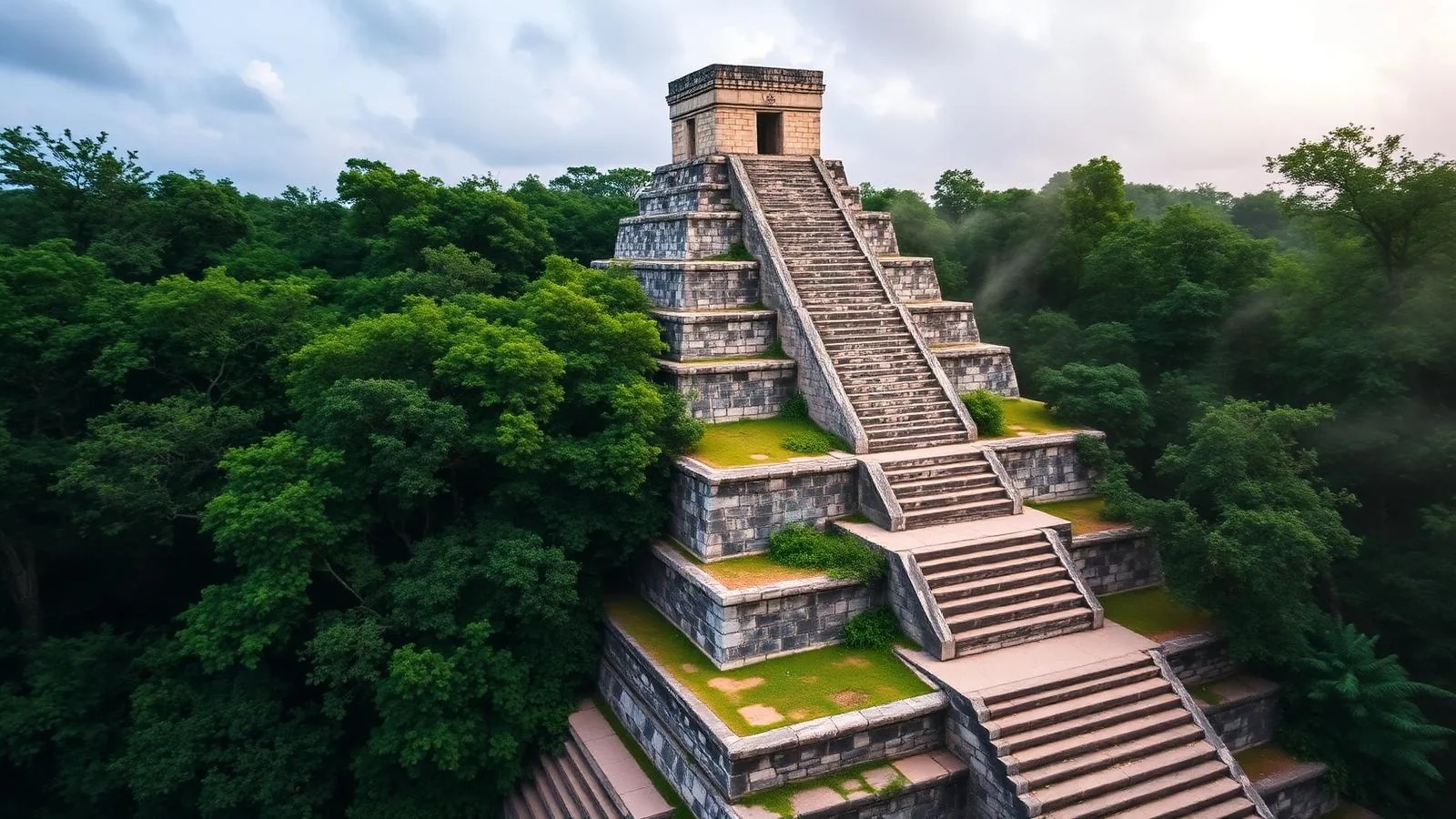
In this guide
- Quick Facts: Best Mayan Ruins in Mexico
- Chichen Itza: The Icon of Yucatán
- Palenque: Emerald Jungle and Royal Tombs
- Uxmal and the Refined Puuc Style
- Calakmul: The Remote Giant of the Rainforest
- Tulum and Coba: Coastal Fortresses and Jungle Roads
- Hidden Gems: Ek Balam and Bonampak
- Non-Maya Mesoamerican Giants: Teotihuacan & Monte Albán
- Comparing Mexico's Ancient Sites
- Practical Tips: Heat, Crowds, and Cultural Respect
- Final Thoughts: Choosing Your Archaeological Journey
This guide is part of our Mexico Itinerary: Where to Go, Costs and When to Visit — start there for the overview, when to go and how to get around.
I stepped into the jungle clearing at Palenque just after seven in the morning, watching translucent coils of river mist rise off the moss-draped limestone of the Temple of the Inscriptions. The air was thick with the scent of damp earth and crushed leaves, broken suddenly by the guttural roar of howler monkeys echoing through the high canopy above. Standing there in my sweat-stained linen shirt, I realised that ancient Mesoamerica is not something you merely look at in a museum—it is a living, breathing landscape that swallows you whole.
For centuries, the Maya civilization flourished across the dense rainforests, arid plains, and coastal bluffs of southeastern Mexico and Central America. They engineered complex astronomical calendars, carved delicate hieroglyphics into hard stone, built sophisticated trade routes, and erected massive pyramids without draft animals or iron tools. Today, the archaeological sites scattered across the Mexican states of Yucatán, Quintana Roo, Campeche, and Chiapas offer some of the most profound travel experiences on earth.
Yet no two Mayan sites are identical. The sun-bleached geometric perfection of Uxmal feels worlds apart from the wild, choked jungle towers of Calakmul or the turquoise ocean views of Tulum. Navigating these historic wonders requires understanding their distinct architectural styles, physical demands, and geographical contexts. In this guide, I will walk you through Mexico's finest Maya strongholds—alongside two monumental non-Maya Mesoamerican capitals—so you can construct an unforgettable archaeological journey.
Quick Facts: Best Mayan Ruins in Mexico
- Primary Regions: Yucatán Peninsula (Yucatán, Quintana Roo, Campeche) and Chiapas highlands/rainforest.
- Architectural Styles: Puuc (intricate geometric stonework), Petén (soaring, steep jungle pyramids), Chenes (flamboyant monster-mouth doorways), and Postclassic Coastal (compact defensive structures).
- Best Time to Visit: November to April (dry season offers milder temperatures and lower humidity).
- Primary Travel Bases: Mérida, San Cristóbal de las Casas, Palenque town, Campeche city, Valladolid, and Tulum.
- Getting Around: First-class long-distance buses, regional passenger trains, car rentals, and organised small-group excursions.
Chichen Itza: The Icon of Yucatán
As one of the New Seven Wonders of the World, Chichen Itza is the undisputed centerpiece of Yucatecan archaeology. Sprawling across a vast limestone plain, this grand city flourished between the 8th and 10th centuries, blending classic Maya traditions with central Mexican Toltec artistic influences.
Highlights & Architecture
The crown jewel of the site is El Castillo (the Temple of Kukulcán), a masterclass in ancient geometry and archaeoastronomy. Designed so that during the spring and autumn equinoxes the afternoon sun casts triangular shadows mimicking a slithering serpent, it dominates the central plaza with quiet authority.
Beyond the main pyramid lies the Great Ball Court, the largest in Mesoamerica, where acoustic engineering allows a whisper at one end to be heard hundreds of metres away. Don't miss the Temple of the Warriors, surrounded by the imposing Hall of a Thousand Columns, and the circular observatory known as El Caracol, where Maya astronomers mapped the orbit of Venus.
Beat the Crowds & Heat
Because of its global fame, Chichen Itza receives thousands of visitors daily. The secret to a peaceful visit is spending the previous night in the neighbouring town of Valladolid or at a nearby jungle lodge, allowing you to pass through the turnstiles right as the gates open at 8:00 AM.
By 11:00 AM, the equatorial sun bakes the central plaza, and busloads of day-trippers arrive from Cancún. Bring a wide-brimmed hat, plenty of water, and move quickly to the main structures early in the morning before retreating into the shaded forest trails surrounding the site's outer ruins.
Palenque: Emerald Jungle and Royal Tombs
Nestled against the tumbling foothills of the Chiapas highlands, Palenque is arguably the most atmospheric ancient city in Mexico. Though smaller in footprint than Chichen Itza, its exquisite craftsmanship, sculpted stucco reliefs, and dramatic jungle setting give it an unmatched sense of romance.
Temple of the Inscriptions & The Palace
Palenque reached its apex in the 7th century under the ruler K'inich Janaab' Pakal (Pakal the Great). His resting place was uncovered deep within the Temple of the Inscriptions, buried under layers of stone beneath a massive carved jade funerary mask.
Directly opposite stands The Palace, a sprawling residential complex featuring an unusual four-storey observation tower, delicate inner courtyards, and remarkably preserved stone reliefs depicting captured rival lords. Walking through its vaulted corridors feels remarkably intimate, offering a clear glimpse into the daily life of Maya royalty.
Jungle Trails and Howler Monkeys
Much of Palenque remains swallowed by dense, ancient rainforest. Following the stone pathways down toward the site exit leads you past cascading waterfalls, babbling creeks, and unexcavated mounds covered in twisted tree roots.
Keep your eyes trained on the upper canopy. Bright toucans routinely flutter across the clearings, and resident families of howler monkeys territorialise the treetops, filling the humid morning air with their haunting calls.
Uxmal and the Refined Puuc Style
Located in the rolling hills south of Mérida, Uxmal represents the absolute pinnacle of Puuc architecture. Defined by smooth lower walls topped with extraordinarily detailed mosaic friezes, the buildings here display an elegance that many art historians consider unmatched across the ancient Americas.
Pyramid of the Magician & Governor's Palace
Upon entering, you are immediately confronted by the Pyramid of the Magician (Adivino). Unlike almost all other Mesoamerican pyramids, which feature sharp square bases, this majestic structure boasts smooth, rounded oval edges that gleam golden-pink in the morning light.
Further up the central ridge sits the Governor's Palace, a long, low limestone structure draped in over twenty thousand individually carved stone tiles forming lattice patterns, serpents, and masks of the rain god Chaac. Nearby, the Nunnery Quadrangle offers magnificent courtyards framed by towering stone facades.
Exploring Kabah, Sayil, and Labná
Uxmal serves as the gateway to the broader Puuc Route, a collection of smaller, less-visited sites scattered along a scenic loop highway. A short drive away lies Kabah, famous for its incredible Palace of the Masks (Codz Poop), whose wall is entirely covered in hundreds of hooked noses representing Chaac.
Continuing down the route brings you to Sayil, home to a grand three-tiered palace rising from the scrub forest, and Labná, celebrated for its magnificent stone archway. These satellite sites offer tranquil exploration away from mainstream tour buses.
Calakmul: The Remote Giant of the Rainforest
Deep within the vast Calakmul Biosphere Reserve in Campeche, near the border with Guatemala, lies one of the largest and most powerful ancient capitals ever discovered. For centuries, Calakmul engaged in a ferocious geopolitical struggle for dominance against its arch-rival, Tikal.
Great Pyramid Structure II & Imperial Rivalry
What makes Calakmul extraordinary is its sheer, unfiltered scale. Structure II is one of the tallest Maya pyramids ever constructed, rising over 45 metres above the forest floor. Unlike many other major sites, visitors are still permitted to climb its steep stone steps.
Reaching the upper platform rewards you with an astonishing 360-degree view over a endless ocean of dark green jungle canopy, broken only by the limestone tips of distant neighbouring temples breaking through the trees. It is a hauntingly wild perspective that reveals just how isolated this ancient superpower was.
How to Reach Campeche’s Wildest Ruin
Visiting Calakmul requires commitment. The site is reached via a narrow, two-hour paved access road that branches off the main highway, winding deep into protected jungle where wild turkeys, spider monkeys, and occasionally jaguars cross the path.
Base yourself in the small village of Xpujil or at a eco-lodge near the reserve entrance. Pack plenty of water, high-energy snacks, and insect repellent, as there are no commercial services once you pass the outer gate.
Tulum and Coba: Coastal Fortresses and Jungle Roads
Quintana Roo offers two starkly contrasting archaeological encounters: the dramatic seaside ruins of Tulum and the sprawling, lake-bound forest ruins of Coba.
Tulum: Postclassic Cliffside Beauty
Perched dramatically on 12-metre limestone cliffs overlooking the turquoise Caribbean Sea, Tulum was a walled merchant port that thrived late in the Maya timeline, remaining active even as the Spanish arrived. Its primary structure, El Castillo, served both as a ceremonial temple and a beacon for canoes navigating the offshore barrier reef.
While Tulum's structures are modest compared to Chichen Itza or Uxmal, its physical setting is unmatchable. The striking contrast between dark weathered limestone, emerald palm trees, and blinding blue sea makes it one of the most photographed places in Mexico.
Coba: Ancient Causeways and Shaded Forest
Located an hour inland from Tulum, Coba offers an entirely different atmosphere. This sprawling city grew around five natural lakes and is connected by a complex network of ancient raised white stone roads known as sacbeob.
Because the ruins are spread across a wide area beneath a dense forest canopy, renting a pushbike or hiring a local tricycle rickshaw at the entrance is the ultimate way to explore. The main draw is the soaring Nohoch Mul pyramid, towering high above the surrounding trees.
Hidden Gems: Ek Balam and Bonampak
For travellers seeking remarkable artistic detail without the heavy crowds found at major commercial sites, Ek Balam and Bonampak are essential detours.
Ek Balam: Acropolis Plaster Carvings
Situated north of Valladolid, Ek Balam ("Black Jaguar") is famous for its soaring main structure, the Acropolis. Tucked beneath protective thatched roofs on the upper levels are some of the best-preserved stucco decorations in the Maya world.
The intricate doorway depicts the open mouth of a monster, complete with sharp teeth and winged figures that look remarkably like angels. The sharp detail of the plaster work—preserved for over a millennium under fell soil—is simply breathtaking.
Bonampak: Vibrant Murals of Chiapas
Deep in the Lacandon Jungle of Chiapas lies Bonampak, a modest site that holds one of the world's greatest artistic treasures. Inside the unassuming Temple of the Murals are three small rooms whose walls and ceilings are covered from floor to roof in vivid, original paint.
These ancient frescoes depict royal court ceremonies, musicians playing wooden trumpets, energetic battle scenes, and the brutal treatment of prisoners of war. The brilliant blues, ochres, and reds provide an unvarnished window into Maya warfare and courtly politics.
Non-Maya Mesoamerican Giants: Teotihuacan & Monte Albán
While the Maya dominated the east and south, other brilliant civilizations built empires across central and southern Mexico. Adding these two non-Maya sites to your travel plans provides vital context for Mesoamerican history.
Teotihuacan: Avenue of the Dead
Located in the high Valley of Mexico near Mexico City, Teotihuacan was a massive multi-ethnic metropolis that reached its peak long before the Aztec empire rose. In fact, when the Aztecs discovered the abandoned city centuries later, they named it "the place where gods were created".
The site is oriented around the massive Avenue of the Dead, flanked by the colossal Pyramid of the Sun—one of the largest structures built in the pre-Columbian Western Hemisphere—and the graceful Pyramid of the Moon. The scale of urban planning here remains astounding.
Monte Albán: Mountain-Top Zapotec Capital
Flattening the entire top of a mountain ridge overlooking the Central Valleys of Oaxaca, Monte Albán served as the civic and ceremonial heart of the Zapotec civilization for over a thousand years.
The vast Grand Plaza commands spectacular 360-degree views of the valleys below. The site features fascinating stone carvings known as Danzantes (dancers), ancient ball courts, and underground tomb complexes that revealed fabulous gold and jade treasures during modern excavations.
Comparing Mexico's Ancient Sites
To help you decide which sites best suit your travel style, energy level, and geographic route, I have put together this direct comparison of Mexico's premier archaeological locations.
| Site Name | State / Region | Architectural Style | Key Highlight | Crowd Level | Climbing Allowed |
|---|---|---|---|---|---|
| Chichen Itza | Yucatán | Maya-Toltec | El Castillo & Great Ball Court | Very High | No |
| Palenque | Chiapas | Usumacinta Classic Maya | Temple of Inscriptions & Palace | Moderate-High | Partial |
| Uxmal | Yucatán | Puuc Classic Maya | Pyramid of the Magician | Moderate | No |
| Calakmul | Campeche | Petén Classic Maya | Structure II & Rainforest Canopy | Very Low | Yes |
| Tulum | Quintana Roo | Postclassic Coastal Maya | Cliffside setting over Caribbean | Very High | No |
| Coba | Quintana Roo | Classic Maya / Sacbeob | Forest shade & wide bicycle trails | Moderate-High | No |
| Ek Balam | Yucatán | Late Classic Maya | Acropolis stucco monster doorway | Low-Moderate | Yes |
| Bonampak | Chiapas | Usumacinta Classic Maya | Vivid multi-room wall murals | Very Low | No |
| Teotihuacan | State of Mexico | Teotihuacano (Non-Maya) | Avenue of Dead & Sun Pyramid | Very High | No |
| Monte Albán | Oaxaca | Zapotec (Non-Maya) | Mountain-top vistas & Danzantes | Moderate | Partial |
Practical Tips: Heat, Crowds, and Cultural Respect
Exploring ancient ruins in tropical latitudes requires sensible preparation. Following a few simple strategies will dramatically enhance your comfort and overall experience.
Heat Management and Timing
The tropical sun across the Yucatán Peninsula and Chiapas can be brutal, especially when radiating off bare limestone plazas. Always arrive at major sites right when gates open in the morning. This allows you to explore during the coolest hours before tour buses arrive.
- Hydration: Carry at least two litres of water per person; many remote sites do not sell drinks past the entrance ticket booth.
- Sun Defence: Wear lightweight long sleeves, high-SPF sunblock, a wide-brimmed hat, and polarized sunglasses.
- Footwear: Choose breathable hiking shoes or sturdy trail runners with strong grip—ancient stone steps can be polished smooth and remarkably slippery.
Hiring Certified Local Guides
While wandering ruins independently is enjoyable, hiring a licensed local guide at the entrance gate elevates your understanding immensely. Certified guides spend years studying Mesoamerican iconography, history, and botany.
They can decipher intricate glyphs, demonstrate acoustic trickery built into temples, and point out hidden carvings you would otherwise walk right past. Always verify that your guide holds official credentials issued by the national tourism secretariat.
Respecting Living Maya Culture
It is vital to remember that the Maya are not an vanished civilization. Millions of Maya people live across southeastern Mexico today, speaking indigenous languages like Yucatec, Tzotzil, and Tzeltal, maintaining traditional agricultural methods, and honouring ancestral spiritual beliefs.
Treat the archaeological sites with reverence. Respect barricades and "Do Not Climb" signs—these rules exist to preserve fragile stonework and ensure visitor safety. When travelling through modern Maya villages in Chiapas or Yucatán, ask permission before taking photographs of local people or sacred community ceremonies.
Final Thoughts: Choosing Your Archaeological Journey
Mexico's ancient heritage is vast, rich, and endlessly rewarding. If you are pressed for time on a coastal holiday, combining the seaside beauty of Tulum with a early-morning excursion to Chichen Itza provides a magnificent introduction to the Maya world.
However, if your heart craves true adventure, head south into the rainforests. Standing high atop the pyramids of Calakmul as morning fog rolls across the jungle, or wandering through the mist-shrouded palaces of Palenque, connects you with the past in a way that stays with you long after the mud has dried on your boots.
More Mexico guides
Things to Do in Mexico: Ruins, Cenotes and Cities
From Mexico City's markets and Oaxaca's mezcal country to Yucatán cenotes, Mayan ruins, Chiapas jungle and the Pacific surf coast — what's…
Mexico Itinerary: Where to Go, Costs and When to Visit
Where to go in Mexico and for how long: Mexico City, Oaxaca, the Riviera Maya and Chiapas, plus safety realities, costs and a 10-day…