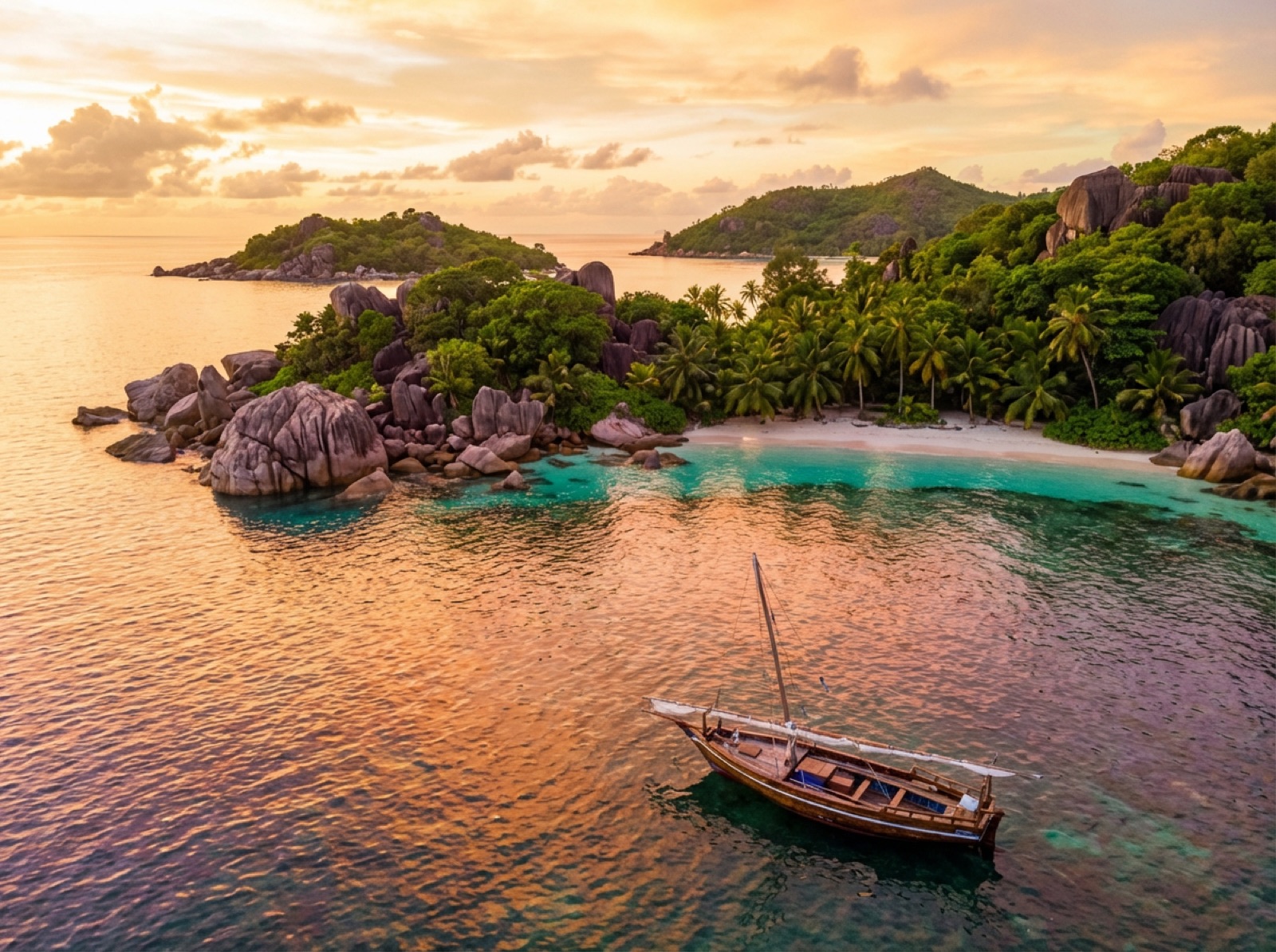
Things to Do in the Seychelles: Beaches, Islands and Nature
Mahé, Praslin and La Digue compared, the granite beaches worth the ferry, snorkelling, and how to see the Seychelles without a resort budget.
In this guide
- Quick Facts: Seychelles Highlights
- Mahé: Granite Peaks, Beaches and Capital Charm
- Praslin: Ancient Palms and World-Class Shorelines
- La Digue: Bicycles, Boulders and Vanilla
- Uninhabited Isles and Marine Sanctuaries
- Silhouette and Bird Island: Off-the-Beaten-Track Adventures
- Hiking and Nature Trails Across the Archipelago
- Snorkelling, Diving and Marine Life
- Creole Culture, Spices and Culinary Delights
- Weather Patterns: Monsoon Winds and Seasons
- Island Hopping: Ferries, Flights and Logistics
- Practical Travel Advice and Conservation Rules
- Final Thoughts: Crafting Your Seychelles Adventure
This guide is part of our Seychelles Itinerary: Best Islands, Beaches and Costs — start there for the overview, when to go and how to get around.
Step off the timber ferry deck onto the sun-baked jetty at La Digue and the smell of salted air, ripe mangoes and damp granite hits you before your foot even touches the sand. Shoes tend to come off within minutes here, and the way to get around is a battered beach-cruiser bicycle with a rusty basket. There is an immediate, intoxicating weightlessness to the Seychelles that few places on Earth can match.
Scattered across hundreds of thousands of square kilometres of the western Indian Ocean, this archipelago of 115 islands split between granitic peaks and outer coral cays is far more than a cliché honeymoonee retreat. Beyond the polished infinity pools lies an astonishingly wild ecosystem where giant tortoises wander through coastal scrub, prehistoric palm forests cast cool shadows over emerald soil, and colossal granite boulders rise from crystalline lagoons like sculpted art installations.
Whether you are tackling sweat-drenched jungle ridges on Mahé, drifting alongside hawksbill sea turtles off tiny coral islets, or sampling fiery Creole fish curries in Victoria, the Seychelles rewards travellers who venture off the sunbed. This comprehensive guide covers the absolute best things to do across the islands, from iconic shorelines to wilderness trails and remote marine reserves.
Quick Facts: Seychelles Highlights
- Geographic Division: 42 granitic islands (Mahé, Praslin, La Digue) and 73 coralline islands.
- Key Highlights: Weathered granite beaches, UNESCO palm forests, free-roaming giant tortoises, world-class diving.
- Getting Around: Passenger ferries, short island-hopper flights, bicycle hires, and small rental cars.
- Climate: Tropical marine, cyclone-free, governed by two distinct seasonal trade winds.
- Cultural Heart: Rich Seychellois Creole heritage blending African, French, British, and Asian influences.
- Conservation Status: More than half of the country's landmass is protected under strict environmental reserves.
Mahé: Granite Peaks, Beaches and Capital Charm
Mahé is the largest island in the archipelago and home to roughly ninety percent of the country’s population. Yet despite hosting the international airport and national capital, Mahé remains intensely green, dominated by a towering interior mountain range that drops sharply into turquoise coves.
Victoria: Market Spices, History, and Botanical Gardens
No trip to Mahé is complete without spending a morning exploring Victoria, one of the world's smallest national capitals. The town centres around Lorloge, an elegant silver clock tower erected in 1903 that was modelled after the clock standing near London's Vauxhall Bridge.
A few streets away, the sensory pulse of the island beats within the Sir Selwyn Selwyn-Clarke Market. Built in 1840 and modernised since, this double-storey hub is filled with the calls of fishmongers laying out red snapper, kingfish, and parrotfish on marble slabs. Upstairs, local traders sell hand-woven baskets, coconut oil, vanilla pods, and stacks of fragrant spices. Outside, yellow-vented bulbuls dart between piles of golden bananas and breadfruit.
A short walk south from the bustling centre brings you to the tranquil Seychelles National Botanical Gardens. Established over a century ago, these five-hectare gardens offer a fantastic introduction to the native flora and fauna. Here, you can walk along shaded avenues of tall native palms, admire exotic orchids in the propagation houses, and view a resident colony of Aldabra giant tortoises in a dedicated forest enclosure.
Beau Vallon vs Anse Intendance: Two Sides of Mahé
Mahé’s coastline is lined with dozens of distinct bays, each offering a very different atmospheric energy depending on the season and location.
On the northwestern coast lies Beau Vallon, a sweeping crescent of soft white sand and calm, clear water. It is the liveliest beach on the island, ideal for swimming, stand-up paddleboarding, and water sports. In the late afternoon, beachside shacks open up to cook fresh fish over open coconut-husk fires, filling the humid evening air with delicious smoke.
In stark contrast, driving south brings you to Anse Intendance on Mahé's southern tip. Raw, wild, and breathtakingly dramatic, Intendance features half a kilometre of blindingly white sand flanked by deep green jungle and immense granite headlands. With no offshore reef to temper the ocean swells, the waves roll in with thunderous power. It is an extraordinary spot for beachcombing and photography, though swimming requires extreme caution due to strong rip currents, particularly during the southeast monsoon.
Hiking Mahé: Morne Seychellois and Anse Major
To truly appreciate Mahé’s topography, you must lace up your boots and head into Morne Seychellois National Park, which covers over twenty percent of the island. Dense cloud forest wraps around granite peaks that rise over nine hundred metres above sea level.
For a rewarding hike without extreme vertical elevation, the coastal trail to Anse Major is unmatched. Starting near Bel Ombre on the northwest coast, the rocky path weaves along granite cliff faces, over timber bridges, and beneath flowering shrubs, offering sweeping views across the bright blue sea toward Silhouette Island. The trail ends at a secluded, roadless beach where a calm lagoon provides perfect swimming and snorkelling rewards after a warm, hour-long trek.
For panoramic views across the east coast and Victoria, the trail up Copolia Peak offers a steeper but manageable climb through lush forest. At the exposed summit, walking across the massive granite dome reveals unusual endemic insect-eating pitcher plants (Nepenthes pervillei) clinging to the rocky crevices.
Praslin: Ancient Palms and World-Class Shorelines
Located forty-five kilometres northeast of Mahé, Praslin is the second-largest island in the inner granitic group. Quieter and more relaxed than its bigger neighbour, Praslin is famous for its prehistoric forests and beaches that consistently top international rankings.
Vallée de Mai: The Legend of the Coco de Mer
At the heart of Praslin lies the Vallée de Mai Nature Reserve, a UNESCO World Heritage site so dense, pristine, and magical that British general Charles Gordon, visiting in 1881, declared it the original location of the Garden of Eden. Walking beneath the towering canopy of this primeval palm forest feels like stepping back into the dinosaur age.
The reserve is the primary natural sanctuary for the Coco de Mer palm (Lodoicea maldivica), which produces the largest and heaviest seed in the plant kingdom. The double-lobed nut, famous for its suggestive anatomical shape, can weigh up to thirty kilograms. Male trees produce long, catkin-like inflorescences, while female trees hold giant hanging nuts that take up to seven years to mature.
As you wander along the shaded footpaths of the valley, keep your eyes tuned to the high canopy. The reserve is one of the final remaining refuges for the elusive, endemic Seychelles black parrot, whose distinct whistling calls echo through the silent, fan-leaved forest.
Shoreline Idylls: Anse Lazio and Anse Georgette
Praslin boasts two beaches that compete for the title of the Indian Ocean's finest sandbar.
On the northern tip of the island, Anse Lazio opens up as a wide, picture-postcard bay framed by smooth, rounded granite rocks. The sand is exceptionally fine and bright white, meeting turquoise water that deepens gradually into clear blue offshore. Native takamaka trees cast broad green umbrellas of shade along the upper sand line, making it a perfect spot to spend an entire afternoon reading, swimming, and marine watching.
Tucked away on the northwestern coast, Anse Georgette is equally stunning but feels even more exclusive. Enclosed by thick coastal vegetation and steep granite hills, this uncrowded cove features clear, jewel-toned waters and pristine sand without a single rock underwater. Because access via land requires walking through private grounds or taking a steep coastal trail,visitor numbers remain low, preserving its peaceful atmosphere.
La Digue: Bicycles, Boulders and Vanilla
If Mahé represents the energy of the Seychelles and Praslin its botanical wonder, La Digue is its soul. Life here slows down to a gentle pedal stroke. Cars are severely restricted, meaning almost everyone—locals and international travellers alike—gets around on foot, by bicycle, or aboard open-sided shuttle wagons.
Anse Source d’Argent and L’Union Estate
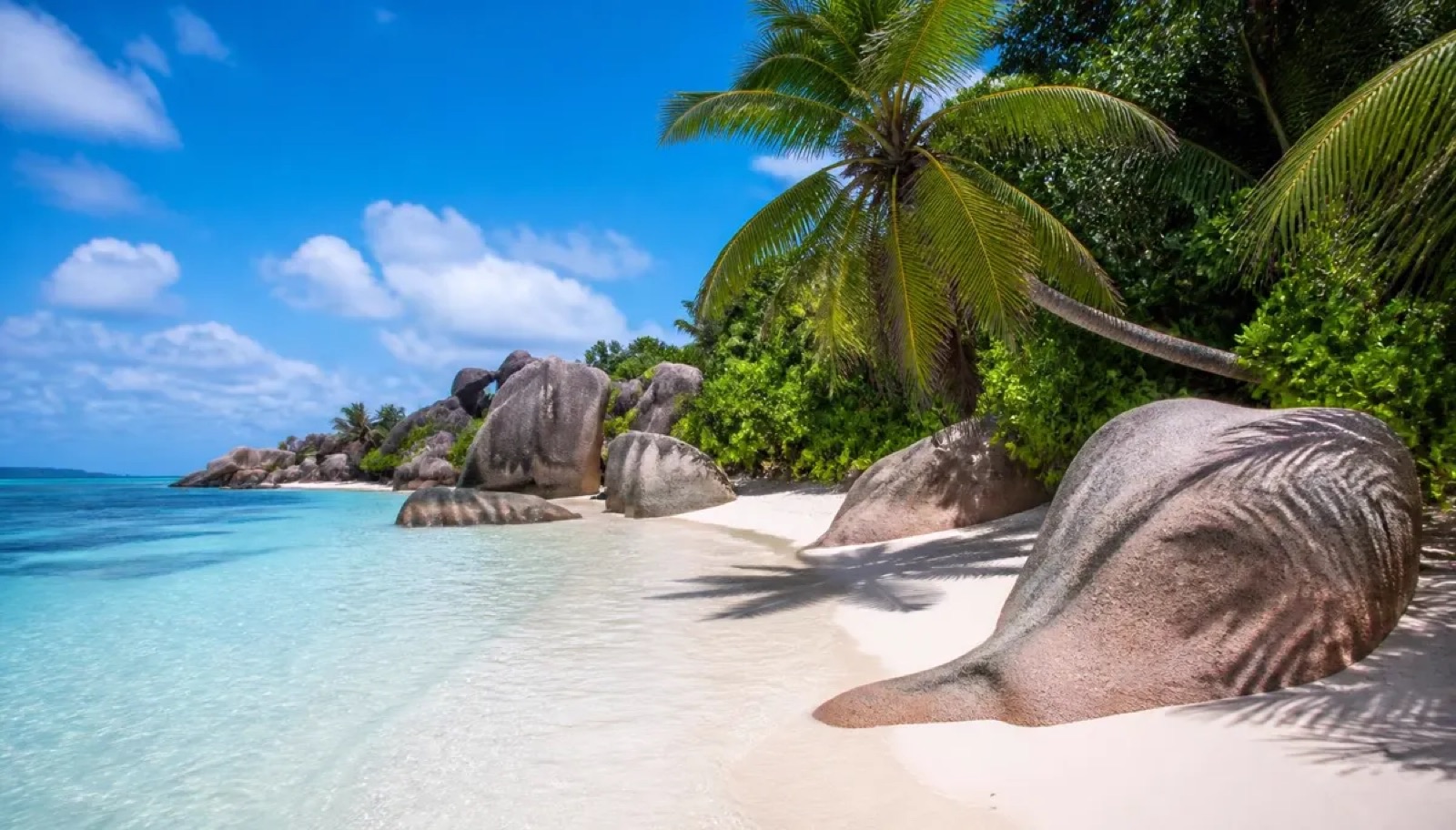
The image that most people hold of the Seychelles—imposing granite boulders sculpted by weather into smooth, grey ribs resting on pinkish sand—was taken right here at Anse Source d'Argent on La Digue’s southwest coast.
To access this iconic shore, visitors pass through L'Union Estate, a historic plantation that offers a window into the island’s agricultural past. Here, you can wander past traditional coconut plantations, view a historic plantation house built from native timber, see an old ox-powered mill used to extract copra oil, and tour fragrant vanilla plantations where climbing vines loop around timber trellises.
Beyond the estate grounds, the path leads to Anse Source d'Argent. A coral reef protects the shallow shore, creating a warm, turquoise lagoon that is ideal for wading, clear-bottom kayaking, and leisurely swimming. As the sun sinks lower in the sky, the changing light turns the massive granite rocks from pale silver to warm bronze and deep ochre.
The Wild South Coast: Grand Anse, Petite Anse, and Anse Cocos
For an entirely different coastal experience, pedal across the island’s low central ridge to the eastern side. Here, facing the open sea, lies Grand Anse. Broad, deep, and framed by dramatic rocky points, this beach features powerful turquoise waves crashing onto golden sand.
From the southern end of Grand Anse, a marked walking trail weaves over granite headlands and through coastal scrub to reach Petite Anse, and further along, Anse Cocos. Anse Cocos is a sheltered, secluded crescent with a natural ocean swimming pool formed by a ring of smooth boulders at its northern edge, where you can soak safely in calm, crystalline water while waves crash against the outer rocks.
Uninhabited Isles and Marine Sanctuaries
One of the great pleasures of a Seychellois itinerary is jumping aboard a boat to explore small, protected reserves lying just off the main islands. These day trips offer incredible opportunities for wildlife encounters both above and below the surface.
Curieuse Island: Free-Roaming Giant Tortoises
Located just off the northern coast of Praslin, Curieuse Island is a small granite island with a distinct, reddish soil profile. Today, it operates as a strictly managed national park and sanctuary for hundreds of free-roaming Aldabra giant tortoises (Aldabrachelys gigantea).
Visitors land at Baie Laraie, where these gentle giants slowly meander along the beach, grazing on fallen leaves and native shrubs. A wooden boardwalk weaves through a thick mangrove forest across the island to Anse José, where you can see the historic, restored Doctor’s House, the former physician’s residence of the island’s leper colony (which operated from 1829 to 1965), and now houses a fascinating local environmental museum.
Cousin and Aride: Avian Havens
For birdwatching enthusiasts and nature lovers, day trips to Cousin Island and Aride Island are essential highlights.
Cousin Island Special Reserve, located near Praslin, was purchased by international conservation groups in the late 1960s to save the critically endangered Seychelles warbler. Today, the island is a flourishing success story. Walking under the forest canopy, white terns hover mere inches above your head, noddies nest in low branches, and hawksbill turtles come ashore to lay eggs between October and March.
Further north, Aride Island Nature Reserve is the wilder, more remote cousin. Hosting more breeding seabird species than any other inner island—including vast colonies of frigatebirds, roseate terns, and red-tailed tropicbirds—Aride is an untouched slice of nature where human presence is kept to a strict minimum.
St Pierre and Coco Island: Underwater Gardens
If your goal is to spend hours drifting over colourful coral structures surrounded by marine life, arrange a boat excursion to St Pierre Islet or Isle Coco Marine National Park.
St Pierre is a tiny, picturesque cluster of granite rocks topped by a few resilient palm trees rising out of deep blue water off Cote d'Or beach. Beneath the surface, granite crevices host shoals of damselfish, surgeonfish, spotted eagle rays, and harmless reef sharks. Isle Coco, surrounded by a shallow, sheltered reef, offers some of the best visibility for snorkelling in the inner island cluster.
Silhouette and Bird Island: Off-the-Beaten-Track Adventures
While Mahé, Praslin, and La Digue host most travellers, looking further afield to the archipelago's outer rim reveals extraordinary remote destinations.
Silhouette Island, visible on the horizon from Mahé's west coast, is the third-largest granitic island but feels virtually untouched. Dominated by Mount Dauban, which rises over seven hundred metres into swirling mists, Silhouette is covered in ancient primeval forest filled with rare pitcher plants, incense trees, and sheath-tailed bats. With no paved roads, exploration here is done on foot along wild jungle trails.
About one hundred kilometres north of Mahé lies Bird Island, a flat coral cay that marks the northern boundary of the Seychelles bank. Between May and October, millions of sooties arrive on the island to nest, creating an unforgettable sensory spectacle. Bird Island is also home to Esmeralda, widely considered one of the heaviest and oldest living free-roaming giant tortoises on the planet.
Hiking and Nature Trails Across the Archipelago
The Seychelles is one of the world's finest tropical hiking destinations. The unique combination of steep granite peaks, varied microclimates, and sheltered coastal coves provides endless trail variety across short distances.
| Trail Name | Island | Difficulty | Approx. Duration | Key Highlights |
|---|---|---|---|---|
| Anse Major Trail | Mahé | Easy–Moderate | 1.5 to 2 hours | Coastal granite scenery, ocean views, secluded swim spot. |
| Copolia Peak | Mahé | Moderate | 1.5 to 2 hours | 360-degree views over Victoria, endemic pitcher plants. |
| Morne Blanc | Mahé | Challenging | 2 to 2.5 hours | Steep jungle ascent, high-elevation mist forest, vertical view over the west coast. |
| Vallée de Mai Loops | Praslin | Easy | 1 to 2 hours | UNESCO primeval palm forest, Coco de Mer, rare bird watching. |
| Nid d’Aigle (Eagle’s Nest) | La Digue | Moderate–Challenging | 2 hours | Highest point on La Digue, views over Praslin and outer islands. |
When tackling any of these trails, always wear sturdy footwear with good grip, carry plenty of freshwater, and wear sun protection. Tropical humidity can make even short ascents surprisingly exhausting, so pace yourself accordingly.
Snorkelling, Diving and Marine Life
The underwater realm of the Seychelles is as rich and diverse as its land ecosystems. The inner islands sit atop a shallow underwater plateau, offering warm, nutrient-rich conditions that support hard and soft corals, large granite swim-throughs, and an abundance of pelagic life.
For scuba divers, the granite reefs around Mahé and Praslin feature dramatic underwater topography. Craggy canyons, granite arches, and deep drop-offs host green turtles, hawksbill turtles, nurse sharks, marble rays, and huge schools of fusiliers. Wreck divers can explore artificial reefs like the Twin Barges off Mahé, which are covered in colourful sponges and macro sea life.
While marine encounters are possible year-round, conditions shift with the seasons:
- Whale Sharks: These filter-feeding giants pass through the waters around Mahé during seasonal migrations, usually between September and November when plankton blooms occur. Check local dive operator notices and conservation guidelines for responsible viewing opportunities.
- Sea Turtle Nesting: Female hawksbill turtles come ashore to lay eggs on protected beaches across Mahé, Praslin, and Cousin between October and March. Green turtles nest primarily on the outer coral islands throughout the year.
- Visibility Peak: The transition periods between trade winds (April–May and October–November) bring calm seas and exceptional underwater visibility, often exceeding thirty metres.
Creole Culture, Spices and Culinary Delights
Seychellois culture is a warm, expressive blend of origins. Over centuries, African, French, British, Indian, and Chinese arrivals mixed to create a distinct identity expressed through language (Seselwa), music (Moutya and Sega), and a exceptional culinary heritage.
Seychellois Creole cuisine is grounded in fresh fish, fragrant spices, coconut milk, and tropical root vegetables. Freshly caught fish is routinely transformed into incredible dishes using native herbs and spices harvested straight from island gardens.
Must-try culinary experiences include:
- Kari Koko Zourit (Octopus Coconut Curry): Tender octopus simmered slowly in rich coconut cream infused with fresh turmeric, ginger, garlic, cinnamon leaf, and crushed chillies.
- Grilled Fish with Garlic and Chilli: Whole red snapper or jobfish marinated in ginger, garlic, lime juice, and chopped chilli, grilled over aromatic coconut husks.
- Ladob: A traditional dish served sweet or savoury. The sweet version features plantain bananas, sweet potatoes, and breadfruit cooked softly in coconut milk with sugar, vanilla, and nutmeg.
- Shark Chutney: Boiled shark meat finely mashed and cooked with bilimbi (a sour fruit), lime juice, fried onions, and local spices.
To experience authentic Creole food, bypass formal dining rooms occasionally and visit the small takeaway shacks found near busy public beaches and ferry piers. These budget-friendly stalls serve hot, flavourful meals packed into foil trays, best enjoyed sitting on a log right at the water's edge.
Weather Patterns: Monsoon Winds and Seasons
The Seychelles sits just south of the equator and comfortably outside the primary Indian Ocean cyclone belt. This means extreme weather events are rare, and the destination enjoys a warm, tropical climate year-round with temperatures hover consistently between 24°C and 31°C.
However, the destination's marine conditions, wind speeds, rainfall, and beach aesthetics are heavily governed by two opposing seasonal trade winds:
The Southeast Monsoon (May to October)
During these cooler, drier months, steady winds blow in from the southeast. Marine waters can become choppy, making boat crossings between islands bumpier. The wind also drives sea kelp onto beaches facing south and east (such as Grand Anse on Praslin or Anse Royal on Mahé).
However, beaches facing northwest (such as Beau Vallon on Mahé or Anse Lazio on Praslin) remain calm, clear, and sheltered. This windier period is popular with windsurfers, hikers, and active travellers who prefer lower humidity.
The Northwest Monsoon (December to March)
This period brings warmer, more humid air from the northwest along with frequent, heavy tropical downpours that clear quickly into sunshine. Sea conditions are generally calm and flat, making it an excellent time for island hopping, swimming, and diving.
During these months, beaches on the south and east coast of the islands are pristine and clear of seaweed, while beaches facing northwest may accumulate washed-up marine foliage.
The Shoulder Months (April and November)
The transition months between the changing trade winds are considered by many to be the sweet spots for visiting. During April and November, the wind dies down completely, producing hot, calm conditions with glassy seas and extraordinary clarity for underwater diving and snorkelling.
Island Hopping: Ferries, Flights and Logistics
One of the biggest mistakes travellers make when visiting the Seychelles is staying anchored to a single resort on one island. The true magic of the archipelago lies in moving between different islands, each of which has a distinct character, landscape, and pace of life.
Inter-Island Ferries
High-speed passenger catamarans run regular, scheduled daily services between the three main inner islands (Mahé, Praslin, and La Digue).
- Mahé to Praslin: Modern, multi-deck catamarans make the open-ocean crossing in roughly sixty minutes. If you are prone to seasickness, choose a seat on the lower deck near the centre of the vessel, particularly during the rougher southeast monsoon months.
- Praslin to La Digue: Short passenger ferries connect the jetty at Sainte Anne on Praslin to La Passe on La Digue in approximately fifteen to twenty minutes, running multiple times a day.
Because ferry timetables can shift slightly based on season and sea conditions, it is advisable to check current schedules online and reserve your passages well in advance during peak travel periods.
Domestic Island Hopping Flights
For a faster and scenic transit between Mahé and Praslin, the national carrier operates a frequent shuttle service using small turboprop aircraft. The low-altitude flight takes just fifteen minutes, offering stunning aerial views of the reefs, islands, and granitic formations scatter across the blue ocean below.
Local Transport on the Main Islands
- Mahé: Hiring a small rental car is the most practical way to explore the island's steep, winding mountain roads and remote southern beaches. Public buses also operate comprehensive routes across Mahé, providing a fun, very cheap way to travel alongside locals, though routes require patience.
- Praslin: Car hires are available, alongside a reliable public bus service that runs along the main coastal routes. Taxis can also be arranged through hotel desks.
- La Digue: Walking and cycling are the primary modes of transport. Bicycle rental shops operate right at the main ferry pier, offering beach cruisers fitted with baskets for day packs and towels.
Practical Travel Advice and Conservation Rules
The Seychelles takes environmental protection extremely seriously. To ensure your trip runs smoothly while respecting local culture and fragile island ecosystems, keep these practical tips in mind:
- Environmental Conservation: Never collect seashells, live coral, or sand from beaches or marine reserves. Taking natural items—including Coco de Mer nuts without an official export permit and seal—out of the country is strictly illegal under national environmental protection laws.
- Reef Safety: Use only reef-safe, zinc-based sunscreens to protect delicate coral reefs from harmful chemical runoff. Avoid stepping on living coral structures when entering the sea or snorkelling in shallow lagoons.
- Giant Tortoise Etiquette: When interacting with free-roaming giant tortoises, give them space. Do not sit on their shells, feed them processed human food, or crowd them while they are resting in the shade.
- Currency and Payments: The official currency is the Seychellois Rupee (SCR). Major cards are widely accepted across hotels, established restaurants, and ferry offices, but carrying small amounts of local cash is essential for buying fresh fruit at roadside stalls, tipping, or paying for bus rides.
- Footwear and Attire: Pack sturdy water shoes for rocky beach entries and reef walking, alongside reliable hiking shoes for tropical trails. While beachwear is expected on the sand, dress respectfully (covering shoulders and knees) when walking through Victoria or visiting places of worship.
- Health and Safety: The Seychelles is generally a very safe destination with low crime rates, but standard travel common sense applies. Avoid leaving bags unattended on public beaches while swimming, and carry a headlamp if walking or cycling along unlit coastal roads after dark.
Final Thoughts: Crafting Your Seychelles Adventure
It is easy to look at glossy photos of the Seychelles and assume it is merely a passive beach destination. But to experience these islands solely from the comfort of a resort chair is to miss the true spirit of the archipelago.
The magic of the Seychelles lies in its contrasts. It is found in the cool, echoing shadows of prehistoric palm forests at Vallée de Mai, the salty spray in your face as a catamaran slices through blue water between Mahé and Praslin, the crunch of red soil beneath your boots along a mountain ridge, and the warm aroma of grilled fish drifting down a quiet cove as the sun dips below the horizon.
Take the time to hop between the islands, rent a bicycle, talk with local vendors at the Victoria market, and step off the beaten track. You will quickly discover an island paradise that is fiercely protected, deeply wild, and completely unforgettable.