Atacama Desert Guide: Geysers, Salt Flats, Stars
San Pedro de Atacama planned properly: altitude, the classic excursions, stargazing, and how many days you actually need.
In this guide
- Quick Facts
- Arriving in the Otherworldly
- High and Dry: Acclimatisation and Hydration
- Organising Your Atacama Adventure
- Valle de la Luna: Sunset on Another Planet
- El Tatio Geysers at the Top of the World
- Salar de Atacama: Flamingos and Salt
- Altiplanic Lagoons and Piedras Rojas
- Water Worlds: Laguna Cejar and Puritama Springs
- Under a Sea of Stars: Atacama Astronomy
- Packing for Extremes: Sun and Cold
- Onward to Bolivia: The Uyuni Crossing
- Explore in Depth
- Frequently Asked Questions
- Final Thoughts
This guide is part of our Chile Travel Guide: Atacama, Lakes and Patagonia — start there for the overview, when to go and how to get around.
At 5 a.m., somewhere around 4,300 metres above sea level, the cold is sharp and crystalline, and the darkness is broken only by vehicle headlights. Then comes a low hiss from the darkness, followed by another, and another. As the first hint of dawn bruises the sky behind the Andes, it reveals a landscape from another world: dozens of steaming pillars rising from the frozen earth. This is El Tatio, the highest geyser field on the planet, and a perfect introduction to the beautiful, brutal, and utterly unforgettable Atacama Desert.
San Pedro de Atacama, a dusty adobe oasis, is your basecamp for exploring this astonishing corner of northern Chile. From here, you’ll journey into a land of extremes: the driest non-polar desert on earth, where landscapes are painted in impossible colours by mineral deposits, where you can float in salt lagoons and boil in thermal springs, and where the night sky is so clear it feels like you could reach out and touch the Milky Way. This guide is packed with the practical advice you need to navigate the high altitude, extreme temperatures, and powerful sun, so you can focus on the sheer wonder of it all.
Quick Facts
- Location: Northern Chile, high in the Andes mountains near the borders of Bolivia and Argentina. The main hub is the small town of San Pedro de Atacama.
- Getting There: Fly into El Loa Airport (CJC) in the nearby city of Calama. From there, it's a 90-minute road transfer to San Pedro, usually via pre-booked shared shuttle or private car.
- Getting Around: The village of San Pedro is small and easily walkable. For all outlying attractions (which is almost everything), you'll need to join an organised tour or, for experienced drivers, hire a suitable 4x4 vehicle.
- Language & Currency: The official language is Spanish. The currency is the Chilean Peso (CLP). While credit cards are accepted in many larger establishments in San Pedro, cash is essential for smaller shops, market stalls, and some tour entry fees.
- Best Time to Visit: The Atacama is a genuine year-round destination. For the most pleasant temperatures, aim for the shoulder seasons: September to November (spring) or March to May (autumn).
Arriving in the Otherworldly
The journey begins long before you touch down. Flying into Calama, you’ll look down on a landscape of brutal emptiness, a vast crumpled map of brown, ochre, and rust-red rock stretching to the horizon. This isn't just empty; it's the driest non-polar desert in the world, with some weather stations here having never recorded a single drop of rain.
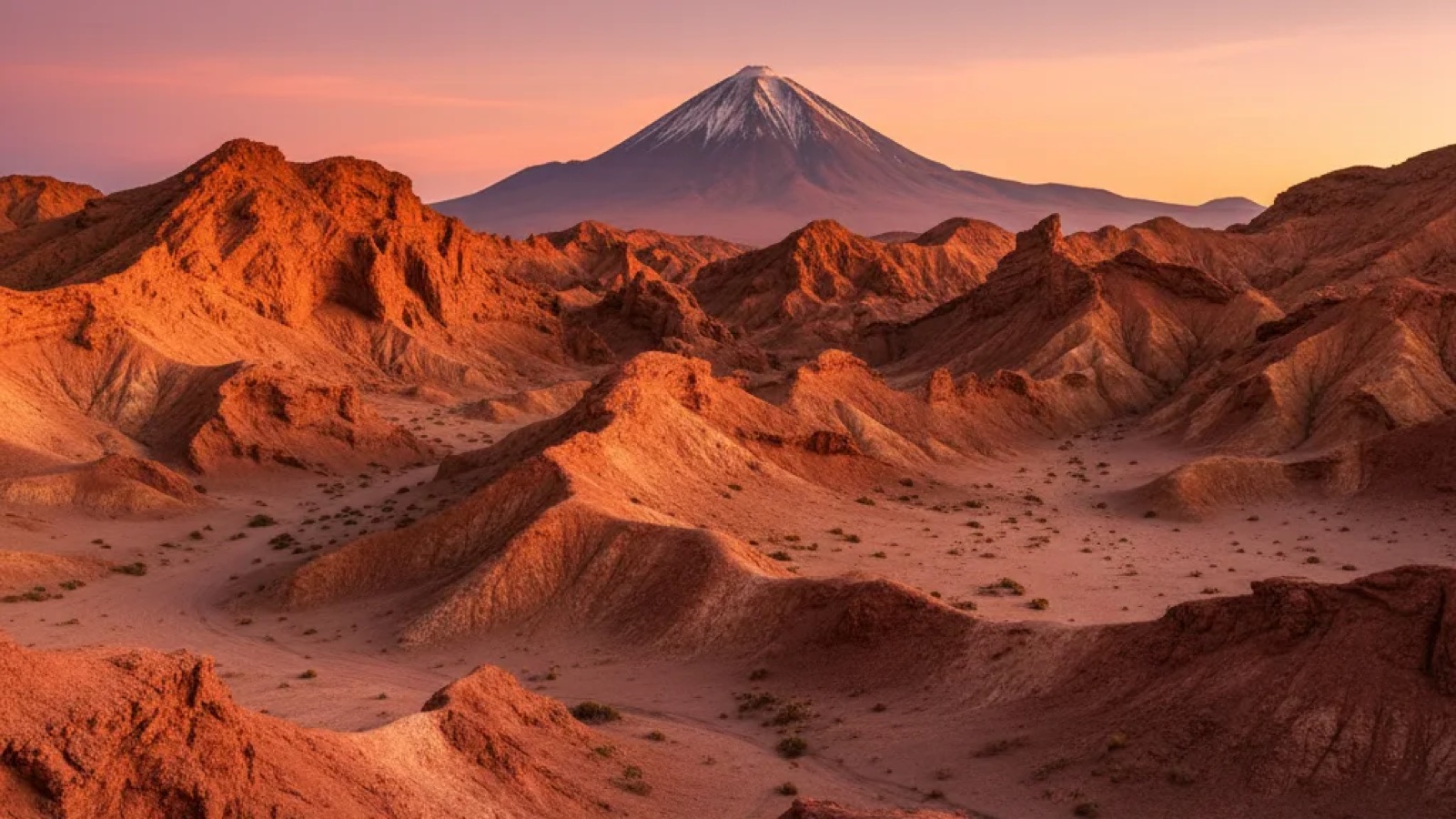
The drive from Calama’s El Loa Airport to San Pedro de Atacama only deepens this impression. For 90 minutes, the road spears through an epic, barren landscape, with the snow-dusted cone of the Licancabur volcano growing ever larger in your windscreen. Then, you descend into a small green valley and arrive in San Pedro. It’s a shock of life: a charming, low-slung town of dusty unpaved streets, adobe walls, and rustic restaurants. It feels like a frontier town, a hub for adventurers, scientists, and travellers drawn to the desert's powerful allure.
High and Dry: Acclimatisation and Hydration
Before you do anything else, you need to understand two things about the Atacama: it is very high, and it is very, very dry. San Pedro itself sits at an altitude of around 2,400 metres (7,900 feet), which is high enough to feel. Many of the most famous excursions, like the El Tatio geysers and Altiplanic Lagoons, will take you well above 4,000 metres.
Altitude sickness is a real risk and can ruin your trip. The golden rule is to take it easy on your first day. Don't plan a strenuous hike or a high-altitude tour. Walk slowly, avoid heavy meals and alcohol, and drink water. Then drink some more. Aim for at least three to four litres a day here. You won't feel thirsty in the dry air, but you are losing moisture with every breath. Coca tea (mate de coca) is offered everywhere and is a traditional local remedy that can help alleviate mild symptoms.
The dryness is relentless. Within hours, you’ll feel it in your skin, your lips, and your sinuses. A powerful moisturiser, a good lip balm with SPF, and even a saline nasal spray are not luxuries here—they're essential supplies. This aridity is also a photographer's dream, creating haze-free, crystal-clear light, but it can wreak havoc on camera gear if you’re not careful with dust.
Organising Your Atacama Adventure
The best way to explore the Atacama is through the numerous tour operators based in San Pedro. Walking down the main street, Caracoles, you'll find dozens of agencies offering excursions to the region’s highlights. Most tours are structured as either half-day trips (leaving in the morning or afternoon) or full-day trips, and they almost always include transport from the town. Entry fees to the national parks and reserves are often, but not always, included, so it pays to clarify what's covered when you book.
A sensible itinerary would be to spend at least three to four full days here. This gives you enough time to see the main sights without rushing and, crucially, allows your body to acclimatise properly. A good strategy is to structure your tours by altitude:
- Day 1: Arrive, settle in. Afternoon tour to the relatively low-altitude Valle de la Luna for sunset.
- Day 2: Morning tour to Laguna Cejar or the Rainbow Valley. Afternoon tour to the Salar de Atacama.
- Day 3: An early start for a high-altitude tour, like the El Tatio Geysers or the Altiplanic Lagoons (Piedras Rojas). Relax at the Puritama Hot Springs in the afternoon.
- Day 4: Another major tour, or a stargazing tour the night before you depart.
While you can book tours on arrival, if you are travelling during peak season (December-February or national holidays), it can be wise to book your must-do excursions a little ahead of time online.
Valle de la Luna: Sunset on Another Planet
This is the classic Atacama experience for a reason. Just a short drive from San Pedro, the Valley of the Moon and the adjoining Valle de la Muerte (Death Valley) present a landscape so alien it feels utterly cinematic. Years of wind and water erosion (from a time long past) have sculpted the salt-crusted earth into bizarre formations, towering sand dunes, and silent, jagged canyons.
Most tours time their visit for late afternoon, culminating in sunset. You'll typically walk through salt caves and climb the immense Duna Mayor for a panoramic view. The magic happens as the sun sinks. The light turns golden, casting deep shadows and igniting the Andes in shades of pink and orange. But don't leave when the sun disappears. The real show is the "blue hour" that follows, when the sky turns a deep, velvety indigo and the valley below is bathed in a soft, ethereal light. It's pure magic and a photographer's dream.
El Tatio Geysers at the Top of the World
This is an excursion that demands commitment. The wake-up call comes around 4 a.m. for the long, cold drive up to the El Tatio geyser field. At 4,320 metres, this is one of the highest-altitude excursions and the air before dawn is spectacularly, profoundly cold. Wear every layer you have: thermals, fleece, down jacket, beanie, gloves—and expect to still be cold. But it's worth every shiver.
You arrive in the dark to a scene from Dante's Inferno: a field of over 80 active geysers hissing, bubbling, and spewing columns of steam into the freezing air. The spectacle is at its most dramatic in the frigid moments just before sunrise, when the temperature difference between the boiling water and the air is at its greatest. As the first rays of sun crest the mountains, they backlight the steam, creating an unforgettable, otherworldly scene. It's a raw and powerful display of the Earth's geothermal energy.
Salar de Atacama: Flamingos and Salt
The vast Salar de Atacama is Chile's largest salt flat, a immense, crackled white expanse that shimmers in the heat. It’s a harsh environment, yet it harbours delicate life. The most popular place to visit is Laguna Chaxa, part of the Los Flamencos National Reserve. Here, shallow, briny lakes attract three of the world's six species of flamingo: the Andean, Chilean, and the rarer James's flamingo.
Seeing these elegant, pink-hued birds feeding against the backdrop of the white salt and distant volcanoes is a beautiful sight. Tours often visit in the late afternoon, when the light is softer and the heat less intense, often combining it with a stop in the small village of Toconao. Remember to bring binoculars for a closer look at the birds without disturbing them.
Altiplanic Lagoons and Piedras Rojas
Often combined into a stunning full-day trip, this tour takes you deep into the high-altitude Andean landscape. The Miscanti and Miñiques lagoons, located at over 4,100 metres, are two of the most beautiful sights in the entire region. Their waters are a shocking, impossible shade of deep blue, fringed with white salt shores and set against the backdrop of their namesake volcanoes.
Nearby, the Salar de Talar, better known as Piedras Rojas (Red Rocks), offers another visual feast. Here, wind-eroded volcanic rocks of a deep red-brown colour contrast with the turquoise-white salt flat and dusty yellow grasses. The sheer vibrancy and contrast of the colours here are breathtaking. This is a high-altitude day, so it’s best saved for after you’ve spent a couple of days acclimatising in San Pedro.
Water Worlds: Laguna Cejar and Puritama Springs
The Atacama offers two very different, but equally memorable, water experiences. Laguna Cejar is one of several hypersaline sinkholes in the middle of the Salar de Atacama. The concentration of salt is so high that when you get in, you float effortlessly, much like in the Dead Sea. It's a bizarre and hilarious sensation, bobbing on the surface under the desert sun. Make sure to rinse off at the provided showers afterwards, as the salt will crystallise on your skin as you dry.
For a totally different experience, head to the Puritama Hot Springs. Tucked away in a narrow canyon, a series of eight geothermal pools are connected by wooden walkways. The water is a blissful temperature, rich in minerals, and perfect for soothing muscles tired from hiking and long drives. It’s a true oasis and the perfect way to spend a final afternoon in the desert, relaxing and reflecting on the adventures had.
Under a Sea of Stars: Atacama Astronomy
There's a reason the world's most powerful telescopes, like the ALMA array, are built here. The combination of high altitude, bone-dry air, and near-zero light pollution creates some of the clearest night skies on Earth. On a moonless night, the star-gazing experience is simply staggering. The Milky Way doesn't just look like a faint cloud; it's a brilliant, textured band of light that arcs across the entire sky.
Numerous stargazing tours are offered from San Pedro, typically run by passionate astronomers with powerful portable telescopes. They'll drive you a short way out of town, point out constellations of the Southern Hemisphere, and let you gaze at planets, nebulae, and star clusters. It's an absolute must-do.
Photography Tip: For astrophotography, timing is everything. Check the moon calendar and plan your visit for the days surrounding the new moon. A full moon is beautiful, but it acts like a giant streetlamp, washing out the fainter stars and the detail of the Milky Way. You'll need a tripod and a camera with manual settings to attempt long-exposure shots.
Visiting the large scientific observatories is a different matter. These are research facilities, and public tours are limited, often booked out months in advance, and subject to change. You must check their official websites for the latest information on availability and booking procedures.
Packing for Extremes: Sun and Cold
Packing for the Atacama is all about one word: layers. The diurnal temperature range is immense. You can be shivering in sub-zero temperatures before dawn at El Tatio and sweating in a t-shirt by midday in San Pedro. Your suitcase must be prepared for both.
Non-negotiable items include:
- A warm fleece and a windproof/down jacket.
- A beanie, scarf, and warm gloves. Thermal underwear is a lifesaver for early morning tours.
- Lightweight shirts (some long-sleeved for sun protection) and shorts or light trousers for daytime.
- A wide-brimmed sun hat, sunglasses, and high-SPF sunscreen (SPF 50+). The UV index at this altitude is extreme.
- Sturdy, comfortable walking shoes or hiking boots.
- Lip balm with SPF, a rich moisturiser, and eye drops.
- A reusable water bottle to stay hydrated and reduce plastic waste.
Onward to Bolivia: The Uyuni Crossing
For many travellers, San Pedro de Atacama is the starting point for one of South America's classic overland journeys: the three or four-day 4x4 trip across the border into Bolivia, culminating at the incredible Salar de Uyuni. This is a rugged, high-altitude adventure through an even more remote and wild landscape of coloured lagoons, volcanoes, and unique rock formations.
Numerous tour operators in San Pedro organise these trips. It's essential to do your research, as the quality and safety standards of operators can vary. Remember that this is a basic, no-frills journey, with accommodation in simple mountain refuges. You'll also need to check visa requirements for Bolivia for your specific nationality well in advance of your trip.
Explore in Depth
This guide dives deep into the Atacama, but it's just one piece of the incredible puzzle that is Chile. For a country that stretches over 4,000 kilometres from this dry desert to the icy glaciers of Patagonia, you'll want to see how it all connects.
Frequently Asked Questions
How many days do I really need in the Atacama Desert?
Plan for a minimum of three full days in San Pedro de Atacama. This gives you one day to arrive and acclimatise with a low-altitude sunset tour, followed by two full days for major excursions like the geysers and high-altitude lagoons. Four or five days is even better. This allows you to see more without rushing, build in time for relaxation like the Puritama Hot Springs, and gives your body a much better chance to adjust to the altitude, making the whole experience more enjoyable.
Is it difficult to breathe because of the altitude in San Pedro?
You will definitely feel the altitude. San Pedro is at 2,400 metres, and most visitors experience some mild symptoms like light-headedness or shortness of breath on the first day. The key is to take it slow, drink plenty of water, and avoid alcohol initially. Serious altitude sickness is rare if you ascend gradually and don't over-exert yourself. For high-altitude tours like El Tatio (4,320 metres), you'll feel the thin air more acutely, so it's vital to do those tours after you've already spent a couple of days acclimatising.
Do I need to book all my tours before I arrive in San Pedro?
It's not strictly necessary for most standard tours. The main street of San Pedro has dozens of tour agencies, and you can usually book tours for the following day upon arrival. However, if you are travelling in the absolute peak of high season (like Christmas or January/February) or have your heart set on a specific, popular tour, booking a few weeks in advance online can provide peace of mind. The major exception is official tours of scientific observatories like ALMA, which must be booked months ahead.
Is the Atacama Desert always hot?
This is a common misconception! The Atacama has one of the most extreme daily temperature ranges anywhere. While midday can be sunny and quite warm, requiring a t-shirt and sun hat, the temperature plummets as soon as the sun goes down. Mornings and nights are cold, and at high altitudes like El Tatio before sunrise, temperatures can drop well below freezing. The only way to pack correctly is with layers you can easily add or remove throughout the day.
Can I explore the Atacama on my own with a rental car?
It is possible, but only for experienced and confident drivers. You would need to rent a capable 4x4 vehicle, not a standard sedan. The main challenges are the rough, often unmarked gravel roads, the complete lack of mobile phone signal outside of town, and the risks associated with driving at high altitude. For most travellers, organised tours are a safer, more efficient, and more informative way to see the region. The guides know the roads, the timings, and the geology, which adds immense value.
Final Thoughts
The Atacama Desert is more than just a place on a map; it's an experience that recalibrates your sense of scale and colour. It's a land that makes you feel small against its immense, silent landscapes, yet connects you deeply to the raw power of our planet. The sharp clarity of the air, the impossible blue of the lagoons, and the sheer brilliance of the star-filled sky leave memories of incredible vividness.
It’s a challenging environment, no doubt. The altitude will test you, the dryness will chap your lips, and the cold will make you question your sanity on a pre-dawn excursion. But embracing these extremes is part of the journey. The reward is a gallery of natural masterpieces that you'll be thinking about long after the desert dust has settled.