Chile Travel Guide: Atacama, Lakes and Patagonia
A country 4,000 km long: how to choose regions, when to go, and how to link Santiago, the Atacama and Chilean Patagonia.
In this guide
- Quick Facts
- A Country of Extremes: Understanding the Geography
- Santiago: The Vibrant Hub
- Valparaíso and Viña del Mar: Coastal Colour and Contrast
- The Wine Valleys: A Toast to the Andes
- The Atacama Desert: Otherworldly Landscapes
- The Lake District: Volcanoes, Forests, and Adventure
- Chiloé: The Mystical Island
- Patagonia: The Wild South
- When to Go: Seasons and Crowds
- Logistics: Transport, Safety, and Language
- A Taste of Chile: Food and Drink
- Explore in Depth
- Frequently Asked Questions
- Final Thoughts
The wind in Patagonia is a living thing. Beneath the Torres del Paine, the air isn't just cold, it's a physical force, a constant pressure that sculpts the clouds and makes the granite spires seem to vibrate with energy. One moment the peaks are shrouded in a fury of grey cloud; the next, the wind tears a hole in the sky and a spear of golden light lights up the rock, turning it from sullen grey to fiery orange. You don't fight the Patagonian wind; you lean into it, work with it, and let it show you the raw, untameable beauty of this place. The same applies to all of Chile – a country of staggering extremes that demands your respect and rewards you with memories as sharp and clear as the southern constellations.
Chile is a sliver of a country, squeezed between the Andes and the Pacific, stretching over 4,200 kilometres from the world's driest desert in the north to the glacial fields of the south. This guide covers its impossible geography. We'll start in the buzzing capital of Santiago, dip into the colourful chaos of Valparaíso and the nearby wine valleys, then journey to the two great poles of Chilean adventure: the stark, otherworldly landscapes of the Atacama Desert and the wild, wind-carved grandeur of Patagonia. We'll cover the logistics of navigating this long, thin land, when to go, what to eat, and how to capture its incredible soul through your camera lens.
Quick Facts
- Location: A long, narrow country on the western coast of South America, bordered by Peru, Bolivia, Argentina, and the Pacific Ocean.
- Getting There: Most international travellers arrive at Arturo Merino Benítez International Airport (SCL) in Santiago, the country's main hub.
- Getting Around: Due to the immense distances, internal flights are essential for travelling between major regions like the Atacama, Santiago, and Patagonia. Long-distance buses are comfortable and efficient for shorter regional journeys.
- Language & Currency: The official language is Spanish. Chilean Spanish is notoriously fast and filled with unique slang. The official currency is the Chilean Peso.
- Best Time to Visit: It varies dramatically. Patagonia's summer (December to February) is peak season for trekking. The Atacama Desert is a year-round destination. The central region, including Santiago and the wine valleys, is lovely in spring (September to November) and autumn (March to May).
A Country of Extremes: Understanding the Geography
The first thing you need to grasp about Chile is its absurd shape. Looking at it on a map can be deceiving; you simply cannot comprehend the scale until you're there. To put it in perspective, travelling from Arica in the far north to Puerto Williams in the south is like travelling from Lisbon to Moscow. This isn't a country you can 'do' in a two-week road trip unless you confine yourself to one small part of it.
This geography dictates everything about your itinerary. The Andes Mountains form a colossal, ever-present spine to the east, while the Pacific Ocean batters the coast to the west. In between, you have every climate imaginable. This is why internal flights are not a luxury, but a necessity for most travellers. Trying to connect the Atacama to Patagonia by bus would consume the better part of a week. The smart way to travel Chile is to think of it as three or four separate countries, using the excellent domestic airline network to hop between them with Santiago as your central hub.
Santiago: The Vibrant Hub
Almost every Chilean adventure begins and ends in Santiago. It's a sprawling, modern metropolis, but one with a distinctly South American energy and a truly jaw-dropping backdrop. On a clear day, the snow-capped Andes loom over the eastern edge of the city, a constant, humbling reminder of the nature that lies just beyond the urban sprawl. A rewarding walk runs from the historic Plaza de Armas, the city's colonial heart, into the more bohemian inner-city neighbourhoods.
A standout area is the Barrio Lastarria. Its leafy, European-style streets are filled with independent bookshops, small art galleries, cinemas, and fantastic little cafés perfect for people-watching. Just next door, Barrio Bellavista explodes with colour, its streets a canvas for murals and its bars and restaurants buzzing well into the night. It's also where you'll find La Chascona, one of Pablo Neruda's three fascinating homes-turned-museums. For a real taste of the city, head to the Mercado Central, a wrought-iron fish market where the shouts of vendors mix with the sizzle of fresh seafood being cooked to order.
Valparaíso and Viña del Mar: Coastal Colour and Contrast
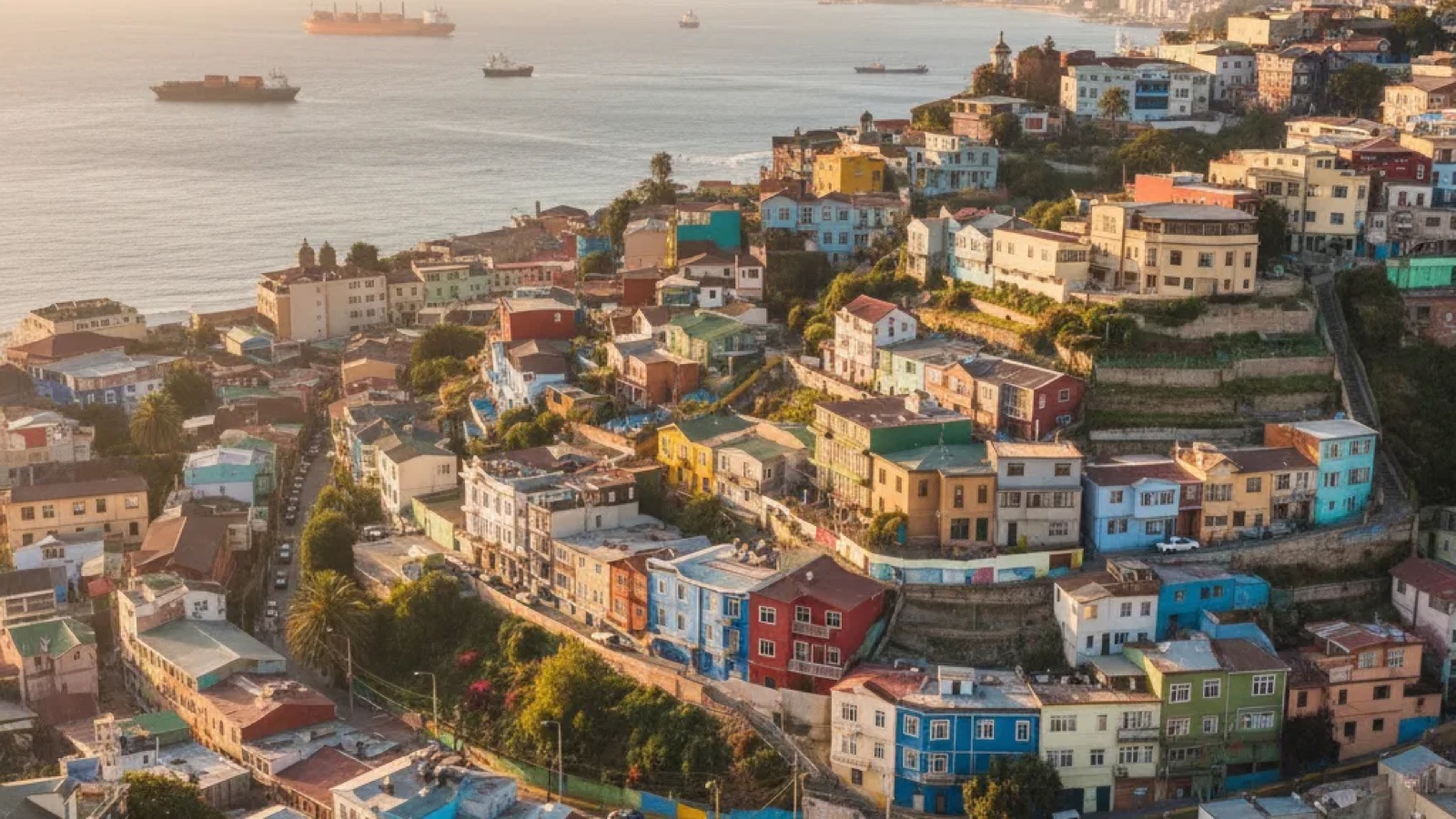
A short bus ride from Santiago lies Valparaíso. "Valpo," as it's known, is a chaotic, beautiful mess. It's a port city that tumbles down a series of steep hillsides (*cerros*) into the sea, a labyrinth of winding alleys, creaking old funiculars (*ascensores*), and homes painted every colour imaginable. It’s a city that feels alive, a living work of art.
The real magic of Valpo is found in getting lost. Pick a hill, any hill, and just start walking. You’ll be rewarded with some of the most intricate and expressive street art you will ever see, from tiny stencils to building-sized murals. Every corner reveals a new view of the colourful chaos and the glittering Pacific below. For photography, the soft light of early morning or late afternoon is your best friend here, making the vibrant colours glow without harsh shadows.
Just next door, Viña del Mar offers a complete contrast. It's Chile's premier beach resort, a place of manicured gardens, modern high-rises, and sandy beaches. While it lacks Valpo's gritty soul, it’s a pleasant place to feel the sea breeze and see how Chileans relax and unwind. The two cities are easily connected by a local train, making it simple to experience both in a day or two.
The Wine Valleys: A Toast to the Andes
Chilean wine is world-famous, and visiting the valleys where it's produced is an essential experience. The two most accessible valleys from Santiago are Casablanca and Colchagua. The Casablanca Valley, located on the way to Valparaíso, is a cool-climate region known for its crisp Sauvignon Blanc and Chardonnay. The morning fog that rolls in from the Pacific creates perfect growing conditions, and tasting a chilled white wine while looking out over the vines is a sublime way to spend an afternoon.
Further south, the Colchagua Valley is Chile's red wine heartland, famous for its powerful Carmenere and Cabernet Sauvignon. The atmosphere here feels more traditional, with historic haciendas and a warmer, sunnier climate. Many wineries offer tours and tastings, often paired with fantastic local food. Organising a trip can be done via tours from Santiago, or by hiring a car for greater flexibility. Even if you're not a massive wine connoisseur, the sheer beauty of the vineyards set against the Andean foothills makes it a worthwhile trip.
The Atacama Desert: Otherworldly Landscapes
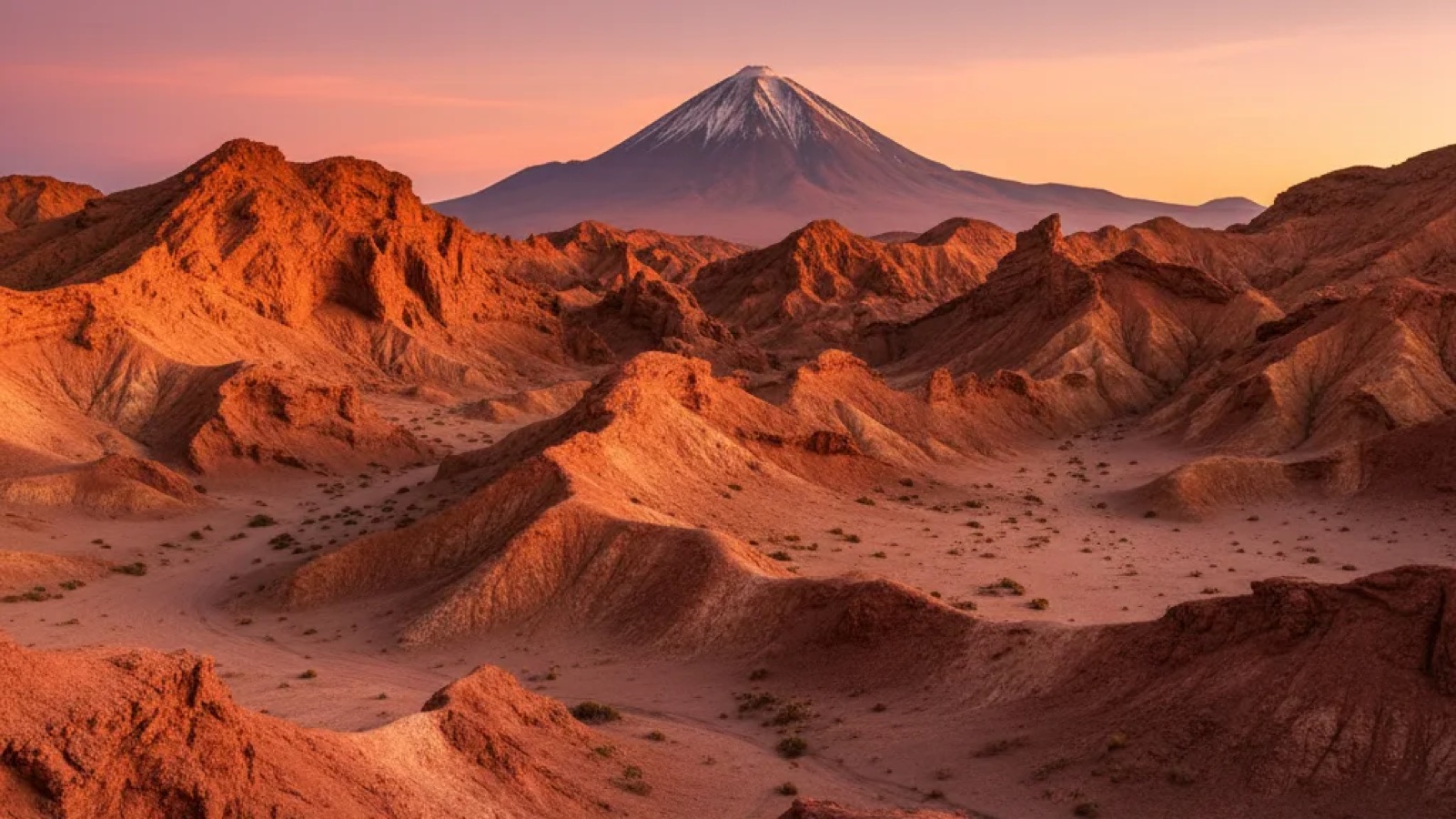
Flying north from Santiago feels like landing on another planet. The Atacama Desert is the driest non-polar desert in the world, a high-altitude plateau of surreal beauty. The hub for all exploration is the dusty adobe town of San Pedro de Atacama. From here, a universe of geological wonders unfolds.
A standout is the pre-dawn drive to the El Tatio geyser field. Standing at over 4,300 metres in the freezing air as columns of steam roar from the earth against the rising sun is utterly primal. Then there's the bizarre beauty of the Valle de la Luna (Valley of the Moon), where salt-encrusted rock formations and giant sand dunes make you feel like you’re walking on Mars. Floating effortlessly in the hyper-saline waters of Laguna Piedra, beside Laguna Cejar (where swimming is no longer allowed), is another must-do. But the ultimate highlight is the night sky. The combination of high altitude, zero light pollution, and dry air creates a breathtaking canopy of stars. You don’t just see stars; you see the thick, milky swirl of our galaxy, a sight that truly puts your place in the universe into perspective.
A word of caution: altitude is a real factor here. San Pedro sits at about 2,400 metres, but many excursions go much higher. Take it easy for your first day or two, drink plenty of water and coca tea, and listen to your body.
The Lake District: Volcanoes, Forests, and Adventure
In stark contrast to the arid north, Chile’s Lake District is a lush, green wonderland of deep blue lakes, temperate rainforests, and perfectly conical, snow-capped volcanoes. The main hubs are Pucón and Puerto Varas, towns that show a distinct German architectural influence from 19th-century settlers. Pucón sits on the shore of Lago Villarrica, under the watchful eye of the active Villarrica Volcano. It's an adventure capital, offering everything from hiking up the volcano (conditions permitting) to white-water rafting and kayaking.
Puerto Varas, on the edge of the enormous Lago Llanquihue, is slightly more tranquil but no less stunning, with picture-perfect views of the Osorno and Calbuco volcanoes. From here, you can explore the Vicente Pérez Rosales National Park, with its emerald-green Petrohué Falls. One of the best things to do in the region is to seek out the *termas* (hot springs), often set in beautiful natural surroundings. Soaking in geothermally heated water after a long day's hike, surrounded by dense forest, is pure bliss.
Chiloé: The Mystical Island
Just off the coast from the Lake District lies the island of Chiloé, a world apart from mainland Chile. This is a place steeped in mythology, with a unique culture and a damp, green landscape that feels almost Irish. It's famous for its iconic wooden churches, 16 of which are UNESCO World Heritage Sites, built by Jesuit missionaries and local craftsmen using incredible shipbuilding techniques. It's also known for its *palafitos* – colourful houses built on stilts over the water in towns like Castro. Chiloé has its own cuisine, its own folklore of forest gnomes and ghost ships, and a quiet, magical rhythm that gets under your skin.
Patagonia: The Wild South
This is the Chile of postcards, the ultimate goal for so many travellers. Chilean Patagonia is a vast, sparsely populated region of glacial fjords, windswept pampas, and jagged granite peaks. The gateway to its most famous park is Puerto Natales, a functional port town that has grown into a bustling hub for trekkers preparing for their adventures in Torres del Paine National Park.
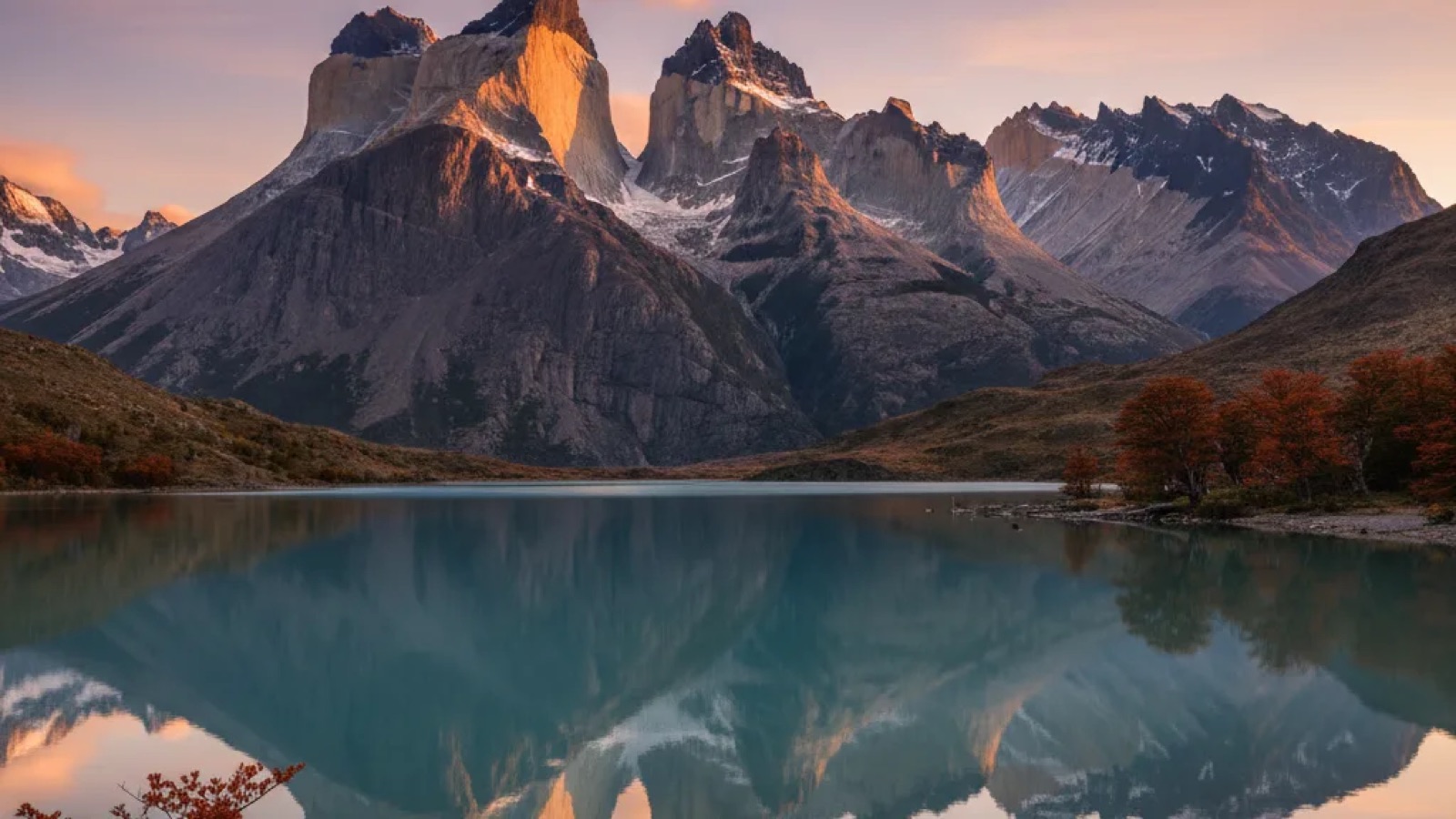
Torres del Paine itself is almost indescribably beautiful. The park is a masterpiece of towering granite horns, brilliant turquoise lakes fed by glacial melt, and sprawling ice fields. The famous W Trek is a multi-day hike that takes you past its most iconic sights: the Grey Glacier, the French Valley, and the base of the towers themselves. The light in Patagonia is a photographer's dream – and challenge. The weather changes in an instant, and the same landscape can look completely different from one minute to the next. The wind is relentless. You need to be prepared for four seasons in a single day, but the reward is witnessing one of the planet's most dramatic and pristine landscapes.
When to Go: Seasons and Crowds
Remember that for anyone in the Northern Hemisphere, the seasons are reversed. Chile's summer is from December to February, and winter is from June to August.
Patagonia
The main trekking season is the southern summer (December to February). This is when you'll have the best chance of good weather and the longest daylight hours. It is also, by far, the most crowded and windiest period. The shoulder seasons are a great alternative: October-November (spring) and March-April (autumn). In spring, you'll see wildflowers, and in autumn, the *lenga* trees turn spectacular shades of red and orange. There are fewer people on the trails, and while the weather is more unpredictable, the trade-off is often worth it. Winter (June to August) is for the truly adventurous and well-prepared, as many services shut down and conditions can be extreme.
Atacama Desert
The Atacama is a year-round destination. It has very little rainfall, ever. The southern summer (Dec-Feb) sees the warmest daytime temperatures but also brings the possibility of the *invierno altiplánico*, or Altiplano winter, which can cause rare afternoon thunderstorms. The winter months (June-August) have beautifully clear skies, but nights can be bitterly, bitterly cold, dropping well below freezing.
Logistics: Transport, Safety, and Language
Transport
Book internal flights with local carriers to get between the main regions. For travelling within regions, like from Santiago to Valparaíso or around the Lake District, Chile has an excellent network of long-distance buses (*turbus*). They are comfortable, safe, and run frequently. If you choose to drive, particularly in Patagonia or over an Andes pass into Argentina, be prepared. Roads can be unpaved gravel (*ripio*), services are few and far between, and weather can change in an instant. Always check road conditions before you set out.
Safety
Chile is generally one of the safer countries in South America. However, like any country, you need to be smart, especially in large cities. Petty theft, such as pickpocketing and bag snatching, can be an issue in crowded areas of Santiago and Valparaíso. Keep your valuables secure and out of sight, don't flash expensive electronics around, and be aware of your surroundings on public transport and in busy markets. Outside the big cities, crime is much less of a concern.
Language
While you can get by with English in tourist hotels and on tours, speaking some Spanish will vastly improve your experience. Chileans are friendly and will appreciate the effort. Be warned, though: they speak very quickly and use a lot of local slang. You’ll hear the word *cachai?* (like "you get me?") at the end of every other sentence. Don't be discouraged; a smile and a phrasebook go a long way.
A Taste of Chile: Food and Drink
Chilean food is hearty, comforting, and makes the most of the country's incredible produce. The *empanada de pino* a baked pastry filled with minced meat, onion, olive, and hard-boiled egg – is a national icon. My absolute favourite is *pastel de choclo*, a comforting corn casserole with a meat filling, similar to a shepherd's pie but with a sweetcorn topping. Given its enormous coastline, the seafood is phenomenal. Head to any local market for ridiculously fresh ceviche, mussels, or the unique *congrio* (conger eel).
And then there's the pisco sour. Both Chile and Peru claim it as their national drink, but the Chilean version is simpler, typically made without egg white. It's a potent and refreshing mix of pisco (a grape brandy), lime juice, and sugar. After a long day of exploring, there’s nothing better than sitting down to a well-made pisco sour and a fresh-from-the-oven empanada.
Explore in Depth
For a more detailed look at Chile's most iconic destinations, including specific trekking routes and day-by-day activity suggestions, check out the dedicated guides:
Frequently Asked Questions
Do I really need to fly between regions in Chile?
For most travellers with limited time, the answer is yes. The distance between Santiago and Calama (for the Atacama) is over 1,500 kilometres, a bus journey of about 20 hours. Santiago to Punta Arenas (for Patagonia) is over 3,000 kilometres. Flying turns these multi-day overland slogs into a few hours in the air, allowing you to spend your precious holiday time exploring the destinations themselves, not just travelling between them. Think of the flights as a necessary part of the adventure in this uniquely long country.
Is it safe to travel alone in Chile?
Yes, Chile is a popular and relatively safe destination for solo travellers, including women. The main tourist trail is well-trodden, and you'll find plenty of other travellers in hostels and on tours. The primary safety concern is petty theft in major cities like Santiago and Valparaíso, so exercise standard urban precautions: be aware of your belongings, avoid walking alone in deserted areas at night, and trust your instincts. Outside the cities, especially in rural Patagonia and the Atacama, safety concerns are minimal.
How difficult is the altitude in the Atacama Desert?
The altitude is a serious consideration. San Pedro de Atacama itself is at 2,400 metres (around 8,000 feet), which is high enough to feel. Many popular excursions, like the El Tatio geysers, go above 4,300 metres. The key is acclimatisation. Plan to have a very relaxed first day in San Pedro. Avoid heavy meals and alcohol, and drink lots of water and the local coca tea. Most people experience mild symptoms like a headache or shortness of breath, but severe altitude sickness can be dangerous. Listen to your body and don't push yourself too hard, too soon.
Can I visit Patagonia in winter?
You can, but it’s a very different and much more challenging trip. The southern winter runs from June to August. Many trails, hotels, and transport services in and around Torres del Paine close down. The weather is extremely cold, with short days and heavy snow. However, for experienced winter hikers or those seeking solitude and dramatic, snow-covered landscapes, it can be magical. The wind also tends to die down. You would need to plan meticulously, have appropriate gear, and likely hire a local guide for any serious trekking.
What should I pack for a trip that covers both the Atacama and Patagonia?
Packing for Chile is a challenge of extremes. You need layers. For Patagonia, you'll need a solid layering system: thermal base layers, a fleece mid-layer, and a waterproof and windproof outer shell (both jacket and pants). A warm hat, gloves, and sturdy, broken-in hiking boots are non-negotiable. For the Atacama, you'll need lightweight, sun-protective clothing for hot days, but also all those warm Patagonian layers for the freezing nights and early morning excursions. Don't forget a swimsuit for hot springs and salt lagoons, plus strong sunglasses and high-SPF sunscreen for both regions.
Final Thoughts
Chile is a country that stays with you. Its landscapes are so monumental, so primal, that they recalibrate your sense of scale. It’s a place that makes you feel small in the best possible way, whether you’re standing under a sky impossibly full of stars in the Atacama or leaning into a gale-force wind on a Patagonian ridge. It’s more than just a collection of beautiful sights; it's an encounter with the raw power of the planet.
From the urban cool of Santiago to the bohemian spirit of Valparaíso, the serene vineyards to the wild frontiers, Chile offers a journey of staggering diversity. It challenges you, it inspires you, and it ultimately rewards you with a profound sense of wonder. It is one of those rare places that exerts an irresistible pull to return, again and again.
More Chile guides
Atacama Desert Guide: Geysers, Salt Flats, Stars
San Pedro de Atacama planned properly: altitude, the classic excursions, stargazing, and how many days you actually need.
Torres del Paine: W Trek and O Circuit Guide
Trekking Torres del Paine: the W versus the O, refugios and camping, the weather, and the planning that has to happen early.