Berlin Travel Guide: History, Neighbourhoods and Food
Berlin on foot and by U-Bahn: the history sites that matter, how the neighbourhoods differ, museum planning, food markets and how many days you actually need.
In this guide
- Quick Facts: Navigating the German Capital
- Iconic Landmarks: From Pariser Platz to the Reichstag
- Museum Island: A Treasury of Art and Antiquity
- Traces of a Divided City: Cold War Landmarks
- Remembrance and Reflection: Powerful History Sites
- Central Hubs and Green Havens
- Berlin Neighbourhoods: Local Life and Vibe
- Day Trip: Potsdam and Sanssouci Palace
- Currywurst, Döner, and Café Culture
- Getting Around and Practical Advice
- Final Thoughts on Berlin
This guide is part of our Germany Travel Guide: Cities, Castles and Regions — start there for the overview, when to go and how to get around.
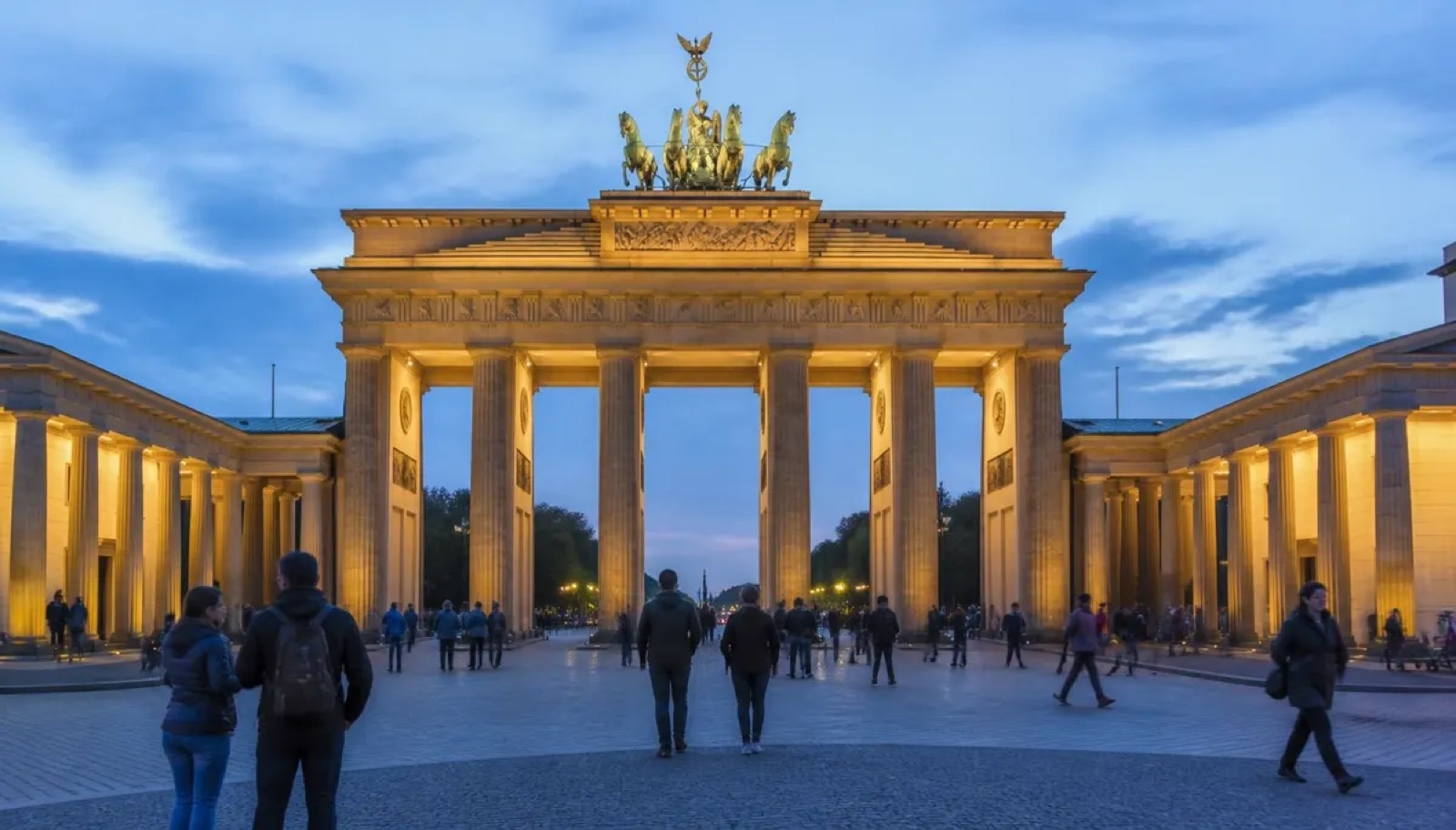
I still remember my first late-autumn evening stepping off the train into the heart of Berlin, the crisp northern air carrying the faint aroma of roasted chestnuts, woodsmoke, and spiced curry ketchup. Golden spotlighting illuminated the sandstone pillars of the Brandenburg Gate, while the faint rumble of an underground train hummed through the granite pavers beneath my boots. As an Australian used to younger, sun-drenched coastal cities, the weight of history hanging in Berlin's cool atmosphere felt almost tangible, yet entirely intoxicating. It is a metropolis where every corner reveals a story written across centuries of triumph, tragedy, division, and ultimate rebirth.
Unlike traditional European capitals defined by a single historic core, Berlin is a sprawling tapestry of distinct neighbourhoods, each functioning almost like a city unto itself. Decades of Cold War separation forged two distinct urban identities, leaving behind double sets of opera houses, grand boulevards, and public squares that continue to enrich the city's modern cultural landscape.
Whether you are tracing the ghostly outline of the former inner-German border, standing face-to-face with ancient treasures on Museum Island, or sipping a flat white in a leafy courtyard in Prenzlauer Berg, Berlin invites you to engage deeply with its past while revelling in its fiercely creative present.
Quick Facts: Navigating the German Capital
- Location: Northeastern Germany, situated along the banks of the Spree and Havel rivers within the flat plains of Brandenburg.
- Currency: Euro (EUR). While credit cards are widely accepted, carrying cash is still recommended for small bakeries, flea markets, and street food stalls.
- Transport Network: Integrated public transit (BVG) comprising the U-Bahn (underground), S-Bahn (suburban rail), MetroTrams, and city buses across three fare zones (A, B, and C).
- Best Time to Visit: May through September for outdoor beer gardens and late sunsets; December for world-famous Christmas markets.
- Language: German. English is fluently spoken across hospitality, cultural venues, and transport networks.
Iconic Landmarks: From Pariser Platz to the Reichstag
Standing at the historic core of Berlin offers an immediate introduction to the dramatic shifts in German political history. The stretch connecting Pariser Platz to the Spree river is packed with architectural monuments that have borne witness to grand royal processions, wartime destruction, and modern reunification.
Brandenburg Gate and Pariser Platz
The Brandenburg Gate (Brandenburger Tor) is Berlin’s defining symbol, constructed in the late 18th century as a neoclassical gateway to the royal avenue of Unter den Linden. Crowned by the magnificent Quadriga—a horse-drawn chariot driven by Victoria, the Roman goddess of victory—this monument stood isolated within the restricted border strip during the Cold War era, visible but inaccessible to residents on either side of the Wall.
Today, the cobblestone expanse of Pariser Platz surrounding the gate bustles with street performers, travellers, and locals. Visiting at dawn offers a quiet, contemplative experience as the first sunlight warms the yellow sandstone columns before the crowds arrive.
The Reichstag Dome
Just a short stroll north of the gate stands the historic Reichstag building, the seat of the German federal parliament (Bundestag). The building’s dramatic modern makeover features an extraordinary glass dome designed by architect Sir Norman Foster, symbolizing transparency in democratic governance.
Walking up the interior helical ramp inside the dome provides panoramic 360-degree views across the city skyline, as well as a direct look down into the parliamentary chamber below. Because access to the roof and dome is tightly regulated, visitors must secure advance bookings via the official Bundestag online portal well before their trip.
Unter den Linden and Bebelplatz
Stretching eastward from Pariser Platz toward the Spree, Unter den Linden is Berlin's most famous historic boulevard, lined with stately lime trees, majestic embassy buildings, and cultural institutions. A leisurely walk along this grand avenue reveals centuries of Prussian architectural heritage.
Adjacent to the boulevard lies Bebelplatz, a public square framed by the State Opera and Humboldt University. Here, visitors find a poignant sunken memorial: a glass floor panel set into the cobblestones revealing empty white bookshelves below, commemorating the notorious 1933 book burnings that took place on this exact spot.
Museum Island: A Treasury of Art and Antiquity
Situated in the middle of the Spree River, the UNESCO World Heritage-listed Museum Island (Museumsinsel) is a remarkable complex of five world-renowned museums, built under successive Prussian monarchs to make art and history accessible to the public.
The Five Great Institutions
Each building on the island houses a distinct chapter of human culture and architectural artistry, making it one of the premier museum complexes in the world:
- Neues Museum: Home to the Egyptian Museum and Papyrus Collection, headlined by the world-famous, breathtaking Bust of Nefertiti displayed in a dedicated domed room.
- Altes Museum: A neoclassical masterpiece displaying classical antiquities from ancient Greece, Etruria, and Rome surrounding a central rotunda modeled on the Pantheon.
- Pergamonmuseum: Famed for its monumental architectural reconstructions, including the Ishtar Gate of Babylon and the Market Gate of Miletus. Note: The museum closed completely in October 2023 for renovation; the north wing is due to reopen in 2027, with full reopening not expected until the late 2030s, so check official schedules prior to visiting.
- Alte Nationalgalerie: Shaped like a Roman temple, housing an exquisite collection of 19th-century paintings and sculptures, including works by Caspar David Friedrich and Impressionist masters.
- Bode-Museum: Located at the northern tip of the island, featuring an astonishing collection of medieval and Renaissance sculptures, Byzantine art, and a vast numismatic collection.
Planning Your Visit to Museum Island
Attempting to explore all five museums in a single day can easily lead to sightseer fatigue. It is best to select two key collections for a morning and afternoon session, taking time to rest along the green lawn of the Lustgarten between visits. timed-entry tickets booked online in advance are strongly recommended during peak travel seasons.
Traces of a Divided City: Cold War Landmarks
From 1961 to 1989, Berlin was physically partitioned by a concrete wall that separated families, political systems, and ideological worlds. Although much of the barrier was torn down following reunification, key memorial sites preserve the sobering memory of this division.
Berlin Wall Memorial at Bernauer Straße
For the most authentic historical perspective on the division, head to the Berlin Wall Memorial (Gedenkstätte Berliner Mauer) along Bernauer Straße. Unlike other sites, this open-air exhibition extends for 1.4 kilometres along the actual former border strip, preserving a complete section of the border fortifications, including the inner and outer walls, a watchtower, and the ground of the former "death strip."
An outdoor exhibition tells the heartbreaking stories of attempted escapes, destroyed apartment blocks, and ghost U-Bahn stations that trains ran through without stopping. The visitor centre across the street offers elevated viewing platforms and comprehensive historical document archives.
East Side Gallery
Located along the banks of the Spree in Friedrichshain, the East Side Gallery represents a vibrant celebration of freedom over division. Stretching for 1.3 kilometres, this continuous section of the Berlin Wall was transformed into the world's longest open-air mural gallery shortly after the border opened.
More than one hundred artists from around the globe painted murals expressing hope, political commentary, and unity. Standout works include the famous depiction of the socialist fraternal kiss between Leonid Brezhnev and Erich Honecker. The gallery remains open around the clock as a free public memorial space.
Checkpoint Charlie
Located at the intersection of Friedrichstraße and Zimmerstraße, Checkpoint Charlie was the most famous military border crossing point between the American and Soviet sectors during the Cold War. It was here that foreign diplomats, military personnel, and non-German tourists entered East Berlin, and where US and Soviet tanks faced off in a tense standoff in late 1961.
While the site today is heavily tourist-focused, with a replica guard house and photo opportunities, the surrounding outdoor display panels and nearby historical exhibitions provide crucial context regarding the perilous nature of Cold War diplomacy.
Remembrance and Reflection: Powerful History Sites
Berlin confronts the dark chapters of its 20th-century history with remarkable candour and institutional restraint. Visiting these sites requires a reflective mindset, allowing space to absorb the weight of historical memory.
Memorial to the Murdered Jews of Europe
Situated near the Brandenburg Gate, the Memorial to the Murdered Jews of Europe covers a vast field with 2,711 charcoal-grey concrete slabs (stelae) arranged in a rigid grid pattern across a gently undulating slope. Designed by architect Peter Eisenman, the design produces a profound sense of isolation and disorientation as you walk deeper into the narrow, sloping corridors between the concrete blocks.
Beneath the outdoor field lies the underground Information Centre, which offers a deeply moving personal perspective through letters, diaries, and photographs documenting individual victims and families affected by the Holocaust. Silence and respectful behaviour are observed throughout the memorial site.
Topography of Terror
Positioned on the site of the former headquarters of the Gestapo, the SS, and the Reich Security Main Office during World War II, the Topography of Terror (Topographie des Terrors) is one of Berlin's most visited documentation centres. The permanent exhibition details the apparatus of state-sponsored terror, persecution, and propaganda orchestrated from this exact ground.
An outdoor wall of documentation panels runs along exposed cellar walls of the former Gestapo building, right alongside a preserved length of the outer Berlin Wall, illustrating how layers of mid-20th-century history rest directly upon one another.
Central Hubs and Green Havens
Beyond its monumental sights, Berlin is an amazingly green and spacious city, offering vast urban parks and grand public squares where residents gather to socialize and unwind.
Alexanderplatz and the Fernsehturm
Known affectionately as "Alex," Alexanderplatz serves as the bustling commercial heart of former East Berlin. Dominated by socialist-era urban planning, the square is framed by vast retail hubs and the famous World Clock (Weltzeituhr), which displays current times across cities worldwide.
Towering over the square is the Fernsehturm (TV Tower), Berlin’s tallest structure. Built in the late 1960s as a symbol of East German engineering, its sphere houses an observation deck and revolving restaurant that offer unmatched views across the entire city basin on clear days.
Tiergarten and the Victory Column
The Tiergarten is Berlin's green heart, a sprawling 520-acre urban park featuring shaded forest paths, landscaped lawns, idyllic winding canals, and traditional beer gardens. Originally a royal hunting ground, it now serves as an urban sanctuary for joggers, picnickers, and cyclists.
At the centre of the park rises the Victory Column (Siegessäule), crowned by a shimmering golden statue of Victoria, goddess of victory. Energetic visitors can ascend the spiral staircase inside the column to enjoy spectacular views straight down the central axis toward the Brandenburg Gate.
Potsdamer Platz and Modern Architecture
Once the busiest traffic intersection in Europe during the 1920s, Potsdamer Platz was rendered a desolate wasteland split by the Wall during the Cold War. Following reunification, it became the largest building site in Europe, transformed into a dazzling complex of modern glass skyscrapers, entertainment complexes, and shopping arcades.
The iconic tent-like roof construction of the Sony Center lights up in brilliant colours at night, creating an impressive setting for evening dining, cinema visits, or simply marveling at modern architectural engineering.
Charlottenburg Palace
For a taste of royal Prussian splendor, head west to Charlottenburg Palace (Schloss Charlottenburg). Built at the end of the 17th century as a summer residence for Sophie Charlotte, the first Queen consort in Prussia, this grand Baroque and Rococo palace complex features lavishly furnished royal apartments, porcelain cabinets, and ballroom halls.
The surrounding palace gardens stretch down toward the Spree River, designed in a mix of formal French geometric parterres and romantic English landscape styles, perfect for a peaceful afternoon stroll.
Berlin Neighbourhoods: Local Life and Vibe
To truly understand Berlin, you must step away from the major historical monuments and explore its distinct residential quarters (known locally as Kiez). Each neighbourhood possesses its own unique rhythm, architectural charm, and community spirit.
Kreuzberg and Neukölln
Located in southern Berlin, Kreuzberg and its neighbouring quarter Neukölln are world-famous for their multicultural roots, alternative arts scenes, and energetic street life. Historically working-class districts, they evolved into vibrant hubs for international creatives, students, and long-standing Turkish-German communities.
A favourite afternoon routine involves strolling along the Maybachufer canal bank, taking in the lively bi-weekly open-air markets, exploring independent vintage shops, or enjoying flat whites at cozy waterfront cafés.
Prenzlauer Berg
Situated north of Mitte in former East Berlin, Prenzlauer Berg is characterized by beautifully restored 19th-century residential buildings (Altbauten), cobbled tree-lined streets, and picturesque public squares like Kollwitzplatz.
Once a bohemian stronghold for artists and dissidents prior to the fall of the Wall, the area has transformed into a peaceful, family-friendly neighbourhood filled with independent boutiques, craft bakeries, third-wave coffee roasters, and leafy playground parks.
Tempelhofer Feld and Mauerpark
Berliners love repurposing urban spaces, and nowhere is this more evident than at Tempelhofer Feld. This former airport—site of the famous 1948–1949 Berlin Airlift—was decommissioned and transformed into one of the world's largest inner-city public parks. Today, the endless asphalt runways are packed with rollerbladers, wind-skaters, community gardeners, and families flying kites.
On Sundays, head to Mauerpark on the border of Prenzlauer Berg and Wedding. The park transforms into a massive flea market filled with vintage clothes, mid-century furniture, and vinyl records, alongside the famous outdoor amphitheatre karaoke sessions that attract thousands of cheering spectators during warm summer afternoons.
| Neighbourhood | Primary Vibe | Best Suited For | Key Highlights |
|---|---|---|---|
| Mitte | Historic, polished, cultural | First-time visitors, museum enthusiasts | Museum Island, Brandenburg Gate, Unter den Linden |
| Kreuzberg | Alternative, creative, multicultural | Foodies, street art lovers, night owls | Paul-Lincke-Ufer, street food halls, canal walks |
| Prenzlauer Berg | Leafy, relaxed, historic architecture | Families, coffee lovers, vintage shoppers | Kollwitzplatz, restored Altbau streets, Mauerpark |
| Neukölln | Edgy, bohemian, international | Young travellers, budget dining, indie art | Weserstraße bars, Tempelhofer Feld access, canal paths |
| Charlottenburg | Upscale, classic West Berlin, elegant | Luxury shoppers, traditional dining, palace gardens | Charlottenburg Palace, Kurfürstendamm boulevard |
Day Trip: Potsdam and Sanssouci Palace
Located just 25 kilometres southwest of central Berlin, the historic city of Potsdam serves as the regional capital of Brandenburg and offers a magnificent getaway into royal German heritage. Direct regional trains and S-Bahn line S7 connect central Berlin directly to Potsdam in under forty minutes.
The city's crowning jewel is the sprawling Sanssouci Park, created as the summer retreat for Frederick the Great, King of Prussia. Highlights within the park complex include:
- Sanssouci Palace: An exquisite single-storey Rococo villa perched dramatically atop terraced vineyard gardens, built as a place for the king to relax "without cares" (sans souci).
- The New Palace (Neues Palais): A massive, ornate 18th-century Baroque palace located at the western end of the park, featuring vast banquet halls and over two hundred sumptuously decorated rooms.
- The Dutch Quarter (Holländisches Viertel): Located in Potsdam's town centre, featuring red-brick gabled townhouses built in the 18th century for Dutch craftspeople, now housing boutique shops and cozy tearooms.
Currywurst, Döner, and Café Culture
Berlin’s food culture reflects its diverse population and relaxed urban spirit. Rather than formal dining alone, much of the city's food identity thrives on vibrant street food counters and independent café life.
The iconic Currywurst—a steamed then fried pork sausage sliced into bite-sized pieces and smothered in a warm, spiced tomato ketchup sprinkled with curry powder—was invented in Berlin in the late 1940s. Served alongside crispy French fries with mayonnaise, it remains the classic fast food snack enjoyed at street kiosks across the city.
Equally integral to Berlin’s culinary identity is the Döner Kebab. Adapted by Turkish immigrants in West Berlin during the early 1970s, the local version features thinly shaved rotisserie meat packed into crispy warm flatbread, layered with fresh red cabbage, lettuce, tomatoes, cucumbers, and a choice of garlic, herb, or spicy chili sauces.
Alongside its street food traditions, Berlin boasts a booming speciality coffee scene. Across neighbourhoods like Prenzlauer Berg, Kreuzberg, and Mitte, independent roasteries serve masterfully pulled espressos and single-origin filter coffees in industrial-chic café spaces, making a slow morning coffee an essential ritual for visitors.
Getting Around and Practical Advice
Berlin's public transit system, managed by the BVG and Deutsche Bahn, is exceptionally efficient, clean, and comprehensive. Understanding how to navigate it ensures smooth travel across the sprawling metropolitan area.
Public Transport: U-Bahn, S-Bahn, and Trams
The transport network is divided into three geographical zones:
- Zone A: Inner city area bounded by the S-Bahn ring rail line (includes major historic sights).
- Zone B: Outside the S-Bahn ring, up to the city limits.
- Zone C: Surrounding area up to 15 km outside Berlin, including the city of Potsdam and Berlin Brandenburg Airport (BER).
Travel tickets must be purchased before boarding and validated by stamping them in the small yellow or red stamping machines located on railway platforms or inside buses and trams. Transport marshals conduct regular spot-checks, and unvalidated tickets carry steep fines. For short visits, day passes covering zones A and B generally offer the best value and flexibility.
Seasonal Considerations
Berlin changes dramatically with the passage of the seasons. Spring and summer bring the city outdoors: canal banks pack out with evening crowds, beer gardens hum under chestnut trees, and outdoor music festivals pop up in green parks.
Winter brings shorter days and colder temperatures, but compensates with cozy winter charm. From late November through December, public squares across Berlin transform into atmospheric Christmas Markets (Weihnachtsmärkte), filled with wooden stalls selling hand-carved crafts, steaming mugs of spiced mulled wine (Glühwein), and sweet roasted almonds.
Final Thoughts on Berlin
Berlin is a city that never stands still, continuously reshaping its identity while honouring the complex layers of its history. From the solemn dignity of its Cold War monuments and ancient museum treasures to the creative energy pulsing through its residential streets, the German capital leaves an indelible mark on everyone who wanders its avenues.
Take your time, rent a bicycle, linger over coffee in a neighbourhood square, and allow Berlin’s unique blend of raw history and dynamic modernity to unfold naturally around you.