Germany Travel Guide: Cities, Castles and Regions
Germany's regions and major cities, castles, scenic roads and the Alps, festivals, food and beer, trains and the autobahn, seasons and suggested routes.
In this guide
- Quick Facts: Germany
- Regional Character and the 16 Federal States
- Exploring Germany's Iconic Cities
- Fairy-Tale Castles, Scenic Roads, and Alpine Peaks
- Festivals and Festive Traditions
- German Food, Beer, and Bakery Culture
- Getting Around: Trains, Autobahn, and Transit
- Seasons and When to Visit
- Suggested Regional Travel Routes
- Practical Tips for Travelling in Germany
- Final Thoughts: Embracing Germany's Endless Variety
- Explore Germany in Depth: My Detailed Guides
- Related reading
- Explore in Depth
Step out of Munich’s Hauptbahnhof on a crisp autumn morning and the air practically snaps with fresh energy, carrying the unmistakable scent of freshly baked sourdough pretzels and caraway. There is an immediate, grounding warmth to Germany that quickly dismantles any tired stereotypes about rigid formality. From high-speed trains through timber-framed villages to cruises along the winding Moselle River and Berlin’s creative neighbourhoods, this multifaceted heart of Europe is easy to fall in love with.
Germany is a country of extraordinary contrasts, where hyper-modern engineering and contemporary art thrive alongside centuries of preserved folk tradition. You can spend your morning admiring world-class modern architecture in a booming financial capital, and by late afternoon find yourself sipping cold beer beneath leafy chestnut trees in a centuries-old garden. Beyond the iconic landmarks lies a canvas of 16 distinct federal states, each fiercely proud of its unique cultural identity, regional dialect, and local culinary heritage.
Whether you are drawn by the majestic contours of the Bavarian Alps, the romantic allure of fairy-tale castles perched above misty forests, or the ethereal magic of winter Christmas markets, Germany rewards curiosity at every single turn. This guide brings together practical advice to help you navigate this endlessly captivating nation effortlessly.
Quick Facts: Germany
- Capital: Berlin
- Official Language: German (High German / Hochdeutsch)
- Currency: Euro (€)
- Visa Policy: Schengen Area (check official government resources prior to departure for entry and passport validity rules)
- Primary Transport: Deutsche Bahn rail network, Autobahn highway system, municipal U-Bahn and S-Bahn networks
- Best Time to Visit: May to September for outdoor exploration and warm days; late November through December for festive holiday markets
Regional Character and the 16 Federal States
To truly understand Germany, one must realise that it is not a monolithic culture, but rather a federation of 16 distinct states (Bundesländer). Each state possesses a unique historical background, regional dialect, and distinct culinary flavour, making a journey across state lines feel like stepping into a whole new country.
North vs South: Maritimes to Mountain Crests
In northern coastal states like Hamburg, Schleswig-Holstein, and Lower Saxony, maritime traditions dictate daily life. Architecture favours deep red brickwork, menus feature fresh herring and smoked seafood, and the local tone is famously understated yet deeply welcoming. Moving south into Bavaria and Baden-Württemberg, the flat northern plains give way to rolling foothills and dramatic Alpine summits. Here, life revolves around leafy outdoor beer gardens, alpine brass music, hearty home-style cooking, and deeply cherished folk festivals.
East vs West: Cultural Heritage and Modern Identity
The western states along the Rhine and Ruhr valleys represent Germany's industrial and trade backbone, celebrated for festive carnival celebrations, warm hospitality, and terraced river vineyards. In contrast, eastern states such as Saxony, Thuringia, and Brandenburg showcase magnificent baroque architecture, centuries of classical musical history, and compelling modern narratives shaped by the late twentieth century. Exploring both sides offers a rich understanding of how heritage and innovation intertw across the nation.
Exploring Germany's Iconic Cities
Germany’s urban hubs are remarkably diverse. Rather than a single city dominating national life, the country relies on a balanced network of powerful, creative, and historic urban centres.
Berlin: History, Art, and Reinvention
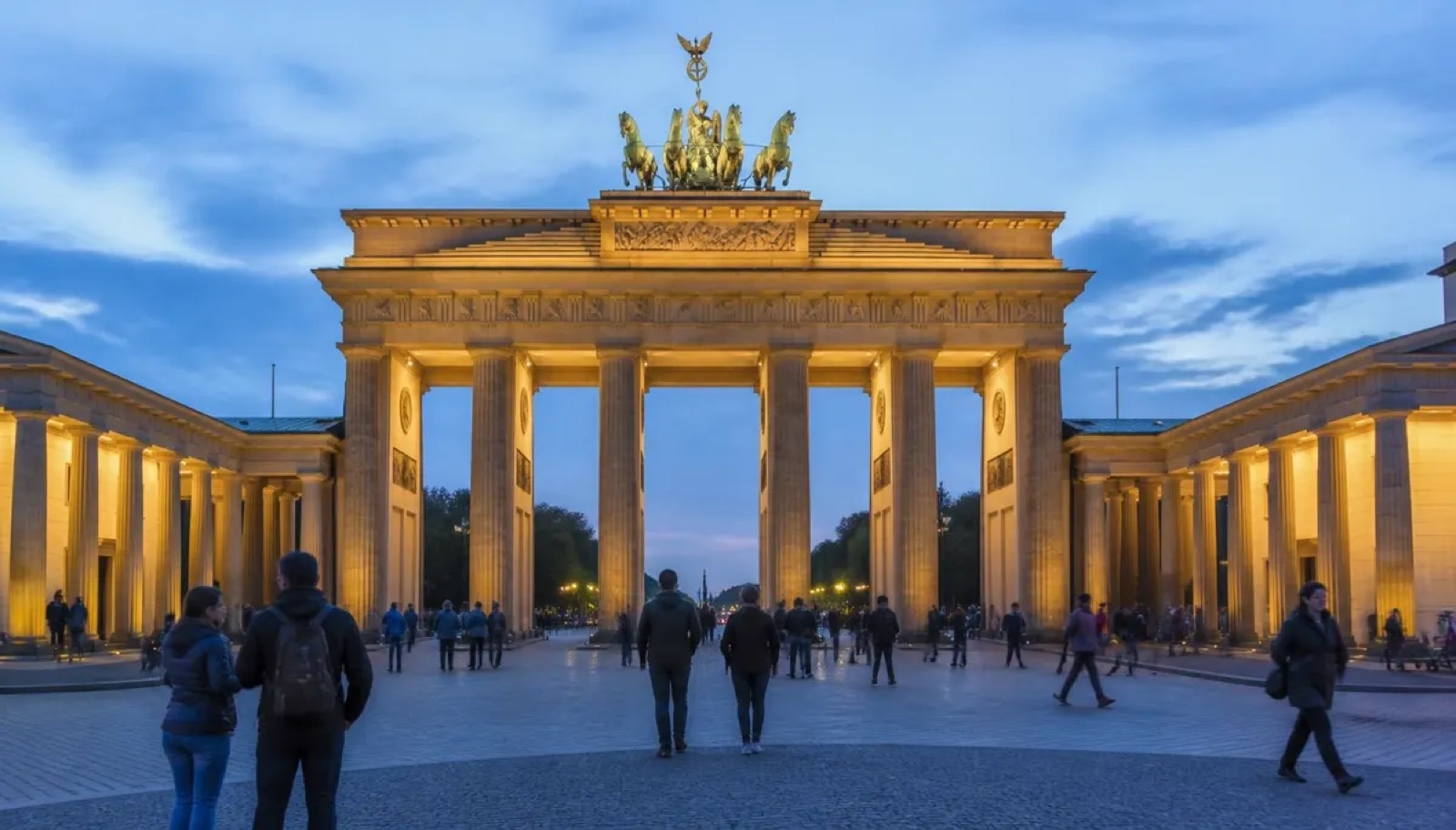
The German capital is an endlessly fascinating metropolis that wears its complex history openly. Walking through Berlin feels like exploring an expansive museum, where surviving fragments of the Berlin Wall at the East Side Gallery sit in stark contrast to the striking glass dome of the renovated Reichstag building. Yet Berlin is equally defined by its wide green spaces, relaxed cafe scene, and boundary-pushing creative energy.
Every neighbourhood (Kiez) retains a distinct personality. You can spend a quiet morning exploring the historic galleries and cobbled streets of Mitte, wander through the leafy residential squares and independent boutiques of Prenzlauer Berg, or experience the vibrant multicultural street life in Kreuzberg and Neukölln.
Munich: Bavarian Elegance and Gateway to the Alps
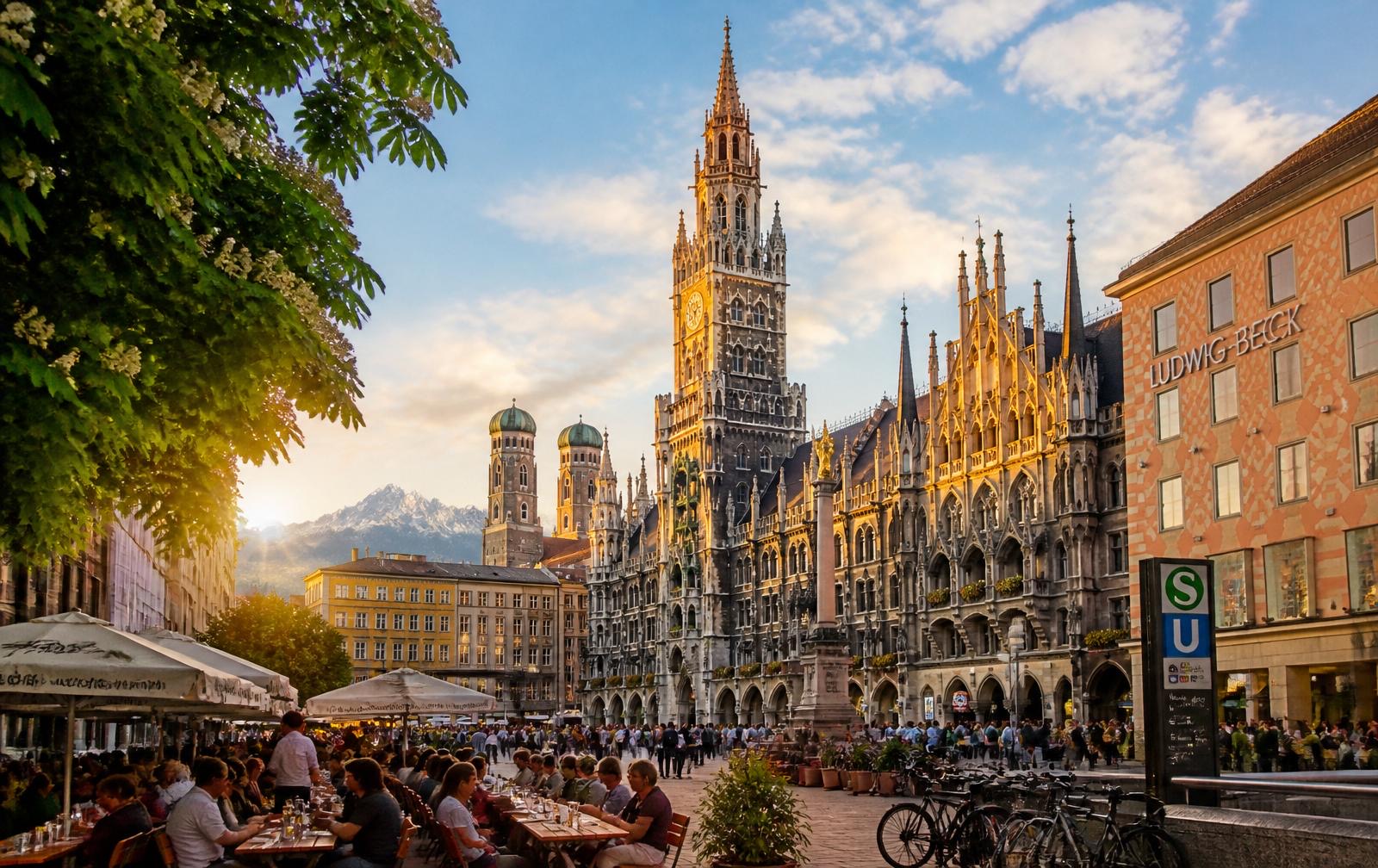
Munich (München) offers a striking contrast to the capital. Polished, affluent, and surrounded by nature, the Bavarian capital seamlessly balances high art with relaxed living. The central pulse of the city is Marienplatz, where visitors gather to watch the mechanical figurines of the historic Glockenspiel perform atop the New Town Hall.
A brief stroll leads to the vast Englischer Garten, a urban park larger than New York's Central Park, where locals gather along the riverbanks to watch brave surfers tackle the standing wave of the Eisbach stream. No stay in Munich is complete without sitting at a wooden table under the chestnut trees of a neighbourhood beer garden, enjoying a large soft pretzel alongside a crisp lager.
Hamburg: Harbour Energy and Brick Architecture
Located in the north along the River Elbe, Hamburg is Germany's historic maritime gateway. As a historic Hanseatic city-state, Hamburg is defined by water, boasting more bridges than Venice and Amsterdam combined. The UNESCO-listed Speicherstadt district, with its soaring red-brick warehouses sitting above narrow canals, provides a dramatic setting for morning walks, while the futuristic Elbphilharmonie concert hall dominates the modern harbour skyline.
Cologne: Gothic Splendour and Rhine Hospitality
Rising grandly above the skyline of Cologne (Köln) is the majestic twin-spired Cologne Cathedral (Kölner Dom), a masterpiece of Gothic architecture that took over six centuries to complete. Set along the banks of the Rhine River, Cologne is world-famous for its cheerful, open hospitality, energetic Carnival season, and unique local beer culture centered around Kölsch—a light, top-fermented beer served in tall, slender glasses by traditional waiters known as Köbes.
Dresden and Leipzig: Saxon Cultural Gems
In the eastern state of Saxony lie two of Germany's most captivating cultural capitals. Dresden, historically known as "Florence on the Elbe," features painstakingly restored baroque wonders such as the grand Frauenkirche and the Zwinger Palace. Nearby Leipzig has developed a reputation as a dynamic centre for contemporary art and youth culture, grounded in its deep classical music heritage associated with Johann Sebastian Bach and Felix Mendelssohn.
Frankfurt: Modern Skyline and Wine Taverns
While frequently viewed purely as a high-rise financial centre and global transit hub, Frankfurt am Main holds delightful cultural surprises. Just across the river from the glittering skyscrapers lies the historic district of Sachsenhausen. Here, cosy traditional taverns serve tart Apfelwein (apple wine) poured from traditional stoneware jugs called Bembel, accompanied by local specialities served with green herb sauce (Grüne Soße).
Fairy-Tale Castles, Scenic Roads, and Alpine Peaks
Beyond the cities, the German countryside unfolds into timeless landscapes of fairy tales. Rolling river valleys, thick pine woodlands, and jagged mountain ridges are seamlessly connected by iconic scenic drives and rail corridors.
Neuschwanstein Castle and the Bavarian Alps
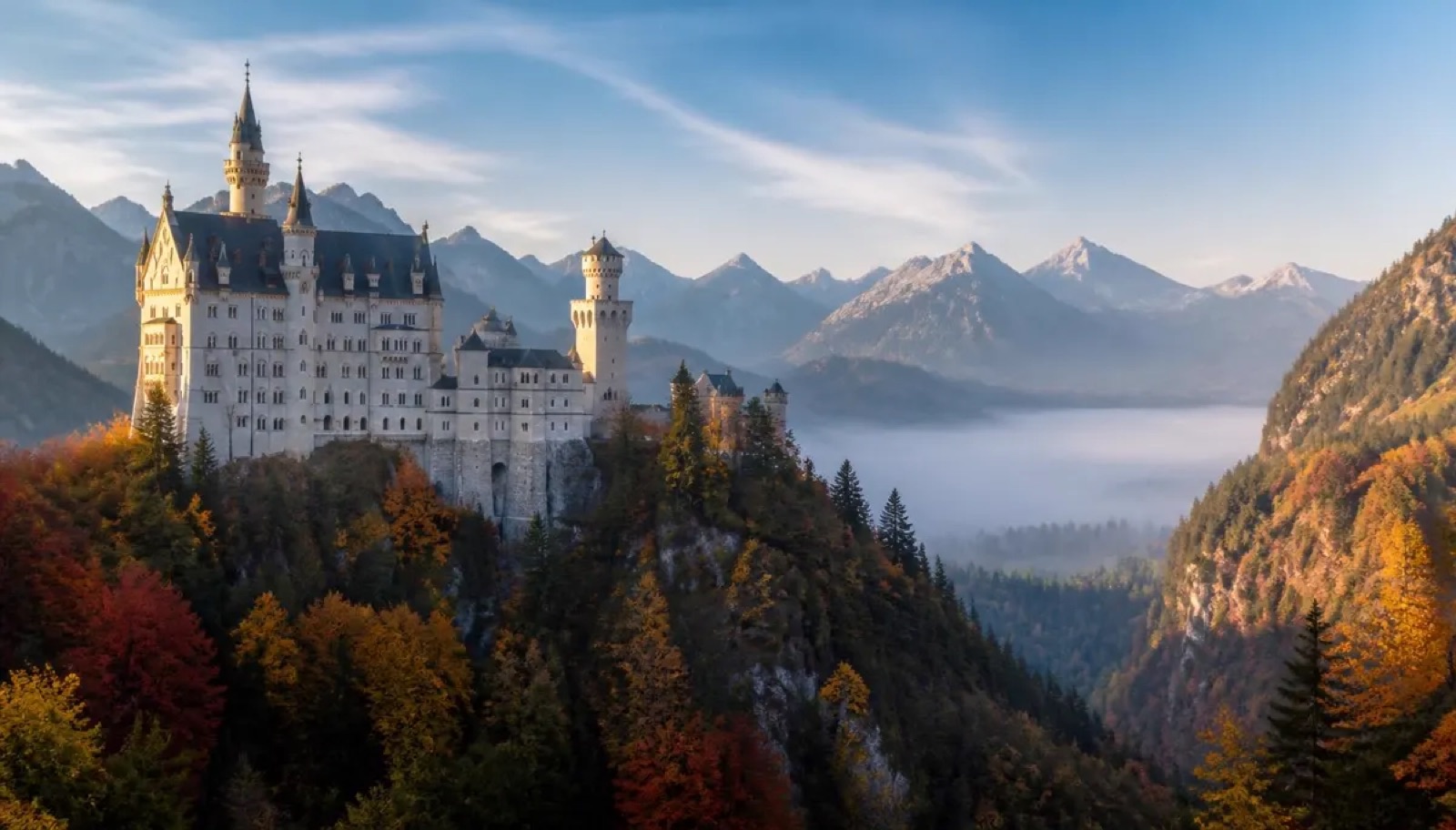
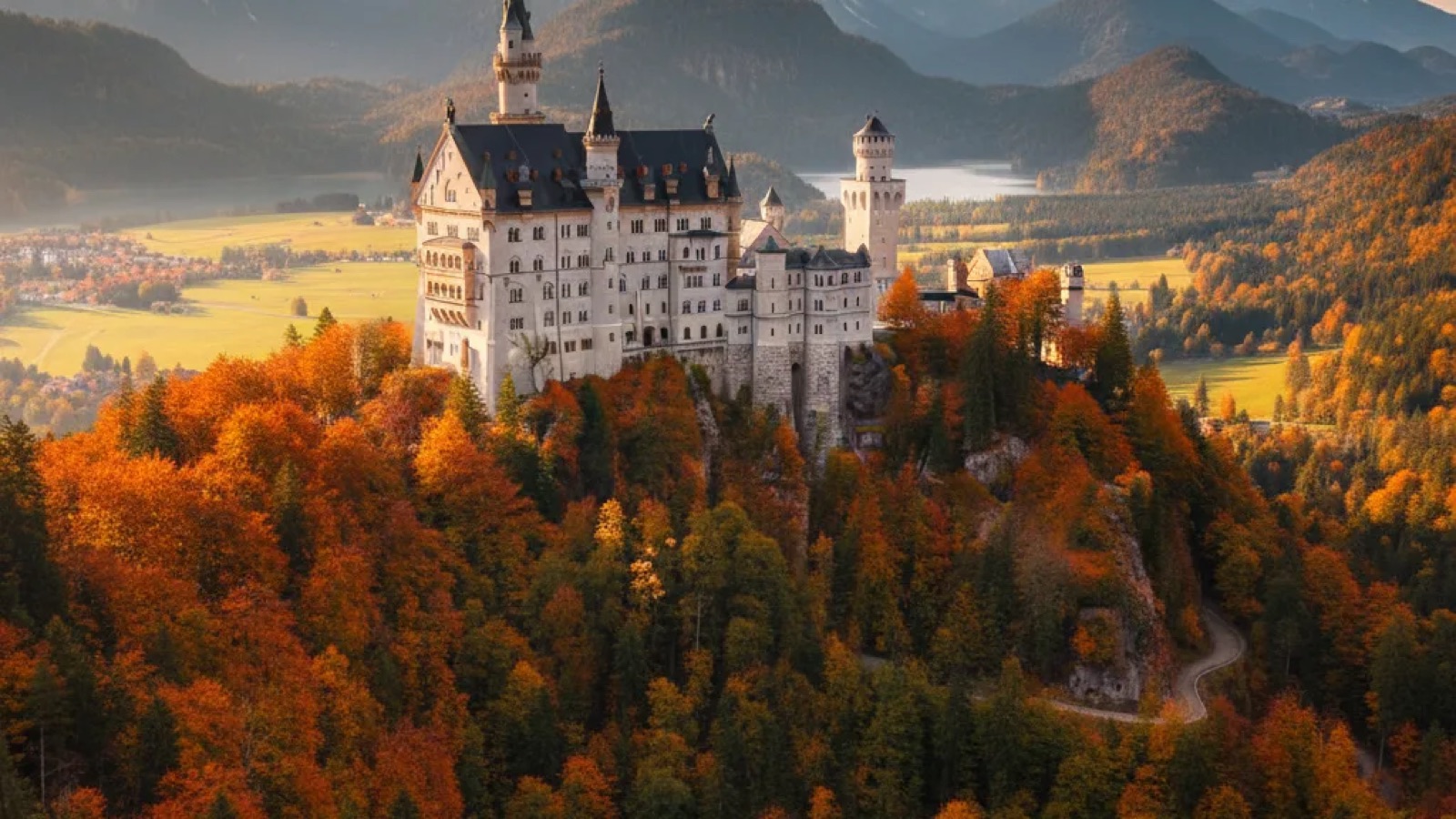
Perched high on a rocky ridge above the village of Hohenschwangau in southern Bavaria, Neuschwanstein Castle remains the archetype of romantic palace design. Commissioned in the 19th century by King Ludwig II as an extravagant personal sanctuary, its soaring white towers set against dramatic Alpine peaks inspired modern animation iconography. Standing on the Marienbrücke bridge as morning mist lifts off the surrounding pines is an extraordinary experience.
The surrounding region of the Bavarian Alps offers outdoor recreation across every season. Key highlights include Garmisch-Partenkirchen, sitting in the shadow of the Zugspitze—Germany's highest mountain peak—and the tranquil, emerald waters of Lake Königssee located within Berchtesgaden National Park.
The Romantic Road and Rothenburg ob der Tauber
The Romantic Road (Romantische Straße) is Germany's most famous scenic travel corridor, winding through Bavaria from Würzburg down to Füssen. The ultimate highlight along this historic route is Rothenburg ob der Tauber, an exceptionally preserved walled medieval town. Walking along its timber-framed alleyways, past steep gables and flower-filled window boxes, feels like stepping directly into the Middle Ages.
The Black Forest (Schwarzwald)
Tucked into southwest Germany near the French border, the Black Forest is a region of dense evergreen woods, deep farm valleys, and sunlit ridges. Renowned as the historic origin of hand-carved cuckoo clocks and rich cherry gateau, the region is a paradise for hikers and outdoor enthusiasts. Base yourself in historic thermal spa towns like Baden-Baden or the sunny, eco-conscious university city of Freiburg to access miles of clear forest trails.
Moselle and Rhine Wine Valleys
Carved by winding rivers flanked by sheer, terraced vineyards, the Rhine and Moselle river valleys feature some of Europe's most dramatic scenery. Perched high above the water sit remarkably preserved medieval strongholds such as Burg Eltz and Marksburg Castle. Exploring these valleys via river ferry or scenic train, stopping off at quiet wine-making villages like Cochem and Bernkastel-Kues to sample local Riesling, is a highlight of European travel.
Baltic and North Sea Coasts
Germany's northern coastline delivers a fresh maritime atmosphere. Along the Baltic coast, elegant 19th-century resort towns feature white wooden beach boardwalks and classic hooded wicker beach chairs (Strandkörbe). The nearby island of Rügen features dramatic white chalk cliffs rising over blue waters, while the North Sea coast is defined by the vast mudflats of the Wadden Sea, a UNESCO site perfect for guided tidal walks.
Festivals and Festive Traditions
German cultural life is paced by cherished annual traditions that bring communities together in celebration throughout the year.
Oktoberfest: Conviviality and Bavarian Heritage
Held every year in Munich on the sprawling Theresienwiese grounds, Oktoberfest is the world’s largest folk festival (Volksfest). Starting in mid-September and running into early October, the event brings millions of guests together inside grand beer halls constructed by Munich's historic breweries. Beyond the beer, the festival celebrates regional culture through brass bands, traditional Bavarian attire (Lederhosen and Dirndls), and incredible food.
Christmas Markets (Weihnachtsmärkte)
From late November through Christmas Eve, towns and cities across Germany transform into magical holiday displays. Historic cobblestone squares fill with hand-crafted wooden stalls glowing under soft holiday lights. Visitors gather to browse hand-carved ornaments, sip steaming mugs of spiced hot wine (Glühwein), and sample warm gingerbread (Lebkuchen). Classic market destinations include Nuremberg's Christkindlesmarkt, Dresden's historic Striezelmarkt, and atmospheric urban markets across Cologne and Rothenburg.
German Food, Beer, and Bakery Culture
German food culture goes far beyond simple meat and potatoes, offering rich regional variation, an unyielding dedication to artisan baking, and precise brewing standards.
Hearty Regional Specialities
Traditional German dishes rely on high-quality seasonal ingredients. Classics include tender Sauerbraten (marinated pot roast), golden crisp Schnitzel, and regional sausages ranging from fine white Münchner Weißwurst to spiced Thüringer Rostbratwurst. Springtime heralds the arrival of Spargelzeit (white asparagus season), when tender stalks served with butter or hollandaise take pride of place on restaurant menus nationwide.
The Sacred German Bakery (Bäckerei)
Breadmaking in Germany is a revered craft listed (since 2014) on Germany's national inventory of intangible cultural heritage, compiled by the German Commission for UNESCO. A neighbourhood Bäckerei serves as the daily pulse of local life, offering a huge assortment of dark sourdough breads (Krustenbrot), seed-crusted breakfast rolls (Brötchen or Semmeln), and soft, twisted pretzels. A fresh roll filled with local butter and cheese remains the quintessential local breakfast.
Beer Purity and Regional Brew Styles
Brewing traditions in Germany are historically anchored by the Reinheitsgebot (Beer Purity Law), which traditionally dictated that beer could only be brewed using water, barley, and hops. Distinct regional beverage traditions flourish across the country:
| Region / City | Local Beverage Style | Flavour Profile & Serving Tradition |
|---|---|---|
| Bavaria (Munich) | Helles & Weißbier | Crisp, malty golden lagers or naturally hazy, aromatic wheat beers served in large glassware or litre mugs (Maß). |
| Cologne | Kölsch | Clear, light-bodied, top-fermented beer served continuously in slender 0.2-litre cylindrical glasses (Stange). |
| Düsseldorf | Altbier | Copper-coloured, hop-forward dark ale traditional to the Lower Rhine region, served in small straight glasses. |
| Frankfurt (Hesse) | Apfelwein (Ebbelwoi) | Tart, crisp cider poured from traditional diamond-patterned stoneware pitchers into ribbed glassware. |
| Berlin | Berliner Weisse | Refreshing, tart, low-alcohol wheat beer often customized with sweet woodruff (green) or raspberry (red) syrup. |
Getting Around: Trains, Autobahn, and Transit
Germany features one of the world's most advanced, efficient, and well-connected transport networks, making independent travel remarkably straightforward.
Deutsche Bahn and High-Speed Rail
The national rail network operated by Deutsche Bahn (DB) connects major metropolitan centres and small rural towns. Sleek, high-speed ICE (InterCity Express) trains zip between major hubs like Frankfurt, Munich, Berlin, and Hamburg at high speeds, offering quiet, comfortable travel with onboard dining. Regional trains (RE and RB) service smaller regional routes. Fares are generally significantly lower when booked well in advance. Check official railway timetable channels prior to your day of travel for up-to-date schedule information and seat reservations.
Driving the Autobahn Network
Renting a vehicle to navigate Germany’s famous Autobahn highway system offers exceptional freedom, particularly when exploring rural areas like the Black Forest, Alpine valleys, or river wine corridors. Speed limits do exist across many sections of the highway and are clearly indicated by round white speed signs outlined in red. Outside restricted zones, recommended speed guidelines apply. Strict lane discipline is required by law: the left lane is exclusively reserved for passing.
Municipal Transit Networks
German cities boast integrated public transit networks that coordinate local services into a single fare system. These systems comprise the U-Bahn (underground metro), S-Bahn (suburban commuter rail), streetcars (trams), and buses. Standard practice requires travellers to validate single-use transit tickets in small stamping machines on platforms or onboard before starting their journey.
Seasons and When to Visit
Germany is a true year-round travel destination, with distinct seasonal shifts offering unique travel experiences.
- Spring (March to May): Crisp, pleasant temperatures, green parklands, and blooming fruit orchards. Excellent conditions for urban sightseeing before summer crowds arrive.
- Summer (June to August): Warm and sunny conditions ideal for outdoor dining, swimming in pristine lakes, and attending open-air summer festivals. This is peak tourist season across major destinations.
- Autumn (September to November): Dramatic autumn foliage across deep forests, wine harvest festivals along river valleys, and Oktoberfest celebrations. Crisp daytime temperatures make outdoor hiking ideal.
- Winter (December to February): Festive holiday lights and cheerful atmosphere at winter Christmas markets throughout December. Colder conditions bring snow to higher elevations, opening up alpine winter sports.
Suggested Regional Travel Routes
To help structure your journey, these recommended regional itineraries highlight the diversity of the country.
1. The Bavarian & Alpine Highlights Route (7–10 Days)
Begin in historic Munich to enjoy iconic museum precincts, vibrant squares, and shade-dappled beer gardens. Travel north on a day excursion to walled Rothenburg ob der Tauber before heading south toward the majestic Alps. Visit Neuschwanstein Castle near Füssen, ride high above Garmisch-Partenkirchen, and wrap up your journey amid the mountain scenery surrounding Lake Königssee.
2. Imperial & Cultural East Route (7 Days)
Start in modern Berlin for three days exploring world-class contemporary galleries, historic landmarks, and distinct urban neighbourhoods. Board a high-speed train south to Leipzig to experience its classical music roots and flourishing contemporary arts district, before finishing in grand Dresden to admire restored baroque architecture along the River Elbe.
3. Classic Rhine & Black Forest Route (10 Days)
Arrive in Frankfurt and travel west into the scenic Rhine Valley. Take a picturesque river cruise past cliffside castles and terraced vineyards, continuing north toward the grand cathedral city of Cologne. Turn south to enter the dense evergreen landscape of the Black Forest, using the historic, sunshine-filled city of Freiburg as your base for countryside walks and regional dining.
Practical Tips for Travelling in Germany
Daily travel in Germany is smooth and comfortable once you understand a few key cultural norms and practical habits.
Cash Habits and Sunday Rest Days (Ruhetag)
While electronic card payments have expanded rapidly, cash remains widely favoured across Germany. Small bakeries, open-air markets, countryside guest houses (Gasthöfe), and public rest facilities frequently require physical cash payment. Carrying a modest stash of Euro coins and banknotes is always recommended.
Plan ahead for Sundays, which are legally set aside as a quiet day of rest (Ruhetag). Supermarkets, retail stores, and pharmacies remain closed nationwide on Sundays. However, restaurants, cafes, museums, major transit hubs, and gas stations operate as usual.
Recycling and the Pfand Deposit System
Environmental responsibility is an integral part of daily living in Germany. Household waste is carefully sorted into separate bins for paper, organic matter, plastics, and general waste. Furthermore, the country operates an efficient beverage container deposit scheme known as Pfand. Purchasing eligible bottled beverages includes a small refundable deposit, which is refunded when you return empty containers to automated machines (Pfandautomat) located near supermarket entrances.
Language Basics and Local Manners
English is widely spoken across major cities, hotels, and transit centres. However, attempting a few simple German greetings is always appreciated by locals:
- Guten Tag: Good day / Hello
- Bitte: Please / You're welcome
- Danke: Thank you
- Entschuldigung: Excuse me / Sorry
- Auf Wiedersehen: Goodbye
Punctuality is genuinely respected in Germany; arriving on time for train connections, guided tours, or dinner reservations is standard courtesy. When raising a glass with friends, maintain eye contact and offer a warm "Prost!" before taking your first sip.
Final Thoughts: Embracing Germany's Endless Variety
Germany is a destination that constantly rewards curious travellers with fresh layers of discovery. Whether you find yourself admiring high-speed railway engineering, reflecting on profound historic moments, or simply enjoying a warm pretzel in a sunny Bavarian courtyard, the country leaves a warm, lasting impression. Pack comfortable walking shoes, bring an open appetite, and prepare to explore one of Europe's most compelling destinations.
Explore Germany in Depth: My Detailed Guides
This guide is the overview. When you are ready to plan a specific part of the trip, these deep-dives go further, and each one links back here:
- Berlin Travel Guide: History, Neighbourhoods and Food
- Munich Travel Guide: Beer Gardens, Castles and Old Town
- Best German Food to Try
Related reading
Explore in Depth
If you want to go deeper on the places covered above, these companion guides pick up where this one leaves off:
More Germany guides
Berlin Travel Guide: History, Neighbourhoods and Food
Berlin on foot and by U-Bahn: the history sites that matter, how the neighbourhoods differ, museum planning, food markets and how many…
Munich Travel Guide: Beer Gardens, Castles & Old Town
When to go, the Old Town and Marienplatz, beer gardens and halls, Oktoberfest timing, day trips to Neuschwanstein and Dachau, transport…
Neuschwanstein and the Bavarian Alps: A Guide
Visiting Neuschwanstein without the chaos, plus the Bavarian Alps around it: Fussen, Garmisch, the Zugspitze and alpine lakes.