Senso-ji, Tokyo: Visiting the City's Oldest Temple
Senso-ji's history, getting to Asakusa, Kaminarimon Gate, Nakamise-dori, the main hall, Asakusa Shrine, the pagoda, temple etiquette and the area.
In this guide
- Discovering the Heart of Old Tokyo at Senso-ji Temple
- The Enduring Legacy: A Brief History of Senso-ji Temple
- Getting to Senso-ji Temple: Your Transit Guide to Asakusa Tokyo
- Kaminarimon Gate: The Thunder Gate and Its Guardians
- Nakamise-dori Market: A Culinary and Souvenir Journey to Senso-ji
- Honzon Hall (Main Hall) and Asakusa Shrine: The Heart of Senso-ji Temple
- The Five-Story Pagoda: A Beacon in the Tokyo Sky
- Exploring the Senso-ji Temple Grounds: Beyond the Main Attractions
- Beyond the Temple: What to See and Do in Asakusa Tokyo
- Essential Etiquette Tips for Visiting Senso-ji Temple
- Best Time to Visit Senso-ji Temple: Avoiding Crowds and Catching Festivals
- Common Mistakes to Avoid When Visiting Senso-ji Temple
- Budget Breakdown: Estimating Costs for Your Senso-ji Temple Visit
- Pro Tips for an Unforgettable Senso-ji Experience
- Conclusion: Your Journey to Senso-ji Temple
This guide is part of our Tokyo Travel Guide: Neighbourhoods, Food and Getting Around — start there for the overview, itineraries and costs.
Discovering the Heart of Old Tokyo at Senso-ji Temple
Stepping into Asakusa, you immediately feel a shift. The neon glow of Shibuya and the futuristic vibe of Shinjuku fade, replaced by the resonant echoes of history. Senso-ji Temple is often called the soul of old Tokyo, and passing under the colossal Kaminarimon Gate, it's clear why. Tokyo's oldest temple isn't just a landmark; it's a living, breathing testament to Tokyo's enduring spiritual heritage.
This comprehensive Senso-ji Temple guide for 2025 will be your indispensable companion to exploring this iconic spiritual site. We'll dive deep into its fascinating history, navigate the bustling Nakamise-dori market, unravel the mysteries of its beautiful architecture, and provide all the practical tips you need for an unforgettable visit. Whether you're a first-timer or returning to rediscover its charm, prepare to immerse yourself in the vibrant culture of Asakusa and experience the timeless beauty of Senso-ji Temple firsthand.
The Enduring Legacy: A Brief History of Senso-ji Temple
The story of Senso-ji Temple, Tokyo's oldest temple, begins with a fishing net and a miracle. Legend has it that in 628 AD, two brothers, Hamanari and Takenari Hinokuma, were fishing in the Sumida River when they pulled up a small golden statue of Kannon, the Goddess of Mercy. Despite repeatedly returning it to the river, the statue always came back to them. Recognizing this as divine intervention, their village chief, Haji no Nakatomo, enshrined the statue. This humble beginning marked the birth of what would become Senso-ji Temple.
Over the centuries, Senso-ji Temple grew in prominence, becoming a major spiritual center. It suffered significant damage during numerous fires and natural disasters, including the Great Kanto Earthquake of 1923. However, its most devastating blow came during World War II, when many of its structures were destroyed by air raids. Yet, like a phoenix, Senso-ji Temple rose again, rebuilt with the devotion of the Japanese people. The current main hall, for instance, was completed in 1958, a testament to resilience and faith. The temple's reconstruction came to symbolise hope for Tokyo. It’s a powerful reminder that even in urban chaos, ancient traditions endure, making Senso-ji Temple a compelling destination for understanding Japanese history.
This rich history is palpable as you explore the grounds, linking you directly to more than 1,400 years of tradition. Understanding its past significantly enhances your appreciation for every stone and structure at Senso-ji Temple.
Getting to Senso-ji Temple: Your Transit Guide to Asakusa Tokyo
One of the beauties of visiting Senso-ji Temple is its accessibility. Located in the Asakusa district of Tokyo, it's well-served by several train lines, making it easy to reach from anywhere in the city. Getting there is direct and straightforward – a real plus on Tokyo's incredible public transport system.
- By Subway:
- Tobu Skytree Line: Get off at Asakusa Station. It's a short 5-minute walk to Senso-ji Temple.
- Tokyo Metro Ginza Line: Get off at Asakusa Station (Exit 1). This is perhaps the most convenient exit, placing you almost directly at Kaminarimon Gate. A 2-minute walk.
- Toei Asakusa Line: Get off at Asakusa Station (Exit A4). Approximately a 3-minute walk.
- Tsukuba Express: Get off at Asakusa Station. Slightly further, about an 8-minute walk from Tsukuba Express Exit A1. - By Bus: Several local bus routes serve the Asakusa area. You can find detailed routes and schedules on the Tokyo Metropolitan Bureau of Transportation website. Look for stops near 'Asakusa Kaminarimon' or 'Sensoji-mae'.
- By Water Bus: For a more scenic approach, consider taking a Tokyo Water Bus from locations like Hinode Pier, Hamarikyu Gardens, or Odaiba. It drops you off just a short walk (around 5-10 minutes) from the Senso-ji Temple complex. This offers spectacular views of the Sumida River and the Tokyo Skytree. From Odaiba, the approach, with the temple emerging from the skyline, is simply breathtaking.
Cost Estimates (one-way):
- Subway/Train: ¥170 - ¥280 (approx. $1.10 - $1.80 USD), depending on your starting station.
- Tokyo Water Bus (from Hinode Pier): ¥1,000 (approx. $6.50 USD).
Key Station Details:
- Asakusa Station (Tokyo Metro Ginza Line, Tobu Skytree Line, Toei Asakusa Line)
- Address for Navigation: 2-chōme-3-1 Asakusa, Taito City, Tokyo 111-0032, Japan (This is the general area of Senso-ji Temple and Kaminarimon Gate).
No matter where you're coming from in Tokyo, reaching Senso-ji Temple is a breeze, making it an essential and easy addition to any Tokyo itinerary.
Kaminarimon Gate: The Thunder Gate and Its Guardians
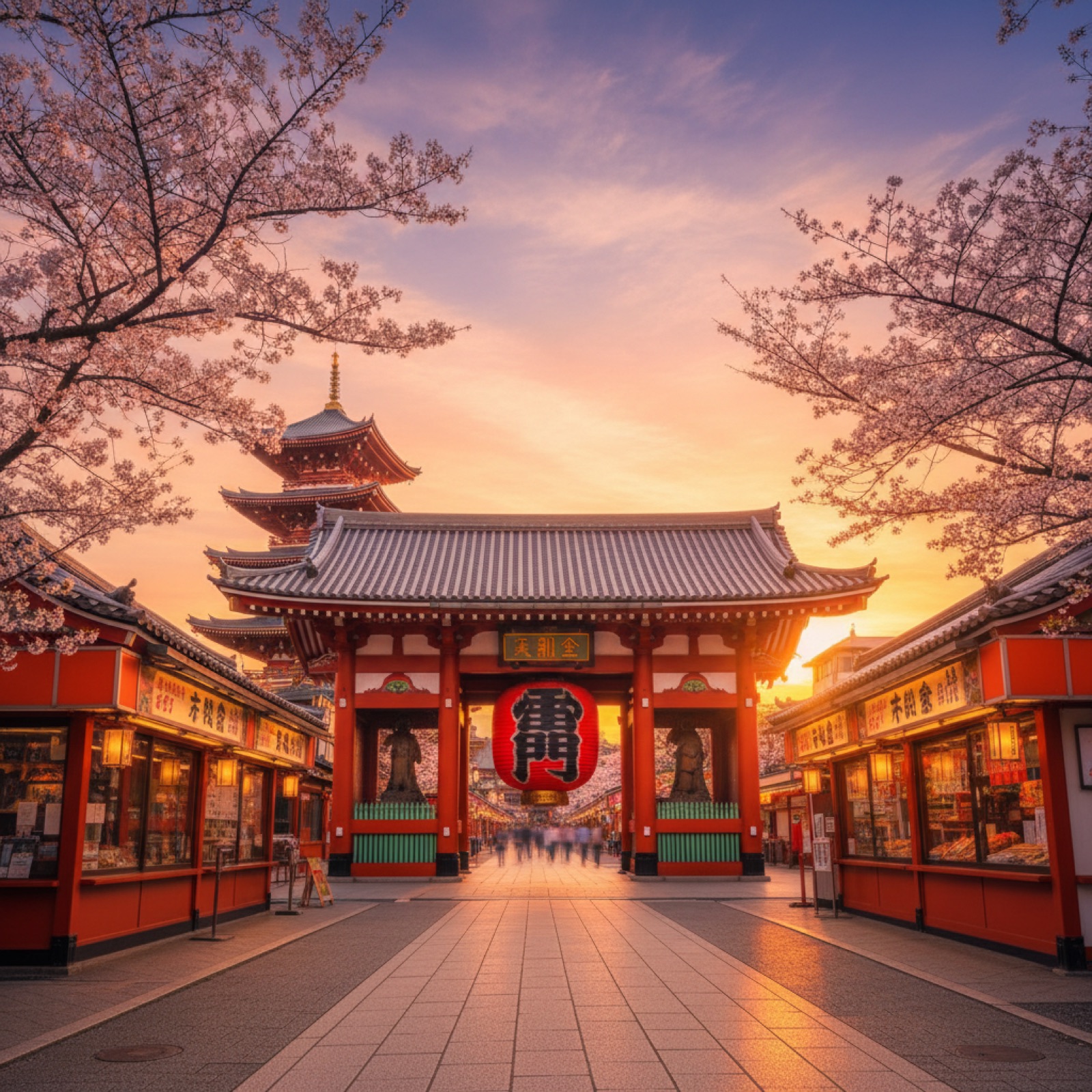
Your journey into Senso-ji Temple truly begins at the magnificent Kaminarimon Gate, or 'Thunder Gate.' This iconic structure is more than just an entrance; it’s a symbol of Asakusa and a grand welcome to Tokyo's oldest temple. The sheer scale of the gate, with its vibrant red and black colours, is breathtaking.
Standing tall at 11.7 meters (38 feet), the Kaminarimon Gate is guarded by two formidable statues: Fujin (the god of wind) on the right and Raijin (the god of thunder) on the left. Their fierce expressions are meant to ward off evil spirits, protecting the temple grounds. In the center, hanging majestically, is a massive red chochin (paper lantern), weighing approximately 700 kg (1,500 lbs) and standing 3.9 meters (13 feet) tall. This lantern is replaced every 10 years and is temporarily folded up during major festivals to allow portable shrines (mikoshi) to pass through.
As you pass through the gate, don't forget to look up and around. On the back of the gate, you'll find two more statues: Tenryu and Kinryu, celestial dragons, further protecting the temple. The intricate details and powerful symbolism of Kaminarimon Gate set the spiritual tone for your exploration of Senso-ji Temple.
Pro Tip: This area is always crowded. For a photo with fewer people, try visiting just after sunrise, when the gate is usually less busy, though the Nakamise-dori shops won't be open yet.
Nakamise-dori Market: A Culinary and Souvenir Journey to Senso-ji
Once you've passed through the Kaminarimon Gate, you're immediately swept into the vibrant energy of Nakamise-dori market, a pedestrian street stretching approximately 250 meters (820 feet) to the Hozomon Gate, which is the second gate of Senso-ji Temple. This bustling marketplace is one of Japan's oldest shopping streets, with a history dating back to the late 17th century when local residents were granted permission to set up stalls to serve pilgrims visiting Senso-ji Temple.
Nakamise-dori is an sensory overload in the best possible way. The aroma of freshly baked senbei (rice crackers), dango (sweet dumplings), and melon pan fills the air. Shops overflow with traditional Japanese souvenirs like kimonos, yukata, folding fans, lucky charms, and quirky trinkets. It’s the perfect place to pick up gifts for friends back home or simply indulge in some authentic Japanese street food.
It's worth setting aside a good hour just for sampling various snacks. The freshly grilled senbei (around ¥150-¥300 per piece, approx. $1-$2 USD) are a revelation, still warm and crispy, and a delicious anpan (sweet bean paste bun, ¥200-¥250, approx. $1.30-$1.60 USD) from one of the many bakeries is hard to resist. Remember, while it's tempting to eat as you walk, it's generally considered polite to stop at a shopfront or designated eating area to enjoy your food in Japan.
Key Items to Look Out For:
- Senbei: Traditional rice crackers in various flavors (soy sauce, sugar, chili).
- Kaminari Okoshi: A local specialty, puffed rice mixed with sugar and other ingredients, named after Kaminarimon Gate.
- Ningyo-yaki: Small, intricately shaped cakes often filled with red bean paste.
- Traditional Crafts: Fans, kimonos, ceramic goods, samurai swords (replica!).
- Lucky Charms: Omamori (amulets) for good fortune, health, or safe travel.
Allow yourself plenty of time to explore Nakamise-dori. It's an integral part of the Senso-ji Temple experience, offering a delightful blend of history, commerce, and culinary delights. Prices are generally reasonable, making it an excellent spot for souvenirs.
Honzon Hall (Main Hall) and Asakusa Shrine: The Heart of Senso-ji Temple
After navigating the bustling Nakamise-dori and passing through the impressive Hozomon Gate (another magnificent two-story gate with giant red lanterns and straw sandals), you arrive at the heart of Senso-ji Temple: the Honzon Hall, or Main Hall, and the adjacent Asakusa Shrine. This is where the spiritual essence of Tokyo's oldest temple truly resides.
The current Honzon Hall, a beautiful example of traditional Japanese temple architecture, was rebuilt in 1958 after its destruction during World War II. Its vibrant red and gold ornamentation, often seen glinting under the Tokyo sun, is captivating. Inside, although the main object of veneration – the Kannon statue – is not visible to the public, the atmosphere is one of profound peace and devotion. Visitors can offer prayers, burn incense, and soak in the serene ambiance.
Before entering the Honzon Hall, you'll encounter the large incense cauldron (jokoro). Many visitors gather around it, wafting the smoke towards themselves. It's believed that the smoke has healing properties and can bring good health if directed at ailing parts of your body. People of all ages, from young children to the elderly, take part in this ritual. Next to it, the water purification fountain (temizuya) is where you cleanse your hands and mouth before approaching the main hall, a crucial step in proper Japanese temple etiquette.
Just to the right of the Honzon Hall stands Asakusa Shrine (Asakusa Jinja). While Senso-ji Temple is Buddhist, Asakusa Shrine is Shinto, dedicated to the three men who discovered the Kannon statue: the Hinokuma brothers and Haji no Nakatomo. This proximity of a Buddhist temple and a Shinto shrine on the same grounds is a beautiful representation of Japan's syncretic religious traditions, where both faiths have coexisted and intertwined for centuries. Asakusa Shrine is also the site of the famous Sanja Matsuri (Three Shrine Festival), one of Tokyo's most spectacular and lively festivals, held every May.
Key Practical Details:
- Opening Hours (Honzon Hall): 6:00 AM to 5:00 PM (April-September), 6:30 AM to 5:00 PM (October-March). The grounds are open 24/7.
- Admission: Free for both the Honzon Hall and Asakusa Shrine.
- Address (Main Hall): 2-3-1 Asakusa, Taito-ku, Tokyo 111-0032.
Take your time inside the Honzon Hall. Observe the intricate artwork, listen to the quiet murmur of prayers, and allow yourself to connect with the spiritual heart of Senso-ji Temple. It’s a truly moving experience.
The Five-Story Pagoda: A Beacon in the Tokyo Sky
Dominating the skyline of Asakusa and standing proudly beside the Honzon Hall is the majestic Five-Story Pagoda (Goju-no-to). This towering structure, reaching a height of 53 meters (174 feet), is one of the most recognizable symbols of Senso-ji Temple and a stunning example of traditional Japanese Buddhist architecture. Seen at dusk with the subtle lighting, it feels like a beacon drawing you in.
Like many structures at Senso-ji Temple, the original pagoda suffered destruction during World War II. The current pagoda was rebuilt in 1973, funded by donations. Its design, with each successive story slightly smaller than the one below, creates an elegant, upward-tapering silhouette. While visitors cannot enter the pagoda, it houses memorial tablets and, importantly, a relic of Buddha on its topmost floor. This relic was received from the Sri Lankan government, further connecting Senso-ji Temple to the broader Buddhist world.
The pagoda serves not only as a religious monument but also as a striking photographic subject, particularly against the backdrop of a clear blue sky or illuminated at night. Its presence is a constant reminder of the temple's profound spiritual significance and its enduring history. Standing near it, you can't help but feel a sense of awe at the craftsmanship and the centuries of devotion it represents.
Exploring the Senso-ji Temple Grounds: Beyond the Main Attractions
While the Kaminarimon Gate, Nakamise-dori, Honzon Hall, and the Five-Story Pagoda are undoubtedly the main draws, truly experiencing Senso-ji Temple means exploring its quieter corners and hidden gems. The expansive grounds hold numerous smaller shrines, gardens, and statues that offer moments of reflection and further insight into Japanese culture. It's worth wandering off the beaten path a bit; that's where some of the best discoveries are made.
- Dempoin Garden: Located behind the temple's main hall, this exquisite traditional Japanese garden is a designated Place of Scenic Beauty. It boasts a beautiful pond, meticulously pruned trees, and a tea house. While usually closed to the public, it occasionally opens for special events or during specific seasons. Check the official Senso-ji Temple website for any announcements regarding public access.
- Statue Park: To the left of the main hall, you'll find a peaceful park-like area dotted with various statues, including more Kannon statues and several Jizo statues, often adorned with red bibs by parents praying for the health of their children.
- Yakushido Hall: A smaller hall on the temple grounds dedicated to Yakushi Nyorai, the Buddha of medicine and healing.
- Awashima-do Hall: This small hall is particularly popular among women, as it is dedicated to goddesses associated with women's health, beauty, and safe childbirth.
- Bentendo Hall: Dedicated to Benzaiten, one of the Seven Lucky Gods, goddess of music, arts, and good fortune. This hall is beautifully situated near a pond.
- Komagata-do Hall: This is believed to be the spot where the Kannon statue was first discovered in the Sumida River in 628 AD. It is a humble yet historically significant shrine.
- Stone Pagodas and Memorials: Throughout the grounds, you'll find various smaller pagodas and monuments, each with its own story or dedication. Take a moment to read the explanations (if available in English) or simply appreciate their quiet presence.
Allowing yourself extra time to simply wander around the periphery of the main complex offers a deeper, more personal connection with Senso-ji Temple. It's a chance to escape the immediate crowds and find some tranquil spots within this vibrant spiritual hub.
Beyond the Temple: What to See and Do in Asakusa Tokyo
While Senso-ji Temple is undoubtedly the star attraction, the surrounding Asakusa district offers a wealth of other experiences that truly complement your visit to Tokyo's oldest temple. It's a neighborhood where traditional charm meets modern amenities, making it a perfect area to spend half a day or even a full day. For first-time visitors to Japan, Asakusa is a must-see for a glimpse into 'old Tokyo.'
- Sumida River Cruise: (approx. ¥800 - ¥1,500, approx. $5-$10 USD depending on destination) Depart from the pier near Azuma Bridge, just a short walk from Senso-ji Temple. Enjoy fantastic views of the Tokyo Skytree, Asahi Beer Hall's 'Golden Flame,' and the city skyline as you cruise down the Sumida River towards destinations like Odaiba or Hama-rikyu Gardens. It's a peaceful way to see the city from a different perspective.
- Tokyo Skytree: (Observation Deck Ticket: ¥2,100 - ¥3,100 for Tembo Deck, ¥3,100 - ¥4,200 for Tembo Galleria, approx. $13-$27 USD). Visible from almost everywhere in Asakusa, this towering structure offers panoramic views of Tokyo. It's a striking contrast to the ancient temple and provides a modern perspective on the city. You can walk or take a short train ride from Asakusa to Tokyo Skytree Station.
- Asakusa Culture Tourist Information Center: Located directly across from Kaminarimon Gate, this architectural marvel by Kengo Kuma offers free Wi-Fi, a multi-lingual information desk, and an incredible free observation deck on the 8th floor. It provides fantastic views of Kaminarimon Gate and Nakamise-dori towards Senso-ji Temple. Opening hours: 9:00 AM - 8:00 PM.
- Kitchen Street (Kappabashi-dori): (Free to browse). A paradise for foodies and aspiring chefs, this street is lined with dozens of shops selling everything related to restaurants: plastic food replicas (sample price: realistic sushi replica for ¥1,500 - ¥3,000, approx. $10-$20 USD), kitchenware, knives, pottery, and restaurant supplies. It's a fascinating glimpse into Japan's culinary industry. Just a 10-15 minute walk from Senso-ji Temple.
- Rickshaw Rides (Jinrikisha): (approx. ¥3,000 - ¥5,000 per person for a 20-30 min ride, approx. $20-$35 USD). Experience Asakusa in traditional style with a guided rickshaw tour. The friendly pullers often serve as knowledgeable guides, sharing local stories and pointing out hidden sights. You'll find them near Kaminarimon Gate.
- Traditional Craft Shops: Beyond Nakamise-dori, explore the side streets of Asakusa for smaller shops specializing in specific crafts, like traditional fans, woodworking, or elaborate hair ornaments.
- Local Eateries: Asakusa is brimming with traditional Japanese restaurants (izakayas, soba shops, tempura specialists). Don't miss trying some local Asakusa tempura! Expect to pay ¥1,500 - ¥3,000 (approx. $10-$20 USD) for a good tempura lunch set.
By allocating enough time to explore Asakusa, you’ll not only visit Senso-ji Temple but also truly immerse yourself in one of Tokyo’s most historic and culturally rich neighborhoods.
Essential Etiquette Tips for Visiting Senso-ji Temple
Visiting a sacred site like Senso-ji Temple is a wonderful experience, and observing a few basic etiquette rules shows respect for Japanese culture and the sanctity of the temple. These are simple gestures that go a long way in ensuring a pleasant visit for everyone.
- Dress Modestly: While Senso-ji Temple is quite accustomed to tourists, it's still a good idea to dress respectfully. Avoid overly revealing clothing. Shoulders and knees covered are generally a safe bet.
- Photography: Photography is generally allowed on the temple grounds and in the Honzon Hall, but always be respectful. Avoid using flash inside sacred areas, and be mindful of people praying. Never photograph monks or individuals without their express permission.
- Temple Offerings and Prayers: If you choose to offer a prayer, approach the offering box, gently toss in a coin (often a ¥5 coin, as 'go-en' or '5 yen' sounds like 'good緣' or 'good luck/connection'), put your palms together, make your wish silently and bow. Clapping is part of prayer at Shinto shrines such as neighbouring Asakusa Shrine, not at Buddhist temples.
- Water Purification (Temizuya): Before entering the main hall, you'll see a water pavilion. Pick up the ladle, fill it with water, and pour a little over your left hand, then your right. Then, pour a small amount into your cupped left hand to rinse your mouth (spit the water discreetly beside the basin, not into it). Finally, tip the ladle upright to let the remaining water flow down the handle, cleansing it for the next person. Do not drink directly from the ladle.
- Incense Burning (Jokoro): Purchase a bundle of incense (often ¥100, approx. $0.65 USD). Light it at the communal flame, extinguish the flame by waving (never blowing), then place it upright in the sand. Waft the smoke towards yourself for good health.
- No Eating or Drinking in Sacred Areas: While Nakamise-dori is for food and souvenirs, avoid eating or drinking inside the main temple precincts, especially near the Honzon Hall. Find a designated bench or exit the sacred area if you need a snack.
- Keep Noise Levels Low: Temples are places of worship and contemplation. Speak in hushed tones, especially inside the halls.
- Remove Hats and Sunglasses: It's customary to remove your hat and sunglasses upon entering the main halls of temples and shrines.
- Footwear: You typically do not need to remove your shoes at Senso-ji Temple's main hall, but if you enter any smaller sub-temples or specific rooms where shoes are required to be removed, look for a shoe rack and follow suit.
- Respect the Omikuji (Fortune-telling): If you draw an 'unlucky' fortune at the omikuji stands (often ¥100, approx. $0.65 USD), don't worry! It's customary to tie it to a designated rack of wires nearby to symbolically leave the bad luck behind. Lucky fortunes can be kept with you for good fortune.
By following these simple guidelines, you’ll show respect, enhance your own understanding, and contribute to the peaceful atmosphere of Senso-ji Temple.
Best Time to Visit Senso-ji Temple: Avoiding Crowds and Catching Festivals
Choosing the right time to visit Senso-ji Temple can significantly impact your experience. As Tokyo's oldest and most popular temple, it attracts millions of visitors annually, so crowds are almost a given. However, with a little planning, you can find windows of tranquility or immerse yourself in vibrant celebrations. Depending on when you go, the difference is truly astonishing.
- Early Morning (Sunrise - 8:00 AM): This is hands down the best time to visit if you seek peace and stunning photography opportunities. The temple grounds are open 24/7, and before the Nakamise-dori shops open (typically around 9:00 AM-10:00 AM), the atmosphere is serene. You'll share the space with local worshippers and a handful of early bird tourists. The soft morning light on the Kaminarimon Gate and Honzon Hall is magical. You'll have uninterrupted views of the Five-Story Pagoda.
- Late Evening (After 5:00 PM/Honzon Hall Closes): While the main hall usually closes at 5:00 PM, the temple grounds remain open. The Kaminarimon Gate, Hozomon Gate, and the Five-Story Pagoda are beautifully illuminated from dusk until around 11:00 PM. The crowds thin out considerably, and the glowing red architecture against the night sky creates a truly enchanting atmosphere. It’s a completely different, more contemplative experience.
- Weekdays vs. Weekends/Holidays: Always aim for a weekday if your schedule allows. Weekends and Japanese public holidays see a dramatic increase in visitors, with Nakamise-dori becoming particularly dense.
- Seasons:
- Spring (March-April): Beautiful for cherry blossoms, especially in Sumida Park adjacent to the temple, but also one of the busiest times for tourism in general. Expect larger crowds.
- Autumn (October-November): Pleasant weather and beautiful fall foliage. Crowds are moderate.
- Winter (December-February): Fewer tourists generally, but it can be quite cold. The new year period (first week of January) is exceptionally busy as many Japanese visit for Hatsumode (first temple visit of the year).
- Summer (June-August): Hot and humid, but can be a good time to visit if you don't mind the heat, as overall tourist numbers might be slightly lower due to the weather.
Major Festivals and Events (Expect LARGE Crowds):
- Sanja Matsuri (May): One of Tokyo's wildest and most spectacular festivals, held at Asakusa Shrine. Portable shrines (mikoshi) are paraded through the streets. If you love vibrant crowds and traditional celebrations, this is a must-see, but be prepared for intense throngs of people. Check exact dates as they vary slightly each year (usually third weekend in May).
- Hozuki-ichi (Ground Cherry Market) (July 9-10): A traditional market where vendors sell 'Hozuki' (ground cherries) believed to bring protection from evil spirits and good luck.
- Asakusa Samba Carnival (Late August): A surprising and vibrant spectacle with Brazilian-style samba dancers parading through the streets. Completely different vibe from the temple's usual serenity!
- Hagoita-ichi (Battledore Fair) (December 17-19): A popular year-end fair selling ornamental 'Hagoita' (wooden battledores), traditionally used for decorating and believed to ward off evil.
My advice? Go early on a weekday morning, spend a couple of hours exploring the tranquil temple grounds, then enjoy the bustling Nakamise-dori as the shops open. If you have time, come back in the evening for the illuminated view of the Senso-ji Temple.
Common Mistakes to Avoid When Visiting Senso-ji Temple
Even seasoned travelers can make little blunders, especially when navigating a new cultural landscape. To ensure your visit to Senso-ji Temple is as smooth and enjoyable as possible, here are some common mistakes and how to avoid them.
- Only Visiting During Peak Mid-Day: As covered before, visiting between 10 AM and 3 PM means facing the densest crowds. Try to go early morning or late afternoon/evening for a more peaceful experience.
- Rushing Through Nakamise-dori: Don't just see Nakamise-dori as a pathway to the main temple. It's an experience in itself! Take your time, sample the snacks, browse the souvenirs, and soak in the atmosphere. Rushing means you'll miss out on a significant part of the Senso-ji Temple journey.
- Ignoring Temple Etiquette: Forgetting to cleanse at the temizuya, blowing out incense flames, or talking loudly inside the main hall can be seen as disrespectful. Review the etiquette tips above to ensure a culturally sensitive visit.
- Eating While Walking on Nakamise-dori: While tempting, it's generally considered poor manners to eat or drink while walking in Japan, especially in such a public and traditional setting. Step aside, find a bench, or eat within the shop's designated area if they have one.
- Not Exploring Beyond the Main Hall: Many tourists visit Kaminarimon, Nakamise-dori, and the Honzon Hall, then leave. The surrounding grounds of Senso-ji Temple hold beautiful gardens, smaller shrines, and peaceful corners that offer a deeper insight into the temple's history and diverse spiritual elements.
- Forgetting About Asakusa Shrine: Located right next to the Honzon Hall, Asakusa Shrine is a Shinto shrine with its own distinct charm and history. It's often overlooked but is a beautiful place for contemplation and a prime example of Japan's syncretic religious landscape.
- Not Utilizing the Asakusa Culture Tourist Information Center: This is a goldmine of information, free Wi-Fi, and a fantastic observation deck with a great view of Senso-ji Temple. It's a shame to walk past without utilizing its resources, especially since it's right across from Kaminarimon Gate.
- Underestimating the Tokyo Sun/Rain: Depending on the season, you might be exposed to strong sun or sudden rain. Bring a hat, sunscreen, sunglasses, or a compact umbrella/rain jacket. Much of your visit will be outdoors.
- Not Having Cash for Smaller Purchases: While many larger shops and restaurants in Tokyo accept cards, smaller stalls on Nakamise-dori or for temple offerings might be cash-only. ¥1,000 notes and coins are very useful.
By being mindful of these common pitfalls, your visit to Senso-ji Temple, Tokyo's oldest temple, will be much more enriching and respectful.
Budget Breakdown: Estimating Costs for Your Senso-ji Temple Visit
One of the best things about visiting Senso-ji Temple is that the main attractions are entirely free! This makes it a fantastic budget-friendly activity in an otherwise often expensive city. However, there are still some costs you might incur, particularly if you indulge in the delights of Nakamise-dori or explore other Asakusa attractions. Here’s a breakdown to help you plan your finances:
Cost Table for a Typical Senso-ji Temple Visit (Per Person, assuming 1 USD = 153 JPY)
| Item | Approximate Cost (JPY) | Approximate Cost (USD) | Notes |
|---|---|---|---|
| Transportation to Asakusa (Round Trip) | ¥340 - ¥560 | $2.20 - $3.70 | Based on subway from central Tokyo. Could be higher/lower depending on starting point. |
| Senso-ji Temple Admission | ¥0 | $0 | Main temple and grounds are free. |
| Asakusa Shrine Admission | ¥0 | $0 | Free. |
| Incense/Offering at Main Hall | ¥100 - ¥200 | $0.65 - $1.30 | Optional. |
| Omikuji (Fortune Slip) | ¥100 | $0.65 | Optional. |
| Nakamise-dori Snacks (e.g., 2-3 items) | ¥400 - ¥900 | $2.60 - $5.90 | Senbei, Ningyo-yaki, Melon Pan, Dango. Optional. |
| Nakamise-dori Souvenir (small) | ¥500 - ¥1,500 | $3.30 - $9.80 | Fan, small charm, postcard. Optional. |
| Lunch in Asakusa (e.g., Soba, Tempura) | ¥1,500 - ¥3,000 | $9.80 - $19.60 | Mid-range casual restaurant. Optional. |
| Rickshaw Ride (20-30 min, per person) | ¥3,000 - ¥5,000 | $19.60 - $32.70 | Optional, shared cost if with partner. |
| Tokyo Skytree Tembo Deck Ticket | ¥2,100 - ¥3,100 | $13.70 - $20.30 | Optional, if combining with your Senso-ji Temple visit. |
| TOTAL (Minimal, no extras) | ¥440 - ¥760 | $2.90 - $5.00 | Transportation + 1 small snack |
| TOTAL (Average, with snacks, small souvenir, lunch) | ¥2,840 - ¥6,160 | $18.60 - $40.30 | Includes transport, snacks, small souvenir, and a decent lunch. |
As you can see, a visit to Senso-ji Temple itself is extremely affordable. The costs add up if you indulge in shopping, dining, or add optional extra activities like the Tokyo Skytree or a rickshaw ride. Budget around ¥3,000 - ¥6,000 (approx. $20-$40 USD) per person for a comprehensive and enjoyable experience including transport, snacks, and a casual meal, but you could easily do it for less if you truly stick to the minimal. Remember to have some cash on hand for smaller purchases at Nakamise-dori.
Pro Tips for an Unforgettable Senso-ji Experience
These insider tips will help you maximize your visit to Senso-ji Temple, Tokyo's oldest temple. These practical insights will help you enjoy the magic of Senso-ji even more.
- Go Early, Then Late: This is the number one tip. Visit first thing in the morning (before 8 AM) for serene photos and a spiritual experience. Then, if your schedule allows, return after sunset (after 6 PM) to see the temple beautifully illuminated without the day's crowds. The atmosphere is completely different and equally captivating.
- Hydrate and Pack Light: Especially in summer, Tokyo can be incredibly hot and humid. Bring a reusable water bottle. You'll be doing a fair amount of walking, so comfortable shoes and a light daypack are essential.
- Engage with the Locals: Don't be shy! Shopkeepers on Nakamise-dori are often friendly, and you might learn interesting tidbits about their goods. If you see locals performing rituals, observe respectfully, and if appropriate, a polite bow or 'Arigato gozaimasu' (thank you) after a purchase goes a long way.
- Look Up and Down: The beauty of Senso-ji Temple isn't just at eye level. Look up at the intricate carvings on the gates, the details of the main hall's roof, and the towering pagoda. Also, pay attention to the small details on the grounds, like the subtle patterns in the gravel or the small guardian statues.
- Don't Be Afraid of the Omikuji: Drawing a fortune slip (omikuji) is a fun and traditional experience. Even if you don't read Japanese, the act of drawing one and then tying an unlucky one to the designated racks is part of the cultural immersion. It usually costs ¥100 (approx. $0.65 USD).
- Combine with Skytree but Don't Rush: Senso-ji Temple and Tokyo Skytree are visually linked and geographically close. It's common to visit both on the same day. However, don't try to cram too much into one block of time. Allow each attraction its due: 2-3 hours for Senso-ji/Asakusa and another 2-3 hours for Skytree area (including shopping).
- Cash is King on Nakamise-dori: While many bigger stores in Japan accept credit cards, the smaller, independent stalls on Nakamise-dori often prefer or only accept cash. Have some ¥1,000 notes and coins ready for snacks and small souvenirs.
- Explore the Side Streets: Venture off the main Nakamise-dori. You'll find quieter restaurants, unique craft shops, and a more local feel in the adjacent alleys. This is where you might discover a hidden gem for lunch or a truly unique souvenir.
- Consider a Goshuin: If you're interested in collecting stamps from temples and shrines, consider purchasing a Goshuincho (stamp book) at the temple office. For a small fee (around ¥300-¥500, approx. $2-$3 USD), a monk will hand-write and stamp a beautiful calligraphy entry unique to Senso-ji Temple. It's a wonderful, spiritual souvenir.
- Know Where to Get Information: The Asakusa Culture Tourist Information Center (right across from Kaminarimon Gate) is invaluable. They have multi-lingual staff, maps, free Wi-Fi, and clean restrooms. Don't overlook it!
By implementing these tips, your visit to Senso-ji Temple will be richer, more enjoyable, and truly unforgettable.
Conclusion: Your Journey to Senso-ji Temple
From the thunderous presence of Kaminarimon Gate to the serene contemplation within the Honzon Hall, Senso-ji Temple offers some of the most profound experiences in Tokyo. It's a place where history whispers from every stone, where ancient traditions blend seamlessly with the vibrant pulse of modern Tokyo, and where the spiritual heart of the city beats strongest.
This comprehensive guide has armed you with everything you need to navigate Tokyo's oldest temple. You're now equipped with insights into its rich history, practical transit details, meticulous etiquette tips, suggestions for avoiding crowds, and a clear understanding of what to budget. Whether you're seeking spiritual solace, a deeper understanding of Japanese culture, or simply a delicious snack on Nakamise-dori, Senso-ji Temple offers an experience like no other.
More Japan guides
Universal Studios Japan: Tickets, Express Passes and Tips
Planning Universal Studios Japan: ticket and Express Pass options, the Wizarding World, which rides to hit first, and how to avoid the…

Zao Onsen Guide: Snow Monsters, Skiing and Hot Springs
Zao Onsen in winter: the snow monsters, the ski terrain, sulphur hot springs, how to get there from Yamagata, and when the frost-covered…
Niseko Ski Guide: Powder, Passes and Where to Stay
Niseko's four resorts compared, getting there from Sapporo, the ski season, lift passes, gear rental, accommodation, onsen, dining and a…