Fiji Itinerary: Best Islands, Resorts and How Many Days
Planning a Fiji trip: the best islands in the Mamanucas and Yasawas, resort versus village stays, transfer costs and a 7–10 day Fiji itinerary.
In this guide
- Why Fiji Is Worth the Hype
- Best Time to Visit Fiji
- Nadi and Viti Levu
- The Mamanuca Islands
- The Yasawa Islands
- Resort vs Local Village Experiences
- Diving and Snorkelling
- Getting Around Between Islands
- Is Fiji Expensive to Visit? Costs and Daily Budget
- How Many Days Do You Need in Fiji? A 7–10 Day Itinerary
- Final Practical Tips
- Nearby Guides
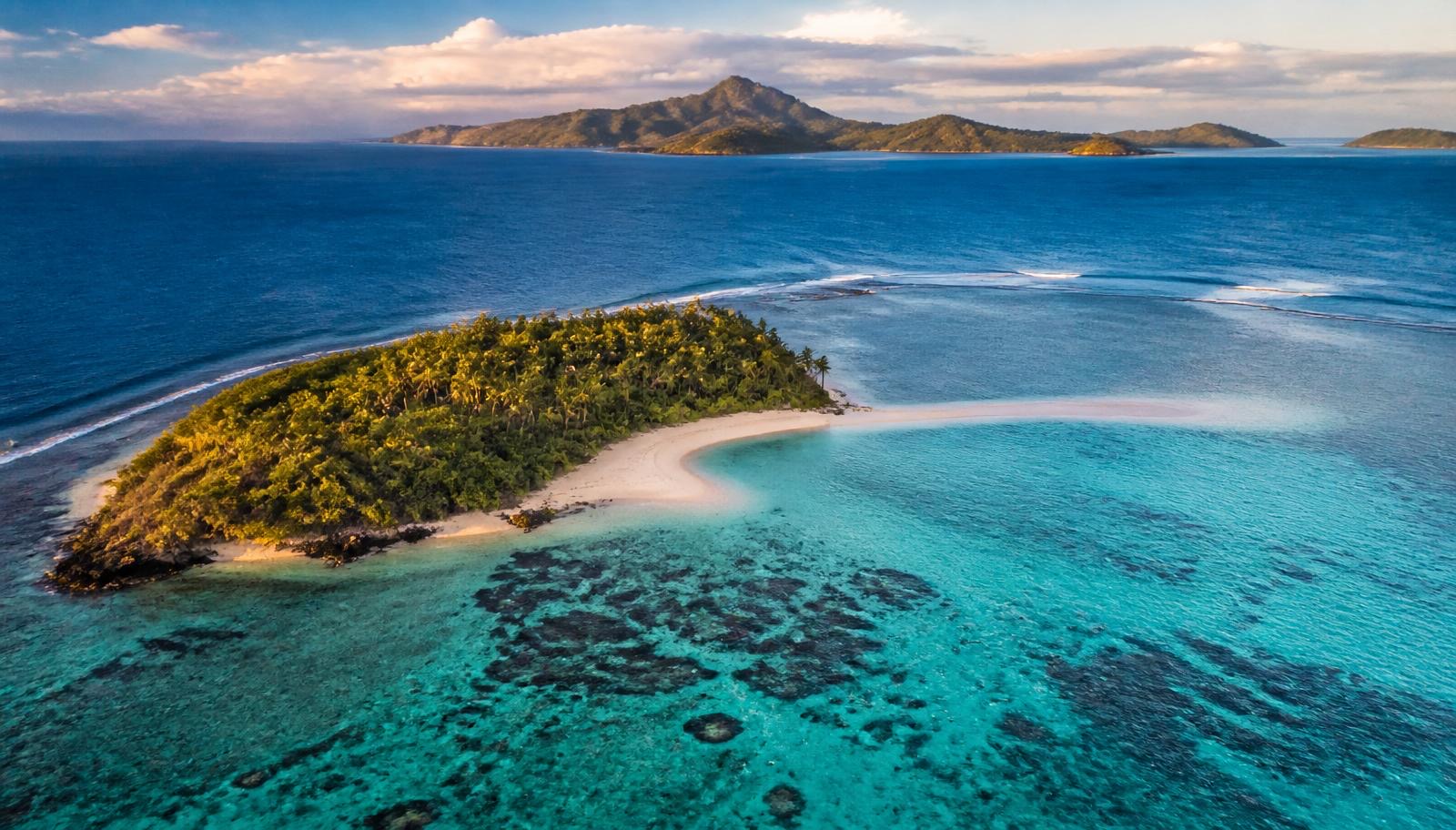
From a tiny 12-seat prop plane banking over the Yasawa Islands, you see palm-covered specks of white sand strung across water so blue it looks digitally retouched, with coral reefs visible as dark shapes from 500 feet — photos of the South Pacific barely do it justice. Covering Nadi, the Mamanucas, the Yasawas and Fiji's less-visited main-island interior, this is the guide to read before your first flight into Nadi International.
Fiji is not a single destination. It's an archipelago of more than 300 islands scattered across 1.3 million square kilometres of ocean, and the version most first-time visitors see — a Denarau resort strip, maybe a day boat to a Mamanuca island — is a tiny slice of the country. This guide is for the trip that gets past the resort walls and into the actual Fiji: where a village chief invites you into a bure for kava, where you sleep in a beachfront eco-lodge run by the family who's fished the reef for four generations, and where a snorkel off an unnamed islet turns into an accidental encounter with a reef manta.
Why Fiji Is Worth the Hype
Fiji is one of those places whose reality actually matches its brochure. The water genuinely is that colour. The reefs genuinely are that healthy — the country sits on the edge of the Great Sea Reef, one of the largest barrier reef systems on earth, and dive sites like Bligh Water routinely rank in the world's top ten for soft-coral density. And "Fiji time" is not a marketing line but a cultural fact you learn by day two: nothing is late, exactly, but nothing is on schedule either.
What surprises most first-time visitors is how friendly the country genuinely is. Fijians will greet you with Bula! in the airport, in the supermarket, on the street and from three villages away — and they mean it. The tourist industry here is smaller and more human-scale than most Pacific competitors, so you're rarely a number.
The trade-off is cost. Fiji is a splurge destination, especially compared to Southeast Asia. A comfortable trip is not cheap, a luxury trip is very expensive, and the ultra-budget trip that the backpacker forums promise (US$40 a day) is technically possible but genuinely uncomfortable in places you don't want to be uncomfortable. Budget for the trip you actually want.
Best Time to Visit Fiji
Fiji has two clear seasons and picking the right one matters more than in most tropical destinations.
- Dry season (May to October): the classic peak. Cooler (24–28°C), lower humidity, less rain, better visibility for diving, and the water is still 25–27°C. It's also the busiest and most expensive time, especially July, August and the Australian/NZ school holidays.
- Wet season (November to April): hotter (28–32°C), much more humid, afternoon storms, and — critically — cyclone season. Cyclones peak December through March. Resort rates drop 20–40%, the outer islands can be genuinely quiet, and diving is still good in the mornings, but there's real weather risk. Buy proper travel insurance.
- Shoulder (May and October–early November): arguably the sweet spot. Peak-season weather without peak-season prices or crowds.
The sweet spot is late May and early June: dry season has started, Australian and NZ winter school holidays haven't hit yet, and prices are noticeably softer than July–August. September offers a similar sweet spot on the way out.
Nadi and Viti Levu
Almost every visitor lands at Nadi International Airport on Viti Levu, Fiji's biggest island. Nadi itself is not a beach town — it's a small commercial city with an okay market, a few Hindu temples (the country's Indo-Fijian population is significant), and a strip of resort areas ten minutes' drive west at Denarau. Most travellers use Nadi as a transit point and get onto an outer island the next morning.
That said, Viti Levu is bigger than most people realise and worth a couple of days on its own:
- Denarau Island is the artificial resort peninsula immediately west of Nadi — Sofitel, Sheraton, Westin, Radisson. Golf-course-flat, gated, easy, and where the Mamanuca and Yasawa ferries depart from Port Denarau Marina. Convenient for a first night; not a real Fiji experience.
- The Coral Coast, along Viti Levu's southern shore between Sigatoka and Pacific Harbour, has more character. Small resort villages, actual sandy beaches, the Sigatoka Sand Dunes National Park, and easy access to the Navua River trips into the interior.
- Pacific Harbour, further east on the south coast, is Fiji's adventure hub — famous for the shark dives at Beqa Lagoon (bull sharks and tiger sharks at the Bistro dive site) and jet-boat runs up the Upper Navua Gorge.
- Suva, on the east coast, is Fiji's actual capital — a proper functioning South Pacific city with the Fiji Museum, a covered municipal market, and a very different feel from the tourist west. Worth a day if you're travelling deeper.
- The Nausori Highlands in the interior are where the country's mountain rainforest, waterfalls (Namosi, Bouma on Taveuni) and traditional highland villages sit. A day trip out of Nadi with a licensed operator is the easiest way in.
The Mamanuca Islands
The Mamanucas are the closer, more developed of Fiji's two big western island chains. There are about 20 named islands, 30–90 minutes by boat from Denarau, and every one of the resorts sits directly on white sand fronting a coral reef. This is where you go for a classic Fiji week: postcard beach, snorkelling out the front door of your bure, sunset cocktails on a jetty, minimal effort.
The islands to know:
- Malolo and Malololailai are the two biggest, with several resorts across price points. Malolo Island Resort is a good pick for families; Likuliku on the same island was the first Fiji resort with overwater bures (Fiji Marriott Resort Momi Bay on Viti Levu also has them). Musket Cove on Malololailai has a legendary marina bar.
- Castaway Island is a small private-island resort — one hotel, one beach, ringed by a reef. Genuinely lovely.
- Beachcomber Island is the famous party island and backpacker option — small, loud, cheap by Fiji standards.
- Monuriki is the uninhabited islet where Cast Away (the Tom Hanks film) was shot. Multiple day boats stop here for snorkelling and reef lunch — worth it once.
- Tavarua and Namotu are the two legendary surf islands, home to Cloudbreak (one of the world's most famous reef breaks). Booked out by surfers years ahead.
Most first-time visitors either commit to one Mamanuca resort for the whole trip or do 3 nights in a Mamanuca then 3 nights in the Yasawas. Either works.
The Yasawa Islands
The Yasawas are the further, wilder, more spectacular chain — a string of 20-odd volcanic islands running north-west of the Mamanucas for about 90 kilometres. This is the Fiji you see on the aerial-photography posters: soaring green ridges, white-sand crescents, empty reef lagoons. Resorts here range from serious backpacker (dorms with mosquito nets and shared meals) to genuine over-the-top luxury (Turtle Island, where The Blue Lagoon was filmed).
The essential islands:
- Waya is the southernmost and most dramatic, with the country's most photographable peak (Mount Batinareba, a 2-hour hike) rising 500 metres straight out of a horseshoe bay.
- Naviti, in the middle, has the manta-ray channel where reef mantas cruise reliably from May through October. Snorkelling with them is one of the best hours you'll have in the Pacific.
- Nanuya Lailai and Nanuya Levu are home to the Blue Lagoon proper — the impossibly clear channel between them, and the beach at Nanuya Lailai (accessible on day trips even if you're not staying on the island).
- Sawa-i-Lau, at the far northern end, has the extraordinary limestone caves you swim into — an above-water cathedral chamber and, if the tide is right, a second cave you free-dive into through a submerged tunnel.
Getting to the Yasawas is either the daily Yasawa Flyer catamaran from Denarau (a 5–7 hour run stopping at multiple resort islands) or a chartered seaplane/helicopter. Most travellers do the ferry both ways; if your budget allows, one leg by seaplane is spectacular.
Resort vs Local Village Experiences
The single decision that shapes what your Fiji trip actually feels like is: how much time do you spend inside a resort bubble versus outside it?
The "resort only" trip is easy, comfortable and — if you pick a good resort — genuinely lovely. You'll get a warm welcome, excellent food, and reef-front snorkelling. What you won't necessarily get is a sense of what the country outside the resort is like.
The alternatives, in ascending order of immersion:
- A resort-arranged village visit. Most Mamanuca and Yasawa resorts partner with the nearest inhabited village and run a half-day cultural visit — you'll be presented to the chief, share a bowl of kava, watch a meke (traditional dance), and buy some crafts. Fine as an introduction; obviously curated.
- A homestay or village-run guesthouse. In the Yasawas especially, several villages run small guest bures where you pay directly to the village. Meals are eaten with the family, days are spent walking or fishing, and you get pulled into the actual rhythm of village life. Coral View on Tavewa, Botaira on Naviti and Barefoot Manta on Drawaqa are three that consistently do this well.
- A sevusevu ceremony. If you visit any village directly (not through a resort), traditional custom asks that you present a bundle of yaqona (kava root) to the chief on arrival. Any Nadi market vendor will sell you a bundle for a few Fiji dollars and explain what to say. This is the single act that transforms you from tourist to guest.
- Interior Viti Levu. Trips into the Nausori Highlands with a licensed operator (Talanoa Treks does small-group multi-day walks between highland villages) are the most immersive option on the main island.
A dress-code note: women should cover shoulders and knees in villages, and everyone should remove hats and sunglasses when entering — hats and sunglasses in a village are read as disrespectful, the way keeping shoes on inside a temple would be elsewhere.
Diving and Snorkelling
Fiji is genuinely one of the best diving countries in the world — it's often called the "soft coral capital" because of the dense, brightly coloured soft corals that carpet many of its walls and pinnacles. What that means practically:
- Snorkelling straight off the beach is exceptional at most resorts. You do not need to book a boat trip to see reef fish, small sharks, turtles and healthy coral — put on a mask and swim out.
- The Somosomo Strait, between Vanua Levu and Taveuni, holds the Rainbow Reef and the Great White Wall — arguably Fiji's most famous dives, with 30-metre visibility and dense soft-coral cover. Base in Taveuni or Savusavu.
- Beqa Lagoon off Pacific Harbour is the shark-dive site — a legitimately world-class encounter with bull sharks and, in the winter months, tiger sharks. Only book with licensed, responsible operators (Beqa Adventure Divers is the original).
- Manta rays at Naviti (Yasawas) from May through October. Multiple resorts here run daily snorkel drops when the mantas are in the channel.
- Bligh Water — the open passage between Viti Levu and Vanua Levu — is the classic soft-coral live-aboard destination. Nai'a Fiji is the well-known operator; expect 7–10 day cruises.
Certification: Fiji is a perfectly good place to get PADI Open Water certified — a 4-day course runs FJ$1,300–1,800. Warm water, gentle house-reef sites, and instructors used to nervous beginners.
Getting Around Between Islands
Fiji's internal transport takes some planning. A few realities:
- The Yasawa Flyer catamaran, run by Awesome Adventures Fiji, is the workhorse of the western islands. Departs Port Denarau daily, works its way north through the Mamanucas and up the Yasawas, and returns the same day. Buy a "Bula Pass" (unlimited hop-on/hop-off, 5, 7, 12 or 15 days) if you're island-hopping.
- Resort transfers from Denarau are usually run by the resort's own boat (30–90 min) and are the most common way to reach a single Mamanuca island.
- Seaplanes and helicopters (Turtle Airways, Pacific Island Air, Island Hoppers) are expensive but spectacular. Around FJ$300–700 per person for a Mamanuca or nearer Yasawa transfer.
- Domestic flights to the outer islands (Taveuni, Vanua Levu, Kadavu) are run by Fiji Airways and Fiji Link. Book online in advance.
- On Viti Levu: local buses run around the coastal road cheaply but slowly. Rental cars are available at Nadi airport and give you real flexibility on the mainland. Drive on the left; roads outside the tourist strip are patchy — don't drive at night in rural areas.
Fiji Time is real. Ferry departures shift, resort transfers are approximate, and things generally happen 15–45 minutes later than scheduled. Build slack into your day, especially before international flight connections.
Is Fiji Expensive to Visit? Costs and Daily Budget
Fiji is by some distance the most expensive destination in this batch, and it's important to go in with realistic numbers. All in US dollars, excluding international flights:
- Backpacker (Yasawa dorm rooms, Bula Pass ferry, shared meals): US$90–140 per day. This is the low ceiling; you can't really get cheaper without staying on Viti Levu.
- Mid-range (mid-tier Mamanuca or Yasawa resort with meal plan, a couple of paid activities): US$250–400 per day per person. This is where most non-luxury travellers land.
- Comfort (upmarket resort, some boat and dive add-ons, seaplane transfer): US$500–900 per day per person.
- Luxury (Likuliku overwater villa, Turtle Island, Kokomo Private Island, Six Senses Fiji): the ceiling is very high — Kokomo villas start around US$5,000 a night, Turtle Island is full-board all-inclusive and runs US$3,500+ per couple per night.
Concrete price points from 2025–2026 trips: local Fijian lunch at a Nadi market cafe FJ$8–15, resort dinner FJ$50–90 per person, cocktail at a resort bar FJ$18–28, Yasawa Flyer one-way to mid-Yasawas FJ$150–200, single-tank dive FJ$180–260, resort snorkel gear rental FJ$15–25 per day, Beqa shark dive FJ$400.
Meal plans matter. Most Mamanuca and Yasawa resorts sit on small islands with no other food options, so you're eating breakfast, lunch and dinner at the resort restaurant regardless. Full-board packages are usually genuinely better value than paying per meal, especially at the mid-tier islands. Read the fine print.
Tipping is not traditional in Fijian culture — instead, most resorts have a "Christmas fund" tip box at reception where all tips are pooled and distributed to all staff. Drop something in on the way out rather than tipping individual servers.
How Many Days Do You Need in Fiji? A 7–10 Day Itinerary
Seven to ten days is enough to see Nadi, one Mamanuca and one or two Yasawas properly. Sample route:
- Day 1 (arrive Nadi): land at Nadi (most flights arrive early morning from LAX or Auckland), transfer to Denarau for one night, adjust to Fiji time, dinner at a Port Denarau restaurant.
- Days 2–4 (Mamanuca island): boat transfer from Denarau (30–60 min) to your Mamanuca resort. Three nights on one island — snorkel the house reef, do a day trip to Monuriki, do a village visit, drink Fiji Gold at the beach bar.
- Day 5 (transfer to Yasawas via Yasawa Flyer): Yasawa Flyer from Denarau or a direct island-to-island transfer if your resort chain includes both. Aim for a resort in the middle Yasawas (Naviti, Nanuya Balavu) so you're in reach of both mantas and the Blue Lagoon.
- Days 6–7 (Yasawas): manta-ray snorkel morning (May–October), Sawa-i-Lau caves excursion, hike a ridge for the aerial-photograph view, sunset from the beach.
- Day 8 (transfer back to Nadi): Yasawa Flyer back to Denarau, one buffer night at a Denarau resort in case of weather delays.
- Days 9–10 (Coral Coast + fly out): optional two nights on the Coral Coast or Pacific Harbour for the interior/rainforest/shark-dive angle before your international flight.
Have another week? Fly to Taveuni (Fiji's "Garden Island") for the Somosomo Strait diving and the Bouma waterfalls, or to Kadavu for the untouched Astrolabe Reef.
Final Practical Tips
- Visa: most Western passports (US, Canada, UK, EU, Australia, NZ) get a 4-month visitor permit free on arrival.
- Money: Fijian dollar (FJD). Around 2.2–2.3 FJD to the US dollar in 2026. ATMs at Nadi airport and in Nadi/Suva/Denarau; outer-island resorts almost all accept card, but small kiosks and village handicraft sellers are cash-only.
- Language: English is an official language and universally spoken. Learning Bula (hello / welcome / good), Vinaka (thank you) and Moce (goodbye, pronounced "mo-thay") goes a long way.
- Plugs: Type I (Australian three-pin), 240V. Bring an adapter or buy one at the airport.
- SIM cards: Vodafone Fiji and Digicel both sell tourist SIMs at Nadi airport for around FJ$20 with plenty of data. eSIMs also work.
- Water: tap water in Suva, Nadi and Denarau is generally safe. On many outer islands it's rain-water cistern-supplied; drink bottled or filtered.
- Sun and reef: UV is fierce. Reef-safe sunscreen only near reefs — regular oxybenzone sunscreens damage coral. Rash guards ("stinger suits") in local shops are cheap and worth it.
- Cyclone season: December to March. Travel insurance that covers weather-related trip disruption is non-optional if you're travelling then.
- Sundays are traditional church days across most of Fiji — many activities, shops and restaurants slow down or close. Resorts still run normally.
Fiji rewards travellers who commit. Don't try to see six islands in a week — pick two (one Mamanuca, one Yasawa) and let each one have its full length. Say Bula to everyone, present kava at any village you visit, and trust that "Fiji time" is not the country running late — it's the country running at the right speed. That's the whole point — you'll come back.