New Zealand South Island Itinerary: Two Weeks
A two-week South Island road trip: Christchurch, Aoraki, Fiordland and the West Coast glaciers, with realistic driving times and seasons.
In this guide
- Quick Facts
- The 14-Day South Island Road Trip Itinerary
- Key Destinations & Regional Highlights
- Vehicle Selection: Campervan vs. Car & Accommodation
- Seasonality: Choosing the Best Time to Go
- Driving Realities, Distances & Road Safety
- South Island Culinary Highlights
- Budgeting and Financial Planning
- Crucial Road Trip Mistakes to Avoid
- Final Thoughts
- Explore in Depth
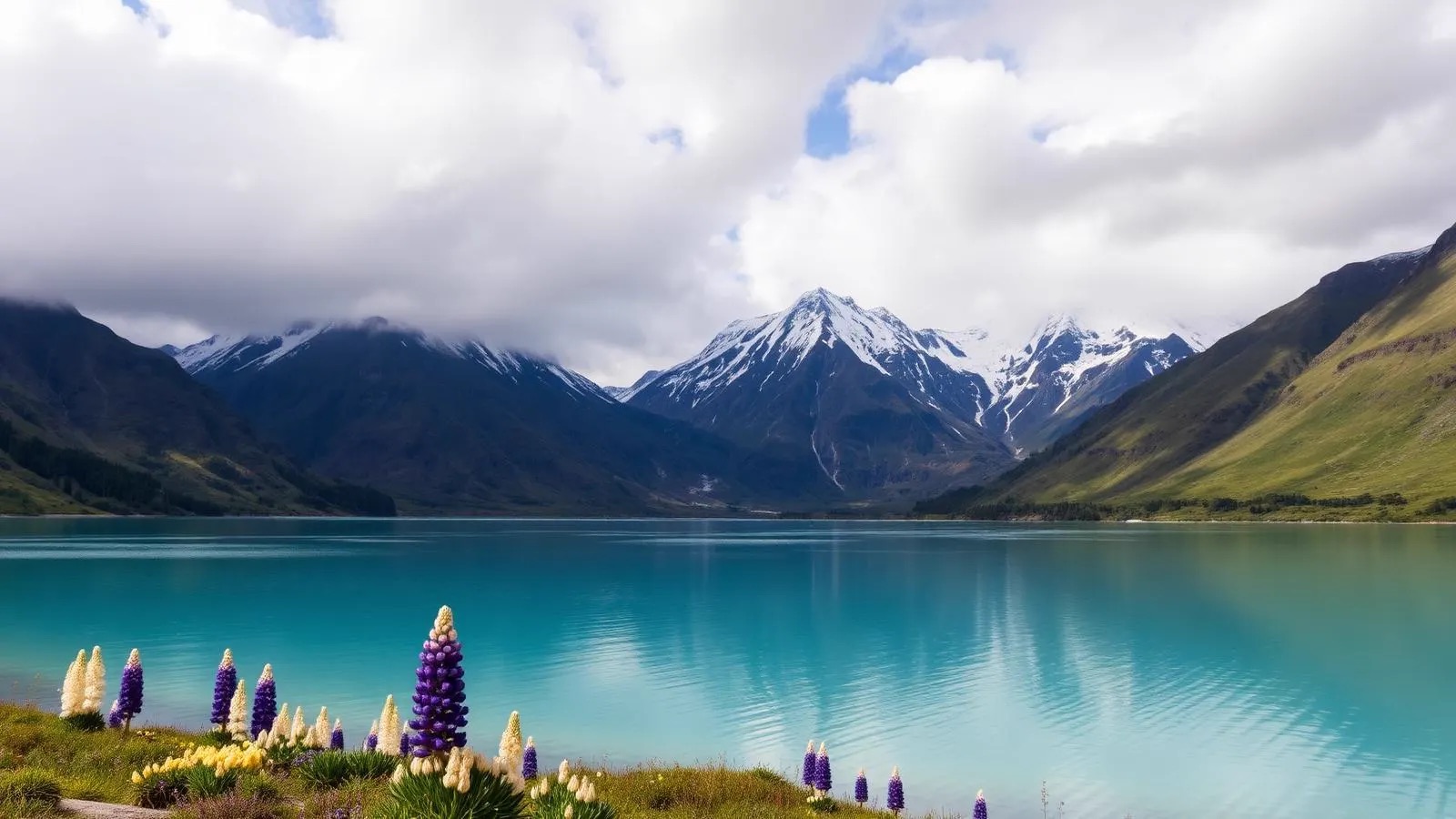
I still vividly recall my first morning parked at the edge of Lake Pukaki, pulling back the campervan curtains just as the first amber sunlight hit the jagged peak of Aoraki/Mount Cook. The air was so crisp it practically stung my lungs, and the water was an impossible, opaque shade of glacial turquoise that looked completely unedited. I brewed a mug of black coffee on the small gas burner, stepped outside into the quiet frost, and realised within seconds that the South Island of New Zealand is one of those rare places on Earth that exceeds every photo you have ever seen.
Over twelve years and dozens of return visits across Te Waipounamu—the Maori name for the South Island, meaning 'the waters of greenstone'—I have explored almost every highway, dirt track, and alpine pass on this spectacular landmass. What makes the South Island the ultimate road trip destination is not just the grandeur of its landscapes, but the sheer variety packed into a manageable geographic area. In a single week, you can walk among prehistoric rainforests, cruise through sheer-walled fjords, trace line-of-sight views across tussock plains, and stand before massive river-carved glaciers.
Planning a two-week road trip requires a delicate balance between covering distance and allowing time to breathe. It is remarkably easy to fall into the trap of spending your entire holiday behind the wheel because every mountain road looks enticing on a map. This detailed road trip itinerary is designed as a classic loop—traditionally starting and finishing in Christchurch, or running between Christchurch and Queenstown—giving you the perfect mix of high-alpine peaks, coastal marine reserves, glassy lakes, and deep fjord country without forcing you to rush through the finest scenery on the planet.
Quick Facts
- Total Driving Distance: Approximately 2,200 to 2,600 kilometres for a complete island loop.
- Recommended Duration: 14 days minimum for a well-paced journey.
- Driving Side: Left side of the road, with frequent single-lane bridges throughout rural areas.
- Entry Requirements: Most international visitors require a New Zealand Electronic Travel Authority (NZeTA) prior to arrival; check official government immigration portals before booking.
- Primary Gateways: Christchurch International Airport (CHC) and Queenstown Airport (ZQN).
- Peak Season: December to February (Summer), with high demand for vehicles and campsite spots.
- Cellular Coverage: Reliable in main townships, but extremely limited or non-existent in national parks, alpine passes, and along Milford Road.
The 14-Day South Island Road Trip Itinerary
This itinerary operates as a grand loop starting and ending in Christchurch, taking in the southern alpine core, the dramatic West Coast, and the sunny northern bays. If you have less time, you can easily adapt this into a one-way trip between Christchurch and Queenstown.
Day 1: Christchurch to Lake Tekapo
After picking up your vehicle in Christchurch, head south across the expansive Canterbury Plains towards the Mackenzie Basin. As you climb inland, the flat farmland transforms into sweeping, golden tussock hills. Your destination is Lake Tekapo, famous for its intense milky-blue colour caused by finely ground rock flour from nearby glaciers. In the late afternoon, visit the iconic Church of the Good Shepherd perched on the lakeshore. Spend your night here taking advantage of the Aoraki Mackenzie International Dark Sky Reserve, one of the clearest places on Earth for stargazing.
Day 2: Lake Tekapo to Aoraki / Mount Cook National Park
Drive along the western shore of Lake Pukaki towards Aoraki / Mount Cook National Park. The road hugging the lake offers incredible photography pull-offs with New Zealand's highest peak looming in the background. Spend the day hiking the Hooker Valley Track, an accessible three-hour return walk crossing three swing bridges and ending at a terminal lake filled with icebergs. If weather permits, take a scenic flight or glacier boat tour before settling into your campsite or lodge nestled right at the base of the mountains.
Day 3: Mount Cook to Wanaka via the Lindis Pass
Depart the alpine valley and wind your way south through the dramatic, velvety brown hills of the Lindis Pass. Stop at the high viewpoint to capture the vast expanse of tussock terrain. Continue onwards to Wanaka, a vibrant alpine town situated on the shores of Lake Wanaka. Spend the afternoon strolling along the waterfront to view the famous solitary willow tree growing out of the lakebed, or climb Mount Iron for panoramic views across the basin.
Day 4: Wanaka to Queenstown via the Crown Range Road
Take the high road to Queenstown by driving over the Crown Range Road, the highest paved public road in New Zealand. Pause at the summit saddle for sweeping views down over the Wakatipu Basin. Drop into historic Arrowtown, a gold-mining village filled with restored cottages and leafy avenues. Arrive in Queenstown by afternoon, taking the Skyline Gondola up Bob's Peak to watch the sunset over Lake Wakatipu and the jagged Remarkables mountain range.
Day 5: Queenstown Adventure and Relaxation
Dedicate a full day to the South Island's adventure capital. Whether your style is jet boating through narrow river canyons, skydiving, hiking up Ben Lomond, or taking a historic steamship cruise across Lake Wakatipu to an alpine sheep station, Queenstown delivers. In the late afternoon, wander through the central pedestrian streets or relax in the lush Botanic Gardens along the lakeshore peninsula.
Day 6: Queenstown to Te Anau (The Gateway to Fiordland)
Leave Queenstown behind and hug the southern edges of Lake Wakatipu as you head south towards Te Anau. This scenic drive takes you along the base of towering lakefront cliffs. Te Anau serves as the primary staging point for trips into Fiordland National Park. Spend the afternoon walking along the lake front, visiting the bird sanctuary to spot rare native takahē, or taking a boat ride across the lake to explore the glowing glow-worm caves underground.
Day 7: Te Anau to Milford Sound and Return
Set off early along the famous Milford Road (State Highway 94), one of the most stunning alpine drives on earth. Allow plenty of time for stops at the Eglinton Valley, Mirror Lakes, the Avenue of the Disappearing Mountain, and the engineering marvel of the Homer Tunnel. Upon reaching Milford Sound, embark on a nature cruise past Mitre Peak, roaring waterfalls, and steep cliff faces rising straight out of the dark water. Return to Te Anau for the night to avoid rushing back to Queenstown.
Day 8: Te Anau to Franz Josef Glacier via the Haast Pass
This is a major driving day, but the scenery changes continuously. Track north back through Wanaka and head into the dense temperate rainforests of Haast Pass. Stop at Thunder Creek Falls and the Blue Pools, where crystal-clear mountain water flows through deep limestone chasms. Emerge onto the untamed West Coast, following the ocean northwards past windswept beaches until you reach Franz Josef Glacier township nestled under the southern alps.
Day 9: Exploring Glacier Country
Spend the day exploring the glacier valleys of Franz Josef and Fox Glacier. While direct walking access onto the ice is no longer possible from the valley floor due to rapid retreat, gentle walking tracks take you to impressive viewpoints of the terminal river outlets and towering ice walls. For a splurge, consider a heli-hike to land directly on the upper glacier icefalls. In the afternoon, head to nearby Lake Matheson to catch the famous mirror reflections of Mount Cook and Mount Tasman on a calm day.
Day 10: Franz Josef to Punakaiki and Hokitika
Follow the West Coast Highway north through lush native fern forests and old gold-mining towns. Stop at Hokitika to wander the beach, browse the local greenstone (pounamu) carving workshops, and walk through the dramatic blue water of Hokitika Gorge. Continue north along the coast to Punakaiki to view the Pancake Rocks and blowholes, where ocean swells force plumes of water through stacked limestone blowholes at high tide.
Day 11: Punakaiki to Abel Tasman National Park
Turn inland and trace the Buller Gorge highway towards the top of the island. The roads wind through dramatic river canyons before smoothing out into the sun-drenched valleys of the Tasman region. Arrive at the coastal villages of Marahau or Kaiteriteri, the primary gateways to Abel Tasman National Park. Enjoy an evening stroll on golden sand beaches beneath tall tree ferns.
Day 12: Abel Tasman Coastal Exploration
Abel Tasman is New Zealand's premier coastal park. Rent a kayak to explore marine reserves, or catch a water taxi deep into the park to hike a section of the Abel Tasman Coast Track. Walk along golden beaches, cross swing bridges suspended over tidal estuaries, and swim in calm, turquoise waters. Look out for fur seals lounging on rocky outcrops offshore before catching a water taxi back to your base in the late afternoon.
Day 13: Abel Tasman to Kaikoura via Marlborough
Head east through the rolling vineyards of the Marlborough region, famous worldwide for its crisp Sauvignon Blanc. Continue south down the dramatic Pacific Coast highway, where the mountains meet the sea. You will arrive in Kaikoura, a coastal town famous for its deep underwater canyon system that attracts marine life year-round. Spend the late afternoon walking along the Kaikoura Peninsula Walkway to spot large colonies of New Zealand fur seals lounging on the flat limestone platforms.
Day 14: Kaikoura to Christchurch
On your final morning, join a marine eco-tour to spot giant sperm whales, dusky dolphins, and wandering albatrosses off the coast. Afterwards, head south through the rolling farmlands of North Canterbury, making a quick detour through the Waipara wine region if time permits. Return to Christchurch, drop off your road trip vehicle, and reflect on an extraordinary circuit around Te Waipounamu.
Key Destinations & Regional Highlights
Aoraki / Mount Cook and Lake Tekapo
Located in the heart of the Mackenzie Basin, this area represents alpine New Zealand at its most dramatic. Standing at 3,724 metres, Aoraki is the highest mountain in the country. The region is strictly protected, with virtually no light pollution, earning it designation as an International Dark Sky Reserve. Stargazing tours near Tekapo or within Mount Cook Village offer views of distant galaxies and the Southern Cross through powerful telescopes.
For daylight adventures, the Hooker Valley Track remains the signature walk in the park. It is a flat, exceptionally well-maintained track that takes approximately three hours return, navigating swing bridges over glacial torrents before revealing an unobstructed view of Aoraki over Hooker Lake. Check road conditions at the visitor centre before setting off, as weather in this high-alpine area can switch rapidly from brilliant sunshine to freezing rain.
Queenstown and Wanaka
While often grouped together, Queenstown and Wanaka have distinct personalities. Queenstown is energetic, bustling, and framed dramatically by the sharp ridges of The Remarkables and Lake Wakatipu. It is the birthplace of commercial bungy jumping and offers jet boating, parasailing, and off-road driving tours. However, it also features serene lakeside walking paths and access to high-country sheep stations.
Wanaka, located just over the Crown Range, offers a slightly laid-back pace with an emphasis on outdoor recreation. Hiking up Roy's Peak or Mount Iron provides sweeping vistas across the alpine lake dotted with small islands. The lakeside promenade is perfect for cycling, with hire shops offering e-bikes for effortless cruising along the shoreline tracks.
Fiordland National Park and Milford Sound
Fiordland is a vast, untouched wilderness of rainforests, sheer granite walls, and deep sea inlets carved by ancient glaciers. Milford Sound (Piopiotahi) is the most famous destination within this World Heritage site. Even on rainy days—which occur frequently here—hundreds of temporary waterfalls cascade thousands of metres down vertical rock faces, creating a magical atmosphere.
To reach Milford, you will travel from Te Anau along the Milford Road. Plan for plenty of time along this drive, as stops like the Mirror Lakes and the Eglinton Valley offer exceptional photographic opportunities. Once at the sound, day cruises take passengers out to the open Tasman Sea, passing massive sea cliffs, fur seal colonies, and occasional pods of dolphins.
The Wild West Coast and Glaciers
Stretching hundreds of kilometres along the western sea boundary, the West Coast (known locally as 'The Coast') feels wild, remote, and elemental. It is a strip of dense, ancient rainforest wedged between the roaring Tasman Sea and the towering peaks of the Southern Alps.
Franz Josef and Fox Glaciers are unique because they descend from high alpine snowfields directly into temperate rainforests near sea level. Walkways through the glacier valleys provide views of the retreating ice tongues, while local helicopter operators run scenic landings and ice hikes higher up where the glacier remains stable and thick. Further north, the coastal drive takes you past Hokitika Gorge with its vivid turquoise waters and to the pancake-like limestone formations at Punakaiki.
Abel Tasman National Park
Occupying the sun-drenched north-western corner of the island, Abel Tasman National Park is a paradise of golden beaches, granite headlands, and calm, crystal-clear water. Native birds, including the bellbird (korimako) and tui, provide a rich musical backdrop to hiking tracks through the coastal forests.
Because there are no road surfaces within the heart of the national park, access is primarily by sea taxi, kayak, or on foot via the Abel Tasman Coast Track. Half-day, full-day, and multi-day trips are easily arranged from the coastal communities of Marahau and Kaiteriteri.
Kaikoura
Where the Seaward Kaikoura Range drops directly into the Pacific Ocean lies Kaikoura, a marine life hotspot. Just offshore, a deep ocean trench plunges thousands of metres, creating nutrient-rich upwellings that sustain a dense marine ecosystem. Giant sperm whales live here year-round, while migrating humpback and blue whales pass through seasonally.
Whale watching boats and scenic flights operate daily, weather permitting. On shore, you can walk along the peninsula track past hundreds of New Zealand fur seals resting on the flat rock platforms, or enjoy fresh seafood right at the water's edge.
Vehicle Selection: Campervan vs. Car & Accommodation
The Freedom of a Campervan
Renting a campervan or motorhome is the quintessential South Island road trip experience. It combines your transport and lodging into a single vehicle, offering maximum flexibility to adjust your route depending on local weather conditions.
- Freedom Camping Laws: New Zealand has strict national and local rules regarding freedom camping (camping outside designated commercial campgrounds). To camp on public conservation land, your campervan must be certified as fully self-contained, meaning it has an internal toilet, fresh water tank, and waste water holding system that can operate for several days without outside resources. Uncertified vehicles must stay at established holiday parks or Department of Conservation (DOC) campsites.
- Campsite Facilities: Commercial holiday parks provide powered sites, hot showers, fully equipped communal kitchens, and laundry facilities. DOC campsites are more rustic, often offering basic long-drop toilets and non-potable water in spectacular, remote locations.
- Driving Dynamics: Motorhomes are larger, heavier, and slower on steep alpine passes like the Crown Range or Haast Pass. Always use lay-bys to let faster traffic pass behind you.
Car Rental and Fixed Accommodation
If you prefer driving a smaller, more nimble vehicle and sleeping in a fixed bed each night, renting a standard car and staying in local lodging is a fantastic option.
- Driving Comfort: Cars handle mountain roads with greater ease, are simpler to park in tight urban centres like Queenstown, and use significantly less fuel than heavy motorhomes.
- Lodging Variety: The South Island features a vast network of accommodations, ranging from standard roadside motels with kitchenettes to luxury eco-lodges, bed and breakfasts, and high-country farmstays.
- Advance Booking: Unlike campervan travel, relying on fixed lodging requires booking well in advance—especially if travelling during peak summer (December through February) or ski season (July through September).
Where to Base Yourself: Key Hubs & Neighbourhoods
Selecting the right neighbourhood hubs ensures you spend less time checking in and out of lodging and more time exploring:
- Christchurch: Base yourself in Christchurch Central City for easy access to restaurants, botanic gardens, and urban art, or stay near the seaside suburb of Sumner or Lyttelton for coastal views.
- Queenstown: Choose Queenstown Town Centre if you want to walk to dining and nightlife without needing a car, or stay in Frankton or Kelvin Heights for quiet waterfront views and easier road connections south.
- Wanaka: Wanaka Township provides easy walking access to the lakefront, cafes, and supermarket supplies.
- Te Anau: The main lakefront strip in Te Anau is ideal for walking to excursion pick-ups and dining, acting as the quiet staging area for Milford Sound.
- Nelson / Motueka / Kaiteriteri: Use Motueka or Kaiteriteri as your immediate launching pad for Abel Tasman boat transfers, or stay in Nelson for an artistic city base surrounded by wineries.
Seasonality: Choosing the Best Time to Go
The South Island experiences four distinct seasons, each offering a vastly different visual and travel experience. Weather in the Southern Alps can change rapidly, and regional microclimates mean the West Coast may be experiencing heavy rain while the Canterbury Plains are dry and sunny.
Summer (December to February)
Summer offers the longest daylight hours (sunset can be as late as 9:30 PM in the far south), warm temperatures, and fully accessible high-country hiking tracks. Wildlife is active, and alpine flowers bloom early in the season. However, summer brings peak tourist traffic, higher rental costs, and busy walking trails. Early reservations for vehicles and popular tracks are essential.
Autumn (March to May)
Autumn is widely considered by photographers to be the best time for a South Island road trip. Settled, calm weather patterns often settle over the island, bringing crisp mornings and clear, bright days. The trees in Arrowtown, Wanaka, and Central Otago turn vibrant shades of yellow, gold, and red during April. Tourist numbers drop significantly, making roads and campsites quieter.
Winter (June to August)
Winter turns the South Island into a snowy wonderland. Mountain ranges are covered in deep snow, and ski resorts around Queenstown, Wanaka, and Canterbury are in full swing. While lowlands rarely see heavy snow settle for long, mountain passes frequently experience frost and snow, requiring drivers to carry and know how to fit snow chains. Days are shorter (sunset around 5:00 PM), but snow-capped peaks offer unbelievable mountain photography.
Spring (September to November)
Spring brings melting snow packs, causing river levels to rise and waterfalls in Fiordland to roar at peak volume. Bright purple and pink lupin flowers bloom along the gravel riverbeds and lake shores of the Mackenzie Basin (Lake Tekapo and Lake Pukaki) around late November. Weather during spring can be unpredictable, oscillating rapidly between bright warm sunshine and chilly spring storms.
Driving Realities, Distances & Road Safety
Driving in the South Island is double-edged: the roads pass through some of the world's most spectacular landscapes, but they require total focus and realistic timing.
Understanding South Island Roads
Outside of the main highway corridors near Christchurch, almost all highways on the South Island are single-lane in each direction. You will encounter hundreds of single-lane wooden and concrete bridges where one direction of traffic must yield to oncoming vehicles—always observe the red and black priority arrows on road signs before crossing.
Roads in mountainous regions (such as the Crown Range Road, Lindis Pass, Haast Pass, and Arthur's Pass) are narrow and feature sharp switchbacks, steep drops, and blind corners. Speed limits are typically 80km/h or 100km/h on open highways, but safe cornering speeds are frequently much lower (marked by yellow speed advisory signs on curves).
Calculating Realistic Travel Times
Do not rely purely on digital navigation mapping for travel time calculations on the South Island. A distance of 200 kilometres may look like a simple two-hour drive on flat terrain, but on winding alpine or coastal routes, it often takes three to four hours. Factors that slow down travel include:
- Single-lane bridges and narrow mountain passes.
- Slower recreational campervans and heavy logging trucks ahead of you.
- Frequent stops at scenic lookouts, waterfall paths, and photo points.
- Unpredictable mountain weather forcing reduced speeds.
Winter Safety and Mountain Passes
If travelling between late May and October, winter road conditions are common across high-altitude passes. State Highway 94 (Milford Road), State Highway 73 (Arthur's Pass), and the Crown Range Road are frequently affected by black ice and heavy snowfall.
- Always carry properly fitted snow chains suitable for your tire size in your vehicle. Rental vehicle providers usually hire these out with instructions.
- Check the Waka Kotahi (NZ Transport Agency) road condition alerts every morning before setting off.
- Mountain passes can close temporarily for avalanche clearance or snow removal; always build buffer time into your schedule.
South Island Culinary Highlights
A South Island road trip offers plenty of chances to taste fresh local produce, wild game, exceptional seafood, and award-winning cool-climate wines.
Coastal Seafood
The ocean waters surrounding the island produce incredible seafood. In Kaikoura—whose Maori name translates literally to 'eat crayfish'— roadside caravans and local shacks serve fresh local crayfish (spiny lobster) grilled with garlic butter right beside the sea. The Marlborough Sounds are world-renowned for green-lipped mussels, recognizable by their large size and bright green shell edge, best enjoyed steamed in white wine and herbs.
Hearty High-Country Fare
Inland regions produce high-quality meats raised on tussock grasslands. High-country lamb is a staple on local restaurant menus, slow-roasted with herbs or cooked over wood fires. Central Otago wild venison and game meats are also popular autumn and winter offerings in mountain towns like Wanaka and Queenstown.
Iconic Local Eats
No road trip is complete without trying authentic local specialties:
- Savoury Meat Pies: Stop at rural bakeries (such as those in Fairlie, Sheffield, or Arrowtown) for piping hot pastry pies filled with slow-cooked mince, cheese, or steak and pepper.
- The South Island Cheese Roll: Known locally as 'Southern Sushi', this iconic comfort food consists of white bread rolled around a rich filling of grated cheese, onion soup mix, and butter, then toasted until golden and crispy.
- Hokey Pokey Ice Cream: Creamy vanilla ice cream packed with crunchy nuggets of honeycomb toffee—a national classic after a long day of hiking.
- Local Wines: Sample world-leading Sauvignon Blanc in Marlborough, or try rich, elegant Pinot Noir in the sun-drenched, rocky valleys of Central Otago near Bannockburn and Gibbston.
Budgeting and Financial Planning
Planning a trip to New Zealand requires realistic financial preparation. Costs for fuel, activities, and vehicle rentals can add up quickly, but careful management makes it straightforward to stay on track.
Fuel and Transport Expenses
Fuel prices in New Zealand are generally higher than in North America and parts of Asia due to isolated supply chains and fuel taxes. Diesel is usually cheaper per litre at the pump than unleaded petrol, but diesel vehicles in New Zealand are subject to Road User Charges (RUC), which rental companies usually calculate and charge based on the distance driven upon vehicle return. Always clarify with your rental provider how fuel and RUC fees are structured.
Activities vs. Free Nature
One of the best aspects of the South Island is that its premier attractions—the national parks, mountain peaks, alpine lakes, and hiking tracks—are completely free to enter and explore. Department of Conservation trails carry zero entrance fees.
To stretch your travel budget, balance high-ticket bucket-list experiences (such as a helicopter landing on a glacier, a guided boat cruise in Milford Sound, or skydiving) with days spent doing self-guided hikes, lakeside picnics, and free wildlife viewing from public coastal paths. Check official operator platforms directly for current pricing on guided activities.
Self-Catering Strategies
Eating out for three meals a day at mountain resort towns can deplete your budget quickly. Buying supplies at major supermarket chains in gateway cities like Christchurch, Ashburton, Timaru, or Dunedin will save money compared to shopping at small convenience stores in tiny remote towns. Vehicles equipped with basic kitchen facilities allow you to cook breakfasts and dinners while parked in scenic locations.
Crucial Road Trip Mistakes to Avoid
Visitors often make the same easily avoidable mistakes. Keep these points in mind to ensure your adventure runs smoothly:
- Trying to See Both Islands in Two Weeks: Attempting to combine the North and South Islands into a single 14-day trip usually results in exhausting daily drives with little time to step out of the car. Focus your two weeks purely on the South Island to experience it properly.
- Ignoring Freedom Camping Regulations: Never pitch a tent or park an uncertified vehicle overnight on roadside lay-bys where camping is banned. Local councils issue heavy fines to protect delicate environments. Always use designated camping apps or official maps to check where overnight parking is legal.
- Underestimating Weather Changes: Mountains create their own extreme weather. A bright, sunny morning at the trailhead can turn into freezing rain, heavy snowfall, or gale-force winds by mid-afternoon. Always carry waterproof outer layers, warm wool or fleece clothing, sturdy footwear, and extra food/water on walks, no matter how short they seem.
- Not Booking Milford Sound and Glacier Activities Ahead: Milford Sound boat cruises and West Coast glacier heli-hikes have strict daily passenger caps. During peak months, these excursions sell out weeks or months in advance. Book critical bucket-list experiences early, but ensure your bookings offer flexible weather-cancellation policies.
- Driving Immediately After Long International Flights: Long-haul flights to New Zealand lead to severe jet lag. Driving on winding alpine roads while fatigued, especially while adjusting to left-hand traffic, is dangerous. Spend your first night relaxing in Christchurch to rest and recharge before getting behind the wheel.
Final Thoughts
There is a unique kind of magic that takes hold when you are cruising down an open South Island highway, with a towering line of snow-capped peaks rising above the dashboard and no pressing schedule other than reaching the next turquoise lake before sunset. Te Waipounamu rewards those who travel with a sense of wonder, a flexible attitude towards the weather, and a deep respect for its untamed natural landscapes.
Whether you find yourself quietly gazing at the dark, starry skies above Lake Tekapo, hearing the echo of cascading waterfalls deep inside Milford Sound, or watching a sperm whale breach against the backdrop of the Kaikoura mountains, this two-week road trip will leave you with memories that linger long after you pack your bags and head home. Take your time, pull over often, keep your camera charged, and let the wild beauty of New Zealand's South Island unfold before you.
Explore in Depth
More New Zealand guides
New Zealand North Island Itinerary: Two Weeks
A two-week North Island road trip: Coromandel, Rotorua, Tongariro, Napier, Wellington and Northland, with realistic driving times and…
Things to Do in Rotorua: Geothermal New Zealand
Geothermal parks, Maori cultural experiences, forest trails and lake history in Rotorua, plus safety notes for thermal areas and hot pools.