French Riviera Guide: Nice, Antibes and Menton
The Cote d'Azur beyond the cliches: basing yourself in Nice, the coastal train, hill villages and the best months to visit.
In this guide
- Quick Facts
- Unpacking the French Riviera: More Than Just a Coastline
- Nice: The Perfect Riviera Base
- A Note on the Beaches: Pebbles are the Reality
- Getting Around: The TER Train is Your Best Friend
- East of Nice: Villefranche, Èze and Monaco
- West of Nice: Antibes, Cannes and the Hill Villages
- The Outliers: Menton and Saint-Tropez
- When to Go: Seasons, Crowds, and the Mistral
- A Taste of the Riviera: What to Eat and Drink
- Frequently Asked Questions
- Final Thoughts
Step into the Cours Saleya flower market in Nice on a morning and the French Riviera greets you not with the smell of the sea, but with a wave of freesias and mimosa. The morning sun warms the striped awnings, locals haggle for socca bread, and the air is thick with conversation. That sensory overload – the intense colours, the commingled scents of blossoms and baking bread, the hum of a city waking up by the sea – is the Côte d'Azur. It’s a place that gets under your skin, a sliver of coastline so saturated with history, art, and natural beauty it almost feels unreal, and every visit reveals another layer.
This guide is built from those return trips, distilling years of wandering into practical advice for your own adventure. We’ll use Nice as our anchor and explore the legendary coastline from the Italian border to the glamorous enclaves further west. We’ll cover the best way to get around (spoiler: it’s the train), talk honestly about the beaches, and dive into the distinct personality of towns like Antibes, Menton, and the hilltop village of Èze. Whether you’re planning a sun-drenched week or a quick cultural escape, think of this as the inside track to navigating the crowds, finding the best light for your photos, and discovering the real soul of the Côte d'Azur.
Quick Facts
- Location: The Côte d'Azur is the Mediterranean coastline of the south-eastern corner of France, in the Provence-Alpes-Côte d'Azur region. It stretches roughly from Saint-Tropez in the west to Menton and the Italian border in the east.
- Getting There: The main international gateway is Nice Côte d'Azur Airport (NCE), located just a few kilometres from Nice city centre. It's one of France's busiest airports and is very well-connected.
- Getting Around: The regional TER train line is the single most efficient and affordable way to travel between coastal towns. Buses serve the hill villages. Driving is possible but parking and summer traffic can be extremely challenging.
- Language and Currency: The official language is French, though English is widely spoken in tourist areas. The currency is the Euro.
- Best Time to Visit: The shoulder seasons of May-June and September-October offer the best balance of warm weather, manageable crowds, and pleasant sea temperatures. July and August are very hot and extremely busy.
Unpacking the French Riviera: More Than Just a Coastline
When people say "French Riviera," they’re talking about the Côte d'Azur. This legendary stretch of coast runs from the Italian border in the east all the way to, depending on who you ask, Cassis or Saint-Tropez in the west. For most travellers, the practical heart of the Riviera lies between Menton and Cannes. This is where the Alps meet the Mediterranean, creating a dramatic landscape of deep blue bays, seaside proms, and villages that cling precariously to rocky cliffs.
It’s a place of contrasts. You have the Belle Époque grandeur of Nice's grand hotels, the eye-watering wealth of Monaco, the sleepy, sun-baked charm of Antibes' old town, and the hidden artistic soul of hilltop villages like Saint-Paul-de-Vence. For decades, it’s been a magnet for artists – Picasso, Matisse, Chagall, Cocteau – all drawn by the unique, luminous quality of the light. You can feel it when you’re here. There’s a clarity and intensity to the colours that is hard to find anywhere else.
Nice: The Perfect Riviera Base
There’s no better place to base yourself than Nice. It’s a real, working city, not just a tourist resort, and it has the transport connections, energy, and amenities to prove it. The airport is right on the edge of town, a quick tram or bus ride from the centre. This practicality is its superpower. From Nice, the entire coastline is within easy reach for day trips, but you also have a fantastic city to come home to each night.
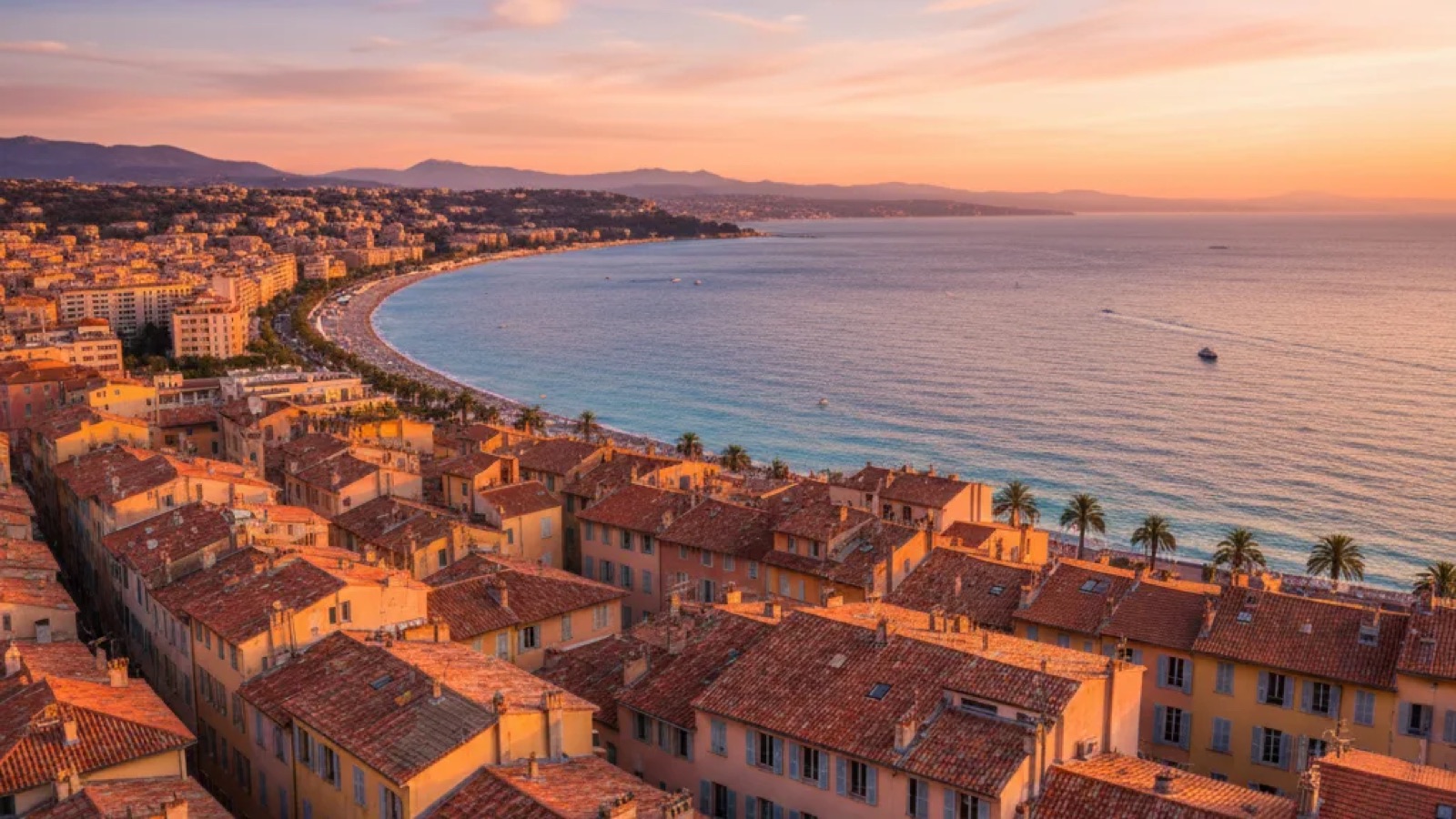
The heart of Nice beats in two places: the Promenade des Anglais and Vieux Nice (the Old Town). The Prom is a vast, sweeping bayfront where you’ll see people jogging, skating, and simply strolling at all hours. It’s iconic, but the real magic is in the labyrinthine alleyways of the Old Town. Here, you’ll find shady squares, ochre and terracotta-coloured buildings with faded green shutters, tiny chapels, and the incredible Cours Saleya market, which transforms from a flower and produce market in the morning to a bustling open-air dining spot at night.
For an unbeatable view, you must climb the Colline du Château (Castle Hill). There’s no castle anymore, just a wonderful park with winding paths, a man-made waterfall, and the most spectacular panoramic views over the Baie des Anges on one side and the Port Lympia on the other. The best photography spot is from the eastern edge of the viewpoint, looking down on the patchwork of red-tiled roofs of Vieux Nice. The patterns and colours are just mesmerising. Art lovers are also spoiled here, with the Musée Matisse and the Musée National Marc Chagall both offering incredible collections dedicated to the artists who made this region their home.
A Note on the Beaches: Pebbles are the Reality
It's important to set expectations for the beaches, especially in and around Nice. The iconic image of the Baie des Anges is beautiful, but that beach is made of large, smooth grey pebbles called galets. It’s not the soft, sandy paradise many first-timers imagine. Lying on a towel is uncomfortable for more than ten minutes; you’ll see locals arriving with padded mats or renting a sunbed for the day at one of the private beach clubs.
The water is a stunning shade of turquoise and wonderfully refreshing. But if soft sand between your toes is non-negotiable, you need to travel. Head west towards Antibes and Cannes, where you'll find public beaches with actual sand. Villefranche-sur-Mer, just one train stop from Nice, also has a beach of coarse sand and fine gravel which is a much gentler option. The best approach? Embrace the pebble beach in Nice for a quick, cooling dip, but plan a dedicated beach day trip elsewhere if you want to lounge in comfort.
Getting Around: The TER Train is Your Best Friend
The single most important piece of advice for visiting the Côte d'Azur: do not rent a car unless you’re planning to explore deep into the backcountry. For travel between the coastal towns, the train is superior in every way. The regional TER (Train Express Régional) line runs like clockwork, hugging the coast and connecting all the major centres from Cannes to Ventimiglia in Italy.
The stations are almost always centrally located, the views from the window are often spectacular, and the cost is very reasonable. Most importantly, it allows you to completely bypass the two biggest headaches of Riviera travel: traffic and parking. In July and August, the coastal roads can become gridlocked, and finding a parking spot in towns like Èze or Antibes is a competitive sport that can easily waste hours of your day. The train is fast, efficient, and utterly stress-free by comparison. You can buy tickets from machines at the station (they all have an English language option) or via the official app. Just remember to validate your paper ticket in the yellow machines on the platform before you board!
East of Nice: Villefranche, Èze and Monaco
The stretch of coast east of Nice is pure drama. Your first stop, just a five-minute train ride away, should be Villefranche-sur-Mer. It has one of the deepest natural harbours on the Med, and the old town tumbles right down to the waterfront. It feels a world away from the bustle of Nice and is a perfect spot for a lazy seaside lunch.
Further along is Èze. Be aware that the train station, Èze-sur-Mer, is at sea level. The famous medieval village, Èze Village, is perched 400 metres up a cliff. You can take a bus from the station or, if you’re feeling energetic, hike the steep but rewarding Nietzsche Path. Named for the philosopher who supposedly walked it while composing his work, it takes about 90 minutes and the views are worth every step. The village itself is a stunning, albeit tourist-heavy, labyrinth of stone alleys, artisan shops, and five-star hotels. For photographers, try to be in Èze Village for the golden hour before sunset. The way the warm light hits the old stones and the shimmering sea below is pure magic.
And then there's Monaco. A separate principality, it's easily visited as a day trip by train. You can see the Prince's Palace, the famous Monte-Carlo Casino, and the superyachts in the harbour. It feels like a different country because it is – slick, clean, and conspicuously wealthy. It’s certainly an experience, but an afternoon is usually enough to take in the unique atmosphere before retreating back to the more soulful charms of France.
West of Nice: Antibes, Cannes and the Hill Villages
Heading west from Nice, the vibe changes again. Antibes is a standout town on the Riviera. Its walled old town is a joy to get lost in, less polished than some of its neighbours but packed with character. The covered Provençal market is fantastic, and the walk around the Cap d'Antibes offers stunning coastal views. The real highlight is the Musée Picasso, housed in the Château Grimaldi where Picasso had a studio in 1946. Seeing his vibrant, joyful works with the very sea and light that inspired them right outside the window is a powerful experience.
Cannes, of course, is famous for its film festival. Outside of that fortnight in May, it’s a chic city with luxury boutiques, grand hotels along the Boulevard de la Croisette, and some of the best sandy beaches on this stretch of coast. It's more overtly glamorous than Nice and worth a day trip to experience the see-and-be-seen atmosphere.
Don't forget the villages perchés or hilltop villages. While Èze is the most famous, Saint-Paul-de-Vence is its main rival. Famed for its connection to artists like Chagall and Calder, it is now home to countless art galleries and the renowned Fondation Maeght modern art museum. It's a gorgeous place, though it can feel like an open-air museum. Reaching it requires a bus (the 655 from Cagnes-sur-Mer is a good option), which can be a welcome change of pace from the train.
The Outliers: Menton and Saint-Tropez
At the two extremes of the Côte d'Azur lie two very different towns. Menton, the last stop before Italy, is a hidden gem. It has a warmer microclimate than the rest of the coast and a distinctly Italian feel in its architecture and cuisine. It’s famous for its lemons, celebrated every February with a huge festival, and for its exceptional gardens like the Serre de la Madone. The morning light in Menton is incredible; get up early and walk along the waterfront towards the old town, watching the sun illuminate the tall, pastel-coloured buildings of the Quai Bonaparte.
Saint-Tropez, on the other hand, is the definition of a destination. Famous for its jet-set crowd, Pampelonne beach clubs, and vibrant nightlife, it's also famously difficult to get to. It is not on the main coastal train line. To reach it, you either have to drive the often-congested coastal road, or take a train to Saint-Raphaël and then a bus or ferry. Because of this, it doesn't work well as a simple day trip from Nice. It's a place you commit to, often staying in or near the town itself. It's a fantastic, glamorous experience, but one that requires separate planning from a typical Nice-based itinerary.
When to Go: Seasons, Crowds, and the Mistral
Timing your visit to the French Riviera is crucial. July and August are peak season. The weather is hot, the sea is bath-warm, and the crowds are immense. Prices for accommodation soar and the traffic can be nightmarish. If you love a buzzing, high-energy atmosphere and don’t mind crowds, it can be fun. Otherwise, it's best avoided.
The shoulder seasons of May-June and September-October are perfect. The weather is still beautifully warm and sunny, the sea has warmed up (especially in September), and the crowds have thinned out considerably. You get all the beauty with a fraction of the stress. Spring sees the region covered in wildflowers, while autumn brings a golden light and the grape harvest inland.
Winter (November to March) is quiet. Many restaurants and some attractions may have reduced hours or close, but you’ll have the place largely to yourself. It’s a great time for city breaks in Nice, with clear, crisp air and low sun. Be aware of the Mistral, a strong, cold wind that can blow down from the Rhône Valley, primarily affecting the western part of the Riviera. It’s less of a factor in Nice and Menton, which are sheltered by the Alps, but it can make its presence felt.
A Taste of the Riviera: What to Eat and Drink
The food here is a wonderful mix of French and Italian influences, with a strong emphasis on fresh, seasonal produce. Look for restaurant chalkboards advertising the plat du jour (dish of the day) or a menu du jour (set menu), which are almost always excellent value for lunch. Be aware that the French keep strict dining hours; kitchens often close between lunch and dinner, so plan accordingly.
You can't leave without trying some local specialities. Socca is a must – a thin, crispy chickpea pancake, cooked on a giant griddle and seasoned with pepper, best eaten hot out of the paper. You’ll find it in the old towns of Nice and Antibes. Pissaladière is a tart-like pizza topped with caramelised onions, anchovies, and olives. A true salade niçoise should contain tuna or anchovies, hard-boiled eggs, tomatoes, olives and raw vegetables, but never, ever rice or cooked vegetables such as potatoes or green beans. And of course, with Provence just inland, the local dry rosé wine is practically obligatory on a sunny afternoon.
For those looking to venture further, the culture and landscapes of the Riviera are just the beginning. The lavender fields, vineyards and hilltop towns of inland Provence offer a completely different, and equally magical, French experience.
Frequently Asked Questions
Is the French Riviera expensive to visit?
It certainly can be, but it doesn't have to be. While Monaco and Saint-Tropez are synonymous with luxury, you can have a surprisingly affordable trip. Basing yourself in Nice, using the efficient TER train to get around, and enjoying picnics with fresh produce from the local markets are all great ways to manage your budget. Many museums have reasonable entry fees, and exploring the old towns and hiking coastal paths is completely free. A menu du jour at lunch is always a great value option for dining out.
Do I need to speak French?
In major tourist hubs like Nice, Cannes, and Monaco, you will find English is widely spoken in hotels, restaurants, and shops. However, making an effort with a few French pleasantries will always be warmly appreciated. A simple "Bonjour" (Hello), "Merci" (Thank you), and "S'il vous plaît" (Please) goes a long way. In smaller villages or more local establishments, a translation app on your phone can be very helpful, but don't let a language barrier stop you; a smile and a bit of pointing works wonders.
How many days should I spend on the French Riviera?
Allow a minimum of five days to get a real feel for the region without rushing. This would allow you two or three days to explore Nice itself and another two or three days for day trips to places like Èze, Monaco, or Antibes. A week is even better, as it gives you time to relax, perhaps have a dedicated beach day, and visit a hilltop village like Saint-Paul-de-Vence. The Riviera is so dense with things to see, you could easily spend two weeks and not run out of new towns to discover.
Are the beaches in the French Riviera sandy?
This is a common point of confusion. Many of the most famous beaches, including the entire stretch in Nice, are made of large grey pebbles called galets. They are beautiful to look at but not very comfortable for sunbathing. If you're looking for soft, golden sand, you need to head to the beaches in Cannes, Juan-les-Pins, or parts of Antibes. Villefranche-sur-Mer offers a good middle ground with coarse sand and fine gravel. So yes, there are sandy beaches, but you need to know where to find them.
Is the French Riviera safe for solo travellers?
Yes, the French Riviera is a very safe and enjoyable destination for solo travel. As with any popular tourist destination, it's wise to use common sense. Be aware of your surroundings, especially in crowded areas like train stations and markets, and keep an eye on your belongings to avoid pickpockets. The main towns are well-lit and busy in the evenings. The reliable public transport network makes it easy and safe to navigate between towns alone. By taking standard precautions, you can have a fantastic and secure solo adventure.
Final Thoughts
There's a reason the Côte d'Azur has captivated travellers, artists and dreamers for over a century. It's the physical beauty, of course – that impossible blue of the sea against the sun-bleached stone of a medieval village. But it’s more than that. It's the scent of jasmine on a warm evening, the clink of wine glasses in a bustling square, the joy of jumping into the cool Med after a hot day of exploring.
The key to falling in love with the Riviera is to look beyond the clichés of glamour and expense. Ride the train with the locals, lose yourself in the backstreets of an old town, and take the time to just sit at a café and watch the world go by. That's where you'll find the rhythm of life here, a rhythm that will call you back again and again.