Iceland Ring Road: A 10-Day Itinerary
Driving Iceland's Ring Road in 10 days: a realistic route, driving times, weather and road closures, and where to slow down.
In this guide
- Quick Facts
- How Long Do You Really Need for the Ring Road?
- Clockwise or Anticlockwise?
- Hiring a Car & Driving in Iceland
- Your Daily Lifeline: Road.is and Safetravel.is
- A 10-Day Anticlockwise Ring Road Itinerary
- What About the Westfjords?
- Summer or Winter? Seasons and Expectations
- Campervan vs Guesthouse: Which is Right for You?
- Final Practical Tips
- Explore in Depth
- Frequently Asked Questions
- Final Thoughts
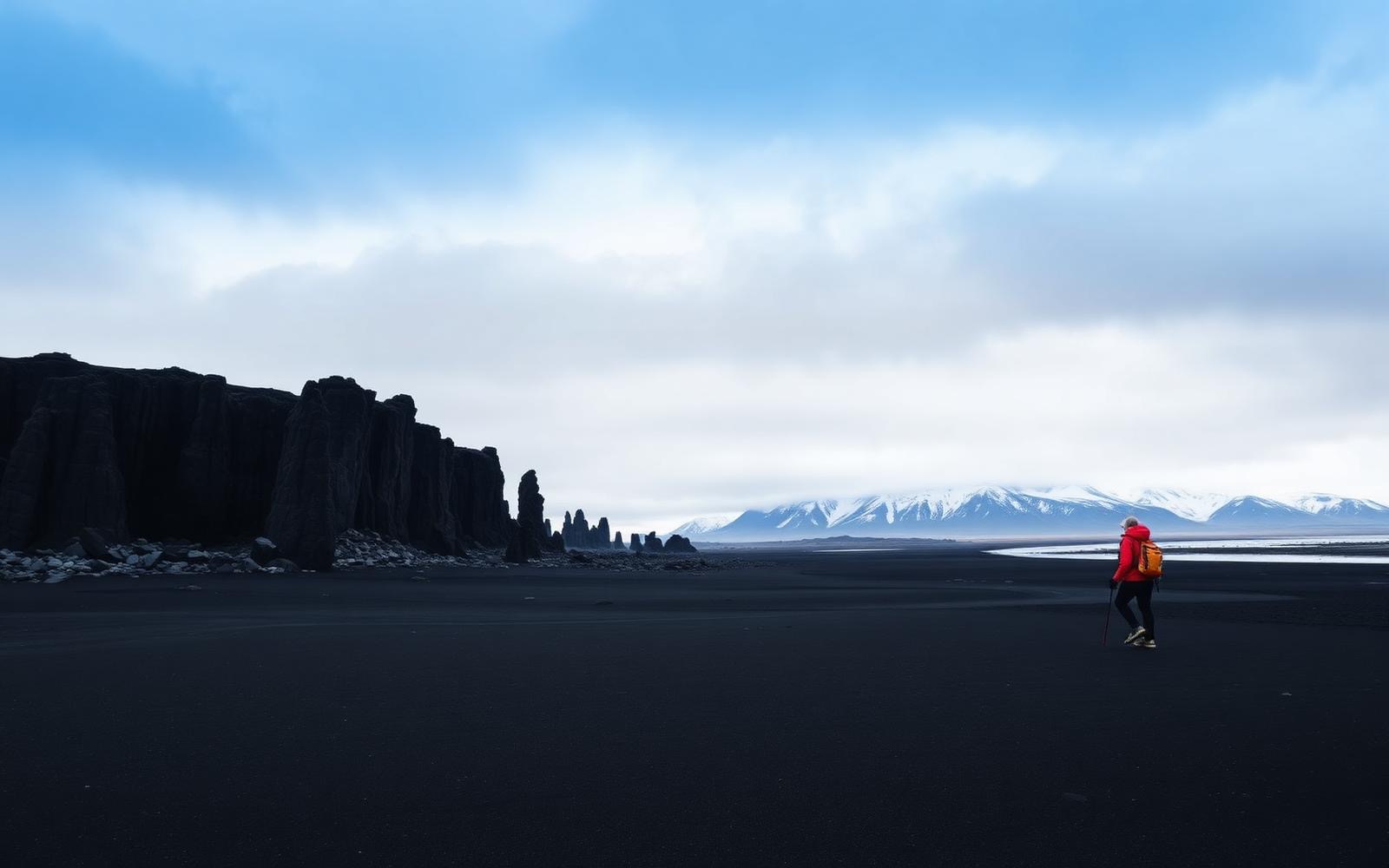
On Diamond Beach, shards of iceberg the size of a small car rest on a bed of pure black sand, impossibly blue, while the North Atlantic churns behind them, tossing more of these glacial diamonds onto the volcanic shore. An Icelandic Ring Road trip isn’t just a road trip; it’s a journey through a geology textbook come to life, a constant, humbling reminder of the planet’s raw power. Every kilometre reveals a new wonder, from thundering waterfalls you can walk behind to bubbling mud pots that smell of the earth’s core.
A lap of Iceland on Route 1, the Ring Road, is one of the world’s great driving adventures. It’s a loop of roughly 1,300 kilometres that connects most of the inhabited parts of the country, acting as a thread through a tapestry of volcanoes, glaciers, fjords, and otherworldly landscapes. But pulling it off requires planning. This guide is designed to give you the practical knowledge you need to do it right. We'll cover how long you really need, whether to go clockwise or anticlockwise, the critical details of hiring a car and driving safely, and a day-by-day itinerary that balances the epic sights with manageable driving days. This is your roadmap to the land of fire and ice.
Quick Facts
- Location: Iceland, North Atlantic Ocean.
- Getting There: Fly into Keflavík International Airport (KEF), located about 50 kilometres from the capital, Reykjavík.
- Getting Around: A hire car is essential for the Ring Road. 2WD is sufficient for Route 1 in summer; a 4x4 is recommended for winter or if you plan to explore F-roads (highland tracks).
- Language & Currency: The official language is Icelandic, but English is spoken almost universally. The local currency is the Icelandic króna. Card payments are accepted nearly everywhere.
- Best Time to Visit: June to August offers the midnight sun, greenest landscapes, and best road conditions. September to April offers the chance to see the Northern Lights, but with shorter days and potentially hazardous winter driving conditions.
How Long Do You Really Need for the Ring Road?
This is the most important question you’ll ask. While you could technically drive the whole loop in under 24 hours, that would entirely miss the point. The Ring Road isn’t the destination; it’s the path that connects the destinations. Rushing is the biggest mistake you can make.
Here’s a realistic breakdown:
- 7 Days: The Absolute Minimum. This is a whirlwind tour. You'll be driving for many hours each day, with time for only the most famous sights right off the main road. You’ll spend a lot of time watching the scenery from behind the windscreen and will likely have to skip entire regions like the Snæfellsnes Peninsula. It’s possible, but it’s exhausting.
- 10 Days: The Comfortable Sweet Spot. This is the best itinerary for most first-time visitors. It allows for more reasonable driving days, gives you time to do a short hike or two, and lets you add a detour to the stunning Snæfellsnes Peninsula. You won’t feel perpetually rushed and can linger at a place that captures your imagination.
- 14+ Days: The Relaxed Explorer. With two weeks, the trip transforms from a road trip into a true exploration. You can cover the entire Ring Road, spend a couple of days on the Snæfellsnes Peninsula, and even dedicate 3-4 days to the remote and spectacular Westfjords (which are not on the Ring Road). This pace allows for spontaneity, longer hikes, and soaking in the atmosphere of the small towns.
Clockwise or Anticlockwise?
The vast majority of travellers drive the Ring Road anticlockwise, starting from Reykjavík and heading along the South Coast first. There’s a good reason for this: it’s front-loaded with superstars. Within the first few days, you tick off the Golden Circle, Seljalandsfoss, Skógafoss, the black sand beaches near Vík, and the Jökulsárlón glacier lagoon.
However, there's a strong case to be made for a clockwise journey. By heading north from Reykjavík first, your trip builds to a crescendo, saving the blockbuster South Coast for the end. The crowds also tend to thin out as you move against the main flow of traffic. Going clockwise can make the experience feel more personal, finishing with the awe-inspiring glaciers just before returning to the capital. If you’re a photographer chasing the light, a clockwise route in summer means the sun will be behind you or to your side for many of the key South Coast sights in the afternoon, which can be advantageous.
Hiring a Car & Driving in Iceland
Your vehicle is your lifeline on the Ring Road. Choosing the right one—and the right insurance—is critical. The roads themselves are generally in excellent condition, but Iceland’s environment presents unique challenges.
Do I Need a 4x4?
For the Ring Road (Route 1) itself during the summer (roughly May to September), a standard 2WD vehicle is perfectly adequate. The road is paved for almost its entire length. A 4x4 becomes necessary for two reasons: winter driving or F-roads. In winter, a 4x4 with good winter tyres provides much-needed traction and safety on icy, snow-covered roads. F-roads are highland tracks, unpaved and often involving river crossings, that access Iceland’s rugged interior. You are legally required to have a 4x4 to drive on F-roads, and they are only open for a short period in mid-summer. For a standard Ring Road trip outside of deep winter, a 2WD will save you money on hire and fuel.
Insurance is Non-Negotiable
Standard Collision Damage Waiver (CDW) is usually included, but Iceland’s environment requires more. It's strongly advisable to get Gravel Protection (GP) and Sand and Ash Protection (SAAP). The Ring Road itself is fully paved, but many side roads and detours are gravel, and cars passing in the other direction will kick up stones that can easily chip your windscreen or paint. The south coast is also prone to high winds that can whip up volcanic sand and ash, capable of stripping the paint off a car in minutes. These specific insurance packages are worth every cent for peace of mind.
Unique Driving Hazards
Driving in Iceland isn't like driving at home. Be prepared for:
- Single-Lane Bridges: Common throughout the country, especially in the east and south-east. The rule is simple: the car that reaches the bridge first has the right of way. Slow down significantly on approach and be prepared to stop.
- Wind & Car Doors: Iceland’s winds are legendary. When you park, always face the car into the wind if possible. When you open your door, hold onto it with two hands. A sudden gust can catch the door and bend it backwards on its hinges, causing thousands of dollars in damage that is almost never covered by insurance. This is the single most common and costly mistake tourists make.
- Sheep on the Road: In summer, hundreds of thousands of sheep roam free. They are unpredictable and often gather near the road. Slow down the moment you see them. -
- Blind Rises: Many roads have blind crests. Always keep to the right side of your lane, as you never know what might be coming over the hill.
Your Daily Lifeline: Road.is and Safetravel.is
Before you turn the key in the ignition each morning, you must check two websites. This is not optional. The weather in Iceland can change in an instant, and conditions can vary dramatically from one region to another.
Road.is is the official site of the Icelandic Road and Coastal Administration. It provides a real-time, colour-coded map showing the condition of every road in the country—from passable, to icy, to completely closed. It also has webcams and wind speed indicators.
Safetravel.is is a project of the Icelandic Association for Search and Rescue. It provides up-to-the-minute weather warnings, avalanche risks, and other safety alerts. You can also submit your travel plan with them, which is a crucial safety measure if you're planning any serious hiking or heading into more remote areas.
A 10-Day Anticlockwise Ring Road Itinerary
This itinerary is a blueprint for a comfortable and epic 10-day trip. It builds in flexibility and ensures you see the highlights without burning out. Distances are approximate and you should always book accommodation well in advance, especially in summer.
Day 1: Arrival in Reykjavík
Fly into Keflavík (KEF), pick up your hire car, and make the 45-minute drive to Reykjavík. Don’t plan too much for your first day. Settle into your accommodation, shake off the jet lag, and take a walk through the city centre. Stroll down Laugavegur, the main shopping street, and marvel at the magnificent architecture of the Hallgrímskirkja church. It’s a gentle introduction to the country before the big driving days begin.
Day 2: The Golden Circle
Today is a classic for a reason. The Golden Circle is a 300-kilometre loop that showcases three of Iceland's most famous sights. First, visit Þingvellir National Park, the site of Iceland's ancient parliament and where the North American and Eurasian tectonic plates are pulling apart. You can literally walk between continents. Next, head to the Geysir geothermal area, where the Strokkur geyser erupts every 5-10 minutes. Finally, witness the power of Gullfoss, a spectacular two-tiered waterfall. While popular, these sites are essential introductions to Icelandic nature. Finish your day by driving towards the South Coast to get a head start for tomorrow. Guesthouses near the towns of Hella or Hvolsvöllur are a good base.
Day 3: South Coast Waterfalls & Black Sand Beaches
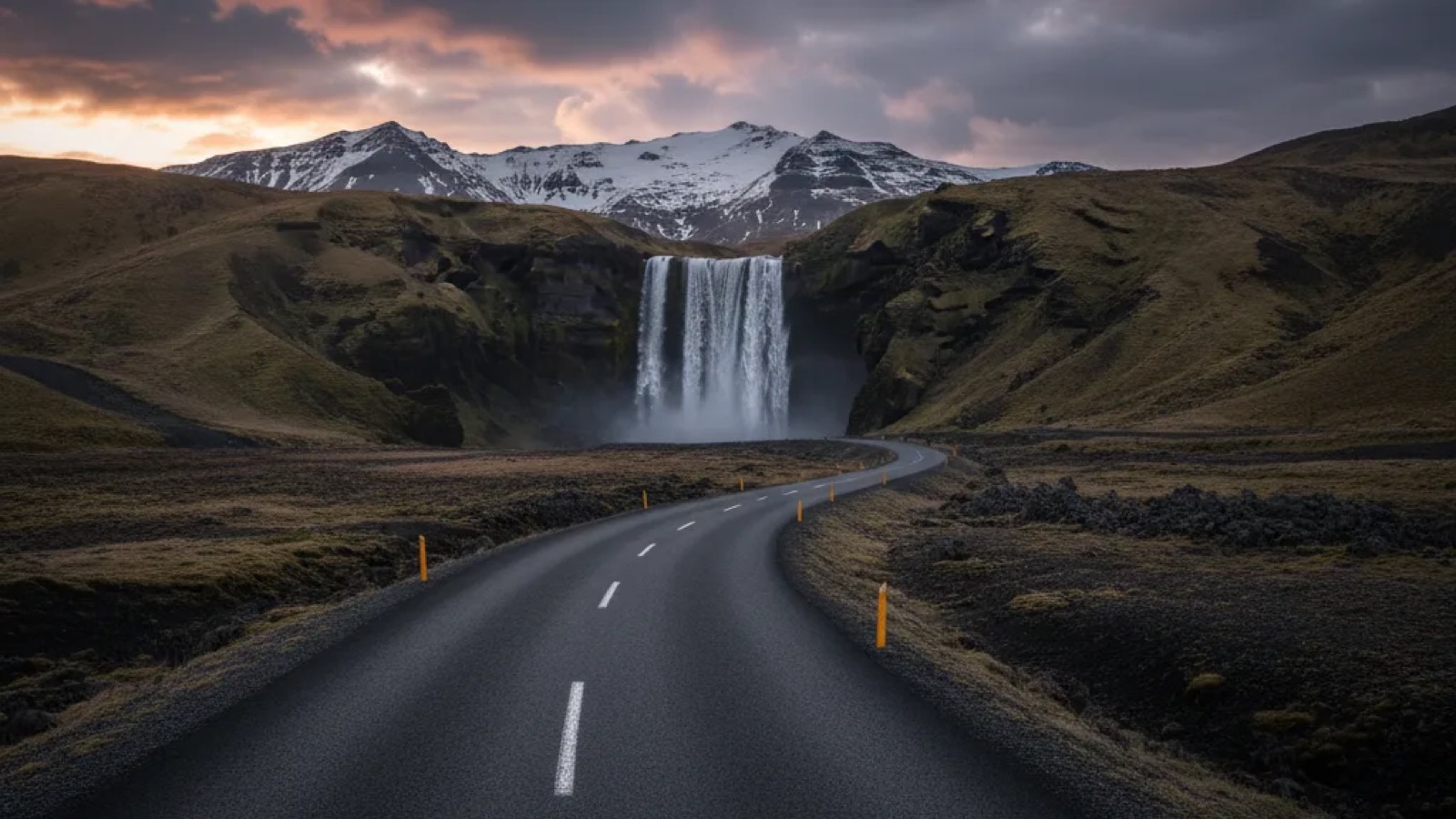
Get ready for a day of icons. Your first stop is Seljalandsfoss, the waterfall you can walk behind. Pro photography tip: bring a lens cloth, as the spray is intense! A short walk away is the lesser-known but equally beautiful Gljúfrabúi, hidden inside a small canyon. Continue east to Skógafoss, a perfectly rectangular curtain of water. You can climb the stairs to the top for a dizzying view. The day ends at the volcanic black sand beaches near Vík. The most famous is Reynisfjara. While stunning with its basalt columns and sea stacks, it is incredibly dangerous. Beware of the sneaker waves—they are unpredictable, powerful, and have tragically claimed lives. Never turn your back on the ocean and stay well away from the water's edge.
Day 4: Canyons, Lava Fields & Vatnajökull National Park
Leaving the village of Vík, your journey takes you across vast, moss-covered lava fields and glacial sand plains. A worthwhile detour is Fjaðrárgljúfur, a serpentine canyon that looks like it was carved by a mythical beast. (Its accessibility can change to protect the fragile environment, so check for closures before you go). The main destination for the day is Skaftafell, a verdant oasis within the enormous Vatnajökull National Park. Don't miss the easy one-hour hike to Svartifoss (Black Fall), which is framed by dramatic black basalt columns that inspired the architecture of Hallgrímskirkja in Reykjavík. Stay overnight in the area between Skaftafell and Höfn to position yourself for tomorrow's icy wonders.
Day 5: Glacial Lagoons & Diamond Ice
Today is a highlight of any trip to Iceland. You’ll arrive at Jökulsárlón, a large glacial lagoon filled with icebergs that have calved off the Breiðamerkurjökull glacier. The sight of these blue-and-white giants floating silently towards the sea is mesmerising. You can take a boat tour to get closer to the ice. Just across the road is Diamond Beach, where the icebergs wash up on the black sand before being reclaimed by the Atlantic. It's a photographer's dream. The contrast, the colours and the textures are worth hours of watching as the scene changes with the light. Continue on to the charming fishing town of Höfn for the night.
Day 6: The Winding Eastfjords
This is a major driving day, but one of the most scenic. The Ring Road weaves in and out of the dramatic, sparsely populated Eastfjords. The pace slows here. The mountains plunge directly into the sea, and the road clings to the coastline. Each fjord reveals a new, tiny fishing village. Take your time, stop often, and soak in the tranquility. A popular and highly recommended detour is the mountain pass down into Seyðisfjörður, a ridiculously picturesque village known for its colourful wooden houses and thriving arts scene. It feels like a world apart. Stay overnight in the town of Egilsstaðir, the main hub of the East.
Day 7: From the East to the Geothermal North
From Egilsstaðir, the landscape changes dramatically. You’ll drive across a stark, barren highland plateau that feels like the surface of the moon. The destination is Europe’s most powerful waterfall, Dettifoss. You have a choice of viewing it from the east or west bank (the roads are different and don't connect). The west side (Road 862) is paved and has better infrastructure, while the east side (Road 864) is a rougher gravel track but offers what many consider to be a more powerful, in-your-face perspective. Afterwards, continue to the Lake Mývatn area, a hotbed of geothermal activity.
Day 8: Lake Mývatn & Akureyri
Spend the morning exploring the alien landscapes around Mývatn. Walk through the steaming fumaroles and bubbling mud pots of the Hverir geothermal area (the smell of sulphur is intense!). Explore the surreal lava formations of Dimmuborgir (the Dark Castles), and perhaps take a dip in the Mývatn Nature Baths, a calmer alternative to the Blue Lagoon. In the afternoon, make the short drive to Goðafoss (Waterfall of the Gods) before continuing to Akureyri, Iceland’s charming ‘Capital of the North’. It’s a lovely small city to relax in, with great cafés and a beautiful botanical garden.
Day 9: Snæfellsnes Peninsula, ‘Iceland in Miniature’
Instead of rushing back to Reykjavík, the perfect finale to a Ring Road trip is a detour to the Snæfellsnes Peninsula. It's often called ‘Iceland in Miniature’ because it has a little bit of everything: volcanoes, glaciers, black and golden beaches, lava fields, and dramatic sea cliffs. The drive from Akureyri is long, so break it up. The main attraction is the iconic, cone-shaped Kirkjufell mountain, arguably the most photographed peak in Iceland, especially with the Kirkjufellsfoss waterfall in the foreground. Stay overnight in a town on the peninsula like Grundarfjörður or Stykkishólmur.
Day 10: Exploring Snæfellsnes & Return to Reykjavík
Spend the morning exploring the rest of the peninsula. Walk the coastal path between the villages of Arnarstapi and Hellnar with its stunning sea arches and basalt formations. Visit the black pebble beach of Djúpalónssandur. The entire area is dominated by the mystical, glacier-capped Snæfellsjökull volcano, the setting for Jules Verne's 'Journey to the Centre of the Earth'. In the afternoon, make the 2-3 hour drive back to Reykjavík or directly to Keflavík for your flight home, your head full of incredible memories.
What About the Westfjords?
You’ll notice the Westfjords are not on this itinerary. This remote, ancient, and sparsely populated peninsula is a spectacular corner of Iceland, but it is not part of the Ring Road. The roads there are slower, often unpaved, and cling to the edges of enormous fjords. To do the Westfjords justice, you need to add a minimum of 3-4 extra days to your trip. It’s an adventure in itself, best saved for a second visit or a much longer itinerary of three weeks or more.
Summer or Winter? Seasons and Expectations
Your experience will be completely different depending on when you go.
Summer (June-August): This is the season of the midnight sun, where it never truly gets dark. The landscape is a vibrant green, all roads (including F-roads) are typically open, and the weather is at its most stable. It's the best time for hiking and accessing the interior. As a photographer, the challenge and joy is that 'golden hour' can last for three or four hours. The downside? It's peak season, meaning more people and the need to book everything far in advance.
Winter (October-April): Winter transforms Iceland into a wonderland of ice and snow. The main draws are the magical Northern Lights (Aurora Borealis) and the electric-blue ice caves that form in the glaciers (accessible only via guided tours). However, daylight is extremely limited (as little as 4-5 hours in mid-winter), driving can be treacherous with frequent road closures due to snow and wind, and many guesthouses and attractions outside of the main towns close down. A winter Ring Road trip is for the adventurous and flexible traveller only and absolutely requires a 4x4.
Campervan vs Guesthouse: Which is Right for You?
A popular option is to hire a campervan, combining your transport and accommodation. This offers ultimate flexibility, allowing you to change your plans based on the weather or a whim. It can also be a good way to manage food costs, as you can cook your own meals. However, it’s crucial to know that you cannot just pull over and sleep anywhere. Wild camping is strictly forbidden in Iceland. You must stay in designated campsites each night. These offer facilities like toilets, showers, and sometimes kitchens and laundry. Campsites can be busy in summer, and the experience is still, well, camping.
Staying in guesthouses, farm stays, and hotels provides more comfort, a guaranteed warm room, and a hot shower. It’s a chance to meet local hosts and enjoy a bit more space. The trade-off is a loss of flexibility, as you are tied to your pre-booked accommodation each night. You really do need to book months in advance for a summer trip. There’s no right answer; it comes down to your personal travel style and comfort level.
Final Practical Tips
A few last pieces of hard-won advice before you go:
- Fuel: Fuel stations can be few and far between, especially in the East and the North. Follow the golden rule: never let your tank go below half full. If you see a station and you're at or near the halfway mark, fill up.
- Swimming Pool Etiquette: Visiting local swimming pools (sundlaug) is a fantastic Icelandic cultural experience. But you must follow the rules. It is mandatory to shower naked, using soap, in the communal changing rooms before entering the pool. This is non-negotiable and keeps the pool water clean with minimal chlorine.
- Respect the Land: Iceland’s ecosystem is incredibly fragile. The moss can take decades to recover if damaged. Always stay on marked paths, never drive off-road (it’s illegal and causes immense damage), and respect any signs indicating a closed area. Drones are heavily regulated, so check local rules for any area you plan to fly. Pack out everything you pack in. Leave no trace.
Explore in Depth
Want to know how to experience the wonders of Iceland without breaking the bank? My guide to budget travel in Iceland offers practical tips on saving money on food, transport, and accommodation while still having an incredible adventure.
Frequently Asked Questions
Can I drive the Iceland Ring Road in winter?
Yes, it is possible, but it requires serious planning and flexibility. You will need a 4x4 vehicle with winter tyres. Daylight hours are very short, and road closures due to snow, ice, and wind are common. You must check road.is and safetravel.is every morning and have backup plans. Some regions, particularly in the East and North, can be challenging. Many attractions may be inaccessible. Your itinerary must be loose, as weather will dictate your progress. It's an adventure for experienced winter drivers, not for the faint of heart.
Do I need to book accommodation in advance for a Ring Road trip?
Absolutely, especially if you are travelling between June and August. Accommodation outside of Reykjavík is limited and books up months in advance. Spontaneity is not a luxury you’ll have if you want to stay in guesthouses or hotels. If you are travelling in a campervan, you don't need to book individual campsites, but be aware that popular ones can fill up early in the day during peak season. In the shoulder seasons and winter, you have more flexibility, but it's still wise to book at least a day or two ahead.
What should I pack for a summer Ring Road trip?
Layers are everything, even in summer. Icelandic weather is famously unpredictable. You need a waterproof and windproof outer layer (jacket and pants), a warm mid-layer like a fleece or lightweight down jacket, and thermal base layers. Pack sturdy, waterproof hiking boots. Also include a warm hat, gloves, and a scarf. Don't forget your swimmers for hot springs and local pools! Even in summer, you'll be glad you have warm clothing when you're standing on a windy cliff or near a glacier.
Is a campervan a cheaper way to see Iceland?
Not necessarily. While you can save on restaurant meals by cooking yourself, the initial hire cost of a campervan can be significantly higher than a small car. You also have to factor in nightly campsite fees, which you must use. When you compare the total cost of a campervan, fuel, and campsites against a budget car, fuel, and pre-booked guesthouses (especially if sharing), the price can often be quite similar. The main advantage of a campervan isn't cost, but the freedom and flexibility it provides.
How can I photograph the Northern Lights?
You need three things: darkness, clear skies, and solar activity. Travel between September and April for the best chances. Get away from the light pollution of towns. You'll need a tripod to keep your camera perfectly still for a long exposure. Use a wide-angle lens with a wide aperture (e.g., f/2.8 or lower). Set your focus to infinity manually. Start with settings like a 15-second exposure, f/2.8, and ISO 1600, then adjust based on the brightness of the aurora. A remote shutter or self-timer is essential to avoid camera shake.
Final Thoughts
Some places just change you, and Iceland is one of them. It's more than just a checklist of sights; it's an experience that recalibrates your sense of scale and time. The Ring Road is the perfect skeleton key to unlock this world. It forces you to slow down, to pay attention to the weather, to respect the raw power of nature.
The images that endure from a Ring Road trip are the ones etched in your mind: the impossible green of a summer valley, the sound of a million tonnes of ice crashing into a lagoon, the feeling of the wind trying to pull you from a cliff edge. Plan well, drive safe, and let Iceland work its magic on you. It’s a journey you’ll carry with you for a lifetime.