India Travel Guide: Where to Go on a First Trip
A first India trip planned properly: which region to pick, how long to stay, trains, food safety, seasons and cultural etiquette.
In this guide
- Quick Facts
- Embracing the Scale: Why You Can't See It All
- Choosing Your First Adventure: Classic India Itineraries
- When to Go: Navigating India's Seasons
- How Long to Stay: Pacing Your Journey
- Getting In: Visas and Formalities
- The Great Indian Railway Journey
- Beyond the Rails: Other Ways to Get Around
- A Feast for the Senses: What to Eat and Drink (Safely)
- Cultural Etiquette: Dress, Temples, and Touts
- Staying Safe and Well for All Travellers
- Festivals, Tipping, and Connectivity
- Explore in Depth
- Frequently Asked Questions
- Final Thoughts
On the train between Jodhpur and Jaisalmer, deep in the heart of Rajasthan, the world through the dusty window simplifies into a blur of green and gold. The rhythmic clatter of the tracks is a constant companion, underscored by the murmur of Hindi, the laughter of a family sharing a tiffin box, and the chai-wallah's melodic call echoing down the carriage. Outside, the landscape shifts from scruffy farmland to the shimmering edges of the Thar Desert. A single train journey like this holds more life, more colour and more raw sensation than entire weeks spent elsewhere. This is India. It's not just a place you see; it's a place you feel with every single one of your senses.
For the first-time traveller, India can feel like a beautiful, bewildering puzzle. It's a continent masquerading as a country, and the sheer scale of it can be intimidating. The big question for first-timers isn't what to see, but where to even begin. This guide answers it. The secret to a great first trip is not to try and see everything, but to choose one region and immerse yourself completely. We'll break down the classic starting points, get into the nitty-gritty of travel logistics like trains and visas, and share the practical advice that will help you navigate the chaos and discover the incredible soul of this country.
Quick Facts
- Location: South Asia, bordering the Indian Ocean, Arabian Sea, and Bay of Bengal. It shares land borders with Pakistan, China, Nepal, Bhutan, Bangladesh, and Myanmar.
- Getting There: Major international gateways include Indira Gandhi International Airport (DEL) in Delhi, Chhatrapati Shivaji Maharaj International Airport (BOM) in Mumbai, and Kempegowda International Airport (BLR) in Bengaluru. Direct flights are available from major hubs in Australia, Europe, North America, and Southeast Asia.
- Getting Around: The Indian Railways network is vast and iconic for long distances. Domestic flights are plentiful and connect all major cities. Long-distance buses, both government and private, cover almost everywhere else. In cities, auto-rickshaws and ride-hailing apps are a mainstay.
- Language & Currency: India's Constitution recognises 22 scheduled languages; Hindi and English are the official languages of the central government. Hindi is widely spoken in the north and central regions, while English is common in business, government, and tourism. The currency is the Indian Rupee (INR).
- Best Time to Visit: Generally, the cooler, drier season from October to March is ideal for most of the country. However, the Himalayas are best visited from June to September, and the monsoon (roughly June-September) can be a lush, beautiful time to visit certain regions like Kerala if you don't mind the rain.
Embracing the Scale: Why You Can't See It All
The first and most important piece of advice for anyone planning a trip to India is this: let go of the idea that you can "do" India in one go. To put it in perspective, the country is roughly the size of Western Europe. You wouldn't try to see Lisbon, Berlin, and Rome in two weeks, and you should apply the same logic here. Hopping from north to south to west in a single trip is a recipe for exhaustion, not enjoyment. You'll spend more time in airports and on overnight trains than you will absorbing the places you came to see.
India’s diversity isn't just geographical; it's cultural, linguistic, and culinary. The snow-capped peaks of Himachal Pradesh feel like a world away from the tropical backwaters of Kerala. The food, the language, the architecture, the very rhythm of life changes dramatically from one state to the next. By choosing one or two neighbouring regions, you give yourself the gift of time. You can sink into the local pace, spend an extra day in a market that fascinates you, or take that spontaneous detour to a village festival. This is where the real magic of travelling in India happens—not in ticking off a checklist, but in allowing the country to reveal itself to you slowly.
Choosing Your First Adventure: Classic India Itineraries
With the "one region at a time" philosophy in mind, where should you start? Each part of India offers a profoundly different experience. Here are some of the most popular and rewarding paths for a first-time visitor.
The Golden Triangle & Rajasthan: Palaces and History
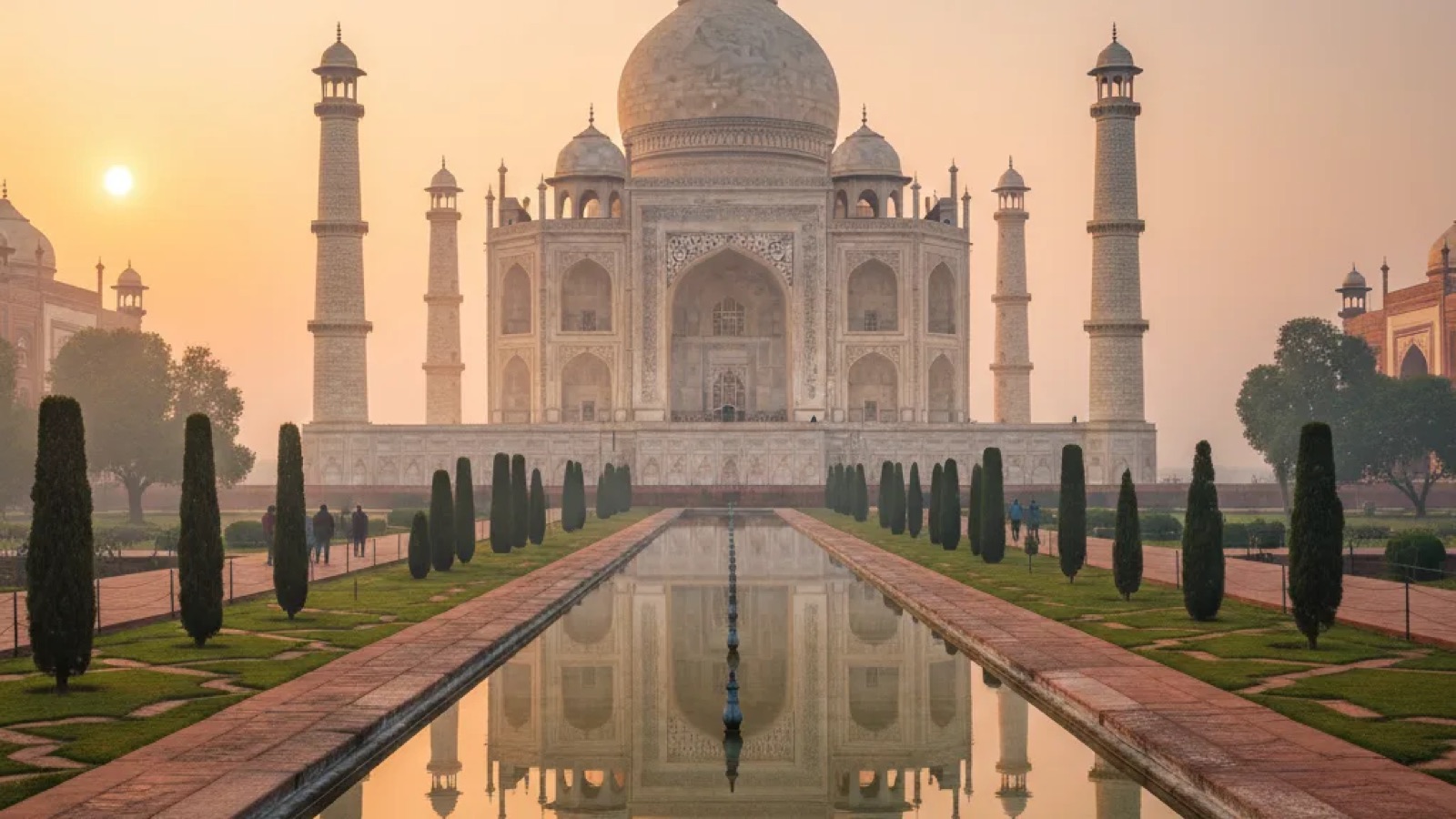
This is the India of many people's imaginations. The route connecting Delhi, Agra, and Jaipur—the Golden Triangle—is the country's most well-trodden tourist circuit, and for good reason. It’s an incredible introduction to the history of the Mughal and Rajput empires. You'll move from the sprawling capital of Delhi, with its ancient tombs and bustling markets, to Agra, home of the incomparable Taj Mahal, and then to Jaipur, Rajasthan's vibrant "Pink City." It's well worth extending this trip deeper into Rajasthan to visit the blue city of Jodhpur or the lake city of Udaipur. It's a region of majestic forts, opulent palaces, and desert landscapes. It is chaotic, colourful, and a full-on sensory experience that will leave you spellbound.
The Serene South: Kerala & Tamil Nadu
If your idea of India is more about lush landscapes and a gentler pace, head south. Kerala is nicknamed "God's Own Country," and it's an apt description. Here, you can float along the tranquil backwaters on a traditional houseboat, explore the fragrant spice plantations and tea gardens of the Western Ghats, and relax on palm-fringed beaches. Neighbouring Tamil Nadu offers a different flavour of the south, with its colossal, intricately carved temple complexes. The culture here is ancient and deeply rooted. A trip through the south is generally more relaxed than one in the north, making it a fantastic choice for first-timers who might be apprehensive about the intensity.
The High Himalayas: Himachal Pradesh & Ladakh
For the mountain lovers and adventure seekers, the Indian Himalayas are a world-class destination. In Himachal Pradesh, you'll find charming towns like Shimla and Manali, set against a backdrop of pine forests and soaring peaks. This is a hub for trekking, paragliding, and soaking in the Tibetan culture found in places like Dharamshala, home of the Dalai Lama. Further north, accessible only in the summer months by road, is Ladakh. This high-altitude desert is breathtaking. The landscape is stark and stunning, dotted with ancient Buddhist monasteries clinging to cliffsides. It's a physically demanding region due to the altitude, but the rewards are immeasurable photographic and spiritual experiences.
Varanasi & The Ganges: A Spiritual Epicentre
Varanasi is one of the oldest living cities in the world and one of the most powerful places in India. It is not for the faint of heart. Life and death are on public display along the ghats (steps) leading down to the sacred River Ganges. You'll witness public cremation ceremonies, pilgrims bathing in the holy water, and ancient rituals that have been performed for thousands of years. It’s intense, confronting, and can be emotionally overwhelming, but it offers a profound insight into the spiritual heart of Hinduism. Plan to spend at least three days here, taking early morning and evening boat rides on the river to see the ghats in their best light—both literally and figuratively.
When to Go: Navigating India's Seasons
Timing your trip to India is critical and depends entirely on where you plan to go. The country’s weather is dominated by three main seasons.
The Cool, Dry Season (October – March): This is peak season for a reason. For most of the country, especially the plains of the north and Rajasthan, the weather is glorious—warm, sunny days and cool, comfortable nights. It's the perfect time for sightseeing. The downside is that it's also the most crowded and expensive time to travel. One major thing to be aware of is the dense fog that often blankets North India, particularly in December and January. It can cause significant delays and cancellations for both flights and trains, so build buffer days into your itinerary if travelling then.
The Hot Season (April – June): The heat in the lead-up to the monsoon can be ferocious, especially in central and northern India. Temperatures regularly soar well above 40°C. Sightseeing becomes a draining affair, best done in the very early morning or late evening. For most people, it's best to avoid this period for a first trip unless you're heading to the cooler high-altitude regions of the Himalayas, which are just starting to open up.
The Monsoon (June – September): The monsoon rains sweep across the subcontinent, bringing relief from the heat but also high humidity and, at times, flooding and travel disruptions. While many avoid this season, it can be a magical time to visit. Rajasthan becomes surprisingly green, and Kerala's landscapes are lush and vibrant. It's also when Ladakh is at its most accessible and beautiful. If you don't mind the rain, travelling during the monsoon can mean fewer crowds and a different perspective on the country.
How Long to Stay: Pacing Your Journey
The biggest mistake first-time visitors make is trying to cram too much into too little time. India will exhaust you if you let it. The constant noise, crowds, and stimulation are part of the experience, but they also take a toll. A frantic pace will lead to what's known as "India fatigue," where the wonder is replaced by weariness.
Allow a minimum of two weeks for any trip to India, and even then, you should stick to a very focused itinerary, like the core Golden Triangle. Three to four weeks is a much more comfortable timeframe, allowing you to explore a region like Rajasthan or Kerala more deeply without feeling rushed. The key is to build in downtime. Don't schedule every minute. Plan days where your only goal is to sit in a café, wander through a neighbourhood, or read a book. These unstructured moments are often when the most memorable encounters happen. Remember, a 6-hour train journey can easily turn into an 8-hour one. Travel days are tiring. Pacing is everything.
Getting In: Visas and Formalities
For most nationalities, including Australians, a visa is required to enter India. The good news is that the process has been streamlined significantly with the introduction of the e-Visa system. This allows you to apply for and receive your visa online before you travel, without needing to visit an embassy.
There are typically different categories of e-Visa available, varying in duration and number of entries. However, visa rules, categories, and application processes can and do change frequently. It is absolutely essential that you check the very latest information and make your application through the one and only official Government of India e-Visa portal. Be wary of third-party websites that look official but charge extra fees. Start the process well in advance of your trip, but not too early, as there's usually a specific window within which you can apply.
The Great Indian Railway Journey
Travelling by train is the quintessential Indian experience. The network is one of the largest in the world, and it's the backbone of the country, carrying millions of people every day. It’s a rolling microcosm of Indian society and one of the best ways to travel long distances here. Watching the diverse landscapes of India unfold from your window is something you'll never forget. To a first-timer, the system can seem bewildering, but it's remarkably efficient once you understand the basics.
Booking in advance is non-negotiable. Trains on popular routes fill up weeks, sometimes months, ahead of time, especially around holidays. You can book tickets via the official Indian Railways Catering and Tourism Corporation (IRCTC) website, though it can be tricky for foreigners to register. Several reputable third-party booking sites make the process much easier for a small service fee.
Understanding Train Classes
The class of travel you choose will define your journey. Here are the most common options for overnight travel:
- AC 2-Tier (2AC) & AC 3-Tier (3AC): This is the sweet spot for most foreign travellers. These are air-conditioned carriages with sleeping berths. In 3AC, berths are arranged in bays of six, with two more along the corridor. In 2AC, they are in bays of four, offering more space and privacy with a curtain for each berth. Bedding (a sheet, blanket, and pillow) is provided.
- Sleeper Class (SL): This is the budget option and a real adventure. It's non-air-conditioned, with open windows and a similar berth layout to 3AC but with more people. It's crowded, noisy, and you need to bring your own bedding and lock for your bag. It can also be one of the most memorable ways to travel, sharing food and stories with local families. It's not for everyone, but it's an incredible immersion in Indian life if you're up for it.
- AC Chair Car (CC): For shorter daytime journeys (under 6-8 hours), this is a great option. It’s an air-conditioned carriage with comfortable reclining seats, similar to what you'd find on a train in Europe.
Beyond the Rails: Other Ways to Get Around
While trains are iconic, sometimes other modes of transport make more sense. Domestic flights are a lifesaver for bridging the vast distances between regions. Flying from Delhi to Kerala, for example, can save you two full days of travel. Airlines like IndiGo and Air India (which absorbed Vistara in November 2024) offer extensive networks connecting all major cities and many smaller ones. As with trains, book in advance for the best fares.
For shorter distances or reaching places not on the rail network, buses are your answer. They range from rickety government local buses to comfortable air-conditioned "Volvo" coaches run by private operators for inter-city routes. The latter are a great option for overnight journeys if you can’t get a train ticket.
Within cities, the auto-rickshaw is king. These three-wheeled tuk-tuks are perfect for nipping through traffic. Always agree on a fare before you get in or insist on using the metre. In major cities, ride-hailing apps like Uber and Ola are a game-changer. They offer transparent, fixed pricing and are often cheaper and more comfortable than haggling with a rickshaw driver, especially for airport runs or late at night.
A Feast for the Senses: What to Eat and Drink (Safely)
Indian food is a universe unto itself and one of the absolute highlights of travelling here. Forget the generic "curry" you might know from home; the cuisine is incredibly diverse. Northern food is known for its rich, creamy gravies, tandoori breads (like naan and roti), and meat dishes. Southern cuisine, on the other hand, is often lighter, with more rice, lentils, coconut, and spectacular vegetarian dishes like dosas and thalis. India is a paradise for vegetarians; you'll find extensive and delicious veg options everywhere.
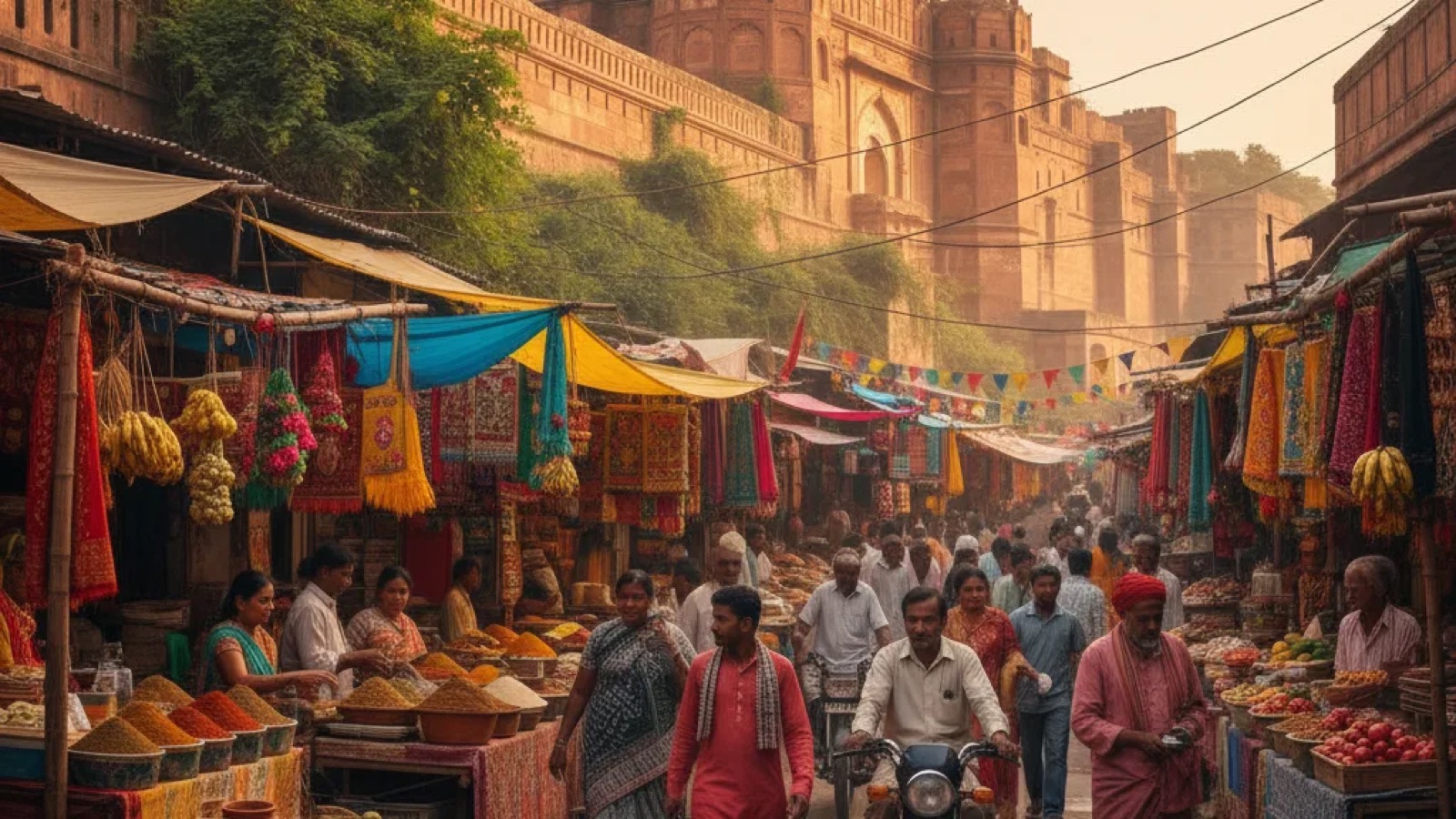
Street food is a vital part of the culinary landscape, and you shouldn't be afraid to try it—you just need to be smart. My rule is to only eat from stalls that are busy with locals. High turnover means the food is fresh. Opt for things that are cooked to order right in front of you, like freshly fried samosas or pani puri from a vendor who looks clean and organised. For photography, markets are a goldmine; the colours of the spices, the steam rising from a chai pot, the concentration on a cook's face—it’s all there.
Now, let's talk about "Delhi Belly." Traveller's diarrhoea is a real risk, but you can minimise it. The golden rule is: only drink bottled water from a sealed bottle. Avoid ice in drinks, and be wary of salads or anything that might have been washed in tap water. Stick to the "peel it, boil it, cook it, or forget it" mantra. Carry hand sanitiser and use it religiously before eating. If you do get sick, a simple pharmacy-bought electrolyte solution and a bland diet will usually see you through a day or two of discomfort.
Cultural Etiquette: Dress, Temples, and Touts
India is a largely conservative country, and dressing modestly is a sign of respect that will go a long way. For both men and women, this means keeping your shoulders and knees covered. For women, loose-fitting long trousers, long skirts, and tops that aren't low-cut are ideal. A large, lightweight scarf or two is invaluable. They are incredibly versatile: you can use one to cover your head when entering a Sikh gurudwara, drape it over your shoulders for extra modesty, or protect yourself from the sun or dust.
When visiting any temple, mosque, or other place of worship, you'll almost always be required to remove your shoes. Wear shoes that are easy to slip on and off. Check the rules on photography; it's often forbidden inside the main sanctum. Be quiet and observant.
You will encounter touts, especially in major tourist hubs. They might offer to be your guide, take you to a "special" shop, or tell you your hotel is closed. The best approach is a polite but firm "No, thank you" (Nahin, shukriya) and to keep walking. Don't engage in long conversations. Similarly, haggling is a part of the shopping experience in markets. It should be a friendly, light-hearted exchange, not an aggressive argument. Aim for a price that both you and the vendor are happy with. In many modern shops and all government emporiums, prices are fixed.
Staying Safe and Well for All Travellers
India is generally a safe country, but like anywhere, it requires common sense and awareness. Petty theft can be an issue in crowded areas, so keep your valuables secure and out of sight. Be mindful of your surroundings, especially at busy train stations and markets.
For solo women travellers, India can present some unique challenges, but it is absolutely a rewarding destination. The key is to take extra precautions. Dressing conservatively is the most important step to avoid unwanted attention. Avoid being out alone late at night in unfamiliar or poorly lit areas. In hotels, ask for a room that isn't on the ground floor or in an isolated wing. When travelling by train overnight, choose an upper berth for more privacy. Using ride-hailing apps provides a record of your journey and driver, which adds a layer of security. Trust your instincts. If a person or situation feels off, remove yourself from it.
Finally, look after your mental well-being. The sensory overload is real. If you feel overwhelmed, it's okay to retreat. Spend an afternoon in your hotel room or a quiet park. Don't feel guilty for needing a break from the intensity. India is a marathon, not a sprint.
Festivals, Tipping, and Connectivity
If your trip coincides with a major festival like Holi (the festival of colours, usually in March) or Diwali (the festival of lights, usually in October/November), you're in for a treat. These are incredible, vibrant spectacles. However, be aware that they can also cause massive travel disruption. Trains and flights get booked solid months in advance, and much of the country shuts down. Plan accordingly—either book everything far ahead and embrace the celebration, or schedule your trip to avoid the peak festival days.
Tipping is not mandatory in India, but it is widely appreciated as wages are often low. For a porter at a train station or hotel, a small note is appropriate. In restaurants, a tip of around 5-10% is generous if a service charge isn't already included in the bill. For a private driver or a guide you've hired for a day, a more substantial tip is customary if you were happy with their service.
Staying connected is easy. It's well worth getting a local SIM card upon arrival at the airport. Data is incredibly affordable, and having access to maps, ride-hailing apps, and online booking portals on the go is invaluable. Airtel and Jio are two of the main providers with good coverage across the country.
Explore in Depth
Ready to dive deeper into planning a specific route? The Golden Triangle is the perfect starting point for many travellers, offering a dense and dazzling slice of North Indian history and culture. Our detailed itinerary breaks down the journey day by day.
Frequently Asked Questions
Is India safe for a first-time solo female traveller?
Yes, but it requires more vigilance than travelling in many other parts of the world. The key is preparation and awareness. Dress conservatively to minimise unwanted attention, avoid travelling alone late at night, and book accommodation and transport with reputable companies. Using upper berths on overnight trains and choosing female-only dorms in hostels where available are good strategies. Millions of women, both Indian and foreign, travel solo safely in India every year. By being cautious and trusting your intuition, you can have an incredibly rewarding experience.
Should I book my accommodation in advance or can I find it when I arrive?
For a first trip, it's best to book your accommodation for at least the first few nights in each new city. Arriving in a chaotic Indian city after a long journey can be overwhelming, and having a place to go directly removes a huge amount of stress. During peak season (October-March) or around major festivals, it's wise to book all of your accommodation in advance as the best places fill up quickly. If you're a more experienced traveller visiting in the off-season, you'll have more flexibility to find places on arrival.
How do I handle the constant attention and requests for photos?
As a foreign traveller, especially if you are fair-skinned or have blonde hair, you may attract a lot of attention and requests for selfies, particularly in areas with fewer tourists. For the most part, this is born of friendly curiosity. If you're comfortable with it, a quick photo can be a nice interaction. However, you are under no obligation. A polite smile and a "no, thank you" while continuing to walk is a perfectly acceptable response. If a group becomes too persistent, just walk away confidently. Don't feel you have to say yes to everyone.
What's the best way to deal with "Delhi Belly" if it happens?
First, don't panic. Almost every seasoned traveller has a story. The most important thing is to stay hydrated. Visit any pharmacy (they are everywhere) and buy packets of oral rehydration salts (ORS) to mix with bottled water. These replace the essential salts and sugars you're losing. Stick to a very plain diet for a day or two—plain rice, bananas, toast, and plain yoghurt (curd). Avoid spicy, oily food and dairy (except plain curd). If symptoms are severe, persist for more than 48 hours, or you have a high fever, it's best to see a doctor.
Is it better to take a tour or travel independently in India for a first trip?
This depends entirely on your travel style and comfort level. If you're nervous about the logistics, a tour with a reputable company can be a fantastic, stress-free introduction. They handle all the transport, accommodation, and guiding, letting you focus on the experience. However, if you are an independent and resilient traveller, organising your own trip is deeply rewarding. It gives you complete flexibility over your itinerary and pace. A good compromise can be to travel independently but hire local day guides or a car and driver for specific portions of your trip.
Final Thoughts
India is not an easy country to travel in, but that is precisely what makes it so worthwhile. It's a place that challenges you, pushes your boundaries, and forces you to engage with the world in a way that few other destinations do. It will rewire your brain and recalibrate your senses. You will have moments of frustration, but they will be eclipsed by moments of profound beauty, unexpected kindness, and pure wonder.
The best advice is to arrive with an open heart, a flexible plan, and a good sense of humour. Embrace the chaos, talk to people, try the food, and ride the trains. Don't just see India—let yourself experience it. If you do, you'll leave with more than just photographs; you'll leave with a piece of it forever in your soul.