Golden Triangle Itinerary: Delhi, Agra, Jaipur
The classic Golden Triangle in a week: how many days in each city, train versus car, Taj Mahal timing and what to skip.
In this guide
- Quick Facts
- Why the "Golden Triangle"? Understanding the Route
- A Realistic 7-Day Golden Triangle Itinerary
- Delhi: Capital Chaos and Calm
- Transport Showdown: Private Car vs. Indian Railways
- Agra: More Than Just the Taj
- The Journey to Jaipur: Fatehpur Sikri and Stepwells
- Jaipur: The Pink City of Palaces and Bazaars
- Best Season and Trip Duration
- Dress Code and Etiquette
- Extending Your Trip: Tigers and Lakes
- Explore in Depth
- Frequently Asked Questions
- Final Thoughts
This guide is part of our India Travel Guide: Where to Go on a First Trip — start there for the overview, when to go and how to get around.
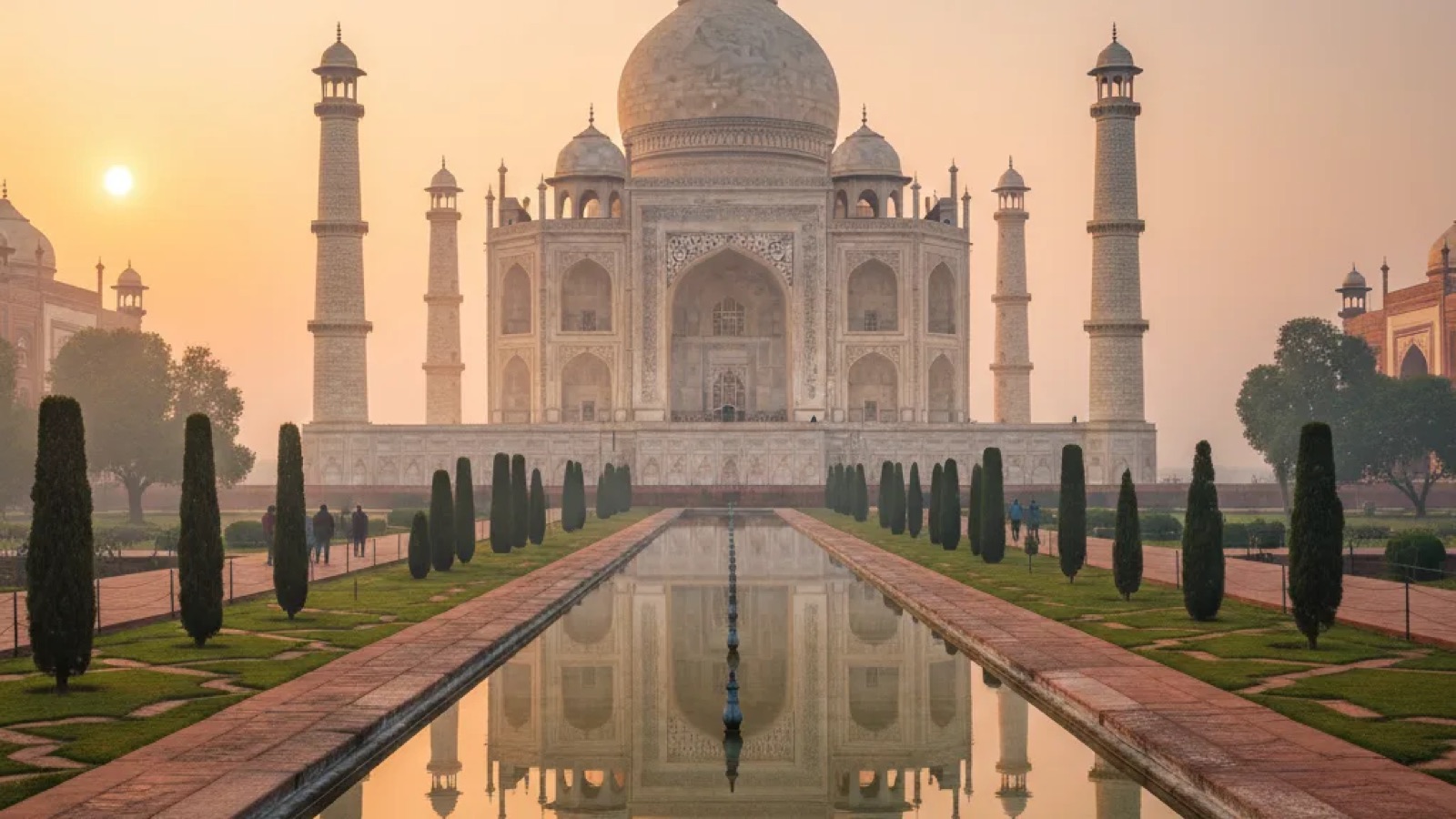
Seeing the Taj Mahal at dawn begins with the sound: the pre-dawn quiet of Agra, a muffled hum of a city still sleeping, broken by the call to prayer echoing from a distant mosque. You queue with a handful of other pilgrims and travellers, the air crisp and cool, a stark contrast to the daytime heat to come. As you pass through the great gatehouse, the darkness frames it perfectly. It isn't just white marble; it's pearlescent, ethereal, seeming to float in the faint light, and it hushes the already quiet crowd into total silence. It’s a moment that’s become a cliché for a reason. It’s genuinely breathtaking, and it sits at the heart of a journey that, for many, is their first, unforgettable taste of India.
India’s Golden Triangle is the most well-trodden tourist circuit in the country, and for good reason. It’s a magnificent introduction, connecting the sprawling capital of Delhi with Agra, home of the Taj Mahal, and Jaipur, the vibrant capital of Rajasthan. In one compact, week-long trip, you experience a cross-section of North Indian history, from Mughal grandeur to Rajput finery. This guide shows how to do it right. We'll cover a realistic day-by-day itinerary, the practicalities of getting around (car and driver versus the excellent Indian Railways), how to sidestep the common tourist traps, and the best spots for capturing the incredible light that makes this corner of the world a photographer’s dream.
Quick Facts
- Location: North India, comprising the three cities of Delhi (the national capital), Agra (in the state of Uttar Pradesh), and Jaipur (the capital of Rajasthan).
- Getting There: Most international travellers fly into Delhi's Indira Gandhi International Airport (DEL), which is the natural starting point for the circuit.
- Getting Around: A combination of a private car with a driver (the most popular option for flexibility) and express trains (a fast, efficient, and atmospheric alternative) is ideal. Within cities, auto-rickshaws and ride-hailing apps are a lifesaver.
- Language and Currency: Hindi is the most common language, but English is widely spoken in hotels, restaurants, and tourist sites. The official currency is the Indian Rupee (INR).
- Best Time to Visit: The ideal time is during the cooler, drier months from late October to mid-March. The weather is pleasant for sightseeing. April and May are scorchingly hot, while the monsoon season runs from roughly June to September.
Why the "Golden Triangle"? Understanding the Route
The name is simple geography. If you plot Delhi, Agra, and Jaipur on a map, they form a rough equilateral triangle, with each leg of the journey being about 200-250 kilometres. It’s "golden" because of the extraordinary wealth of historical and cultural treasures packed into this relatively small area. For a first-time visitor, it’s the perfect, manageable bite of an enormous country.
This route is for you if you have between six and ten days and want a concentrated blast of iconic India. You’ll see world-famous monuments, dive into bustling markets, and witness the fusion of Mughal and Hindu cultures. It’s intense, colourful, and at times, overwhelming. It is not an "off-the-beaten-path" experience; you will be sharing these sights with many others. But its popularity is its strength: the tourist infrastructure is well-developed, making it a relatively smooth and accessible entry point for navigating the beautiful chaos of India.
A Realistic 7-Day Golden Triangle Itinerary
This pacing is comfortable, not frantic. It allows for spontaneous street food stops and moments of quiet observation, which are just as important as ticking off the big sights. You can easily stretch this to 8 or 9 days by adding another day in Delhi or Jaipur.
Day 1: Arrival and Settling into Delhi
Arrive at Delhi's Indira Gandhi International Airport (DEL). The culture shock can hit you the moment you step out of the terminal. Take a pre-paid taxi or organise a hotel transfer to get your bearings. South Delhi or the area around Connaught Place are good choices for your first night. Just focus on settling in, having a good meal, and resting up. Your adventure starts tomorrow.
Day 2: The Two Sides of Delhi
Spend the morning exploring the grandeur of New Delhi. A great loop is India Gate, the impressive boulevard of Kartavya Path (formerly Rajpath), and a drive past the Parliament House and President's residence. A highlight is Humayun's Tomb, the magnificent 16th-century tomb that was a precursor to the Taj Mahal. It’s less crowded and, in the soft morning light, its red sandstone and white marble are stunning. In the afternoon, dive headfirst into the sensory overload of Old Delhi. Take a cycle-rickshaw through the chaotic lanes of Chandni Chowk market and visit the colossal Jama Masjid, one of India's largest mosques.
Day 3: Delhi's History & the Road to Agra
Start your day at the Qutub Minar, a soaring 73-metre-high tower of victory in South Delhi. The surrounding archaeological park is full of fascinating ruins. Afterwards, find a moment of peace in the beautiful Lodhi Garden, a favourite spot for Delhiites. In the early afternoon, begin your journey to Agra. The drive via the Yamuna Expressway is smooth and takes around 3-4 hours. After checking into your hotel in Agra, keep the evening relaxed. Save your energy for an early start.
Day 4: The Taj Mahal & On to Jaipur
This is the day. Get up before dawn to be at the Taj Mahal for sunrise. The experience of seeing it emerge from the darkness is unforgettable. Spend 2-3 hours soaking it all in. Afterwards, return to your hotel for breakfast and check-out. Before leaving Agra, visit the formidable Agra Fort, a walled city of red sandstone that offers fantastic views of the Taj from its ramparts. From here, begin the drive to Jaipur (approx. 4-5 hours), making a crucial stop at Fatehpur Sikri, the stunningly preserved (and mysteriously abandoned) city of Emperor Akbar.
Day 5: Jaipur, The Pink City's Forts and Palaces
Your first stop should be the magnificent Amber Fort (often called Amer Fort), perched on a hill overlooking Maota Lake. Walk or take a jeep up to the entrance. Spend the morning exploring its vast complex of courtyards and palaces. In the afternoon, head back into the city. Make a photo stop at the Jal Mahal (the "Water Palace") on the way. In Jaipur proper, visit the City Palace, which is still home to the royal family, and the adjacent Jantar Mantar, an incredible collection of 18th-century astronomical instruments that look like giant, abstract sculptures.
Day 6: Bazaars, Block Printing, and Sunset Views
Start the day with the iconic facade of the Hawa Mahal ("Palace of Winds"); the best photos are from the cafes across the street in the morning light. Then, spend the rest of the morning diving into the vibrant bazaars of the old city, like Johari Bazaar (for gems) and Bapu Bazaar (for textiles). Many places offer fantastic block-printing workshops where you can try your hand at the local craft. In the late afternoon, make your way up to Nahargarh Fort for panoramic sunset views over the entire city. It's the perfect way to cap off your time in Jaipur.
Day 7: Return to Delhi or Onward Journey
Enjoy a final leisurely Rajasthani breakfast. Depending on your flight schedule, you can either drive back to Delhi (approx. 5-6 hours) to fly home, or fly directly out of Jaipur's own international airport (JAI), which is often a much more relaxed option. Alternatively, this is the day you would travel to your next destination if extending your trip.
Delhi: Capital Chaos and Calm
Delhi isn’t just one city; it’s a dozen cities layered on top of each other. The key is to embrace the contrast. One minute you can be navigating the tangled wires and overwhelming crowds of Old Delhi, and the next you can be walking through the serene, green expanse of Lodhi Garden.
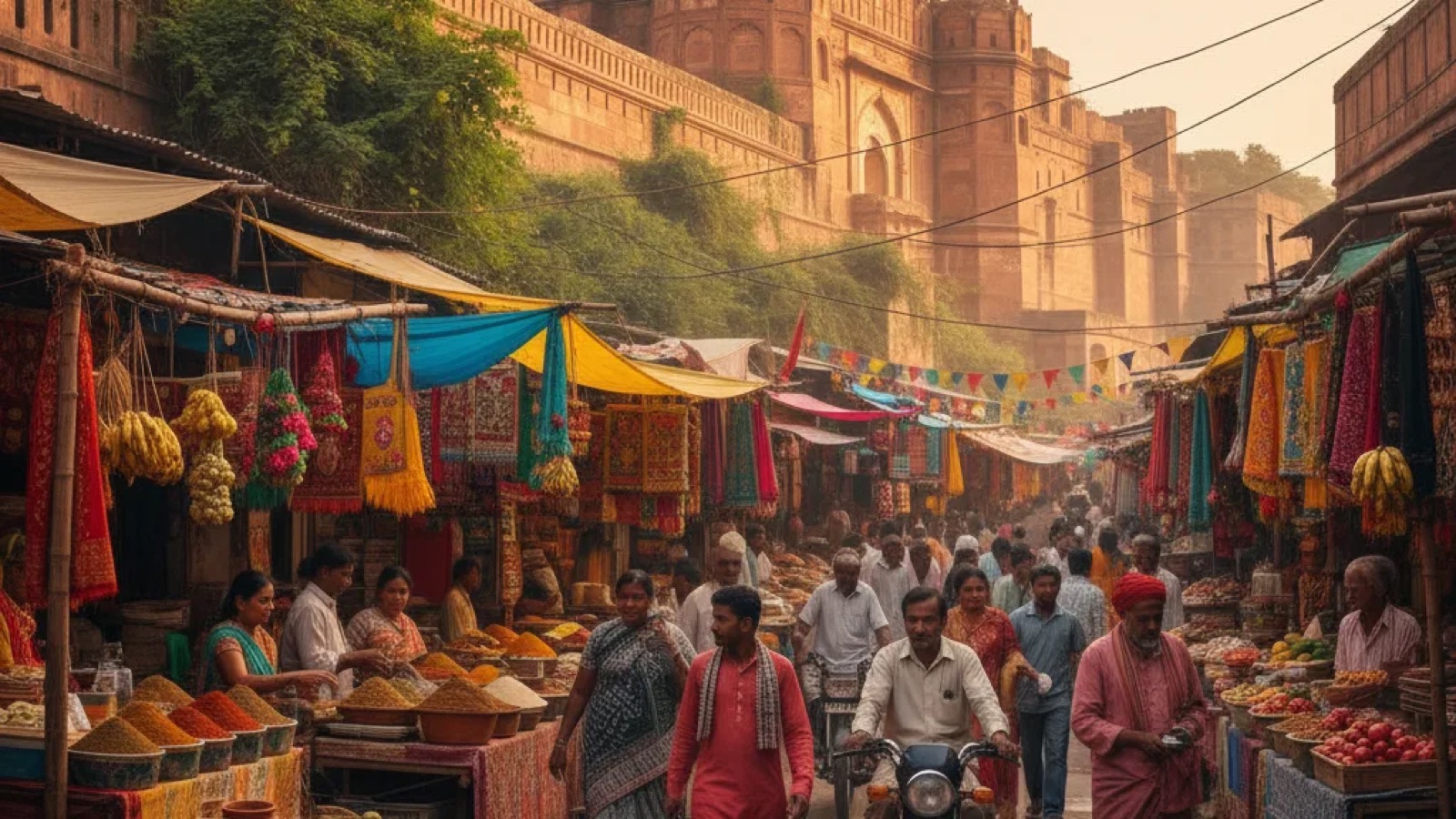
The heart of the city's energy is Old Delhi. Hiring a cycle-rickshaw at the edge of the Chandni Chowk market is non-negotiable. Your driver will expertly weave through a seemingly impossible tangle of people, carts, scooters, and cows. The air is thick with the smell of sizzling street food and fragrant spices. Be sure to look up at the incredible network of electrical wires, it’s a sight in itself. Nearby, the Jama Masjid mosque is an island of relative calm. You'll need to leave your shoes at the entrance and be respectfully dressed (scarves are usually available to borrow). The view from one of its minarets over the old city is worth the climb.
By contrast, New Delhi, designed by the British architects Lutyens and Baker, is all about wide, tree-lined avenues and monumental government buildings. Humayun's Tomb is an absolute must-see. For photographers, it is in some ways even more compelling than the Taj. Its intricate latticework and the perfect symmetry of its gardens offer endless compositions, especially in the golden hours of early morning or late afternoon. Don't underestimate the Delhi Metro. It’s modern, clean, air-conditioned, and a brilliantly efficient way to cross the city and bypass the notorious traffic.
Transport Showdown: Private Car vs. Indian Railways
This is the biggest logistical choice you'll make. There’s no single right answer; it depends on your budget, travel style, and priorities.
Hiring a car and driver is the most common and convenient option. You get door-to-door service, your luggage is secure, and you have complete flexibility to stop whenever you want for photos, a chai break, or an interesting-looking temple. It makes visiting sites like Fatehpur Sikri or the Abhaneri stepwell between Agra and Jaipur effortless. The key is to use a reputable company and, most importantly, set expectations with your driver on day one. Politely but firmly state that you are not interested in unscheduled shopping stops at emporiums where they receive a commission. A simple, "No shopping today, thank you, maybe later," usually works. A good driver is a fantastic guide and asset; a bad one can add a layer of hassle.
Travelling by train is a quintessential Indian experience. The Shatabdi and Gatimaan Express trains that connect Delhi and Agra are superb. They are fast, comfortable, air-conditioned, and food is often included in the ticket. You get to see the landscape roll by and witness a slice of everyday life. The downside is the logistics. You have to get to and from train stations, manage your own luggage, and pre-booking tickets is essential, as popular routes fill up weeks in advance. For the Agra-Jaipur leg, the train options are slower and less convenient, which is why most people drive that section. A hybrid approach—train from Delhi to Agra, then a car for the Agra-Jaipur-Delhi section—can be the best of both worlds.
Agra: More Than Just the Taj
While the Taj Mahal is the reason everyone comes to Agra, the city has more to offer. But first, the main event. Seeing the Taj Mahal at sunrise is the classic experience. The gates typically open around 30 minutes before sunrise. Be aware that it is closed to all visitors every Friday. Security is extremely tight. You can basically only bring your phone, camera, and a small wallet. No food, no tripods, no large bags, no pens, not even books. Check the official Archaeological Survey of India (ASI) website right before you go for the latest list of prohibited items, as it can change.
My photography tip: once you get the iconic shot from the entrance, don't just stay on the central axis. Walk over to the mosque on the left (west) side. The morning sun lights up the Taj beautifully from this angle, and you can frame it through the arched doorways for a more creative composition.
Don't leave Agra without visiting the Agra Fort. This was the main residence of the Mughal emperors before they shifted the capital to Delhi, and it’s a beast of a fortress. Its red sandstone walls hide a maze of palaces, audience halls, and mosques. From its ramparts, you get a poignant view across the Yamuna River to the tomb that Emperor Shah Jahan built for his wife. For a final, perfect view, head to Mehtab Bagh ("Moonlight Garden") across the river for sunset. It’s a classic spot for photographers to capture the Taj as the setting sun bathes it in a warm, golden glow.
The Journey to Jaipur: Fatehpur Sikri and Stepwells
The drive from Agra to Jaipur is an experience in itself, largely because of the incredible sights you can stop at along the way. This is where having a car and driver really pays off. The absolute must-do stop is Fatehpur Sikri, about an hour out of Agra. This was the short-lived capital of the Mughal Empire under Emperor Akbar in the late 16th century. It was abandoned after only 14 years, supposedly due to a lack of water, leaving behind a near-perfectly preserved ghost city. The blend of Hindu and Mughal architectural styles is fascinating, and walking through the grand courtyards and intricate palaces feels like stepping back in time.
If you have a bit more time and a taste for the unusual, you can ask your driver to make a detour to Abhaneri to see the Chand Baori. This is one of India's largest and most spectacular stepwells. It’s a dizzying, Escher-like structure of 3,500 narrow steps descending 13 stories into the earth. The geometric patterns of the steps are mesmerising and incredibly photogenic. It’s a bit of a detour off the main highway, but utterly worth it if you’re interested in ancient engineering and architecture.
Jaipur: The Pink City of Palaces and Bazaars
Jaipur, the capital of Rajasthan, feels different from Delhi and Agra. It's a city of Rajput kings, not Mughal emperors, and its old city, painted a distinctive terracotta pink in 1876 to welcome the Prince of Wales, exudes a vibrant, romantic energy. The undisputed king of its sights is Amber Fort. This sprawling honey-coloured fortress-palace is a breathtaking blend of Hindu and Mughal styles. Give yourself a good three hours here; it’s enormous. Don't miss the Sheesh Mahal (Mirror Palace), where the walls and ceiling are covered in a mosaic of tiny mirrors that glitter in the dim light.
Back in the city, the Hawa Mahal is Jaipur's most famous landmark. It's essentially just a facade, built so the women of the royal court could observe street life without being seen. The best view is from the tattoo parlours and cafes across the road. A short walk from there is the City Palace complex, a beautiful museum that gives you a glimpse into the opulent lifestyle of Jaipur's past rulers. Right next door, the Jantar Mantar observatory is one of the most remarkable sights in India. It's a surreal sculpture park of giant astronomical instruments, a testament to the scientific prowess of Maharaja Jai Singh II.
No visit to Jaipur is complete without diving into its bazaars. They are a treasure trove of textiles, jewellery, blue pottery, and leather goods. For a hands-on cultural experience, find a block-printing workshop. Spending a couple of hours learning from an artisan and creating your own scarf is a far more rewarding souvenir than anything you could buy off the shelf.
Best Season and Trip Duration
Timing is everything in this part of India. The climate dictates the experience. The absolute best window for the Golden Triangle is from late October to mid-March. The daytime temperatures are warm and pleasant, the skies are generally clear, and the evenings are cool. It's peak season, so expect larger crowds and book accommodation and trains well in advance.
From April, the heat starts to build, and by May and early June, it becomes punishingly hot, with daytime temperatures often soaring well above 40°C. Sightseeing becomes a genuine chore. The monsoon follows from late June to September, bringing heavy rain, high humidity, and potential travel disruptions. While the landscape becomes lush and green, the weather can be unpredictable.
Six nights and seven days is a good minimum to see the highlights without feeling completely rushed. If you can spare 8 or 9 days, you'll be glad for the extra breathing room. It allows for more leisurely exploration, an extra day in Jaipur for shopping and workshops, or a slower pace in Delhi to recover from jet lag.
Dress Code and Etiquette
India is a conservative country on the whole, and dressing respectfully will not only show you’re a considerate traveller but will also minimise unwanted attention. For both men and women, this means aiming to cover your shoulders and knees. Loose, lightweight cotton or linen clothing is perfect for the climate.
For women, a long scarf or dupatta is the single most useful item you can pack. You can use it to cover your head when entering a mosque like Jama Masjid, drape it over your shoulders if you’re wearing a singlet, or simply use it for extra sun protection. You’ll need to remove your shoes before entering all temples, mosques, and gurdwaras (Sikh temples), so shoes that are easy to slip on and off are a smart choice. When visiting religious sites, be quiet and observant. Photography is often allowed, but be mindful of people who are there to worship and always ask before taking a close-up photo of a person.
Extending Your Trip: Tigers and Lakes
The Golden Triangle is a fantastic launchpad for exploring more of Rajasthan and beyond. Two of the most popular and logical extensions are Ranthambore and Udaipur.
If seeing a tiger in the wild is on your bucket list, Ranthambore National Park is one of the best places in India to do it. It’s located about a 3-4 hour drive from Jaipur. You’ll need to add at least two nights to your itinerary to allow for two or three jeep safaris into the park, which maximises your chances of a sighting. The park itself, with its ancient fort ruins scattered among the jungle, is stunningly beautiful even without the tigers.
For a dose of romance, head further south to Udaipur, known as the "City of Lakes". It’s often touted as India’s most romantic city, and it’s hard to argue. With its shimmering Lake Pichola, floating palaces, and elegant havelis, it has a much more relaxed and charming vibe than the big cities of the Triangle. You can get there via a short domestic flight, an overnight train from Jaipur, or a long day's drive. Plan for at least two or three days to soak in the atmosphere.
Explore in Depth
Even a classic trip needs solid planning. These guides cover the nuts and bolts of organising a big trip and making the long journey there as comfortable as possible.
Frequently Asked Questions
Is the Golden Triangle safe for solo female travellers?
Yes, but it requires an extra layer of awareness and preparation. As a solo woman, you will attract more attention. Dressing modestly helps immensely. Opt for pre-booked, reputable transport, especially at night, and avoid arriving in new cities late. A private car and driver can add a significant layer of security and peace of mind. Many solo women travel this circuit and have an incredible time by taking sensible precautions, staying in well-reviewed hotels, and trusting their instincts. Joining a small group tour can also be a great option if you're apprehensive.
How much time do I really need in each city?
Allow two full days in Delhi and two full days in Jaipur to do them justice. Delhi is vast and has sights spread across the city, so two days allows you to explore both Old and New Delhi without rushing. Jaipur's main sights (especially Amber Fort) and its wonderful markets also deserve two days. Agra’s main attractions—the Taj Mahal and Agra Fort—can be seen in one very full day, which is why many itineraries have you arriving one afternoon, seeing the sights the next day, and then moving on.
Should I book accommodation and transport in advance?
Absolutely, yes. Especially if you are travelling during the peak season from October to March. Good, centrally located hotels fill up quickly. Express trains like the ones between Delhi and Agra are incredibly popular and tickets should be booked several weeks, or even months, ahead through the official IRCTC website or a reliable agent. While you could technically find a car and driver upon arrival, booking in advance with a well-regarded company ensures you get a quality vehicle, a professional driver, and a clear agreement on the itinerary and costs.
What's the food like and how do I avoid getting sick?
The food is one of the absolute highlights! You'll find rich Mughlai curries in Delhi and Agra, and fantastic vegetarian thalis in Rajasthan. To avoid the infamous "Delhi Belly," follow the golden rules: eat at busy places with high turnover, prefer cooked food that is served piping hot, and avoid tap water at all costs (stick to sealed bottled water). Be wary of salads washed in tap water and fruit you haven't peeled yourself. Carry hand sanitiser and use it religiously. Don't be afraid of street food, but choose vendors who are busy and cooking everything fresh in front of you.
Is hiring a private driver for the entire trip worth it?
For most first-time visitors, it is. While it's not the cheapest option, the value it provides in convenience, flexibility, and stress reduction is enormous. Your driver handles the chaotic traffic, you can leave your luggage securely in the car while you sightsee, and you can easily visit places like Fatehpur Sikri between cities. It transforms the journey from a series of logistical challenges into a seamless travel experience. Just be sure to book through a reputable agency and be clear about your expectations regarding shopping stops from the very beginning.
Final Thoughts
After more than a decade of travelling, there are few journeys that deliver such a potent dose of history and culture so efficiently. The Golden Triangle is not a subtle destination; it's a full-on immersion. You’ll feel the press of the crowds, the heat of the sun on ancient stone, and the kindness of strangers offering you a cup of chai. You will be hassled, you will be in awe, and you will likely be overwhelmed at least once a day. But that's the point.
It endures as a classic because it works. It takes three vital chapters of India’s story and presents them in a way that is challenging but achievable, chaotic but deeply rewarding. You’ll leave with a memory card full of incredible photos, but more importantly, with a genuine sense of the depth, colour, and complexity of this extraordinary country.