Laos Travel Guide: Luang Prabang, Vientiane and the Mekong
The slowest country in South-East Asia, and better for it. Routes, seasons, overland transport, river towns and how to travel Laos respectfully.
In this guide
- Quick Facts: Laos
- The Soul of the Mekong: Geography and the Slow Travel Mindset
- Luang Prabang: Sacred Temples and Colonial Romance
- Vientiane: The Laid-Back Capital
- Vang Vieng: Karst Landscapes and Outdoor Adventure
- Northern Wilds: Nong Khiaw, Muang Ngoi, and Phonsavan
- Central Laos: Thakhek and the Konglor Cave Loop
- Southern Wonders: Pakse, Bolaven Plateau, and Si Phan Don
- Lao Cuisine: Flavours of Herbed Meats and Sticky Rice
- Getting Around: Railway, Boats, and Roads
- Culture, Religion, and Local Etiquette
- Weather, Seasons, and Cross-Border Transit
- Suggested Routes and Itineraries
- Practical Planning, Currency, and Health
- Final Thoughts: Embracing the Lao Pace
- Explore Laos in Depth: My Detailed Guides
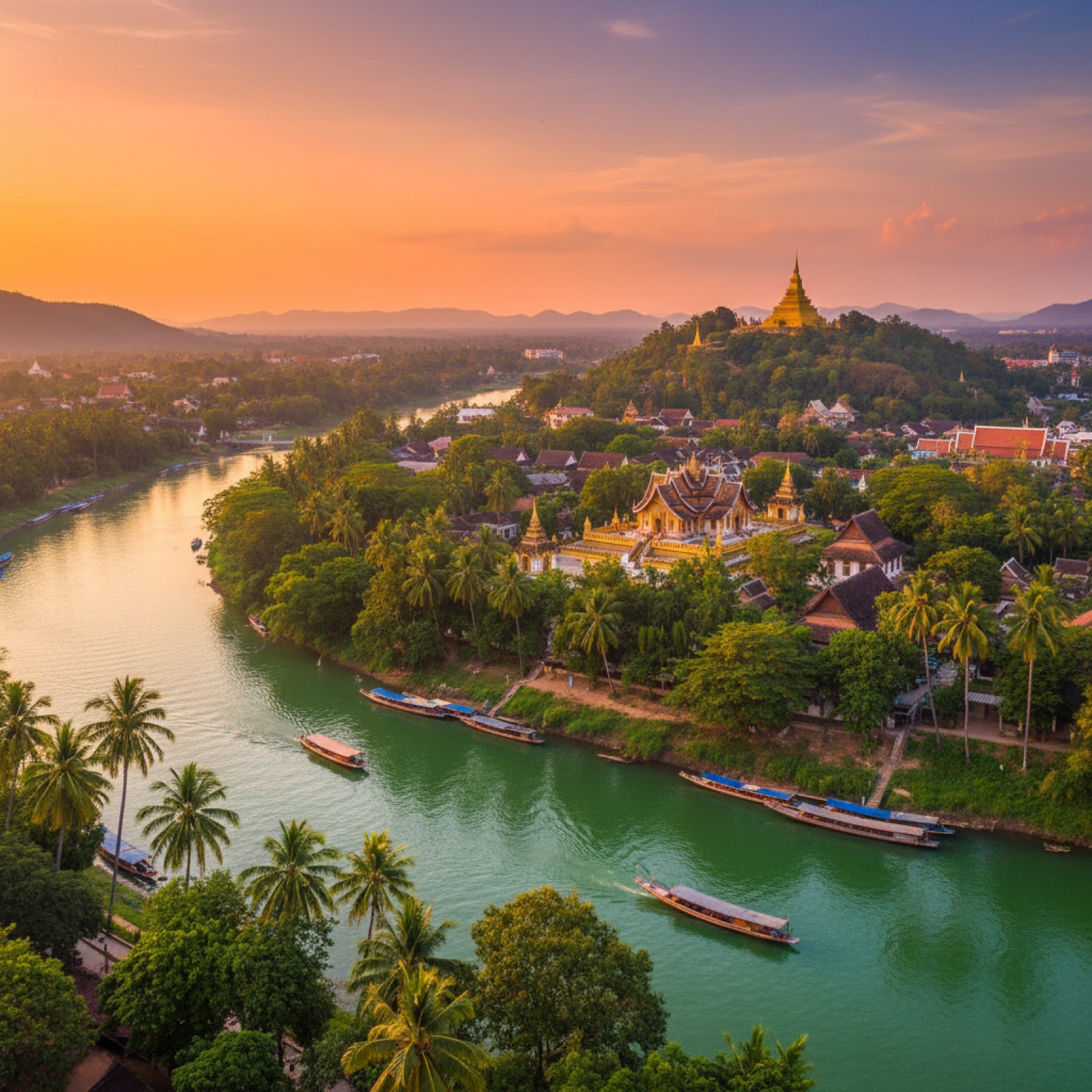
Sit on the banks of the Mekong in Luang Prabang at sunset and you can watch a longtail boat slice through water tinted liquid copper. The humid tropical air carries the faint scent of grilled lemongrass chicken and damp teak wood, while frangipani blossoms drop silently onto red-tiled paths. In a calm, quiet moment like that, Laos offers something increasingly rare in modern travel: the space to breathe.
Laos is Southeast Asia’s only landlocked country, but to view it merely as a nation without a coastline is to completely miss its aquatic soul. Defined by the mighty Mekong River that threads through its mountainous spine, Laos is a destination that demands a total shift in tempo. Here, life unfolds at the speed of the river's current, inviting travellers to put away their watches, slow down their stride, and trade breathless sightseeing for genuine cultural immersion.
From the mist-shrouded limestone karsts of the remote north to the sun-drenched, tranquil archipelago of the far south, this guide covers everything you need to navigate Laos thoughtfully. Whether you are gliding past jungle-covered mountains on a wooden slow boat, taking the high-speed railway between heritage cities, or exploring ancient stone mysteries on high plateaus, Laos promises an unhurried, deeply rewarding journey.
Quick Facts: Laos
- Capital City: Vientiane
- Official Currency: Lao Kip (LAK)
- Official Language: Lao (French and English are widely spoken in major tourist hubs)
- Primary Religion: Theravada Buddhism
- Geography: Landlocked nation bordered by Thailand, Vietnam, Cambodia, Myanmar, and China
- Main Transit Arteries: The Mekong River and the Laos-China Railway
The Soul of the Mekong: Geography and the Slow Travel Mindset
A Land Shaped by Water and Mountains
Landlocked between five neighbouring countries, Laos is dominated by dramatic topography. Dense rainforests, rugged mountain ranges, and towering limestone karsts cover more than two-thirds of the country. Running through almost the entire length of the nation is the Mekong River—known locally as Mae Nam Khong, the "Mother of Waters". The river serves as a trade route, a food source, a social highway, and a natural border with Thailand and Myanmar.
Because the terrain has historically made road construction challenging, local communities have long relied on riverways for transport. This geography has protected traditional ways of life, allowing rich ethnic cultures and pristine wilderness to flourish in relative isolation compared to its more bustling neighbours.
Embracing Pen Nyang Pen
To enjoy Laos fully, you must embrace the national mindset summarised by the phrase pen nyang pen, which translates roughly to "no worries" or "it doesn't matter". Things in Laos rarely happen in a rush. Buses may depart late, food is prepared fresh from scratch, and service is delivered with gentle, quiet smiles rather than brisk efficiency.
Adopting a slow travel mindset isn't just recommended here—it is essential. When you stop fighting the relaxed pace and start aligning your expectations with local rhythm, the true charm of Laos opens up. A long boat ride becomes a meditation, a delayed bus becomes a chance to chat with locals, and an unplanned afternoon in a hammock becomes the highlight of your week.
Luang Prabang: Sacred Temples and Colonial Romance
The Heart of Lao Heritage
Nestled at the confluence of the Mekong and Nam Khan rivers, Luang Prabang is the spiritual and cultural heart of Laos. Recognized as a UNESCO World Heritage site, this peninsula town seamlessly blends traditional Lao wooden architecture with elegant French colonial buildings, all set against a backdrop of emerald-green hills.
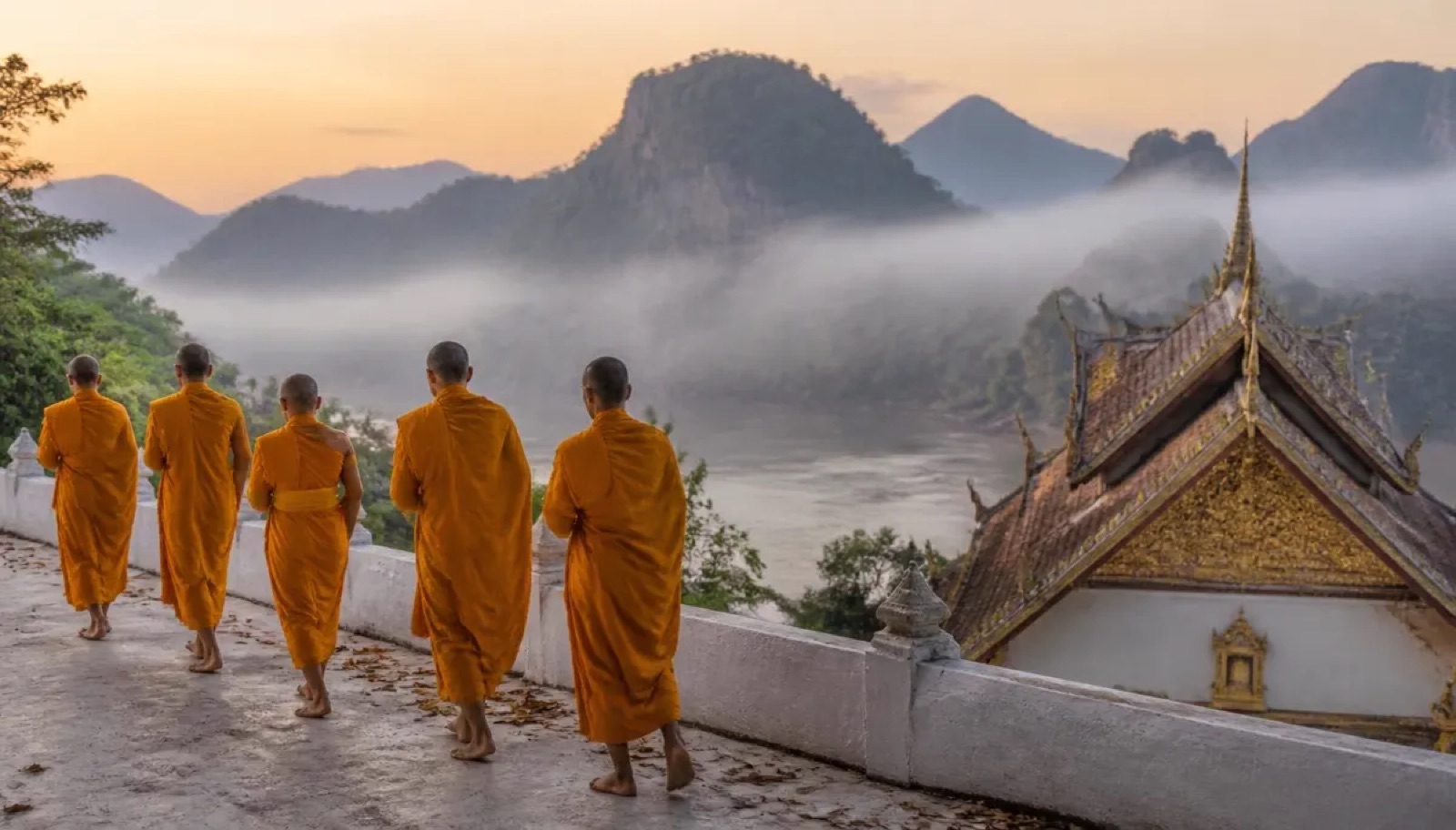
Quiet lanes lined with golden-roofed temples (wats) invite aimless wandering. Saffron-robed monks walk under the shade of palms, while whitewashed colonial villas host atmospheric cafes and artisan boutiques. The town manages to feel at once sophisticated and deeply sacred.
Sacred Rituals and Mindful Traditions
Every morning at dawn, Luang Prabang witnesses Sai Bat, the ancient tradition of morning alms-giving. Hundreds of Buddhist monks walk silently through the streets in single file to collect offerings of fresh sticky rice from kneeling residents. While this peaceful ritual has become a popular sight for visitors, it remains a living religious practice that demands absolute respect and quiet decorum from observers.
Beyond the morning alms, the town's central temple, Wat Xieng Thong, stands as a masterpiece of classic Lao architecture. Its sweeping, low-slung roofs touch near the earth, and its intricate gold-leaf stencils tell stories of local folklore and religious lore.
Natural Splendour and Panoramic Views
A short trip outside the town centre brings you to Kuang Si Waterfalls, a multi-tiered cascade spilling over limestone formations into striking turquoise pools. The mineral-rich water creates natural swimming holes surrounded by thick tropical foliage, offering a refreshing escape from the tropical heat.
Back in town, climbing the several hundred steps up Mount Phousi offers rewarding 360-degree views over the surrounding rivers and jungle peaks. It is the customary spot to watch the sun dip below the mountains across the Mekong, filling the sky with hues of amber and violet.
Vientiane: The Laid-Back Capital
A Capital Unlike Any Other
Compared to the frantic, sprawling metropolises elsewhere in Southeast Asia, Vientiane feels more like a sleepy river town than a national capital. Situated along a broad bend of the Mekong opposite Thailand, Vientiane displays a relaxed charm defined by tree-lined boulevards, vibrant morning markets, and historic temples.
The city's French colonial heritage is evident everywhere, from the wide avenues and European-style bakeries selling fresh croissants to the striking Patuxai—a massive concrete victory gate modelled loosely on Paris's Arc de Triomphe, decorated with traditional Lao mythological figures.
Monuments and Sunset Walks
The national symbol of Laos and its most sacred religious monument is Pha That Luang, a massive gold-covered Buddhist stupa located in the heart of the city. Believed to enshrine a relic of the Buddha, its gleaming spire dominates the skyline and serves as the focal point for annual religious festivals.
As late afternoon approaches, life in Vientiane shifts toward the Mekong Riverfront Park. Locals and travellers gather along the paved promenade to exercise, browse the lively night market stalls selling textiles and souvenirs, and enjoy fresh fruit shakes while watching the sun sink below the river horizon.
Vang Vieng: Karst Landscapes and Outdoor Adventure
From Party Hub to Eco-Adventure Centre
Located roughly halfway between Vientiane and Luang Prabang, Vang Vieng sits framed by dramatic limestone karst mountain towers rising sheer out of bright green rice paddies. In decades past, this small town was infamous as an unrestrained backpacker party spot centered on river tubing. Over recent years, however, a concerted community shift has successfully transformed Vang Vieng into a premier outdoor adventure destination.
Today, visitors head to Vang Vieng to immerse themselves in stunning karst scenery and active outdoor pursuits. The party scene has stepped back, giving way to eco-lodges, boutique stays, and organised nature tours.
Kayaking, Caves, and Viewpoints
The Nam Song River remains the heart of action in Vang Vieng. Kayaking along its clear waters provides incredible perspectives of the limestone cliffs rising on either side. Nearby, numerous natural limestone caves—such as Tham Phu Kham—hide crystal-clear subterranean pools often referred to as the Blue Lagoons.
For those willing to break a sweat, several steep hiking trails lead to spectacular peak viewpoints like Nam Xay. Reaching the top via rugged wooden steps and bamboo ladders rewards climbers with sweeping views over the valley floor, where morning mists often drift past jagged rock pinnacles.
Northern Wilds: Nong Khiaw, Muang Ngoi, and Phonsavan
River Solitude in Nong Khiaw and Muang Ngoi
For those seeking remote natural beauty far from the main transport corridors, heading further north into Luang Prabang Province pays dividends. Nong Khiaw is a peaceful village set along the banks of the Nam Ou River, framed by towering, jungle-covered limestone peaks. Connected across the river by a high concrete bridge, it serves as a base for day hikes to scenic lookouts, kayak trips, and visits to nearby caves.
Further upriver—accessible primary by boat—lies Muang Ngoi, a small village where life moves at an exceptionally slow pace. With limited motor vehicle traffic, days here are spent walking through carless dirt trails, visiting rural minority villages set amongst rice fields, or simply relaxing in a riverside hammock listening to the water.
The Mystery of the Plain of Jars in Phonsavan
In the cool, hilly province of Xieng Khouang lies Phonsavan, the gateway to one of Southeast Asia's greatest archaeological mysteries: the Plain of Jars. Scattered across dozens of highland sites are thousands of massive, carved stone jars, ranging in size from one to over three metres tall.
Originating from the Iron Age, these ancient stone containers are believed by archaeologists to have played a central role in prehistoric burial practices, though local legends tell stories of giants using them to brew rice wine to celebrate military victories. Exploring these windswept grassy hills provides a fascinating look into the region's ancient past.
Critical Safety: UXO Awareness and Staying on Marked Paths
When travelling in northern and eastern Laos—particularly around Phonsavan and Xieng Khouang—it is crucial to understand the historical context of Unexploded Ordnance (UXO). During the Indochina conflict in the 1960s and 1970s, Laos became the most heavily bombed nation per capita in world history. Millions of unexploded bomblets remained embedded in the soil after the war ended.
While extensive international clearance efforts have made major tourist sites completely safe, strict safety precautions must always be observed when exploring rural areas:
- Stay strictly on marked paths: Never stray off established, cleared trails when hiking or visiting archaeological sites.
- Look for clearance markers: Pay attention to concrete markers painted white (cleared) or red (uncleared/danger zones).
- Never touch suspicious metal objects: If you spot scrap metal, old casings, or unidentified objects in fields or forests, leave them untouched and inform local authorities.
- Visit official education centres: Take time to visit organizations like COPE in Vientiane or the Quality of Life Association in Phonsavan to understand the ongoing impact of UXO and support land clearance initiatives.
Central Laos: Thakhek and the Konglor Cave Loop
Riding the Thakhek Loop
Central Laos offers incredible opportunities for independent land journeys, nowhere more so than around Thakhek. Located along the Mekong in Khammouane Province, this town serves as the starting point for the famous multi-day Thakhek Motorbike Loop. Traversing hundreds of kilometres through limestone canyons, rural farming villages, and serene blue lagoons, it is widely considered one of Southeast Asia's classic road journeys.
Riders navigate gentle curves winding through dramatic karst ranges, stopping at pristine rivers and cave networks along the way. The route offers a window into rural Lao life that few standard tour packages can match.
Subterranean Wonders of Konglor Cave
The crown jewel of the Thakhek Loop is Konglor Cave (Tham Kong Lo), a magnificent underground river cavern stretching over seven kilometres straight through a solid limestone mountain. Visitors board small, narrow wooden motorboats guided by local boatmen equipped with headlamps.
Navigating through the darkness, you glide down an underground river inside a vast cavern that reaches heights of over ninety metres in places. Midway through, boats pull up to illuminated sandbanks where giant stalactites and stalagmites glow under soft lighting before emerging back out into bright tropical sunlight on the other side of the mountain range.
Southern Wonders: Pakse, Bolaven Plateau, and Si Phan Don
Pakse and the Coffee Highlands of the Bolaven Plateau
Serving as the commercial hub of southern Laos, Pakse sits at the confluence of the Mekong and Xe Don rivers. While the city itself is primarily a transport junction, it provides access to two of the south's greatest destinations: the Bolaven Plateau and Wat Phou.
Rising east of Pakse, the Bolaven Plateau sits at a higher elevation, offering cooler temperatures, rich volcanic soil, and lush agricultural land. This region produces some of the world's finest Arabica and Robusta coffees. Touring the plateau allows you to visit local family-run coffee plantations, taste single-origin brews, and admire dramatic waterfalls like Tad Fane—where twin waterfalls plummet over a hundred metres into a deep jungle gorge.
To the south of Pakse lies Wat Phou, a UNESCO World Heritage site featuring ancient Khmer Hindu temple ruins that predate Angkor Wat. Set dramatically against the base of Mount Phu Kao, its carved stone sanctuaries and staircases lined with frangipani trees evoke a profound sense of antiquity.
Si Phan Don: The 4,000 Islands
Near the southern border where Laos meets Cambodia, the Mekong River expands to a width of nearly fourteen kilometres during the monsoon season, creating a vast inland delta packed with thousands of islands, islets, and sandbars known as Si Phan Don (The 4,000 Islands).
The most popular bases for travellers are Don Det and Don Khon. Linked together by an old French railway bridge, these islands are practically free of car traffic, offering a peaceful sanctuary where bicycles and walking are the main ways to get around. Days here pass lazily—watching fishermen cast nets, spotting rare Irrawaddy river dolphins in deep river pools, and visiting Khone Phapheng Falls, the largest waterfall by water volume in Southeast Asia.
Lao Cuisine: Flavours of Herbed Meats and Sticky Rice
Key Staples and Iconic Dishes
Lao food is vibrant, fragrant, and heavily focused on fresh herbs, chili peppers, lime juice, and fermented fish paste (padaek). Unlike many of its neighbours, the fundamental staple of every Lao meal is not steamed rice, but Khao Niao (sticky glutinous rice). Served in small woven bamboo baskets called thip khao, sticky rice is traditionally eaten using your fingers, rolled into small balls to scoop up side dishes and sauces.
The national dish of Laos is Laap (sometimes spelled larb), a minced meat salad cooked with chopped herbs like mint, cilantro, and scallions, seasoned with lime juice, fish sauce, ground toasted rice powder, and fresh chilies. It can be made with chicken, pork, beef, duck, or fresh river fish, delivering a refreshing balance of sour, salty, and spicy flavours.
Another essential dish is Tam Mak Hoong, a fiery green papaya salad pounded in a clay mortar with garlic, chilies, lime, sugar, and pungent padaek sauce. It packs a spicy, savoury punch that perfectly complements baskets of cool sticky rice and grilled meats.
French Culinary Influences
Decades of French colonial influence left a delicious mark on local food culture across Laos. Stalls throughout towns and cities serve Khao Jee—crusty French baguettes stuffed with pork pate, fresh herbs, pickled vegetables, and spicy sauces, creating a quick and cheap street-food meal. Coffee lovers will also delight in sweet Lao iced coffee brewed dark and served over ice with condensed milk.
Getting Around: Railway, Boats, and Roads
The Laos-China High-Speed Railway
The introduction of the high-speed Laos-China Railway has fundamentally transformed travel across northern and central Laos. Connecting the northern border town of Boten directly down to Vientiane—with major stops at Na Teuy (for Luang Namtha), Muang Xay, Luang Prabang, and Vang Vieng—the 160 km/h trains cut travel times between key destinations from full-day bus journeys down to a matter of hours.
Sleek, air-conditioned trains run on precise schedules through mountainous tunnels and over high viaducts. Tickets can be booked via official mobile applications or through local travel agencies. Note that train station security is similar to airport checks, so ensure you pack aerosols, knives, and sharp objects appropriately in checked luggage or avoid bringing restricted items.
River Travel and Slow Boats
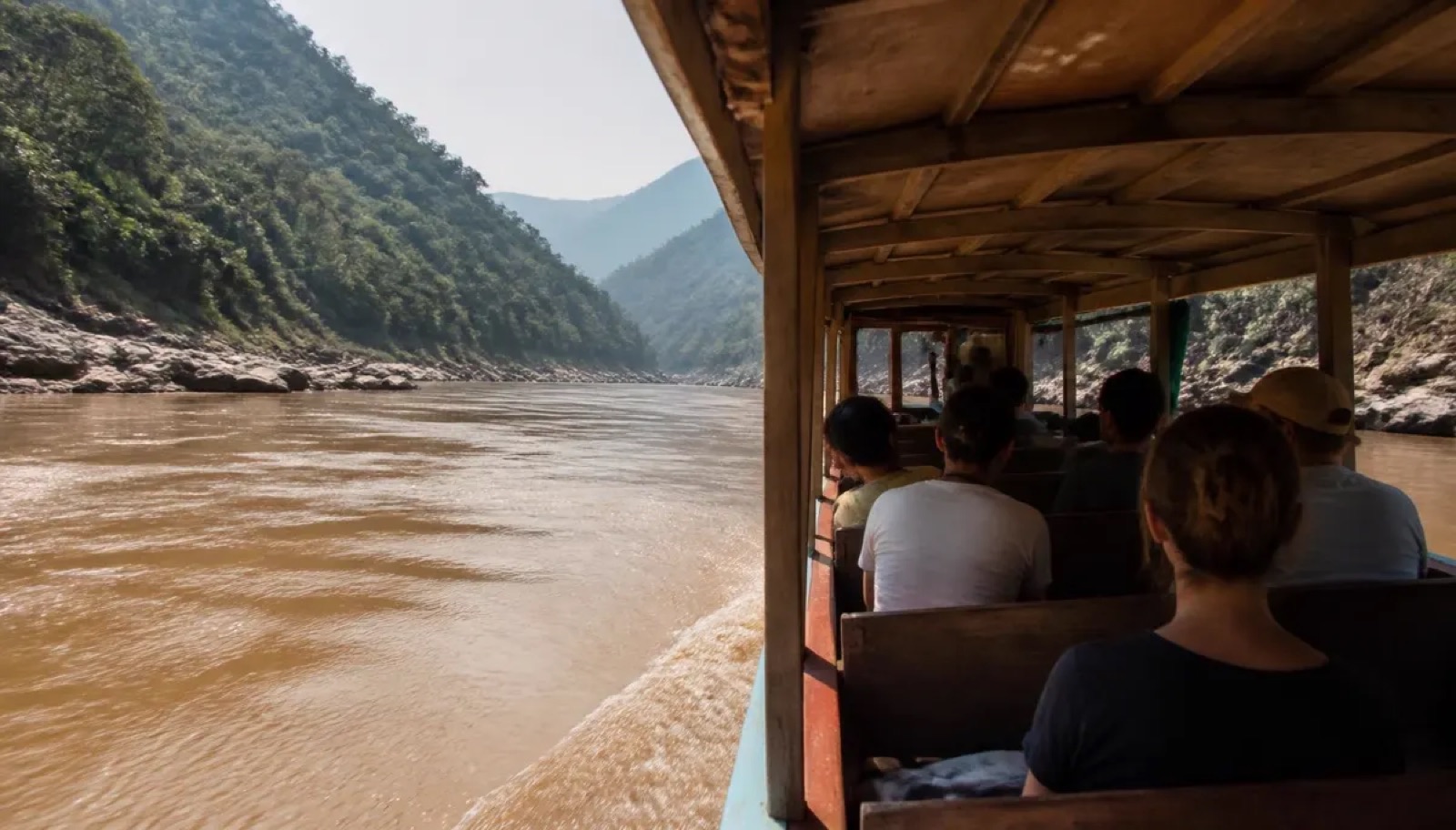
For those who prefer traditional, scenic journeys, travelling by river remains an iconic experience. The two-day slow boat ride down the Mekong from Huay Xai (on the Thai border) to Luang Prabang is widely regarded as one of South East Asia’s great river routes. Passenger boats drift past dense jungle banks, remote villages, and craggy karst cliffs, stopping overnight at the quiet riverside town of Pakbeng.
Local Buses, Minivans, and Songthaews
Away from the high-speed rail line, road transport relies on a network of public buses, shared minivans, and local songthaews (converted pickup trucks with bench seating). Road conditions vary considerably; while main arteries are generally paved, mountain passes can be bumpy, winding, and prone to rain delays during the wet season. Always build flexibility into your travel schedule when relying on road transit.
Transport Mode Comparison
| Mode of Travel | Best For | Speed / Comfort | Key Routes / Coverage |
|---|---|---|---|
| High-Speed Train | Fast, comfortable travel between major northern and central cities | Very Fast / High Comfort (Air-conditioned, modern seating) | Vientiane – Vang Vieng – Luang Prabang – Na Teuy (Luang Namtha) – Boten |
| Mekong Slow Boat | Scenic, relaxing journeys; immersive river landscapes | Slow / Moderate Comfort (Wooden seats or aircraft-style recliners) | Huay Xai to Luang Prabang (via Pakbeng) |
| Shared Minivan / Bus | Reaching regional destinations off the railway line | Moderate Speed / Variable Comfort (Can be cramped on winding roads) | Luang Prabang to Nong Khiaw; Vientiane to Thakhek / Pakse |
| Motorbike Rental | Independent exploration, scenery loops, off-the-beaten-track flexibility | Flexible / Adventure (Requires good riding experience) | Thakhek Loop, Bolaven Plateau Loop |
Culture, Religion, and Local Etiquette
Theravada Buddhism in Daily Life
Buddhism infuses almost every aspect of daily life in Laos. Faith is expressed gently through daily offerings, respectful speech, and traditional social customs. Temples (wats) serve not only as places of worship but as social community hubs where festivals and public gatherings take place.
Temple Etiquette and Dress Code
When visiting temples or religious sites, showing proper respect is vital. Always observe the following traditional norms:
- Dress modestly: Cover shoulders and knees. Avoid wearing sleeveless tops, short skirts, or gym shorts when visiting temples.
- Remove footwear and hats: Take off shoes and headwear before entering temple buildings or local homes. Look for shoe racks near doorways.
- Mind your feet: Feet are considered the lowest and uncleanest part of the body in Lao culture. Avoid pointing your feet at Buddha statues, monks, or other people when sitting down; tuck your legs behind or sit cross-legged instead.
- Refrain from touching heads: The head is considered the highest and most sacred part of the body. Avoid touching anyone's head, including children.
Interacting Respectfully with Monks
Monks are held in high esteem throughout Lao society. When addressing or interacting with a monk, use polite language and maintain a deferential posture. Women should be aware that monks are traditionally forbidden from having direct physical contact with females or receiving objects directly from a woman's hands; items should instead be placed on a table or cloth in front of them.
Weather, Seasons, and Cross-Border Transit
Understanding the Seasons
Laos generally experiences a tropical monsoon climate with two main seasons: dry and wet.
- Cool Dry Season: This period offers the most comfortable weather across the country, characterised by pleasant warm days, clear blue skies, and cooler evenings—especially in higher elevation areas like Luang Prabang and the northern mountains.
- Hot Dry Season: Temperatures rise significantly across the plains and southern regions. This period also coincides with the regional agricultural burning season in rural areas, which can lead to reduced visibility and hazy air across northern mountain valleys.
- Wet Season (Monsoon): Tropical downpours bring lush greenery, flowing waterfalls, and swollen rivers ideal for boat travel. Rain typically falls in short, intense afternoon bursts rather than day-long downpours, making travel fully doable provided you allow time for occasional transit delays.
Cross-Border Overland Travel
Laos shares land borders with five nations, making it an easy central link for multi-country Indochina itineraries:
- Thailand: Easily crossed via several Thai-Lao Friendship Bridges (including crossings at Nong Khai/Vientiane, Mukdahan/Savannakhet, and Nakhon Phanom/Thakhek), as well as northern river crossings near Huay Xai.
- Vietnam: Connected via mountain passes in the north and central regions, including popular overland bus routes between Luang Prabang or Vientiane and Hanoi. Check current border point entry rules before planning overland journeys.
- Cambodia: Joined at the southern border near Si Phan Don (4,000 Islands), providing a direct land route toward Stung Treng and Siem Reap.
Suggested Routes and Itineraries
Option 1: The Classic Northern Highlights (7 to 10 Days)
Ideal for first-time visitors taking advantage of the high-speed rail line for efficient travel:
- Days 1–3: Luang Prabang: Temple walks, Mount Phousi sunset, Kuang Si Waterfalls, and morning alms.
- Days 4–5: Vang Vieng: High-speed train south; kayak the Nam Song River, hike Nam Xay viewpoint, explore caves.
- Days 6–7: Vientiane: High-speed train to the capital; visit Pha That Luang, Patuxai, and enjoy sunset dining along the Mekong.
Option 2: Comprehensive North-to-South Journey (2 Weeks)
A balanced itinerary taking in mountains, culture, and southern island relaxing:
- Days 1–2: Vientiane: City landmarks, night markets, and cafe culture.
- Days 3–4: Vang Vieng: Outdoor karst adventure and river views.
- Days 5–8: Luang Prabang & Nong Khiaw: Heritage town sights followed by a side trip into the river valley of Nong Khiaw.
- Days 9–11: Pakse & Bolaven Plateau: Fly south to Pakse; tour coffee plantations and dramatic highland waterfalls.
- Days 12–14: Si Phan Don (4,000 Islands): Relax on Don Det or Don Khon, rent bicycles, and explore river waterfalls.
Option 3: The Grand Laos Explorer (3 Weeks or More)
An immersive journey incorporating deep wilderness, ancient history, and scenic road loops:
- Days 1–3: Slow Boat from Huay Xai to Luang Prabang: Two-day river trip along the Mekong with an overnight stay in Pakbeng.
- Days 4–7: Luang Prabang & Muang Ngoi: Explore the heritage centre and travel upriver to quiet northern villages.
- Days 8–10: Phonsavan: Archaeological site tour at the Plain of Jars; learn about historical UXO clearance work.
- Days 11–15: Central Motorbike Loop (Thakhek): Ride through limestone landscapes and navigate the underground river boat ride at Konglor Cave.
- Days 16–21: Southern Laos: Wat Phou ruins, Bolaven coffee highlands, and slow life in the 4,000 Islands.
Practical Planning, Currency, and Health
Managing Lao Kip and Cash Economy
The primary currency is the Lao Kip (LAK). While digital payments and credit card processing are growing in major hotels and upscale establishments in Vientiane and Luang Prabang, Laos remains predominantly a cash economy—especially once you step outside major urban centres.
ATMs are readily available in cities and larger towns, though withdrawal limits can vary. It is wise to carry small denominations of cash when travelling through rural villages, purchasing street food, or paying boatmen, as changing large notes in small settlements can be difficult. Keep cash protected from tropical moisture during boat journeys or wet season trips.
Visas, Official Documentation, and Entry Rules
Visa requirements for entering Laos vary depending on your nationality. Many nationalities are eligible for an electronic visa (eVisa) prior to arrival or a visa-on-arrival at major international airports and land border crossings. Because regulations, fee structures, and accepted entry points can change, always check current official government immigration portals or consult your nearest embassy before arranging travel.
Health, Safety, and Travel Well-being
Laos is generally a safe and welcoming nation for travellers, with low rates of violent crime. Simple practical safety precautions will ensure a smooth trip:
- Hydration and Water Safety: Tap water is not suitable for drinking. Always consume purified or boiled water, or carry a reusable bottle equipped with an advanced filtration system.
- Sun and Insect Protection: Apply high-SPF sunscreen during river trips, and bring effective insect repellent for tropical evenings and forest hikes.
- Travel Insurance: Ensure you hold reliable travel insurance covering medical evacuation, outdoor sports, and transit cancellations before embarking on your trip. Medical facilities in rural Laos are basic; severe medical issues are typically transferred to facilities across the border in Thailand.
Final Thoughts: Embracing the Lao Pace
Travelling through Laos is a reminder that the best travel experiences aren't measured by how many sights you check off a list, but by how deeply you connect with where you are. Whether you find yourself listening to morning temple drums in Luang Prabang, floating quietly through a underground cavern in Thakhek, or sipping cold tea while watching the Mekong flow gently past the 4,000 Islands, Laos leaves an impression that stays with you long after you pack your bags.
Pack an open heart, leave your rush behind, and let Southeast Asia’s most serene nation reveal itself at its own timeless rhythm.
Explore Laos in Depth: My Detailed Guides
This guide is the overview. When you are ready to plan a specific part of the trip, these deep-dives go further, and each one links back here:
More Laos guides
Mekong Slow Boat Guide: Huay Xai to Luang Prabang
The two-day slow boat down the Mekong, honestly described — border crossing, the overnight stop at Pakbeng, what to pack and whether it is…
Luang Prabang Itinerary: Things to Do in 3 to 5 Days
Things to do in Luang Prabang over three to five days — Kuang Si Falls, Mount Phousi, the alms ceremony and night market, plus where to…