Mekong Slow Boat Guide: Huay Xai to Luang Prabang
The two-day slow boat down the Mekong, honestly described — border crossing, the overnight stop at Pakbeng, what to pack and whether it is worth it.
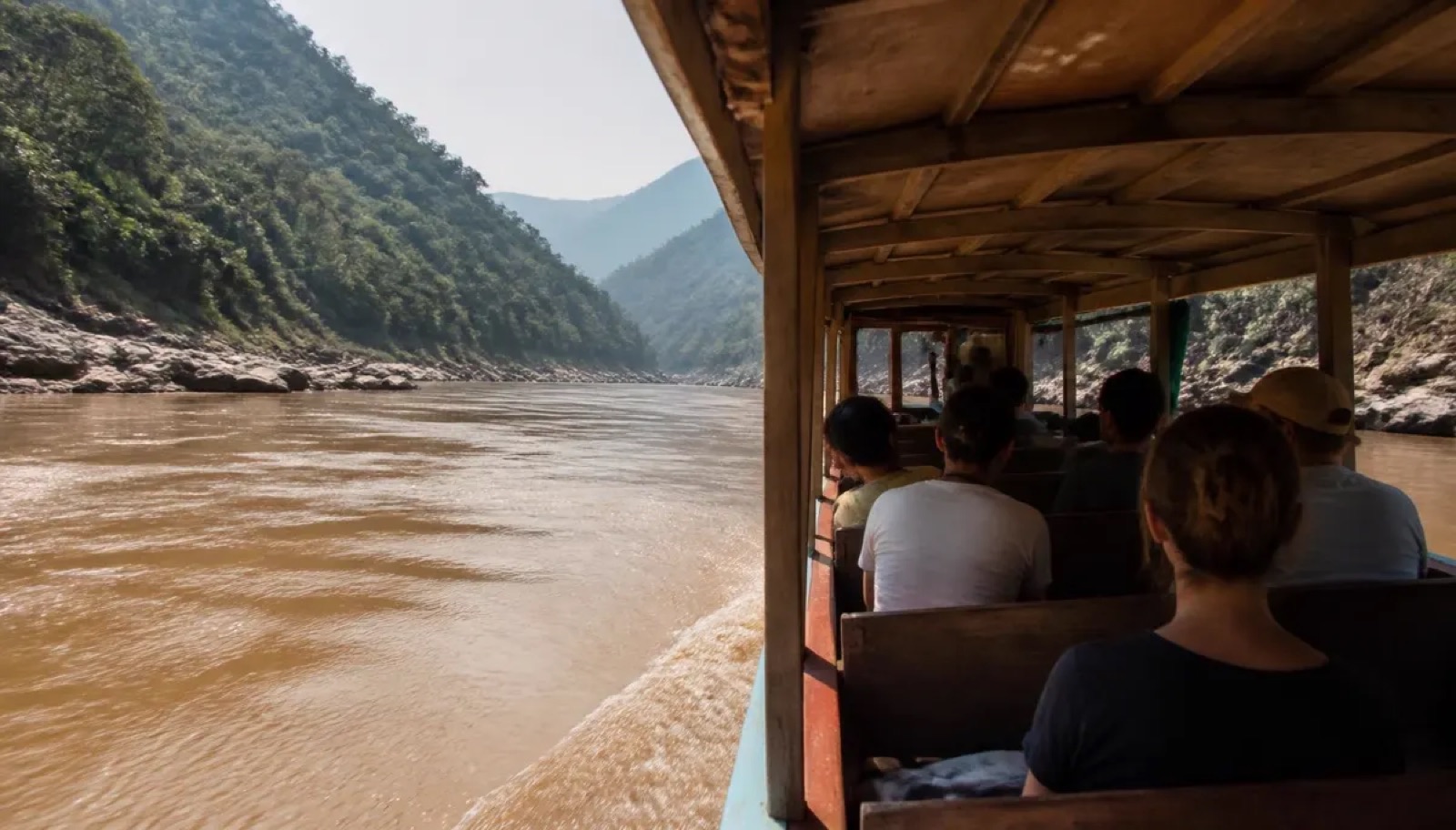
In this guide
- Quick Facts: The Mekong Slow Boat
- The Mekong Slow Boat Experience: Overview & What to Expect
- Border Crossing: Chiang Khong to Huay Xai
- Onboard Life: Boat Layout, Seating and Comfort
- What to Pack for the Two-Day Voyage
- Day One: Huay Xai to Pakbeng
- Overnight Stop: Navigating Pakbeng
- Day Two: Pakbeng to Luang Prabang
- Wet Season vs Dry Season: Water Levels and Travel Times
- Speedboats and Other Alternatives Compared
- Doing the Route in Reverse: Luang Prabang to Huay Xai
- Safety, Etiquette and Setting Realistic Expectations
- Practical Planning Advice
- Conclusion: The Unforgettable Magic of the Slow Boat
This guide is part of our Laos Travel Guide: Luang Prabang, Vientiane and the Mekong — start there for the overview, when to go and how to get around.
Mornings on the Mekong can begin with a thick blanket of river fog clinging to the dark mahogany hulls of the wooden boats, and the low thrum of a diesel engine underfoot. The smell of petrol fumes mixes with crisp mountain air and freshly poured dark Lao coffee as boats push out from the bank at Huay Xai into the coffee-coloured waters. Over two unhurried days, northern Laos unfolds at a human pace: emerald karsts rising out of the mist, children splashing along muddy banks, and water buffalo coolly observing the passing boats.
Taking the two-day slow boat down the Mekong River from the Thai border town of Huay Xai to the UNESCO-listed former royal capital of Luang Prabang is one of Southeast Asia's classic overland—or rather, over-water—journeys. It is far more than mere transportation from point A to point B; it is an immersive, hypnotic ritual of travel that forces you to unplug, slow your heart rate, and witness a timeless way of life along one of the world's greatest waterways.
However, the experience can vary dramatically depending on how you prepare, which boat option you select, and how well you manage your expectations. This guide covers everything you need to know about navigating the border, enduring the long hours on board, spending the night in the frontier town of Pakbeng, and soaking up every moment of this incredible river voyage.
Quick Facts: The Mekong Slow Boat
- Start / End Points: Huay Xai (Bokeo Province) to Luang Prabang (via Pakbeng).
- Total Distance: Approximately 300 kilometres along the Mekong River.
- Duration: 2 days (typically 6 to 9 hours of river travel per day).
- Key Border Crossing: Chiang Khong (Thailand) to Huay Xai (Laos) via the Fourth Thai–Lao Friendship Bridge.
- Overnight Stop: Pakbeng (halfway point; accommodation arranged separately or via tour package).
- Best Time to Travel: November to February (cool, dry season with high water levels after the monsoons).
The Mekong Slow Boat Experience: Overview & What to Expect
The slow boat route along the upper Mekong River has long served as a vital lifeline for remote communities in northern Laos. Long before paved highways crossed the rugged mountain terrain, long wooden barges carried diesel, livestock, produce, and passengers between riverside hamlets.
Today, while road networks have improved, the river journey remains the preferred route for travellers seeking romantic landscapes and a serene transition into the heart of Laos. It offers an intimate glimpse into rural life that you simply cannot see from the window of an overland bus or an aeroplane window at ten thousand metres.
The Rhythm of the River
Once the boat casts off, a tranquil rhythm takes over. The hum of the engine becomes background noise, punctuated by the occasional blast of the horn as the captain navigates hidden rocks or warns shallow wooden canoes of our wake.
You will spend your hours reading, chatting with fellow travellers, gazing at the steep rainforest canopy, or watching local villagers net fish along the gravel shoals. Time stretches out in the most delightful way, allowing you to settle into what locals affectionately call "Lao time."
Who This Journey Is (and Isn't) For
This journey is ideal for patient travellers, slow-travel enthusiasts, photography buffs, and anyone looking to absorb the natural splenders of Southeast Asia. If you view travel as a collection of sensory experiences rather than a rush to cross off tourist sites, you will fall in love with the river.
Conversely, if you are on a tight timeline, require air-conditioned luxury at all times, or become easily restless during six to eight hours without high-speed internet, you may find the journey testing. It requires a flexible attitude, a willingness to sit on wooden or re-purposed bus seats, and an acceptance of rustic facilities.
Border Crossing: Chiang Khong to Huay Xai
Most travellers embarking on the downstream slow boat begin their journey in Northern Thailand, coming from Chiang Mai or Chiang Rai to the border town of Chiang Khong. Crossing into Laos here is straightforward, but it requires crossing the Mekong via the Fourth Thai–Lao Friendship Bridge before arriving at the boat terminal in Huay Xai.
Arrive in Chiang Khong the evening before your intended boat departure. This allows you to complete border immigration early in the morning and avoid a frantic dash to catch the morning boat departure on the Lao side.
Leaving Thailand via the Friendship Bridge
The border crossing is situated a few kilometres south of the main town centre of Chiang Khong. You will exit Thailand through the Thai immigration hall, where your passport will be stamped out. From there, international shuttle buses ferry travellers across the Friendship Bridge over the Mekong to the Lao immigration complex.
Ensure you have local Thai baht or exact foreign currency handy for the short shuttle bus ride across the bridge. The crossing itself takes only a few minutes, offering grand elevated views of the river you will soon be navigating.
Laos Visa and Customs at Huay Xai
Upon reaching the Lao immigration facility in Huay Xai, you can process your Visa on Arrival (VoA) or present an official eVisa, depending on your nationality and current border entry regulations. Always check official government channels prior to your trip for the latest entry requirements and accepted payment methods.
Ensure your passport has at least six months of validity remaining from your entry date and plenty of blank pages. Keep passport-sized photos handy, as well as crisp, unblemished physical banknotes for visa processing fees, as torn or marked bills are frequently rejected at the border counter.
Getting to the Boat Pier
Once you clear Lao customs and immigration, you are officially in Huay Xai. The slow boat pier (known locally as the slow boat dock) is located a short tuk-tuk ride away from the immigration border complex.
Shared tuk-tuks regularly wait outside the customs terminal to transport arriving passengers to the main pier or ticket office. It is wise to head directly to the pier area to secure your ticket and select a decent seat on the boat before it fills up.
Onboard Life: Boat Layout, Seating and Comfort
The standard public slow boats are long, narrow timber vessels—often measuring thirty to forty metres in length—powered by large automotive diesel engines mounted at the stern. The layout is simple: a covered long deck lined with seats, a captain's wheelhouse at the bow, and a small service area and toilet at the rear.
Understanding the layout of these boats is key to ensuring a comfortable journey over two full days on the water.
The Boat Anatomy: Seats, Engines and Space
In years past, passengers sat on hard wooden benches, but nowadays, most public slow boats are fitted with re-purposed car or bus seats arranged in rows facing forward. These seats are generally unattached to the floor, meaning they can slide slightly or be adjusted for legroom.
The golden rule of slow boat seating is simple: sit as far forward as possible. The large diesel engines located in the rear produce significant noise and diesel fumes throughout the day. Sitting in the front two-thirds of the boat ensures a quieter ride, cleaner air, and far better views out the open side windows.
Facilities: Toilets and Food Onboard
Public boats feature a basic western-style or squat toilet room at the rear of the vessel. While functional, hygiene levels can deteriorate as the day progresses, so carrying your own toilet paper and hand sanitiser is essential.
Most public boats operate a small kiosk onboard selling cold water, soft drinks, beer, instant noodles, and light snacks such as potato crisps or peanuts. However, fresh, substantial meal options onboard public vessels are limited, making it vital to bring your own packed lunch and fresh fruit purchased from local market stalls before departing each morning.
Public Boat vs Private Cruise Options
Travellers can choose between two primary modes of river transit: the traditional public slow boat or a boutique private cruise. Both follow the exact same river route and stop overnight in Pakbeng, but the experience differs considerably.
| Feature | Standard Public Slow Boat | Boutique / Private Cruise |
|---|---|---|
| Cost Tier | Budget / Backpacker | Mid-Range to High-End Luxury |
| Seating | Re-purposed bus/car seats; variable spacing | Assigned padded armchairs, lounge tables, viewing decks |
| Meals Included | No (small snack kiosk onboard) | Yes (freshly prepared hot Lao buffets onboard) |
| Excursions | None (direct transit between piers) | Guided shore stops at ethnic villages & caves |
| Luggage Handling | Stored in central hold under tarps | Managed and protected by dedicated crew |
| Atmosphere | Social, lively, basic, sometimes crowded | Quiet, spacious, educational, relaxed |
What to Pack for the Two-Day Voyage
Because you will be static on a boat for up to eight hours a day, thoughtful packing in your daypack will make an enormous difference to your overall physical comfort. Your main heavy luggage will usually be stowed away in the lower hull or packed at the back under protective canvas tarps, making it inaccessible during transit.
Keep everything you need for the daylight hours inside a compact, secure daypack that stays at your seat with you.
Essential Comfort Gear
- Inflatable Seat Cushion: While bus seats are an improvement over wood, several hours of sitting can take a toll on your lower back. A compact camping cushion is a lifesaver.
- Warm Layers & Windbreaker: Early mornings on the river can be surprisingly chilly, particularly between November and January when river fog lingers until mid-morning. Pack a light fleece and a wind-resistant jacket.
- Sun Protection: Direct sunlight glares off the water. Bring sunglasses, a wide-brimmed hat, and broad-spectrum sunscreen for when the midday sun hits the open deck windows.
- Earplugs or Noise-Cancelling Headphones: Essential if you end up seated in the rear half of the vessel near the diesel engine bay.
Rations and Hydration
- Refillable Water Bottle: Bring plenty of drinking water. Staying hydrated in the tropical climate is crucial, even when sitting still.
- Fresh Snacks: Pick up fresh baguettes, bananas, local sticky rice, nuts, and dry snacks from the morning markets in Huay Xai and Pakbeng before boarding.
- Hygiene Kit: Small packs of tissue paper, wet wipes, and alcohol-based hand sanitiser are absolute must-haves for onboard bathroom visits.
Electronics and Entertainment
- Power Bank: There are no accessible electrical outlets for passengers on standard public boats. A fully charged portable power bank will keep your phone, camera, and e-reader powered up.
- Books or Podcasts: While watching the scenery is mesmerising, having a good book or downloaded audiobooks for quiet stretches of the river is highly recommended.
- Dry Bag: A small waterproof dry bag protects your precious camera gear, passport, and electronics from accidental spray, rain drips, or spills onboard.
Day One: Huay Xai to Pakbeng
The first leg of the journey covers the upper stretch of the Mekong, where the river serves as a natural boundary between Thailand and Laos for a short stretch before dipping entirely into Lao territory. The excitement at the dock in Huay Xai is palpable as bags are loaded, tickets are stamped, and passengers find their spots.
As the boat pulls away from the bank, the urban sounds of the border fade rapidly, replaced by the roar of the river engine and the rustle of tropical forest foliage along the shoreline.
Morning Departure and Leaving the Frontier
Boats typically push off around 9:00 AM (the departure was moved forward from 11:00 AM in December 2024) once passenger manifests are finalised and cargo is balanced. The captain navigates out into the main current, threading between exposed granite boulders and sandbars that line the channel.
During the first few hours, you will pass low-lying hills covered in teak plantations and banana groves. Small wooden pirogues—traditional thin fishing canoes—skim past, piloted by local villagers checking bamboo fish traps set against the rocky banks.
Mid-day River Scenery and Remote Shorelines
By early afternoon, the landscape becomes increasingly mountainous and rugged. The Mekong slices through deep gorges lined with dense virgin rainforest and bamboo thickets. Keep your eyes peeled for dramatic cliff faces where wild orchids cling to the rock work.
Periodically, the boat will pull right up to an empty, muddy bank to drop off local passengers or unload supplies for remote villages that have no road access. Watching families greet arriving relatives or unload sacks of rice and corrugated roofing sheets offers a profound glimpse into everyday life along the river.
Arriving in Pakbeng
As late afternoon approaches and the sun drops behind the western mountain peaks, casting long golden light across the brown water, the boat begins to slow down. Around dusk, you will round a sharp river bend and catch sight of the hillside town of Pakbeng.
The pier at Pakbeng comes alive as dozens of boat passengers disembark up the steep concrete ramp, met by enthusiastic local guesthouse operators and porter boys offering transport and rooms for the night.
Overnight Stop: Navigating Pakbeng
Pakbeng is a frontier transit town built almost entirely around the daily flow of slow boat traffic. Suspended on a steep bluff overlooking the junction of the Mekong and Nam Beng rivers, it exists in a state of quiet rest during the day, bursting into vibrant life for a few hours every evening when the boats tie up.
While historically basic, Pakbeng now boasts a wide variety of amenities tailored to international travellers, ranging from simple family-run timber homestays to comfortable eco-lodges perched high above the riverbank.
What to Expect in Pakbeng
Disembarking in Pakbeng can feel slightly chaotic as hundreds of passengers step off the boats simultaneously. Luggage is pulled from the boat deck, and travellers haul their daypacks up the steep incline towards the main street.
The town consists primarily of one long, rising main road lined with guesthouses, small restaurants, bakeries, atmospheric bars, and convenience stores. Everything you need for an evening stay is within easy walking distance of the central street.
Accommodation and Dining Options
If you are travelling on an organised cruise package, your accommodation in Pakbeng will already be booked and your luggage transported to your room. If you are travelling independently on the public boat, you can either pre-book a guesthouse online or simply walk up the hill and inspect rooms on arrival.
For dinner, local eateries along the main drag serve excellent Lao dishes, including aromatic laap (herbed minced meat salad), steaming bowls of noodle soup, fresh river fish, and Indian curries introduced by long-standing local merchant families. It is an ideal time to relax over an ice-cold local beer and share travel stories with people met on the water.
Preparing for Day Two
Before turning in for the night, purchase your breakfast baguette, fresh fruit, and water supplies for the following day's journey. Pakbeng’s bakeries open early to cater to departing passengers, turning out fresh French-style sandwiches wrapped in paper.
Get a good night’s rest; the morning boat departure comes quickly, and you will want to get down to the pier early to secure a comfortable seat for the second leg to Luang Prabang.
Day Two: Pakbeng to Luang Prabang
The second morning on the Mekong begins with atmospheric splendour. A cold, thick river mist frequently blankets Pakbeng at dawn, obscuring the far bank and turning the surrounding mountain summits into floating green islands in a sea of white fog.
Boarding the boat in the cool morning air, you will find the vessel quiet as passengers wrap themselves in jackets and blankets, waiting for the morning sun to burn off the vapour and illuminate the river.
Early Morning River Mist
As the captain throttles up and steers out into the river, the fog slowly dissipates, revealing dramatic limestone karsts rising sheer out of the water. Day two features some of the most striking rock formations and dramatic mountain scenery of the entire journey.
The river widens and narrows unpredictably, forcing the captain to carefully navigate around swirl eddies and half-submerged rock shelves. The landscape feels untamed, wild, and deeply majestic as you glide deeper into Luang Prabang Province.
Approaching the Pak Ou Caves and Luang Prabang
In the afternoon, as you approach the final stretch towards Luang Prabang, the boat passes near the famous Pak Ou Caves (Tham Ting and Tham Theung). Set dramatically into the face of a towering limestone cliff at the confluence of the Nam Ou and Mekong rivers, these holy caves are packed with thousands of Buddha statues left by pilgrims over centuries.
While public slow boats do not stop at the caves (they continue directly to the main destination pier), boutique cruise options often include a guided shore excursion here before making the final run into town.
Arrival Pier and Getting into Luang Prabang Town
The main slow boat landing dock for Luang Prabang is located at Ban Xieng Lek, approximately ten kilometres upstream from the historic UNESCO town centre. This purpose-built terminal keeps heavy commercial boat traffic away from the delicate historic heritage zone.
Upon disembarking at the pier, you will walk through the small arrival terminal building where shared tuk-tuks wait to carry passengers into the town centre, typically dropping them at the Night Market entrance rather than at individual guesthouses. The drive into town takes about twenty minutes, bringing an end to your two-day river adventure.
Wet Season vs Dry Season: Water Levels and Travel Times
The character of the Mekong River changes dramatically depending on the season, affecting both the scenery and the time it takes to complete the journey between Huay Xai and Luang Prabang.
Understanding these seasonal variations will help you choose the right time for your trip and set realistic expectations for your travel schedule.
High Water (Wet Season) Dynamics
During the monsoon and post-monsoon months (roughly July through October), heavy rains in the regional catchments flood the Mekong, raising water levels by several metres. The river transforms into a powerful, muddy torrent carrying high volumes of sediment and drifting timber.
- Faster Speeds: Strong downstream currents mean the boat travels significantly faster on the downstream run to Luang Prabang, shortening overall transit times.
- Lush Scenery: Surrounding hillsides, waterfalls, and jungle canopy are at their absolute greenest and most vibrant.
- Debris Navigation: Captains must exercise heightened vigilance to spot floating logs and hidden debris carried by the swift current.
Low Water (Dry Season) Challenges
During the dry season (roughly February through May), river levels drop dramatically, exposing vast sandbars, gravel beds, and jagged granite ridges that remain submerged during the monsoon.
- Slower Travel: The downstream current slacks off, and captains must navigate complex, winding channels, resulting in longer hours on the water.
- Exposed Rock Formations: While travel is slower, the dramatic, exposed rock geology and sprawling sand beaches create unique visual landscapes.
- Cooler Morning Weather: November through January offers ideal mild temperatures, blue skies, and comfortable conditions, though morning river fog can temporarily delay early cast-offs.
Speedboats and Other Alternatives Compared
While the two-day slow boat is the most celebrated way to travel between the Thai border and Luang Prabang, it is not the only option available. Travellers can choose between low-flying speedboats, overland bus and rail networks, or domestic flights.
Here is an honest assessment of how these alternatives compare to the classic slow boat journey.
Why the Mekong Speedboat Is Best Avoided
You will undoubtedly hear about the high-speed wooden boats (speedboats) that zip between Huay Xai and Luang Prabang in just six to seven hours total. These thin, low-slung wooden crafts are powered by massive, roaring car engines fitted with long driveshafts.
Taking these speedboats is strongly discouraged for several critical reasons:
- Extreme Noise: The deafening roar of the un-muffled engine requires crash helmets and ear defenders; conversation or relaxed sightseeing is completely impossible.
- Severe Physical Discomfort: Passengers sit cramped in a tiny line on low wooden floor boards with their knees pulled up to their chests for hours, absorbing relentless impacts as the boat slams across the river wake.
- Major Safety Hazards: Mekong speedboats have a notorious safety record. Hitting a submerged rock or floating log at high speed can instantly capsize or splinter the vessel.
Overland Buses and Trains
With recent infrastructure developments in Laos, including modern highway upgrades and high-speed rail connections across northern provinces, overland travel is now faster than ever before. Sealed roads and express bus connections link major northern towns, making land transit viable for time-strapped travellers.
However, long-distance bus routes through the mountainous interior can be winding and prone to delays. While land transport gets you across the countryside faster, you miss out entirely on the tranquil, scenic serenity of the river corridor.
Flying Between Chiang Rai/Bangkok and Luang Prabang
For those with minimal time, short regional flights connect major Thai transit hubs directly to Luang Prabang International Airport. While undeniably fast and comfortable, flying completely skips the border region and the transformative geographic transition that makes arriving in Luang Prabang by water so rewarding.
| Transport Option | Total Travel Time | Comfort Level | Scenic / Cultural Value | Safety Profile |
|---|---|---|---|---|
| Mekong Slow Boat | 2 Days (overnight Pakbeng) | Moderate (Relaxed) | Exceptional | High (Experienced river captains) |
| Mekong Speedboat | 6–7 Hours | Extremely Low | Poor (Helmet required, high stress) | Low (High risk of collisions) |
| Overland Bus | 10–14 Hours | Low to Moderate | Moderate (Mountain pass views) | Moderate (Winding mountain roads) |
| Regional Flight | 1–2 Hours | High | Low (Aerial views only) | High (Standard international aviation) |
Doing the Route in Reverse: Luang Prabang to Huay Xai
While the vast majority of travellers take the slow boat downstream from Huay Xai to Luang Prabang, it is entirely possible—and equally rewarding—to travel upstream in the reverse direction.
Choosing the upstream route offers a few distinct advantages, though it also presents a couple of logistical differences worth noting.
Upstream Navigation and Longer Hours
Pushing against the powerful current of the Mekong means the upstream journey requires slightly more time on the water each day. The boat works harder against the flow, particularly during high-water months, adding roughly one to two hours to each day's travel time.
You will leave Luang Prabang in the morning, spend night one in Pakbeng, and arrive at the Huay Xai border pier late on the second afternoon.
Logistics and Planning Considerations
The primary benefit of travelling upstream is that boats are frequently far less crowded. While downstream boats leaving Huay Xai can fill up quickly with travellers coming off Northern Thailand routes, upstream vessels departing Luang Prabang often have plenty of open seats, giving you room to spread out and enjoy a very peaceful trip.
If you choose this direction, ensure you check current border operating hours at Chiang Khong/Huay Xai to ensure you can cross into Thailand comfortably upon arrival, or plan to spend a night in Huay Xai before crossing the border the following morning.
Safety, Etiquette and Setting Realistic Expectations
A river trip through a developing country requires a sensible, respectful approach to local customs and practical safety norms. The Mekong is a working river, and life onboard reflects the rural character of Laos.
By following a few simple cultural guidelines and keeping safety front of mind, you will ensure a smooth, enjoyable trip for both yourself and your fellow passengers.
River Safety Norms
Commercial slow boats carrying passengers are required to carry basic life jackets, which are typically stowed in overhead racks above the seating areas or under deck hatches. Familiarize yourself with where life jackets are stored when you first board and settle into your seat.
Keep your limbs inside the boat gunwales when pulling alongside piers or rocky shorelines. The captains are highly skilled at maneuvering these heavy wooden vessels using engine bursts, but hulls can bump firmly against wooden moorings or riverbank rocks during landing manoeuvres.
Cultural Etiquette in Riverside Villages
If you take a cruise that includes village stops along the river, or when interacting with locals at piers and market stalls, remember that rural Lao culture is modest and polite.
- Dress Respectfully: Keep shoulders and knees covered when walking through rural villages or disembarking at local piers. swimwear and skimpy beach clothes are culturally inappropriate away from resort pools.
- Ask Before Photo Graphing: Always ask for permission before taking close-up photographs of local villagers, elders, or children playing on the riverbanks.
- Support Local Vendors: Buy snacks, drinks, and handicrafts directly from local family vendors along the riverbanks to ensure tourism funds directly benefit these remote river communities.
Managing Expectations for Comfort
It is important to remember that the standard public slow boat is a shared local transport service, not a polished European river cruise vessel. Equipment can show wear, toilet facilities are basic, and departure schedules can shift slightly based on water conditions, cargo loading, or weather delays.
Approach any minor hiccups with a warm smile and patience. Embracing the unhurried, unpredictable nature of river travel is all part of the charm of travelling through Laos.
Practical Planning Advice
To ensure your slow boat journey down the Mekong goes off without a hitch, keep these practical logistics and planning tips in mind before setting out:
- Check Current Requirements: Always verify current visa policies, border crossing procedures, and entry regulations for both Thailand and Laos prior to your trip, as border details can update periodically.
- Verify Departure Locations: Departure piers and ticket collection arrangements in Huay Xai and Luang Prabang can shift seasonally or due to riverbank development. Confirm exact dock locations with local operators or official tourism offices before setting off.
- Carry Physical Cash: Cash is king along the river. ATMs are virtually non-existent between Huay Xai and Luang Prabang, save for a few machines in Pakbeng that may occasionally be out of service or short on cash. Carry sufficient Lao Kip (and backup Thai Baht or US Dollars) for meals, guesthouses, snacks, drinks, and local transport.
- Arrive Early at the Dock: On public boats, seats are generally unreserved. Arriving at the dock an hour before scheduled departure gives you the best pick of seats near the front of the boat, away from engine noise.
- Protect Your Valuables: Keep your essential travel documents, wallet, phone, and expensive camera gear inside a small daypack near your feet or in your lap rather than packed away in large luggage stored in the hold.
Conclusion: The Unforgettable Magic of the Slow Boat
In a modern world obsessed with high-speed connections, rapid airport transit, and packed travel itineraries, spending two full days floating down the Mekong River is a rare and precious gift. It forces you to put down your phone, look up at the mountain ridges, and reconnect with the quiet beauty of travel for travel’s sake.
The boat glides into the landing dock at Luang Prabang on the second afternoon, often bathed in soft orange light. The thrumming of the engine, the misty green mountains, and the friendly waves from children along the shore make every slow mile worthwhile.
Pack your patience, bring a good cushion and a sense of wonder, and step aboard. The mighty Mekong is waiting to show you the beating heart of Laos at its very best.
More Laos guides
Laos Travel Guide: Luang Prabang, Vientiane and the Mekong
The slowest country in South-East Asia, and better for it. Routes, seasons, overland transport, river towns and how to travel Laos…
Luang Prabang Itinerary: Things to Do in 3 to 5 Days
Things to do in Luang Prabang over three to five days — Kuang Si Falls, Mount Phousi, the alms ceremony and night market, plus where to…