New York City Travel Guide: First-Timer Essentials
How to plan a first trip to New York: where to stay, the subway, the boroughs worth your time and the sights that earn their queues.
In this guide
- Quick Facts
- The Five Boroughs Explained
- Arriving from the Airport
- Choosing Your Home Base: Where to Stay
- Mastering the Grid and the Subway
- The Essential Sights
- A Trio of World-Class Museums
- Wandering Iconic Neighbourhoods
- Brooklyn Bridge and Beyond
- Broadway, Bagels & Beyond: The Food Scene
- Money, Safety, and Practical Tips
- A Photographer’s Notes on New York City
- Explore in Depth
- Frequently Asked Questions
- Final Thoughts
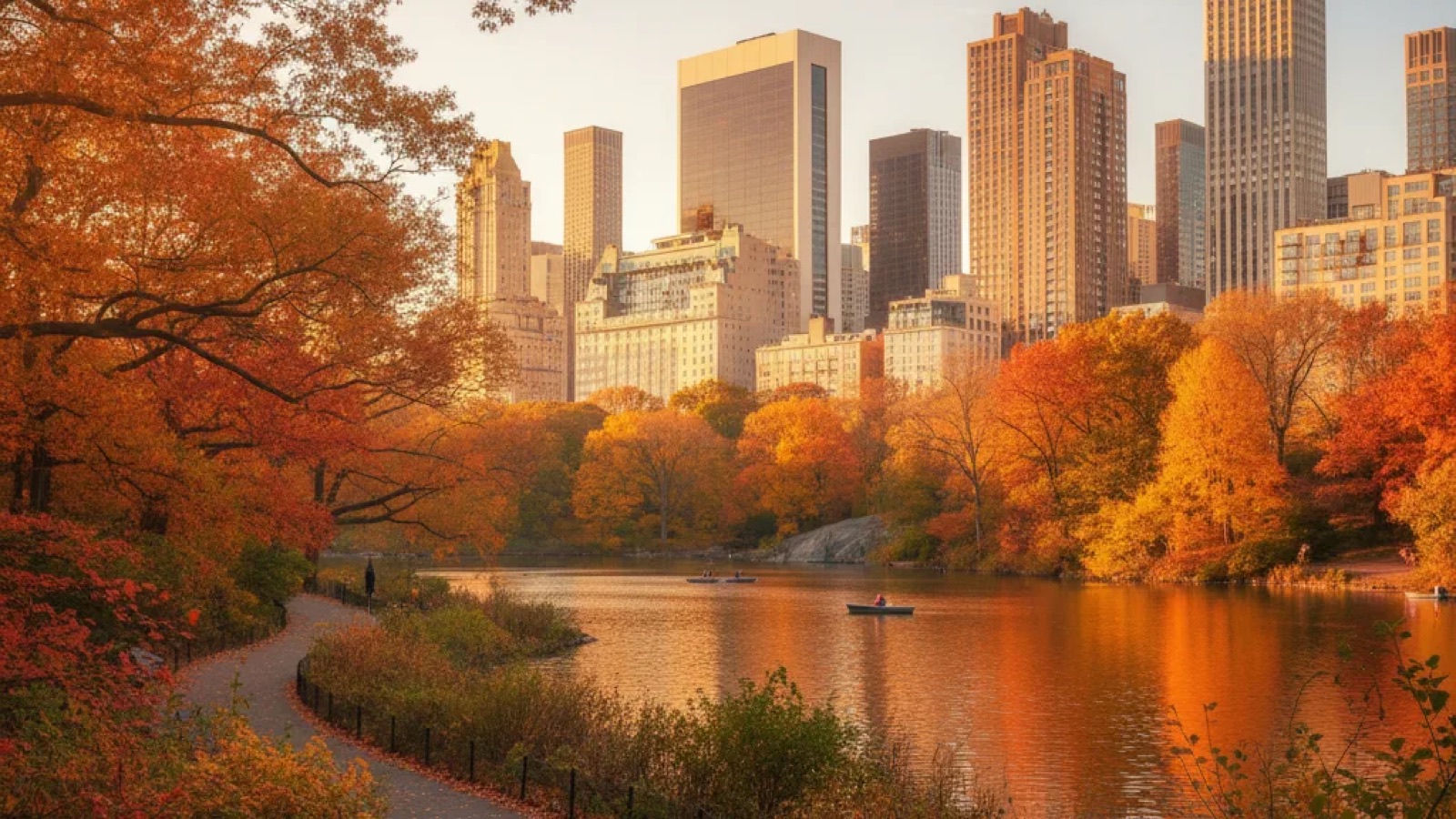
Steam rises from a manhole cover on a crisp autumn morning in the West Village, catching the low sun as if staged. You can walk for hours, swallowed by the city’s rhythm. The soundscape is a constant symphony: the distant wail of a siren, the rumble of a subway train underfoot, the murmur of a dozen different languages from people brushing past. It’s this total sensory immersion, the feeling of being a tiny, anonymous part of an enormous, moving organism, that defines New York. It’s a city that’s been filmed and photographed into a global icon, yet still manages to surprise you with a quiet, poetic moment on a cobblestoned street corner.
If you're heading there for the first time, the sheer scale of it all can feel overwhelming. Where do you even begin? This guide is designed to cut through the noise and give you the foundational knowledge you need to explore confidently. We’ll cover how to get into the city from the airport, how to make sense of the subway, where to base yourself, and how to tackle the big sights without losing your mind. But more than that, we’ll talk about how to find the real magic of NYC: in its diverse neighbourhoods, its incredible food, and the simple act of walking its endless, fascinating streets.
Quick Facts
- Location: Northeastern United States, at the mouth of the Hudson River.
- Getting There: Three major international airports serve the city: John F. Kennedy (JFK), LaGuardia (LGA), and Newark Liberty (EWR) in neighbouring New Jersey. All are connected to the city via a mix of public transport and private options.
- Getting Around: The subway is the lifeblood of the city, operating 24/7. Walking is essential and often the best way to explore individual neighbourhoods. Yellow cabs and rideshare services are abundant.
- Language & Currency: English is the official language, though hundreds of languages are spoken. The currency is the United States Dollar (USD).
- Best Time to Visit: Autumn (September-November) offers pleasant temperatures and beautiful light. Spring (April-June) is also lovely. Winter is cold but festive, while summer can be very hot and humid.
The Five Boroughs Explained
First thing to realise is that "New York City" is made up of five distinct boroughs, each with its own character, government, and identity. While you might spend most of your first trip in one, understanding the landscape is key.
Manhattan is the long, thin island that most people picture when they think of NYC. It’s home to Times Square, Central Park, the Empire State Building, Wall Street, and the majority of the city’s most famous landmarks. It’s the densest, most intense, and most expensive part of the city. For a first-timer, it’s where you’ll likely spend the majority of your time.
Brooklyn, just across the East River, has transformed over the last couple of decades. It's a massive borough in its own right, known for its creative energy, historic brownstone neighbourhoods, vibrant food scene, and incredible skyline views of Manhattan. Areas like Williamsburg, DUMBO, and Bushwick are major destinations for visitors seeking a trendier, more local vibe.
Queens is the most ethnically diverse urban area in the world. For travellers, this translates into the most authentic and exciting food scene in the city. A subway ride to neighbourhoods like Flushing (for East Asian cuisine) or Jackson Heights (for South American and South Asian food) is a culinary pilgrimage. It’s also home to two of the city’s airports (JFK and LaGuardia) and some great-value accommodation options.
The Bronx, north of Manhattan, is the birthplace of hip-hop and home to the New York Yankees. Staten Island is the most suburban borough, connected to Manhattan by its famous, and free, ferry.
Arriving from the Airport
Getting from the airport into the city can be your first real New York challenge. You have three main airports and a tangle of transport options.
From John F. Kennedy Airport (JFK) in Queens, the most reliable public transport route is the AirTrain JFK. This unmanned train loops the terminals and connects you to two key points: the Jamaica Station (for the Long Island Rail Road or the E, J, Z subway lines into Manhattan) and the Howard Beach Station (for the A subway line). The LIRR is faster but more expensive; the subway is the classic, budget-friendly way in. Taxis and rideshares are also readily available but are subject to traffic, which can be brutal.
LaGuardia Airport (LGA), also in Queens, is closer to Manhattan but lacks a direct rail link. The solution here is the bus. A dedicated public bus service connects airport terminals directly to subway stations in Queens and Manhattan. This is the cheapest route by far. Of course, taxis and rideshares are also an option.
Newark Liberty International Airport (EWR) is actually in New Jersey. Like JFK, it has an AirTrain service. This connects you to the Newark Liberty International Airport Station, where you can catch an NJ Transit or Amtrak train directly to Penn Station in Midtown Manhattan. It's generally a quick and efficient journey. As always, check the official airport and transport authority websites before you travel, as routes, schedules, and ticketing systems can and do change.
Choosing Your Home Base: Where to Stay
Where you stay will shape your entire experience of New York. There’s a trade-off between convenience, cost, and character. Here are the main contenders for a first-timer.
Midtown Manhattan: This is the epicentre of tourism. Staying here puts you within walking distance of Times Square, Broadway theatres, Central Park South, and the Empire State Building. The transport connections are unbeatable. The trade-off? It’s chaotic, loud, and can feel impersonal and tourist-heavy. After a long day of exploring, returning to the thick of it isn't for everyone.
Lower Manhattan: Think areas like Greenwich Village, the Financial District, or SoHo. These neighbourhoods have much more character than Midtown. You’re trading some convenience for atmosphere – charming streets, historic architecture, and fantastic restaurants. You’ll still have great subway access, but you'll be travelling a little further to get to some of the uptown museums.
Williamsburg, Brooklyn: Just one or two subway stops from Manhattan, Williamsburg offers a different perspective. It's a hub of independent boutiques, excellent cafes, buzzing bars, and a younger, creative crowd. The waterfront provides some of the best skyline views you'll find anywhere. The trade-off is that you'll be on the subway every time you want to visit a Manhattan landmark, adding a little travel time to your day.
Long Island City, Queens: Located just across the river from Midtown, LIC is primarily a place to stay for value and convenience. It has a high concentration of hotels at often more reasonable prices than Manhattan, and the subway connections are fantastic, getting you into the city centre in minutes. What you save in money, you compromise in neighbourhood charm; it doesn't have the same vibrant street life as the other areas mentioned.
Mastering the Grid and the Subway
Getting around NYC is an art, but it’s one you can learn quickly. The city’s logic is built on two things: the street grid and the subway.
Walking the Grid
Above 14th Street, Manhattan is a beautifully simple grid. Avenues run north-south and Streets run east-west. Fifth Avenue is the great dividing line; addresses with "East" (E 42nd St) are east of Fifth, and those with "West" (W 42nd St) are west of it. Street numbers get higher as you go north (uptown). Avenues are a mix of numbers (First, Second, etc.) and names (Lexington, Park, Madison). Once you grasp this, you can navigate most of Manhattan with surprising ease. Walking is, without question, the best way to absorb the details of the city. Look up, look down, and let yourself get a little lost.
Riding the Subway
The subway is fast, cheap, and runs 24/7. It looks intimidating, but it’s simpler than you think.
- Uptown vs. Downtown: This is the most important concept. Trains are primarily designated by their direction of travel. "Uptown" trains go north (towards the Bronx, Upper Manhattan, and Queens), and "Downtown" trains go south (towards Brooklyn and Lower Manhattan). Platforms will be clearly marked.
- Express vs. Local: Look at a subway map. You’ll see some stations have black dots and some have white dots. Local trains stop at all the dots. Express trains only stop at the white dots, skipping the black ones to travel much faster. Make sure the train you’re boarding (e.g., the 2 Express versus the 1 Local) stops where you need to go.
- Service Changes: This is the New Yorker's constant complaint. On late nights and weekends, lines are often re-routed or run on a different schedule for maintenance. Always, always check a live transit app or the MTA's official website for service advisories before you head out, especially if you have a timed ticket for something.
You can pay for rides with a tap-and-go system using your contactless credit card or smartphone (OMNY), or with an OMNY card. MetroCard sales ended on 31 December 2025, so tapping is now the standard way to pay.
The Essential Sights
You can't do it all, but you can cover the icons and still have time to breathe. Here’s a pragmatic approach to the biggest names on the list.
The 9/11 Memorial & Museum is a profoundly moving and essential experience. The outdoor memorial, with its two enormous reflecting pools sitting in the footprints of the Twin Towers, is a powerful space for quiet reflection. The names of every victim are inscribed around the edges. The museum below is emotionally heavy but incredibly well-curated, documenting the events of the day and their aftermath. Visit the outdoor memorial first, and giving yourself plenty of time and emotional space for the museum.
For the Statue of Liberty & Ellis Island, booking your ferry tickets online well in advance is non-negotiable, especially if you want to access the pedestal or crown of the statue. If tickets are sold out or you’re short on time and money, there's a fantastic alternative: the Staten Island Ferry. This commuter ferry is completely free to ride. It glides right past the Statue of Liberty, offering spectacular photo opportunities, and provides a stunning panorama of the Lower Manhattan skyline on its journey. You just have to get off on the Staten Island side and board the next ferry back to Manhattan.
Choosing an observation deck can be tough as new ones open all the time. Whether it's the classic Empire State Building, the open-air views from Top of the Rock, or the newer experiences at One World Observatory or Summit One Vanderbilt, they all offer a staggering perspective. My best advice for timing is to book your ticket for a slot about 45-60 minutes before the official sunset time. This allows you to see the city in daylight, watch the sun go down painting the sky in incredible colours, and then witness the magic as millions of city lights begin to twinkle on below you. It's three shows for the price of one.
A Trio of World-Class Museums
New York’s museum scene is astounding, but for a first visit, three titans stand out.
The Metropolitan Museum of Art (The Met), perched on the edge of Central Park, is simply one of the greatest art museums in the world. Its collection spans 5,000 years of human history, from the astonishing Temple of Dendur in the Egyptian wing to iconic European paintings and an entire floor of American art and design. You could spend a week here and not see it all. My advice is to look at the map online beforehand, pick two or three wings that genuinely interest you, and focus on those.
The Museum of Modern Art (MoMA) in Midtown is the place for masterpieces of the 19th and 20th centuries. This is where you come face-to-face with works you’ve seen in books your whole life: Van Gogh’s "The Starry Night," Picasso’s "Les Demoiselles d'Avignon," and Monet’s enormous "Water Lilies." The design and architecture collections are also superb.
Flanking Central Park on the opposite side to the Met is the American Museum of Natural History. It's a place of wonder, especially if you have any childhood nostalgia for dinosaurs – the fossil halls are truly epic. From the giant blue whale model suspended in the Hall of Ocean Life to the dazzling gems in the Hall of Minerals, it’s a captivating journey through the natural world.
Wandering Iconic Neighbourhoods
The true heart of New York is found by walking its streets. Put away the checklist for an afternoon and just wander through one of these areas.
Let's be honest about Times Square. It's a dazzling, overwhelming, chaotic vortex of light and advertising. You should see it once, maybe walk through it at night to witness the spectacle, but don't plan to spend much time there. It’s a tourist attraction, not a reflection of local life.
For a perfect afternoon, combine a walk on the High Line with a visit to Chelsea Market. The High Line is a brilliant urban renewal project, a public park built on a disused elevated railway line. It threads its way above the streets, offering unique views and a beautifully landscaped path. Start at its northern end and walk south, finishing near Chelsea Market, a cavernous old factory building now filled with some of the city's best food stalls. Grab lunch here and soak up the buzz.
Greenwich Village and the quieter, more residential West Village are pure magic. These are the neighbourhoods of crooked streets that defy the grid, leafy brownstone-lined blocks, historic jazz clubs, and cozy cafes. It feels like a different city to the steel canyons of Midtown. This is where you come for a long, aimless walk with a camera.
Brooklyn Bridge and Beyond
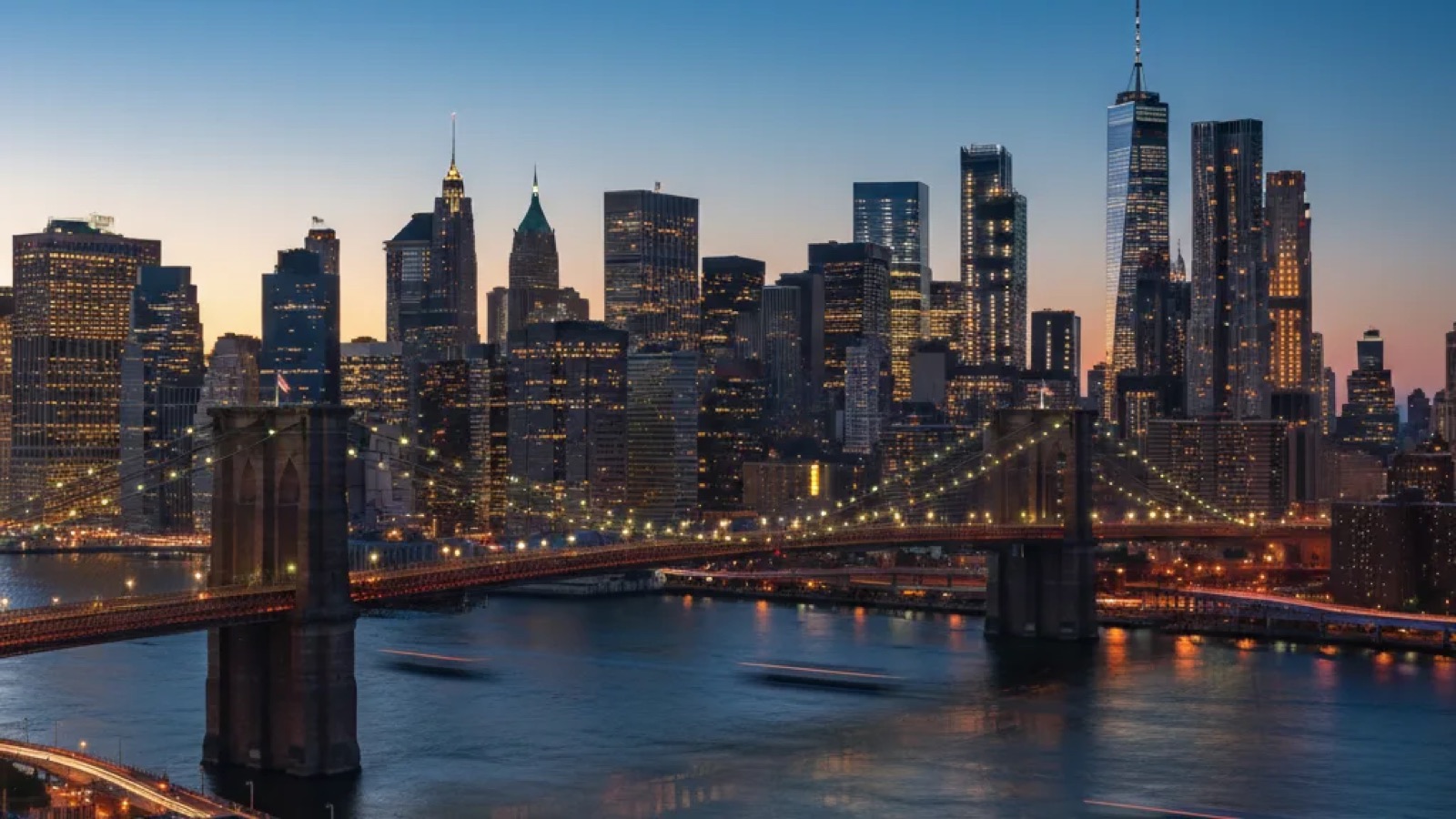
Crossing the East River into Brooklyn is an essential part of any NYC trip. The star attraction is, of course, the Brooklyn Bridge. Here is the single most important piece of advice: walk it from Brooklyn towards Manhattan. If you start in Manhattan, you're constantly looking over your shoulder for the skyline view. If you start in Brooklyn, that breathtaking panorama of skyscrapers is laid out in front of you the entire way. For photography, go at dawn. The light is soft and golden, and you’ll share the bridge with a handful of runners and fellow photographers instead of thousands of tourists.
When you get off the bridge on the Brooklyn side, you’re in DUMBO (Down Under the Manhattan Bridge Overpass). This former industrial area is now a chic neighbourhood of cobblestone streets, converted warehouses, and fantastic parks lining the river. It’s also home to one of the most famous photo spots in NYC: the view of the Manhattan Bridge perfectly framing the Empire State Building, taken from Washington Street.
If you have an extra day and fancy a change of pace, take the subway all the way out to Coney Island. The journey itself is a fascinating look at the sprawl of Brooklyn. Coney Island is a slice of vintage Americana, with its rickety-looking Cyclone roller coaster, a classic boardwalk, and the famous Nathan's Famous hot dogs. It’s kitschy, a bit gritty, and completely unique.
Broadway, Bagels & Beyond: The Food Scene
New York is one of the world's great food cities, with options for every taste and budget. And yes, a night at a Broadway show is an iconic experience. You can book tickets months in advance for hit shows or try your luck for last-minute seats. Many shows have digital lotteries or in-person rush queues on the day of the performance for discounted tickets; it’s worth researching the specific show you want to see for their policies.
But the real culinary adventure happens on the streets. Start your day with a proper New York bagel, chewy on the inside and crisp on the outside. Grabbing a huge, foldable pizza slice for lunch is a rite of passage. But don't stop there. Delve into the food halls like Chelsea Market or Dekalb Market Hall in Brooklyn. Most importantly, use the subway to your advantage. A trip to Flushing in Queens will reward you with some of the best dumplings, noodles, and regional Chinese food you'll find outside of Asia. It's an authentic, delicious adventure.
Money, Safety, and Practical Tips
A few practicalities will make your trip much smoother. First, money. The price you see on a tag in a shop is not the final price. Sales tax is added at the register, which can be a surprise if you're not used to it. Second, tipping is a fundamental part of the culture here. In restaurants and bars, a tip is expected for service. It's also customary to tip taxi drivers, hotel porters, and other service staff.
In terms of safety, New York is a remarkably safe big city, but you need to have your street smarts about you. Be aware of your surroundings, especially in crowded places like Times Square or on the subway. Keep your wallet and phone secure, and don't walk around with headphones on full blast late at night. Walk with purpose and confidence, and you'll blend right in.
For travellers with mobility issues, New York can be challenging. While the city is working on it, many subway stations are not accessible, involving long flights of stairs. Buses are generally all equipped with ramps. Many museums and major attractions are fully accessible, but it's crucial to check the accessibility information on the official website of each place you plan to visit.
A Photographer’s Notes on New York City
This city is a photographer's dream. Beyond the obvious shots, here are a few things worth looking for. As mentioned, the Brooklyn Bridge at dawn is unbeatable for the light and lack of crowds. The "blue hour"—the period just after sunset—from the waterfront in DUMBO or Williamsburg is magical, as the Manhattan skyline transforms into a wall of glittering lights against a deep blue sky.
Twice a year, a phenomenon known as Manhattanhenge occurs, when the setting sun aligns perfectly with the east-west street grid of Manhattan, creating a spectacular corridor of light. The dates are published online each year and it draws massive crowds, but the photos are worth the effort.
Finally, don't just shoot the big picture. Some of the best New York photos are the small details: the texture of a brownstone stoop, the steam from a food cart, the blur of a yellow cab, the reflection of skyscrapers in a puddle after a rain shower. The city's character is in these moments.
Explore in Depth
Feeling ready to sketch out a day-by-day plan? Use this guide as your foundation and then dive into our detailed itinerary to see how it all fits together on the ground.
Frequently Asked Questions
How many days are enough for a first trip to New York?
For a first visit, allow at least five full days. This gives you enough time to see the major landmarks in Manhattan without feeling completely rushed, allows for a day exploring parts of Brooklyn, and gives you some breathing room to wander a neighbourhood or two. Any less than four days and you'll spend most of your time just travelling between sights. With a week, you can explore more deeply, perhaps visiting more museums or venturing further into Queens or Brooklyn.
Is an unlimited subway pass worth it for a tourist?
Whether an unlimited pass is worth it depends entirely on your travel style. The system now allows for "fare capping," meaning that after a certain number of rides paid for with the same contactless card or device within a week, the rest of your rides for that week become free. This often makes more sense for visitors than buying a pass upfront. If you plan to walk extensively within neighbourhoods and only use the subway a couple of times a day, paying per ride might be cheaper. If you’re a power-user, crisscrossing boroughs constantly, the fare cap will likely benefit you.
What's the best way to handle jet lag when arriving from Australia?
The flight from Australia is a beast. My best advice is to try and sync to New York time as soon as you get on the plane. When you arrive, resist the urge to nap. Get outside into the daylight, go for a walk, and have a proper meal at a local time. Try to stay awake until at least 9 or 10 PM on your first night. This helps reset your body clock faster than anything else. Stay hydrated, avoid too much caffeine late in the day, and give yourself a slightly easier schedule for your first full day.
Can I get by without using cash in New York City?
For the most part, yes. New York is very card-friendly. Contactless payments are widely accepted in shops, restaurants, museums, and on the subway. It’s possible to get through an entire trip paying with just your phone. However, it’s worth carrying a small amount of cash. You might need it for a street food cart that doesn't take cards, for small purchases in a neighbourhood bodega, or for leaving a tip for hotel housekeeping. It’s better to have a little and not need it.
Is New York City safe for solo female travellers?
Absolutely. Countless solo female travellers adore New York. Like any major city in the world, the key is awareness. Stick to well-lit, populated areas at night, be mindful of your belongings in crowds, and trust your gut instinct. The city is full of people and there’s a sense of safety in numbers. One of the great joys of New York is its anonymity; people are generally focused on their own lives, allowing you to explore with a wonderful sense of freedom.
Final Thoughts
There's a reason New York City holds such a mythical status in our collective imagination. It’s a place of relentless ambition and creative energy, a city that is constantly reinventing itself while its history echoes from every brick building and cobblestone alley. It can be intense and demanding, but it’s also incredibly rewarding. It’s a city that meets you where you are, whether you’re seeking art, history, food, or just the thrill of being somewhere that feels like the centre of the world.
Go with a plan, but don't be afraid to throw it away. The best moments in New York often happen when you take a wrong turn, follow a curious sound, or sit down on a park bench and just watch the world go by. Let the city’s energy carry you. You'll come home with stories to tell.