Overland Track: Complete Six-Day Hiking Guide
Permits, huts, daily stages, gear and river crossings for Tasmania's Overland Track, the six-day walk from Cradle Mountain to Lake St Clair.
In this guide
- An Unforgettable Journey on the Overland Track Tasmania
- Planning Your Overland Track Adventure: Essential Steps
- Overland Track Booking: Permits, Fees & When to Secure Your Spot
- Crafting Your Overland Track Itinerary: Beyond the Standard 6 Days
- Overland Track Difficulty: Is it Right for You? Terrain, Weather & Fitness
- Overland Track Packing List: Essential Gear for Every Season
- The Journey Day-by-Day: What to Expect on Your Overland Track Tasmania Walk
- Encountering Wildlife & Nature: Biodiversity of Cradle Mountain-Lake St Clair National Park
- Food & Water on the Track: Staying Fuelled and Hydrated in the Wilderness
- Safety and Emergencies: What You Need to Know for the Overland Track
- Getting There and Away: Logistics for Your Overland Track Tasmania Trek
- Pro Tips for an Unforgettable Overland Track Experience
- Budget Breakdown: Cost of Hiking the Overland Track Tasmania
- Common Mistakes to Avoid on the Overland Track
- Conclusion: Your Overland Track Tasmania Adventure
This guide is part of our Tasmania Travel Guide — start there for the island-wide overview, itineraries and costs.
An Unforgettable Journey on the Overland Track Tasmania
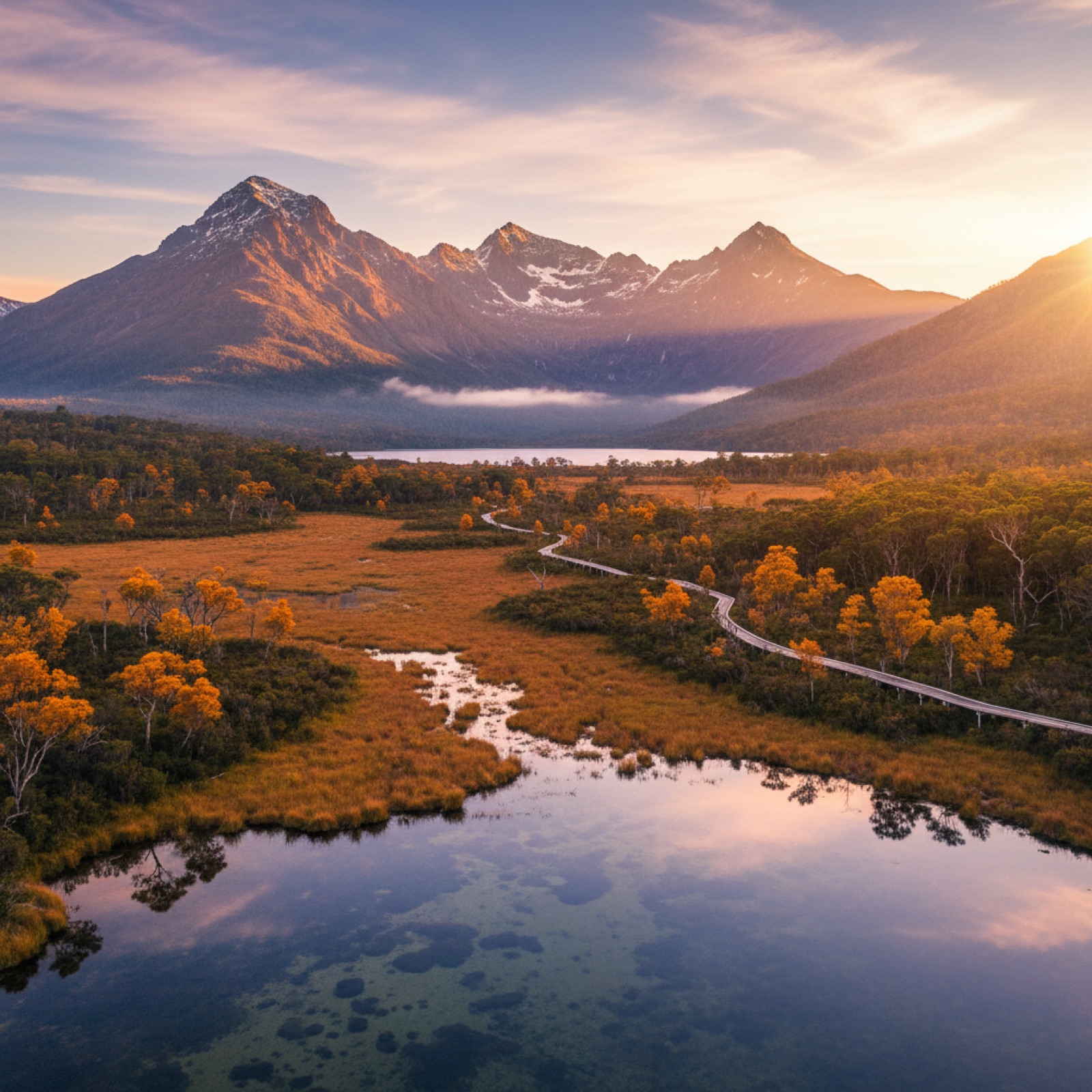
If there's one multi-day hike in Australia that truly steals the heart, it's the Overland Track Tasmania. Look out at Cradle Mountain's jagged peaks, with the crisp Tasmanian air filling your lungs, and it's easy to see why people travel. The Overland Track isn't just a walk; it’s a profound journey through one of the planet's last true wilderness areas, a chance to disconnect from the digital and reconnect with the wild heart of Tasmania. If you're dreaming of an adventure that challenges, inspires, and leaves an indelible mark on your soul, then this ultimate guide to the Overland Track Tasmania is for you. We'll dive deep into everything you need to know to make your 2025 trek a reality, from snagging those coveted bookings to packing the perfect gear, and all the breathtaking moments in between.
Planning Your Overland Track Adventure: Essential Steps
Embarking on the Overland Track Tasmania requires meticulous planning. It's not a spontaneous trip, but the reward is worth every minute of preparation, so allow time to pore over maps and read up before you go. Here’s how you should approach your 2025 adventure:
Best Time to Visit the Overland Track
The main walking season for the Overland Track Tasmania runs from 1 October to 31 May. During this peak period, walkers must book ahead and walk north to south (Cradle Mountain to Lake St Clair). This direction enhances the wilderness experience by concentrating foot traffic and minimizing erosion. November is a good choice – the wildflowers are blooming, and the weather, though still unpredictable, can offer some glorious sunshine.
- Summer (Dec-Feb): Warmest temperatures (averaging 15-20°C, but can reach 30°C), longer daylight hours, but also busier and higher chance of summer storms. Best for swimming in the glacier lakes.
- Autumn (Mar-May): Crisp air, stunning Fagus (deciduous beech) turning golden in late April/early May, fewer crowds than summer. Temperatures can drop significantly, especially at night. This is a personal favourite for the colours.
- Spring (Oct-Nov): Wildflowers, often still snow on mountain tops, rapidly changing weather. Can be wet and cold, but incredibly beautiful with fresh growth.
Outside of the main season (1 June – 30 September), you don't need a booking, and you can walk in either direction. However, this period is recommended only for experienced, well-equipped winter trekkers as snow and extreme cold are common, and hut facilities are minimal. Search for 'Tasmanian wilderness trekking' for resources on winter hiking.
Understanding the Trail: What is the Overland Track?
The Overland Track Tasmania is a world-renowned, 65-kilometre (40-mile) multi-day hike that traverses the heart of the Tasmanian Wilderness World Heritage Area. It typically takes six days to complete, starting at Cradle Mountain and finishing at Lake St Clair. The trail winds through ancient rainforests, exposed alpine plateaus, glaciated valleys, and alongside pristine lakes, offering incredible views and a deep immersion in nature. It's truly a bucket-list experience for any outdoor enthusiast.
Overland Track Booking: Permits, Fees & When to Secure Your Spot
Securing your spot on the Overland Track Tasmania is crucial, particularly during peak season. You don't want to show up without a permit!
Permit System and Booking Process
All walkers undertaking the Overland Track Tasmania during the peak season (1 October to 31 May) must book an Overland Track Pass. This includes a National Parks entry fee. Bookings open in July each year for the following season. My advice? Set a reminder and be ready to book on opening day! Slots, especially for popular dates, fill up incredibly fast.
- Booking Platform: Book directly through the Tasmania Parks and Wildlife Service website.
- Booking Window: Bookings typically open in July for the season starting in October. For 2025, look for announcements in mid-2024.
- Group Sizes: Limited to 12 people per group per day. Larger groups may need to split their booking.
Overland Track Fees (Approximate pricing)
These fees cover the Overland Track Pass and contribute to track maintenance, hut upkeep, and ranger services. Prices are subject to change, so always check the official Parks Tasmania website.
| Item | Cost (AUD) | Cost (USD - approx.) | Notes |
|---|---|---|---|
| Overland Track Pass (Adult) | AUD 312 (2026/27 season) | ~USD 205 | Includes National Parks entry fee for duration of walk. |
| Child (under 17) | ~AUD 224-240 | ~USD 150-160 | |
| National Parks Pass (if doing other activities) | ~AUD 90 (8 weeks) | ~USD 60 | Good if visiting other parks before/after. Check if already covered by OT pass. |
| Ferry from Narcissus/Echo Point to Cynthia Bay | ~AUD 60 | ~USD 40 | Mandatory for most walkers. Book with Lake St Clair Lodge. |
| Private Shuttle (Launceston/Devonport to Cradle) | AUD 50-90 pp | USD 35-60 pp | One-way. Varies by provider. |
Total Estimated Cost for Overland Track Pass + Ferry + Shuttle: Approximately AUD 420 - AUD 460 (USD 275 - USD 305) per person, not including gear, food, or accommodation before/after.
Crafting Your Overland Track Itinerary: Beyond the Standard 6 Days
The standard Overland Track Tasmania itinerary is 6 days, 5 nights, but there are fabulous side trips that can extend your adventure. The best way to experience the trail is to factor in an extra day or two for these detours. This really elevates the 'multi-day hike Australia' experience.
Standard 6-Day Itinerary (North to South)
This is the most common route, starting at Ronny Creek near Cradle Mountain and finishing at Cynthia Bay, Lake St Clair.
- Day 1: Ronny Creek to Waterfall Valley Hut (approx. 10.7 km, 4-5 hours)
The iconic walk beneath Cradle Mountain's dolerite peaks. Be prepared for stunning views right from the start. Side trip: Cradle Mountain summit (add 3-4 hours, challenging). - Day 2: Waterfall Valley Hut to Windermere Hut (approx. 7.9 km, 3-4 hours)
A more gentle day through button grass plains, offering vast panoramic views. Side trip: Lake Will (add 1-2 hours). - Day 3: Windermere Hut to Pelion Plains Hut (approx. 16.7 km, 5-7 hours)
The longest day, passing through rainforest and crossing rivers. Pelion Plains offers expansive views. - Day 4: Pelion Plains Hut to Kia Ora Hut (approx. 8.6 km, 3-4 hours)
A shorter day, allowing time for significant side trips. Side trips: Mount Ossa summit (Tasmania's highest, add 4-6 hours, challenging) or Mount Pelion East (add 3-4 hours). Mount Ossa is highly recommended if the weather is good! - Day 5: Kia Ora Hut to Bert Nichols Hut (approx. 9.7 km, 3.5-4.5 hours)
Passes through incredible ancient rainforest, with waterfalls such as Darrans, Fergusson, and Hartnett Falls. - Day 6: Bert Nichols Hut to Narcissus Hut (approx. 9.0 km, 3-4 hours) and Ferry to Lake St Clair
A relatively flat walk to Narcissus Hut. From here, most walkers take the Lake St Clair ferry across the lake to Cynthia Bay. You can also walk the final ~17.5km along the lake (add 5-6 hours), though this section is less scenic due to fire damage.
Extending Your Overland Track Adventure
Many experienced walkers choose to extend their stay. This is where you really get into the core of 'Tasmanian wilderness trekking'.
- Add extra half-days: Many huts are ideally located for afternoon exploration. For example, spend an extra night at Pelion Plains to bag multiple peaks.
- Focus on side trips: Mount Ossa, Mount Pelion East, Cradle Mountain summit, Lake Will, the Acropolis, and the Pine Valley Hut spur are all worthwhile detours. Pine Valley Hut requires an extra permit and an additional 2-3 days, for a challenging but spectacular journey into the Labyrinth. This allows for deep immersion into the 'Cradle Mountain Lake St Clair National Park' landscape.
- Overland Track with Cradle Mountain Huts Walk: For a more luxurious experience, consider an all-inclusive guided tour with private huts and catered meals. These tours are typically 6 days/5 nights and include all permits and transfers. Costs range from AUD 4,000 - AUD 6,000 (USD 2,600 - USD 4,000) per person.
Overland Track Difficulty: Is it Right for You? Terrain, Weather & Fitness
The first question people ask about the Overland Track Tasmania is, "How hard is it?" It's a challenging track, no doubt, but highly rewarding. It requires a good level of fitness and mental preparedness for variable conditions, making it a true 'multi-day hike Australia' benchmark.
Understanding the Terrain
The track is well-maintained but diverse:
- Boardwalks: Significant sections are boardwalked, particularly in fragile alpine areas and boggy sections, protecting the environment.
- Rocky Paths: Expect plenty of rough, rocky, and root-strewn paths, requiring careful foot placement.
- Mud: Even in summer, mud can be prevalent, especially after rain. Good waterproof boots are non-negotiable.
- Steep Climbs/Descents: While not extreme, there are sustained ascents and descents, particularly on Day 1 (Cradle Mountain) and if tackling side peaks.
- Side Trips: These are often significantly more challenging, less maintained, and even steeper.
The Unpredictable Tasmanian Weather
Tasmania's weather is famously volatile, especially in the mountains. Walkers can experience four seasons in one day:
- Rain: Be prepared for persistent rain. Quality rain gear is essential.
- Wind: Exposed sections can be very windy, particularly on the higher plateaus.
- Temperature Swings: Summer days can be warm, but nights can drop to single digits. In spring/autumn, snow is possible even at lower elevations. Minimum temperatures can dip below 0°C (32°F) even in summer.
- Sun: When the sun is out, it's strong. Sunscreen, hat, and sunglasses are vital.
Always check the BOM (Bureau of Meteorology) forecast for Cradle Mountain before you set off, but understand it can change rapidly.
Fitness Level Required
To comfortably complete the Overland Track Tasmania, you should:
- Be able to walk 10-17 km (6-11 miles) per day with a fully loaded pack (15-20 kg / 33-44 lbs) over varied terrain.
- Be comfortable with sustained ascents and descents.
- Have experience with multi-day hiking and adverse weather conditions.
- Engage in regular cardiovascular exercise (running, cycling) and strength training (especially legs and core) for several months leading up to your trip.
Go on practice hikes with your full pack weight to simulate conditions. Don't underestimate this; proper fitness enhances your enjoyment and safety.
Overland Track Packing List: Essential Gear for Every Season
Your Overland Track packing list is critical for a safe and enjoyable journey. Overpacking will weigh you down, underpacking can be dangerous. This is a tried-and-true gear guide for the 'Tasmanian wilderness trekking' experience.
The Big Four: Pack, Shelter, Sleep, Cook
- Backpack: A comfortable, waterproof 60-75 litre pack is ideal. Look for one with good hip support. An Osprey Atmos 65 is a good example.
- Shelter (Tent): While huts are available, they cannot be guaranteed. A lightweight, 3-4 season tent is essential. Ensure it's freestanding and has good wind stability. A 2-person tent around 2kg is perfect for singles wanting space, or couples.
- Sleeping Bag: Rated to at least -5°C (23°F), preferably -10°C (14°F), even in summer.
- Sleeping Mat: Insulated inflatable mat for warmth and comfort. R-value of 3+ is recommended.
- Cooking System: Lightweight stove (Jetboil or MSR PocketRocket), fuel (enough for boiled water for 6 days), pot, spork, mug.
Clothing (Layers are Key!)
Think layers – baselayer, mid-layer, outer shell. Avoid cotton!
- Hiking Boots: Waterproof, broken-in, sturdy hiking boots with ankle support.
- Gaiters: Essential for mud and keeping debris out of your boots.
- Socks: 3-4 pairs of wool or synthetic hiking socks.
- Baselayers (Top & Bottom): Merino wool or synthetic. 2 tops, 1 bottom.
- Mid-Layers: Fleece jacket or mid-weight merino jumper.
- Insulation Layer: Down or synthetic puffy jacket (essential for cold evenings).
- Waterproof Trousers: Full-zip preferred for ventilation.
- Waterproof Jacket: Breathable and fully waterproof (Gore-Tex or similar).
- Hiking Trousers/Shorts: Quick-drying. One pair of zip-off trousers is usually enough.
- Hat: Sun hat and a warm beanie for evenings.
- Gloves: Waterproof and warm.
- Camp Shoes: Lightweight sandals or crocs for hut/tent comfort.
Navigation & Safety Gear
- Map & Compass: Essential, and know how to use them. The TASMAP Cradle Mountain-Lake St Clair 1:100,000 map is ideal.
- PLB (Personal Locator Beacon): Strongly recommended (not a permit condition). Can be hired from Service Tasmania PLB Hire Service for approximately AUD 45 (USD 30) per week.
- First Aid Kit: Comprehensive, including blister treatment, pain relief, any personal medications.
- Headlamp: With spare batteries.
- Whistle: For emergencies.
- Knife/Multi-tool.
- Sunscreen & Insect Repellent: Important!
Miscellaneous
- Water Bottles/Reservoir: At least 2-3 litre capacity. Water is plentiful, but filtration is advised.
- Water Filter/Purifier: Tablets or a lightweight filter (Sawyer Squeeze).
- Dry Bags: To protect all your gear from moisture. Line your pack.
- Toiletries: Biodegradable soap, small towel, toothbrush/paste.
- Rubbish Bags: Pack it in, pack it out!
- Camera: Gopro or robust point-and-shoot.
For more detailed information, search for 'Overland Track essentials' specific to Australian conditions.
The Journey Day-by-Day: What to Expect on Your Overland Track Tasmania Walk
Walking the Overland Track Tasmania is an immersive experience. Here’s a detailed look at what each day typically entails.
Day 1: Ronny Creek to Waterfall Valley Hut (approx. 10.7 km / 4-5 hours)
Your adventure begins at Ronny Creek. After checking in with the ranger – a crucial step for your permit – you'll hit the boardwalk. The initial stage offers breathtaking views of Cradle Mountain. Expect a mix of excitement and awe as the peaks slowly reveal themselves through the mist. The climb to Marions Lookout is challenging but incredibly rewarding. From there, it's mostly downhill to Waterfall Valley, home to the beautiful little Pencil Pine Falls. The hut here is one of the more spacious ones.
Highlights: Cradle Mountain views, Marions Lookout, Pencil Pine Forest, first taste of alpine wilderness.
Pro Tip: Take your time on the boardwalk sections, as they can be slippery when wet. The Cradle Mountain summit side trip is steep, exposed, and requires good weather and no fear of heights. Only attempt with light packs; leave main pack at Marions Lookout. It's a fantastic addition if conditions allow, but don't feel pressured if it's not for you.
Day 2: Waterfall Valley Hut to Windermere Hut (approx. 7.9 km / 3-4 hours)
This is often considered the 'easiest' day. You'll walk largely through button grass plains, past the tranquil Lake Windermere, giving you a chance to truly stretch your legs and soak in the expansive natural beauty. The relatively flat terrain makes it a good day to settle into your rhythm. The silence, broken only by the chirping of birds, is remarkable.
Highlights: Lake Windermere (great for a swim on a warm day!), expansive button grass plains, views of distant peaks.
Pro Tip: Consider the side trip to Lake Will. It adds about an hour or two but is a serene detour, often overlooked by those rushing. The turn-off is clearly marked and worth it for a peaceful lunch spot.
Day 3: Windermere Hut to Pelion Plains Hut (approx. 16.7 km / 5-7 hours)
The longest day on the main track. You’ll leave the open plains and descend into lush rainforest, crossing several rivers. The track can be muddy here. The final stretch opens up into the vast Pelion Plains, with the impressive mass of Mount Ossa (Tasmania’s highest peak) dominating the skyline. This day is a real test of endurance, but the diversity of landscapes keeps it engaging. The hut at Pelion is one of the largest and often buzzes with conversation.
Highlights: Ancient rainforests, crossings of Forth River and Pelion Creek, first glimpse of Mount Ossa, the vastness of Pelion Plains.
Pro Tip: Start early on this day, especially if you want to take your time or plan on any detours the next day. Ensure your waterproofs are easily accessible for the rainforest sections.
Day 4: Pelion Plains Hut to Kia Ora Hut (approx. 8.6 km / 3-4 hours)
A shorter day, providing ample opportunity for side trips. This is the day to consider summiting Mount Ossa (1617m/5305ft), which is a challenging 4-6 hour return side trip from the main track near Pelion Gap. The views from the top are simply staggering – 360-degree panoramas of the entire World Heritage Area. On a clear day, it’s one of the most memorable moments of any 'multi-day hike Australia' experience. Alternatively, Mount Pelion East offers a less strenuous but equally rewarding challenge.
Highlights: Mount Ossa summit (if weather permits!), Mount Pelion East, Pelion Gap. Kia Ora is a smaller, more intimate hut.
Pro Tip: Pack a day pack for the Mount Ossa ascent – snacks, water, rain gear, and camera. Check weather conditions rigorously before attempting the summit. It can be very exposed and dangerous in high winds or low visibility.
Day 5: Kia Ora Hut to Bert Nichols Hut (approx. 9.7 km / 3.5-4.5 hours)
This day is famed for its stunning waterfalls. The track plunges deep into cool temperate rainforest, showcasing magnificent Myrtle and Leatherwood trees, and passing by Darrans Falls, Fergusson Falls, and Hartnett Falls. The track can be very muddy and requires careful footing over slippery roots and rocks. The feeling of being swallowed by the dense, ancient forest is a stark contrast to the open plains of earlier days.
Highlights: Darrans, Fergusson, and Hartnett Falls, ancient rainforest immersion, moss-laden trees.
Pro Tip: Waterproof boots are absolutely essential here. Take your time to appreciate the waterfalls; they are a true highlight of the Overland Track Tasmania.
Day 6: Bert Nichols Hut to Narcissus Hut (approx. 9.0 km / 3-4 hours) & Ferry to Cynthia Bay
The final walking day typically leads you to Narcissus Hut, located at the northern end of Lake St Clair. The terrain is relatively flat and easy, passing through more rainforest and along the Cuvier River. From Narcissus, most walkers opt for the ferry across Lake St Clair to Cynthia Bay, where the walk officially concludes. The ferry ride is a lovely way to relax and reflect on your journey as you glide across Australia's deepest lake. If you choose to walk the final 17.5 km along the lake shore, be aware that sections can be less engaging due to past fires and logging, and the ferry is generally recommended for a more satisfying end to the trek.
Highlights: Cuvier River, the scenic ferry ride across Lake St Clair, reaching the end of your incredible journey.
Pro Tip: Book your ferry in advance! You can do this at the Lake St Clair Lodge or sometimes through Parks Tasmania when booking your permit. Ferry times usually align with arrival times at Narcissus. Walking the final section is an option, but many describe it as a less exciting endpoint compared to the ferry across the stunning Lake St Clair, especially after being on foot for 5 days already.
Encountering Wildlife & Nature: Biodiversity of Cradle Mountain-Lake St Clair National Park
The Overland Track Tasmania traverses the Cradle Mountain-Lake St Clair National Park, a jewel in the Tasmanian Wilderness World Heritage Area. The park is a haven for unique Australian wildlife and ancient flora, making it an extraordinary 'Tasmanian wilderness trekking' experience.
Fauna You Might Spot
- Wombats: These chunky, burrowing marsupials are often seen grazing near huts, especially in the early morning or late afternoon, and close encounters are common!
- Pademelons & Wallabies: Smaller relatives of kangaroos, they're common in forested areas and around campsites.
- Echidnas: Spiny anteaters, quite shy but occasionally spotted foraging.
- Birds: Keep an eye out for Black Currawongs (often bold around huts!), various honeyeaters, and the striking Pink Robin in the rainforests. Wedge-tailed Eagles (Australia's largest raptor) can sometimes be seen soaring overhead.
- Tassie Devils: While present in the park, they are nocturnal and incredibly elusive. Seeing one is a rare privilege.
Important Note: Never feed wildlife. It can make them sick and aggressive, and accustomed to humans, which is detrimental to their survival.
Flora: Ancient Landscapes and Unique Ecosystems
The track passes through an incredible variety of vegetation zones:
- Alpine Heathlands & Button Grass Plains: Characterised by tough, low-lying shrubs and sedges, often interspersed with delicate wildflowers (during spring/summer).
- Temperate Rainforests: Dominated by ancient Myrtle, Sassafras, and Leatherwood trees, dripping with mosses and lichens. These forests are hundreds, if not thousands, of years old.
- Eucalyptus Forests: Particularly around Lake St Clair.
- The Fagus: Unique to Tasmania, this deciduous beech (Nothofagus gunnii) is Australia's only deciduous native tree. In late April to early May, its leaves turn brilliant shades of gold, orange, and red, creating a spectacular 'turning of the fagus.' It’s worth timing a trip specifically for this.
Food & Water on the Track: Staying Fuelled and Hydrated in the Wilderness
Packing appropriate food and understanding water sources are vital for a successful Overland Track Tasmania journey. You need enough highly caloric, lightweight food, and a reliable way to purify water.
Food Planning for 6 Days
Think dehydrated, calorie-dense, and easy-to-prepare. Aim for around 2,500-3,000 calories per day to keep your energy levels up on this intense 'multi-day hike Australia'.
- Breakfast: Porridge with dried fruit and nuts, instant coffee/tea.
- Lunch: Wraps (tortillas last better than bread) with hard cheese, salami, tuna sachets, or peanut butter. Crackers and avo smash (powdered avo is a thing!).
- Dinner: Dehydrated hiking meals (Back Country Cuisine, Campers Pantry are good Australian brands), pasta with sauce mix and TVP (textured vegetable protein), couscous with packet soup.
- Snacks: Trail mix, muesli bars, chocolate, nuts, dried fruit, jerky, energy gels. These are crucial for maintaining energy between meals.
- Treats: A small bar of chocolate or a few lollies can be a massive morale booster after a tough day!
Pro Tip: Repackage everything to remove excess packaging weight. Label each meal, so you don't accidentally eat Day 6's dinner on Day 2! Consider bringing a small plastic bottle of olive oil to add extra calories to dinners.
Water Sources and Purification
Water on the Overland Track Tasmania is generally plentiful, sourced from rain tanks at huts or directly from streams and rivers. However, purification is always recommended.
- Hut Tanks: All huts have rainwater tanks. This water should be treated before drinking.
- Streams: Numerous streams cross the track. As a rule, aim to gather water from fast-flowing sections upstream from the track.
- Lakes: Not generally recommended directly from lakes, especially near shorelines, due to potential contamination.
Purification Methods:
- Filter: A lightweight water filter (e.g., Sawyer Squeeze, Katadyn BeFree) is the best method. It's fast and effective against bacteria and protozoa.
- Purification Tablets: Good as a backup or for lighter loads. Take 30 minutes to work.
- Boiling: Boiling water for 1 minute kills everything but takes time and fuel.
Carry at least 2 litres of water carrying capacity, if not 3 litres, especially for longer sections or if you plan side trips.
Safety and Emergencies: What You Need to Know for the Overland Track
Safety on the Overland Track Tasmania is paramount. The remote wilderness environment means you need to be self-reliant and prepared for potential emergencies. Even minor mishaps are serious in 'Tasmanian wilderness trekking'.
Carry a PLB (Personal Locator Beacon)
As mentioned in the packing list, carrying a Personal Locator Beacon (PLB) is strongly recommended for all walkers on the Overland Track Tasmania, although Parks and Wildlife Service does not make it compulsory. These devices are lifesavers in emergencies, transmitting your location via satellite to rescue services. They are available for hire from Service Tasmania shops in Hobart, Launceston, Burnie and Devonport (weekdays only), and in limited numbers from the Cradle Mountain, Lake St Clair and Mount Field visitor centres, for approximately AUD 45 (USD 30) per week. Ensure you know how to activate it before you leave.
PLB Hire (Tasmania): Call Service Tasmania on 1300 135 513 to confirm availability before visiting a shop. Visitor centre PLBs cannot be reserved.
Ranger Posts & Emergency Communication
- Rangers: There are rangers at Cradle Mountain (start) and Lake St Clair (end), and occasionally out on the track. They are a great source of information and assistance.
- Hut Logbooks: Each hut has a logbook. It's crucial to sign in and out of every hut. This helps rangers track walker progress and identify missing parties.
- No Mobile Reception: Expect absolutely no mobile phone reception on the vast majority of the track. Don't rely on your phone for communication or navigation.
- Emergency Shelters: The huts provide basic shelter, but are not always guaranteed to have space, especially if you haven't booked.
Weather and Environmental Hazards
- Hypothermia: A real risk due to sudden temperature drops, rain, and wind. Know the symptoms (shivering, confusion, lethargy) and how to prevent it with proper layering and staying dry.
- Heatstroke/Dehydration: Possible in warmer months, especially on exposed sections. Carry enough water and stay hydrated.
- Blisters: Can quickly debilitate a trekker. Treat them immediately.
- Snakebites: While rare, Tasmanian snakes (tiger snake, lowland copperhead) are venomous. Wear gaiters, watch where you step, and know basic first aid (pressure immobilisation bandage).
- Bushfires: Check for fire bans and warnings before and during your trek, especially during summer.
Always inform someone of your itinerary and expected return date. The more people who know your plans, the better.
Getting There and Away: Logistics for Your Overland Track Tasmania Trek
Figuring out the logistics for the Overland Track Tasmania can be a bit of a puzzle since it's a one-way walk. Here's how to handle it.
Getting to Cradle Mountain (Track Start)
The track starts at Ronny Creek, near the Cradle Mountain Visitor Centre.
- By Car (Rental): You can drive to the Cradle Mountain Visitor Centre. Parking is available (check for long-term options, fees may apply). From the Visitor Centre, a shuttle bus takes you to Ronny Creek. If you have a rental, you'll need to arrange a shuttle back to pick it up at the end, or drop it one-way. Some companies like Overland Track Transport offer car relocation services.
- Dedicated Bus Services: This is the best option. Companies like Tasmania Expeditions, McDermott's Coaches, or bespoke private shuttles offer transfers from Launceston, Devonport, or Hobart directly to Cradle Mountain.
| Provider | Route Example | Cost (AUD) | Booking/Website |
|---|---|---|---|
| McDermott's Coaches | Launceston/Devonport to Cradle Mountain | ~AUD 50-70 one-way | mcdermotts.com.au |
| Tasmania Expeditions | Hobart/Launceston to Cradle Mountain | Variable, often part of tour package or private transfer rate. | tasmanianexpeditions.com.au |
| Overland Track Transport | Car relocation services from Cradle to Lake St Clair or vice-versa. | ~AUD 250-350 per vehicle | overlandtracktransport.com.au |
Departing from Lake St Clair (Track End)
The track officially ends at Cynthia Bay, Lake St Clair.
- Lake St Clair Ferry: As mentioned, hire the ferry from Narcissus Hut across the lake to Cynthia Bay. This is the most common and scenic option. The ferry office is located at Cynthia Bay at the Lake St Clair Lodge. Book in advance!
- Scheduled Bus Services: From Cynthia Bay, you can catch scheduled buses back to major centres like Hobart, Launceston, or Devonport. Again, McDermott's Coaches is a popular option.
- Private Shuttle: Pre-booked private shuttles are also available.
Approximate Ferry Schedule: Departs Cynthia Bay daily at 9:00 AM, 12:30 PM, 3:00 PM. From Narcissus, 9:30 AM, 1:00 PM, 3:30 PM. Always confirm current times when booking. The cost is approximately AUD 60 (USD 40) per person.
Pro Tips for an Unforgettable Overland Track Experience
A few tricks can elevate your Overland Track Tasmania journey from great to absolutely epic. These are the 'Overland Track essentials' for planning.
- Book Early, Like REALLY Early: This can’t be stressed enough. As soon as bookings open (usually July for the following season), be online and ready. Especially if you have specific dates in mind. If you miss out, keep checking back; cancellations do happen.
- Train with Your Pack: Don't just hike for fitness; hike with your fully loaded pack. Get used to the weight and how it sits. This will prevent many aches and pains on the actual trek. Short weekend hikes with 15kg in your pack over the two months before your trek are a good way to prepare.
- Invest in Quality Gear: This isn't the track to skimp on gear. Good waterproofs (jacket and pants!), comfortable boots, and a warm sleeping bag are non-negotiable. Tasmania’s weather is truly unpredictable, and quality gear is your best defence.
- Take Side Trips: While the main 65km is wonderful, the side trips are often the real gems. If the weather is good, make the effort for Mount Ossa – the views are life-changing. Schedule an extra day if you want to explore Pine Valley.
- Pack a Luxury Item (or two): It might be a small hip flask of Tasmanian whisky, an e-reader, a lightweight coffee plunger or gourmet chocolate. A little comfort goes a long way for morale in the wilderness.
- Embrace the Huts (but bring a tent): The huts are communal, offer basic shelter, and can be a great place to meet other hikers. However, they are not guaranteed to have space, especially if you're not within your allocated overnight stop or if there's an emergency. Always carry a tent for safety and flexibility (plus, camping under a clear Tasmanian night sky is magical!). Think about 'hut or tent Overland Track' logistics, bring both!
- Leave No Trace: This is a World Heritage Area. Everything you pack in, you pack out. This includes all food scraps, toilet paper (yes, even used), and any human waste if outside designated toilets.
- Be Bear Aware (Figuratively): While there are no bears, Tassie devils and quolls can be attracted to food. Keep all food sealed and secured, especially in designated food lockers at huts if available, or hung from trees if camping.
- Charge Everything: There are no charging facilities on the track. Bring a fully charged power bank for your phone (for photos, not calls!) and headlamp.
- Talk to Rangers & Other Walkers: Rangers at the start and end are invaluable for up-to-date track conditions and weather. Fellow walkers often have great tips or stories. Lasting friendships are often forged on the trail.
Budget Breakdown: Cost of Hiking the Overland Track Tasmania
Hiking the Overland Track Tasmania is an investment, but a worthwhile one. This budget breakdown will give you a realistic idea of what to expect for any 'multi-day hike Australia' enthusiast.
Pre-Trip Costs (Gear & Preparation)
| Item | Estimated Cost (AUD) | Estimated Cost (USD - approx.) | Notes |
|---|---|---|---|
| Overland Track Pass (mandatory) | AUD 312 | USD 205 | Includes park entry for the walk. |
| PLB Hire (strongly recommended) | AUD 45 | USD 30 | For 7 days. |
| Good Quality Backpack (60-75L) | AUD 250-500 | USD 165-330 | One-off cost, lasts years. Renting possible (AUD 15-25/day). |
| Tent (lightweight 3-4 season) | AUD 300-800 | USD 200-530 | One-off cost, shareable. Renting possible (AUD 15-30/day). |
| Sleeping Bag (-5 to -10°C) | AUD 200-600 | USD 130-400 | One-off cost. Renting possible (AUD 10-20/day). |
| Sleeping Mat (insulated) | AUD 100-250 | USD 65-165 | One-off cost. Renting possible (AUD 5-10/day). |
| Waterproof Jacket & Pants | AUD 300-800+ | USD 200-530+ | Essential. Quality lasts. |
| Hiking Boots & Gaiters | AUD 200-400 | USD 130-260 | Break them in! |
| Cooking System (stove, fuel, pot) | AUD 100-200 | USD 65-130 | One-off cost. |
| Other Essential Clothing & Accessories | AUD 200-500 | USD 130-330 | Layers, socks, headlamp, first aid, dry bags, etc. |
| Food for 6 days (dehydrated, snacks) | AUD 150-250 | USD 100-165 | Can be cheaper if you re-package and buy in bulk. |
Total Estimated Gear Cost: If buying everything new, easily AUD 2,000 - AUD 4,000+ (USD 1,300 - USD 2,600+). significantly less if you already own gear, borrow, or hire. Hiring a full set of basic gear for 6 days could be around AUD 200-300 (USD 130-200).
On-Trip / Logistics Costs (Per Person)
| Item | Estimated Cost (AUD) | Estimated Cost (USD - approx.) | Notes |
|---|---|---|---|
| Shuttle to Cradle Mountain (e.g. Launceston) | AUD 50-90 | USD 35-60 | One-way. |
| Lake St Clair Ferry | AUD 60 | USD 40 | One-way from Narcissus to Cynthia Bay. |
| Shuttle from Lake St Clair (e.g. to Hobart/Launceston) | AUD 70-120 | USD 45-80 | One-way. |
| Accommodation Pre/Post Hike | AUD 50-100+ per night | USD 35-70+ per night | Hostel dorm to budget motel. |
| Contingency/Miscellaneous | AUD 100 | USD 70 | For incidentals, souvenirs, last-minute supplies. |
Total Estimated Logistics Cost: Approximately AUD 330 - AUD 570 (USD 220 - USD 380), not including pre/post accommodation.
Overall Realistic Budget (per person, assuming some existing gear/hiring): Expect to spend around AUD 1,000 - AUD 1,500 (USD 660 - USD 1,000) for the entire experience, including permits, transport, food, and some hiring of key gear. If you're buying all new, top-tier gear, this figure could easily double or triple. Remember your 'Overland Track booking' cost is just the start!
Common Mistakes to Avoid on the Overland Track
Like any major wilderness trek, the Overland Track Tasmania comes with its pitfalls. Learning from others' mistakes is key to a smooth journey. Even seasoned 'Tasmanian wilderness trekking' veterans have close calls.
- Underestimating the Weather: This is by far the biggest mistake. Even in summer, you can experience snow, driving rain, and gale-force winds. Never assume pleasant weather – hikers starting in shorts and a t-shirt in November can be caught in a hail storm by afternoon. Always pack for all four seasons.
- Skipping the PLB: It's strongly recommended for a reason. Mobile phones don't work. A PLB is your only reliable link to emergency services. Don't risk your life (or the lives of your companions) by not carrying one.
- Overpacking (or Underpacking): Finding the right balance is an art. A heavy pack drains your energy and makes side trips less appealing. Too little gear, especially warm layers or waterproofs, can be dangerous. Weigh your pack during training hikes.
- Not Breaking in Boots: Blisters are the enemy on a multi-day hike. Spend weeks/months wearing your new hiking boots around town and on progressively longer walks before your trip.
- Not Treating Water: While most water looks pristine, giardia and other nasties can be present. Always filter, chemically treat, or boil all drinking water.
- Relying Solely on Huts for Accommodation: While the huts are a comfort, they are for shared use and cannot be guaranteed, especially during busy periods or if emergencies mean more people are sheltering. Always carry a strong, 3-4 season tent. This is a key part of the 'hut or tent Overland Track' decision.
- Ignoring Side Trips: The official track is fantastic, but many of the most spectacular views and unique experiences are found on the side trips (Mount Ossa, Pine Valley, the Acropolis). Don't let fatigue or a rigid schedule prevent you from experiencing these.
- Not Knowing How to Read a Map & Compass: Even with modern GPS devices, battery failures and user error can occur. Basic navigation skills are crucial, especially in poor visibility.
- Leaving Rubbish: Practice 'Leave No Trace' principles rigorously. Pack out everything, even tiny wrappers or fruit peels. Human waste should be buried correctly or bagged out where toilets are not available.
- Not Booking Transport/Ferry in Advance: This can derail your start or end. Book your permits, initial shuttles, and the Lake St Clair ferry well in advance.
Conclusion: Your Overland Track Tasmania Adventure
There you have it – the ultimate guide to conquering the Overland Track Tasmania. From the first sight of Cradle Mountain to the serene ferry ride across Lake St Clair, this is one of Australia's finest wilderness experiences. It's more than just a hike; it's a profound connection with an ancient, wild landscape that truly invigorates the soul.
Whether you're planning your Overland Track booking for 2025, meticulously creating your Overland Track packing list, or simply dreaming of the unparalleled beauty of the Cradle Mountain Lake St Clair National Park, this guide should equip you with the knowledge and inspiration you need. Prepare thoroughly, embrace the unpredictable Tasmanian weather, take those breathtaking side trips, and most importantly, allow yourself to be fully present in this incredible environment.
The Overland Track Tasmania is a challenge, but it's a deeply rewarding one that will leave you with stories for a lifetime. So, what are you waiting for? Start planning your adventure today!
More Tasmania guides
Tasmania Travel Guide: Plan the Perfect Trip
Getting to and around Tasmania, when to go, top sights, 5-day to 2-week itineraries, where to stay, food and wine, road-trip advice and…

Launceston Travel Guide: Things to Do in Two Days
How to spend two days in Launceston: Cataract Gorge, the Tamar Valley cellar doors, City Park and the best cafes and pubs in town.

Hobart Travel Guide: Where to Eat, Stay and Explore
Three days in Hobart done properly: Salamanca Market, MONA, kunanyi/Mount Wellington, the best places to eat and where to base yourself.