Mongolia Itinerary: Gobi Desert, Ger Stays and Naadam
A Mongolia itinerary for the Gobi Desert, Khuvsgul Lake and ger stays with nomadic families — best time to visit, tour costs and what to pack.
In this guide
- Why Visit Mongolia? The Call of the Wild
- Planning Your Mongolia Travel: Essentials Before You Go
- Ulaanbaatar: The Beating Heart of Modern Mongolia Travel
- Gobi Desert Tours: An Adventure into the Vastness
- Experiencing Nomadic Culture Mongolia: A Way of Life
- Beyond the Gobi: Other Must-See Destinations
- Is Mongolia expensive to visit? Trip costs and daily budget
- Practical Tips for Mongolia Travel
- Culinary Journeys: What to Eat in Mongolia
- Responsible Tourism in Mongolia: Protecting the Steppe
- Conclusion: Your Mongolian Saga
- Explore Mongolia in Depth
“From the moment you step off the plane in Ulaanbaatar, the crisp air, hinting at distant steppes, tells you this isn't just another trip. This is Mongolia travel, an immersion into a land where horizons stretch endlessly and ancient traditions thrive. Mongolia truly stands apart. It's an adventure into the soul of nomadic life, a journey far removed from the digital clamour of the modern world. If you're yearning for an experience that will challenge, inspire, and utterly captivate you, then look no further than this magnificent country. This guide covers everything you need to make your Mongolia trip unforgettable.
Why Visit Mongolia? The Call of the Wild
Mongolia isn't just a destination; it's an experience that carves itself into your memory. The magic begins with the sheer scale of untouched wilderness. In 2025, Mongolia continues to offer unparalleled opportunities for authentic travel, far from overcrowded tourist traps. It's a land where the internet often gives way to the whisper of the wind across the steppes, and where genuine human connection with locals is a daily occurrence.
The Undeniable Allure of Mongolia Travel
- Unrivalled Wilderness: From the scorching sands of the Gobi Desert to the pristine taiga of Khuvsgul Lake, Mongolia boasts landscapes unlike anywhere else. This expansive beauty offers endless opportunities for trekking, horseback riding, and simply soaking in the silence.
- Rich Nomadic Culture: At its heart, Mongolia is a nation of horsemen and herders. Experiencing Nomadic culture Mongolia firsthand, perhaps by staying in a traditional ger (yurt) with a local family, is a profound privilege. You'll learn about their resilient way of life, untouched by centuries.
- Ancient History: Walk in the footsteps of Genghis Khan. Discover ancient monasteries, deer stones, and rock carvings that tell tales of empires and shamanic rituals spanning millennia.
- Adventure Tourism: Whether it's multi-day horseback treks, camel riding in the Gobi, eagle hunting festivals, or exploring the vastness by jeep, Mongolia is a playground for adventurers.
A night in a ger camp, under a galaxy of stars brighter than you've likely ever seen, sums up this country. It’s an embrace of simplicity, of raw beauty, and of a rhythm of life dictated by nature. This is what makes Mongolia travel so compelling.
Planning Your Mongolia Travel: Essentials Before You Go
Before you embark on your extraordinary Mongolian adventure, a little preparation goes a long way. Understanding a few key elements can transform your trip from good to incredible.
Visa Requirements and Entry
Most visitors, including those from the USA, UK, Canada, Australia, and many European countries, do not require a visa for stays up to 30 days. Always check the latest requirements with your local Mongolian embassy or consulate well in advance of your Mongolia travel dates, as policies can change. Ensure your passport is valid for at least six months beyond your intended departure date.
When is the best time to visit Mongolia?
The shoulder seasons (May-June and September-October) offer pleasant weather and fewer crowds. July and August are peak season, thanks to the warmer temperatures and the famous Naadam Festival. Winter (November-April) is incredibly harsh, with temperatures plummeting, but offers a unique, stark beauty for the truly adventurous.
- Summer (June-August): Warmest temperatures (20-30°C/68-86°F), greenest landscapes, ideal for outdoor activities. Peak tourist season.
- Shoulder Seasons (May, Sept, Oct): Mild days (10-20°C/50-68°F), cooler nights. Fewer tourists. Excellent for horseback riding and trekking.
- Winter (Nov-April): Extremely cold (-20 to -40°C/-4 to -40°F), but beautiful snowy landscapes and unique cultural experiences (e.g., camel festivals). Not for the faint of heart.
Packing Essentials for Mongolia Travel
Packing for Mongolia requires versatility, as weather can change dramatically within a day. When it comes to Mongolia travel, layers are your best friend.
- Clothing: Thermal underwear, warm fleece, waterproof and windproof outer layers, sturdy hiking boots, sandals for ger camps, hat, gloves, scarf.
- Health & Safety: Personal first aid kit (painkillers, plasters, antiseptic wipes), bug repellent, high-factor sunscreen, lip balm, water purification tablets/filter.
- Electronics: Portable power bank (electricity can be scarce outside Ulaanbaatar), universal adapter, camera with extra batteries.
- Miscellaneous: Headlamp, small daypack, sunglasses, toiletries, re-usable water bottle.
Currency and Money Matters
The local currency is the Mongolian Tugrik (MNT). While ATMs are plentiful in Ulaanbaatar, they are rare elsewhere. It's wise to carry enough cash (USD or MNT) for your excursions, particularly for Gobi Desert tours or stays in remote ger camps. Credit cards are accepted in major hotels and restaurants in the capital, but rarely outside of it.
- 1 USD ≈ 3,400 MNT
- 1 EUR ≈ 3,700 MNT
- 1 GBP ≈ 4,300 MNT
It's wise to withdraw a significant amount of Tugrik in Ulaanbaatar before heading out. It saves a lot of hassle in the countryside.
Ulaanbaatar: The Beating Heart of Modern Mongolia Travel
Ulaanbaatar is a city of contrasts: Soviet-era buildings standing alongside glittering glass towers, monks in maroon robes walking past teenagers in designer jeans. It’s often seen as just a transit point, but it's a vibrant introduction to modern Mongolian life and a crucial starting point for any Mongolia travel adventure.
Top Ulaanbaatar Attractions
- Gandantegchinlen Monastery: This magnificent monastery is a spiritual haven and one of the most important Buddhist sites in Mongolia. Visit in the morning to witness the monks' morning prayers. The giant golden Avalokiteshvara statue is truly awe-inspiring.
- Address: Gandan Street, Ulaanbaatar
- Opening Hours: 9 AM - 4 PM daily
- Entrance Fee: 5,000 MNT (approx. $1.50 USD) for the main temple, 10,000 MNT (approx. $3 USD) for photography.
- Sukhbaatar Square (Chinggis Khaan Square): The heart of the city, centred on an equestrian statue of Damdin Sükhbaatar, with a monumental seated Genghis Khan in front of the Government Palace on its north side. This is where national celebrations take place and it’s a great spot for people-watching.
- National Museum of Mongolia: Essential for understanding Mongolia's rich history, from prehistoric times to the Mongol Empire and the Soviet era. Don't miss the traditional clothing and nomadic artifact exhibits.
- Address: Juulchin Street 1, Ulaanbaatar
- Opening Hours: 9:30 AM - 4:30 PM (closed Tuesdays)
- Entrance Fee: 10,000 MNT (approx. $3 USD)
- Bogd Khaan Palace Museum: The winter palace of Mongolia's last king, Bogd Khan. It offers a fascinating glimpse into royal life, with beautiful temples and an impressive collection of artifacts.
- Address: Khan-Uul District, Zaisan Street, Ulaanbaatar
- Opening Hours: 9:30 AM - 4:30 PM daily
- Entrance Fee: 8,000 MNT (approx. $2.30 USD)
- Zaisan Memorial: Perched on a hill, this Soviet-era monument offers panoramic views of Ulaanbaatar. It's a great spot for sunset and definitely worth the climb.
Accommodation and Dining in Ulaanbaatar
Ulaanbaatar offers a range of accommodations, from budget hostels to luxury hotels. For Mongolia travel, a mid-range hotel is a good place to start and get acclimatized.
Recommended Hotels:
- Shangri-La Hotel Ulaanbaatar: Luxury, central location. Prices from $250 USD/night. Book Here
- Kempinski Hotel Khan Palace: Mid-range to luxury, excellent service. Prices from $150 USD/night. Book Here
- The Blue Sky Hotel and Tower: Modern, great views. Prices from $180 USD/night. Book Here
- Hostelworld Ulaanbaatar: Budget-friendly options available via Hostelworld, typically $15-30 USD/night.
Dining in the capital is diverse. You can find traditional Mongolian fare, but also Korean, Chinese, and international cuisine. A good local spot for traditional food is:
- Modern Nomads (various locations): Excellent regional dishes like Khuushuur (fried meat dumplings) and Bansh (steamed dumplings). Try the traditional milk tea! A meal typically costs 15,000-30,000 MNT (approx. $4.50-9 USD).
Gobi Desert Tours: An Adventure into the Vastness
No Mongolia travel experience is complete without venturing into the legendary Gobi Desert. Forget the stereotypical image of endless sand dunes; the Gobi is a tapestry of rocky outcrops, lush oases, towering cliffs, and yes, some dramatic sand dunes too.
Highlights of the Gobi Desert
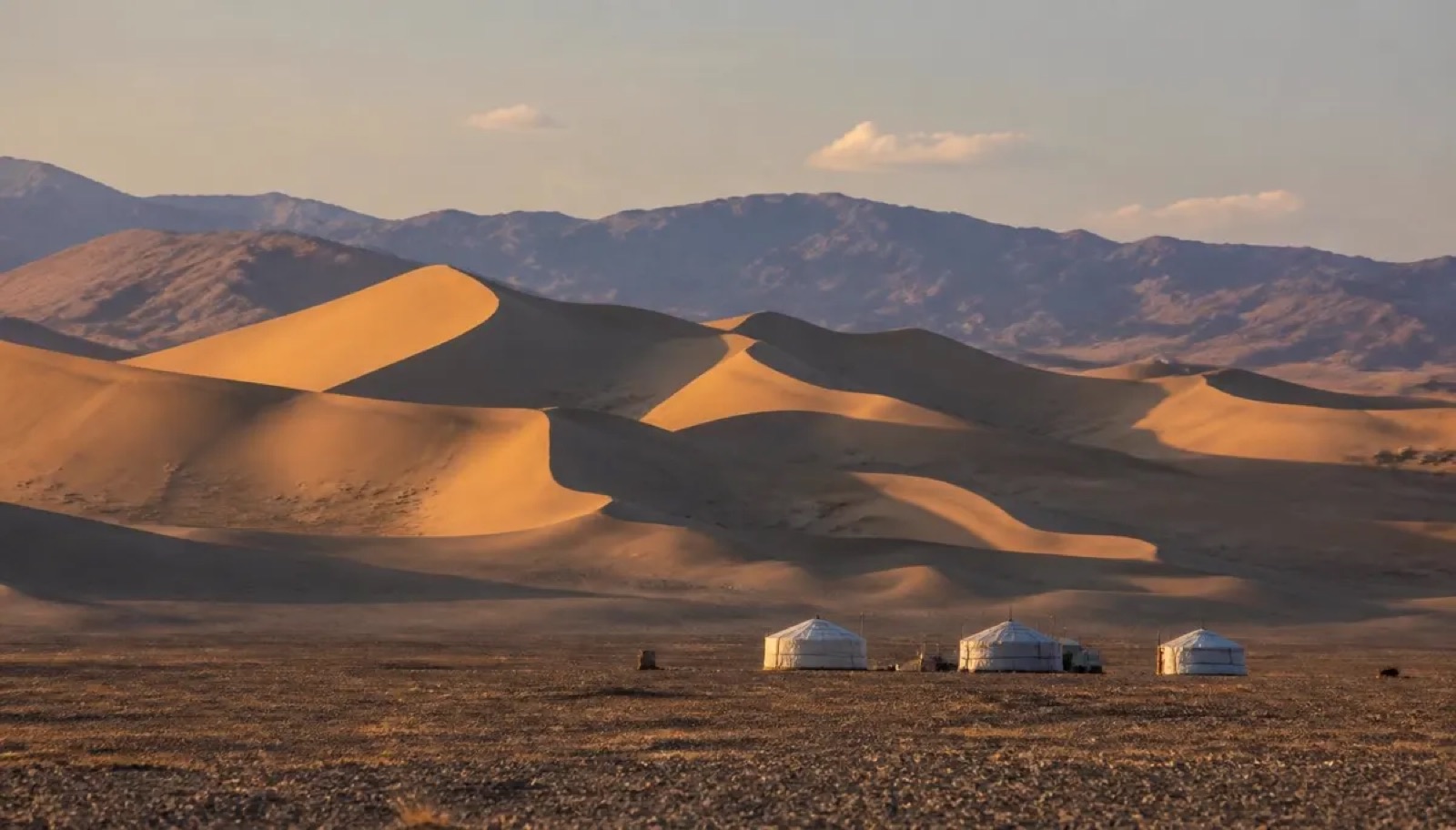
- Khongoryn Els (Singing Dunes): These magnificent sand dunes stretch for over 100 km and can reach heights of 300 metres. Climbing them, especially at sunrise or sunset, is an unforgettable experience. The “singing” sound comes from the wind blowing over the sand. Reaching the top takes incredible effort, but the breathtaking view makes every step worthwhile.
- Flaming Cliffs (Bayanzag): Known for their vibrant red and orange hues, these cliffs are famous for being the site where dinosaur eggs were first discovered in the 1920s. It’s an otherworldly landscape, especially at sunset, where you can almost feel the ancient history beneath your feet.
- Yolyn Am (Eagle Valley): A dramatic gorge in the Gurvan Saikhan Mountains, often retaining ice well into summer. It's a fantastic spot for hiking and wildlife spotting, with the chance to see ibex, argali sheep, and even the elusive snow leopard.
- Camel Riding: Experience the desert like a true nomad on a two-humped Bactrian camel. It’s surprisingly comfortable and a quintessential Gobi experience. Most Gobi Desert tours include this.
Organizing Gobi Desert Tours
Exploring the Gobi independently is challenging due to vast distances, lack of public transport, and limited infrastructure. It's highly advisable to book with a reputable tour operator. Most tours depart from Ulaanbaatar and last 5-10 days, covering the major highlights.
Recommended Tour Operators for Mongolia Travel:
- G Adventures: Offers various itineraries, including Gobi-focused trips. Prices from $1,500 – $3,000+ USD for 7-14 days. Check Itineraries
- Intrepid Travel: Similar to G Adventures, with a focus on sustainable and authentic experiences. Prices comparable. Explore Trips
- Local Mongolian Tour Companies (e.g., Discover Mongolia, Golden Gobi): Often more flexible and can be more budget-friendly. Prices can range from $80-150 USD per person per day, depending on group size, inclusions (driver, guide, food, accommodation).
| Item | Cost (MNT) | Cost (USD) |
|---|---|---|
| Tour Operator Fee (7 days, per person) | ~3,000,000 MNT | ~$880 USD |
| Accommodation (Ger camps, included) | Included | Included |
| Food & Water (included) | Included | Included |
| Entrance Fees (included) | Included | Included |
| Camel Riding (optional, ~1 hour) | ~30,000 MNT | ~$9 USD |
| Total per person (estimated) | ~3,030,000 MNT | ~$889 USD |
A local guide for a Gobi trip is well worth it, as the insights they share about the landscape and Nomadic culture Mongolia are invaluable. It’s an investment that truly enhances your Mongolia travel.
Experiencing Nomadic Culture Mongolia: A Way of Life
This is arguably the most profound aspect of Mongolia travel. To truly understand Mongolia, you must engage with its nomadic heart. Interacting with herder families is the highlight for many visitors.
Staying in a Ger Camp
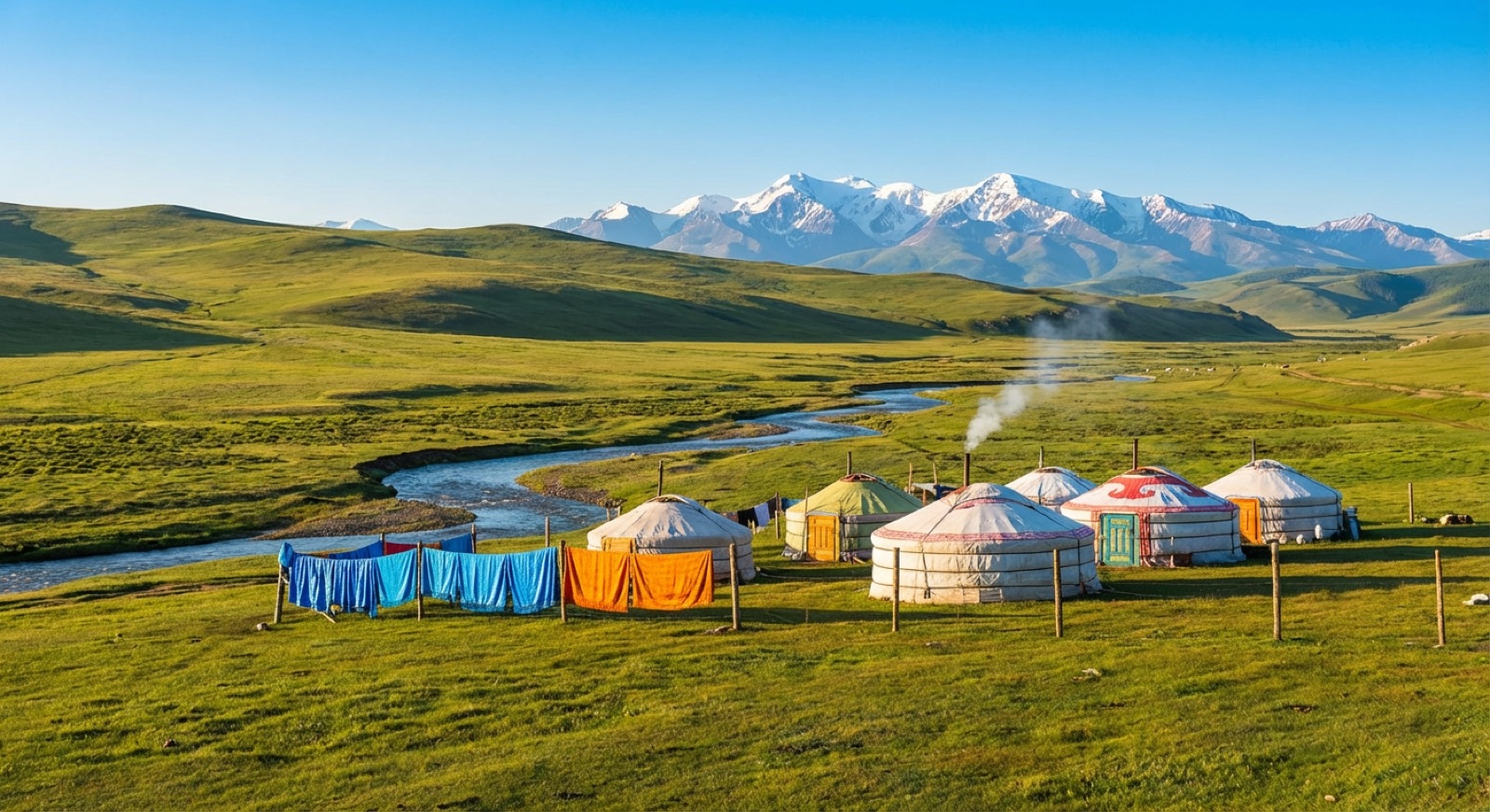
A ger (often called a yurt outside Mongolia) is the traditional dwelling of Mongolian nomads. Staying in a tourist ger camp is comfortable, with beds and sometimes even small wooden stoves for warmth. But for a truly authentic experience, try to arrange a stay with a nomadic family.
- An Authentic Experience: Many tour operators can arrange a homestay with a real nomadic family. This typically involves sleeping in a spare ger, helping with daily chores (milking yaks, herding goats), and sharing meals.
- Ger Etiquette: Always enter clockwise, don't step on the threshold, don't lean on the central poles, and accept offered food/drinks with your right hand. First-timers can easily slip up, and a guide can gently correct you. Learning these customs is part of the charm of Nomadic culture Mongolia.
The Role of Horses in Nomadic Life
Horses are central to Mongolian identity. Children learn to ride almost before they can walk, and the bond between rider and horse is legendary. A multi-day horseback trek through the grasslands is a highlight of any Mongolia travel.
- Horseback Riding: Many regions offer horseback riding excursions, from short hourly rides to multi-day treks. The cost can vary, but expect around 20,000-40,000 MNT (approx. $6-12 USD) per hour, or 100,000-200,000 MNT (approx. $30-60 USD) per day for guided treks, excluding food and accommodation.
- Naadam Festival: If you visit in July, the Naadam Festival is a must-see. It's a spectacular display of the 'Three Manly Games' – wrestling, archery, and horse racing. It’s a raw, powerful celebration of Mongolian heritage and a pinnacle of experiencing Nomadic culture Mongolia.
Shamanism and Buddhism
Mongolia’s spiritual landscape is a blend of Tibetan Buddhism (mainly Gelugpa school) and ancient shamanic traditions. You’ll see ovoos (sacred stone cairns) adorned with prayer flags, Buddhist monasteries, and sometimes even encounter a shaman. These deep spiritual roots are woven into the fabric of Mongolia travel.
Beyond the Gobi: Other Must-See Destinations
While the Gobi is spectacular, Mongolia offers much more. The best advice for anyone doing Mongolia travel is to explore beyond one region if time permits.
Khuvsgul Lake (The Blue Pearl of Mongolia)
Located in northern Mongolia, near the Siberian border, Khuvsgul Lake is stunningly beautiful – a pristine freshwater lake surrounded by taiga forests and mountains. It's an excellent destination for hiking, fishing, kayaking, and even visiting reindeer herders (Tsaatan minority). The air here is incredibly fresh, a stark contrast to the Gobi's arid heat.
- Activities: Horse trekking, boat tours, visiting reindeer herders.
- Getting there: Domestic flights from Ulaanbaatar to Murun (~250,000-400,000 MNT / $70-120 USD one-way), then a drive to the lake (can be bumpy).
- Accommodation: Ger camps around the lake, prices vary (50,000-150,000 MNT / $15-45 USD per night).
Karakorum and Erdene Zuu Monastery
Step back in time to Karakorum, the ancient capital of the Mongol Empire under Genghis Khan. Today, little remains of the city except scattered ruins, but it's home to the impressive Erdene Zuu Monastery, one of the oldest and most important Buddhist monasteries in Mongolia. Its immense walls convey the historical significance of this place to Mongolia travel.
- Location: Ovorkhangai Province, ~360 km west of Ulaanbaatar.
- Getting there: Often included in central Mongolia tours or can be reached by bus from Ulaanbaatar (approx. 8 hours, 30,000 MNT / $9 USD).
- Entrance Fee (Erdene Zuu): 8,000 MNT (approx. $2.30 USD).
Terelj National Park
Relatively close to Ulaanbaatar, Terelj is a popular day trip or short overnight stay. It features dramatic rock formations (like Turtle Rock), beautiful valleys, and is a great place for horseback riding and hiking. It's an accessible taste of Mongolia travel for those with limited time.
- Location: Tov Province, ~60 km northeast of Ulaanbaatar.
- Getting there: Easily accessible by tour, private driver, or local bus from Ulaanbaatar.
- Activities: Turtle Rock, Ariyabal Meditation Temple, horseback riding.
Is Mongolia expensive to visit? Trip costs and daily budget
One of the most common questions is, “How much does Mongolia travel cost?” While it can be an expensive destination due to logistical challenges and vast distances, smart planning can help.
Key Cost Factors:
- Flights: International flights to Ulaanbaatar (UBN) are often the biggest expense. Plan to spend $800 - $1,500+ USD depending on your departure location and time of year.
- Tours vs. Independent Travel: Independent travel is cheaper for Ulaanbaatar, but significantly more challenging and potentially more expensive for multi-day trips outside the capital. Tours offer convenience and consolidate costs.
- Duration of Stay: Longer trips naturally cost more, but the daily average might decrease if you're doing longer tours.
- Accommodation: Ulaanbaatar offers hostels ($15-30 USD), mid-range hotels ($60-150 USD), and luxury ($150+ USD). Ger camps in the countryside typically cost $20-50 USD per person/night with shared facilities.
- Food: Meals in Ulaanbaatar can range from $5-15 USD. Outside, tour meals are usually included or you'll eat local food for $3-10 USD.
Budget Breakdown Table (Estimated per person, per day, excluding international flights)
| Category | Budget Traveler ($ USD) | Mid-Range Traveler ($ USD) | Luxury Traveler ($ USD) |
|---|---|---|---|
| Accommodation | $15 - $30 (hostels/basic ger) | $60 - $120 (mid-range hotel/ger camp) | $150+ (luxury hotel/private ger) |
| Food & Drink | $10 - $20 (local eateries/self-catering) | $20 - $40 (mix of local/restaurants) | $50+ (fine dining) |
| Local Transport (within city) | $3 - $5 (bus/taxi) | $5 - $10 (taxis) | $10+ (private car) |
| Activities/Tours (daily average) | $50 - $100 (group tours/entry fees) | $100 - $200 (small group/private portions) | $200+ (private guide/exclusive experiences) |
| Miscellaneous (souvenirs, etc.) | $5 - $10 | $10 - $20 | $20+ |
| Daily Total (Estimated) | $83 - $165 | $195 - $390 | $430+ |
A mid-range Mongolia travel cost for a two-week trip, including a 7-day Gobi tour with a local operator and some time in Ulaanbaatar, is around $2,000 USD, excluding international flights, focusing on value and authentic experiences.
Practical Tips for Mongolia Travel
A few insights are worth knowing before a first trip. These practical tips will make your Mongolia travel much smoother.
Pro Tips for Your Mongolian Adventure
- Learn Basic Mongolian Phrases: Even a few words like 'Sain baina uu' (hello), 'Bayarlalaa' (thank you), and 'Uuchlaarai' (excuse me) will go a long way with locals, particularly when experiencing Nomadic culture Mongolia.
- Offline Maps are Essential: Google Maps works for Ulaanbaatar, but beyond that, download offline maps (e.g., Maps.me or Gaia GPS). Cell signal is patchy at best in the countryside.
- Expect 'Mongolian Time': Things move slower here, and schedules can be flexible. Embrace the laid-back pace, especially outside the capital.
- Be Prepared for All Weathers: Even in summer, temperatures can drop significantly at night, and rain can sweep in. Layers are crucial.
- Bring a Gift for Nomadic Families: If staying with a family, small gifts like notebooks, pens, sweets for children, or even a nice bottle of spirits for the adults are much appreciated.
- Photography Etiquette: Always ask permission before photographing people, especially monks.
Common Mistakes to Avoid
- Underestimating the Distances: Mongolia is massive. Travel between destinations can take full days of driving on rough roads. Don't try to cram too much into a short trip.
- Attempting Solo Travel to Remote Areas Without Preparation: While exhilarating, venturing into the Gobi or remote regions alone without a guide or proper vehicle is risky and ill-advised.
- Not Bringing Enough Cash: As mentioned, ATMS are rare outside Ulaanbaatar. Your Mongolia travel cost can quickly spiral if you can't pay for essentials.
- Ignoring Local Customs: Being aware of and respecting Mongolian customs, particularly around gers and monasteries, shows respect and enhances your experience.
Culinary Journeys: What to Eat in Mongolia
Mongolian cuisine is hearty, designed to sustain a nomadic lifestyle in harsh conditions. It’s predominantly meat-based, with mutton and beef being staples, accompanied by dairy products. Buuz (steamed dumplings) are a revelation after a long day of driving through the Gobi.
Must-Try Mongolian Dishes:
- Buuz (Бууз): Steamed dumplings filled with minced meat (usually mutton or beef) and onion. A national favorite, especially during Tsagaan Sar (Lunar New Year).
- Khuushuur (Хуушуур): Fried dough pockets similar to buuz, but pan-fried until crispy. Absolutely delicious, particularly hot off the grill during Naadam.
- Tsuivan (Цуйван): A noodle dish stir-fried with meat and vegetables (carrots, onions, cabbage). Comfort food at its best.
- Khorkhog (Хорхог): A traditional Mongolian barbecue. Meat (often goat or mutton) is cooked with hot stones inside a sealed container. It’s more of an event than just a meal, usually cooked for special occasions or groups. A Gobi Desert tour is a great chance to try it.
- Aaruul (Ааруул): Dried curd, a hard cheese snack. Comes in various shapes and textures. It takes some getting used to, but it’s a nomadic staple.
- Suutei Tsai (Сүүтэй цай): Traditional Mongolian milk tea, often with a pinch of salt. It’s hydrating and surprisingly filling. You'll be offered this everywhere, so learn to love it!
For vegetarians, Mongolia travel culinary experiences can be challenging outside Ulaanbaatar. It’s advisable to explain your dietary needs clearly to your tour operator or guide. Pack protein bars or instant noodles for emergencies.
Responsible Tourism in Mongolia: Protecting the Steppe
As travelers, we have a responsibility to minimize our impact and support local communities. This is especially true in a place as sensitive and culturally rich as Mongolia.
How to Travel Responsibly in Mongolia:
- Respect Local Culture: Dress modestly, especially when visiting monasteries. Be mindful of customs when with nomadic families.
- Support Local: Choose locally-owned ger camps and tour operators. Buy souvenirs directly from artisans. Your Mongolia travel dollars can make a big difference.
- Leave No Trace: Pack out all your trash, avoid disturbing wildlife, and stick to established trails. The pristine landscapes are fragile.
- Conserve Resources: Water and electricity are precious, especially in remote areas. Use them sparingly.
- Be Aware of Your Impact: Large tourist groups can sometimes overwhelm small nomadic communities. Opt for smaller groups if possible.
A good philosophy for Mongolia travel, and really all travel, is to leave a place better than you found it, or at the very least, leave no negative trace. The beauty of the steppe and the warmth of its people deserve the utmost respect.
Conclusion: Your Mongolian Saga
Mongolia travel isn't just about seeing sights; it's about connecting with something primal, something enduring. It’s an adventure that strips away the unnecessary and leaves you with the raw beauty of nature and the resilience of human spirit.
Whether you dream of riding horses across endless steppes, tracking snow leopards in the Altai, or simply sharing a cup of salty milk tea with a nomadic family under a billion stars, Mongolia offers an experience unlike any other. Plan your journey carefully, embrace the unexpected, and prepare to be transformed. Your ultimate Mongolian adventure in 2025 is waiting. Go forth and explore!
Explore Mongolia in Depth
This guide is the overview. When you are ready to plan a specific part of the trip, this deep-dive goes further, and it links back here: