Sydney Travel Guide: Beaches, Harbour, Day Trips
Sydney Harbour, beaches and coastal walks, when to visit, public transport, neighbourhoods to stay in, day trips, food, costs and sample itineraries.
In this guide
- Quick Facts
- Exploring Sydney Harbour and Iconic Landmarks
- Sydney's World-Class Beaches and Coastal Walks
- When to Visit Sydney: Climate and Seasons
- Getting Around Sydney: Public Transport and Navigating the City
- Where to Stay: Best Neighbourhoods to Base Yourself
- Day Trips from Sydney: Escaping the City
- Sydney Food Culture and Local Flavours to Try
- Budgeting and Financial Practicalities
- Essential Practical Tips and Common Mistakes to Avoid
- Sample Sydney Itineraries
- Final Thoughts
- Explore in Depth
This guide is part of our Australia Travel Guide: Planning a First Trip — start there for the overview, when to go and how to get around.
There is a specific moment when Sydney grips you: a crisp October dawn aboard the early ferry from Manly, as the morning mist lifts off the water and the rising sun paints the sails of the Sydney Opera House in a warm, honeyed gold. Behind it, the steel arch of the Sydney Harbour Bridge cuts a majestic silhouette against a clear Australian sky. Few global gateways bring raw natural beauty and urban architectural ambition together in such magnificent harmony.
Sydney is a city defined by water. Its sprawling, natural harbour—one of the grandest on earth—acts as a shimmering blue highway that links historic colonial precincts, glittering glass towers, sheltered coves, and world-famous ocean beaches. Unlike many international metropolises where nature is confined to manicured city parks, Sydney’s environment is wild, expansive, and ever-present. From the pounding surf of Bondi to the quiet, eucalyptus-scented trails of the Blue Mountains on its western horizon, the outdoors is not just a backdrop here; it is the lifeblood of daily existence.
Whether you are visiting for a few days or settling in for a multi-week Australian adventure, navigating this radiant city requires an understanding of its distinct geography, variable coastal microclimates, and efficient public transport systems. In this comprehensive guide, I will share the practical insights, photographic vantage points, and local secrets I have gathered over countless visits to help you plan an unforgettable Sydney journey.
Quick Facts
- Country: Australia
- State: New South Wales (State Capital)
- Primary Gateway: Sydney Kingsford Smith Airport (SYD)
- Public Transport: Integrated Opal System (Contactless credit/debit cards accepted across trains, ferries, buses, and light rail)
- Language: English
- Time Zone: Australian Eastern Standard Time (AEST, UTC+10) / Australian Eastern Daylight Time (AEDT, UTC+11)
- Emergency Number: 000 (Triple Zero)
Exploring Sydney Harbour and Iconic Landmarks
The beating heart of the city is Sydney Harbour (officially Port Jackson), a drowned river valley that extends over twenty kilometres inland. Most first-time travellers naturally gravitiate towards Circular Quay, the vibrant transit hub where the city centre meets the harbour waters. From this vantage point, two of the world's most recognizable structures stand within easy viewing distance of each other.
The Sydney Opera House
Positioned on Bennelong Point, the Sydney Opera House is a masterpiece of modern expressionist architecture. Designed by Danish architect Jørn Utzon, its iconic shell-like roofs—covered in over a million glazed ceramic tiles—reflect the changing light of the sky throughout the day. While taking a photo from across the water is essential, I strongly recommend walking around the entire concourse to appreciate the engineering marvel from every angle.
To photograph the Opera House at its absolute best, head to the Western Boardwalk during the golden hour just before sunset. The setting sun casts a warm light directly onto the ceramic sails, creating a striking contrast against the deepening blue of the harbour waters. While guided interior tours are available daily to explore the concert halls and theatres, simply sitting on the broad outdoor steps with a cool drink and watching the ferry traffic is one of Sydney’s great simple pleasures.
Sydney Harbour Bridge and the Pylon Lookout
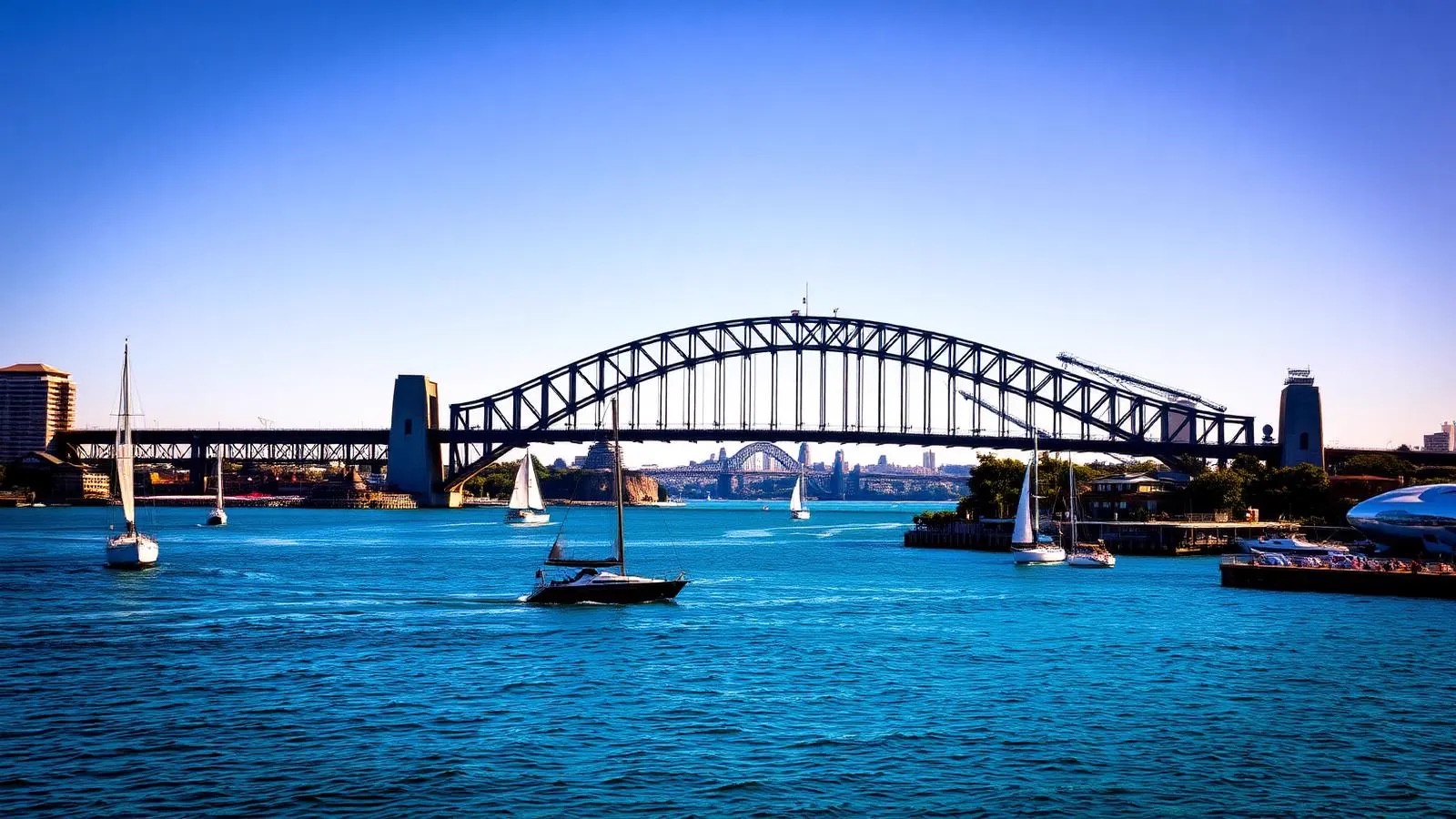
Affectionately nicknamed "The Coat hanger" by locals due to its arch design, the Sydney Harbour Bridge spans the harbour, connecting the central business district to the North Shore. Walking across the bridge is entirely free and offers sweeping panoramas of the harbour, the Opera House, and the city skyline. The pedestrian walkway runs along the eastern side of the bridge, accessible via stairs from the historic Rocks neighbourhood.
For travellers seeking high-altitude views without booking an expensive guided bridge climb, the South-East Pylon Lookout provides an exceptional alternative. Rising dozens of metres above the roadway, climbing the interior stairs of this granite-faced tower brings you to a historic viewing platform. From here, you get elevated, uninterrupted vantage points over the harbour while reading historical displays about the bridge’s remarkable construction during the 1920s and 1930s.
Royal Botanic Garden and Mrs Macquarie's Chair
Wrapping around Farm Cove adjacent to the Opera House lies the Royal Botanic Garden Sydney, a 30-hectare oasis of manicured lawns, rare tropical plants, and native Australian flora. Established over two centuries ago, it is one of the oldest botanical institutions in the Southern Hemisphere and offers a serene escape from the urban bustle.
Follow the sea wall pathway around the perimeter of the garden to reach Mrs Macquarie's Point. Exposed sandstone carved into a bench mark—known as Mrs Macquarie's Chair—was originally fashioned for the Governor's wife in the early nineteenth century. Today, this headland offers what is widely considered the ultimate postcard view of Sydney, framing both the Opera House and the Harbour Bridge in a single, perfectly balanced landscape. Bring a picnic blanket in the late afternoon to watch the sun drop behind the bridge.
Sydney's World-Class Beaches and Coastal Walks
With dozens of ocean and harbour beaches scattered across its coastline, Sydney possesses an unmatched coastal lifestyle. The ocean culture here is deeply ingrained, revolving around morning surf sessions, ocean swimming pools, and dramatic oceanfront hiking trails cut into yellow sandstone cliffs.
The Bondi to Coogee Coastal Walk
If you only complete one walking trail in Sydney, make it the Bondi to Coogee Coastal Walk. This six-kilometre cliff-top trail links several of the eastern suburbs' most gorgeous beaches, offering sweeping vistas of the Pacific Ocean, deep ocean inlets, and dramatic rock formations shaped by coastal erosion.
Starting at the iconic Bondi Beach—famous for its crescent of golden sand and rolling surf waves—the trail heads south past the legendary ocean pool at Bondi Icebergs. As you navigate the paved trail, you will encounter:
- Tamarama Beach: A narrow, deep beach flanked by steep headlands, beloved by local surfers and famous for its powerful swell.
- Bronte Beach: A family favourite with a broad grassy park, shaded barbecue areas, and a picturesque ocean pool cut directly into the headland sandstone.
- Clovelly Beach: A long, narrow bay resembling a natural swimming pool, featuring concrete sunbathing platforms and exceptional underwater visibility for snorkelling.
- Gordons Bay: A secluded, picturesque cove filled with timber dinghies, home to an underwater nature trail that is a haven for marine life.
- Coogee Beach: A energetic seaside destination with a vast expanse of sand, calm swimming conditions, and historic ocean baths at its southern end.
Take your time on this walk. Allow at least two to three hours to comfortably complete the journey, stopping for a swim, a cold coffee, or to photograph the crashing waves below. Wear sturdy walking shoes, apply high-factor sunscreen, and carry plenty of drinking water, as sun exposure along the cliff-tops can be intense.
Manly Beach and the Northern Beaches
While Bondi garners much of the international fame, locals will often tell you that Manly Beach, situated on the Northern Beaches peninsula, offers an even better seaside experience. The trip to Manly begins with a classic 25 to 30-minute ride aboard the iconic green-and-yellow harbour ferry from Circular Quay, crossing the open heads of the harbour entrance.
Upon disembarking at Manly Wharf, walk down The Corso—a lively pedestrian strip lined with surf shops, outdoor dining spots, and tall Norfolk Island pines—to reach the ocean beach. Manly offers long stretches of sand suitable for both experienced surfers and casual swimmers. A short, level coastal path from the southern end of Manly Beach leads you to Shelly Beach, a sheltered, west-facing cove located within the Cabbage Tree Bay Aquatic Reserve. The calm, protected waters of Shelly Beach make it one of the premier locations in the city for snorkelling and scuba diving, where you can routinely spot blue gropers, sea dragons, and harmless wobbegong sharks swimming amongst the kelp beds.
Harbour Beaches and Hidden Coves
For those who prefer calm, wave-free waters over heavy ocean surf, Sydney Harbour conceals several quiet, protected beaches that are ideal for swimming and stand-up paddleboarding:
- Camp Cove: Located near Watsons Bay, this tranquil harbour beach offers still water, clean sand, and spectacular skyline views back towards the city.
- Nielsen Park (Shark Beach): Nestled within Sydney Harbour National Park in Vaucluse, offering shade under giant fig trees and quiet swimming areas.
- Milk Beach: A secluded pocket of sand tucked beneath historic Strickland House, offering one of the most remarkable sunset vistas across the harbour.
- Balmoral Beach: Situated on the lower North Shore, featuring classic Edwardian bathhouses, a shaded promenade, and gentle water suited for long, relaxed swims.
When to Visit Sydney: Climate and Seasons
Sydney enjoys a humid subtropical climate with warm summers, mild winters, and abundant sunshine throughout the year. Because seasons in the Southern Hemisphere are flipped compared to North America and Europe, planning your timing around outdoor activities is key.
Summer (December to February)
Summer brings high energy, outdoor festivals, and maximum beach culture. Average high temperatures range from 26°C to 30°C, though heatwaves can occasionally drive temperatures significantly higher. Humidity is at its peak, and afternoon thunderstorms are common. This is peak domestic and international tourist season, so popular beaches and harbour sights will be crowded, and accommodation demands are at their highest.
Autumn (March to May)
Autumn is arguably my favourite season for exploring Sydney as a photographer and outdoor enthusiast. Daytime temperatures drop to a comfortable 20°C to 25°C, humidity diminishes, and the ocean water remains warm enough for swimming through April. The autumn light is crisp and clear, making it ideal for coastal hiking, city walking tours, and open-air dining without the sweltering heat of summer.
Winter (June to August)
Winter in Sydney is crisp, clear, and relatively mild compared to northern latitudes, with daytime highs averaging around 16°C to 18°C, though night-time temperatures can drop below 8°C. While swimming is generally reserved for the brave, winter brings clear, blue skies and low rainfall. Crucially, winter marks the peak of the humpback whale migration along the coast, with thousands of whales passing close to Sydney's cliffs between May and November.
Spring (September to November)
Spring sees the city bloom back into vibrant life. Average temperatures rise from 20°C to 25°C, rainfall is statistically at its lowest, and the urban parks fill with native flowers. In late October and November, Sydney is blanketed in stunning purple blossoms as thousands of jacaranda trees flower across harbour neighbourhoods like Kirribilli, Paddington, and Balmain.
Getting Around Sydney: Public Transport and Navigating the City
Sydney possesses an extensive, highly integrated public transport network comprising trains, metro lines, light rail, buses, and public ferries. Navigating the system is smooth, modern, and very user-friendly for international travellers.
Understanding the Opal Transport System
Public transport ticketing in Sydney operates on the Opal card system. However, physical Opal cards are largely unnecessary for short-term visitors today. You can simply tap on and tap off at turnstiles and card readers using your contactless credit card, debit card, or smart device (linked to Apple Pay or Google Pay).
Key transport rules to keep in mind:
- Always Tap On and Tap Off: You must tap the exact same card or device at the start and end of every single journey across trains, light rail, buses, and ferries to ensure correct fare calculation. Tapping with a physical card on the way in and a smartwatch on the way out will result in two separate, higher charges.
- Fare Caps: The system incorporates daily and weekly expenditure caps. Once you reach the maximum cap on any given day or within a calendar week, subsequent travel across the network is free for the remainder of that period. Check the official Transport for New South Wales website before your trip to view current cap rates and off-peak travel discounts.
- Sunday Travel: Public transport traditionally features heavily discounted fare caps on weekends, making Sunday the perfect day for longer excursions, such as travelling out to the Blue Mountains or riding the ferry to the edge of the harbour network.
Riding the Sydney Ferries
Sydney's iconic public ferries are far more than mere commuter vehicles; they are one of the finest sight-seeing experiences in the world. Operating from Circular Quay, ferries branch out across the harbour to various key locations:
- F1 Manly Ferry: The essential harbour transit experience, sailing past Fort Denison, the Heads, and opening out into Manly Wharf.
- F9 Watsons Bay Ferry: Ideal for visiting South Head, coastal dining, and enjoying calm harbour swimming spots.
- F4 Pyrmont Bay Ferry: Takes you under the Sydney Harbour Bridge into Darling Harbour and Barangaroo.
- F3 Parramatta River Ferry: Takes a scenic, meandering journey westward along the river toward historic Parramatta.
Trains, Buses, and Light Rail
The city's suburban train network is fast and efficient, running underground through the Central Business District (CBD) along the City Loop (stopping at Central, Town Hall, Wynyard, Circular Quay, St James, and Museum stations) before extending to outer suburbs and regional areas.
The Light Rail network (L1, L2, and L3 lines) offers smooth surface travel through the heart of the CBD along George Street, connecting Circular Quay to Central Station, and extending southeast toward Surry Hills, Randwick, and Kingsford, or west toward Pyrmont and Dulwich Hill. Buses handle areas not serviced by rail, particularly the eastern beach suburbs like Bondi and Coogee.
Where to Stay: Best Neighbourhoods to Base Yourself
Because Sydney is vast and spread out across diverse micro-regions, selecting the right neighbourhood for your base will shape your overall experience. Rather than focusing on specific hotels, choose a location that aligns with your preferred pace of travel and daily interests.
The Rocks and Circular Quay
For convenience, history, and unmatched harbour access, you cannot beat The Rocks and Circular Quay precinct. Located right on the water at the northern edge of the CBD, staying here means stepping out of your accommodation directly onto the ferry wharves and being within walking distance of the Opera House, Botanic Garden, and historic cobbled alleyways.
Best for: First-time visitors, short stays, photography enthusiasts, and travellers wanting central access to major transit links.
Surry Hills and Darlinghurst
Situated just south and east of the central city core, Surry Hills and Darlinghurst are Sydney’s creative, culinary epicentres. Characterised by tree-lined streets, historic Victorian terrace houses, boutique design stores, and exceptional specialty coffee roasters, these vibrant neighbourhoods showcase Sydney’s local urban culture.
Best for: Food lovers, coffee fanatics, nightlife seekers, and travellers who prefer a creative, local neighbourhood atmosphere over commercial hotel towers.
Bondi and the Eastern Suburbs
If your dream Sydney holiday centres around morning surfs, health-conscious coastal cafés, sunset beach strolls, and ocean swimming, base yourself directly in Bondi or neighbouring Bronte and Coogee. While commute times to the city centre require a bus ride or a bus-to-train transfer at Bondi Junction, the laid-back coastal lifestyle offers an authentic taste of Sydney’s outdoor identity.
Best for: Beach lovers, surfers, active lifestyle travellers, and those staying in the city for an extended period.
Manly and the Northern Beaches
Staying in Manly offers a distinct resort-like atmosphere that feels completely removed from the bustle of the central business district, yet remains linked by a scenic ferry ride across the harbour. You enjoy easy access to both quiet harbour coves and rugged ocean surf beaches, alongside a relaxed dining scene along the water.
Best for: Families, water sports enthusiasts, and travellers seeking a relaxing seaside getaway with high quality amenities.
Day Trips from Sydney: Escaping the City
One of Sydney’s greatest advantages is its proximity to wilderness reserves, rugged national parks, and agricultural valleys. Beyond the suburban footprint, world-class day trips await within two to three hours of the central city.
The Blue Mountains National Park
A UNESCO World Heritage site located roughly 100 kilometres west of Sydney, the Blue Mountains National Park is famous for its towering sandstone escarpments, dense eucalyptus forests, deep valleys, and dramatic waterfalls. The blue haze that blankets the region is created by vast forests of eucalyptus trees discharging microscopic droplets of oil into the air, which refract light in the blue spectrum.
The gateway town of Katoomba is easily reachable by public transport. Direct regional trains depart regularly from Central Station, taking approximately two hours to reach Katoomba station. Key attractions within the park include:
- Echo Point and the Three Sisters: The premier lookout offering views over the Jamison Valley and the iconic rock formation known as the Three Sisters, steeped in Indigenous creation stories.
- Scenic World: Features the Scenic Railway—the steepest passenger railway in the world—and the Scenic Skyway, a glass-floored cable car suspended high above the valley floor.
- Wentworth Falls: A spectacular multi-tiered waterfall offering several hiking routes ranging from easy cliff-top walks to challenging descent tracks into the rainforest canopy.
- Grand Canyon Track: Located near Blackheath, this historic walking loop drops deep into a shaded sandstone gorge filled with giant tree ferns, rushing streams, and ancient moss-covered walls.
The Royal National Park and Wedding Cake Rock
Located directly south of the city, the Royal National Park is the world’s second-oldest designated national park (established after Yellowstone in the USA). Stretching along a coastal plateau, the park features coastal heathlands, pristine beaches, and river valleys.
Popular sections include the Coast Track, which offers multi-hour walking trails along high sandstone cliffs, leading to distinctive formations like Wedding Cake Rock—a stark white, square sandstone cliff overhang, fenced off since 2015 and viewed only from a distance—and the Figure Eight Pools near Burning Palms Beach. Note that visiting the Figure Eight Pools requires extreme caution, as the wave platforms are fully submerged and highly dangerous during high tides or heavy swell; always check ocean conditions before attempting to visit.
The Hunter Valley Wine Region
Located roughly two and a half hours drive north of Sydney, the Hunter Valley is Australia’s oldest commercial wine region. Known globally for producing world-class Semillon and exceptional Shiraz, the valley features hundreds of cellar doors set against rolling green hills and broken mountain ranges.
While hiring a car provides maximum flexibility, booking an organised day tour departing from Sydney CBD allows you to sample wines, artisanal cheeses, and locally produced chocolates without navigating driving duties. Many cellar doors offer full tasting sessions, farm-to-table lunch experiences, and vineyard walking tours.
Sydney Food Culture and Local Flavours to Try
Sydney's dining scene is defined by fresh, high-quality local produce, access to pristine seafood, and deep Asian and Mediterranean culinary influences shaped by successive waves of immigration.
Fresh Seafood at the Harbour and Markets
Surrounded by ocean waters, Sydney takes immense pride in its seafood. Make a trip to the Sydney Fish Market, which moved into a new building on Blackwattle Bay in Glebe in 2026—one of the largest seafood markets in the Southern Hemisphere. Here, wholesale fishmongers display fresh catches landed daily from Australian and New Zealand waters.
Must-try seafood highlights include:
- Sydney Rock Oysters: Native to eastern Australia, these oysters are smaller than Pacific oysters but boast a rich, complex, mineral flavour profile.
- Moreton Bay Bugs and Balmain Bugs: Slipper lobsters with sweet, delicate white meat, perfect grilled with garlic butter or sliced cold in seafood platters.
- Wild Blue Swimmer Crab and King Prawns: Sweet, clean flavours best enjoyed simply iced with lemon wedge accompaniments.
Café Culture and Flat Whites
Australians take their coffee exceptionally seriously, and Sydney is home to a world-leading espresso culture. You will struggle to find a basic drip coffee here; instead, cafés rely on high-end espresso machines operated by skilled baristas.
Order a flat white—a double shot of espresso topped with silky, micro-foamed steamed milk—and pair it with classic Australian breakfast dishes. Weekend brunch is an essential local ritual, featuring avocado crushed on sourdough with feta and dukkah, poached eggs over wilted greens, and freshly squeezed juices in sunny outdoor courtyards.
Multicultural Neighbourhood Dining
To experience the full breadth of Sydney's food scene, venture into its culturally rich suburban dining pockets:
- Haymarket (Chinatown & Thai Town): Located around Campbell and Dixon Streets, this area offers authentic regional Chinese, Cantonese dim sum, and vibrant late-night Thai eateries.
- Marrickville & Cabramatta: Marrickville in the Inner West and Cabramatta in the South West are world-class hubs for Vietnamese cuisine, offering steaming bowls of rich pho, crispy banh mi baguettes, and fresh herb rolls.
- Leichhardt & Haberfield: Traditional Italian hubs where you will find wood-fired pizzerias, handmade pasta joints, and historic pasticcerias selling freshly piped cannoli.
- Enmore & Newtown: Known for eclectic, budget-friendly global dining ranging from Egyptian street food to vegan diners and fiery Sri Lankan curries.
Budgeting and Financial Practicalities
Sydney is consistently ranked among the world’s premium travel destinations, and expenses can accumulate quickly if you are not careful. However, with a few practical adjustments, exploring the city on a sensible budget is easily achievable.
Managing Expenses in a World City
Australia operates largely as a cashless society. Contactless card payments, digital wallets, and tap-to-pay terminals are standard everywhere from high-end harbour restaurants to small beach kiosks and weekend markets. Carrying large sums of cash is unnecessary.
Tipping culture in Australia differs significantly from North America. Tipping is not mandatory, and service charges are rarely added automatically to bills. Hospitality workers earn fair base wages set by award standards. While leaving a modest tip for exceptional dining service is appreciated, it is entirely discretionary and not expected for casual cafe service or drink orders.
Free and Low-Cost Attractions
A surprising number of Sydney’s finest experiences cost absolutely nothing:
- Public Art Galleries & Museums: Permanent collections at the Art Gallery of New South Wales (including the modern Sydney Modern Project building) and the Museum of Contemporary Art (MCA) at Circular Quay feature completely free admission.
- Self-Guided Coastal Walks: All ocean beaches, headlands, and coastal walking paths—including the Bondi to Coogee trail and the Spit Bridge to Manly walk—are public space and completely free to explore.
- Botanic Gardens & Parks: Entry to the Royal Botanic Garden, Centennial Park, and Hyde Park costs nothing, making them ideal spots for self-catered picnics using fresh market ingredients.
Essential Practical Tips and Common Mistakes to Avoid
To ensure your journey runs smoothly and safely, keep these field-tested practical tips in mind during your stay in Sydney.
Sun Safety and Ocean Swimming
The Australian sun is surprisingly harsh due to clear atmospheric conditions and high UV radiation indices. Even on overcast or cooler days, sunburn can occur very quickly.
Follow the Australian sun safety guidelines: Slip on sun-protective clothing, Slop on broad-spectrum SPF 50+ sunscreen every two hours, Slap on a wide-brimmed hat, and wear UV-rated sunglasses. When swimming at ocean beaches, swim exclusively between the red and yellow safety flags placed on the sand by volunteer surf lifesavers. These flags mark the safest sections of the beach free from dangerous ocean rips (strong outbound water currents). If you ever find yourself caught in an ocean rip, remain calm, do not attempt to swim directly against the current back to shore; instead, float, raise one arm to signal lifesavers, or swim parallel to the beach to escape the narrow current.
Common Tourist Pitfalls
- Relying on Commercial Harbour Cruises: Private sightseeing cruises can be very expensive. For a fraction of the price, use regular public ferries to Manly, Watsons Bay, or Taronga Zoo, which follow identical scenic routes across the harbour water.
- Underestimating Walking Distances: Sydney’s central core and eastern coastline feature steep hills, sandstone staircases, and long distances between public transit stops. Wear comfortable, broken-in walking shoes rather than flimsy footwear when heading out for day trips.
- Ignoring Off-Peak Transport Caps: Travelling outside peak morning and afternoon commuter hours saves money across the public transport network, while using contactless payment on the same card secures daily and weekly fare caps.
- Overestimating Drive Times: Traffic congestion in Sydney can be severe, particularly around bridge choke-points and major central arteries. Parking in the CBD and near major beaches like Bondi is notoriously scarce and costly. Relying on the transit network is almost always faster and stress-free.
Sample Sydney Itineraries
To help structure your time effectively, here are two sample routes designed to showcase the best balance of harbour views, coastal landscapes, and cultural sights.
3-Day Express Itinerary
- Day 1: Classic Harbour & City Core. Begin early at Circular Quay. Explore the concourse of the Sydney Opera House and stroll through the Royal Botanic Garden to Mrs Macquarie's Chair for iconic views. Walk back through historic The Rocks precinct, cross the pedestrian walkway of the Sydney Harbour Bridge to Milsons Point, and take an evening public ferry back past the illuminated harbour sights.
- Day 2: Eastern Beaches & Coastal Splendour. Catch a bus to Bondi Beach. Grab an espresso at a beachside café, view the ocean pool at Bondi Icebergs, and complete the six-kilometre Bondi to Coogee Coastal Walk. Enjoy a seafood lunch at Coogee, take an afternoon dip, and spend the evening dining in the culinary streets of Surry Hills.
- Day 3: Manly & Northern Shores. Take the iconic morning F1 Ferry across the harbour to Manly Wharf. Walk down The Corso to Manly Beach, follow the coastal path around to Shelly Beach for snorkelling or swimming, and hike up to North Head for dramatic views over the ocean cliffs. Return via sunset ferry for dinner at Circular Quay.
7-Day Comprehensive Itinerary
- Day 1: Harbour Highlights. Opera House, Royal Botanic Garden, Mrs Macquarie's Point, historic walk through The Rocks, South-East Pylon Lookout access.
- Day 2: Eastern Suburbs Coastal Walk. Full morning completing the Bondi to Coogee trail, beach swimming, and a casual evening exploring Newtown and Enmore’s food and live music scene.
- Day 3: Day Trip to the Blue Mountains. Early morning train to Katoomba. View the Three Sisters from Echo Point, ride the Scenic World cable cars, and complete a bushwalk around Wentworth Falls or the Grand Canyon Track.
- Day 4: Manly & Cabbage Tree Bay. Ferry ride to Manly, coastal walk to Shelly Beach, paddleboarding or marine reserve snorkelling, sunset drinks along Manly Wharf.
- Day 5: Culture, Art & Hidden Coves. Visit the Art Gallery of New South Wales, explore the modern exhibitions, stroll down to Woolloomooloo, take a ferry to Watsons Bay, and relax on quiet Camp Cove beach.
- Day 6: Royal National Park Exploration. Rent a vehicle or take a coastal train south to explore the cliff trails, river valleys, and rainforest gorges of the Royal National Park.
- Day 7: Urban Neighbourhoods & Food Trail. Morning coffee and breakfast in Surry Hills, browsing boutique stores in Paddington, a visit to the Sydney Fish Market for a fresh seafood feast, and a final evening sunset stroll along Barangaroo Reserve.
Final Thoughts
Sydney is a rare metropolis that seamlessly balances urban sophistication with raw, breathtaking nature. It is a place where you can spend your morning riding ocean waves or hiking sandstone cliff trails, your afternoon exploring world-class modern art galleries and historic botanical grounds, and your evening enjoying fresh ocean seafood while watching the ferries glide past a golden harbour skyline.
The real secret to mastering Sydney lies in adopting the relaxed, outdoors-driven pace of its residents. Don't rush through a packed checklist of sights; instead, slow down, jump aboard a harbour ferry, slip into the ocean pools, take time to enjoy exceptional local coffee, and let the radiant light and natural splendour of this remarkable harbour city unfold naturally around you.