South Coast Track: Complete Hiking Guide
Planning Tasmania's South Coast Track: when to go, transport in and out, gear, a day-by-day itinerary, food and water, track hazards and the costs.
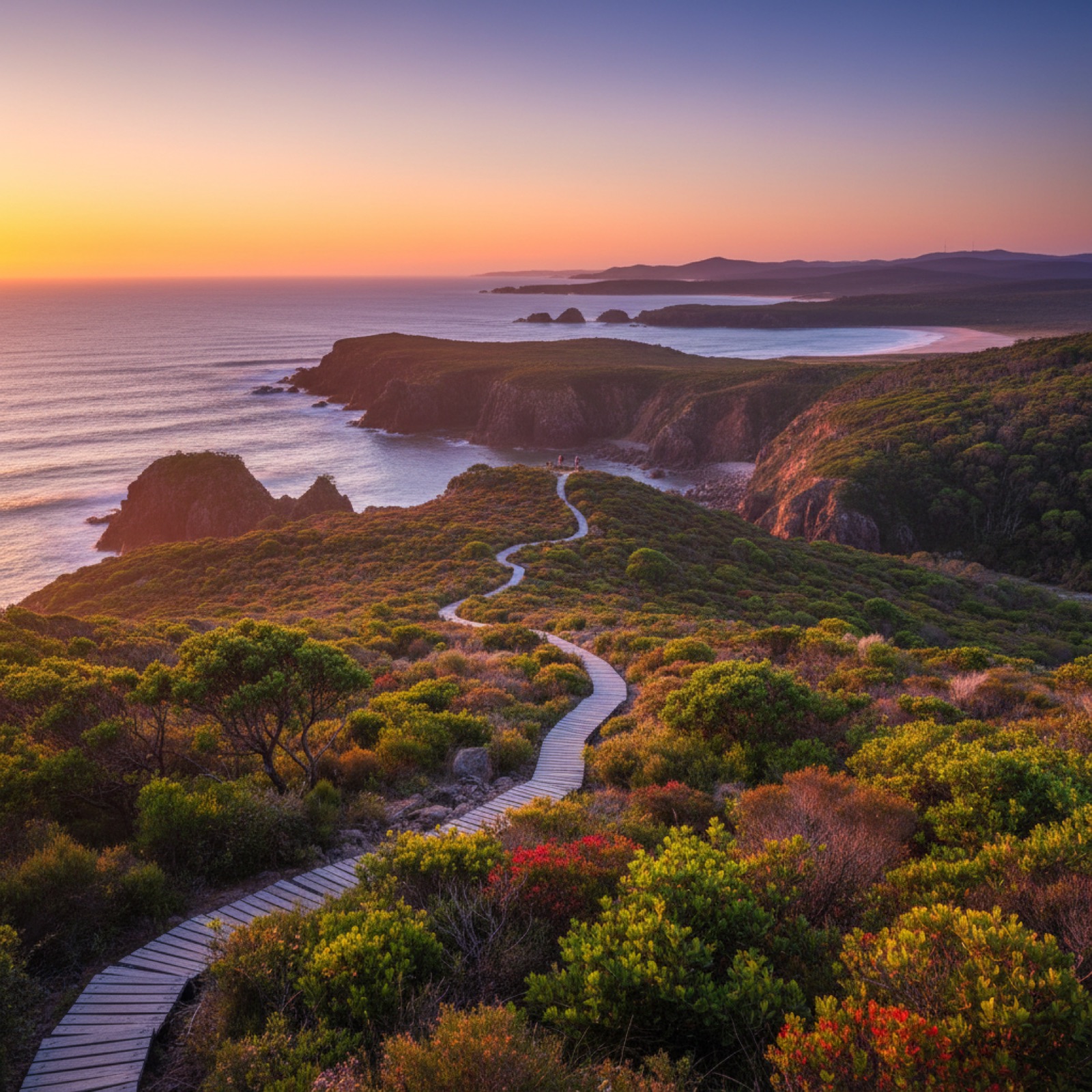
In this guide
- Tasmania South Coast Track: Your Guide to an Epic Wilderness Hike
- Overview: The Tasmania South Coast Track Experience
- Planning Your Tasmania South Coast Track Adventure
- When to Go: Best Time to Hike the South Coast Track
- Getting There and Away: Transport for the South Coast Track
- Essential Gear for the Tasmania South Coast Track
- South Coast Track Day-by-Day Itinerary (Recommended 7-9 Days)
- Food, Water, and Resupply Strategies
- Navigating the Tasmania South Coast Track : Challenges and Safety
- Budget Breakdown: How Much Does the South Coast Track Cost?
- Pro Tips from a Seasoned Hiker
- Common Mistakes to Avoid on the South Coast Track
- Conclusion: Your Epic Tasmania South Coast Track Adventure
This guide is part of our Tasmania Travel Guide — start there for the island-wide overview, itineraries and costs.
Tasmania South Coast Track: Your Guide to an Epic Wilderness Hike
Few trails leave such an indelible mark as the Tasmania South Coast Track. This isn't just a walk in the park; it's a raw, untamed odyssey through one of Australia’s last great wildernesses, where the sheer scale of the landscape hits like a physical force: towering cliffs, ancient rainforests, and beaches that stretch to infinity. It is challenging, exhilarating, and utterly unforgettable. If you're planning on tackling the Tasmania South Coast Track in 2025, this guide is your essential companion for preparing for one of the world's most incredible multi-day hiking expeditions.
Overview: The Tasmania South Coast Track Experience
The Tasmania South Coast Track is not just a trail; it's an immersion into pure, untouched wilderness. Located within the remote South West National Park, this approximately 85-kilometre (53-mile) walk takes you from Melaleuca to Cockle Creek, or vice-versa. It’s an epic journey through wildly diverse landscapes: pristine beaches, towering rainforests, exposed clifftops, and notorious mud bogs that will test your resolve. This isn't a manicured path; it's raw, rugged, and requires serious preparation and commitment – a genuine wilderness experience far removed from the hustle and bustle.
The track’s remoteness means you'll encounter very few people, especially during off-peak times. Expect to see abundant wildlife, from pademelons and wallabies to various bird species. Despite its challenges, the rewards are immense: unparalleled natural beauty, a profound sense of accomplishment, and an unforgettable connection with nature. Remember, while it shares a region with the Port Davey Track, they are distinct hikes, each with its own unique character. This guide specifically focuses on helping you conquer the Tasmania South Coast Track.
Why Hike the Tasmania South Coast Track?
For many, the appeal lies in its extraordinary isolation and the sheer variety of terrain. You’ll ford rivers, climb over rugged passes like the Ironbound Range, and stroll along deserted beaches. It’s a true test of self-reliance and an opportunity to disconnect from technology and reconnect with a primal sense of adventure. The views from the Ironbound Range are breathtaking, offering panoramic vistas of the surrounding Tasmanian wilderness. Each step is a step deeper into a pristine world.
Planning Your Tasmania South Coast Track Adventure
Proper planning is not just recommended for the Tasmania South Coast Track; it's absolutely crucial for your safety and enjoyment. This isn't a spontaneous day hike. Think months, not weeks, ahead, and plan every detail, from gear lists to potential emergency scenarios. It pays off.
Essential Permits and Bookings
To hike the Tasmania South Coast Track, you don't need a specific track permit, but you MUST have a Tasmania Parks Pass. This pass covers entry to all national parks in Tasmania. The best choice is the `Holiday Pass`, which is valid for up to 2 months and costs `AUD $98.35 (approx. USD $64)` per vehicle (up to 8 people) or `AUD $49.20 (approx. USD $32)` per person. You can purchase these online or at park visitor centers.
The biggest booking consideration will be your transport to and from Melaleuca. This typically involves a scenic flight, which is detailed below. These flights need to be booked well in advance, especially for peak season (December-March). Aim to book at least 3-4 months out.
Physical and Mental Preparation
This is a demanding trek. You'll be carrying a heavy pack (18-25kg or 40-55 lbs) over challenging terrain for 7-10 days. Physical training is essential. A good routine involves:
- Daily long walks: 1-2 hours with a weighted pack (starting at 10kg and gradually increasing).
- Weekend hikes: 4-6 hours over varied terrain, including hills.
- Strength training: Focus on legs, core, and shoulders.
- Cardio: Running or cycling to improve endurance.
But it's not just physical. The mental aspect of the Tasmania South Coast Track is equally challenging. You’ll face isolation, potentially bad weather, and moments of discomfort. Develop mental resilience. Practice positive self-talk and prepare for navigating tricky sections. A sudden torrential downpour or a companion's sprained ankle can test your mental fortitude more than anything else.
Navigation and Safety for the South Coast Track Tasmania
The trail is marked with orange arrows, but these can be sparse in some areas or obscured by vegetation. Do NOT rely solely on track markers. A paper map and compass are essential, and you should know how to use them. Always carry:
- The Tasmap South Coast Walk Map and Notes
- A good quality compass
- A GPS device (e.g., Garmin InReach/Zoleo) or a smartphone with offline maps (e.g., AllTrails, Gaia GPS, with downloaded GPX files) and a robust power bank.
Emergency communication is critical. Mobile phone reception is practically non-existent on the Tasmania South Coast Track. A Personal Locator Beacon (PLB) or satellite messenger (like a Garmin inReach Mini) is mandatory for safety. You need to be prepared for self-rescue or to wait for assistance in remote conditions. Always leave your itinerary with a trusted contact and the park rangers.
When to Go: Best Time to Hike the South Coast Track
Choosing the right time to hike the Tasmania South Coast Track can significantly impact your experience. While it can be hiked year-round by experienced trekkers, the most favorable conditions are during the warmer months.
Peak Season: December - March
This is generally considered the best time to hike South Coast Track. You'll experience:
- Warmer temperatures: Average highs of `18-25°C (64-77°F)`, though evenings can still be cool.
- Longer daylight hours: More time for hiking and enjoying the scenery.
- Reduced rainfall: While rain is always a possibility in Tasmania, these months statistically see less.
Downsides: The track can be busier, and flights to Melaleuca book out fast. Even in February, when the weather is generally good, days of persistent rain are still possible, because Tasmanian weather is always unpredictable.
Shoulder Seasons: April - May and October - November
These months offer a good compromise. You’ll find:
- Fewer crowds: A more solitary wilderness experience.
- Challenging but rewarding conditions: Cooler temperatures, higher chance of mud, and more unpredictable weather.
- Beautiful autumn/spring colours: Especially in April/May as the fagus turns golden.
Downsides: Shorter daylight hours, more mud, and potentially colder evenings. Be prepared for anything. November can be a mixed bag, with glorious sunshine one day and knee-deep mud and driving rain the next.
Winter: June - September
Only for the highly experienced and extremely well-prepared. Expect:
- Very cold temperatures: Often below freezing, especially at higher altitudes.
- Heavy rainfall and strong winds: Making river crossings dangerous and the track extremely muddy.
- Shortest daylight hours: Limiting hiking time significantly.
- Snow: Possible on the Ironbound Range.
It's best to avoid tackling the Tasmania South Coast Track in winter unless you are an expert in alpine and wilderness survival and have specific experience with extreme cold and wet conditions. The risks far outweigh the rewards for most.
Getting There and Away: Transport for the South Coast Track
The logistics of accessing the Tasmania South Coast Track are unique and require careful planning. The trail is generally hiked in one direction: starting at Melaleuca and finishing at Cockle Creek. This is because flying into Melaleuca is easier than arranging a pick-up, and Cockle Creek is the southernmost point in Australia accessible by road.
Flying into Melaleuca
Melaleuca is extremely remote and can only be accessed by light aircraft or boat. For hikers, a scenic flight is the most common and often breathtaking option. The views of the rugged coastline and pristine wilderness from above are simply stunning, a perfect start to any Tasmanian wilderness adventure.
- Airlines: The primary operator is Par Avion Wilderness Tours.
- Departure Point: Cambridge Aerodrome, Hobart (near Hobart Airport).
- Flight Time: Approximately 45 minutes.
- Cost: Par Avion's bushwalker fare starts from `AUD $375 (approx. USD $245)` per person one way (2+ passengers). Return flights are also available if you're doing a day trip, but for hikers, it's one way. Always confirm baggage weight limits with the airline, as they are strict due to the small aircraft.
- Recommendation: Book 3-6 months in advance, especially for peak season (December-March). Confirm your booking closer to the date, as flights are weather-dependent.
Getting from Cockle Creek
Once you finish the Tasmania South Coast Track at Cockle Creek, you’ll need road transport back to Hobart. There is no regular year-round public bus, but during the peak summer season several bushwalker bus services run between Hobart and Cockle Creek (bookings essential).
- Shuttle Services: Several private operators offer pre-booked shuttle services.
- Tasmanian Wilderness Experiences and Evans Coaches (seasonal bushwalker services named by Parks Tasmania)
- Tassielink Coaches (check for specific charters, not regular public routes to Cockle Creek)
- Private taxi or ride-share (very expensive due to distance/remoteness)
- Cost: A private shuttle can cost anywhere from `AUD $250 - $400 (approx. USD $165 - $265)` for a shared service, depending on the number of people and operator. Booking well in advance is essential. Try linking up with other hikers finishing at the same time to share the cost.
- Journey Time: Approximately 2.5 - 3 hours back to Hobart.
- Recommendation: Book your shuttle before starting your hike. Have a backup plan in case of delays on the track.
Car Relocation Option
Some companies offer car relocation services where they drive your vehicle from Hobart to Cockle Creek for your arrival. This can be a convenient option if you have your own car. Costs can vary but expect similar pricing to a private shuttle service.
Essential Gear for the Tasmania South Coast Track
The right gear can make or break your Tasmania South Coast Track experience. The key is lightweight, durable, and suitable for all weather conditions. Remember, you carry everything you bring, so every gram counts. This is a tried-and-tested list for hiking Tasmania South Coast Track:
Backpack and Shelter
- Backpack: 65-80 litre capacity. Waterproof cover essential, or use a pack liner. My trusty Osprey Aether 70L usually does the trick.
- Tent: A robust, three-season (or four-season) free-standing tent capable of withstanding strong winds and heavy rain. Ensure it’s lightweight (under 2kg for a 2-person). The MSR Hubba Hubba NX is a popular choice.
- Sleeping Bag: Rated for at least -5°C (23°F), even in summer, as nights can be cold. Synthetic is a good option if you expect a lot of dampness.
- Sleeping Mat: Insulated and comfortable. The Thermarest NeoAir XLite is a good option.
Clothing (Layered System)
Think layers to adapt to rapidly changing conditions, a fundamental principle when hiking Tasmania South Coast Track.
- Base Layer: 2-3 sets of merino wool or synthetic wicking tops and bottoms.
- Mid-Layers: Fleece jacket or lightweight down jacket.
- Outer Shell: High-quality waterproof and windproof jacket (Gore-Tex or similar). This is NON-NEGOTIABLE.
- Waterproof Trousers: Essential for mud and rain.
- Hiking Trousers/Shorts: Quick-drying. One pair of convertible pants is usually enough.
- Socks: 3-4 pairs of merino wool hiking socks.
- Hat: Warm beanie and a wide-brimmed sun hat.
- Gloves: Waterproof and warm.
- Gaiters: Knee-high gaiters are absolutely essential for dealing with mud, scrub, and leeches. Don't start the Tasmania South Coast Track without them.
Footwear
- Hiking Boots: Sturdy, waterproof, well broken-in hiking boots with good ankle support. The Salomon Quest 4D GTX is a reliable choice.
- Camp Shoes: Lightweight sandals or crocs for river crossings and around camp, allowing your boots to dry.
Navigation and Safety Gear
- Maps: Tasmap South Coast Walk Map and Notes – essential!
- Compass: And know how to use it.
- GPS Device/App: With offline maps and GPX tracks.
- PLB/Satellite Messenger: MANDATORY for emergency communication.
- First Aid Kit: Comprehensive, including blister treatments, pain relief, antiseptic, bandages, personal medications.
- Emergency Whistle: For signaling.
- Repair Kit: Duct tape, zip ties, needle, thread for gear repairs.
- Headlamp/Torch: With spare batteries.
- Sunscreen and Insect Repellent: Crucial.
Cooking and Food
- Stove: Lightweight, reliable hiking stove (e.g., MSR PocketRocket, Jetboil) with enough fuel for your trip.
- Cooking Pot/Utensils: Lightweight and compact.
- Water Bottles/Reservoir: 2-3 litre capacity.
- Water Filter/Purification Tablets: Essential, as not all water sources are pristine. A Sawyer Squeeze filter works well.
- Food: Dehydrated meals, high-energy snacks, nuts, dried fruit. Plan 1.5-2x the calories you think you'll need. (More on this later).
- Rubbish Bags: Pack it in, pack it out – every single bit!
Miscellaneous
- Trekking Poles: Absolutely invaluable for stability, especially on muddy sections and river crossings. The Tasmania South Coast Track is where they truly shine.
- Dry Bags: Multiple sizes to keep sleeping bag, electronics, and spare clothes dry.
- Camera: Waterproof (or with a dry bag) to capture the incredible views.
- Power Bank: For charging phone/GPS.
- Toiletries: Biodegradable soap, toothbrush, small towel.
South Coast Track Day-by-Day Itinerary (Recommended 7-9 Days)
This is a typical itinerary, but remember, the Tasmania South Coast Track dictates your pace. Weather and mud conditions can severely impact your daily distances. A planned 7-day trip can stretch into 9 due to unexpected downpours and swollen rivers. Be flexible!
Day 0: Arrive Hobart, Final Prep
Arrive in Hobart, collect any last-minute gear, and double-check your food supplies. Stay at a hotel or hostel like the Hobart Central YHA Hostel (prices from `AUD $35/night approx. USD $23`). Have a hearty meal and get a good night's sleep. Confirm your Par Avion flight for tomorrow.
Day 1: Melaleuca to Cox Bight (13.4 km, 3.5-4.5 hours)
Highlights: Scenic flight into the wilderness, first steps on the Tasmania South Coast Track, stunning beach camping.
Your adventure begins with a breathtaking flight to Melaleuca. From the airstrip, you’ll walk through relatively flat, sometimes boggy, button grass plains, past the famous Deny King's hut (worth a quick look for its historical significance) before reaching the magnificent Cox Bight. You'll be camping right on the sand – an unforgettable experience.
Camping: Designated campsite with basic pit toilet behind the dunes.
Day 2: Cox Bight to Louisa River (17 km, 6-8 hours)
Highlights: Beach walking at Cox Bight, buttongrass plains and forested hills.
The day starts on the beach at Cox Bight (some walkers camp 1.4 km further on at Point Eric) before turning inland across buttongrass plains and forested hills. There are many creek crossings, so take care, especially after heavy rain. The Louisa River crossing can be deep; be prepared to wade or wait for levels to drop.
Camping: Campsite near the Louisa River.
Day 3: Louisa River to Little Deadmans Bay (13 km, 7-10 hours)
Highlights: The infamous Ironbound Range ascent and descent.
This is one of the most challenging days on the Tasmania South Coast Track. You'll ascend about `900 metres (2,950 feet)` onto the Ironbound Range, then traverse the exposed top, where there are good views in fine weather but rain, wind and even snow at other times. A long, steep descent through rainforest, with slippery tree roots, leads to the campsite at Little Deadmans Bay. This is where your trekking poles will be your best friend.
Camping: Campsite at Little Deadmans Bay.
Day 4: Little Deadmans Bay to Prion Beach (9 km, 3-4 hours plus the boat crossing)
Highlights: Prion Beach and the rowing-boat crossing of New River Lagoon.
A respite from the hills, though not the mud: buttongrass, bush and the spectacular stretch of Prion Beach. Walkers row across the marked crossing at New River Lagoon, making the crossing three times so that a boat is left on each side for the next group. Allow an extra hour for this.
Camping: Prion Beach campsite.
Day 5: Prion Beach to Granite Beach (12 km, 5-6.5 hours)
Highlights: Rocky coastline, with an optional stop at Osmiridium Beach.
This stretch includes short climbs, clambering and rock hopping. Many walkers camp at Osmiridium Beach, a short detour from the main track. At Granite Beach, careful footing is needed on the mix of sand and large stones; the campsite is at the far end of the beach.
Camping: Granite Beach campsite.
Day 6: Granite Beach to South Cape Rivulet (9 km, 7-10 hours)
Highlights: Crossing the South Cape Range.
Reputedly the hardest day of the track: a long ascent through forest over the South Cape Range, often boggy and full of tree roots. The campsite is tucked in at the end of South Cape Bay.
Camping: South Cape Rivulet campsite.
Day 7: South Cape Rivulet to Cockle Creek (11 km, 3.5-4.5 hours)
Highlights: The finish line! Lion Rock and final ocean views.
The final leg involves beach walking and mud. After crossing the long headland you descend to the last beach, with Lion Rock jutting into the sea, then climb a set of stairs and head inland across the buttongrass plains of Blowhole Valley to Cockle Creek. Remember to sign out of the walker logbook. Your pre-arranged transport will meet you here.
Camping: Campgrounds are available at Cockle Creek.
Alternative 9-Day Itinerary (More Relaxed Pace)
If you prefer a more relaxed pace or anticipate challenging conditions, consider extending your hike:
- Day 1: Melaleuca to Point Eric, Cox Bight (approx. 15km)
- Day 2: Point Eric to Louisa River (approx. 16km)
- Day 3: Louisa River to Little Deadmans Bay (approx. 13km) - over the Ironbound Range.
- Day 4: Rest day at Little Deadmans Bay, or weather buffer
- Day 5: Little Deadmans Bay to Prion Beach, including the New River Lagoon boat crossing (approx. 9km)
- Day 6: Prion Beach to Osmiridium Beach
- Day 7: Osmiridium Beach to Granite Beach
- Day 8: Granite Beach to South Cape Rivulet (approx. 9km) - over the South Cape Range.
- Day 9: South Cape Rivulet to Cockle Creek (approx. 11km)
This longer itinerary allows for shorter hiking days, more time for photography, and provides a buffer for bad weather or particularly boggy sections, making the Tasmania South Coast Track a bit more manageable.
Food, Water, and Resupply Strategies
There are no resupply points on the Tasmania South Coast Track. You must carry all your food for the entire duration. This impacts your pack weight significantly. On average, aim for 700-800 grams (1.5-1.7 lbs) of food per person per day.
Food Planning
- Breakfast: Porridge with dried fruit and nuts, instant coffee.
- Lunch: Wraps with salami/cheese (if you can keep it fresh), high-energy bars, jerky, peanut butter.
- Dinner: Dehydrated meals (Backpacker's Pantry, Outdoor Gourmet, or homemade), instant noodles, couscous with dried vegetables.
- Snacks: Trail mix, chocolate, energy gels, muesli bars.
- Emergency Rations: Always carry an extra day's worth of food.
Pre-pack your meals into daily bags to stay organized and easily manage consumption. Don’t forget a little treat – a squares of chocolate or some instant custard can be a huge morale booster on a tough day on the South Coast Track Tasmania.
Water Sources
Water is generally abundant on the Tasmania South Coast Track from creeks and rivers, but it needs to be treated. Never drink untreated water. My preferred method is a Sawyer Squeeze filter, as it's lightweight and effective. Chemical tablets or a UV purifier are also viable options. Always carry at least 2 litres of water capacity, and fill up whenever you have the opportunity, especially before dry sections or long climbs like the Ironbound Range. Some campsites have rainwater tanks, but these should not be relied upon as they can be empty or contaminated.
Navigating the Tasmania South Coast Track: Challenges and Safety
This is not a walk for the faint of heart. The Tasmania South Coast Track presents a unique set of challenges that demand respect and thorough preparation. Never underestimate the Tasmanian wilderness.
The Mud
Ah, the mud! It’s legendary on the Tasmania South Coast Track. Expect it. Embrace it. It can be knee-deep, sometimes even waist-deep, requiring careful foot placement or simply wading through. This is why gaiters are non-negotiable. Walking poles help immensely for balance and testing depth. Some sections feel like a chocolate milkshake factory; progress is slow, so it helps to laugh your way through.
River Crossings
Several significant river crossings – particularly at Cox Bight, Louisa River, and sometimes Granite Beach and New River Lagoon – can be dangerous after heavy rain. Always exercise extreme caution:
- Assess: Check depth and current. If in doubt, wait.
- Unpack: Unclip your pack straps in case you fall.
- Poles: Use trekking poles for stability.
- Teamwork: If with others, cross together, linking arms or using the 'tripod' method.
- Never cross alone if a river is swollen. Be prepared to wait for hours or even a full day for water levels to drop.
Weather Extremes
Tasmania’s weather is notoriously fickle. You can experience four seasons in one day. Be prepared for:
- Strong winds: Especially on exposed coastal sections.
- Heavy rain: Can last for days, turning the track into a quagmire.
- Cold temperatures: Even in summer.
- Sunburn: Direct sun can be intense.
Always pack for the worst-case scenario. My advice: never trust a clear sky for long.
Wildlife Encounters
You’re in their home! You’re likely to see wallabies, pademelons, various birdlife (wedge-tailed eagles if you're lucky!), and potentially snakes (copperheads, tiger snakes, white-lipped snakes). Respect their space, keep distances, and never feed them. Snakes are generally shy and will move away if they hear you coming. Make noise as you walk, especially in dense scrub.
Marine Hazards
When walking on beaches, be aware of king tides and rogue waves, especially on exposed sections. Never underestimate the power of the ocean. Also, keep an eye out for washed-up marine debris, including sharp objects.
Leaving No Trace on the South West National Park
This wilderness is precious. Adhere strictly to Leave No Trace principles:
- Pack out everything you pack in, including ALL food scraps.
- Stay on marked trails to avoid erosion.
- Camp only in designated areas.
- Bury human waste at least 20cm deep and 100m from water sources and campsites.
- Respect wildlife.
Your actions directly impact the preservation of this incredible slice of the South West National Park. Aim to leave the place better than you found it; nowhere is that more important than on the Tasmania South Coast Track.
Budget Breakdown: How Much Does the South Coast Track Cost?
The Tasmania South Coast Track is not a cheap hike, primarily due to the remote access. Here’s a realistic breakdown of costs for a 7-day trip (prices are approximate for 2025 and subject to change):
Key Costs (Per Person)
| Item | Estimated Cost (AUD) | Estimated Cost (USD) | Notes |
|---|---|---|---|
| Return Flights to Hobart | $300 - $600 | $197 - $395 | From major Australian cities. Varies greatly. |
| Tasmania Parks Pass | $49.20 | $32 | Holiday Pass (per person). |
| Flight to Melaleuca (one-way) | From $375 | From $245 | Par Avion, book well in advance. |
| Shuttle from Cockle Creek to Hobart | $150 - $250 | $98 - $165 | Varies by group size & operator (shared cost is cheaper). |
| Food (7-9 days) | $200 - $350 | $130 - $230 | Dehydrated meals & high-energy snacks. |
| Gear (purchase/hire) | Variable | Variable | Significant initial outlay if buying; consider hiring big items. |
| PLB/Satellite Messenger Hire | $50 - $80 | $33 - $53 | Optional, but highly recommended if you don't own one. |
| Accommodation (pre/post hike) | $100 - $300 | $65 - $197 | 1-2 nights in Hobart. |
| Contingency (10-15%) | $100 - $200 | $65 - $130 | Always have spare cash for unexpected costs. |
| TOTAL ESTIMATED COST (Min-Max) | AUD $1600 - $2500+ | USD $1050 - $1640+ | Excluding major gear purchases. |
As you can see, the transport costs are the most significant fixed expense for the Tasmania South Coast Track. Budgeting for quality gear, even if hiring, is also essential. Don't skimp on safety!
Pro Tips from a Seasoned Hiker
On challenging hikes, especially on tracks like the Tasmania South Coast Track, a few things can make a huge difference.
- Pack Light, But Pack Right: Every gram counts. Ditch anything you don’t absolutely need. But prioritize safety items and sufficient warm/waterproof clothing over saving a few grams.
- Waterproof Everything: Not just your pack cover. Use dry bags inside your pack for your sleeping bag, electronics, and all spare clothes. Assume everything will get wet at some point.
- Embrace the Mud: Mentally accept that you will get muddy. Trying hard to avoid every bog will exhaust you and slow you down. Step through it strategically.
- Carry Enough Fuel: Don't underestimate how much fuel you'll need for cooking, especially if you're stuck in camp for a day due to weather. A large canister plus a small backup is a sensible amount.
- A Second Pair of Hands (Trekking Poles): As mentioned, these are invaluable for river crossings, navigating slippery roots, and providing stability in mud.
- Comfort Food & Morale Boosters: A small bar of chocolate or a packet of instant soup for dinner can make a terrible day feel much better. Don't forget these little luxuries.
- Go with a Buddy: For a track as remote and challenging as the Tasmania South Coast Track, having at least one companion is a wise safety measure.
- Practice Your River Crossings: If you can, practice crossing strong-flowing water with your pack on before your trip.
- Know Your Body: Listen to your body. Rest when needed. Don't push through an injury that could worsen and jeopardize your trip.
Common Mistakes to Avoid on the South Coast Track
Learning from others' missteps can save you a lot of grief on a demanding trek like the Tasmania South Coast Track.
- Underestimating the Terrain: The distance isn't massive, but the conditions are incredibly challenging. It's not a fast track. Allow ample time.
- Insufficient Waterproofing: Thinking a pack cover alone is enough will lead to misery. Your sleeping bag will get wet without proper dry bags inside your pack.
- Poor Footwear Choices: Wearing new, untested boots or inappropriate trainers will lead to blisters and potentially a ruined trip. Ensure your boots are waterproof and broken-in.
- Not Carrying a PLB/Satellite Messenger: This is a non-negotiable safety item. Don’t rely on others.
- Ignoring Weather Forecasts: While local weather is unpredictable, general trends can guide your packing and daily plans. Check the forecast for southwest Tasmania before you depart.
- Overpacking: Every extra kilo feels like ten after a few days. Be ruthless when packing.
- Lack of Physical Preparation: As discussed, this isn't a stroll. Get fit!
- Not Checking Tide Times: River crossings can be impassable or significantly more dangerous at high tide. Do your research.
Conclusion: Your Epic Tasmania South Coast Track Adventure
Hiking the Tasmania South Coast Track is more than just a physical challenge; it's a journey of self-discovery, resilience, and awe-inspiring beauty. From the moment you fly into Melaleuca until you reach Cockle Creek, you'll be constantly pushed, tested, and ultimately rewarded with experiences that will stay with you long after the mud has washed off your boots. The solitude of the Tasmanian wilderness adventure, the raw power of the Southern Ocean, and the feeling of conquering one of Australia's most formidable trails are truly transformative.
Remember the mantra: prepare meticulously, pack wisely, and embrace the wild. Treat the South Coast Track Tasmania with respect, and it will give you memories for a lifetime. Are you ready to add your own chapter to the legend of this incredible hike in 2025?
More Tasmania guides
Tasmania Travel Guide: Plan the Perfect Trip
Getting to and around Tasmania, when to go, top sights, 5-day to 2-week itineraries, where to stay, food and wine, road-trip advice and…

Launceston Travel Guide: Things to Do in Two Days
How to spend two days in Launceston: Cataract Gorge, the Tamar Valley cellar doors, City Park and the best cafes and pubs in town.

Hobart Travel Guide: Where to Eat, Stay and Explore
Three days in Hobart done properly: Salamanca Market, MONA, kunanyi/Mount Wellington, the best places to eat and where to base yourself.