Things to Do in Hungary Beyond Budapest
Hungary outside Budapest: the Danube Bend, Lake Balaton, Eger, Tokaj, Pécs, Sopron and Győr, villages, the Great Plain, spa towns and wine regions.
In this guide
- Quick Facts: Hungary Beyond Budapest
- The Danube Bend: River Views, Castles, and Artists
- Lake Balaton and the West: The Hungarian Sea and Thermal Lakes
- Eger and Northern Hungary: Castles, Ottoman Minarets, and Red Wine
- Tokaj Wine Region: The King of Wines and Sweet Aszú
- Pécs and Southern Hungary: Early Christian Relics and Zsolnay Ceramics
- Historic Cities of the West: Sopron and Győr
- Traditional Villages and Natural Wonders: Hollókő, Hortobágy, and Aggtelek
- Debrecen and the Great Plain
- Hungary's Thermal Spa Culture Outside Budapest
- Hungarian Wine Regions Overview
- How to Reach Regional Hungary by Train or Bus
- Practical Tips for Travelling Hungary's Regions
- Discovering the Soul of Hungary
This guide is part of our Hungary Travel Guide: Thermal Baths, Wine and the Danube — start there for the overview, when to go and how to get around.
I still recall my first afternoon leaning against a whitewashed brick wall in the Szépasszony-völgy near Eger, a chilled glass of Egri Bikavér balanced on my knee while the crisp autumn air carried the scent of crushed grape skins and woodsmoke. Budapest had dazzled me with its grand boulevards and ruin bars, but stepping onto the countryside railway platform felt like unlocking the true heartbeat of Hungary. Out here, the pace slows down to the tempo of thermal waters bubbling from ancient bedrock, horse-hoof clatter across vast grasslands, and long, lazy lunches under vine-entangled arbours.
Too many travellers treat Hungary as a single-city destination, barely venturing beyond the capital's grand ring roads. Yet within an hour or two by train, the urban concrete gives way to volcanic wine hills, medieval fortresses carved into granite bluffs, and serene freshwater lakes that feel more like inland seas. Leaving the capital behind isn't just an option—it is where the soul of the country reveals itself.
Whether you want to cycle through lavender fields along Lake Balaton, taste world-renowned dessert wines straight from damp tuff-rock cellars, or soak in a natural thermal lake dusted with water lilies, Hungary's regions offer an extraordinary variety of culture, nature, and history. Here is my complete guide to exploring the very best of Hungary beyond Budapest.
Quick Facts: Hungary Beyond Budapest
- Top Destinations: Lake Balaton, Eger, Tokaj, Pécs, Danube Bend, Hortobágy, Aggtelek.
- Transport Hub: Budapest is the central hub; direct trains run from Keleti, Nyugati, and Déli stations to all major regional centres.
- Primary Wine Styles: Full-bodied reds (Eger, Villány), mineral whites (Badacsony, Somló), sweet botrytised wines (Tokaj).
- Landscape Diversity: Volcanic hills, subterranean cave systems, wetlands, endless grassy plains (puszta), and broad river valleys.
- Best Travel Season: Late spring to early autumn for outdoors and wine harvests; spring and autumn offer ideal, uncrowded thermal bath weather.
- Currency: Hungarian Forint (HUF). While cards are widely accepted in cities, carry cash for countryside wine cellars and rural markets.
The Danube Bend: River Views, Castles, and Artists
Just north of Budapest, the Danube River carves a dramatic U-turn through the Visegrád Hills before sweeping south towards the capital. Known locally as the Dunakanyar, the Danube Bend is one of the country's most scenic corridors, dotted with royal strongholds, cobblestone villages, and green riverfront promenades.
Szentendre: The Bohemian Riverside Enclave
A mere half-hour journey from central Budapest brings you to Szentendre, a picturesque town that attracted waves of Serbian and Greek refugees in the 17th century, followed by an influx of painters and sculptors in the early 20th century. The result is a charming labyrinth of pastel-coloured merchant houses, Orthodox church spires, and hidden courtyards.
I love spending a morning wandering down the narrow, cobbled alleys branching off the main square (Fő tér). Pop into the small art galleries, sample marzipan at the local museum dedicated to the confection, and pause for lunch along the tree-shaded Danube embankment. Do not miss the open-air Skanzen museum on the outskirts, where traditional thatched timber homes from across Hungary's regions have been reconstructed with impressive historical detail.
Visegrád: Royal Strongholds and Panoramic Loops
Further upriver lies Visegrád, famous for its dramatically situated High Castle (Fellegvár) perched on a rocky crag high above the river loop. Built in the 13th century after the Mongol invasion, this citadel once housed the Hungarian crown jewels and hosted historic summit meetings between regional kings.
The climb up to the ramparts rewards you with arguably the finest panoramic view in Central Europe. Looking down, the blue ribbon of the Danube curves gracefully around emerald-green hills. Down in the valley, you can explore the ruins of the Renaissance Royal Palace, where King Matthias Corvinus once entertained court guests beside fountains that allegedly ran with wine during banquets.
Esztergom: Hungary's Sacred Heart
At the western end of the Danube Bend sits Esztergom, the nation's original capital and the birthplace of Saint Stephen, Hungary's first king. Dominating the skyline is the colossal Esztergom Basilica, the largest church in the country, its massive green copper dome visible from kilometres away across the river plain.
Inside, the sheer scale of the cathedral is breathtaking, but the real highlight is taking the stairs up to the dome balcony for an extraordinary view spanning across the Danube into Slovakia. You can walk across the historic Mária Valéria Bridge directly into the Slovak town of Štúrovo, looking back for the classic photo postcard view of the towering basilica rising above the riverbanks.
Lake Balaton and the West: The Hungarian Sea and Thermal Lakes
Sprawling over nearly 600 square kilometres, Lake Balaton is Central Europe's largest freshwater lake. Hungarians affectionately refer to it as the "Hungarian Sea", and for generations, its shores have provided the ultimate summer retreat. The northern and southern shores present distinctly different personalities: the south is famed for smooth, shallow beaches and vibrant nightlife, while the north is defined by volcanic vineyards, historic towns, and majestic natural scenery.
Tihany Peninsula: Lavender Fields and Monastic Peace
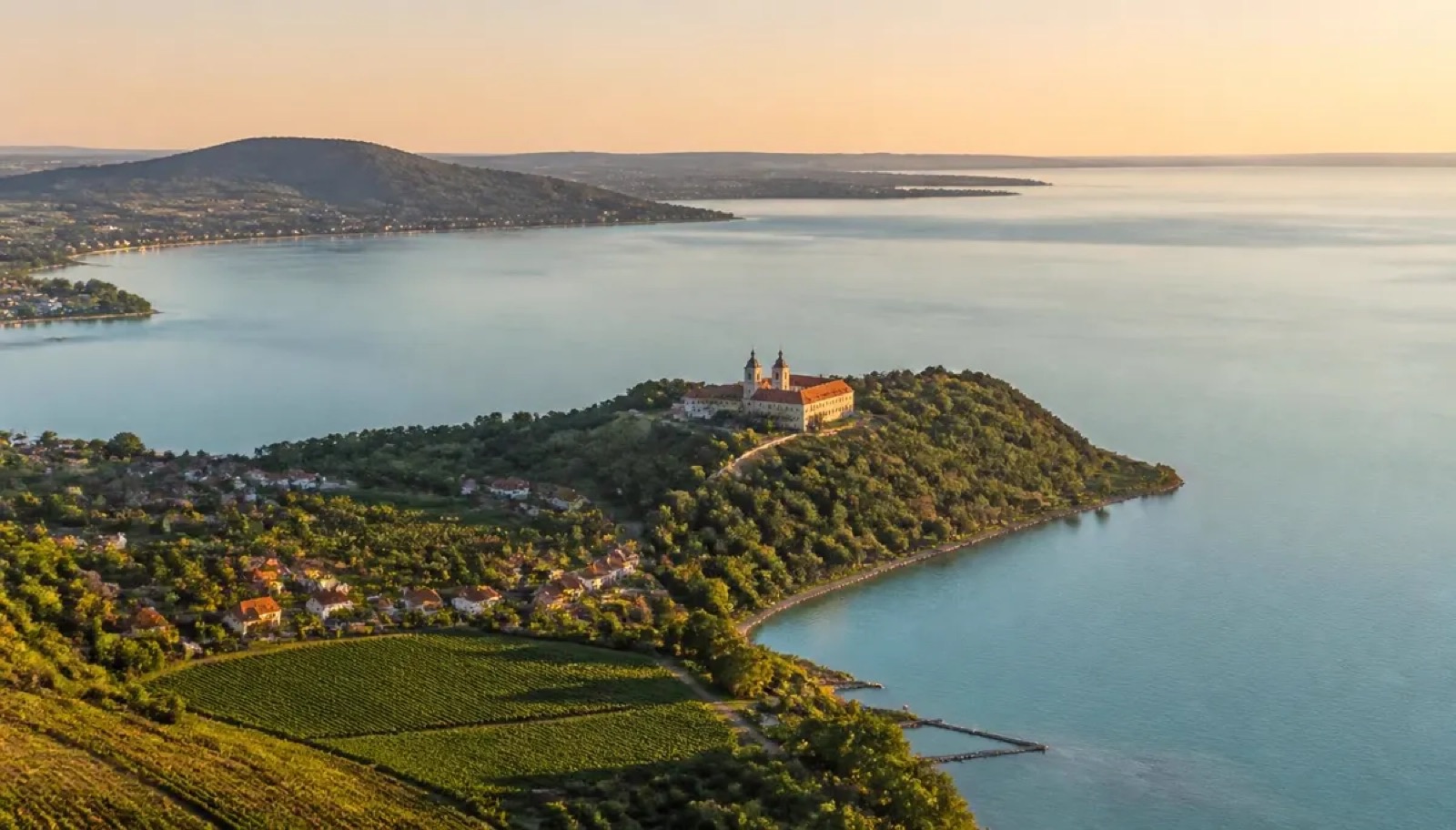
Jutting far out into the lake, the Tihany Peninsula is a protected nature reserve of volcanic origin. Approaching Tihany by ferry or coastal road, the twin towers of the Benedictine Abbey come into view, standing guard on a hilltop above whitewashed thatched cottages.
Founded in 1055, the abbey holds immense historical significance—its founding charter contains the oldest surviving written words in the Hungarian language. Surrounding the village are fields that bloom into a brilliant sea of purple lavender each June, filling the sea breeze with a delicate floral fragrance. Be sure to walk up to the Echo Hill (Visszhang-domb) and sample local lavender-infused gelato while gazing out over the glittering waters below.
Balatonfüred and Siófok: Classic Spa Towns and Beach Life
On the northeastern shore lies Balatonfüred, the lake's oldest spa resort town. Wandering down the iconic Tagore Promenade, shaded by ancient plane trees planted by visiting poets and Nobel laureates, feels like stepping back into the 19th-century Golden Age. Elegant grand villas and neoclassical sanatoriums face a harbour filled with white-sailed yachts.
Directly across the lake on the southern coast lies Siófok, the summer party capital. Here, wide grassy beaches slope gently into warm, shallow waters that are perfect for swimming and paddleboarding. During peak summer, the beachfront promenade buzzes with outdoor bars, music venues, and holidaymakers enjoying fried hake (hekk) and garlicky lángos flatbreads.
Keszthely: Baroque Opulence on the Western Shore
At the far western tip of Lake Balaton sits Keszthely, a quiet university city rich in cultural heritage. The jewel of Keszthely is the magnificent Festetics Palace, a grand French-style Baroque château featuring 101 rooms, manicured formal gardens, and a stunning two-story oak library housing over 80,000 rare volumes.
A stroll through the palace grounds takes you past ornate fountains, coach houses filled with historic carriages, and palm houses. Keszthely offers a refined, relaxed urban counterpoint to the laid-back beach vibe found along the rest of the lake.
Badacsony: Volcanic Terraces and Mineral Whites
Rising abruptly from the northern shore, Badacsony is a flat-topped extinct volcano whose basalt cliffs resemble giant pipe organs. The unique microclimate created by reflecting lake sunlight and heat-retaining volcanic soil produces some of Hungary's finest, most intensely mineral white wines.
You can hike up through steep, terraced vineyards to reach family-run cellar doors overlooking the lake. The flagship grape here is Szürkebarát (Pinot Gris), along with Kéknyelű, an ancient native variety grown almost exclusively on these volcanic slopes. Sipping a crisp glass of Szürkebarát on a wooden terrace while watching the sun set across Lake Balaton is an experience you won't soon forget.
Hévíz: Bathing in a Natural Thermal Wonder
A short bus ride inland from Keszthely brings you to Hévíz, home to the world's largest biologically active, natural thermal lake. Fed by a subterranean spring where warm and cold mineral sources mix deep underground, the entire body of water completely replenishes itself every few days.
Even in the dead of winter, the lake temperature stays delightfully warm, wrapped in a blanket of misty steam while red water lilies float gracefully on the surface. Swimmers lease bright foam pool noodles to float effortlessly in the nutrient-rich, peat-bottomed water, which has drawn visitors seeking healing and relaxation since Roman times.
Eger and Northern Hungary: Castles, Ottoman Minarets, and Red Wine
Heading northeast from Budapest towards the foot of the Bükk Mountains brings you to Eger, one of Hungary's most historical and visually captivating provincial cities. Famous for its heroic resistance against invading Ottoman armies, striking Baroque architecture, and robust red wines, Eger is an essential stop for any traveller.
Eger Castle and Ottoman Heritage
The city revolves around Eger Castle, where in 1552 a small garrison of Hungarian defenders famously held off a massive Ottoman siege force. Walking along the restored stone ramparts offers sweeping views over red-tiled roofs, hidden inner courtyards, and church spires. The museum inside details the legendary battle made famous by Geza Gárdonyi's novel Eclipsed by the Crescent Moon.
The Ottoman era left lasting marks on the city, none more striking than the Eger Minaret. Standing 40 metres tall, it is the northernmost surviving Ottoman minaret in Europe. Brave travellers can climb the narrow, spiral stone staircase inside—consisting of nearly a hundred steep steps—to reach an open-air balcony offering a thrilling bird's-eye vantage point.
Valley of the Beautiful Women (Szépasszony-völgy)
Located just a pleasant twenty-minute walk or short taxi ride south of Eger's centre lies the Szépasszony-völgy, or Valley of the Beautiful Women. This horseshoe-shaped park is ringed by over two hundred historic wine cellars carved directly into soft volcanic tuff rock.
The natural subterranean environment keeps the cellars at a ideal temperature year-round. Winemakers pour generous tastings of local varieties, most notably Egri Bikavér (Bull's Blood), a rich, spicy blended red wine, alongside crisp whites like Egri Csillag (Star of Eger). Sitting at rustic wooden tables outside the cellar entrances with a platter of cured meats, smoked cheeses, and fresh bread as local musicians play violins is pure joy.
Tokaj Wine Region: The King of Wines and Sweet Aszú
Tucked away in northeastern Hungary where the Bodrog and Tisza rivers converge, the Tokaj-Hegyalja region holds the distinction of being the world's first officially demarcated wine region, declared in 1737. This UNESCO World Heritage cultural landscape is synonymous with Tokaji Aszú, a rich dessert wine famously hailed by King Louis XIV of France as "the king of wines, and the wine of kings."
The Magic of Botrytis and Tuff Cellars
The secret behind Tokaj's liquid gold lies in its unique autumn microclimate. Morning mists rising from the rivers combine with long, sunny afternoons to create ideal conditions for Botrytis cinerea, or "noble rot." This beneficial fungus dehydrates grapes on the vine, concentrating sugars, acids, and intense honeyed aromatics.
Hand-picked grape by grape, these shrivelled Aszú berries are crushed into a paste and steeped in base wine. The sweetness of the resulting wine was traditionally measured in puttonyos—wooden baskets used to haul the noble rot grapes. Exploring Tokaj's labyrinthine cellar tunnels, coated in velvet-like black mold (Cladosporium cellare) that regulates moisture, feels like walking through a subterranean wine cathedral.
Exploring Tokaj Town and Modern Dry Whites
The peaceful town of Tokaj serves as the ideal base for exploring the region. Pastel townhouses surround the main square, while historic tasting rooms line the riverbank. Don't assume Tokaj only produces sweet wines—in recent decades, local producers have gained international acclaim for world-class dry white wines made from the native Furmint and Hárslevelű grapes, showcasing striking minerality and vibrant acidity.
Pécs and Southern Hungary: Early Christian Relics and Zsolnay Ceramics
Nestled against the slopes of the Mecsek Mountains near the southern border with Croatia, Pécs enjoys a distinctly sunny, Mediterranean microclimate. Fig trees flourish in sheltered courtyards, pavement cafes spill across stone plazas, and thousands of years of layered history seamlessly blend together.
Early Christian Necropolis and Ottoman Heritage
Pécs boasts extraordinary archaeological treasures, chief among them the UNESCO-listed Early Christian Necropolis dating back to the 4th century Roman city of Sopianae. Visitors can descend into underground burial chambers decorated with remarkably preserved frescoes depicting biblical scenes, Daniel in the lions' den, and delicate floral motifs.
In the heart of the central square (Széchenyi tér) stands the Mosque of Pasha Qasim, a striking 16th-century Ottoman building later converted into a Catholic church. Its massive green dome, horse-shoe arches, and combined Islamic mihrab and Christian altar symbolize the city's complex historical identity.
The Zsolnay Cultural Quarter
Pécs is also world-renowned for Zsolnay ceramics, famous for vibrant iridescent glazes and durable pyrogranite tiles that adorn landmarks across Central Europe. The historic Zsolnay factory grounds have been transformed into a sprawling cultural district.
Walking through the Zsolnay Cultural Quarter, you'll see colourful ceramic roof tiles, tiled fountains, galleries, and museums showcasing exquisite Art Nouveau glassware and porcelain creations. It is one of the most successful urban restoration projects in the country.
Historic Cities of the West: Sopron and Győr
Positioned close to the Austrian border in western Hungary, the cities of Sopron and Győr offer polished historical old towns, grand Baroque architecture, and easy access from Vienna or Budapest.
Sopron: The Most Loyal Town
Sopron's compact, horseshoe-shaped inner town retains its intact medieval layout, framed by ancient city walls and Roman foundations. The city's defining symbol is the Fire Watch Tower (Tűztorony), which combines a 13th-century Gothic base with a magnificent Baroque balcony and turrets. Climbing to the top offers vistas stretching across the rooftop tiles toward the foothills of the Alps.
Sopron earned the nickname "The Most Loyal Town" following a 1921 plebiscite in which residents voted overwhelmingly to remain part of Hungary rather than join Austria. Today, it is also a celebrated wine hub, famous for producing deep, spicy Kékfrankos (Blaufränkisch) red wines.
Győr: The City of Rivers
Situated at the confluence of the Danube, Rába, and Rábca rivers, Győr is Hungary's third-largest city and home to one of the best-preserved Baroque historic centres in Eastern Europe. Pastel-hued merchant mansions feature delicate corner balcony windows, leafy plazas, and outdoor coffee shops.
The heart of the city is Széchenyi Square, anchored by the stunning St. Ignatius of Loyola Church and old monastic buildings. Győr makes an exceptionally easy stopping point along the primary train line between Budapest and Vienna.
Traditional Villages and Natural Wonders: Hollókő, Hortobágy, and Aggtelek
For travellers eager to experience Hungary's folk traditions and wild landscapes, venturing into the rural countryside yields incredible rewards.
Hollókő: Preserved Palóc Heritage
Tucked away in the Cserhát Hills of northern Hungary, Hollókő is a living, working village that was the first village worldwide to be designated a UNESCO World Heritage Site. The old section of the village consists of around sixty timber-framed, whitewashed houses with carved wooden porches, meticulously rebuilt after a fire in the early 20th century.
Hollókő is home to the Palóc people, a distinct regional ethnic group known for their colourful embroidered folk costumes, unique dialect, and rich handicrafts. Visiting during Easter or regional folk festivals allows you to witness traditional dancing, arts, and rituals in an authentic setting, watched over by the stone ruins of a 13th-century hilltop castle.
Hortobágy National Park: Life on the Great Plain
Stretching across eastern Hungary, the Hortobágy is Europe's largest natural grassland (puszta). This expanse of flat prairie land, wind-swept marshes, and sweeping horizons has been grazed by migratory pastoralists for thousands of years, preserving a unique equestrian lifestyle.
The iconic symbol of the park is the Nine-Hole Bridge, a stone structure spanning the wetlands. At the nearby Herdsman Museum and outdoor arenas, you can watch legendary csikós (Hungarian horsemen) demonstrate extraordinary horsemanship, galloping across the plain while standing balanced on the backs of unbridled horses. Look out for indigenous livestock, including long-horned Hungarian Grey cattle, twisted-horn Racka sheep, and vast flocks of migratory birds.
Aggtelek Karst: Underground Cave Systems
Spanning the border between northeastern Hungary and Slovakia, the Aggtelek Karst features more than 700 surveyed caves. The crown jewel of this UNESCO World Heritage site is the Baradla Cave, an immense underground cavern system extending over 25 kilometres.
Guided walking tours follow lit subterranean pathways past towering stalagmites, curtain-like flowstones, and massive rock formations. The acoustics inside the cave's vast "Concert Hall" chamber are so exceptional that classical music concerts are regularly staged deep underground.
Debrecen and the Great Plain
As Hungary's second-largest city, Debrecen serves as the cultural, economic, and educational heart of the eastern Great Plain region. Historically known as the "Calvinist Rome", the city played a pivotal role during the Protestant Reformation and served twice as Hungary's capital during national uprisings.
The central symbol of Debrecen is the imposing Great Reformed Church, a grand neoclassical landmark overlooking Kossuth Square. Climbing the church tower gives you a view over the city's wide boulevards, thermal bath parks, and leafy university district. Debrecen is also famous for its annual Flower Carnival held every August, featuring extravagant floral floats and international dance troupes.
Hungary's Thermal Spa Culture Outside Budapest
While Budapest is famed for its grand historic bathhouses, the countryside is packed with extraordinary, unique thermal springs where locals unwind away from city tourist crowds.
Beyond the warm open waters of Hévíz, several other regional thermal sites warrant a detour:
- Miskolctapolca Cave Bath (Barlangfürdő): Located near Miskolc, this unique bath allows you to float through natural limestone cave passages filled with warm, mineral-rich subterranean water.
- Egerszalók Salt Hill (Szalók Yacht & Thermal): Just minutes from Eger, hot mineral water cascading down a hillside over decades has created striking white travertine salt terraces reminiscent of Pamukkale in Turkey.
- Harkány Thermal Spa: Located south of Pécs, Harkány's sulphur-rich waters have been prized for centuries for treating joint and skin ailments.
- Bükfürdő: Situated in western Hungary near the Austrian border, Bükfürdő features vast indoor and outdoor thermal pools set within peaceful parklands.
Hungarian Wine Regions Overview
Hungary boasts 22 distinct wine regions, offering an extraordinary variety of soil compositions, climates, and native grape varieties. Here is a handy comparison of the primary wine regions outside Budapest:
| Wine Region | Key Grape Varieties | Signature Style | Top Destination Town |
|---|---|---|---|
| Tokaj | Furmint, Hárslevelű, Sárgamuskotály | World-renowned sweet botrytised Aszú & intense mineral dry whites | Tokaj |
| Eger | Kékfrankos, Cabernet Franc, Leányka | Spicy red blends (Egri Bikavér) & fragrant whites (Egri Csillag) | Eger |
| Badacsony | Szürkebarát (Pinot Gris), Kéknyelű, Olaszrizling | Full-bodied, volcanic, mineral-rich whites with high acidity | Badacsony / Balatonfüred |
| Villány | Cabernet Franc, Portugieser, Kékfrankos | Rich, velvet-textured, age-worthy Mediterranean red wines | Villány (near Pécs) |
| Sopron | Kékfrankos, Zweigelt | Crisp, peppery, fresh red wines with cool-climate fruit acidity | Sopron |
How to Reach Regional Hungary by Train or Bus
Navigating Hungary beyond the capital is simple and efficient, thanks to a centralized public transport network operated by national rail provider MÁV and regional bus services.
Train Travel from Budapest
Budapest's three major historic train terminals serve distinct destinations across the country:
- Budapest-Keleti (Eastern Station): Express trains bound for Eger, Tokaj, Miskolc, Győr, Sopron, and international routes to Vienna.
- Budapest-Nyugati (Western Station): Direct lines serving Debrecen, Nyíregyháza, Szeged, and the Great Plain region.
- Budapest-Déli (Southern Station): Frequent suburban and regional express services running along both the northern and southern shores of Lake Balaton and onward to Pécs.
InterCity (IC) trains are fast, comfortable, and reliable. Seat reservations are compulsory on express routes, so booking tickets in advance via the official MÁV mobile app or station ticket windows is recommended.
InterCity Bus Services
Where rail lines don't run directly—such as to smaller towns in the Danube Bend like Visegrád, or rural heritage villages like Hollókő—intercity coach lines provide smooth transit. Long-distance buses typically depart from the main Nepliget or Újpest-Városkapu bus terminals in Budapest. Tickets can be purchased online or directly from the driver upon boarding.
Practical Tips for Travelling Hungary's Regions
Currency and Cash Considerations
While contactless card payments are ubiquitous in Budapest and larger regional hotels, rural wine cellars, family-run guesthouses, and market stalls in smaller villages often prefer or exclusively accept cash in Hungarian Forint (HUF). Always carry some physical currency when heading out into countryside districts.
Language and Local Etiquette
In tourist-heavy areas like Lake Balaton, Eger, and Sopron, English and German are widely spoken, especially by younger staff and hospitality workers. In rural villages, learning a few basic Hungarian phrases—like Jó napot (Good day), Köszönöm (Thank you), and Egészségedre! (Cheers!)—will instantly bring warm smiles from locals.
Seasonal Timing
The best time for countryside exploration runs from May through October. July and August bring vibrant summer crowds to Lake Balaton, while September and October are ideal for visiting wine regions like Eger and Tokaj during the excitement of the annual grape harvest (szüret).
Discovering the Soul of Hungary
While Budapest rightfully captures global travel headlines with its grand architecture and thermal palaces, the true magic of Hungary unfolds out on the open road. It is found in the cool darkness of volcanic wine cellars in Tokaj, the misty steam rising over natural waters in Hévíz, the thunder of horse hooves echoing across the Hortobágy puszta, and long afternoon conversations over home-cooked goulash in quiet provincial squares.
Stepping beyond the capital isn't complicated—it simply requires a train ticket, a curiosity for regional traditions, and a willingness to slow down to the countryside rhythm. Give yourself time to explore Hungary's rich hinterland, and you will discover a side of Central Europe that stays with you long after your journey home.
More Hungary guides
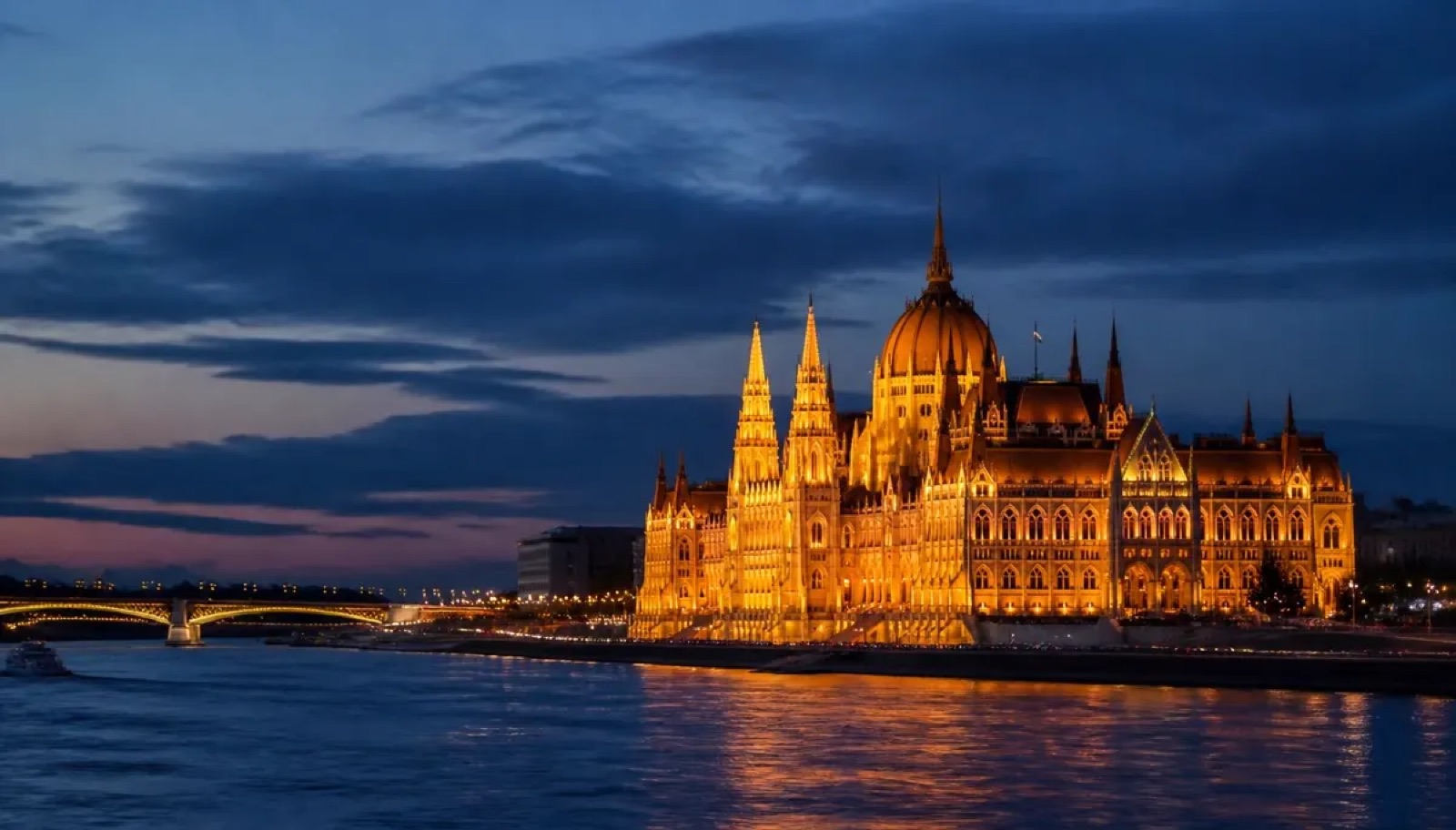
Hungary Travel Guide: Thermal Baths, Wine and the Danube
When to visit, Budapest, thermal baths, Lake Balaton, the Tokaj and Eger wine regions, regional towns, Hungarian food, rail and bus travel…
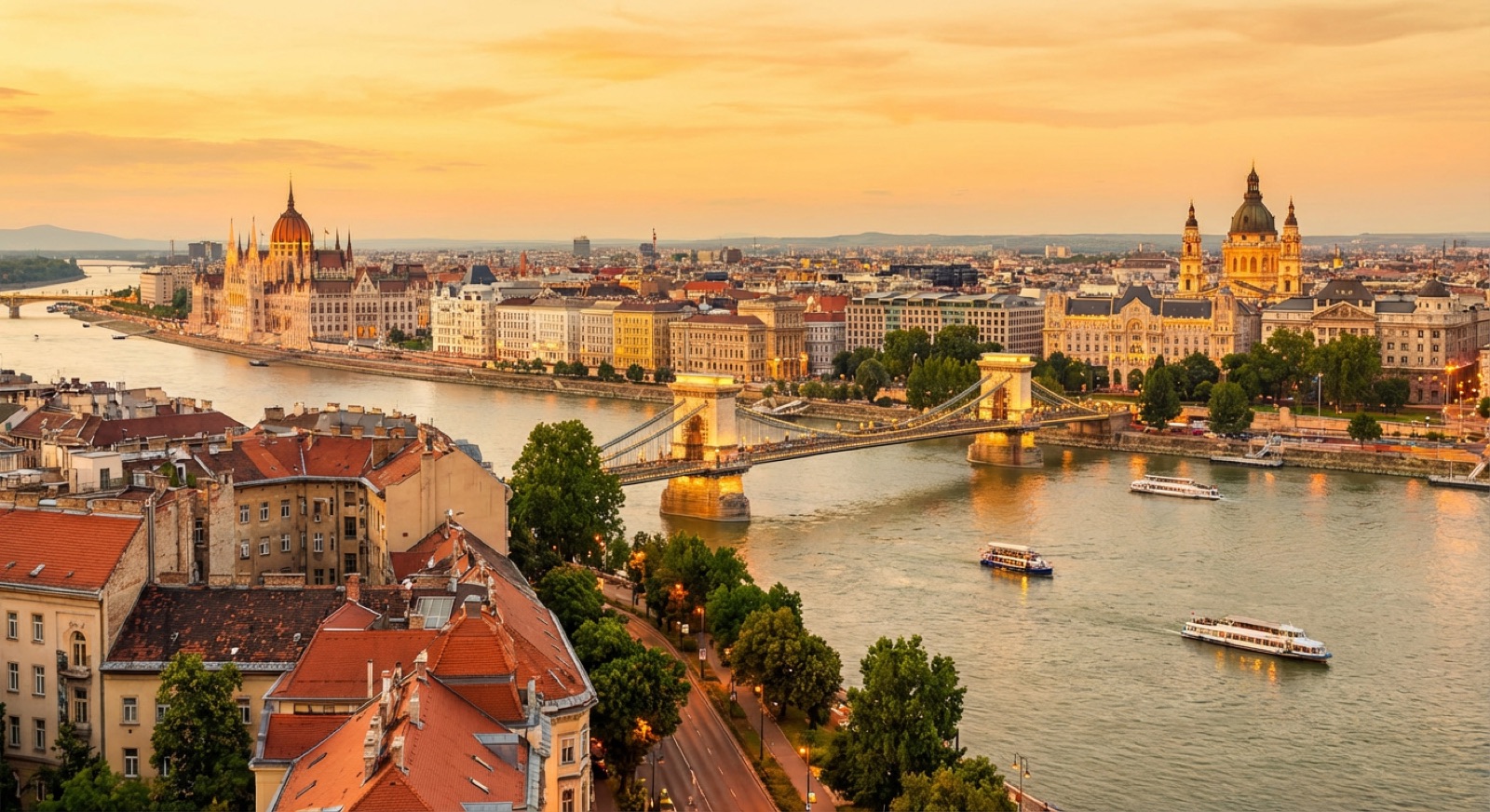
Best Things to Do in Budapest: Baths and Ruin Bars
What to actually do in Budapest — Szechenyi and Gellert baths, the ruin bar scene, Castle Hill, the Parliament and a Danube evening.
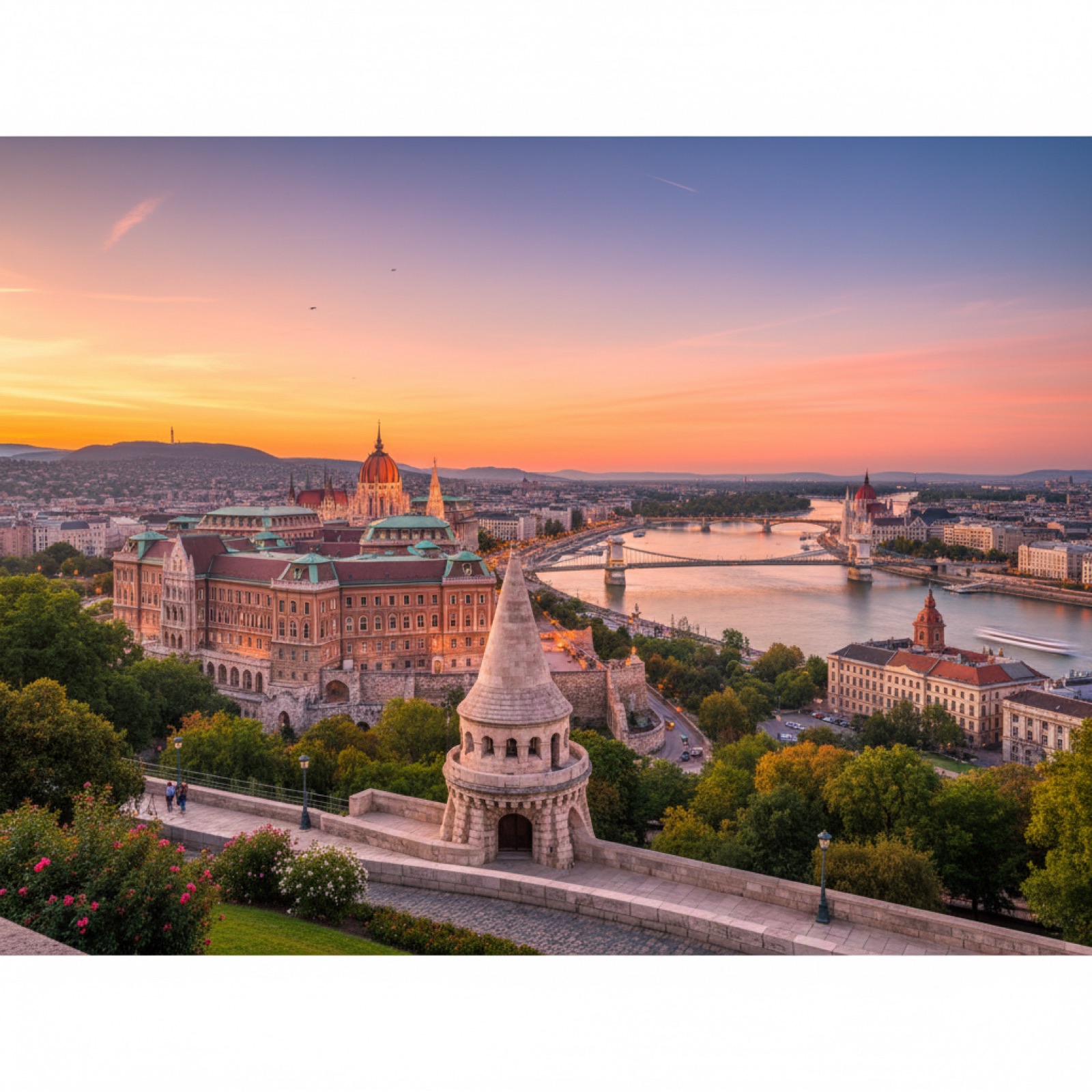
Buda Castle, Budapest: How to Plan Your Visit
A Buda Castle guide covering the hill's history, what's worth seeing inside, tickets, and how to time your visit to this UNESCO site in…