Things to Do in Marrakech: A First-Timer's Guide
The medina and Jemaa el-Fnaa, Marrakech's historic buildings, sights outside the walls, riads versus hotels, day trips, cultural tips and when to go.
In this guide
- Quick Facts for the First-Timer
- The Heartbeat of Marrakech: The Medina and Jemaa el-Fnaa
- Architectural and Historical Marvels
- Beyond the Medina Walls
- Where to Stay: Riads vs. Hotels
- Practicalities and Cultural Insights
- Looking Beyond the City: Day Trips
- When to Visit Marrakech
- Frequently Asked Questions
- Final Thoughts
This guide is part of our Morocco Itinerary: Marrakech, Atlas and Sahara — start there for the overview, when to go and how to get around.
Stepping into the labyrinth of the Marrakech medina feels like stepping into a storybook. The air, thick with the scent of cumin, tanned leather and sweet mint tea, is a character in itself. Just inside the Bab Agnaou gate, the sounds of the city wash over you: the distant clang of a metalworker's hammer, the roar of a motorbike weaving through a crowd, the insistent call of a vendor selling dates. It is overwhelming, chaotic and utterly intoxicating, and even seasoned travellers can feel like novices all over again.
That initial feeling of being wonderfully, completely lost is a rite of passage in Marrakech. You turn a corner expecting a bustling square and find a silent, sun-drenched alleyway painted in dusty rose. You follow the scent of baking bread and stumble upon a hidden courtyard where children are playing. It’s a city that rewards surrender, and a camera becomes an extension of your curiosity, capturing the light filtering through a souk's reed-mat roof or the intricate tilework on a hidden doorway. This guide is a map not just of places, but of feelings and experiences for your own first chapter in the Ochre City.
Quick Facts for the First-Timer
Before you dive headfirst into the exhilarating chaos, here are a few key things to help you get your bearings:
- Language: The official languages are Arabic and Tamazight (Berber). French is very widely spoken, especially in tourism, shops, and food establishments. English is increasingly common in tourist-centric areas, but learning a few Arabic pleasantries (like "As-salamu alaykum" for hello and "Shukran" for thank you) goes a long way.
- Currency: The official currency is the Moroccan Dirham (MAD). You'll find currency exchange offices and ATMs throughout the city, particularly in the new town (Gueliz) and around Jemaa el-Fnaa. Credit cards are often accepted in larger hotels and upmarket restaurants, but cash is essential for the souks and smaller transactions.
- Getting Around: The medina is a pedestrian's world. For longer distances, 'petit taxis' (small taxis) are used for trips within the city. 'Grand taxis' (larger cars, often older models) are used for trips to the suburbs and further afield, including the airport.
- Religion and Culture: Morocco is a predominantly Muslim country. Be mindful and respectful of local traditions and religious practices. This is especially important regarding dress code and behaviour during the holy month of Ramadan.
- Water: It's generally advised to drink bottled water rather than tap water to avoid any stomach upsets.
The Heartbeat of Marrakech: The Medina and Jemaa el-Fnaa
The ancient walled medina is the soul of Marrakech, a UNESCO World Heritage site and a living, breathing museum. It's a dizzying network of narrow alleyways (known as derbs), bustling squares, and hidden courtyards. Everything you've heard about Marrakech—the vibrant souks, the snake charmers, the secret gardens—lives within these ochre-coloured ramparts. To experience it is not to see it from the outside, but to plunge right in.
Jemaa el-Fnaa: The Theatre of Marrakech
All roads in the medina eventually lead to Jemaa el-Fnaa, the city’s vast main square. Its character transforms completely with the passing of the sun. By day, it’s a sprawling open space dotted with fresh orange juice stalls, henna tattoo artists, and the unmistakable sound of the Gnaoua musicians and their hypnotic rhythms. You’ll see snake charmers with their pipes and handlers with monkeys—be aware that taking photos of them will require a payment, and it's a transaction you should be comfortable with before raising your camera.
As dusk settles, the square undergoes a magical metamorphosis. The daytime performers pack up, and in their place, dozens of food stalls are wheeled into position, their lights glowing and smoke billowing into the evening sky. The air fills with the sizzle of grilling meats, bubbling tagines, and fragrant spices. Storytellers gather circles of entranced locals, acrobats perform incredible feats, and the entire square becomes a mesmerising open-air theatre and restaurant. Find a seat at one of the rooftop cafes lining the square to watch the spectacle unfold from above—it’s one of the most iconic views in Morocco.
Navigating the Souks: A Sensory Overload
Branching off from Jemaa el-Fnaa are the souks, a maze of covered markets where seemingly everything is made and sold. This is where your senses will truly go into overdrive. Each section of the souk traditionally has its own specialty. You can wander from Souk Semmarine, the main artery with everything from textiles to pottery, into the quieter Souk Haddadine, the blacksmiths' quarter where the air rings with the sound of hammers on metal. Follow your nose to the spice souk, Rahba Kedima, a colourful square piled high with pyramids of saffron, turmeric, and ras el hanout.
You’ll find alleys dedicated to shimmering lanterns, lanes overflowing with babouches (leather slippers) in every imaginable colour, and workshops where artisans are busy dyeing leather or weaving carpets. Getting lost is not just a possibility; it's an essential part of the experience. The best approach is to embrace it. When you feel you've gone too far, just remember that the general flow of foot traffic will almost always lead you back towards Jemaa el-Fnaa. If you're truly turned around, politely ask a shopkeeper for directions—most will happily point you in the right direction. Just be wary of young men who offer to "guide" you, as this often ends with an unwanted tour of a relative's shop.
Architectural and Historical Marvels
Beyond the delightful chaos of the souks, Marrakech is home to some of North Africa’s most breathtaking examples of Islamic architecture and design. These palaces, tombs, and schools offer a tranquil contrast to the energy of the streets and a fascinating glimpse into the city's rich history.
Koutoubia Mosque
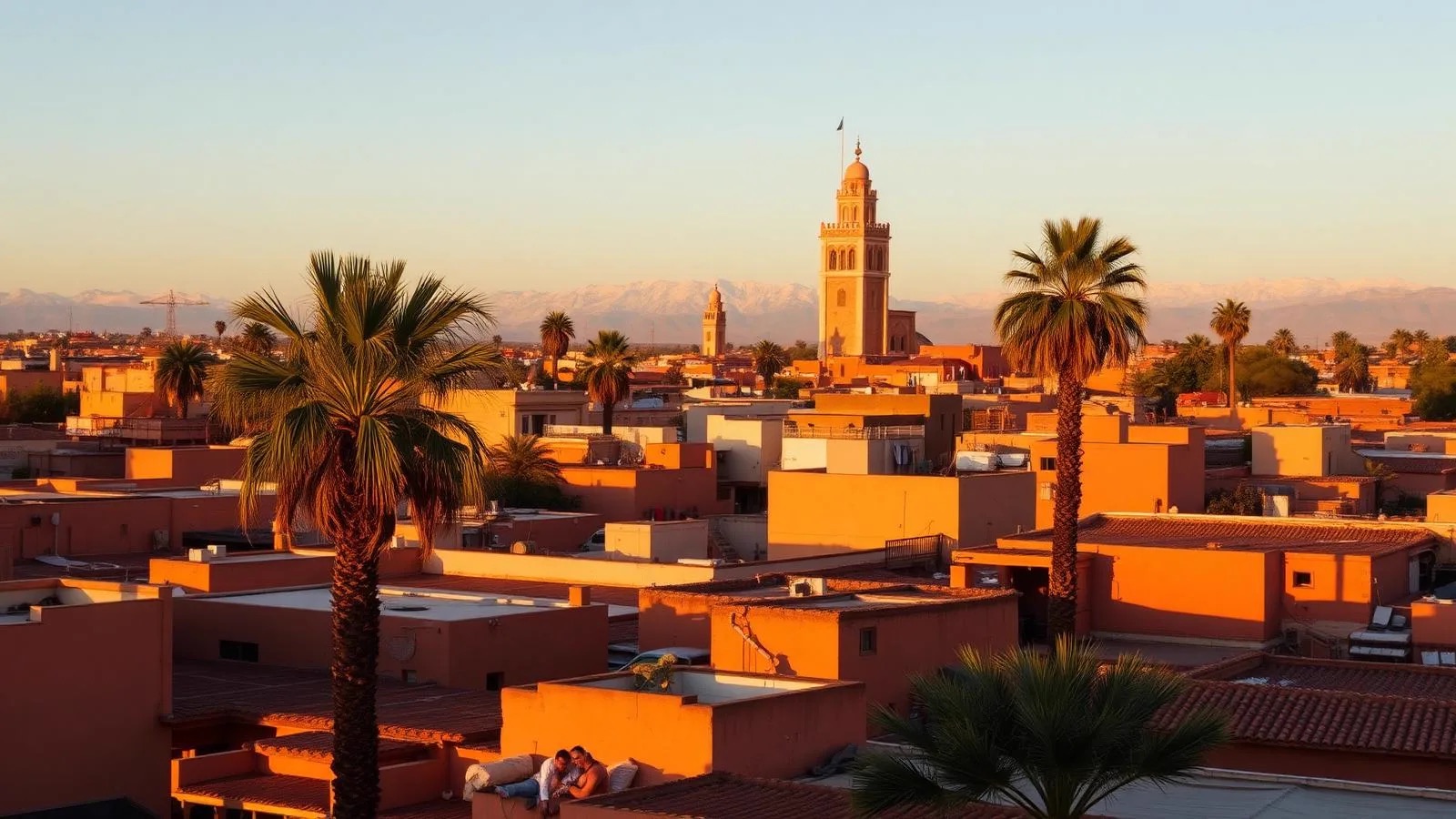
The minaret of the Koutoubia Mosque is to Marrakech what the Eiffel Tower is to Paris—an unmissable landmark that anchors the entire city. Standing 77 metres tall, its elegant design of intricate stonework and decorative arches served as the prototype for other famous minarets in Seville and Rabat. Completed in the 12th century, its name derives from the Arabic for 'bookseller', as a manuscript market was once located nearby. While the mosque itself is an active place of worship and therefore not open to non-Muslim visitors, its exterior and the surrounding gardens are a sight to behold. It’s particularly beautiful at sunset when the stone glows a warm orange and the call to prayer echoes across the city.
Bahia Palace
Built in the late 19th century, the Bahia Palace—meaning 'brilliance'—was intended to be the greatest palace of its time. It is a stunning showcase of Moroccan craftsmanship and artistry. Sprawling across several acres, it’s a captivating series of courtyards, apartments, and gardens without a clear, logical floorplan. This was by design, a rambling layout meant to confuse any would-be intruders. You’ll wander through rooms adorned with breathtaking zellij tilework, painted cedarwood ceilings, and delicate stucco plasterwork. The grand courtyard, with its vast marble floor and surrounding blue-and-yellow tiles, is a highlight and one of the best places to photograph the interplay of light and shadow.
Saadian Tombs
For centuries, these magnificent tombs were sealed off and hidden from the world, only to be rediscovered in 1917. Located next to the Kasbah Mosque, they are the final resting place of the great Saadian dynasty Sultan, Ahmad al-Mansur, along with about 60 of his family members. The level of detail and opulence is astonishing. The most famous chamber, the Hall of the Twelve Columns, houses the sultan's own tomb and is a masterpiece of Italian Carrara marble, gilded cedarwood, and intricate stucco. The sunlight filtering through the grilles creates a serene, almost holy atmosphere. The surrounding gardens hold the graves of servants and soldiers, marked with simpler but equally beautiful coloured tiles.
Medersa Ben Youssef
Once the largest Islamic college in North Africa, the Medersa Ben Youssef is a breathtaking example of Moorish architecture. Founded in the 14th century and redesigned in the 16th, it housed students from across the region for over four centuries. Stepping into its central courtyard is a moment of pure awe. A tranquil reflecting pool is surrounded by walls covered in an incredible profusion of carved cedar, stucco, and colourful zellij tiles. Arabic inscriptions flow elegantly across the plasterwork. You can explore the small, spartan student dormitories that surround the courtyard on the upper level, a stark contrast to the opulence of the main hall, offering a poignant look at the life of the scholars who studied here.
Beyond the Medina Walls
While the medina is the historic heart, life in Marrakech extends well beyond its ancient ramparts. The 'ville nouvelle' (new town), particularly the district of Gueliz, offers a completely different atmosphere with its wide avenues, modern boutiques, and international restaurants. But for a true escape, one garden stands out.
Le Jardin Majorelle
A visit to Le Jardin Majorelle offers a refreshing change of pace and colour palette. This enchanting botanical garden was the 40-year passion project of French painter Jacques Majorelle. After his death, it fell into disrepair and was later purchased and restored by fashion designers Yves Saint Laurent and Pierre Bergé. The garden is famous for its intense, electric cobalt blue accents—a shade now known as 'Majorelle Blue'—which contrast stunningly with the vibrant greens of the exotic plant collection. You'll wander along shaded pathways, past tranquil streams, and amongst a forest of bamboo and towering cacti. It’s a beautifully curated space that feels a world away from the city's hustle. The on-site Berber Museum provides a fascinating, superbly curated insight into the rich culture of the Indigenous people of North Africa.
Where to Stay: Riads vs. Hotels
Your choice of accommodation profoundly shapes your Marrakech experience. The main decision for first-timers is between a traditional riad inside the medina or a modern hotel in the new town.
The Riad Experience
Staying in a riad is the quintessential Marrakech experience. A riad is a traditional Moroccan house built around an inner courtyard or garden. This inward-facing design offers a remarkable sense of peace and seclusion from the bustling streets outside. You step through an often unassuming wooden door into a tranquil oasis, where the only sounds are the trickling of a fountain and the chirping of birds. Riads are typically small, with just a handful of rooms, creating an intimate and personal atmosphere. Breakfast is often a highlight, a homemade Moroccan spread served in the courtyard. They offer an authentic, culturally immersive stay right in the heart of the action.
Modern Hotels
Located primarily in the new districts of Gueliz and Hivernage, modern hotels offer a different kind of comfort. They are generally larger, with amenities you’d expect from international hotel chains: expansive swimming pools, gyms, multiple restaurants and bars, and spacious, air-conditioned rooms. If you prefer a resort-style experience, want to be closer to modern shopping and dining, or feel you might need a buffer from the intensity of the medina, a hotel can be an excellent choice. You can easily take a petit taxi to the medina for sightseeing and then retreat to the familiar comforts of a contemporary hotel at the end of the day.
| Feature | Traditional Riad | Modern Hotel |
|---|---|---|
| Location | Inside the medina, heart of the old city. | Usually in the new town (Gueliz, Hivernage). |
| Atmosphere | Intimate, quiet, traditional, authentic. | Cosmopolitan, bustling, contemporary. |
| Architecture | Inward-facing courtyard, Moroccan design. | Modern or international style. |
| Amenities | Often a plunge pool, rooftop terrace, home-cooked meals. | Large swimming pools, gyms, spas, multiple restaurants. |
| Best For | Travellers seeking cultural immersion and a peaceful retreat. | Travellers prioritizing resort-style amenities and contemporary comfort. |
Practicalities and Cultural Insights
Navigating Marrakech is as much about understanding its culture as it is about knowing its geography. A little preparation in etiquette and practical know-how will make your trip smoother and more rewarding.
The Art of Haggling (and Shopping)
Shopping in the souks is an interactive experience, and haggling is a fundamental part of it. Don't view it as a conflict, but rather as a friendly, and expected, social exchange. It doesn't apply to food or items with clearly marked prices, but for almost everything else—lanterns, leather bags, carpets, ceramics—it’s part of the process.
My approach is always the same. First, start with a smile and a greeting. Never start negotiating for something you don't actually intend to buy. Have a price in your mind that you feel is fair and you're willing to pay. The seller will state their initial price; you can then counter with a lower offer, perhaps around a third to half of their asking price. They will likely laugh or feign shock, but it’s all part of the theatre. Through a series of offers and counter-offers, you'll hopefully meet somewhere in the middle. The key is to keep it light-hearted and respectful. If you can't agree on a price, it's perfectly acceptable to politely thank the vendor and walk away. Sometimes, that's when you'll get your best offer.
Dress and Cultural Respect
Morocco is a Muslim country with conservative values, and dressing respectfully is a simple way to show your appreciation for the local culture. While Marrakech is more accustomed to tourists than more rural areas, modest dress is still recommended, especially when exploring the medina and religious sites. For both men and women, this means keeping shoulders and knees covered. Loose-fitting linen trousers, long skirts or dresses, and t-shirts or blouses are ideal. Not only is this respectful, but it will also protect you from the sun. A scarf or pashmina is an incredibly versatile item for women; it can be used for extra modesty when entering a revered space or for shade from the sun.
Photography Etiquette
As a photographer, Marrakech is a visual feast, but it’s crucial to be mindful and respectful. The golden rule is to always ask for permission before taking a close-up photograph of someone. A smile and a gesture towards your camera is a universally understood way to ask. Many people will happily agree, some will politely decline, and others, particularly performers like snake charmers or water sellers in costume, will expect a small payment for their picture. Never try to sneak a photo of someone who has said no. When capturing general market scenes or wide street shots, be discreet. The goal is to capture the life of the city without intruding on it.
Avoiding Touts and Common Scams
Like any major tourist destination, Marrakech has its share of touts and minor scams. The most common one involves someone—often a young man or boy—approaching you and insisting that a certain street is closed ("la rue est fermée") to try and steer you in another direction, usually towards a family member’s tannery or shop. A firm but polite "No, thank you" ("La, shukran") and continuing on your way is the best response. Unsolicited offers to be your guide should also be politely but firmly refused. If you do get lost and need help, it's better to ask a shopkeeper, a family, or an older person for directions. Just stay aware, walk with purpose, and trust your instincts.
Looking Beyond the City: Day Trips
The energy of Marrakech is captivating, but the landscapes surrounding it offer a completely different kind of Moroccan magic. Organising a day trip is a fantastic way to see the country's diverse scenery.
The Atlas Mountains Foothills
A drive into the foothills of the High Atlas Mountains feels like entering another world. The dusty plains give way to winding roads that climb past lush valleys and traditional Berber villages clinging to the mountainsides. The air becomes cooler and cleaner. Many organised tours head towards the Imlil Valley, the gateway for treks to Toubkal, North Africa's highest peak. Even if you aren't a serious hiker, the scenery is spectacular. You can enjoy a short walk, visit a local Berber home for mint tea, and see a way of life that has remained unchanged for centuries. The contrast with the urban intensity of Marrakech is profound.
Ourika Valley
One of the most popular and accessible day trips from Marrakech, the Ourika Valley is a verdant oasis just a short drive from the city. The Ourika River slices through the foothills of the Atlas, creating a lush green valley that is a favourite weekend escape for Marrakchis. The main attraction is the series of seven waterfalls near the village of Setti Fatma. The walk up to the falls can be a bit of a scramble over rocks and requires sturdy footwear, but you can go as far as you feel comfortable. Along the river, numerous cafes have set up tables and chairs directly in the shallow water, allowing you to cool your feet while enjoying a tagine or a glass of tea. It's a wonderful natural escape, especially during the hot summer months.
When to Visit Marrakech
Timing your visit can have a big impact on your experience, primarily due to the weather.
The Best Seasons
The most pleasant times to visit Marrakech are during the shoulder seasons: spring (March to May) and autumn (September to November). During these months, the weather is typically warm, sunny, and perfect for exploring the city on foot or relaxing on a rooftop terrace. The summer months (June to August) can be intensely hot, with temperatures often soaring well above 40°C, which can make daytime sightseeing challenging. Winter (December to February) is cooler, especially in the evenings, but still generally mild and sunny during the day, making it another viable option if you pack a few warmer layers.
Visiting During Ramadan
Travelling to Marrakech during Ramadan, the Islamic holy month of fasting, offers a unique cultural experience, but it requires some planning. During the day, life slows down considerably. Many cafes and restaurants are closed until sunset, and business hours for shops and attractions may be shortened. It is especially important to be respectful and refrain from eating, drinking, or smoking in public during fasting hours.
The evenings, however, are a magical time. The breaking of the fast (iftar) at sunset is a joyous celebration. The streets come alive, and there's a festive, communal atmosphere. Jemaa el-Fnaa becomes even more vibrant as families gather to eat. It can be a very special time to witness Moroccan culture firsthand, as long as you come prepared for the daytime changes in routine.
Frequently Asked Questions
Is it safe to get lost in the medina?
Yes, getting lost in the medina is a classic Marrakech experience and generally very safe. The alleyways can be disorienting, but they almost always lead back to a main path or square. If you feel truly lost, it's best to ask a shopkeeper or a family for directions rather than accepting unsolicited help from young men, who may lead you on a detour. Keep a confident posture and embrace the adventure of discovering hidden corners of the old city.
What should I wear in Marrakech?
Dressing modestly is a sign of respect for the local culture. For both men and women, clothing that covers the shoulders and knees is recommended. Loose-fitting natural fabrics like linen and cotton are ideal for the climate. Women might find a scarf or pashmina useful for added coverage when visiting religious sites or simply for sun protection. While Marrakech is accustomed to tourists, conservative dress will attract less unwanted attention and show respect for Moroccan traditions.
Do I have to haggle for everything?
No, you don't have to haggle for everything. Haggling is not practiced for food items, at restaurants, or in shops where prices are clearly marked. However, in the souks, bargaining for goods like leather products, lanterns, carpets, and ceramics is an expected and integral part of the shopping experience. Approach it as a friendly negotiation rather than a confrontation. Start with a polite greeting and remember to keep the interaction light-hearted and respectful.
Can I visit the Koutoubia Mosque?
As a non-Muslim visitor, you cannot enter the Koutoubia Mosque itself, as it is an active place of worship. However, you are welcome to admire its stunning exterior and its famous minaret, which is a key landmark of the city. The surrounding gardens are also a lovely public space to walk through and appreciate the scale and beauty of the architecture. The mosque is particularly beautiful when illuminated in the evening.
What's the best way to get around the old city?
The absolute best way to get around the medina (the old city) is on foot. Its narrow, winding alleyways are inaccessible to cars and were designed for pedestrians, carts, and donkeys. Walking allows you to soak in the atmosphere, discover hidden shops, and experience the city at a human pace. For longer distances, such as travelling from the medina to the new town of Gueliz or Le Jardin Majorelle, a petit taxi is the most convenient option.
Final Thoughts
Marrakech is not a city you can simply observe; you have to participate in it. You have to taste it, smell it, and let its rhythms guide you. It’s a place that will challenge your sense of direction and reward your curiosity in equal measure. Embrace the organised chaos, drink the sweet mint tea, allow yourself to get wonderfully lost in the souks, and find your own quiet courtyard away from the crowds. Marrakech has a way of imprinting itself on your memory, leaving you with a collection of vibrant, sensory snapshots—the colour of spices, the warmth of a shared smile, the sound of the evening call to prayer. Go with an open heart and an empty memory card. You’re going to need both.