Tsukiji Outer Market, Tokyo: What to Eat and When to Go
What to eat at the Tsukiji Outer Market, from sushi to street food, plus opening hours, the best times to go, getting there, shopping and costs.
In this guide
- Exploring the Heart of Tokyo's Culinary Scene: a Tsukiji Market Guide
- What is Tsukiji Market? History and Evolution
- How to Get to Tsukiji Market: Your Transportation Guide
- Tsukiji Outer Market Food: Must-Try Dishes and Delicacies
- The Best Sushi in Tokyo: Top Spots at Tsukiji
- Tsukiji Market Street Food: Culinary Delights Beyond Sushi
- Shopping at Tsukiji Market: Souvenirs, Knives, and More
- Tsukiji Market Hours and Best Times to Visit
- Pro Tips for Visiting Tsukiji Market
- Budget Breakdown: How Much Does a Visit to Tsukiji Market Cost?
- Common Mistakes to Avoid at Tsukiji Market
- My Final Thoughts on Tokyo's Tsukiji Market
This guide is part of our Tokyo Travel Guide: Neighbourhoods, Food and Getting Around — start there for the overview, itineraries and costs.
Exploring the Heart of Tokyo's Culinary Scene: a Tsukiji Market Guide
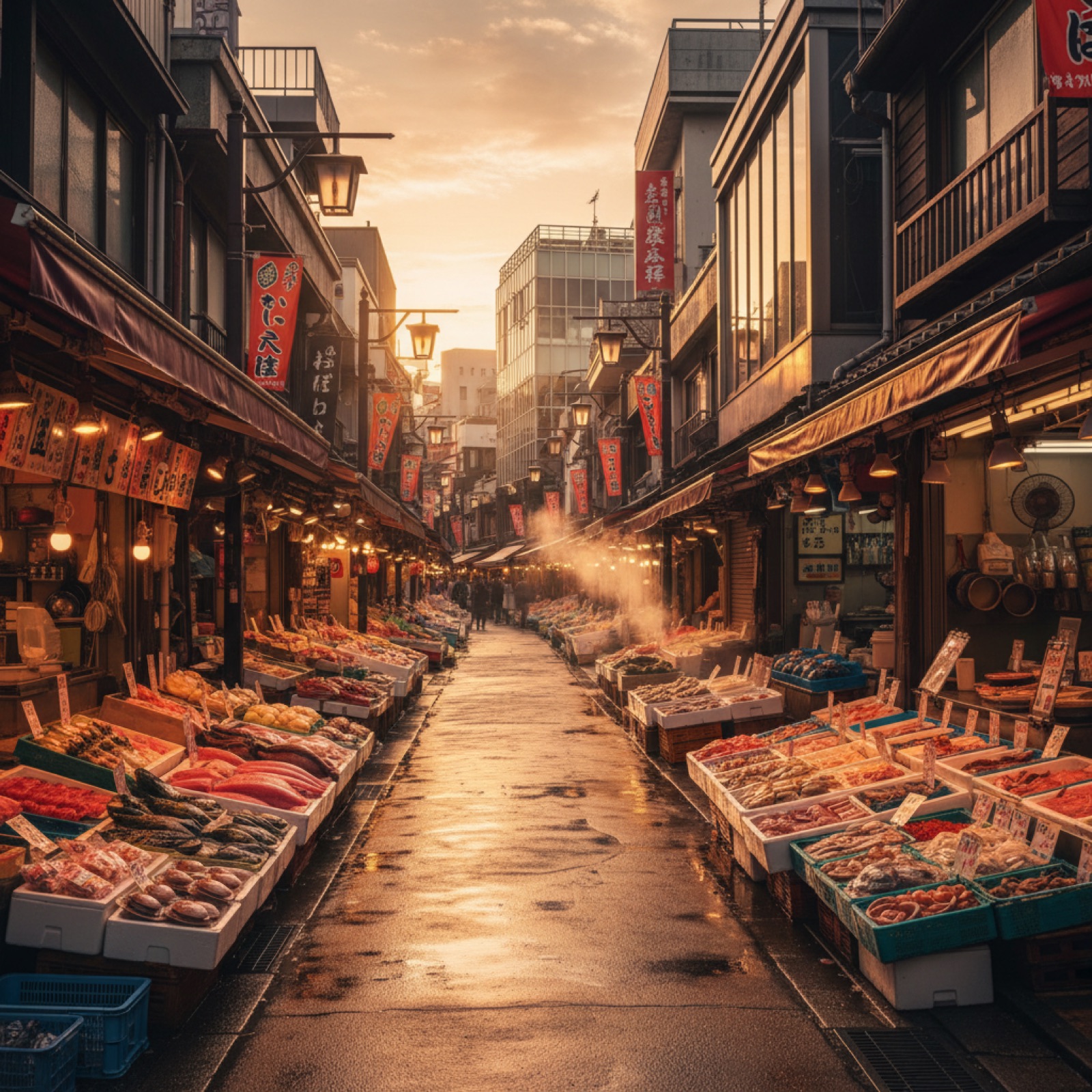
Few places captivate the senses quite like the vibrant energy of Tsukiji Market. Weaving through bustling stalls, with the aroma of fresh seafood hanging heavy in the air and the excited chatter of vendors and visitors alike, feels like stepping into a living, breathing pantry for an entire city. If you're planning a trip to Tokyo, making Tokyo's Tsukiji Market a priority is non-negotiable. It's more than just a market; it's an experience, a window into Japan's profound respect for food culture, and quite simply, home to some of the absolute best sushi Tokyo has to offer. This isn't just another tourist trap; it's a culinary adventure that will redefine your understanding of fresh, delicious food. This guide shares practical tips and recommendations to ensure you have an unforgettable time exploring this iconic Japanese landmark in 2025.
What is Tsukiji Market? History and Evolution
You might have heard conflicting stories about Tsukiji Market. For decades, it was synonymous with the world's largest wholesale Tokyo fish market, famous for its early morning tuna auctions. However, in October 2018, the inner wholesale section, including the iconic tuna auction, relocated to Toyosu Market. Today, the original site is known as the Tsukiji Outer Market, or 'Jogai Shijo,' and it remains a vibrant culinary hub. It's an organized maze of small retail shops, restaurants, and food stalls selling everything from fresh, seasonal produce to high-quality seafood, kitchenware, and specialty Japanese ingredients.
Think of it this way: Toyosu is where the huge, industrial-scale wholesale happens, while the Tsukiji Market you visit today is an incredible open-air pantry and dining street – a place where local chefs and home cooks source their ingredients, and where food enthusiasts go to indulge. It’s an essential part of Tokyo's gastronomic landscape, maintaining its historical charm and commitment to quality, making it a must-visit for any food lover.
How to Get to Tsukiji Market: Your Transportation Guide
Getting to Tsukiji Market is straightforward, thanks to Tokyo's incredibly efficient public transport system. Knowing your options will make your visit smoother, especially if you plan to get there early to beat the crowds.
By Subway (My Recommended Method)
- Oedo Line (Toei Subway): The most convenient option. Get off at Tsukiji Shijo Station (筑地市場駅). Take Exit A1. You'll literally be steps away from the market entrance.
- Hibiya Line (Tokyo Metro): Get off at Tsukiji Station (築地駅). Take Exit 1 or 2. It’s about a 5-minute walk to the market.
Pro tip: The Oedo Line to Tsukiji Shijo Station is often the better choice. It drops you right at the heart of the action, minimizing walking time, which is crucial when you're eager to start eating! A typical subway fare within Tokyo is around ¥170-¥200 (approx. $1.15-$1.35 USD) one-way, depending on distance.
By JR Train (Less Direct, but an option)
- If you're closer to a JR line, you can take a JR train to Shimbashi Station. From Shimbashi, you can transfer to the Toei Oedo Line to Tsukiji Shijo Station, or take a 15-20 minute walk to Tsukiji Market.
Walking
If you're staying in Ginza (a popular shopping district), Tsukiji Market is a pleasant 15-20 minute walk. It’s a great way to take in the city scenery, but save your energy for exploring the market itself!
Taxi
Taxis are readily available in Tokyo but can be expensive. A short ride from Ginza might cost around ¥1,000-¥1,500 (approx. $6.75-$10.00 USD). Only opt for this if you're in a real rush or have mobility issues. Always have your destination written in Japanese for the driver: 築地場外市場 (Tsukiji Jogai Shijo).
Tsukiji Outer Market Food: Must-Try Dishes and Delicacies
This is where the magic truly happens. The Tsukiji Outer Market food scene is a sensory explosion. Every corner offers a new aroma, a tantalizing sight, and a potential new favorite dish. Here’s a rundown of the absolute must-try items:
Fresh Kaisendon (Seafood Donburi)
This is a bowl of rice topped with an exquisite medley of fresh, raw seafood. It's a staple of the Tokyo fish market experience, with vibrant colours and melt-in-your-mouth textures. You can customise it with your favourites like tuna, salmon, scallops, sea urchin (uni), and ikura (salmon roe).
- Average Price: ¥1,800 - ¥3,500 (approx. $12 - $23 USD) depending on the toppings. Expect to pay more for fancier ingredients like uni or premium fatty tuna (otoro).
- Where to find: Many small restaurants in the Outer Market specialize in kaisendon. Look for places with fresh displays and queues.
Tamagoyaki (Japanese Omelette)
Beyond the seafood, tamagoyaki is a sweet or savory rolled omelette that you absolutely cannot miss. It's fluffy, slightly sweet, and utterly addictive. Watching the chefs skillfully layer and roll the eggs is a show in itself. It's often served on a stick, making it perfect Tsukiji Market street food.
- Average Price: ¥100 - ¥200 (approx. $0.65 - $1.35 USD) for a small piece on a stick.
- Where to find: Shops like Tsukiji Yamachō (築地山長) and Marutake (丸武玉子焼) are famous. You'll see long queues, but they move fast!
- Address for Marutake: 4-10-10 Tsukiji, Chuo City, Tokyo. Hours: 4:00 AM - 2:00 PM
Grilled Seafood Skewers
Walking through the market, you'll inevitably be drawn to the enticing aroma of grilled scallops, oysters, and other shellfish. These skewers are grilled right in front of you, seasoned simply, allowing the natural flavor of the fresh seafood Tokyo is known for to shine.
- Average Price: ¥300 - ¥800 (approx. $2 - $5.50 USD) per skewer.
- Where to find: Numerous stalls throughout the Outer Market. Just follow your nose!
Oysters (Freshly Shucked)
For oyster lovers, Tsukiji Market offers some of the freshest you'll ever taste. Shucked on demand, often served with a squeeze of lemon or a dash of ponzu sauce. Some are incredibly huge!
- Average Price: ¥500 - ¥1,000 (approx. $3.30 - $6.75 USD) per oyster, depending on size and origin.
- Where to find: Look for stalls with ice displays of fresh shellfish.
Onigiri
While not seafood, these perfectly shaped rice balls stuffed with various savory fillings are a perfect grab-and-go snack or light breakfast. Salmon or ume (pickled plum) are good choices.
- Average Price: ¥200 - ¥350 (approx. $1.35 - $2.35 USD) per onigiri.
- Where to find: Onigiriya Marutoyo (丸豊), a specialist onigiri shop in the Outer Market (closed Sundays and holidays).
Comparison Table: Must-Try Tsukiji Outer Market Food
| Dish | Description | Typical Price Range | Pro Tip |
|---|---|---|---|
| Kaisendon | Rice bowl with assorted raw seafood | ¥1,800 - ¥3,500 | Go for a mixed bowl to try variety! |
| Tamagoyaki | Sweet/savory rolled omelette | ¥100 - ¥200 | Try a sample before committing to a whole one! |
| Grilled Scallops/Oysters | Fresh shellfish grilled on the spot | ¥300 - ¥800 per skewer | Don't be shy, try the gigantic ones! |
| Fresh Oysters | Raw, shucked-to-order oysters | ¥500 - ¥1,000 per oyster | A squeeze of lemon is all you need. |
| Onigiri | Rice balls with various fillings | ¥200 - ¥350 | Perfect for a quick, affordable snack. |
The Best Sushi in Tokyo: Top Spots at Tsukiji
You can't come to Tsukiji Market without indulging in some of the best sushi Tokyo has to offer. The proximity to the freshest ingredients means sushi chefs here are working with the cream of the crop. While the legendary sushi restaurants from the inner market (like Sushi Dai, Daiwa Sushi and Sushi Dokoro Yamazaki) have moved to Toyosu, the Outer Market still boasts exceptional sushi experiences.
Sushi Zanmai Honten (Main Store)
This is arguably one of the most famous sushi chains in Japan, and their main store in Tsukiji Market is a fantastic place to experience high-quality sushi. They are famous for their New Year's tuna auction bids and solid, consistent quality. It’s reliably delicious and perfect for a first-timer.
- Address: 4-11-9 Tsukiji, Chuo City, Tokyo.
- Hours: Open 24 Hours, 7 days a week!
- Price Range: Sushi sets from ¥2,500 - ¥5,000 (approx. $17 - $34 USD). Individual pieces from ¥100 - ¥800.
- Website: Sushi Zanmai Honten
Donburi Ichiba
While not strictly a sushi restaurant, Donburi Ichiba focuses on rice bowls (donburi) topped with incredibly fresh seafood. They also offer excellent nigiri sushi. It’s a great option if you want a mix of both or prefer a less formal setting than a dedicated sushi counter.
- Address: 4-9-5 Tsukiji, Chuo City, Tokyo.
- Hours: 5:00 AM - 3:00 PM (Monday-Saturday).
- Price Range: Donburi from ¥1,500 - ¥3,000 (approx. $10 - $20 USD). Sushi sets similar to Sushi Zanmai.
Sushi strategy: Go early for sushi, especially if you're targeting a popular spot. While the queues may not be as intense as the old inner market, demand for the best sushi Tokyo still means waiting. Don't be afraid to try a few different places; each chef has a unique touch.
Tsukiji Market Street Food: Culinary Delights Beyond Sushi
The beauty of Tsukiji Market street food is its sheer variety and accessibility. You can literally eat your way through the market, sampling small bites from different stalls as you explore. This is the best way to experience the market's diverse flavours.
Unagi (Grilled Eel)
Rich, savory, and perfectly charred, unagi is a Japanese delicacy. You'll find stalls selling grilled skewers of unagi, often brushed with a sweet soy-based sauce. It's a taste sensation you won't forget.
- Average Price: ¥500 - ¥1,000 (approx. $3.30 - $6.75 USD) for a skewer.
- Where to find: Look for stalls with charcoal grills and the unmistakable aroma of grilling eel.
Sea Urchin (Uni) Skewers or Bowls
Uni is a divisive ingredient, but if you love it, Tsukiji Market is the place to indulge. You can find fresh uni served simply on a spoon, as a skewer, or in a small bowl with rice. It's creamy, briny, and incredibly fresh here.
- Average Price: ¥1,000 - ¥2,000 (approx. $6.75 - $13.50 USD) for a small portion. Prices fluctuate based on season and quality.
Mochi and Daifuku
For a sweet interlude, look for mochi (pounded sticky rice) and daifuku (mochi filled with sweet bean paste and often a whole strawberry). These are delightfully chewy and a perfect palate cleanser.
- Average Price: ¥150 - ¥300 (approx. $1 - $2 USD) per piece.
- Where to find: Specialty sweet shops within the market.
Gyoza (Dumplings)
While not traditional Tokyo fish market fare, you'll find some excellent gyoza stalls. These pan-fried dumplings, often filled with pork and vegetables, are crispy on the outside and juicy on the inside. A comforting, savory treat.
- Average Price: ¥400 - ¥600 (approx. $2.70 - $4 USD) for a plate of 5-6 pieces.
Fresh Fruit Skewers
Don't forget the incredibly sweet and perfectly ripe Japanese fruits. Strawberries, melons, and grapes are often sold on skewers for a refreshing, healthy snack. The quality is exceptional.
- Average Price: ¥300 - ¥800 (approx. $2 - $5.50 USD) per skewer, depending on the fruit.
Tsukiji Market street food Hack: Don't try to eat full meals at every stop. Instead, grab small portions and share with your travel companions. This way, you can taste a much wider variety of the incredible Tsukiji Market food without getting too full too fast!
Shopping at Tsukiji Market: Souvenirs, Knives, and More
Tsukiji Market isn't just about eating; it's also a fantastic place to shop for unique souvenirs, high-quality kitchenware, and specialty Japanese groceries to take home as reminders of your Japan trip.
Japanese Kitchen Knives
If you're a serious cook, a Japanese knife from Tsukiji Market is a must-buy. These knives are renowned for their sharpness, balance, and craftsmanship. You can find everything from all-purpose gyutos to specialized sashimi knives (yanagiba).
- Shops: Tsukiji Masamoto (築地正本), Aritsugu (有次 - though their main store is in Kyoto, some shops here carry their products or similar quality).
- Address for Tsukiji Masamoto: 4-9-9 Tsukiji, Chuo City, Tokyo.
- Hours: 9:00 AM - 5:00 PM (closed Sundays).
- Price Range: ¥10,000 - ¥50,000+ (approx. $67 - $335+ USD) depending on size, material, and craftsmanship.
Ceramics and Tableware
Beautiful bowls, plates, and sake cups are abundant. You can find traditional designs, modern pieces, and those perfectly imperfect wabi-sabi aesthetics. They make for excellent gifts or additions to your home.
- Average Price: Bowls from ¥500 (approx. $3.35 USD), full sets can be ¥5,000+ (approx. $34 USD).
Tea and Coffee
Many shops sell high-quality Japanese teas (matcha, sencha, hojicha) and even specialty coffee beans. A perfect gift for the beverage enthusiast.
- Average Price: Tea bags from ¥500, loose leaf from ¥1,000 (approx. $6.75 USD) per pack.
Dried Seafood and Spices
For those who love to cook, you'll find an incredible array of dried seafood (like bonito flakes for dashi), spices, and unique Japanese seasonings that are hard to find elsewhere.
- Average Price: Varies widely, but small packs from ¥300 - ¥1,000.
Local Sake and Craft Beer
Discover local sake breweries or unique Japanese craft beers. Shops often offer tastings, allowing you to find your perfect bottle.
- Average Price: Sake bottles from ¥1,500 - ¥5,000+ (approx. $10 - $34+ USD).
Tsukiji Market Hours and Best Times to Visit
Understanding the operational hours is crucial for making the most of your visit to Tsukiji Market. While it's no longer the 24/7 behemoth of the wholesale era, the Outer Market still has its rhythms.
General Tsukiji Market Hours
- Most shops and restaurants: Typically open from 5:00 AM or 6:00 AM to around 2:00 PM or 3:00 PM.
- Closed: The market is generally closed on Sundays, public holidays, and some Wednesdays. It's always best to check their official website or a reliable local source for exact days, especially around major holidays.
Best Times to Visit
Here's the key advice:
- Early Morning (7:00 AM - 9:00 AM): This is prime time for serious foodies. The market is bustling, everything is at its freshest, and you'll find the shortest queues for popular sushi restaurants (though 'short' is relative!). The energy is palpable, and it's fantastic for breakfast or an early lunch. This is when you can enjoy the fresh seafood Tokyo is famous for.
- Late Morning (9:00 AM - 11:00 AM): Still busy, but the initial rush starts to die down a little. Good for a leisurely stroll and sampling various Tsukiji Market street food.
- Lunchtime (11:00 AM - 1:00 PM): Expect longer queues for popular eateries. It's still a good time for a meal, but you might spend more time waiting.
- Early Afternoon (1:00 PM - 2:00 PM): Many stalls start to close or run out of popular items. Some might offer discounts as they clear inventory, which can be a bargain, but variety might be limited.
Specific Restaurant Opening Hours (Example)
- Sushi Zanmai Honten: Open 24 hours, 7 days a week. Excellent for late-night cravings or very early risers.
- Marutake Tamagoyaki: 4:00 AM – 2:00 PM. Perfect for an early breakfast snack.
Golden Rule: Check the Calendar! Before you plan your visit, especially if targeting a specific day, always check the Tsukiji Market calendar for closures. A quick search online for 'Tsukiji Market calendar' will usually bring up an up-to-date schedule. Nothing's worse than showing up to a closed market!
Pro Tips for Visiting Tsukiji Market
Here are some insider tips to make your visit to this incredible Tokyo fish market area truly seamless and enjoyable:
1. Go Early (But Not Too Early for Outer Market)
While the wholesale action moved, aiming for around 7:00 AM - 8:00 AM is still ideal for the Outer Market. You'll catch the vendors at their most enthusiastic, the freshest stock, and beat the thickest lunch crowds. Don't go before 5 AM, as most Outer Market shops won't be fully open.
2. Bring Cash (Yen)
Many smaller stalls and street food vendors in Tsukiji Market are cash-only. While larger restaurants may accept cards, it’s always best to have plenty of Japanese Yen on hand for those tempting skewers and small purchases. My rule of thumb is at least ¥5,000-¥10,000 for food and small souvenirs.
3. Wear Comfortable Shoes
You'll be doing a lot of walking, standing, and potentially navigating wet or crowded pathways. Leave the fancy footwear at the hotel.
4. Be Mindful of Your Surroundings
This is still a working market. While less intense than the old inner market, you'll still encounter vendors moving goods, people rushing, and a general hustle and bustle. Be aware of your backpack, don't block pathways, and let the locals go about their business.
5. Don't Be Afraid to Try New Things
Tsukiji Market is the perfect place to step out of your comfort zone. Ever tried uni? Or grilled eel? This is where you'll find the freshest and best versions. Embrace the adventure!
6. Hydrate and Snack Smart
You'll be tasting a lot. Grab a drink from a vending machine, and balance your savory bites with some Tsukiji Market street food like a fresh fruit skewer or a warm bowl of miso soup.
7. Utilize the Public Restrooms
Tokyo's public restrooms are generally spotless. Find them before you're in an uncomfortable situation. There are several clearly marked ones within and around the market.
8. Learn a Few Japanese Phrases
A simple 'Arigato gozaimasu' (thank you) or 'Sumimasen' (excuse me/sorry) goes a long way. Vendors appreciate the effort, even if your pronunciation isn't perfect.
9. Take Photos Respectfully
It's a beautiful, photogenic place. But always be respectful. Ask permission if you're taking close-ups of people or their stalls, and don't interrupt workflow for a photo op.
10. Consider a Food Tour
If you're overwhelmed or want an expert to guide you to the very best sushi Tokyo and other delicacies, a Tsukiji food tour can be an excellent investment. They often include tastings and provide cultural context. Prices typically range from ¥8,000 - ¥15,000 (approx. $54 - $100 USD) per person.
Budget Breakdown: How Much Does a Visit to Tsukiji Market Cost?
One of the great things about Tsukiji Market is that you can tailor your experience to almost any budget. Here’s a rough idea of what you might spend for a typical visit:
Estimated Budget for a Half-Day Tsukiji Market Visit (Per Person)
| Category | Low Budget (Yen / USD) | Mid-Range (Yen / USD) | High-End (Yen / USD) | Notes |
|---|---|---|---|---|
| Transportation | ¥340 / $2.30 | ¥340 / $2.30 | ¥2,000 / $13.50 | Roundtrip subway; taxi for high-end. |
| Breakfast/Snacks | ¥500 / $3.35 | ¥1,500 / $10.00 | ¥2,500 / $17.00 | Tamagoyaki, onigiri; several skewers/oysters. |
| Main Meal (Sushi/Kaisendon) | ¥1,800 / $12.00 | ¥3,500 / $23.50 | ¥7,000 / $47.00 | Basic kaisendon; mid-range sushi set; premium omakase. |
| Drinks | ¥150 / $1.00 | ¥300 / $2.00 | ¥500 / $3.35 | Water/tea from vending machine; coffee/juice. |
| Souvenirs/Shopping | ¥0 / $0 | ¥3,000 / $20.00 | ¥10,000+ / $67.00+ | Small snack; tea/small ceramic; quality knife/sake. |
| Total Estimated Cost | ¥2,790 / $18.65 | ¥8,640 / $57.80 | ¥22,000+ / $147.15+ | Excludes potential food tour costs. |
As you can see, you can enjoy the essence of Tsukiji Market for under $20 if you're careful, or splurge on truly world-class experiences. A mid-range visit is a good balance – a good sushi breakfast plus a few Tsukiji Market street food items.
Common Mistakes to Avoid at Tsukiji Market
To ensure your visit to Tsukiji Market is as enjoyable as possible, here are a few pitfalls to sidestep:
1. Confusing Outer Market with Toyosu Market
This is the most common mistake! Remember, the famous tuna auction and wholesale inner market are now at Toyosu. Tsukiji Market (the Outer Market) is primarily for retail, restaurants, and street food. Don't go to Tsukiji expecting the tuna auction.
2. Visiting on a Closed Day
As mentioned, the market is usually closed on Sundays, public holidays, and some Wednesdays. Always double-check the calendar online before you go. Showing up to a closed market is a huge disappointment and a waste of travel time.
3. Not Bringing Cash
Many of the best small stalls and street food vendors operate strictly on cash. Relying solely on credit cards will limit your options significantly and potentially leave you hungry.
4. Being Disrespectful of Local Culture
Japan is a highly respectful society. When at Tsukiji Market:
- Don't litter: Carry your trash until you find a bin.
- Don't haggle: Prices are fixed.
- Don't block pathways: Vendors need to move their goods.
- Don't eat while walking: Find a designated eating area or stand to consume your Tsukiji Market street food. This is a big one in Japan!
5. Getting Overwhelmed by Choices
With so many tempting options, it's easy to get choice paralysis. Do a little research beforehand, have a few 'must-try' items in mind, and then allow yourself to wander and discover. Don't feel pressured to try EVERYTHING.
6. Expecting the Tuna Auction
Again, this is a hangover from the old market. If you want to see the tuna auction, you need to go to Toyosu Market, not Tsukiji Market.
7. Dressing Inappropriately
While not a strict dress code, wearing open-toed shoes or delicate clothing might make you uncomfortable. You're in a working market; expect some spills, puddles, and a generally busy environment.
8. Waiting for the 'Perfect' Photo
Photography is welcome, but remember that shop owners and workers are busy running their businesses. Don't obstruct their work or customers for your perfect Instagram shot. A quick, polite photo is usually fine.
My Final Thoughts on Tokyo's Tsukiji Market
Even with the relocation of the inner wholesale market, Tsukiji Market remains an indispensable stop on any Japan itinerary. It’s an authentic, bustling hub where the traditions of Japanese culinary excellence are kept alive and accessible to everyone. From savoring the best sushi Tokyo can offer to sampling innovative Tsukiji Market street food, every visit here is a delicious adventure.
The best approach? Go with an empty stomach, an open mind, and a camera ready to capture the vibrant atmosphere. Allow yourself to get a little lost in the alleys, follow the enticing smells, and engage with the friendly vendors. The Tokyo fish market, or rather its spiritual successor in Tsukiji, is a place that will linger in your memory long after the last bite of fresh seafood. It's a genuine taste of Japan, and you won't regret making the journey. Happy eating!
More Japan guides

Universal Studios Japan: Tickets, Express Passes and Tips
Planning Universal Studios Japan: ticket and Express Pass options, the Wizarding World, which rides to hit first, and how to avoid the…

Zao Onsen Guide: Snow Monsters, Skiing and Hot Springs
Zao Onsen in winter: the snow monsters, the ski terrain, sulphur hot springs, how to get there from Yamagata, and when the frost-covered…

Niseko Ski Guide: Powder, Passes and Where to Stay
Niseko's four resorts compared, getting there from Sapporo, the ski season, lift passes, gear rental, accommodation, onsen, dining and a…