Amalfi Coast Guide: Positano, Amalfi and Ravello
How to do the Amalfi Coast without spending the trip in traffic: where to base, ferries versus buses, and when to go.
In this guide
- Quick Facts
- The Amalfi Drive: A Beautiful Nightmare
- Getting Around: Ferries and Buses
- Choosing Your Base: Sorrento, Positano, Amalfi, or Ravello?
- Positano: The Vertical Town
- Amalfi: A Maritime Republic's Legacy
- Ravello: Views from the Heavens
- Hiking the Path of the Gods
- Quieter Corners: Praiano, Atrani and the Emerald Grotto
- Capri: A Day Trip or an Overnight Stay?
- The Flavour of the Coast: Lemons and Limoncello
- When to Visit: The Shoulder Season Sweet Spot
- Practicalities: Getting There and Mobility
- Explore in Depth
- Frequently Asked Questions
- Final Thoughts
This guide is part of our Italy Travel Guide: First-Time Itinerary and Tips — start there for the overview, when to go and how to get around.
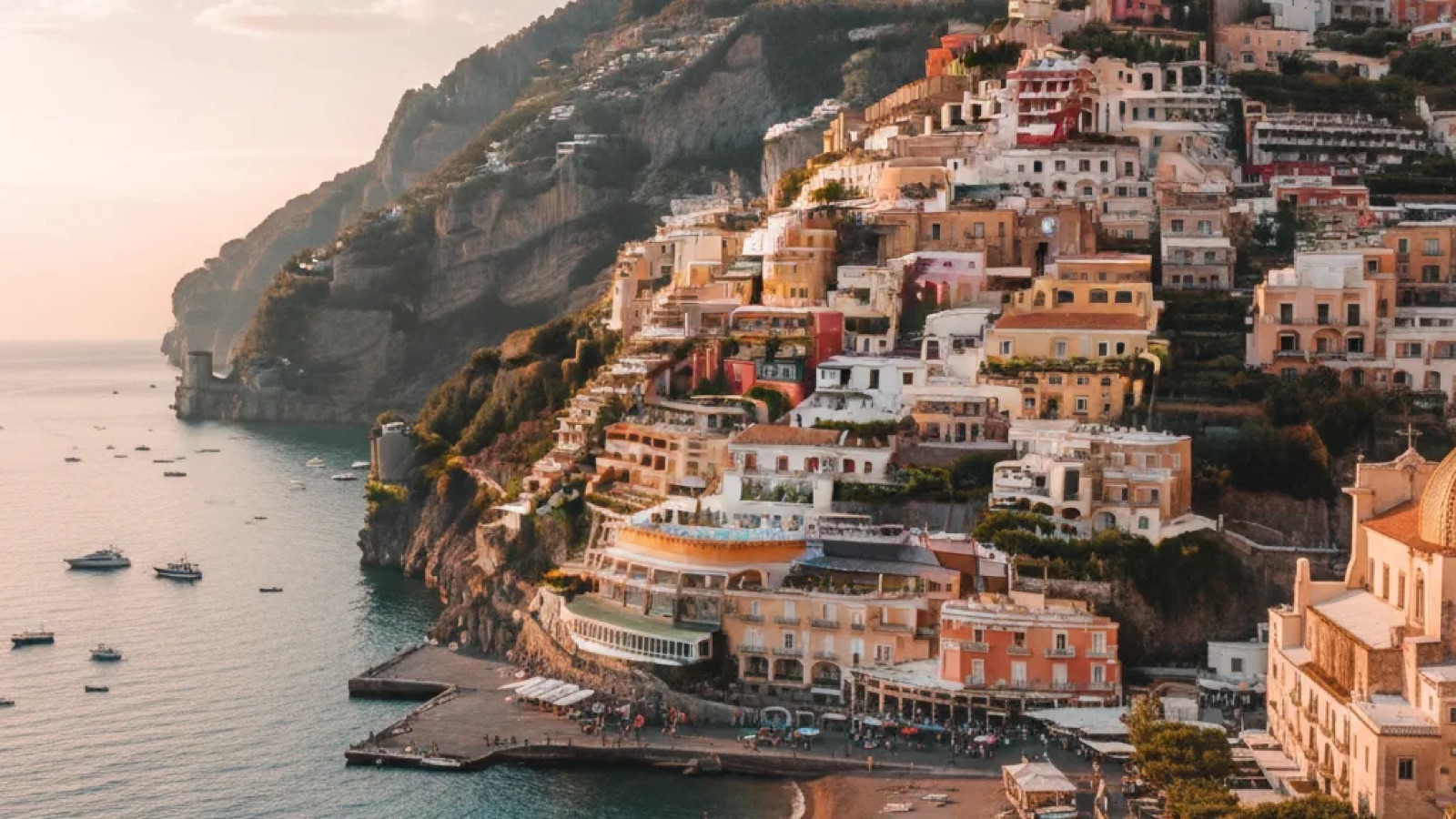
The first time you arrive in Positano by sea, it feels less like a real place and more like a film set you’ve stumbled into. The ferry rounds the headland, and suddenly it’s there: a cascade of pastel houses in impossible shades of peach, terracotta and cream, tumbling down a cliff so steep you wonder what magic holds them up. The scent of salt and lemon blossoms drifts across the water. The boat’s horn echoes off the rock, answered by the happy chatter from the Spiaggia Grande, the main beach, a famous tapestry of colourful umbrellas. No photo can quite do justice to the sheer verticality of it all. It's a moment of pure, cinematic beauty that stays with you long after you leave.
That dazzling first impression is what draws millions to Italy's Amalfi Coast, a 50-kilometre stretch of coastline so spectacular it's recognised as a UNESCO World Heritage site. But travelling here isn't always as serene as that postcard view. This guide covers how to navigate the coast without losing your mind, where to base yourself (from glamorous Positano to lofty Ravello), what to see and do in the main towns, and how to tackle the legendary Path of the Gods. We'll also talk about the best time to visit to dodge the worst of the crowds, and the practicalities of getting here from Naples.
Quick Facts
- Location: Southern Italy, in the Campania region, on the south side of the Sorrentine Peninsula.
- Getting There: The main international gateway is Naples International Airport (NAP). From there, you can connect via car, bus, train or ferry.
- Getting Around: Ferries are the most scenic and civilised option. SITA buses are the budget choice but can be extremely crowded. Driving is stressful with narrow roads and scarce parking.
- Language & Currency: Italian is the official language, though English is widely spoken in tourist centres. Italy uses the Euro.
- Best Time to Visit: The shoulder seasons of May, early June, September, and October offer the best balance of good weather and manageable crowds.
The Amalfi Drive: A Beautiful Nightmare
The legendary road connecting the coastal towns is called the Strada Statale 163, or the 'Amalfitana'. It’s a marvel of engineering, a narrow ribbon of asphalt carved into the side of sheer cliffs that plunge into the turquoise sea. It is, without exaggeration, one of the most beautiful drives on Earth. It is also one of the most stressful.
The road is impossibly narrow, with hairpin bends that require buses and cars to engage in a complex ballet of reversing and inching past each other. In summer, the traffic is monumental. Parking is the real challenge; it's practically non-existent in most towns and outrageously expensive where you can find it. For most travellers, renting a car is best avoided. The anxiety of navigating the road and the futile search for parking will overshadow the beauty of the experience.
My advice? Experience the road from the passenger seat. The views are incredible, but let a professional do the driving. The local bus drivers have nerves of steel and know every centimetre of the route. For a photography mission, hiring a private driver for a day can be a great investment, allowing you to stop at the best viewpoints (safely!) for those golden-hour shots of the coastline snaking into the distance.
Getting Around: Ferries and Buses
If driving is out, that leaves two main options for exploring the coast: the public SITA buses and the passenger ferries. A combination of both works best.
The SITA Bus: This is the workhorse of the Amalfi Coast, connecting all the towns from Sorrento to Salerno. It’s the most budget-friendly way to get around and the only public transport option to reach Ravello, which is high up in the hills. The downsides? In high season, they are incredibly crowded. You’ll likely have to stand, pressed in with other travellers, for winding, sweltering journeys. Queues at the main stops in Positano and Amalfi can be long. You need to buy your tickets beforehand from a 'tabacchi' (tobacco shop) or newsstand; you can't buy them on board.
The Ferries: This is the best way to go. Arriving in a town by sea is the proper way to be introduced to it. The ferries connect major towns like Sorrento, Positano, and Amalfi, and also run to Capri and Salerno. You get to see the dramatic coastline from the water, avoid the traffic jams, and travel in relative comfort with a sea breeze on your face. The only drawbacks are that they are more expensive than the bus and services can be cancelled during rough sea conditions. Always check schedules in advance, as they vary significantly by season, and have a backup plan (usually the bus).
Choosing Your Base: Sorrento, Positano, Amalfi, or Ravello?
Where you stay will define your trip. Each town has a distinct personality, and choosing the right one for your travel style is crucial.
Sorrento: The Practical Hub
Though not technically on the Amalfi Coast itself, Sorrento is perched on the cliffs overlooking the Bay of Naples on the other side of the peninsula. Its key advantage is transport. It's the terminus of the Circumvesuviana train from Naples and Pompeii, and its large port has extensive ferry connections. It's a larger, flatter town with more accommodation and dining options for various budgets. It's the perfect base if you plan on doing lots of day trips (like Pompeii, Vesuvius, or Capri) and want maximum convenience.
Positano: The Glamour Queen
This is the town everyone dreams of. It’s undeniably gorgeous, luxurious, and romantic. It's also the most expensive and the most challenging physically. The entire town is built on a near-vertical cliff, and your life here will be dominated by stairs. Packing light is not a suggestion, it's a command. Stay here if you're on a honeymoon or a splurge trip, love the boutique shopping scene, and are happy to spend your days between the beach and a chic terrace bar.
Amalfi: The Historic Heart
Sitting in a deep ravine, Amalfi feels more like a real, working town. It has a flatter central area, making it slightly easier to navigate than Positano. As a historic maritime power, its magnificent cathedral and bustling piazza give it a sense of history and gravitas. It’s also a major transport hub for both buses and ferries, making it a well-balanced choice for exploring the rest of the coast. A great all-rounder.
Ravello: The Serene Balcony
Floating in the hills 350 metres above the sea, Ravello is the coast's elegant, quiet escape. It’s all about the jaw-dropping views from its famous villa gardens, a sense of peace, and its connection to the arts (it hosts a world-renowned music festival each summer). It's not a place for beach lovers, as you need to take a bus or taxi down to the coast. Stay here if you want to escape the crowds, read a book on a beautiful terrace, and soak in what might be the best views in all of Italy.
Salerno: The Smart Alternative
At the far eastern end of the coast, the port city of Salerno is an often-overlooked but excellent base. As a proper Italian city, it offers better value for accommodation and food, a lovely historic centre, and fantastic transport links, including high-speed trains to Rome and Naples. From its port, you can catch a ferry and "commute" along the coast, enjoying the scenic journey every day.
Positano: The Vertical Town
Positano is an experience. Be prepared for steps. Thousands of them. They connect the winding, bougainvillea-draped lanes that are too narrow for cars, filled with linen shops, art galleries, and ceramic stores. The main beach, Spiaggia Grande, is the glamorous heart of the town, but it's worth walking over to Fornillo Beach. It's smaller, more relaxed, and has a more local feel.
The best thing to do in Positano is simply to get lost. Wander up the stairways, away from the main beach crowds, and you’ll find hidden corners and spectacular viewpoints. For that classic shot of the town, take the beautiful coastal path called the Via Positanesi d'America that leads towards Fornillo. It offers the perfect profile of the pastel houses clinging to the cliff, especially in the gentle light of late afternoon.
Amalfi: A Maritime Republic's Legacy
Amalfi feels different; it carries the weight of its history as one of Italy's great maritime republics. The undisputed centrepiece is the Cattedrale di Sant'Andrea (Duomo), a spectacular structure with Arab-Norman influences. You can't miss its grand, 62-step staircase leading up from the main piazza. Climbing those steps and stepping into the quiet of the Cloister of Paradise is a transportive experience. The piazza itself is the lively heart of the town, a great place to sit with a coffee and watch the world go by.
Amalfi also has a fascinating history of paper-making. You can learn all about it at the Museo della Carta (Paper Museum), housed in a 13th-century paper mill. It’s a surprisingly engaging look at one of the town's oldest traditions. Unlike Positano, Amalfi has more of a life beyond tourism, with hardware stores and bakeries sitting alongside souvenir shops, which gives it a more grounded feel.
Ravello: Views from the Heavens
A bus ride up from Amalfi takes you to another world. Ravello is all about elegance, tranquility and views that will reorganise your soul. There are two places you absolutely must visit: Villa Rufolo and Villa Cimbrone.
Villa Rufolo, in the town centre, is famous for its Moorish-influenced architecture and tiered gardens that inspired Richard Wagner. The view from its terrace, framing the church domes against the deep blue of the sea below, is iconic. Throughout the summer, it becomes the stage for the Ravello Festival, where you can listen to classical music in one of the world's most breathtaking settings.
A ten-minute walk leads to Villa Cimbrone, a private hotel with gardens open to the public. The walk culminates at the 'Terrazzo dell'Infinito' (Terrace of Infinity). Lined with classical busts, this balcony hangs suspended between the sky and sea, offering a panoramic coastal view that is simply sublime. It's a place to just stand and be silent for a few minutes.
Hiking the Path of the Gods
For active travellers, the Sentiero degli Dei, or Path of the Gods, is an unmissable experience. This is not a gentle stroll; it's a proper hike of about 7 kilometres along the clifftops, but the rewards are immense. The classic route starts in Bomerano (a hamlet of Agerola, reachable by bus from Amalfi) and finishes in Nocelle, a tiny village high above Positano.
The path lives up to its name, offering god-like views over the entire coastline, with Capri shimmering in the distance. You'll walk through terraced vineyards, past old stone ruins, and alongside sheer drops. This can't be stressed enough: wear proper walking shoes or hiking boots. The terrain is rocky and uneven, and it's not a place for flip-flops. Also, bring plenty of water, especially in summer. The hike ends in Nocelle, where you can reward yourself with a fresh lemon granita before tackling the 1,700 steps down to the main road at Arienzo, or catching the small local bus down to the centre of Positano.
Quieter Corners: Praiano, Atrani and the Emerald Grotto
If the crowds of Positano and Amalfi get too much, seek out the coast's quieter spots. Praiano, spread between the two main towns, is a less-trodden but wonderful option. It catches the sun until it sets, and its small coves, like Marina di Praia, are delightfully authentic. It still has plenty of stairs, but it offers a more peaceful slice of coastal life.
A well-kept secret is Atrani. Just a 10-minute walk from Amalfi, it’s the smallest municipality in Southern Italy. You walk through a pedestrian tunnel and emerge into a tiny, perfect piazza that opens onto a beach. It feels like you’ve stepped back 50 years. It has all the charm of its famous neighbours with none of the pretence.
Between Amalfi and Praiano, near the village of Conca dei Marini, lies the Grotta dello Smeraldo (Emerald Grotto). This sea cave can be reached by boat or via a lift from the main road. Inside, sunlight filters through an underwater opening, giving the water an eerie and beautiful emerald glow. It's a fun, short excursion, especially on a hot day.
Capri: A Day Trip or an Overnight Stay?
The island of Capri is a magnet, easily reachable by ferry from Sorrento, Positano, or Amalfi. A classic day trip involves a boat tour around the island, a (possible) visit to the famous Blue Grotto, a ride on the funicular railway up to Capri Town, and a bus trip to the higher, quieter village of Anacapri.
Here’s some honest advice: a day trip to Capri in high season can be frantic and underwhelming. You'll spend most of your time in queues with thousands of other day-trippers. The island's true magic reveals itself in the evening, after the last ferry has departed. If you can, it's well worth staying for at least one night. Watching the sunset from a quiet viewpoint and enjoying a peaceful dinner in the Piazzetta once the crowds have gone is a totally different and far superior experience.
The Flavour of the Coast: Lemons and Limoncello
You can’t talk about the Amalfi Coast without talking about lemons. Not just any lemons, but the 'Sfusato Amalfitano' – a huge, fragrant, knobbly variety that grows in terraced groves cut into the hillsides. Their scent is the perfume of the entire region.
You’ll see them everywhere and in everything. The most famous product is, of course, limoncello, the sweet, potent liqueur traditionally served ice-cold after a meal. But don’t stop there. Try a refreshing lemon granita on a hot afternoon, or the famous local dessert, 'delizia al limone' (lemon delight), a sponge cake filled with and covered in a luscious lemon cream. Even the simplest dish of grilled local fish, dressed with nothing more than local olive oil and a wedge of fresh Amalfi lemon, is a taste of perfection.
When to Visit: The Shoulder Season Sweet Spot
Timing your visit to the Amalfi Coast is probably the single most important decision you will make. It has a massive impact on your experience.
- High Season (July and August): This is the peak of summer. It is incredibly hot, humid, and crowded. Prices for accommodation are at their highest, beaches are packed shoulder-to-shoulder, and transport is strained to its absolute limit. If this is the only time you can go, you must book everything far in advance and go with a lot of patience.
- Shoulder Season (May, early June, September, October): This is the golden window. The weather is warm and pleasant, the sea is perfect for swimming, the summer crowds have either not yet arrived or have started to thin, and the landscape is lush with flowers in spring or has a gentle autumnal light in the autumn. This is the best time to visit.
- Low Season (November to March): The coast becomes a quiet, solitary place. The weather is cool and can be rainy, and many hotels, restaurants, and shops close down entirely. Most importantly, ferry services are drastically reduced or stopped altogether, making it much harder to get around. It's a trip for those seeking solitude, not the classic sun-and-sea experience.
Practicalities: Getting There and Mobility
Getting to your slice of paradise requires a bit of planning. The main entry point is Naples International Airport (NAP). From there, your options are:
- Private Driver: The most comfortable and expensive option. A driver will meet you at arrivals and take you directly to your hotel's door. A stress-free but pricey luxury.
- Bus to Sorrento: The Curreri Viaggi bus runs directly from outside the Naples airport terminal to Sorrento. It's efficient and reasonably priced.
- Train to Sorrento: You can take the Alibus from the airport to Napoli Centrale train station. From there, take the Circumvesuviana train to Sorrento. Be warned: this train is old, often hot, has no luggage space, and is known for pickpockets. It’s cheap, but you need to be very vigilant with your belongings.
- Ferry: In season, you can take the Alibus to the port (Molo Beverello) and catch a direct ferry to Sorrento, Positano, or Amalfi. This is often the most pleasant way to arrive.
A final, crucial note on mobility. The Amalfi Coast is a vertical landscape. With the exception of the central areas of Amalfi and Sorrento, you will be walking up and down steep hills and countless stairs every single day. If you have mobility challenges, use a pram, or plan to bring heavy luggage, you must research your accommodation and itinerary very carefully. This is a place to pack light and wear comfortable shoes.
Explore in Depth
For more on the surrounding region and planning your wider Italian journey, check out the other guides. They're designed to help you connect the dots and make the most of your time in this incredible country.
Frequently Asked Questions
Is it better to take the ferry or the bus along the Amalfi Coast?
For the best experience, use both. The ferry is far more scenic, comfortable, and avoids road traffic, making it the superior choice for travelling between coastal towns like Positano and Amalfi. However, the SITA bus is essential for reaching towns high in the hills, most notably Ravello. It's also the more budget-friendly option and your primary backup if rough seas cause ferry cancellations. My strategy is to use ferries for the main routes and the bus for specific destinations like Ravello or for travel early or late in the day when ferries may not be running.
How difficult is the Path of the Gods walk really?
The Path of the Gods is a moderate hike, not a casual stroll. While the classic route from Bomerano to Nocelle is mostly downhill or flat, the path is narrow, rocky, and uneven in many places. It requires a decent level of fitness and, crucially, proper closed-toe walking shoes with good grip. It's not suitable for anyone with a fear of heights, as there are sections with sheer drops. The entire walk takes a few hours, so bring water and sun protection. The views are absolutely worth the effort, but you must be prepared for a real hike.
Can I visit the Amalfi Coast as a day trip from Naples or Rome?
From Naples, a day trip is possible but very rushed. You could take the train to Sorrento and then a ferry to Positano or Amalfi for a few hours. However, you'll spend a significant portion of your day in transit. From Rome, it's not feasible or enjoyable. The journey is simply too long each way, leaving you with almost no time to actually see the coast. The Amalfi Coast deserves, at a minimum, three to four nights to truly appreciate its beauty and overcome the logistical challenges of getting around.
I have mobility issues. Is the Amalfi Coast a good destination for me?
Honestly, it is a very challenging destination for anyone with mobility issues. The defining feature of most towns, especially Positano, is their verticality and endless flights of stairs. Even accessing some beaches and restaurants requires navigating steep paths. Sorrento is the most accessible base, as its centre is relatively flat. From there, you could take ferries to visit towns like Amalfi for a short, limited exploration near the port. Ravello's centre is also walkable, but you must get up there first. Exercise extreme caution and research your specific accommodation and transport thoroughly.
Which town is the best base for a first-time visitor?
This depends entirely on your budget and travel style. For maximum convenience and easy day trips to places like Pompeii, Sorrento is the best choice as it has the best transport links. If your dream is the picture-postcard glamour and you have the budget for it, choose Positano. For a balance of history, a central location on the coast itself, and good ferry/bus connections, Amalfi is an excellent all-round choice. For peace, quiet, and breathtaking views away from the crowds, the hilltop town of Ravello is unbeatable.
Final Thoughts
The Amalfi Coast is a paradox. It’s a hugely popular, often crowded destination that somehow manages to retain its breathtaking magic. It tests your patience with its traffic and its stairs, and then rewards you with a view so beautiful it makes you forget all the hassle. It’s a place that forces you to slow down, whether you’re waiting for a ferry or simply stopping to catch your breath halfway up a flight of stairs, only to be ambushed by another stunning vista.
My best advice is to embrace the pace. Don’t try to rush it. Choose your base wisely, travel in the shoulder season if you can, and leave the car behind. Let the ferries be your chariot and the winding paths your guide. Sit in a piazza with a drink, watch the sunset from a high terrace in Ravello, and let the sheer, unapologetic beauty of it all wash over you. It's one of the world's great travel experiences for a reason.