Naples and Pompeii: A Practical Visitor's Guide
Naples deserves more than a transit stop: the historic centre, the archaeology museum, pizza, and how to visit Pompeii properly.
In this guide
- Quick Facts
- Embracing the Beautiful Chaos of Naples
- Into the Labyrinth: The Centro Storico
- Miracles, Masterpieces and Veiled Figures
- The National Archaeological Museum: An Essential Stop
- The Sacred Art of Pizza (and Pastries)
- Logistics: Getting Around and Staying Safe
- The Journey to Vesuvius: Riding the Circumvesuviana
- Walking Through Time in Pompeii
- Herculaneum: The Other, Better-Preserved City
- Climbing the Volcano: The Crater of Vesuvius
- Explore in Depth
- Frequently Asked Questions
- Final Thoughts
This guide is part of our Italy Travel Guide: First-Time Itinerary and Tips — start there for the overview, when to go and how to get around.
The first slice of proper Neapolitan pizza is a rite of passage. Find a tiny, tiled pizzeria down a laneway near the Via dei Tribunali, where the heat from the domed, wood-fired oven washes over you. The pizzaiolo moves with a blur of practised economy, slapping the dough, slicking it with San Marzano tomato sauce, scattering fresh mozzarella and a few basil leaves. Ninety seconds later, it emerges from the oven’s inferno—soupy in the centre, with a blistered, chewy, leopard-spotted crust. It isn't just lunch; it's an edible history lesson, a taste of a city that lives and breathes its passions with rare intensity. Naples isn't a city you just visit; it’s a city you feel in your bones.
This guide is for travellers who want to dive deep into that feeling. We’ll navigate the beautiful, chaotic heart of Naples, from its ancient Greek street plan to its sublime art and underground tunnels. Then, we’ll journey back in time, using Naples as our base to explore the astonishingly preserved ruins of Pompeii and Herculaneum, buried for centuries under the ash of Mount Vesuvius. You’ll also find hard-won advice on getting around, eating the very best food, and staying safe and savvy. This is a region of profound contrasts—of vibrant life next to cities of the dead, of sacred faith and street-level grit—and it rewards every bit of effort you put into understanding it.
Quick Facts
- Location: Campania region, Southern Italy, on the shores of the Bay of Naples.
- Getting There: Naples International Airport (NAP) connects to many European hubs. High-speed trains link Naples' Centrale station with Rome (just over an hour), Florence, and Milan.
- Getting Around: Central Naples is very walkable. The city also has a metro system, historic funiculars up to Vomero hill, and the separate Circumvesuviana train line for Pompeii and Herculaneum.
- Language & Currency: Italian (specifically the Neapolitan dialect is common). The currency is the Euro.
- Best Time to Visit: The shoulder seasons of April-June and September-October offer pleasant weather for exploring both the city and the exposed archaeological sites. July and August can be extremely hot and crowded.
Embracing the Beautiful Chaos of Naples
Let’s get this out of the way: Naples has a reputation. Visitors hear plenty of warnings about grit, crime, and chaos. And while it is undeniably grittier and more intense than Florence or Rome, the reality is far more nuanced and utterly captivating. This is not an open-air museum; it's a living, breathing, working city with a soul that refuses to be sanitised for tourists. Mopeds weave through impossibly narrow alleys, laundry hangs like festival banners between weathered apartment balconies, and the air is a constant symphony of chatter, sirens, and the scent of espresso and baking pastry.
My advice is to slow down and lean into it. Don’t try to rush through a checklist. Instead, find a piazza, order a coffee at an outdoor table, and just watch the city perform. You'll see multi-generational families arguing and laughing, devout locals pausing at street-corner shrines to the Madonna or Diego Maradona, and an unvarnished authenticity that has been polished away in many other famous Italian destinations. The real magic of Naples reveals itself when you stop trying to conquer it and simply let it happen to you.
Into the Labyrinth: The Centro Storico
The historic heart of Naples is a UNESCO World Heritage site, and for good reason. It still follows the ancient Roman—and before that, Greek—grid system. The most famous thoroughfare is the 'Spaccanapoli', a long, straight, narrow street that appears to split the old city in two when viewed from above. Walking its length is an immersion course in Neapolitan life. You'll pass artisan workshops, pasticcerias piled high with sweets, tiny bookshops, and countless churches, some grand and others barely noticeable behind weathered doors.
Branching off from the Spaccanapoli and its parallel artery, the Via dei Tribunali, is a maze of even smaller alleyways (vicoli). This is where some of the best moments happen—stumbling upon a hidden courtyard, watching a craftsman at work, or finding a tiny trattoria serving just a few perfect pasta dishes. Don’t be afraid to get a little bit lost; it’s all part of the experience. Just keep your wits about you, watch out for those scooters, and soak in the atmosphere of a city plan that has endured for almost 3,000 years.
Miracles, Masterpieces and Veiled Figures
Naples' artistic and spiritual treasures are as intense as its street life. The city's main cathedral, the Duomo di Napoli, is a stunning building, but it's most famous for a vial of dried blood belonging to the city's patron saint, San Gennaro. Three times a year, the city holds its breath as the clergy pray for the blood to miraculously liquefy—an event said to signal good fortune for Naples. Witnessing the devotion surrounding this tradition gives you a real insight into the local psyche.
For a quieter, but no less profound experience, you absolutely must visit the Cappella Sansevero. This small chapel holds some of the most staggering sculptures you will ever see. The centrepiece is Giuseppe Sanmartino's Veiled Christ, a marble statue of Jesus lying under a shroud so realistically carved that the stone appears translucent. Few works in any gallery or museum in the world hit with such force. The detail is breathtaking. You can almost feel the weight and texture of the fabric. You must book tickets well in advance online, as it sells out weeks ahead and queues on the day are rare. Don't miss it.
The National Archaeological Museum: An Essential Stop
Here’s a piece of advice that will transform your visit to Pompeii and Herculaneum: visit the Naples National Archaeological Museum (MANN). You can go before or after, but you must go. Why? Because almost all of the best-preserved, most precious artefacts, mosaics, and frescoes from the Vesuvian sites were excavated and moved here for safekeeping. Seeing them a day before you walk the ancient streets gives you a vibrant, colourful context for the empty spaces you're about to explore. Seeing them after allows you to fill in the blanks, realising "Ah, that magnificent mosaic of Alexander the Great was from that house!"
The scale and quality of the collection are astounding. The Farnese Collection of monumental Roman sculptures is worth the entry alone. But it's the rooms filled with frescoes from Pompeian villas—still showing their vibrant reds and blues—and the intricate floor mosaics that truly bring the lost cities to life. There is also the "Secret Cabinet," a collection of erotic art from Pompeii that offers a surprisingly frank look at Roman attitudes to sex. It's an unmissable and vital part of the story.
The Sacred Art of Pizza (and Pastries)
You cannot come to Naples and not eat pizza. This is its birthplace, and the Neapolitans treat it with the reverence it deserves. True Neapolitan pizza is governed by a strict set of rules (codified by the Associazione Verace Pizza Napoletana, or AVPN) covering everything from the type of flour and tomatoes to the fermentation time and the blistering heat of the wood-fired oven. The result is a pizza that is soft, foldable, and slightly soupy in the centre. The classics are the best: the Margherita (tomato, mozzarella, fresh basil, olive oil—the colours of the Italian flag) and the Marinara (tomato, garlic, oregano, olive oil—no seafood!).
Beyond pizza, Naples is a paradise for anyone with a sweet tooth. Start your day the Neapolitan way: standing at a bar with a strong, hot espresso and a pastry. The king of local pastries is the sfogliatella. It comes in two forms: riccia (a shell-shaped, flaky, layered creation) and frolla (a round, shortcrust version). Both are filled with a delicious mix of ricotta, semolina, and candied citrus peel. Grabbing one warm from a pasticceria in the morning is one of the city's great simple pleasures.
Logistics: Getting Around and Staying Safe
Naples can feel overwhelming at first, but it's manageable. For navigating the city, your own two feet are your best asset in the compact centro storico. For longer distances, the metro system is modern and efficient, with some 'Art Stations' like Toledo that are destinations in themselves. To get up the steep hill to the Vomero neighbourhood for panoramic views, the historic funiculars are both practical and a charming experience.
On safety: be aware, not afraid. The biggest annoyance is the swarm of scooters and mopeds. They appear out of nowhere, so always look both ways—multiple times—even on what looks like a pedestrian lane. As in any major city, be mindful of your belongings. Use a cross-body bag worn on your front and don’t flash expensive gear. The warnings about pickpockets are real, especially in crowded areas like the train station and on the Circumvesuviana, but sensible precautions go a long way, so stay conscious of your surroundings.
The Journey to Vesuvius: Riding the Circumvesuviana
The train that connects Naples to Pompeii, Herculaneum, and Sorrento is the Circumvesuviana. Let’s set expectations: it is not a glamorous high-speed train. It’s a local commuter line that can be hot, crowded, often covered in graffiti, and lacking in air conditioning. It is, however, the most direct and efficient way to get to the archaeological sites.
You can catch it from the lower level of Naples' Garibaldi station (follow the signs). The journey to Ercolano (for Herculaneum) takes about 20 minutes, and to Pompei Scavi (the stop for the main entrance to Pompeii) takes about 35-40 minutes. Keep your bag close, be prepared to stand, and treat it as part of the authentic local experience. Services can sometimes be delayed or cancelled, so it's always wise to check the latest timetables and not plan your connections too tightly.
Walking Through Time in Pompeii
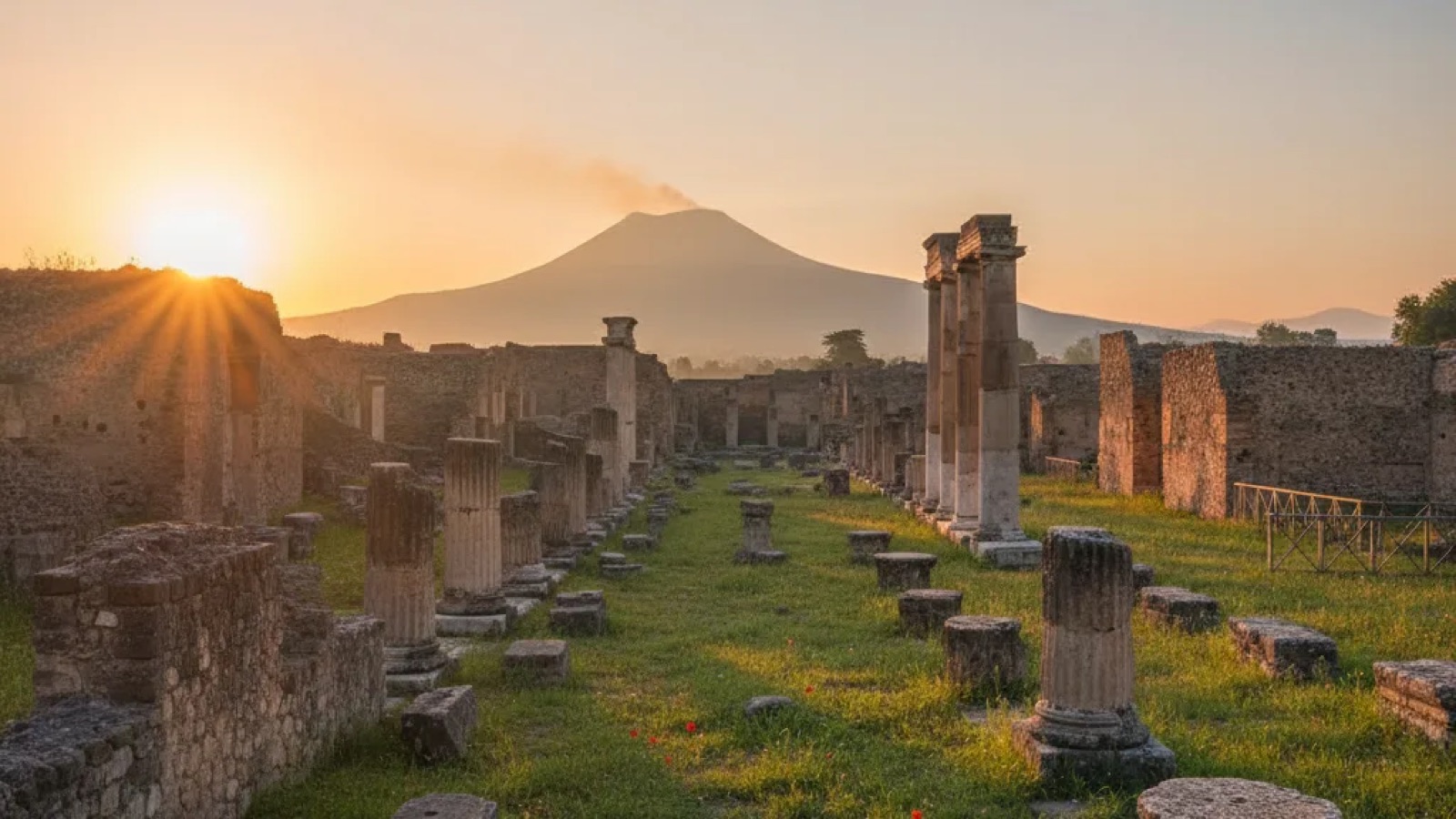
The scale of Pompeii is the first thing that hits you. This was not a village; it was a bustling Roman city of over 10,000 people, and exploring it feels like walking through a ghost town spread over a vast area. You’ll wander down stone-paved streets grooved by chariot wheels, peer into homes, bakeries, workshops, and taverns, and stand in the middle of the vast Forum with the ominous silhouette of Vesuvius looming in the background. It is an unforgettable sight.
My advice is to plan for at least four to five hours to do it any justice. Highlights include the Forum, the amphitheatre, the surprisingly graphic Lupanar (brothel), and the grander villas like the House of the Vettii or the House of the Faun (where the Alexander Mosaic in the museum was found). The plaster casts of victims, captured in their final moments, are profoundly moving and a stark reminder of the human tragedy that unfolded here.
Practicalities are crucial. There is very little shade, so a hat, sunscreen, and a lot of water are non-negotiable, especially from May to September. Wear your most comfortable walking shoes. The size of the site can be overwhelming, so it’s well worth either hiring a licensed guide at the entrance or getting a good audio guide to give structure and stories to your visit. It turns a walk through ruins into a journey through history.
Photography Note: The classic shot is from the southern end of the Forum, looking north down the length of the old square, framing Mount Vesuvius perfectly between the ruined columns. It tells the entire story in a single image.
Herculaneum: The Other, Better-Preserved City
While Pompeii gets most of the attention, its smaller neighbour Herculaneum (modern Ercolano) is, in some ways, even more remarkable. It was a wealthier town and was buried by a different kind of volcanic event—a superheated pyroclastic flow that carbonised organic material rather than just burying it in ash. As a result, the level of preservation is staggering. You can see original wooden doors, bed frames, and even a baby's crib, all turned to charcoal but perfectly intact.
Because it's much smaller than Pompeii, you can explore Herculaneum thoroughly in about two to three hours. It feels more intimate and less daunting. You can wander into two-storey villas with many of their mosaics and frescoes still in situ, giving you a much better sense of what these Roman homes actually looked like. If you have time, visit both sites. If you only have time for one, the choice is tough: Pompeii for epic scale and the feeling of a complete city, or Herculaneum for incredible detail and preservation.
Climbing the Volcano: The Crater of Vesuvius
After seeing the destruction it caused, it feels only right to pay a visit to the culprit. Climbing Mount Vesuvius offers a completely different perspective. From the park entrance, a bus takes you up most of the way. The final part of the "climb" is a wide, gravel path that winds its way up to the crater rim—it's about a 20-30 minute walk, steep but manageable for anyone with a reasonable level of fitness.
The reward is twofold. First, peering into the crater itself—a vast, steaming, rocky pit—is a humbling reminder of the immense geological power sleeping beneath your feet. Second, the panoramic view from the top is one of the best in all of Italy. On a clear day, you can see the entire Bay of Naples, the city, the Sorrento Peninsula, and the island of Capri laid out like a map. It’s absolutely spectacular. Be aware that access to the trail and summit is now strictly controlled and you must book tickets online for a specific time slot in advance. It's also subject to weather closures, so check the forecast and official park status before you go.
Photography Note: From the top of Vomero hill in Naples, especially from the grounds of Castel Sant'Elmo, you can get incredible sunset photos looking out over the sprawling city rooftops towards the distinct shape of Vesuvius on the horizon. The golden hour light turns the whole bay a beautiful, warm colour.
Explore in Depth
Naples is the perfect gateway to some of Southern Italy's other incredible destinations. For more ideas on how to connect your trip, see the related guides.
Frequently Asked Questions
Is Naples dangerous for tourists?
Naples has a reputation for being dangerous, but for most travellers, the reality is much safer. The main concerns are pickpocketing and petty theft, particularly in crowded areas like train stations and on public transport. Behave as you would in any large city: be aware of your surroundings, don't flash valuables, and keep your bags secure. The chaotic traffic, especially the scooters, is often a more immediate hazard than crime. By taking sensible precautions, you’ll find Naples to be a welcoming, if intense, city.
Can I visit Pompeii and Vesuvius in one day?
Yes, it's possible but it makes for a very long and tiring day. A popular combination is to visit Pompeii in the morning for 3-4 hours while it's cooler, then take a bus or taxi up to Vesuvius for the afternoon crater walk. It's only worth doing if you're short on time. A better approach is to dedicate one full day to Pompeii, perhaps combining it with the smaller site of Herculaneum, and visit Vesuvius on a separate half-day trip to properly appreciate each experience without rushing.
Should I choose Pompeii or Herculaneum if I only have time for one?
This depends on what you're looking for. Go to Pompeii for its immense scale and to get the full feeling of a lost Roman city, with its forum, amphitheatres, and varied neighbourhoods. It's the epic, iconic choice. Choose Herculaneum for incredible detail and preservation. It's smaller, more manageable, and the survival of wooden structures and upper floors provides a more intimate and astonishing look at Roman life. If you love fine detail and are short on time, Herculaneum is a fantastic option.
Do I need to book tickets for Pompeii and Vesuvius in advance?
For Vesuvius, yes, advance booking online is now mandatory. Access to the crater path is by timed entry slot only, so you must book ahead to avoid being turned away. For Pompeii, advance booking is highly recommended, especially during high season (April-October) and on weekends, to avoid very long ticket queues. For other sites like the Cappella Sansevero in Naples, booking weeks in advance is essential. Always check the official websites for the latest ticketing rules before your visit.
Is it worth staying in Naples, or should I just do a day trip from Rome?
While a day trip from Rome is technically possible thanks to high-speed trains, it’s best avoided. You would barely scratch the surface. Naples deserves several days to appreciate its unique atmosphere, incredible food, and world-class museums. Staying in Naples also makes it a far more relaxed and logical base for exploring Pompeii, Vesuvius, and the Amalfi Coast. A day trip will feel rushed and stressful, and you'll miss out on the magic of the city in the evenings.
Final Thoughts
Naples and the lands in the shadow of Vesuvius are a corner of the world that gets under your skin. The contrast is what stays with you: the relentless, chaotic, forward-moving energy of Naples set against the silent, static tragedy of Pompeii. One is a city of noise, the other a city of echoes. To experience both is to understand something profound about Italy, and about the sheer resilience of life in the face of history and nature's power.
Few places feel as raw, as honest, or as unapologetically themselves as Naples. It won't hold your hand, but if you meet it on its own terms, it will reward you with some of the most memorable travel experiences you'll ever have. So go, eat the pizza, brave the Circumvesuviana, climb the volcano, and walk the streets of the dead. You’ll come home with stories to tell.