Andalusia Travel Guide: Seville, Granada, Cordoba
Planning southern Spain: the big three Moorish cities, the white villages, when to go and how to link it all by train and car.
In this guide
- Quick Facts
- The Moorish Heart of Spain
- Seville: The Soul of Andalusia
- Granada and the Last Sigh of the Moors
- Cordoba's Mezquita: A Forest of Arches
- The White Villages (Pueblos Blancos)
- Getting Around Andalusia: Train vs. Car
- Malaga, Cadiz, and Jerez
- Finding Authentic Flamenco
- Andalusian Flavours: Tapas and Traditions
- When to Visit: Sun, Fiestas, and Siestas
- Explore in Depth
- Frequently Asked Questions
- Final Thoughts
This guide is part of our Spain Itinerary: Madrid, Andalusia and Barcelona — start there for the overview, when to go and how to get around.
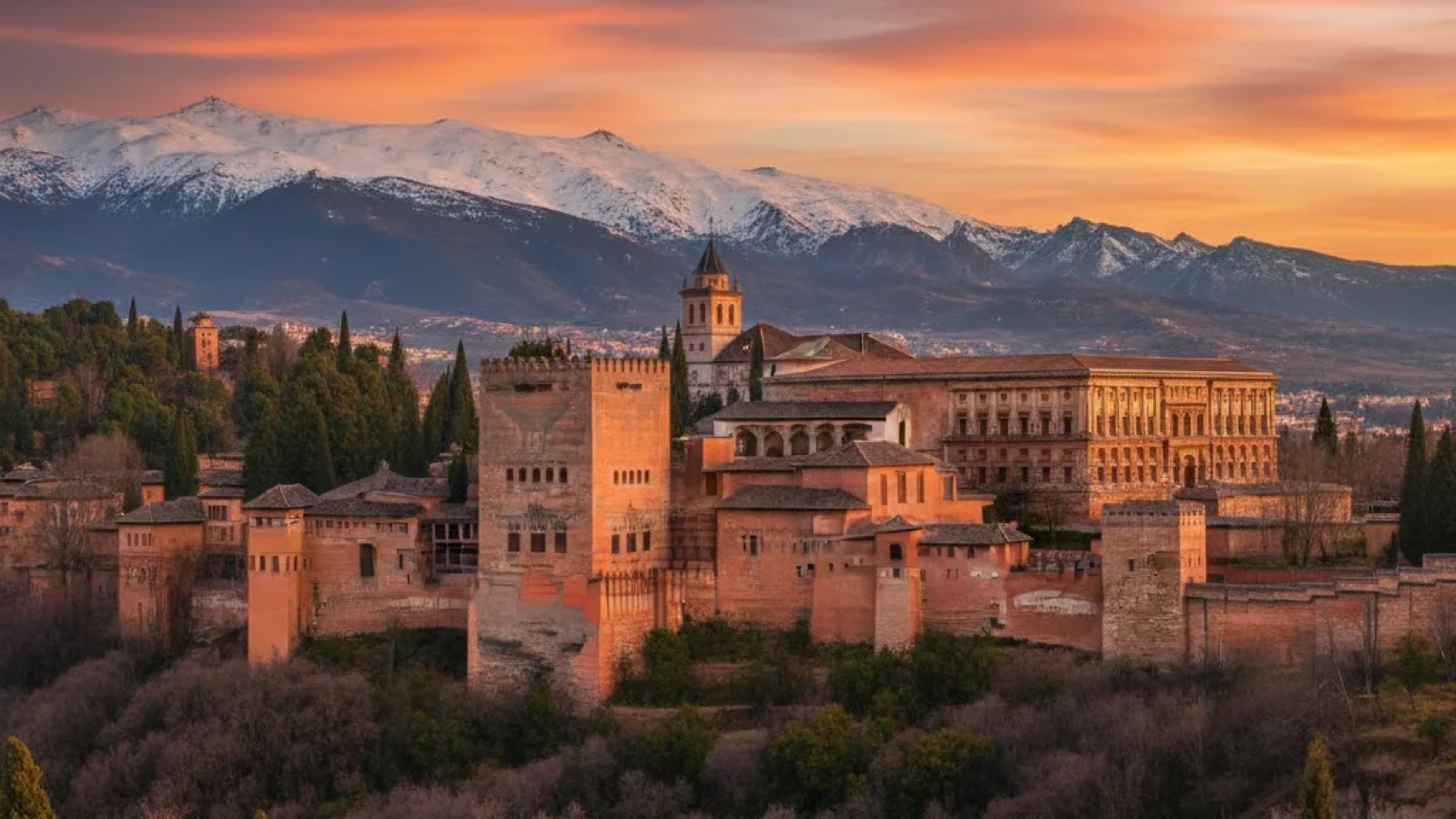
In Granada, head at dusk to the Mirador de San Nicolas in the Albaicín quarter, a simple plaza packed with travellers and locals all facing the same direction. Across the valley, perched on its own hill, the Alhambra isn’t just a fortress; it’s a living thing, catching the last of the day's light, glowing rose-gold against the deep blue shadows of the Sierra Nevada mountains behind. That moment is the essence of Andalusia: a breathtaking collision of history, art, and raw, soul-stirring beauty.
This is a land that looks and feels profoundly different from the rest of Spain. For nearly eight centuries, it was the heart of Moorish Iberia, known as Al-Andalus, and that legacy is everywhere you look. This guide is built around the classic Andalusian triangle: the grand cities of Seville, Granada, and Cordoba. We'll explore how to navigate them using Spain's excellent trains, along with the crucial advice you need for securing your spot at the magnificent Alhambra. We'll then break out into the countryside, hiring a car to wind our way through the famous white villages, or pueblos blancos, clinging to staggering clifftops. From the sherry bodegas of Jerez to the ancient port of Cadiz and the underrated vibrance of Malaga, we’ll dive into the food, the flamenco, and the practicalities of travelling through Spain’s sun-drenched south.
Quick Facts
- Location: The southernmost autonomous community of mainland Spain, bordering Portugal to the west and the Mediterranean Sea and Atlantic Ocean to the south.
- Getting There: The main international gateway is Málaga-Costa del Sol Airport (AGP). Seville Airport (SVQ) is another excellent option. High-speed AVE trains connect Seville and Cordoba directly with Madrid in just a few hours.
- Getting Around: High-speed (AVE) and regional (Avant/MD) trains are brilliant for travel between the main cities of Seville, Cordoba, Granada, and Malaga. A hire car is almost essential for properly exploring the white villages and rural areas.
- Language & Currency: Spanish (Castilian) is the official language. The currency is the Euro. While English is spoken in major tourist centres, learning a few Spanish phrases is always appreciated.
- Best Time to Visit: Spring (late March to early June) and autumn (September to October) offer beautiful, sunny weather perfect for sightseeing. The summers (July and August) are intensely hot, while winter can be cool and sometimes rainy, though still mild compared to northern Europe.
The Moorish Heart of Spain
To really understand Andalusia, you need to look back in time. For 781 years, from the 8th to the 15th century, this region was a centre of Islamic civilisation in Europe. This wasn't just a military occupation; it was a period of extraordinary cultural, scientific, and artistic flourishing. The caliphs and emirs of Al-Andalus built cities that were the envy of the known world, with libraries, observatories, and palaces of unimaginable beauty. They introduced new crops—oranges, lemons, sugarcane, saffron—and sophisticated irrigation techniques that transformed the landscape into the fertile olive- and fruit-growing region we see today.
This history is why Andalusia feels so distinct. The architecture is the most obvious clue. You won't find the grand, imposing palaces of Paris or Vienna here. Instead, you'll discover inward-facing buildings with cool, shaded courtyards filled with fountains and fragrant plants, intricate tilework (azulejos) in dazzling geometric patterns, and horseshoe arches framing delicate stucco carvings. This is the legacy of the Moors, refined and adapted over centuries. When the Christian monarchs completed the Reconquista in 1492, they didn't just bulldoze this history. They were so captivated by its beauty that they incorporated it into their own churches and palaces, creating a unique hybrid style called Mudéjar. The Real Alcázar in Seville is perhaps the greatest example of this on Earth.
Seville: The Soul of Andalusia
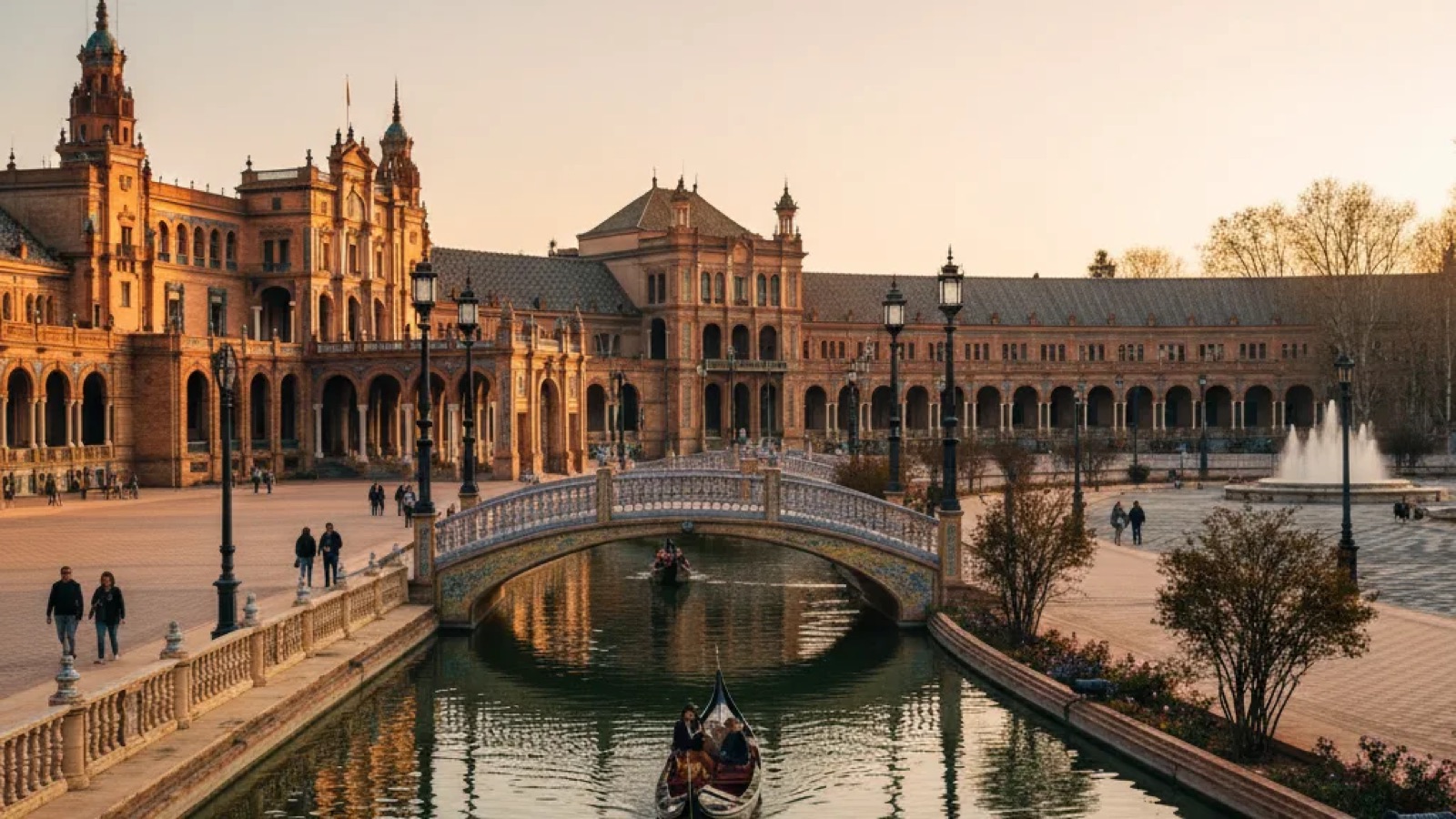
If Andalusia has a beating heart, it’s Seville. This is a city of passion, pageantry, and pure swagger. It’s the home of flamenco (or at least one of its most important birthplaces), bullfighting, and extravagant religious festivals. Your visit will naturally centre on its three monumental sights. The Catedral de Sevilla is a gothic behemoth, the largest of its kind in the world, built on the site of the former mosque with the express intention of showing off the city's new Christian power. Its most beautiful feature, however, is the one that remains from its Islamic past: the Giralda, the former minaret, which you can climb via a series of ramps for spectacular city views.
Steps away is the Real Alcázar. While the Alhambra in Granada gets much of the fame, the Alcázar is just as mesmerising. It’s a breathtaking tapestry of Moorish, Mudéjar, Gothic, and Renaissance styles, and is still an official residence of the Spanish royal family. Give yourself hours to get lost in its succession of jaw-dropping halls and patios, culminating in the golden splendour of the Patio de las Doncellas. Afterwards, lose yourself in the Barrio Santa Cruz, the old Jewish quarter next door. It's a tangle of impossibly narrow lanes, hidden plazas, and whitewashed walls dripping with bougainvillea.
Photography Note: The best shots in Seville are often the simplest. Look for the small, hidden courtyards in the Barrio Santa Cruz. The contrast of the dark green leaves and bright fruit of the orange trees against whitewashed walls, often with a splash of blue from a painted door or flowerpot, makes for a perfect composition. The soft, diffused light inside these patios is incredibly forgiving.
Granada and the Last Sigh of the Moors
Granada is a city with a deep sense of melancholy and romance, the final stronghold of the Nasrids before they surrendered to Ferdinand and Isabella in 1492. It is, of course, dominated by its singular treasure: the Alhambra. This is not just a palace; it's a vast complex of palaces, fortifications, and gardens that represents the absolute pinnacle of Moorish art and architecture in Spain.
To be absolutely clear about this: you must book your tickets for the Alhambra months in advance from the official website. Tickets sell out completely, and turning up on the day hoping to get in is a recipe for bitter disappointment. Your ticket will have a timed entry for the Nasrid Palaces, the most spectacular part of the complex, and you must be there at your allotted time. The sheer intricacy of the tilework, the impossibly delicate plaster carvings that look like lace, and the perfect harmony of water, light, and stone in the Court of the Lions will stay with you forever.
Don't neglect the rest of the complex, especially the Generalife, the summer palace with its gorgeous gardens, fountains, and commanding views. The city of Granada itself is also a joy. Wander the Albaicín, the old Arab quarter on the hill opposite the Alhambra, a maze of cobbled streets and jasmine-scented plazas. Or explore the Sacromonte neighbourhood, famous for its cave dwellings and flamenco shows.
Photography Note: The classic shot of the Alhambra is from the Mirador de San Nicolas in the Albaicín at sunset. It's famous for a reason. Get there early to claim a spot. As the sun dips, it bathes the fortress walls in a warm, golden light that is simply magical. Have your camera ready for that brief window when the lights on the Alhambra come on but the sky still has some deep blue colour.
Cordoba's Mezquita: A Forest of Arches
While Seville has grandeur and Granada has the Alhambra, Cordoba offers something quieter and arguably even more profound. In the 10th century, Cordoba was the largest city in Europe, a beacon of learning and culture under the Umayyad Caliphate. At its heart was the Great Mosque, or Mezquita. The experience of walking into it for the first time is unforgettable. You are suddenly standing in a forest of over 850 columns made of jasper, onyx, marble, and granite, topped with iconic red-and-white striped double arches that stretch away into the dim light. It feels infinite.
The story gets more complex when, after the Reconquista, the new Christian rulers built a full-blown cathedral right in the middle of the mosque. It’s a jarring, fascinating juxtaposition of two faiths and two artistic worlds under one roof. Beyond the Mezquita, Cordoba is a delight to explore on foot. The old Jewish Quarter (Judería) is a beautifully preserved labyrinth of narrow streets, artisan shops, and hidden patios. Every May, the city hosts the Fiesta de los Patios, where residents open their private, flower-filled courtyards to the public. It's a wonderful tradition that showcases the city's soul.
The White Villages (Pueblos Blancos)
To see the other side of Andalusia, you need to get in a car and head for the hills. The pueblos blancos are a collection of stunning villages, their houses whitewashed with lime to deflect the fierce summer sun, that spill down hillsides and cling to dramatic clifftops across the provinces of Cádiz and Málaga. They were originally fortified settlements along the frontier between the Christian and Moorish kingdoms.
The most famous is Ronda, a town split in two by the El Tajo gorge, a spectacular 100-metre-deep chasm. The Puente Nuevo (New Bridge), an 18th-century engineering marvel, spans the gorge and is one of Spain’s most iconic images. Elsewhere, Arcos de la Frontera is the quintessential hilltop town, a cascade of white buildings tumbling down from a sandstone ridge, crowned by a castle and a church. Driving the winding roads to reach it is part of the adventure. Zahara de la Sierra is another gem, sitting beneath the ruins of a Moorish castle and overlooking a startlingly turquoise reservoir.
Photography Note: To photograph Ronda's Puente Nuevo, don't just stay up top. There are walking trails that lead down into the gorge, offering incredible perspectives looking back up at the bridge. The light is often best in the morning when it illuminates the face of the bridge and the town, creating beautiful contrast with the shadows in the gorge below.
Getting Around Andalusia: Train vs. Car
Your transport strategy for Andalusia depends entirely on your itinerary. For connecting the major cities, the train is king. Spain's high-speed AVE and Avant services are fast, comfortable, and efficient. You can get from Seville to Cordoba in around 45 minutes, and from Cordoba to Granada or Malaga in under two hours. Booking tickets in advance on the official Renfe website is highly recommended, as prices can rise closer to the date of travel.
However, the moment you want to explore the pueblos blancos or the stunning rural landscapes, a hire car becomes essential. Public transport between the villages is sparse and infrequent, making it impractical to see more than one in a day. A car gives you the freedom to explore at your own pace, to stop at a roadside venta for lunch, or to pull over and photograph an endless sea of olive groves stretching to the horizon. Driving the winding mountain roads requires confidence, but the scenery is your reward. The best approach is to use the train for the city-to-city legs and then hire a car for a few days specifically for exploring the countryside.
Malaga, Cadiz, and Jerez
Many travellers see Malaga as just the location of the airport for the Costa del Sol, but that's a huge mistake. Over the past decade, Malaga has transformed itself into a genuinely exciting cultural destination. The historic centre is a largely pedestrianised maze of handsome 19th-century buildings, packed with brilliant tapas bars and shops. It boasts a Roman theatre, a formidable Moorish Alcazaba, and, most famously, the Museo Picasso Málaga, celebrating the city's most famous son.
Out on the Atlantic coast, Cadiz feels like another world entirely. It's one of the oldest continuously inhabited cities in Western Europe, a port founded by the Phoenicians. Built on a narrow spit of land, it’s almost entirely surrounded by water, giving it a bright, salty, weather-beaten charm. Wander its old town, watch the waves crash against the sea walls, and eat some of the freshest seafood in Spain.
Inland from Cadiz lies Jerez de la Frontera, a city synonymous with two of Spain's most famous exports: sherry and dancing horses. It's the epicentre of the "Sherry Triangle," and visiting a bodega to learn about the unique solera system of ageing and taste the different varieties—from bone-dry Fino and Manzanilla to rich, sweet Pedro Ximénez—is a must-do. It’s also a major centre for horsemanship, home to the Royal Andalusian School of Equestrian Art.
Finding Authentic Flamenco
Flamenco is not just a dance; it's a raw, passionate art form encompassing singing (cante), guitar playing (toque), and dance (baile). Its roots lie in the marginalised communities of Andalusia, and its soul is one of profound emotion, from deep sorrow to defiant joy. You will see ads for flamenco shows everywhere, and while many are polished and entertaining, they can sometimes feel like a tourist performance.
For a more intimate experience, try to find a peña. These are essentially local, members-only clubs dedicated to preserving the art of flamenco. They are less about spectacular dancing and more about the power of the song. While they aren't always open to the public, some host special nights or can be accessed for a small fee. Ask at your hotel or a local tourist office. Otherwise, seek out smaller, dedicated tablaos in neighbourhoods like Triana in Seville or Sacromonte in Granada, which often have a more authentic, less "dinner-and-a-show" atmosphere. Real flamenco should give you goosebumps.
Andalusian Flavours: Tapas and Traditions
Food in Andalusia is a way of life. The culture of tapas—small plates of food served with drinks—reaches its zenith here. It’s a wonderfully social way of eating. The idea is to move from bar to bar, having one or two specialities at each. A plate of thinly sliced jamón ibérico de bellota (acorn-fed Iberian ham) with a glass of dry sherry is one of life's great pleasures. In some cities, like Granada, a free tapa is still often served with every drink you order.
On a hot day, nothing beats the region's famous cold soups. Gazpacho is the best-known, a liquid salad of tomato, cucumber, pepper, and garlic. But don't miss salmorejo, a thicker, creamier version from Cordoba made with just tomatoes, bread, garlic, and olive oil, often topped with diced ham and hard-boiled egg. On the coast, look for pescaito frito, a mixed plate of lightly floured and fried fresh fish, best eaten with a squeeze of lemon and a view of the sea.
When to Visit: Sun, Fiestas, and Siestas
Timing your trip to Andalusia is critical. Avoid visiting in July and August if you can. The heat is not just hot; it's oppressive, regularly soaring well above 40°C in inland cities like Seville and Cordoba. It can make daytime sightseeing exhausting and unpleasant.
The perfect times to visit are spring (April-May) and autumn (September-October). The weather is glorious—warm, sunny, and ideal for exploring. Spring sees the countryside erupt in wildflowers, and it's also when the region's two biggest festivals take place. Semana Santa (Holy Week) is a profoundly moving spectacle of religious processions, but it means cities are incredibly crowded and accommodation is at a premium. Two weeks later, Seville explodes with the Feria de Abril, a week-long party of dancing, drinking, and parading on horseback. It's an incredible sight, but again, plan far, far ahead.
Be aware of the rhythm of the day. Many shops, and even some sights, close for a siesta in the afternoon, typically from around 2 pm to 5 pm, to avoid the worst of the heat. Life picks up again in the evening. Dinner is a late affair; restaurants rarely get busy before 9 pm, and it's common to see families with small children eating at 10 pm or later. Embrace the slower pace—it's all part of the experience.
Explore in Depth
This guide gives you the big picture of this incredible region. Ready to dive deeper into its most captivating city? Our detailed guide to Seville will take you through the best things to do, from navigating the Alcázar to finding the best tapas bars.
Frequently Asked Questions
Is it better to stay in Granada or just day-trip to see the Alhambra?
You should absolutely stay in Granada for at least one or two nights. A day trip from another city would be incredibly rushed and stressful, especially given the strict timed entry for the Alhambra's Nasrid Palaces. Staying allows you to soak in the city's unique atmosphere, wander the Albaicín quarter at a leisurely pace, and experience the magical view of the floodlit Alhambra from the Mirador de San Nicolas after sunset. Granada has a charm all its own that you would completely miss on a flying visit.
Can I visit the White Villages (Pueblos Blancos) without a car?
It's very difficult, and not recommended. While some bus services exist between the larger towns, they are infrequent and don't connect the smaller, more charming villages. You would spend most of your day waiting for transport rather than exploring. Hiring a car provides the freedom and flexibility to discover these places properly, stop for photo opportunities of the stunning landscapes, and visit several villages in one day. Organised bus tours are an alternative, but they lack the spontaneity of your own wheels.
What is the difference between the Alcázar in Seville and the Alhambra in Granada?
Both are stunning royal palaces with Moorish roots, but they are quite different. The Alhambra is a vast, fortified palace-city, the last bastion of the Nasrid dynasty in Spain. It's famous for its original 14th-century Islamic architecture, particularly the Nasrid Palaces. The Real Alcázar of Seville, while originating as a Moorish fort, was extensively rebuilt by Christian kings in the Mudéjar style, which blends Moorish and Gothic influences. It's a functioning royal palace even today. Think of the Alhambra as a breathtaking historical monument, and the Alcázar as a living, layered palace showcasing centuries of blended styles.
How many days do I really need for Andalusia?
To do the region justice, allow a minimum of 10 to 14 days. This allows you to spend 2-3 nights in each of the main cities—Seville, Granada, and Cordoba—without feeling rushed. It also gives you a few days to hire a car and properly explore the White Villages like Ronda and Arcos de la Frontera. If you only have a week, you could cover the main city triangle, but you'd be moving quickly. Anything less than a week, and you're better off focusing on just one or two cities.
Is it easy to find vegetarian food in Andalusia?
It has become much easier in recent years, but you need to be proactive. Traditional Andalusian cuisine is heavily focused on ham, meat, and seafood. However, many classic tapas are naturally vegetarian! Look for espinacas con garbanzos (spinach with chickpeas), pisto (a ratatouille-like vegetable stew), patatas bravas, tortilla Española (potato omelette), and of course, the cold soups gazpacho and salmorejo. When ordering, it can be useful to know the phrase "soy vegetariano/a" and to clarify that you don't want ham (sin jamón) or tuna (sin atún), which can sometimes be added as a garnish.
Final Thoughts
Andalusia gets under your skin. It’s a place that rewards return visits, each time revealing something new. It might be a courtyard you’ve never noticed before, the taste of a local olive oil that’s different from any you’ve had, or the sound of a flamenco singer whose voice seems to carry centuries of history. It’s a region that asks you to slow down. To take that afternoon siesta, to linger over your tapas, to wait patiently for the sun to set over the Alhambra.
It’s a land of contrasts—of sun-bleached landscapes and cool, shaded patios; of fiery passion and quiet tradition; of Islamic arches and Catholic bell towers. More than just a collection of incredible sights, Andalusia offers a feeling, a rhythm of life that’s governed by the sun and a deep connection to its layered past. Go, and let its warmth seep into your bones.