Seville Travel Guide: Alcazar, Cathedral and Tapas
Seville in two or three days: the Alcazar and cathedral, Santa Cruz and Triana, flamenco, and how to handle the Andalusian heat.
In this guide
- Quick Facts
- Seville's UNESCO Heavyweights: The Alcázar, Cathedral & Giralda
- Getting Lost in the Santa Cruz Quarter
- The Grandeur of Plaza de España & María Luisa Park
- Triana: The Soul of Seville
- Modern Views and Riverside Strolls
- The Art of Tapas in Seville
- Understanding Flamenco: Tablaos and Peñas
- Beating the Heat & Navigating the Festivals
- Easy & Excellent Day Trips from Seville
- Explore in Depth
- Frequently Asked Questions
- Final Thoughts
This guide is part of our Andalusia Travel Guide: Seville, Granada, Cordoba — start there for the overview, when to go and how to get around.
The air in Seville hangs thick with the scent of orange blossom and centuries of history. Sit on a cool stone bench in the Plaza del Triunfo as the sun bleeds out of the sky, and watch the Giralda, the cathedral's mighty bell tower, begin to glow golden against the deepening blue. The clip-clop of a horse-drawn carriage echoes off the ancient walls of the Alcázar, and from a nearby laneway in the Santa Cruz quarter comes the happy clatter of plates and the rising murmur of voices. It feels less like a city and more like a stage, with the performance of daily life about to begin. Seville doesn't just display its history; it breathes it, lives it, and invites you to do the same.
Seville is the undisputed heart of Andalusia. It’s a city of scorching summer passion, grand monuments, and hidden, flower-filled patios. Every visit can reveal a new alleyway or a tapas bar that feels like a local secret. This guide walks you through the must-see sights like the majestic Real Alcázar and the world's largest Gothic cathedral. We’ll get deliberately lost in the old Jewish quarter, cross the river to the soulful neighbourhood of Triana, and unpack the essentials of tapas and flamenco culture. It also shares hard-won practical advice on how to navigate the city, handle the intense summer heat, and capture its unique, golden light with your camera.
Quick Facts
- Location: The capital of Andalusia, in southern Spain, situated on the banks of the Guadalquivir River.
- Getting There: Seville Airport (SVQ) is well-connected internationally, with an easy bus link to the city centre. The Santa Justa train station is a major hub for Spain's high-speed AVE network, making travel from Madrid, Córdoba, and other cities incredibly fast and efficient.
- Getting Around: The historic centre is wonderfully compact and almost entirely walkable. For longer distances, there are public buses, a tram line, and plentiful taxis. A car is not recommended for exploring the city itself.
- Language & Currency: Spanish is the official language. As with the rest of Spain, the currency is the Euro. While English is spoken in major tourist areas, a few words of Spanish will be warmly appreciated.
- Best Time to Visit: The shoulder seasons of spring (March to May) and autumn (September to November) offer glorious weather, perfect for exploring on foot. Spring is particularly beautiful with the orange trees in blossom.
Seville's UNESCO Heavyweights: The Alcázar, Cathedral & Giralda
In the heart of Seville sits a trio of monuments so significant they form a UNESCO World Heritage site: the Real Alcázar, the Cathedral, and the General Archive of the Indies. This is ground zero for any visit and where you'll feel the weight of Seville’s complex history most profoundly.
The Real Alcázar of Seville
If you see only one thing in Seville, make it this. The Real Alcázar is not just a palace; it’s a breathtaking tapestry of cultures. Originally a Moorish fort, it was expanded by Christian kings after the Reconquista, most notably by Pedro I of Castile. He employed craftsmen from the Islamic kingdoms of Granada and Toledo, resulting in the pinnacle of Mudéjar architecture—a mesmerising blend of Islamic geometric patterns, intricate tilework (azulejos), and soaring Christian-style arches.
Walking into the Patio de las Doncellas (Courtyard of the Maidens), with its serene reflecting pool and exquisite plasterwork, is breathtaking. The real showstopper, however, is the Salón de Embajadores (Ambassadors' Hall). A good photography tip is to stand here for a few moments and just watch the light. The way it filters through the latticework and illuminates the jaw-dropping, gold-domed ceiling is pure magic. Beyond the palace walls, the gardens are an oasis of fountains, pools, palm trees and strutting peacocks, offering a welcome respite from the city's heat.
A crucial piece of advice: You must book your tickets for the Alcázar online, well in advance. That means weeks, or even months, ahead during peak season. Timed-entry slots sell out completely. Do not show up hoping to buy a ticket on the day. Always use the official palace website to purchase your tickets to avoid third-party mark-ups and potential issues.
The Cathedral & Giralda Tower
Looming over the plaza, the Catedral de Santa María de la Sede is an exercise in overwhelming scale. It’s the largest Gothic cathedral in the world, built on the site of the former Almohad mosque with the stated ambition to "build a church so beautiful and so grand that those who see it finished will think we are mad." Standing in its cavernous nave, you realise they succeeded. It's home to the monumental tomb of Christopher Columbus, held aloft by four figures representing the kingdoms of Castile, León, Aragon, and Navarre.
The cathedral’s most iconic feature is its bell tower, the Giralda. This was the minaret of the original mosque, and its design inspired towers across Spain and Morocco. The climb to the top is a highlight. Instead of stairs, you ascend via a series of 35 gentle ramps, wide enough for the former muezzin to ride his horse up for the call to prayer. The reward is one of the best panoramic views over Seville, looking down onto the Patio de los Naranjos (Courtyard of Orange Trees) and across the rooftops of Santa Cruz.
The classic photography spot is the corner of Plaza del Triunfo during the ‘blue hour’ just after sunset. The cathedral and Giralda are floodlit, and their warm glow against the deep indigo sky is a classic Seville shot.
Getting Lost in the Santa Cruz Quarter
Right next to the Alcázar and Cathedral lies the Barrio de Santa Cruz, Seville’s former Jewish quarter. This is not a place for maps and itineraries. The best advice is to simply plunge in and allow yourself to get lost. The neighbourhood is a delightful labyrinth of impossibly narrow, cobbled streets that suddenly open onto tiny, sun-drenched plazas. Whitewashed walls are adorned with wrought-iron grilles and bursting with colourful geraniums and bougainvillea.
Every corner you turn reveals a new-found secret: a hidden courtyard, a trickling fountain, or the scent of jasmine hanging in the air. This is also where you’ll see Seville’s famous orange trees everywhere. A quick note on those: please don’t try to eat the fruit! These are Seville oranges, a bitter variety used to make the world-famous marmalade, not for snacking. As you wander, you’ll find countless small bars and restaurants tucked away. It’s touristy, yes, but its charm is utterly undeniable, especially in the quieter morning hours or late at night.
The Grandeur of Plaza de España & María Luisa Park
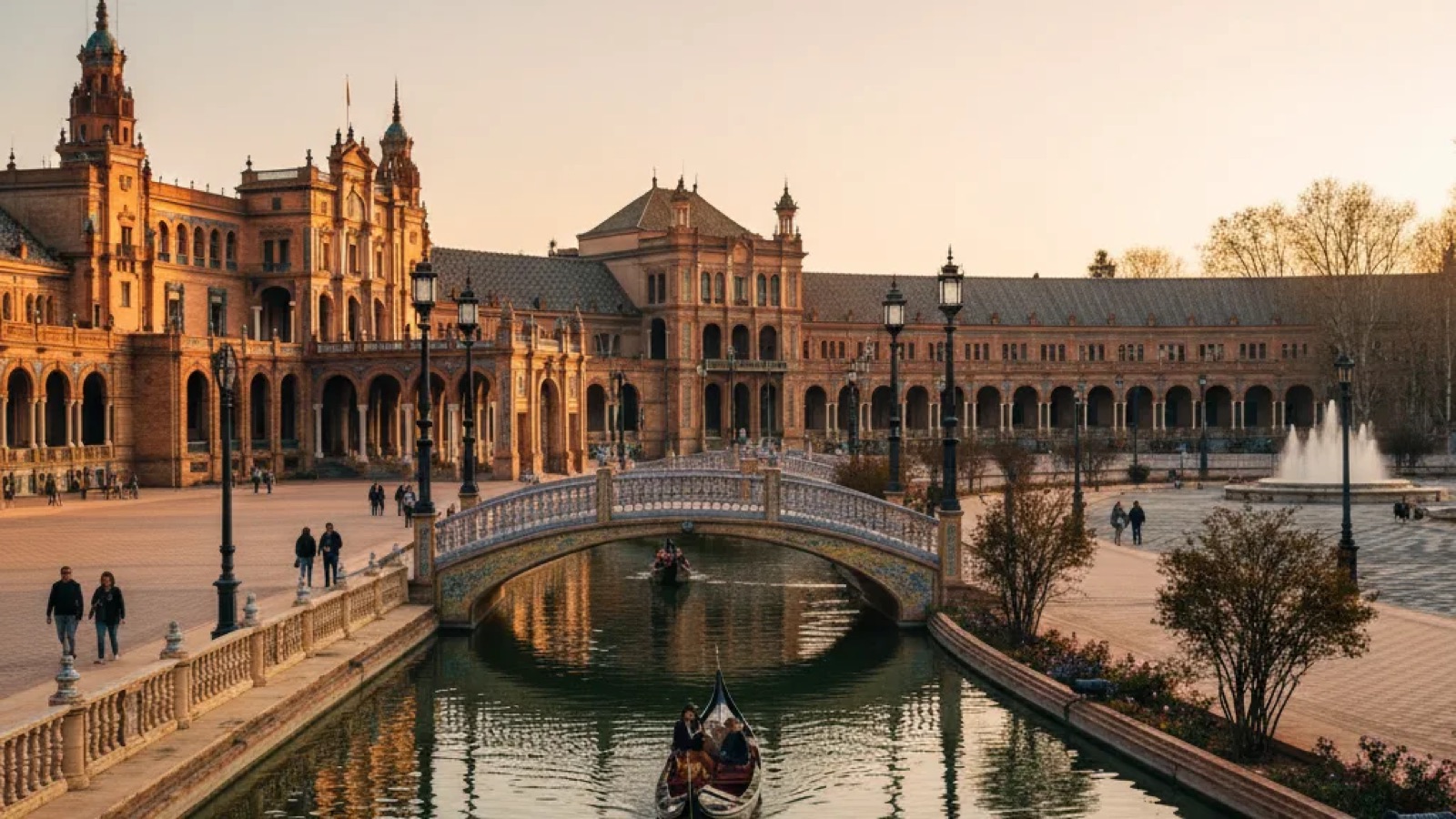
A short, pleasant walk from the historic centre brings you to a spectacle of a completely different era. Built for the Ibero-American Exposition of 1929, the Plaza de España is a vast, semi-circular masterpiece of Regionalist Revival architecture. It’s a stunning combination of brick, patterned tiles, and soaring towers, flanked by a 500-metre canal where you can rent small rowing boats.
The highlights are the 48 tiled alcoves, or ‘map-benches’, set along the walls. Each one represents a different province of Spain, depicted with a detailed map and intricate scenes. It’s a favourite spot for Sevillanos and visitors alike. For photographers, the top tip is to arrive just after sunrise. The morning light floods the plaza, the crowds are gone, and you can capture the beautiful reflections in the canal without a single person in your shot. It feels like you have this entire, monumental space to yourself.
The plaza is bordered by the Parque de María Luisa, a sprawling park that served as the exposition's grounds. It's Seville’s green lung, a glorious expanse of shady avenues, exotic trees, ornate fountains, and hidden pavilions. On a hot afternoon, there's no better place to retreat for a while, find a shady bench, and join the locals in escaping the midday sun.
Triana: The Soul of Seville
Cross the Guadalquivir River via the elegant Puente de Isabel II (colloquially, the Puente de Triana) and you'll find yourself in a neighbourhood with a character all its own. Triana feels different from the monumental centre; it's historically a working-class district of sailors, potters, and artists. It was the heart of the city's Gitano (Romani) community, and is considered by many to be one of the spiritual birthplaces of flamenco.
Your first stop should be the Mercado de Triana, a bustling market built over the remains of the historic Castillo de San Jorge. Inside, it’s a riot of colour and sound, with stalls selling fresh produce, fish, and jamón, alongside small bars where you can grab a drink and a quick tapa. Triana is also famous for its ceramics. Walking down streets like Calle Alfarería, you’ll see workshops and shops (ceramicas) selling the beautiful hand-painted tiles and pottery that adorn so much of Seville.
The neighbourhood truly comes alive in the evening. Its main drag, Calle Betis, which runs along the riverfront, is lined with colourful buildings and an endless array of bars and restaurants. It offers an iconic view back across the water to the Torre del Oro and the Giralda. It's a grittier, more lived-in side of Seville, and essential for a complete picture of the city.
Modern Views and Riverside Strolls
While Seville's identity is steeped in history, it isn’t frozen in time. The most striking example of its modern face is the Metropol Parasol, located at Plaza de la Encarnación. Known locally as "Las Setas" (The Mushrooms), this enormous, undulating wooden structure designed by Jürgen Mayer is a piece of architecture you'll either love or hate. It creates a fantastic contrast with the traditional buildings around it. Take the lift to the top for a winding walkway that provides a unique, 360-degree perspective over the city’s rooftops.
Down by the river, the Torre del Oro ("Tower of Gold") stands as a lonely sentinel. This 13th-century dodecagonal watchtower was part of the old Moorish city walls. The name is said to come from the golden reflection it cast on the water. From here, a stroll along the waterfront promenade is one of the city's simple pleasures, especially on a warm evening as rowers glide by on the Guadalquivir.
For a younger, more alternative evening scene, head north to the Alameda de Hércules. This long, wide plaza, flanked by Roman columns at its southern end, has transformed into a bohemian hub. It’s packed with edgy bars, independent restaurants, and terraces buzzing with students and artists until the early hours.
The Art of Tapas in Seville
Going for tapas in Seville is not just about eating; it’s a social ritual. The verb is tapear—the act of moving from one bar to the next, having a small drink and one or two signature small plates at each. It’s a wonderfully informal and energetic way to spend an evening.
Here’s how to do it like a local. Don’t settle in at one place for a full meal. Find a bar that’s buzzing, preferably one where people are standing at the bar. Squeeze in, get the bartender's attention, and order a drink (a small beer, caña, or a glass of wine) and a tapa. Many bars will have their specialities scrawled on a chalkboard. Classic Seville tapas to look out for are espinacas con garbanzos (a Moorish-spiced spinach and chickpea stew), solomillo al whisky (pork loin in a garlic and whisky sauce), and perfectly fried fish, or pescaíto frito. Once you're done, you pay up and move on to the next spot. The goal is to sample the unique atmosphere and speciality of several places in one night.
Understanding Flamenco: Tablaos and Peñas
You cannot talk about Seville without talking about flamenco. This passionate, powerful art form of song (cante), dance (baile), and guitar (toque) is woven into the fabric of Andalusia. Experiencing it live is a must, but it helps to know what you’re looking for.
For most visitors, the most accessible way to see high-quality flamenco is at a tablao. These are venues dedicated to putting on nightly shows, often including a drink or dinner. While designed for tourists, the quality at the top-tier tablaos is outstanding, featuring world-class professional artists in an intimate setting. It's a formal, ticketed performance, and a fantastic introduction to the art form.
The other option is to find a peña flamenca. These are more like private cultural clubs where aficionados and local members gather to share and perform flamenco in a less formal, more spontaneous setting. The feeling here can be incredibly raw and authentic—the sought-after duende. However, they can be difficult for travellers to find, their performance nights can be unpredictable, and access isn't always guaranteed. For a guaranteed, powerful experience, a reputable tablao in Triana or Santa Cruz is your best bet.
Beating the Heat & Navigating the Festivals
Timing your trip to Seville is critical. The climate and two enormous festivals define the city's calendar and can dramatically shape your experience.
Summer Heat
Be prepared for Seville in summer: it gets incredibly hot. From June to August, daytime temperatures routinely soar above 40°C (104°F). The city adapts to a different rhythm, and you should too. Do all your strenuous sightseeing first thing in the morning. By 1 p.m., the streets start to empty. Do as the locals do: have a long lunch, retreat to your air-conditioned room or a shady park for a siesta, and re-emerge after 6 p.m. The city truly comes back to life late in the evening, with plazas and tapas bars full of people well after midnight.
Festivals: Semana Santa & Feria de Abril
Seville hosts two of Spain's most famous events back-to-back in the spring. Semana Santa (Holy Week) is the week leading up to Easter. It’s a deeply religious and solemn event, with spectacular, centuries-old processions of robed brotherhoods carrying enormous, ornate floats through the streets. It is a profound cultural experience, but it completely takes over the city. Streets are closed for hours, the crowds are immense, and accommodation and flight prices skyrocket. Two weeks later comes the Feria de Abril (April Fair). The city explodes in a week-long party of flamenco dancing, horse-drawn carriages, and celebration. A huge fairground is set up with hundreds of private and public tents (casetas). It’s a joyous, colourful spectacle. Like Semana Santa, it makes travel a logistical challenge. Accommodation must be booked almost a year in advance.
If you are travelling specifically for these events, plan far ahead. If you’re not, and you prefer to explore the city with fewer crowds and lower costs, it's best to avoid these specific weeks.
Easy & Excellent Day Trips from Seville
Seville's excellent transport links make it a perfect base for exploring more of Andalusia. The high-speed AVE train from Santa Justa station is your best friend here.
- Córdoba: Just a 45-minute AVE ride away, this is the easiest and most rewarding day trip. You can travel there and back and spend a full day exploring the main attraction—the absolutely unforgettable Mezquita-Cathedral, a former mosque with a cathedral built right in the middle of its forest of striped arches.
- Cádiz: In around 90 minutes by train, you can be in the oldest continuously inhabited city in Western Europe. Surrounded almost entirely by water, Cádiz has a salty, laid-back vibe, beautiful beaches, and a wonderfully crumbling old town to explore.
- Jerez de la Frontera: The world capital of sherry. A short train ride takes you to Jerez, where you can tour one of the famous sherry bodegas for a tasting. The city is also renowned for its Royal Andalusian School of Equestrian Art, where you can see the famous dancing horses perform.
- Itálica: Just a few kilometres outside Seville, and easily reached by a short public bus ride, lie the ruins of the Roman city of Itálica. It was the birthplace of emperors Trajan and Hadrian and features a massive, well-preserved amphitheatre and beautiful mosaic floors.
Explore in Depth
This guide to Seville is part of a wider series covering the incredible region of Andalusia and a broader cross-country itinerary. If you're planning a bigger trip, these guides will help you connect the dots.
Frequently Asked Questions
How many days do I really need in Seville?
You can see the absolute headline acts—the Alcázar, Cathedral, and Plaza de España—in two very full days. This is a great amount of time for a whirlwind weekend trip. However, three full days is ideal. This gives you time to wander Santa Cruz and Triana at a more leisurely pace, soak up the tapas culture without rushing, and maybe even fit in a flamenco show. With four or five days, you could adopt the local rhythm and add in a fantastic day trip to Córdoba or Cádiz.
Is it really essential to book Real Alcázar tickets in advance?
Yes, one hundred percent. This is the single most important piece of logistical advice for Seville. Tickets, especially for morning slots, regularly sell out weeks or even months in advance during high season (spring and autumn). Do not arrive expecting to join a queue and buy a ticket for the same day, as you will almost certainly be disappointed. Always use the official 'Patronato del Real Alcázar de Sevilla' website to book your timed-entry tickets to ensure you get a fair price and a legitimate entry.
Can you eat the oranges from the trees in Seville?
Technically you can, but you really wouldn’t want to. The thousands of orange trees that line Seville's streets are a specific, bitter variety (Citrus aurantium). They are far too sour and pungent to be eaten fresh off the branch. Their purpose is ornamental, and their fruit is harvested annually to be sold, primarily to the UK, for making marmalade. So admire their beauty and their wonderful scent when they blossom in spring, but stick to the oranges you find at the market for eating!
Is Seville safe for a solo female traveller?
Yes, Seville is generally considered a very safe city for solo travellers, including women. The city centre is compact, well-lit, and often busy with people until late at night, which can feel very reassuring. The usual common-sense precautions for any European city apply: be aware of your surroundings, keep an eye on your belongings in crowded areas, and avoid walking alone in poorly-lit, empty alleyways late at night. The local culture of late dinners and evening strolls means you won't feel out of place being out and about after dark.
What should I wear to a flamenco show?
There is usually no strict dress code for attending a flamenco show at a tablao. However, it's an art form that is deeply respected in Spanish culture, so it’s a nice gesture to dress up a little. Think smart casual. You’ll see a mix of styles, but it’s best to avoid beachwear like shorts, singlets, and flip-flops. Something like trousers or a nice skirt with a smart top, or a simple dress, is perfectly appropriate. It’s about showing respect for the passion and skill of the performers on stage.
Final Thoughts
Seville has a way of getting under your skin. It’s a city of grand statements and quiet whispers. You can be floored by the sheer scale of the cathedral one moment, and then find perfect contentment in a tiny, hidden plaza with nothing but a fountain and a pot of geraniums for company. It’s a city that wears its heart on its sleeve, celebrating its traditions with fierce pride while embracing the rhythms of modern life.
Seville lingers in the memory: the taste of salty olives and cold sherry, the echo of a sole flamenco heel striking the floor, and that unique, buttery light that seems to coat the entire city in gold just before dusk. It's a city that rewards the curious, the patient, and the hungry. Go, walk, look, listen, and taste. Let Seville work its magic on you.