Bergen Travel Guide: Bryggen, Rain and Fjords
Bergen as your fjord base: Bryggen wharf, the funicular and Floyen, the fish market, seven mountains and coping with the rain.
In this guide
- Quick Facts
- Arriving in a City of Water and Mountains
- Wandering the Wooden World of Bryggen
- Beyond the Wharf: Fish Market and Fortress
- A City Between Seven Mountains
- Up to Mount Fløyen for Classic Views
- Conquering Mount Ulriken (and the Vidden Hike)
- Bergen's Art and Musical Heart
- Historic Churches and Charming Streets
- Gateway to the Fjords: Day Trips from Bergen
- Embracing the Bergen Rain
- Planning Your Time: How Many Days and When to Explore
- Explore in Depth
- Frequently Asked Questions
- Final Thoughts
This guide is part of our Norway Travel Guide: Fjords, Trains and Seasons — start there for the overview, when to go and how to get around.
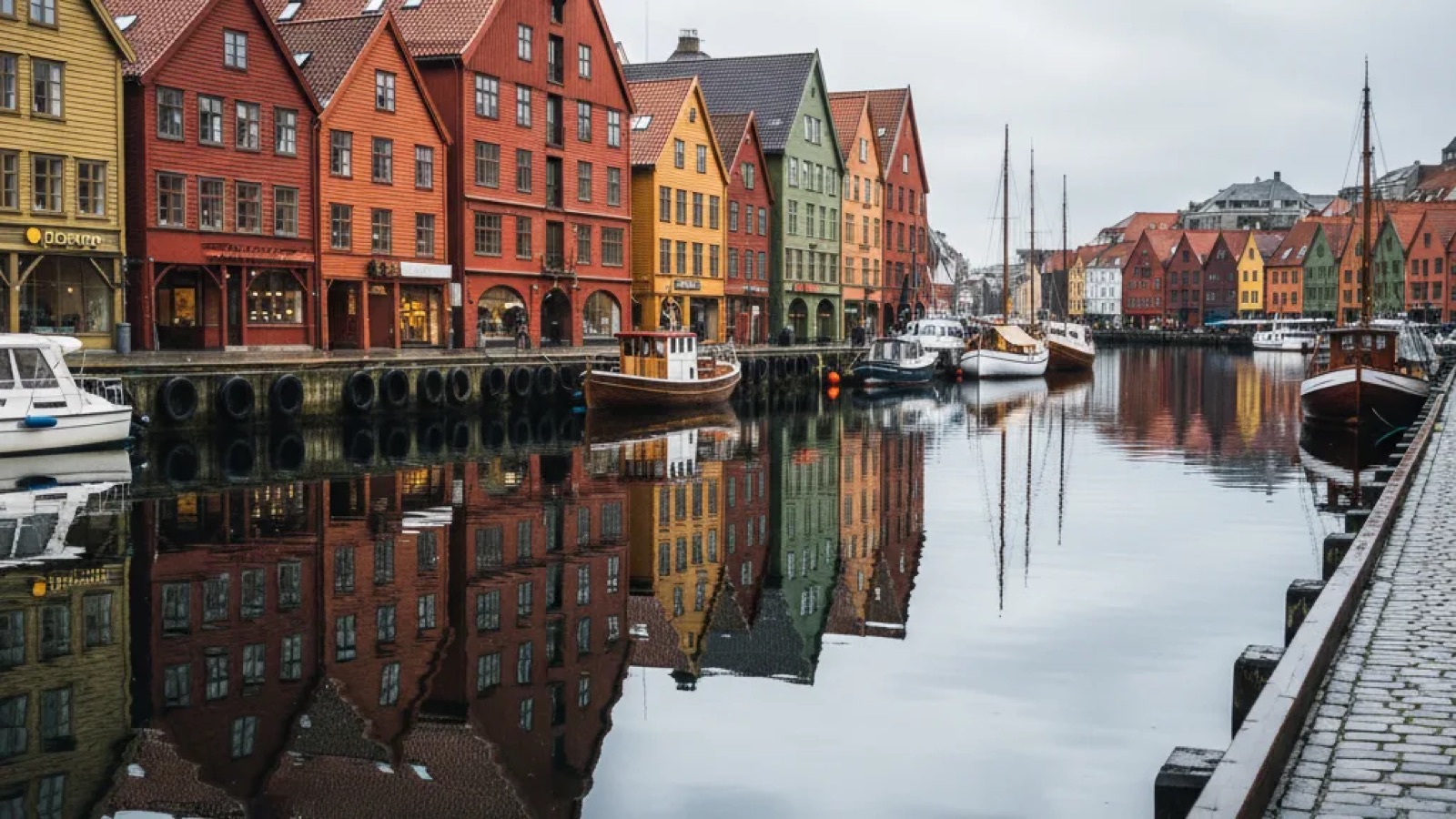
Stand on the opposite side of the Vågen harbour just after the rain stops, when everything gleams and the last of the day’s light catches the iconic gabled facades of Bryggen. The slate-grey sky bruises with evening colour, and the water holds a perfect, shimmering reflection of the old Hanseatic wharf. The air smells of salt, damp wood, and something vaguely fishy and delicious from the nearby market. This is the essence of Bergen: a city wrapped in history, framed by water and mountains, and polished to a shine by its near-constant companion, the rain.
Known as the gateway to the fjords, Bergen is so much more than a starting point. It's a destination in its own right, a vibrant cultural hub with a history as deep as the waters it sails upon. This guide walks you through the creaking wooden alleyways of UNESCO-listed Bryggen, takes you up the mountains that cradle the city for unforgettable views, and gives you the practical advice you need to plan your trip. We'll cover everything from arriving by one of the world's most scenic train rides to choosing the right fjord day trip, and most importantly, how to dress for that famously wet weather and embrace it as part of the city's unique charm.
Quick Facts
- Location: On the southwest coast of Norway, surrounded by mountains and fjords in the heart of Vestland county.
- Getting There: Bergen Airport, Flesland (BGO) is the main international gateway, connected to the city centre by the efficient Bybanen light rail. The spectacular Bergen Railway connects the city with Oslo over a high mountain plateau.
- Getting Around: The city centre is very walkable. Public transport, run by Skyss, includes an extensive network of buses and the Bybanen light rail, which are excellent for reaching sights outside the immediate centre.
- Language & Currency: The official language is Norwegian, but English is spoken fluently almost everywhere. The currency is the Norwegian Krone (NOK). Credit and debit cards are universally accepted.
- Best Time to Visit: May to September offers the best weather, with long daylight hours perfect for hiking and exploring. Be prepared for rain at any time of year. The shoulder seasons of May and September have fewer crowds than the peak months of July and August.
Arriving in a City of Water and Mountains
Your arrival in Bergen sets the stage for the dramatic scenery to come. If you're flying into Bergen Airport (BGO), the easiest and most scenic way into the city is the Bybanen light rail. It’s a smooth, quiet journey of about 45 minutes that glides through suburbs and tunnels, giving you your first glimpse of the Norwegian landscape of granite, pine, and water. It terminates right in the city centre, making it incredibly convenient for most hotels.
Nothing beats arriving on the Bergen Railway, though. This isn't just a train ride; it's a seven-hour journey from Oslo that’s consistently voted one of the most beautiful in the world. After crossing the starkly beautiful Hardangervidda mountain plateau, the largest in Europe, the train begins its dramatic descent towards the coast. You'll pass through countless tunnels, clinging to the side of valleys, with waterfalls cascading just metres from your window. The final hour, as you weave through fjord arms and finally pull into Bergen's historic station, is an unforgettable welcome to the west coast.
Wandering the Wooden World of Bryggen
The first place every visitor goes is Bryggen, and for good reason. This row of colourful, leaning wooden buildings lining the harbour is the historic heart of Bergen and a UNESCO World Heritage site. This was the centre of the Hanseatic League's trading empire from the 14th to the 18th century, a bustling hub where dried cod from the north was traded for grain and goods from the rest of Europe.
Don't just look at the famous facade. The real magic of Bryggen is found by diving into the narrow, creaking wooden alleyways that run between the buildings. As you walk on the timber boardwalks, you can almost hear the ghosts of German merchants. The buildings lean on each other for support, a consequence of time and numerous devastating fires that have swept through the district over centuries. Each time, Bryggen was rebuilt following traditional methods, preserving its unique medieval structure. Today, these historic buildings house small artisan workshops, boutiques, galleries, and restaurants.
Photography Tip: Direct sunlight can be harsh on Bryggen's colourful facades. The best time to shoot is on an overcast day, when the soft, diffused light makes the colours pop without creating deep shadows. Better yet, shoot just after a rain shower when the wet wood deepens in colour and the ground offers beautiful reflections. The view from the other side of the Vågen harbour is classic, especially during the 'blue hour' after sunset.
Beyond the Wharf: Fish Market and Fortress
Right at the head of the harbour, next to Bryggen, you'll find the famous Fish Market (Fisketorget). Let's be realistic: in its modern form, it's largely geared towards tourists. You’ll find bustling stalls selling fresh shrimp, king crab, salmon, and whale meat, alongside prepared seafood sandwiches and platters. While it's an experience to see the variety of seafood Norway has to offer, be aware that it's one of the pricier places to eat in the city. It's best to wander through for the sights and smells, maybe grabbing a small cup of freshly boiled prawns, before finding a more local spot for a full meal.
Just a few minutes’ walk past Bryggen is the imposing Bergenhus Fortress, one of Norway's oldest and best-preserved stone fortifications. It guards the entrance to the harbour and offers a quiet escape from the crowds. You can wander the grounds for free, enjoying the views back over the water. The two main attractions within the fortress are the 13th-century Håkon's Hall, a magnificent medieval royal hall, and the Rosenkrantz Tower, a fortified residence that has been expanded over centuries. Climbing the tower's narrow stone staircases rewards you with a fascinating look at its history and commanding views from the top.
A City Between Seven Mountains
Bergen is famously known as "the city between the seven mountains" (byen mellom de syv fjell). While the official list of which seven peaks count is a matter of local debate, the name perfectly captures the city's geography. Green, rugged mountains form a natural amphitheatre around the city centre, and you're never more than a few minutes away from a trail. This immediate access to nature is a core part of Bergen's identity. For visitors, it means incredible views are easily within reach, offering a completely different perspective of the city, its harbour, and the surrounding fjords.
Up to Mount Fløyen for Classic Views
The most accessible of Bergen’s mountains is Mount Fløyen. The Fløibanen funicular, a pair of slick-looking carriages named Rødhette (Little Red Riding Hood) and Blåmann, whisks you 320 metres up from the city centre in just a few minutes. The ride itself is fun, but the real reward is at the top. The panoramic view of the city peninsula, surrounded by water and islands, is simply breathtaking. It’s the postcard shot of Bergen, and for good reason.
But don't just take your photo and leave. The summit is the starting point for a fantastic network of well-marked walking and hiking trails that wind through forests and around small lakes. It's where the locals go for their evening stroll or weekend run. You can take a gentle 30-minute walk around Skomakerdiket lake or spend hours exploring deeper into the woods. If you're feeling energetic, the walk back down to the city is a lovely, meandering 45-minute descent through charming neighbourhoods.
Photography Tip: The view from Fløyen is spectacular at any time, but it's pure magic during the blue hour – that period just after sunset when the sky holds a deep blue colour and the city lights begin to twinkle on below. It’s well worth timing your visit for this.
Conquering Mount Ulriken (and the Vidden Hike)
For an even more dramatic perspective, head for Mount Ulriken, the highest of the seven mountains at 643 metres. The Ulriken643 cable car takes you on a thrilling ride to the summit, where you're greeted with a wilder, more expansive view that stretches out over the city to the open sea and distant islands. The landscape up here feels more rugged and exposed than on Fløyen.
For serious hikers, Mount Ulriken is one end of the classic Vidden hike. This is a challenging but spectacular 5-hour, 13-kilometre trek across the high mountain plateau that connects Ulriken to Fløyen. It's a proper mountain hike, so you need sturdy hiking boots, waterproofs, food, and water. The trail can be boggy and exposed to the weather, but on a clear day, the feeling of walking high above the city, with fjords and mountains in every direction, is one of the ultimate Norwegian outdoor experiences. You can then take the Fløibanen funicular back down, having traversed the city's mountain rooftop.
Bergen's Art and Musical Heart
Bergen has a rich cultural life that punches well above its weight. The city is home to the KODE art museums, a collection of four buildings located around the central lake, Lille Lungegårdsvann. Together, they form one of the largest art and design collections in the Nordic countries. While you can explore everything from contemporary art to historical design, the star attraction for many international visitors is the extensive collection of works by Norwegian artist Edvard Munch. Seeing pieces like those from his Frieze of Life series here in Norway provides a powerful context that you just don't get elsewhere.
Just outside the city, in a beautiful villa overlooking Nordåsvannet lake, is Troldhaugen, the former home of Norway's most celebrated composer, Edvard Grieg. The villa itself is closed for restoration until summer 2027, but you can walk the grounds, see his tiny composing hut down by the water, and pay your respects at his clifftop tomb. The highlight is attending one of the summer concerts (held Tuesday to Sunday) in the modern concert hall, where you can listen to Grieg's romantic piano music while looking out at the very landscape that inspired it. It’s an incredibly moving experience.
Historic Churches and Charming Streets
While Bryggen gets the spotlight, Bergen is full of other historic gems. A short bus or light rail ride from the centre brings you to the magnificent Fantoft Stave Church. It's a reconstruction – the original 12th-century church was tragically lost to arson in 1992 – but it has been painstakingly rebuilt using traditional methods. With its intricate dragon-head carvings and tarred black wood, it's a powerful and atmospheric link to Norway's Viking and early Christian past.
To see how Bergen used to look, spend an afternoon at the Old Bergen Museum (Gamle Bergen). It’s an open-air museum comprised of around 50 wooden houses from the 18th and 19th centuries, relocated to create a miniature old town. It’s a bit out of the centre but well worth the bus ride. For a more organic experience, simply go for a walk. The neighbourhoods of Nordnes (the peninsula opposite Bryggen) and Sandviken (just past the fortress) are filled with narrow, cobbled lanes and impossibly charming, colourful wooden houses climbing up the hillsides. Getting lost here is one of the city's simple pleasures.
Gateway to the Fjords: Day Trips from Bergen
Bergen's title as the "Gateway to the Fjords" is well-earned. The city is the perfect base for exploring some of the world's most spectacular landscapes. Many tour operators run trips directly from the city's harbour.
For a fantastic half-day trip that gives you a real taste of the west coast, take the cruise to the Mostraumen strait. The boat departs from the main harbour and first sails through the urban fjord before entering the narrow Osterfjord. The scenery becomes progressively more dramatic as the channel narrows, with steep mountain walls, small farms clinging to the hillsides, and numerous waterfalls. The boat often nudges right up to a cascade so you can feel the spray on your face. It's a compact and brilliant introduction to the fjords.
For the truly iconic fjords, you'll need a full day. The famous "Norway in a Nutshell" tour can be done as a very long day trip from Bergen. This self-guided journey combines the Bergen Railway, a bus trip, a fjord cruise on the magnificent Nærøyfjord (a UNESCO-listed arm of the much larger Sognefjord), and the exceptionally steep and scenic Flåm Railway. It’s an epic day of travelling that showcases some of Norway's very best scenery. You can also organise trips south to the beautiful Hardangerfjord, famous for its fruit orchards that blossom spectacularly in late spring.
Embracing the Bergen Rain
Let's talk about the rain. Bergen is one of Europe's wettest cities, with over 200 days of rainfall a year. This isn't a myth; it's a meteorological fact caused by the city's position between the mountains and the North Atlantic. But please don't let this put you off. The locals have a saying: "There's no such thing as bad weather, only bad clothing."
Embracing this philosophy is key to enjoying Bergen. The climate is maritime, meaning winters are relatively mild and summers are cool. The rain is often more of a persistent drizzle or a passing shower than a torrential downpour. The secret is layers and a waterproof outer shell. A good waterproof jacket with a hood is non-negotiable, no matter the season. Waterproof shoes or boots are also a very good idea, as nothing ruins a day of exploring faster than wet feet. With the right gear, you'll barely notice the weather and can enjoy the city as the locals do. In fact, the mood of the city after a shower, with glistening cobblestones and misty mountains, is part of its profound beauty.
Planning Your Time: How Many Days and When to Explore
One of the biggest mistakes travellers make is treating Bergen as a one-day stop. To truly get a feel for the city, its mountains, and its culture, you need a minimum of two full days (which means three nights). This gives you one day to explore Bryggen, the fortress, and the city centre, and a second day to get up into the mountains like Fløyen or Ulriken and visit a museum or two.
If you plan to do a full-day fjord trip, add another day. This gives you four nights and allows you to enjoy the long journey without feeling rushed. Bergen is a major cruise ship port, and on summer days, the area around Bryggen and the Fløibanen funicular can get extremely crowded between 10 am and 4 pm. My strategy is simple: do what the cruise passengers are doing, but at a different time. Explore Bryggen first thing in the morning before the crowds descend, or in the late afternoon after they've returned to their ships. Use the middle of the day to explore the quieter neighbourhoods, visit a museum, or hike on one of the less-central trails.
Explore in Depth
With Bergen as your base, the entire fjord region opens up. Choosing which epic landscape to explore can be tough. My detailed guide to the fjords compares the main contenders to help you decide which one is the right fit for your trip.
Frequently Asked Questions
Is Bergen worth visiting if I'm not interested in hiking?
Absolutely. While the mountains are a huge draw, Bergen is a fantastic city even if you never set foot on a trail. You can spend days exploring the historic Bryggen district, visiting the world-class KODE art museums, enjoying the musical heritage at Troldhaugen, and soaking up the atmosphere in the charming backstreets. The city's seafood culture is a highlight in itself, and the short fjord cruises that leave from the central harbour don't require any hiking but still immerse you in stunning scenery. Bergen's cultural and historical offerings are rich enough to fill a trip on their own.
How many days do I really need for Bergen?
Plan for a minimum of two full days, which usually means booking three nights. This allows you to dedicate one day to the historic core — Bryggen, the fortress, the fish market — and a second day for a different perspective, like taking the funicular up Mount Fløyen and visiting the KODE museums. If you plan on doing a major fjord day trip, like the 'Norway in a Nutshell' route to the Sognefjord, you absolutely must add an extra day. Rushing Bergen means you'll only see the crowded highlights and miss the real character of the city.
Do I really need full waterproof gear, even in summer?
Yes, without a doubt. This is probably the most important piece of practical advice for Bergen. The summer weather can be lovely, but it can also change in an instant. A sunny morning can turn into a drizzly afternoon without warning. You don't need heavy-duty winter gear, but a quality waterproof and windproof jacket with a hood is essential. Waterproof shoes are also a game-changer. Being prepared means a sudden shower won't send you running for cover; you can simply pull up your hood and carry on exploring the city, just like the locals do.
What is the best way to see a fjord from Bergen if I'm short on time?
If you only have half a day, the fjord cruise to the Mostraumen strait is your best option by far. These trips typically last about three to four hours and leave directly from the city harbour. You get to see the landscape transform from the urban setting of Bergen to a genuinely narrow and dramatic fjord with steep sides and waterfalls. It’s an efficient and beautiful trip that packs a lot of classic Norwegian scenery into a short timeframe, making it perfect for visitors who don't have a full day to spare for the longer excursions.
Can I see the Northern Lights in Bergen?
Unfortunately, no. This is a common misconception. Bergen is too far south to be a reliable location for viewing the Aurora Borealis. While a very powerful solar storm could theoretically produce a faint glow on the horizon, it is an extremely rare event. To have a realistic chance of seeing the Northern Lights, you need to travel far north, above the Arctic Circle, to cities like Tromsø or Alta. Plan your trip to Bergen for its incredible fjords, history, and mountains, and save the aurora hunting for a separate trip to Northern Norway.
Final Thoughts
Bergen has a way of getting under your skin. It strikes a rare and beautiful balance between a bustling, modern city and a portal to raw, monumental nature. Return visits always reveal something new – a hidden alleyway in Sandviken, a quiet trail on Mount Fløyen, a new gallery tucked away in Bryggen. It’s a city that asks you to slow down, put on a good jacket, and look closer.
Don't be a tourist who just ticks off the wharf and runs for a fjord. Stay a while. Walk the streets when the day-trippers have gone, listen to a concert, and breathe in the fresh, rain-washed air from a mountain summit. You'll find that Bergen isn't just a gateway to somewhere else; it’s a destination that will stay with you long after you've left.