Norwegian Fjords Guide: Which Fjord to Choose
Sognefjord, Geirangerfjord, Hardangerfjord or Lysefjord — how they differ, how to travel between them and when to visit.
In this guide
- Quick Facts
- What is a Fjord, Anyway?
- Sognefjord: The King of the Fjords
- Geirangerfjord: The Famous Beauty
- Hardangerfjord: The Orchard of Norway
- Lysefjord: The Hiker's Playground
- Nordfjord: Gateway to the Glaciers
- Choosing Your Fjord: A Quick Comparison
- Getting Around: Trains, Ferries, and Mountain Roads
- Hiking the Fjords Safely and Responsibly
- When to Go: Seasons in Fjord Norway
- A Photographer's Notes on the Fjords
- Practical Tips: Packing and Weather
- Explore in Depth
- Frequently Asked Questions
- Final Thoughts
This guide is part of our Norway Travel Guide: Fjords, Trains and Seasons — start there for the overview, when to go and how to get around.
Drift in a kayak in the dead centre of Nærøyfjord and the silence is total; on a still day you can hear the bleating of a single goat on a high ledge a kilometre away. Sheer, dark cliffs rocket up 1,500 metres on either side, streaked with the silver threads of waterfalls that dissolve into mist before they even hit the dark green water below. Everything is a lesson in scale. A kayak, a tour boat passing in the distance, your own ambitions—all feel utterly insignificant against this colossal sculpture carved by ice and time. It’s a feeling that draws travellers back to Western Norway again and again.
Choosing which Norwegian fjord to visit can feel overwhelming. They line hundreds of kilometres of coastline, each with a unique character and its own set of bucket-list sights. This isn't a choice between good and bad, but between different kinds of magnificent. Are you here for a world-famous train journey, an epic multi-day hike, or a gentle drive through blossoming orchards? This guide is hard-won advice, designed to help you cut through the noise and find the fjord that’s perfect for the trip you want to have.
Quick Facts
- Location: Fjord Norway (Vestlandet) is the vast western region of Norway, stretching from south of Stavanger to north of Ålesund.
- Getting There: The main international gateways are Bergen (BGO), Stavanger (SVG), and Ålesund (AES). From Oslo, the spectacular Bergen Railway is a destination in itself.
- Getting Around: A mix of driving, robust car and passenger ferry networks, express boats, trains, and long-distance buses. A car provides the most flexibility, but a car-free trip is very achievable.
- Language and Currency: The official language is Norwegian, but English is spoken to an exceptionally high level almost everywhere. The currency is the Norwegian Krone (NOK). Card payments are the norm.
- Best Time to Visit: Late May to early September offers the best balance of good weather, open roads, and accessible hiking. Spring has the most powerful waterfalls; autumn has beautiful colours and fewer crowds.
What is a Fjord, Anyway?
Before we dive in, let’s get one thing straight. A fjord isn’t just any beautiful coastal inlet. It’s a specific geological marvel. Imagine the last Ice Age. Massive glaciers, kilometres thick, crept down from the highlands, scouring and grinding the rock beneath them. They didn't carve gentle slopes; their immense weight carved deep, steep-sided, U-shaped valleys. When the ice age ended and the glaciers retreated, the sea rushed in to flood these impossibly deep troughs. That’s a fjord: a deep, narrow, and elongated sea inlet or arm of the sea, created by a glacier.
The west coast of Norway has the perfect ingredients: high mountains right next to the coast, providing the source for those ancient glaciers. The result is one of the most dramatic and concentrated fjord landscapes on the planet, a place where sheer mountain walls plunge directly into saltwater that can be over a kilometre deep.
Sognefjord: The King of the Fjords
If you have time for only one classic fjord experience, this is often the one. The Sognefjord is Norway’s longest and deepest fjord, a massive waterway that snakes over 200 kilometres inland. But its main draw is its most famous arm: the Nærøyfjord. A UNESCO World Heritage site, it’s breathtakingly narrow – only 250 metres across at its tightest point – and flanked by impossibly steep cliffs. A silent electric ferry trip through here is sublime; you feel like you're sailing through a crack in the planet.
At the end of another arm, the Aurlandsfjord, lies Flåm. It's the bustling tourist hub of the region, terminus for the famous Flåm Railway and the departure point for most Nærøyfjord cruises. While it gets incredibly busy, it’s undeniably effective. For a quieter base, stay in the village of Aurland, just a short bus ride or a beautiful cycle away. From there, you can drive or take a bus up to the Stegastein viewpoint, a spectacular platform that juts out over the Aurlandsfjord, giving you a god’s-eye perspective of the landscape.
Don’t miss an afternoon in the tiny villages that dot the fjord shores. Undredal, nestled between Flåm and Gudvangen, is famous for its tiny stave church and its excellent local goat cheese (geitost). Gudvangen, at the very end of the Nærøyfjord, sits in a dramatic valley, offering a raw, powerful sense of being enclosed by the mountains.
Geirangerfjord: The Famous Beauty
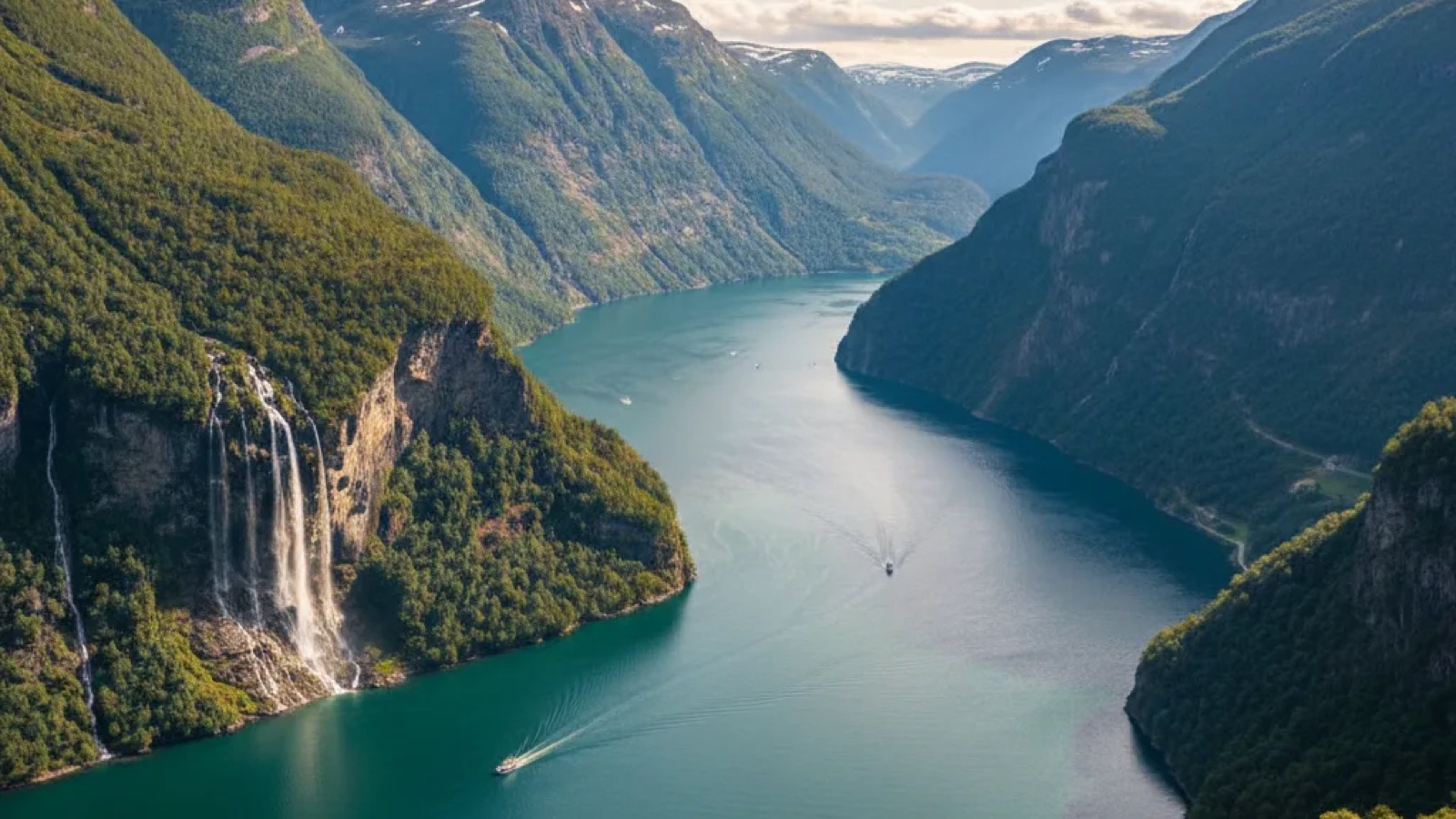
If you've seen one postcard of a Norwegian fjord, it was probably of Geirangerfjord. This is the supermodel of the fjords, another UNESCO World Heritage site known for its dramatic, S-shaped waterway and iconic waterfalls. The most famous are the Seven Sisters (De Syv Søstrene), a collection of seven parallel streams tumbling down one side of the fjord, directly across from a single, powerful cascade called The Suitor (Friaren).
Getting the postcard shot means heading to the viewpoints. The Eagle Road (Ørnevegen) switchbacks steeply up from the village of Geiranger, with a viewing platform offering the classic panorama. For an even higher perspective, the drive up to Dalsnibba takes you to a dizzying 1,500 metres above sea level. This road is an experience in itself, but be aware both the Dalsnibba road and the nearby, equally spectacular, Trollstigen mountain pass are high-altitude roads closed for much of the year. You must check their opening dates before planning a trip.
Here’s the honest truth about Geiranger: it can feel like a victim of its own beauty. On a summer day, with multiple large cruise ships anchored in the tiny fjord, the village of Geiranger can be completely overwhelmed. The best approach is to stay overnight. Once the day-trippers and cruise passengers have left, a magical calm descends. Waking up early and taking a kayak out onto the water before the first ferry arrives is unforgettable.
Hardangerfjord: The Orchard of Norway
While Sognefjord and Geirangerfjord are defined by their raw, severe drama, the Hardangerfjord offers a gentler, more pastoral beauty. It’s known as the orchard of Norway, and its rolling hillsides are covered in fruit farms. Visiting in late May is a truly special experience, when thousands of apple, pear, and cherry trees erupt in a sea of white and pink blossom against a backdrop of snow-capped peaks.
Hardanger is also a fjord of magnificent waterfalls. Two stand out. Vøringsfossen is a powerhouse, plunging 182 metres into the narrow Måbødalen canyon. There are fantastic viewing platforms that let you feel its raw power. Further west, Steinsdalsfossen offers a different thrill: a path allows you to walk right behind the curtain of water without getting soaked. It's a simple joy worth making time for when you're in the area.
For hikers, Hardangerfjord is home to one of Norway’s "big three" hikes: Trolltunga, or the "Troll's Tongue." This sliver of rock jutting out 700 metres above the lake Ringedalsvatnet has become an icon. It is, however, an extremely long and demanding hike that requires serious preparation. More on that later.
Lysefjord: The Hiker's Playground
Located in the southwest near the city of Stavanger, the Lysefjord is rugged, wild, and is the undisputed champion for serious hikers. This is where you come for two of Europe's most famous trails.
The first is Preikestolen, or "Pulpit Rock." After a steep but well-trodden 4-kilometre hike (one way), you emerge onto a massive, perfectly flat-topped cliff that hangs 604 metres directly above the fjord. The view is simply staggering. Although it’s the more "accessible" of the Lysefjord hikes, it should not be underestimated. It's a proper mountain hike.
The second is for the true adventurers: Kjeragbolten. This is a longer, tougher, and more exposed hike than Preikestolen. The prize at the end is a large, egg-shaped boulder wedged in a mountain crevasse, 1,000 metres above the fjord. Posing for a photo standing on that boulder is the ultimate Norwegian adrenaline shot, but it requires nerves of steel and a total absence of vertigo. The hike itself is a fantastic challenge with incredible views, even if you don't step out onto the rock.
Nordfjord: Gateway to the Glaciers
Further north, between Sognefjord and Geiranger, lies the Nordfjord. While the fjord itself is beautiful, it works best as a basecamp for a different kind of adventure: glaciers. The fjord's arms reach inland towards the mighty Jostedalsbreen, the largest glacier in mainland Europe.
The most famous and accessible glacier arm is Briksdalsbreen. A well-maintained trail leads you from the valley floor up to the lake below the glacier, whose blue ice has retreated onto dry land behind the lake since about 2007. The landscape is raw and ever-changing. You are witnessing geology in action. Exploring the areas around Loen and Olden gives you access to multiple glacier tongues and some of the most spectacular valleys in all of Norway.
Choosing Your Fjord: A Quick Comparison
So, which one is for you? Here's a cheat sheet:
- Choose Sognefjord (and Nærøyfjord) if you want the classic "Norway in a Nutshell" experience, combining scenic trains and ferries for an epic, accessible journey through the longest and narrowest fjords.
- Choose Geirangerfjord if you’re chasing that one perfect photograph and don't mind sharing the view. It’s iconic for a reason, but you need to be strategic to avoid the peak crowds.
- Choose Hardangerfjord for a gentler road trip, beautiful spring blossoms, and access to the legendary Trolltunga hike and powerful waterfalls. It's great for those who mix driving with moderate walks.
- Choose Lysefjord if your priority is world-class, pulse-pounding hiking. This is the adventurer's fjord, home to Preikestolen and Kjeragbolten.
- Choose Nordfjord if you're fascinated by glaciers and want to get as close as possible to the ancient blue ice of Jostedalsbreen.
Getting Around: Trains, Ferries, and Mountain Roads
How you experience the fjords depends heavily on how you travel. Norway's public transport is superb. The famous trip combining the Bergen Railway from Oslo or Bergen with the steep Flåm Railway and a ferry through Nærøyfjord is rightly popular and can be organised independently. Express passenger boats also zip along the coast and deep into the fjords, acting as a lifeline for locals and a scenic highway for travellers.
For ultimate freedom, however, nothing beats driving. Modern Norwegian infrastructure is an engineering marvel of tunnels and bridges that make getting around surprisingly efficient. But where it gets really special is the car ferry network. Don’t think of ferries as an obstacle; they are part of the journey. These frequent, roll-on-roll-off ferries are like floating bridges, offering you a mini-cruise and a coffee break every hour or two. Fares are usually paid on board or via an automated plate-reading system linked to your rental car.
The one crucial thing to know about driving is the seasonal closure of high mountain passes (Fjelloverganger). Roads like Trollstigen, the Dalsnibba viewpoint road, and many others across the plateaus are buried in snow from roughly October to late May/early June. You must check the official Norwegian Public Roads Administration (Statens vegvesen) website for real-time road status and opening dates before you finalise your itinerary.
Hiking the Fjords Safely and Responsibly
Hiking is the best way to earn your views in Norway, but the mountains demand respect. The "big three" – Trolltunga, Preikestolen, and Kjeragbolten – are serious undertakings.
Preikestolen (Pulpit Rock): 8km round trip, 3-5 hours. Steep sections. It's the most popular, so go very early or late to avoid crowds.
Kjeragbolten: 11km round trip, 6-8 hours. More demanding, with steep sections on bare rock where you use chains to help you. A hike for confident, fit trekkers.
Trolltunga (Troll's Tongue): 28km round trip, 10-12 hours. This is an extremely long and strenuous day out. It is only for very fit and experienced hikers.
For all of these hikes, no matter the weather forecast, you must carry:
- Proper worn-in hiking boots (not trainers).
- A waterproof jacket and trousers.
- Warm layers (fleece, wool).
- A hat and gloves.
- Plenty of food and water.
- A fully charged phone, a power bank, and a headlamp.
When to Go: Seasons in Fjord Norway
Your experience will be shaped dramatically by the season.
Late Spring (May – June): An ideal time. The days are incredibly long, the hills are electric green, and the waterfalls are at their absolute peak, thundering with melted snow. Most roads are open by June, but you'll have far fewer crowds than in high summer.
Summer (July – August): The warmest, most stable weather. All trails, roads, and services are open. This is peak season, so expect crowds at all the famous spots and book accommodation well in advance.
Autumn (September): A wonderful month. The crowds thin out, the air is crisp, and the valleys glow with spectacular autumn colour. Hiking is still excellent, though you need to be prepared for cooler temperatures and check for early snow on high passes.
Winter (October – April): A trip for connoisseurs of solitude and stark beauty. The fjords are quiet and magical, framed by snow. However, access is severely limited. Most iconic hikes are inaccessible, high mountain roads are closed, and many hotels and attractions shut down. Public transport runs on reduced schedules.
A Photographer's Notes on the Fjords
Photographing the fjords is a game of light and scale. In narrow fjords like Nærøyfjord and Geirangerfjord, direct sun can be harsh and fleeting. The best light is often soft and diffused, or found during the golden hours at the wider mouths of the fjords. Don't be afraid of a cloudy, moody day; it often creates a much more atmospheric and dramatic shot.
To capture the silky, ethereal look of the countless waterfalls, you'll need a tripod. Even a small travel tripod will allow you to use a slower shutter speed (a long exposure) to blur the water's motion. If you're shooting in bright daylight, a neutral density (ND) filter is essential to block light and enable those slower speeds. When it comes to drones, be extremely careful. Regulations in Norway are strict and complex. Flying is prohibited in many national parks and near crowds. Always check the latest rules from official Norwegian aviation authorities before you even think about launching.
Practical Tips: Packing and Weather
If there's one mantra for Fjord Norway, it's "There is no bad weather, only bad clothing." Expect rain, sun, wind, and chilly temperatures, sometimes all in the same day, even in August. The key is layering.
Your non-negotiable packing list should include a synthetic or wool base layer, a warm fleece or light down jacket as a mid-layer, and a high-quality waterproof and windproof shell jacket. Waterproof trousers are not an affectation; they are essential for hiking and even just for walking around on a wet day. Sturdy, comfortable walking shoes with good grip are a must.
Lastly, a word on midges. In the summer months, particularly on calm evenings near still water, these tiny biting insects can be a real nuisance. A good insect repellent is a small thing that can make a big difference to your comfort.
Explore in Depth
Bergen is the undisputed capital of the fjord region and the perfect starting or ending point for any journey. The guide to this beautiful Hanseatic city covers everything you need to know.
Frequently Asked Questions
Do I need to rent a car to see the fjords?
Not at all. For the Sognefjord and Nærøyfjord area in particular, the public transport system is fantastic. You can easily combine the famous Bergen and Flåm railways with fjord ferries and buses to have a complete and spectacular experience without a car. However, a car offers greater flexibility to explore more remote valleys, stop at random viewpoints, and travel on your own schedule, especially in regions like Hardangerfjord or Nordfjord where attractions are more spread out.
Is Flåm worth visiting or is it a tourist trap?
Flåm is a nexus of transport and tourism, and as such, it gets incredibly crowded, especially mid-day when cruise ships and tour buses converge. It can feel like a "tourist trap" if you're expecting a quiet village. The best advice is to treat it as a beautiful and highly functional interchange. Pass through it for the Flåm Railway and your Nærøyfjord cruise, but consider staying in the quieter, more authentic neighbouring village of Aurland for a more peaceful experience.
How difficult is the Trolltunga hike, really?
It is extremely challenging and should only be undertaken by physically fit, experienced hikers. The 28-kilometre round trip takes most people 10-12 hours and involves a significant amount of ascent. It is not a casual walk; it is a full-day mountain expedition. You must have proper hiking boots, full waterproofs, extra warm layers, food, water, and a headlamp. Do not attempt it if the weather forecast is poor or you are not adequately prepared. The sense of achievement is immense, but it must be earned safely.
What should I pack for a summer trip to the Norwegian fjords?
The key is layers. Even in July and August, you need to be prepared for cool and wet conditions. Your essential list should include a high-quality waterproof and windproof jacket, waterproof trousers, a warm fleece or light down jacket, and a base layer. Sturdy, comfortable walking shoes are vital, even for light sightseeing. Also pack sunglasses, a sun hat, and gloves – you might need all three on the same day!
Can I visit the fjords in winter?
Yes, but it's a completely different kind of trip. The main fjord waterways remain ice-free and are hauntingly beautiful in the low winter light, surrounded by snow-covered mountains. However, your travel will be limited. Most iconic hikes like Trolltunga and Preikestolen are inaccessible and dangerous. Many famous mountain roads, including Trollstigen, are closed. It's a trip for quiet contemplation, photography, and enjoying the cosy atmosphere, not for the high-octane adventures of summer.
Final Thoughts
The fjords are more than just a place to take pretty pictures. They are a force of nature that recalibrates your sense of place in the world. Standing at the water's edge, gazing up at a cliff face that has stood for millennia, you can’t help but feel a profound sense of awe and humility. The sheer geological power on display is humbling.
Whether you choose the royal scale of Sognefjord, the postcard perfection of Geiranger, the gentle slopes of Hardanger or the hiker’s paradise of Lysefjord, you will find something that stays with you. The best advice is to slow down. Don’t just tick off the viewpoints. Take the kayak, walk the less-trodden path from the village, or just sit by the water with a coffee and watch the light change. That’s where you’ll find the real magic of Fjord Norway.
More Norway guides
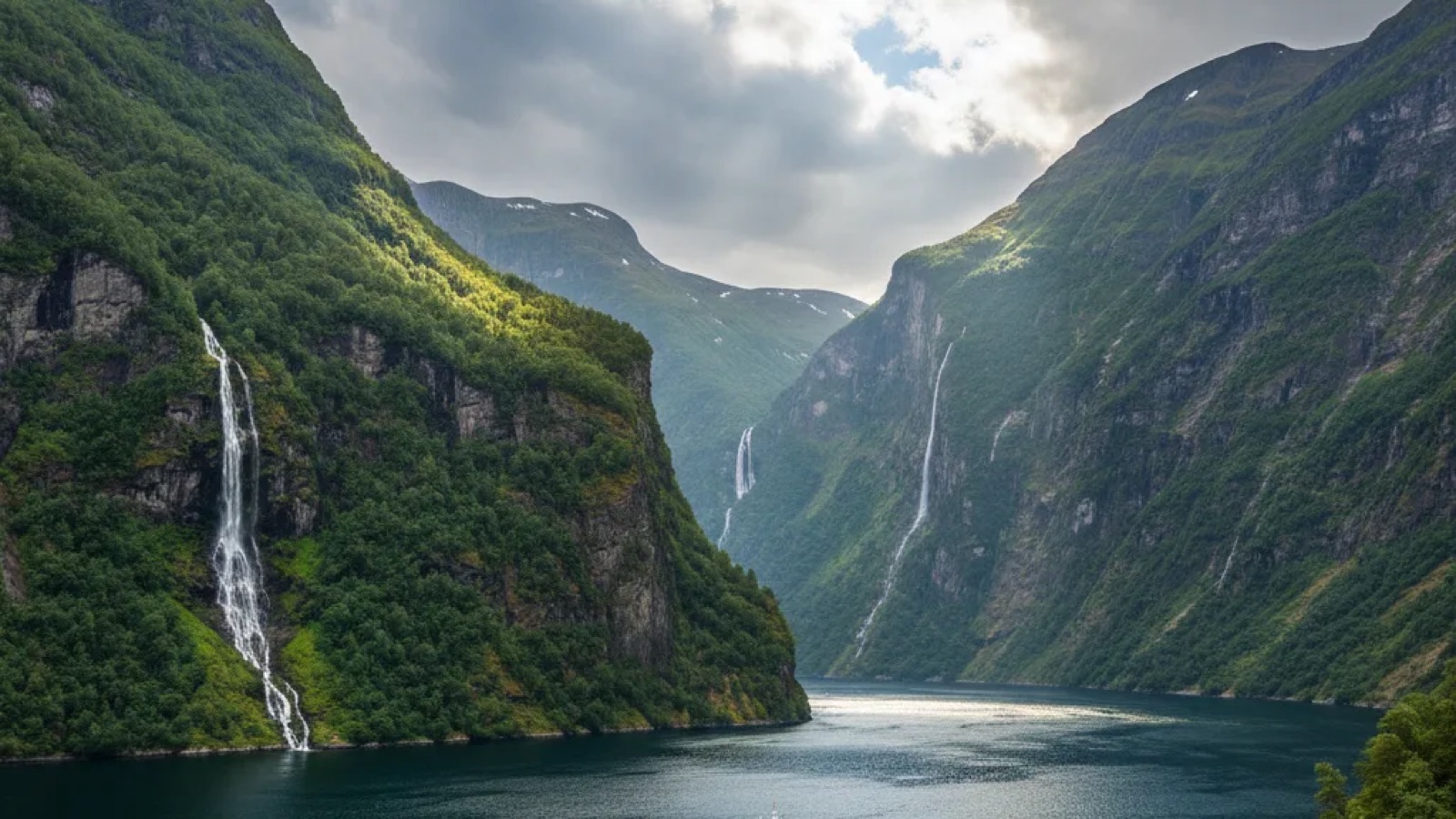
Norway Travel Guide: Fjords, Trains and Seasons
Planning Norway: which fjord region to choose, the scenic trains and ferries, midnight sun versus northern lights, and costs.
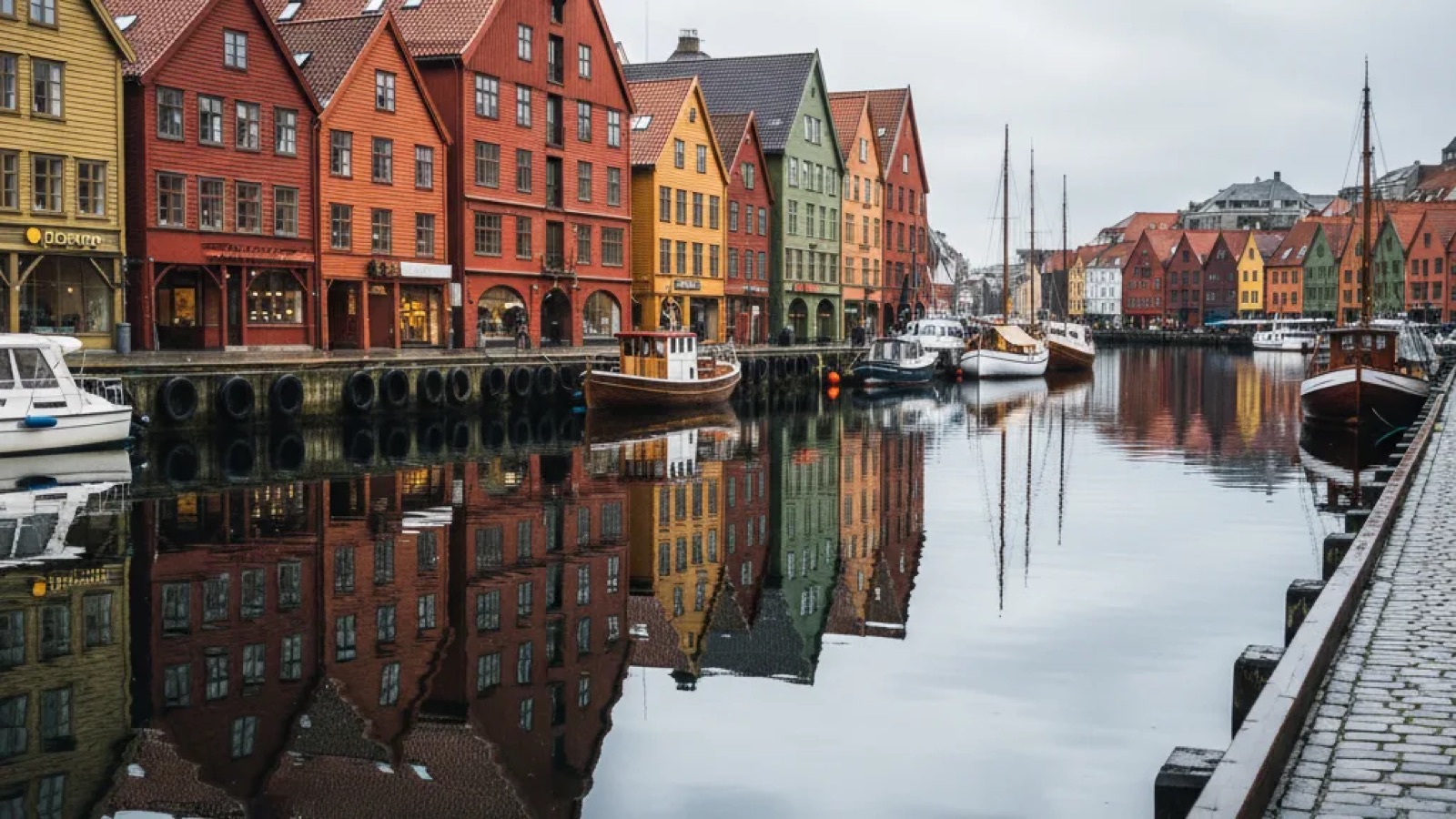
Bergen Travel Guide: Bryggen, Rain and Fjords
Bergen as your fjord base: Bryggen wharf, the funicular and Floyen, the fish market, seven mountains and coping with the rain.