Norway Travel Guide: Fjords, Trains and Seasons
Planning Norway: which fjord region to choose, the scenic trains and ferries, midnight sun versus northern lights, and costs.
In this guide
- Quick Facts
- First, A Geography Lesson: Why You Must Choose
- Oslo: A Cultural and Architectural Start
- The Journey West: The Oslo-Bergen Railway
- Bergen: The Gateway to the Fjords
- Fjord Immersion: The 'Nutshell' Circuit
- Scandic Summit Stories: Norway's Iconic Hikes
- Further Up the Coast: Ålesund and Trondheim
- Into the Arctic: Lofoten, Tromsø and The Light
- Practical Norway: Costs, Transport and Customs
- Sequencing Your Trip: Sample Itineraries
- Explore in Depth
- Frequently Asked Questions
- Final Thoughts
The train window is a moving painting. One moment, a vast, white plateau under a steel-grey sky; the next, a turquoise river carving its way through a valley of impossible green. This is the Bergen line, the famous railway slicing across Norway's spine. Over several hours, the country transforms from the gentle, rolling hills around Oslo to the stark, lunar beauty of the Hardangervidda plateau, the largest in Europe. The carriage is warm and smells of coffee, a stark contrast to the wild, raw landscape flashing past, and no camera pressed against the glass can capture its scale. Some places aren't meant to be captured, but simply experienced. The journey is the perfect metaphor for Norway: a nation of breathtaking contrasts, best savoured slowly.
Welcome to this guide to travelling Norway. This is a country that can overwhelm with its sheer length and abundance of natural wonders. The aim here isn't to give you a packed checklist, but to help you understand the country's distinct regions and rhythms. We'll journey from the cosmopolitan culture of Oslo to Bergen's fjord-side charm, explore the legendary train journeys and ferry routes that stitch the landscape together, and venture north into the Arctic Circle in search of the midnight sun and the elusive northern lights. We'll also cover the essential practicalities, from navigating the roads and embracing the outdoors culture to making a trip to this famously expensive country work for you. Let's get on the road.
Quick Facts
- Location: Western Scandinavian Peninsula, Northern Europe. Sharing borders with Sweden, Finland, and Russia.
- Getting There: Major international airports are in Oslo (OSL), Bergen (BGO), and Tromsø (TOS). Direct flights are available from major hubs across Europe, North America, and Asia.
- Getting Around: A superb network of trains, buses, and ferries makes car-free travel very feasible in many regions. For ultimate flexibility, especially in the north or off the main tourist trail, renting a car is ideal. Domestic flights are common for covering long distances quickly.
- Language & Currency: Norwegian. English is spoken to an exceptionally high level almost everywhere. The currency is the Norwegian Krone (NOK). Card payments are near-universal; carrying large amounts of cash is unnecessary.
- Best Time to Visit: June to August for hiking, midnight sun, and warmest weather. September to March for a chance to see the Northern Lights (the further north, the better). April and May offer spring scenery with fewer crowds.
First, A Geography Lesson: Why You Must Choose
The first thing you need to realise about Norway is that it's long. Incredibly, absurdly long. If you were to pivot it at its southern tip near Oslo, the North Cape would touch Rome. This immense length, coupled with a coastline crinkled by thousands of fjords and islands, means you simply cannot see it all in one trip. Trying to do so will just leave you exhausted and with a wallet much lighter than you'd like.
The best approach is to choose a region and immerse yourself. For a first-time visitor on a one or two-week trip, the classic choice is the 'triangle' of Oslo, Bergen, and the southwestern fjords. This gives you a perfect blend of culture, history, and the jaw-dropping landscapes you've seen in photos. If you have more time, or different priorities, you could focus on the Art Nouveau coast around Ålesund, the historical pilgrimage route to Trondheim, or commit to an Arctic adventure in the Lofoten Islands and Tromsø. Each offers a completely different experience. Don't rush; Norway rewards the slow traveller.
Oslo: A Cultural and Architectural Start
Many journeys start in Oslo, and for good reason. Norway's capital has transformed itself over the last couple of decades into a seriously cool, forward-thinking city that beautifully balances urban life with easy access to nature. A great thing to do on arrival is to walk on the roof of the Oslo Opera House. The angled white marble slopes rise out of the fjord like a glacier, a piece of architecture that begs you to interact with it. The view across the water as the sun sets is a perfect introduction to the city's vibe.
From there, the city unfolds. A short ferry ride takes you to the Bygdøy Peninsula, home to a cluster of fantastic museums. The Fram Museum, with its colossal polar exploration ship you can actually board, is a personal favourite. You can almost feel the chill of the Antarctic ice. For art lovers, Vigeland Park is an open-air sculpture museum unlike anything else, with hundreds of Gustav Vigeland's granite and bronze sculptures depicting the human journey. And for a panoramic view, take the metro up to Holmenkollen, the iconic ski jump perched on a hill above the city. It gives you a real sense of how close the forest (the marka) is to the urban centre.
The Journey West: The Oslo-Bergen Railway
There are faster ways to get from Oslo to Bergen, but none are as spectacular as the Bergensbanen. This isn't just a train ride; it's a seven-hour odyssey, consistently ranked among the world's greatest rail journeys. Summer and winter each offer a profoundly different beauty.
The train climbs steadily from Oslo's urban surroundings into deep forests and alongside tranquil lakes. The magic truly begins as you ascend to the Hardangervidda plateau. In summer, it’s a sparse, beautiful landscape of rock, moss, and distant glaciers. In winter, it's a mesmerising world of white, with snow so deep it buries entire summer cabins, leaving only their roofs peeking out. The highest station, Finse, is inaccessible by road and feels like a true Arctic outpost.
Photography Note: Shooting from a moving train is tricky. Find a seat with a clean window, and instead of trying to capture wide vistas, focus on details close to the tracks — a red barn against the snow, a cascading waterfall, the texture of the rock. Use a fast shutter speed to freeze the motion. Or, better yet, put the camera down for a while and just watch the world go by.
Bergen: The Gateway to the Fjords
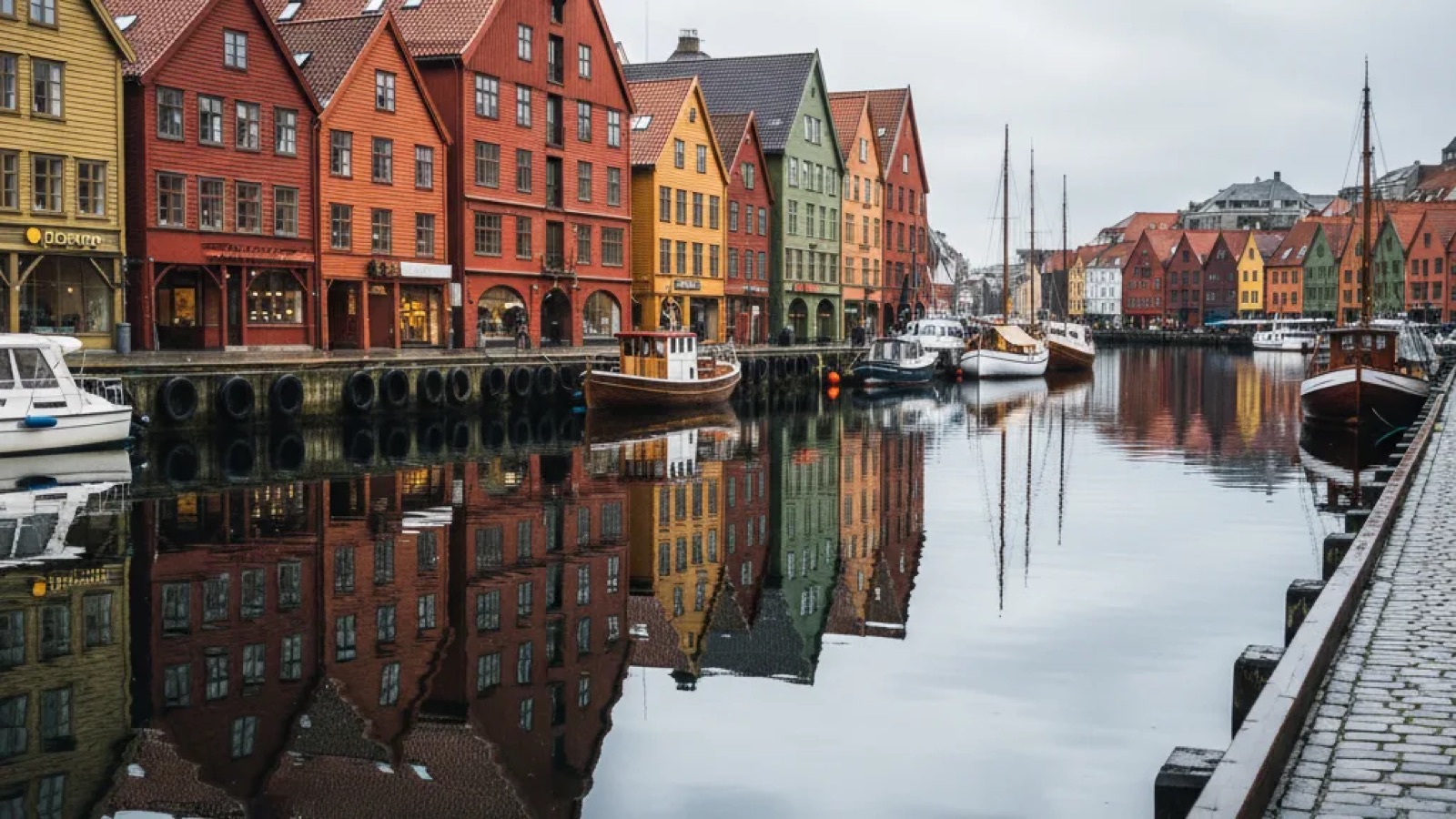
After the starkness of the high plateau, the train descends through a series of dramatic valleys, arriving in the colourful, coastal city of Bergen. Yes, it rains a lot here — it’s part of the identity — but don't let that put you off. The rain just seems to make the colours of the Bryggen waterfront, a UNESCO World Heritage site, even more vibrant. These crooked, wooden Hanseatic wharf buildings are a delight to explore, full of narrow alleyways, artisan workshops, and cosy cafes.
To get your bearings and a stunning view (on a clear day!), take the Fløibanen funicular up Mount Fløyen. The city, harbour, and surrounding fjords spread out below you. Bergen feels more intimate than Oslo, a city deeply connected to the sea and the mountains that cradle it. It serves as the perfect base camp for what usually comes next: heading into the heart of Fjord Norway.
Fjord Immersion: The 'Nutshell' Circuit
You will see the "Norway in a Nutshell" tour advertised everywhere, and while it's a branded package, the route itself is a public-transport masterpiece that you can also organise independently. It’s a perfect-one-day taster of some of Norway's most dramatic scenery, combining two of the world's most beautiful train journeys with a fjord cruise.
The journey typically involves:
- The Bergen Railway: Part of the epic line from Oslo, you take it from Bergen to the mountain station of Myrdal.
- The Flåm Railway: At Myrdal, you change to the famous Flåmsbana. This branch line is a marvel of engineering, descending 867 metres in just 20 kilometres down a steep, narrow valley to the fjord-side village of Flåm. The train makes a photo stop at the powerful Kjosfossen waterfall, where the spray hits your face even from the platform.
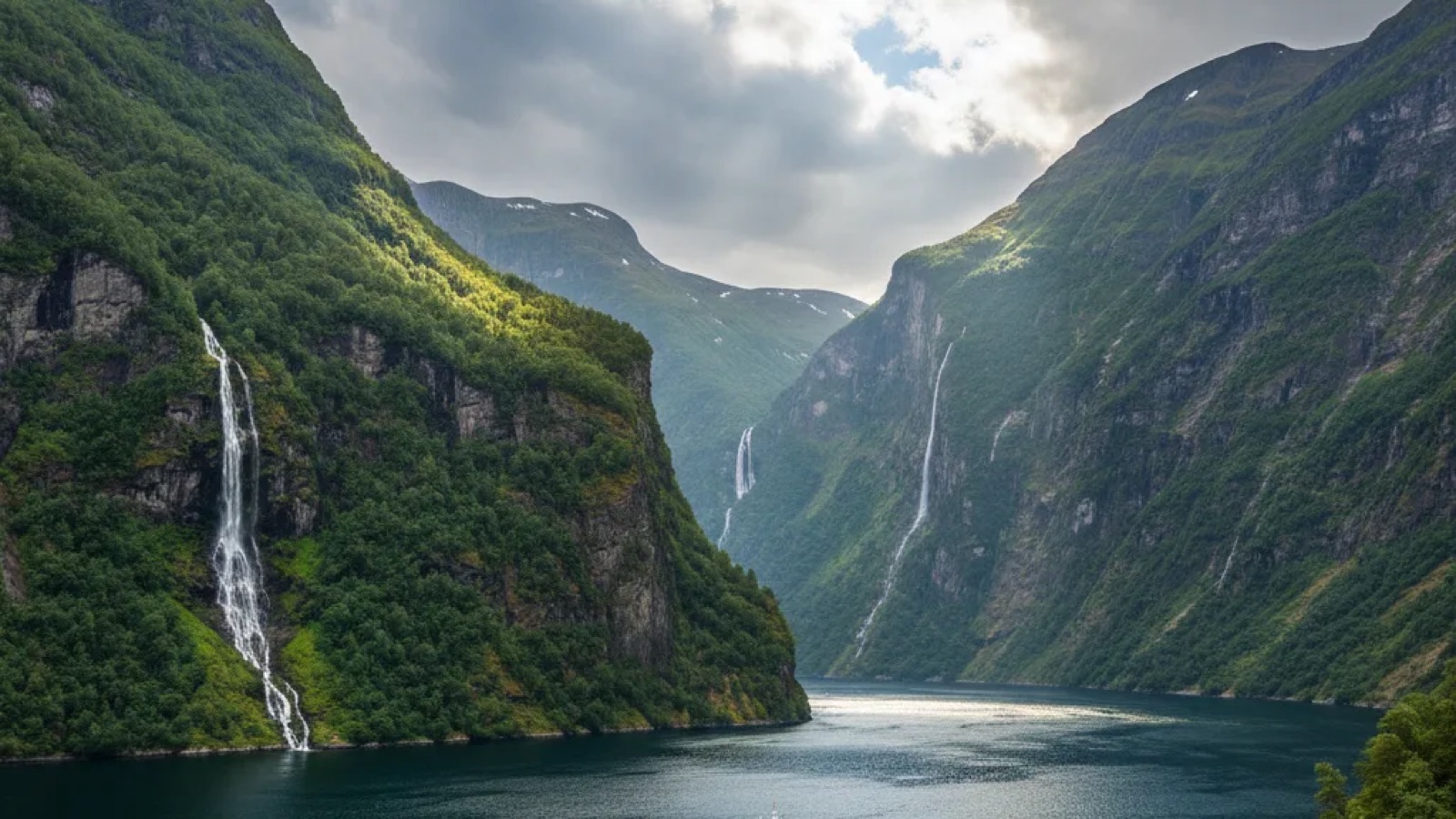
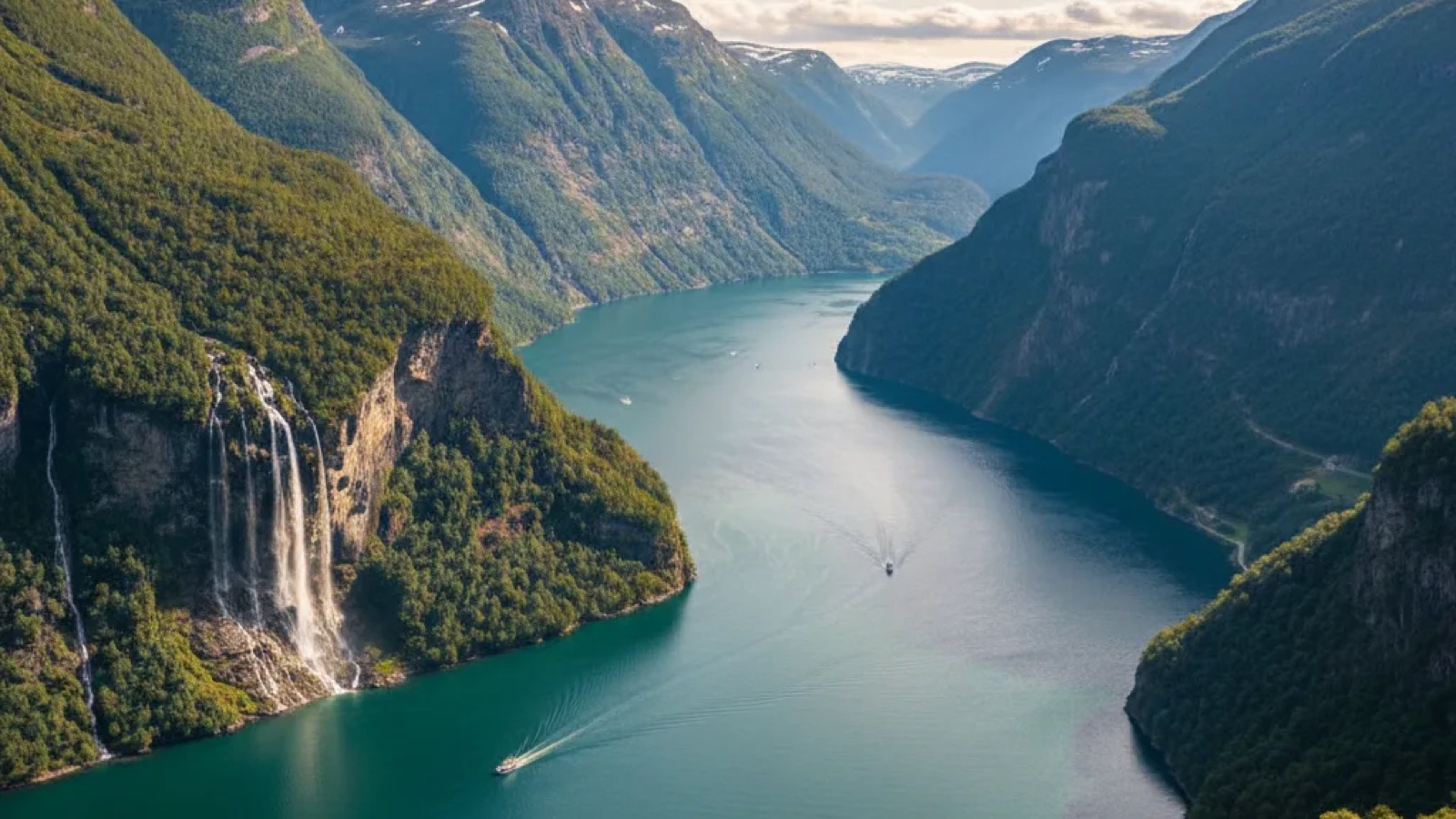
- Fjord Cruise: From Flåm, you board a ferry for a cruise on two fjords. You'll sail along the Aurlandsfjord and then into its narrow, spectacular arm: the Nærøyfjord. This is a UNESCO World Heritage site for a reason. As the boat glides silently through the deep blue water, waterfalls cascade down sheer cliffs towering over 1,500 metres above. It's easy to feel utterly dwarfed, a tiny spectator in nature’s grand theatre.
- The Bus Journey: From the end of the fjord at Gudvangen, a bus takes you back towards the main train line. Historically this included the breathtakingly steep and winding Stalheimskleiva road, but access can change, so always check local conditions. The drive through the valleys is spectacular in its own right.
Scandic Summit Stories: Norway's Iconic Hikes
Norway is a nation of hikers, and the culture of getting outdoors is deeply ingrained. For fit, experienced walkers, the country offers some of the most rewarding and photogenic hikes on the planet. However, these are serious mountain hikes and must be treated with respect.
The "big three" are in the fjord country south and south-east of Bergen — Preikestolen and Kjeragbolten around the Lysefjord, Trolltunga above Odda in Hardanger:
- Preikestolen (Pulpit Rock): The most accessible of the trio. It's a moderately difficult, four-to-five-hour round-trip hike to a massive, flat-topped cliff looming 604 metres over the fjord. The trail is well-trodden, but it's still a proper hike requiring good shoes and fitness.
- Kjeragbolten: Famous for the boulder wedged in a mountain crevasse high above the fjord. This is a much more demanding, longer, and more strenuous hike than Preikestolen, requiring around six to ten hours. Not for the faint-hearted or those with a fear of heights.
- Trolltunga (Troll's Tongue): The most challenging of them all. This is a very long and strenuous trek of ten to twelve hours across high-altitude terrain to reach the spectacular sliver of rock jutting out into space. You must be in excellent physical condition and start very early in the day.
Crucial Advice: These hikes are only accessible in the summer months (roughly June to September, but this varies). Even in summer, the weather can change in an instant. Always check the official trail conditions and weather forecasts at a site like yr.no or with local tourist offices before you set out. Never attempt them in bad weather, and always carry layers, food, water, and a headlamp.
Further Up the Coast: Ålesund and Trondheim
If you have more time, travelling north along the coast is incredibly rewarding. A great option is the famous Hurtigruten coastal ferry, which has been a lifeline for coastal communities for over a century, carrying passengers, post, and freight between Bergen and the Russian border. You can hop on for short legs or do the full 12-day round trip.
The route will take you to Ålesund, a city with a unique story. After a devastating fire in 1904, it was completely rebuilt in the Art Nouveau style. It's a whimsical place of turrets, spires, and ornamental details. Climbing the 418 steps to the viewpoint at Aksla is a must for a photo that captures the city's unique setting across a string of islands.
Further north still is Trondheim, Norway's third-largest city and its first capital. It has a charming, historic centre with colourful waterside warehouses, but the jewel in its crown is the magnificent Nidaros Cathedral. This Gothic masterpiece is the traditional end-point of the St. Olav's Ways pilgrimage and remains a powerful, spiritual place, regardless of your beliefs. It's easy to spend an hour just marvelling at the intricate detail of its western facade.
Into the Arctic: Lofoten, Tromsø and The Light
Crossing the Arctic Circle opens up another world. The Lofoten Islands are arguably one of the most beautiful places on Earth. Here, impossibly sharp, dramatic peaks rise directly out of the sea, sheltering picturesque fishing villages (rorbuer) with their iconic red cabins. It's a paradise for photographers, hikers, and anyone who loves raw, untamed nature. Driving the E10 road that connects the islands is an unforgettable experience.
Further northeast is Tromsø, the largest city in Northern Norway. It's a lively, sophisticated hub with a university, great restaurants, and the stunning Arctic Cathedral. It is also one of the best places in the world to base yourself for seeing the Northern Lights.
The two great light shows of the north dictate the rhythm of life here:
- The Midnight Sun: Roughly from late May to late July, the sun never sets above the Arctic Circle. It's a strange, energising phenomenon that messes with your internal clock but allows for 24-hour hiking and exploration.
- The Northern Lights (Aurora Borealis): The best time to see them is during the polar night season, from September to March. To maximise your chances, you need dark, clear skies, and you need to get away from the city lights. Important: A sighting is never guaranteed. It's a natural phenomenon that depends on solar activity and weather. Some nights bring nothing but cloud; others bring spectacular displays. Go with patience and consider the chase part of the adventure.
Practical Norway: Costs, Transport and Customs
Let's be honest: Norway is one of the most expensive countries in the world to travel in. But don’t let that deter you. With some smart planning, it is manageable.
- Managing Costs: Eating out for every meal will drain your funds quickly. Embrace the local custom! Stay in accommodation with kitchen facilities (cabins, apartments, some hostels) and shop at supermarkets like Rema 1000, Kiwi, or Coop. A picnic lunch with a fjord view is better than any restaurant. Make sure to buy alcohol at the state-run Vinmonopolet, as it's the only place to buy wine and spirits.
- Driving: Renting a car offers incredible freedom. Be prepared for a driving experience filled with countless tunnels (some are incredibly long and even have roundabouts inside!) and car ferry crossings, which are an integral part of the road network, especially in Fjord Norway. Road tolls are largely automated; your rental company will have a system to bill you later.
- The Right to Roam: Norway has a wonderful law called allemannsretten, or the "right to roam". This gives you the right to access and camp on uncultivated land for a night or two, as long as you are respectful, stay at least 150 metres from the nearest inhabited house or cabin, and leave no trace. It's a privilege that enables a deep connection with nature.
- Packing and Weather: Norwegian weather is famously fickle. You can experience all four seasons in one day, even in summer. The key is layering. A waterproof and windproof outer jacket is non-negotiable. Add a fleece or wool mid-layer, and a base layer. Good waterproof walking shoes are essential. Even for a city trip, comfortable, practical footwear is a must.
Sequencing Your Trip: Sample Itineraries
Figuring out a logical route can be tricky. Here are a couple of classic frameworks to build upon.
One Week: The Fjord Essentials
This is a fast-paced but hugely rewarding trip.
- Days 1-2: Oslo. Arrive, acclimatise, and explore the capital's cultural highlights.
- Day 3: The Bergen Railway. Take the scenic train across to Bergen. Sit back and watch the country unfold.
- Days 4-5: Bergen & Fjord Trip. Explore Bergen's Bryggen and take a full-day trip doing the 'Nutshell' route (either as a tour or independently) to experience the Flåm Railway and Nærøyfjord.
- Days 6-7: Hiking or Return. Either use this time for a hike near Bergen, or fly from Bergen to your next destination or back home.
Two Weeks: Fjords and the Arctic
This itinerary combines the classic south with a taste of the magical north.
- Days 1-7: Follow the "One Week" itinerary above, perhaps at a slightly more relaxed pace with an extra day in the fjords for a hike like Preikestolen (this would require renting a car or taking specific buses from Stavanger, a city south of Bergen).
- Day 8: Fly to the North. Take a domestic flight from Bergen (BGO) to either Bodø (BOO) to explore the Lofoten Islands, or directly to Tromsø (TOS).
- Days 9-13: Arctic Exploration. Rent a car and explore. If in Lofoten, drive the stunning E10, hike, and stay in rorbuer. If in Tromsø, focus on Arctic culture, and in winter, a multi-day search for the Northern Lights.
- Day 14: Fly home from your northern airport.
Explore in Depth
This guide gives you the big picture of travelling in Norway. For a closer look at specific regions and experiences, these detailed guides will take you further into this incredible country.
Frequently Asked Questions
What's the best way to see the Norwegian fjords without a car?
It's surprisingly easy. Norway's public transport system is excellent and designed for the terrain. A combination of trains, buses, and passenger ferries can get you to the heart of the most famous fjords. The classic 'Norway in a Nutshell' circuit from Bergen is a perfect example, using only public transport. You can also use express passenger ferries that run along the coast and deep into fjords like the Sognefjord. For more remote areas a car is better, but for iconic spots like the Nærøyfjord and Aurlandsfjord, you can have a fantastic car-free experience by basing yourself in Bergen or Flåm.
Is Norway really as expensive as people say? How can I save money?
Yes, Norway is an expensive destination, particularly for dining out and alcohol. However, you can manage your budget effectively. The biggest savings come from self-catering; stay in places with kitchenettes and shop at local supermarkets for delicious local produce, bread, and cheese. Pack a reusable water bottle, as the tap water is pure and delicious everywhere. Take advantage of the allemannsretten (right to roam) for free activities like hiking and wild camping. Prioritise experiences over expensive meals, and you can make a trip to Norway much more affordable than you might think.
I'm visiting in winter. Am I guaranteed to see the Northern Lights?
Unfortunately, no. Seeing the Aurora Borealis is a magical experience, but it is never guaranteed. It depends on three factors: you need strong solar activity, clear skies, and darkness. You can be in the right place during a huge solar storm, but if it's cloudy, you won't see a thing. The best approach is to travel to the Arctic region (like Tromsø or the Lofoten Islands) between September and March, plan to stay for several nights to increase your chances, and book a tour with local guides who are experts at finding clear skies. Think of it as a bonus to your trip, not the sole purpose.
What is Norwegian food actually like?
Norwegian cuisine is simple, fresh, and deeply connected to the land and sea. Seafood is king, with superb salmon (smoked, cured, or grilled), cod, and sweet shrimp. Look out for fish soup (fiskesuppe), often a creamy and comforting delight. You might also encounter brown cheese (brunost), a caramelized, slightly sweet goat’s cheese that's a national obsession, often served on waffles (vafler) with jam. In game season, you may find reindeer or elk on the menu. And don't forget the humble hot dog (pølse), a surprisingly important part of Norwegian fast-food culture!
Do I need to learn any Norwegian phrases before I go?
While it's not strictly necessary, it's always appreciated. English is spoken so widely and fluently that you will have no trouble communicating. However, learning a few basic phrases shows respect and can open up warmer interactions. A simple "Takk" (Thank you), "Hei" (Hi), and "Ha det bra" (Goodbye) will go a long way. Norwegians are often reserved at first, but a polite greeting can be a great icebreaker. You'll find that people are very happy to help and will switch to perfect English to assist you.
Final Thoughts
Norway is a country that recalibrates your sense of scale. Standing on a cliff edge looking down at a fjord, waiting in the silent, frozen dark for a flicker of green light in the sky, or just watching the landscape morph from the window of a train—these are moments that stay with you. It’s a place that reminds you of the immense power and beauty of the natural world.
My best advice is to embrace the Norwegian philosophy of kos—a word that roughly translates to a sense of cosiness, warmth, and simple pleasure. Don't overschedule. Allow time to sit with a coffee and a waffle, to take that detour down a scenic road, to just stand and breathe in the crisp, clean air. Norway is more than a destination; it's an experience for the soul.
More Norway guides
Bergen Travel Guide: Bryggen, Rain and Fjords
Bergen as your fjord base: Bryggen wharf, the funicular and Floyen, the fish market, seven mountains and coping with the rain.
Norwegian Fjords Guide: Which Fjord to Choose
Sognefjord, Geirangerfjord, Hardangerfjord or Lysefjord — how they differ, how to travel between them and when to visit.