Best Beaches in Colombia: Caribbean and Pacific
Tayrona's jungle-backed bays, Palomino, the Rosario Islands, San Andrés and the wild Pacific coast — which Colombian coast suits which traveller.
In this guide
- Quick Facts: Colombia's Coastal Regions
- Tayrona National Park: Coastal Jungle and Granite Boulders
- The Northern Main Coast: Palomino and Taganga
- Cartagena's Coastal Outposts: Rosario Islands and Barú
- Remote Island Jewels: San Andrés and Providencia
- Borderland Hideaways: Capurganá, Sapzurro, and Isla Fuerte
- The Untamed Pacific Coast: Nuquí and Bahía Solano
- Comparing Colombia's Coastal Destinations
- Which Coast Suits Your Travel Style?
- Practical Advice for Colombia's Beaches
- Final Thoughts on Colombia's Shores
This guide is part of our Colombia Itinerary: Medellin, Cartagena, Coffee Triangle — start there for the overview, when to go and how to get around.
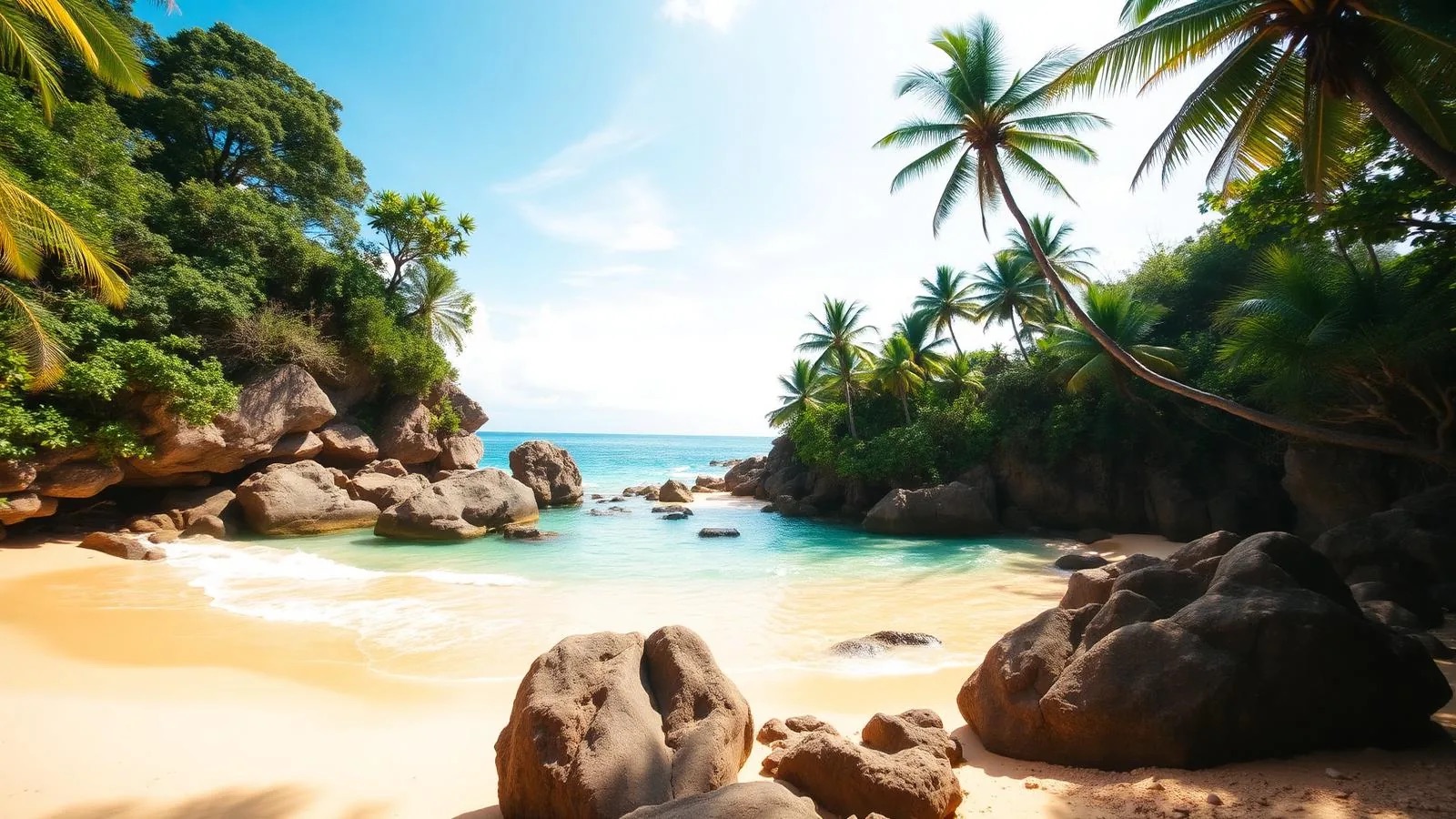
On Cabo San Juan, woven hammocks swing between swaying coconut palms while giant turquoise breakers smash against grey granite boulders. The air is thick with the scent of salt spray, woodsmoke, and tropical humidity, while the distinct, guttural calls of howler monkeys echo through the coastal rainforest. Colombia is one of the few nations on earth graced with two distinct oceanic coastlines, yet for decades its shores remained overshadowed by its interior geography.
When most travellers think of South American beaches, Brazil or Ecuador usually dominate the conversation. Yet Colombia commands over 3,000 kilometres of coastline split between the Caribbean Sea and the Pacific Ocean. The contrast between these two watery worlds could not be more profound. On the Caribbean side, you will find powder-soft sand, coral reefs, and tranquil translucent shallows framed by thick jungle or historic colonial bastions. Turn your gaze west to the untamed Pacific, and the landscape transforms into dark, volcanic sands backed by dense, rain-soaked wilderness where humpback whales breach just metres from the shore.
Whether you are searching for a high-end island resort near Cartagena, an eco-lodge hidden in the Pacific rainforest, or a rustic hammock site reached only by trekking through national park jungle, Colombia's coastal frontier delivers an astonishing range of experiences. Covering the shores from the Panamanian border down to the remote stretches of Chocó, this comprehensive guide will help you choose the ideal coastal getaway for your journey.
Quick Facts: Colombia's Coastal Regions
- Coastline Length: 1,600 km Caribbean coastline; 1,300 km Pacific coastline.
- Sea Temperature: Consistently warm year-round, ranging between 26°C and 29°C.
- Best Caribbean Weather: December to April (dry season with blue skies and strong coastal breezes).
- Pacific Whale Season: July to October (when humpbacks migrate from Antarctica to give birth).
- Key Access Hubs: Cartagena, Santa Marta, San Andrés, and Medellín (for regional air hops to the Pacific and Darién).
- Conservation Status: Several top coastal areas sit within protected National Natural Parks where strict eco-rules apply.
Tayrona National Park: Coastal Jungle and Granite Boulders
Where the snow-capped peaks of the Sierra Nevada de Santa Marta plunge directly into the Caribbean Sea lies Tayrona National Natural Park (Parque Nacional Natural Tayrona). It is widely regarded as Colombia's premier coastal sanctuary, offering a dramatic landscape where lush primary rainforest meets deep turquoise coves framed by massive, smooth granite boulders that look as though they were tumbled by titans.
Reaching Tayrona's finest beaches requires a bit of sweat and effort. Visitors typically enter through the El Zaaino gate and hike through humid forest trails, walking over boardwalks and ducking under giant palm leaves while keeping an eye out for cotton-top tamarins, blue morpho butterflies, and colourful toucans before hitting the sand.
Cabo San Juan de Guía
This is the postcard image of Colombia's coast. Cabo San Juan features two perfectly mirrored horseshoe bays separated by a rocky promontory topped with a rustic wooden hut. Sleeping in a hammock in that hilltop hut, feeling the sea breeze rustle through the thatched roof while waves crash on both sides below, is a quintessential Colombian travel experience.
The swimming here is safe within the sheltered coves, though the beach can get busy during peak midday hours when day-trippers arrive. Staying overnight allows you to experience the cove in the peaceful early morning and late afternoon golden hours.
Playa Cristal and La Piscina
If clear, calm waters are your priority, two specific spots in and around Tayrona stand out above the rest:
- La Piscina: Aptly named "The Swimming Pool", this long crescent of golden sand is protected by a natural offshore barrier reef. The barrier knocks down incoming ocean swells, creating a calm, aquarium-like body of water ideal for swimming and easy snorkelling over seagrass beds.
- Playa Cristal (Playa del Muerto): Located in a separate sector of the park accessed primarily by boat from Taganga or Neguanje, Playa Cristal boasts brilliant white sand and extraordinary water clarity. Coral formations lie close to the shore, offering some of the easiest reef snorkelling on the mainland.
Crucial Safety Note: Be aware that several beautiful beaches in Tayrona, most notably Arrecifes and Playa Brava, have powerful rip tides and treacherous undercurrents. Swimming at Arrecifes is strictly prohibited due to hundreds of historical drownings. Pay close attention to posted warning flags and local advice.
The Northern Main Coast: Palomino and Taganga
Moving east along the Caribbean highway from Santa Marta toward the La Guajira peninsula, the coastline changes dramatically. Here, long stretches of wind-swept beach are backed by backpacker enclaves, fishing villages, and powerful river mouths.
Palomino: Surf, Rivers, and Bohemian Vibes
Once a quiet coastal hamlet, Palomino has transformed into one of the country's most famous backpacker hubs. The town sits at the foot of the mountains where several rivers flow down from the high peaks to hit the ocean. The signature activity here is inner-tubing down the slow-moving Palomino River, floating gently through forest canopy filled with tropical birds before drifting right out into the Caribbean Sea.
The beach itself is expansive and lined with coconut palms, vibrant beach bars, and laid-back hostels. However, prospective visitors should note that the open ocean currents here are notoriously powerful, making Palomino better suited for long beach walks, sunbathing, and coastal atmosphere rather than casual swimming.
Taganga: Scuba Diving Hub in a Mountain Cove
Nestled in a deep bay just north of Santa Marta, the former fishing village of Taganga is encircled by arid, cactus-dotted hills. While the main town beach is a busy working harbour filled with painted wooden fishing boats and seafood shacks, Taganga serves as the primary gateway for budget scuba diving certifications in Colombia.
Dive shops line the main seafront promenade, running daily boat runs to nearby dive sites within Tayrona National Park. Short coastal walks or quick water-taxi trips over the northern headland take you to quieter spots like Playa Grande, where you can sample freshly fried snapper with coconut rice right on the water's edge.
Cartagena's Coastal Outposts: Rosario Islands and Barú
While the historic city of Cartagena de Indias is renowned for its UNESCO-listed colonial architecture and historic stone fortifications, its city beaches (such as Bocagrande) leave much to be desired in terms of sand quality and clear water. To find idyllic Caribbean imagery, travellers head offshore to the Rosario Islands or across the bay to the Barú Peninsula.
The Rosario Islands (Islas del Rosario)
Located roughly 45 minutes by speedboat from Cartagena's La Bodeguita pier, this archipelago of 27 small coral islands is enclosed within a protected marine park. The water here shifts through breathtaking shades of pale turquoise, cyan, and deep cobalt blue.
The islands host a mix of private retreats, eco-friendly boutique resorts, and day-use beach clubs. Highlights include:
- Isla Grande: The largest island in the archipelago, offering internal hiking trails through coastal mangroves, hidden lagoons, and public beaches like Playa Libre. At night, guided canoe trips take travellers to Laguna Encantada to swim amidst glowing bioluminescent plankton.
- Isla Pirata and Isla Marina: Smaller islets featuring intimate eco-resorts with overwater bungalows, wooden sundecks, and direct access to healthy coral reefs teeming with parrotfish and sea fans.
Playa Blanca (Isla Barú)
Connected to the mainland by a road bridge, the Barú peninsula is home to Playa Blanca, undeniably one of the longest and dazzlingly white beaches in the country. The visual appeal of its blinding white sand and shallow turquoise water is undeniable. However, prospective travellers must be prepared for extreme popularity.
During peak hours (10:00 AM to 3:00 PM), Playa Blanca can become crowded with tour boats, day-trippers, Jet Skis, and aggressive beach vendors. To experience its magic, book an overnight stay in a rustic beachfront cabana. Once the day-trip boats depart in the late afternoon, the beach calms down immensely, revealing peaceful Caribbean sunsets.
Remote Island Jewels: San Andrés and Providencia
Situated off the coast of Nicaragua—yet officially part of Colombia—the archipelago of San Andrés, Providencia, and Santa Catalina offers an entirely distinct cultural and ecological experience. Here, an authentic Afro-Caribbean Raizal culture flourishes, complete with San Andrés Creole language, reggae rhythms, and some of the finest marine life in the western Caribbean basin.
Providencia: The Unspoiled Paradise
If you ask seasoned travellers to name their absolute favourite island in the Caribbean, Providencia frequently tops the list. Free from large chain hotels, high-rise buildings, or mass tourism, this mountainous, emerald-green island feels delightfully preserved from a bygone era.
Providencia is surrounded by the world's third-largest barrier reef, earning its waters the nickname "The Sea of Seven Colours" (El Mar de los Siete Colores). Top coastal spots include:
- South West Bay (Bahía Sur Oueste): A sweeping, tranquil crescent of sand backed by casual beach shacks serving grilled lobster and ice-cold Coco Locos. It is also famous for horse races held along the sand at low tide.
- Manzanillo Bay (Bahía Manzanillo): Home to Roland's Roots Bar, this bay offers brilliant swimming, swaying palms, and live reggae music played around evening bonfires.
- Crab Cay (Cayo Cangrejo): A tiny, isolated coral islet located within Old Providence McBean Lagoon National Natural Park. Climbing to the peak of Crab Cay yields panoramic 360-degree views across neon-turquoise shallows where sea turtles and stingrays swim clearly below.
San Andrés: Vibrant Island Energy
The larger sister island, San Andrés, is significantly more developed, featuring bustling duty-free shopping zones, large beach resorts, and lively nightlife. While busy, its natural assets remain impressive. The main town beach, Bahía Sardina (Spratt Bight), boasts impressive clear waters alongside a scenic pedestrian boardwalk. Offshore keys like El Acuario and Haynes Cay offer shallow, knee-deep sandbars where travellers can wade alongside dozens of friendly southern stingrays.
Borderland Hideaways: Capurganá, Sapzurro, and Isla Fuerte
For travellers willing to step well off the established tourist route, the remote northwestern corner of Colombia near the Panamanian border holds exceptionally beautiful, low-density coastal gems.
Capurganá and Sapzurro
Tucked into the Gulf of Urabá where the dense, roadless jungle of the Darién Gap collides with the Caribbean, Capurganá and Sapzurro are completely car-free coastal settlements. Transportation takes place on foot, by bicycle, or via local wooden boat (panga).
- Capurganá: A small village offering access to hidden natural swimming spots like La Coquerita (freshwater pools fed by waterfalls right on the ocean's edge) and El Aguacate bay, named for its avocado-green waters.
- Sapzurro: A horseshoe-shaped bay protected by steep, green jungle hills. The water here is remarkably calm and clear. A short hike up a steep staircase through the forest brings you to La Miel, a beach located just across the border in Panamanian territory, complete with soft sand and duty-free snacks.
Isla Fuerte
Located a 20-minute boat ride off the coast of the Córdoba department, Isla Fuerte is a quiet, coral-formed island that remains blissfully untamed. The island features massive, centuries-old banyan trees (including the famous Árbol del Bulevar), wild sloths sleeping in the canopy, and empty beaches such as Playa San Diego. It is also an underrated destination for surfing and scuba diving among quiet coral caverns.
The Untamed Pacific Coast: Nuquí and Bahía Solano
To step onto Colombia's Pacific coast is to enter an entirely different world. The Department of Chocó features one of the most biodiverse, rain-drenched ecosystems on Earth, where impenetrable jungle cascades down to meet dark volcanic sand, wide estuaries, and a dramatic, mist-shrouded ocean.
There are no roads connecting the Pacific coast to the rest of Colombia; access is strictly via small propellor planes flying into airstrips at Nuquí or Bahía Solano, or by regional supply boats. This isolation has kept the region wonderfully wild.
Nuquí and Playa Guachalito
South of the small township of Nuquí lies Playa Guachalito, a stretch of dark volcanic coastline lined with rustic eco-lodges constructed from local driftwood and bamboo. Standing on the beach, you hear the thunderous roar of the Pacific breakers mixing with the sound of torrential tropical rain on heavy foliage.
Key highlights of the Nuquí region include:
- Whale Watching: From July through October, thousands of humpback whales travel from Antarctic waters to the sheltered, warm bays of Chocó to mate and nurse their newborn calves. Watching these massive marine mammals breach just off the shore is an extraordinary experience.
- Termales: A quiet village where a short jungle walk leads to natural, sulphur-rich hot springs hidden deep under dense foliage, allowing you to soak in warm volcanic waters while listening to the nearby sea.
- Pacific Surfing: Uncrowded, world-class beach breaks and point breaks like Terco and Pico de Loro offer consistent swells for surf enthusiasts.
Bahía Solano and El Almejal
Further north on the Pacific coast, Bahía Solano offers similar access to ocean wilderness. Near the settlement of El Valle, Playa El Almejal is a sweeping beach known for powerful waves and dedicated sea turtle conservation projects. Volunteers and guests can participate in releasing newly hatched olive ridley turtles into the Pacific surf at dusk.
nearby lies Utría National Natural Park (Parque Nacional Natural Utría), an extraordinary marine inlet surrounded by coastal mangroves. The bay’s warm, mirror-flat waters serve as a primary nursery for mother humpback whales and their calves.
Comparing Colombia's Coastal Destinations
To help you select the ideal coastal region for your travel style and itinerary, the table below compares the key characteristics across Colombia's four primary beach zones:
| Region | Sand & Water Type | Atmosphere & Vibe | Primary Activities | Accessibility |
|---|---|---|---|---|
| Tayrona & Santa Marta | Golden sand, turquoise sea, granite boulders | Nature-focused, active, adventurous | Jungle hiking, wildlife watching, rustic camping | Easy (Accessible by highway & short hikes) |
| Rosario Islands & Barú | Coral-white sand, clear cyan shallows | Lively, resort-oriented, tropical chic | Day trips, snorkelling, beach clubs, relaxation | Easy (45-60 min boat ride from Cartagena) |
| San Andrés & Providencia | Bright white sand, "Sea of 7 Colours" | Laid-back Afro-Caribbean Raizal culture | World-class diving, island scooter tours, boat charters | Moderate (Flight to San Andrés; ferry/flight to Providencia) |
| Pacific Coast (Chocó) | Dark volcanic sand, deep oceanic waters | Remote, untamed, eco-centric wilderness | Humpback whale watching, surfing, rainforest treks | Remote (Regional small aircraft or boat only) |
Which Coast Suits Your Travel Style?
Because Colombia’s beaches vary so dramatically in terrain, infrastructure, and access, choosing the right shore comes down to your personal travel interests:
- For Nature Lovers & Hikers: Head to Tayrona National Park. The combination of dense forest trails, wildlife, and breathtaking granite-lined bays is unmatched on the mainland.
- For Total Island Escapism: Book a trip to Providencia. Its pristine coral reefs, slow-paced lifestyle, and absence of mega-resorts make it one of the Caribbean's remaining hidden gems.
- For Off-the-Beaten-Path Adventure: Explore Capurganá & Sapzurro or Isla Fuerte. The journey takes effort, but you will be rewarded with car-free peace, low prices, and authentic local living.
- For Wildlife & Ocean Wilderness: Visit Nuquí or Bahía Solano between July and October. Experiencing breaching humpback whales right from an eco-lodge porch is unforgettable.
- For Quick Sun & Pampering from Cartagena: Pick a boutique eco-resort in the Rosario Islands for an overnight stay to beat the day-trip crowds.
Practical Advice for Colombia's Beaches
Planning a trip to Colombia's shores requires keeping a few practical environmental and logistical factors in mind:
Tayrona Park Scheduled Closures
To allow the ecosystem to regenerate and to permit the indigenous communities (the Kogi, Wiwa, Arhuaco, and Kankuamo) to perform cultural cleansing rituals, Tayrona National Park closes completely three times a year (typically in February, June, and October). Always check official National Natural Parks of Colombia updates before finalizing your itinerary.
Battling Sandflies (Jején)
While mosquitoes are present in humid jungle zones, sandflies (known locally as jején) are a notable nuisance on many Caribbean beaches, particularly in Tayrona and Palomino, as well as parts of the Pacific coast. They are most active at dawn and dusk. Standard bug spray is often ineffective against them; local travellers rely on baby oil, coconut oil, or specialized local repellents containing citronella to create a physical barrier on the skin.
Strong Currents and Rip Tides
The Caribbean Sea along the northern coast of South America can be surprisingly rough. Open ocean beaches like Palomino, Tayrona's Arrecifes, and sections of San Andrés experience heavy swells and treacherous rip currents. Always observe red flag warnings and restrict your swimming to protected bays like La Piscina, Cabo San Juan, or sheltered island lagoons.
Cash and Connectivity
In remote areas such as Providencia, Capurganá, Isla Fuerte, and the Pacific coast of Chocó, card terminals are rare, ATMs are unreliable or non-existent, and mobile internet signals can be weak. Always carry sufficient Colombian Pesos (COP) in cash to cover accommodation, food, national park entry fees, and local transport options before leaving main hubs like Santa Marta, Cartagena, or Medellín.
Final Thoughts on Colombia's Shores
Colombia’s coastlines offer an extraordinary dynamic that few other Latin American nations can replicate. You can spend one morning hiking through coastal jungle past pre-Columbian ruins to swim in a Caribbean turquoise bay, and a few days later find yourself sitting on a remote dark-sand Pacific beach listening to the blowhole spray of a humpback whale under torrential tropical rain.
By understanding the unique traits of each region—from the high-energy island keys off Cartagena to the slow-paced Creole rhythms of Providencia and the wild frontier of the Pacific—you can tailor a coastal journey that perfectly complements your time in Colombia's vibrant interior cities and coffee highlands.
More Colombia guides
Colombia Itinerary: Medellín, Cartagena, Coffee Triangle
A two-week Colombia itinerary through Bogotá, Medellín, Cartagena and the Coffee Triangle, with honest safety advice, flights and daily…
Things to Do in Colombia: Cartagena to Coffee Country
Cartagena's walled city, Medellín's Comuna 13, Guatapé, the Coffee Triangle, Tayrona's beaches and the Lost City trek.