Colombia Itinerary: Medellín, Cartagena, Coffee Triangle
A two-week Colombia itinerary through Bogotá, Medellín, Cartagena and the Coffee Triangle, with honest safety advice, flights and daily costs.
In this guide
- Is Colombia Safe? The Honest Answer
- Best Time to Visit Colombia
- Bogotá
- Medellín and Comuna 13
- Cartagena's Old Town
- The Coffee Triangle and Salento
- Tayrona National Park
- Getting Around Colombia
- Is Colombia Expensive to Visit? Costs and Daily Budget
- Food and Drink
- How Many Days Do You Need in Colombia? A Two-Week Itinerary
- Final Practical Tips
- Explore Colombia in Depth: My Detailed Guides
Many travellers still picture the Colombia of cartel-era headlines, kidnappings and no-go zones. The reality is a South American country that has quietly become one of the most rewarding destinations on the continent: colonial old towns you can wander at night, a proper coffee region, snow-white Caribbean beaches, and cities like Medellín that have reinvented themselves so thoroughly they're now on urbanist syllabuses. This guide covers the country from Cartagena's walls at dawn to a coffee finca outside Salento, and from Comuna 13 to a Tayrona jungle beach.
Colombia is one of the most geographically diverse countries you can visit. It has both a Caribbean and a Pacific coast, three separate ranges of the Andes running down its spine, a share of the Amazon, high-altitude paramo, and one of the world's most biodiverse ecosystems in the Chocó. Culturally it's just as layered: Andean coffee-country calm, coastal Caribbean rhythm, Afro-Colombian and Indigenous heritage on both coasts, and cities that feel entirely different from one another. Two weeks here can feel like three countries in one.
Is Colombia Safe? The Honest Answer
The single biggest gap between Colombia's reputation and Colombia's reality is safety, so it's worth addressing before anything else. The country signed a peace agreement with the FARC in 2016, homicide rates in the major tourist cities have dropped dramatically over the past two decades, and Medellín — once shorthand for danger — is now safer for a visitor than plenty of US cities. That doesn't make Colombia risk-free. It makes it a country where common-sense travel behaviour is enough.
What that means in practice:
- Don't flash valuables. Locals say "no dar papaya" — don't give papaya, i.e. don't hand thieves an easy opportunity. Wear an inexpensive watch, keep your phone off the table at restaurants, use an ATM inside a bank or shopping centre, not on the street at night.
- Use ride-share apps in cities. Uber, Cabify and DiDi all work in Bogotá, Medellín and Cartagena, and remove the two biggest hassles: overcharging and getting lost. In Bogotá, avoid hailing yellow taxis off the street at night.
- Stay in tourist neighbourhoods. Chapinero, La Candelaria (daytime) and Usaquén in Bogotá; El Poblado, Laureles and Envigado in Medellín; the walled city and Getsemaní in Cartagena. These are the areas designed for you.
- Don't buy or take drugs. Beyond the obvious legal risk, "scopolamine" (burundanga) — a drug used to incapacitate victims — is a real, documented issue, particularly around nightlife in Medellín and Bogotá. Never accept a drink, cigarette or gum from a stranger.
- Check the region. Areas near the Venezuelan border, parts of Chocó, and remote southern regions still have security concerns. Nothing in this guide asks you to visit those areas.
Best Time to Visit Colombia
Colombia sits close to the equator, so it doesn't really have summer and winter — it has dry and wet seasons, and the timing varies by region because of the Andes.
- December to March is the main dry season and the best all-around window: reliable Caribbean weather, dry coffee-country trails, clear skies in Bogotá and Medellín. It's also peak season for domestic tourism (Colombians travel around Christmas and Semana Santa), so flights and coastal hotels get expensive and book out.
- April to May is the first rainy shoulder — cheaper, greener, and still very doable, especially in the highlands where rain tends to arrive in short afternoon bursts.
- June to August is a secondary dry season on much of the Caribbean coast and in the Andean cities. It coincides with northern-hemisphere summer holidays but Colombia is still less crowded than most Latin American countries in this window.
- September to November is the wettest stretch. Tayrona's jungle trails get slippery, Cartagena gets sticky, and Bogotá is at its dampest. Prices are lowest.
Because you're combining regions with different microclimates, don't over-optimise for weather. Early March and June both work well.
Bogotá
Bogotá gets skipped by a lot of first-time visitors, which is a mistake. Yes, it's high (2,640 metres — you will feel it on stairs for the first day), grey more often than sunny, and sprawling. But it also has the country's best museums, some of its best restaurants, and the most interesting street-art scene in Latin America.
What to prioritise on a first visit:
- La Candelaria — the colonial old quarter. Wander during the day; take a proper street-art walking tour (Bogotá Graffiti Tour is the classic, tip-based); duck into Plaza de Bolívar; then get out before dark.
- Museo del Oro (Gold Museum) — 55,000+ pre-Hispanic gold pieces. Genuinely one of the best museums in the Americas. Two hours minimum.
- Museo Botero — Fernando Botero's donated collection, plus his own comfortable, fat, unmistakable paintings and sculptures. Free entry.
- Monserrate — a 3,152m mountain that towers over the city, reached by cable car or funicular. Go on a clear afternoon for the view of the sprawl below.
- Usaquén — a quiet, restaurant-and-bar-lined neighbourhood in the north. Sunday flea market is a good weekend anchor.
- Zona G / Chapinero Alto — where the serious food is: cevichería Central Cevichería, Leo (one of Latin America's 50 Best), El Chato, Prudencia. Book ahead.
Two nights is enough. Three if you want to add a day trip to the Zipaquirá Salt Cathedral or Guatavita (yes, El Dorado's actual lake).
Medellín and Comuna 13
Medellín is the reason a lot of travellers extend their Colombia trips. It sits in a narrow Andean valley at 1,500 metres — "the city of eternal spring", 22°C basically all year — and it has done more with public transport, public art and social urbanism in the last 25 years than almost any city its size in the world.
Where to base yourself: Laureles is the local favourite — leafy, gridded, calmer, better food per dollar. El Poblado is where most tourists end up — parks and rooftop bars, more polished, more expensive, higher-density nightlife. A good approach is to stay in Laureles and Uber into Poblado when you want the buzz.
What to actually do:
- Comuna 13 — a hillside neighbourhood that in the 1990s was one of the most violent zones in one of the world's most violent cities, and which has transformed itself around outdoor escalators, street art and hip-hop. Go with a local guide. The tour is the point: the murals are meaningful only with the stories behind them, and the guides are almost always from the neighbourhood.
- Metrocable to Parque Arví — ride the cable-car system built to connect the barrios to the city all the way up to a cloud-forest reserve. Bring a jacket; it gets cold at the top.
- Museo de Antioquia + Plaza Botero — 23 outsized Botero sculptures in a public plaza next to the museum, both his gifts to his hometown.
- Guatapé (day trip) — two hours out, climb El Peñol (740 steps) for the view over one of the strangest lake landscapes in South America, then wander the town's zócalo-tiled streets. Every Medellín hostel and hotel books shuttles.
- Coffee tours — Medellín is on the edge of the coffee region, so half-day finca tours are easier here than anywhere else in the country if you're short on time.
Three nights minimum. This is the one Colombian city that always rewards another day.
Cartagena's Old Town
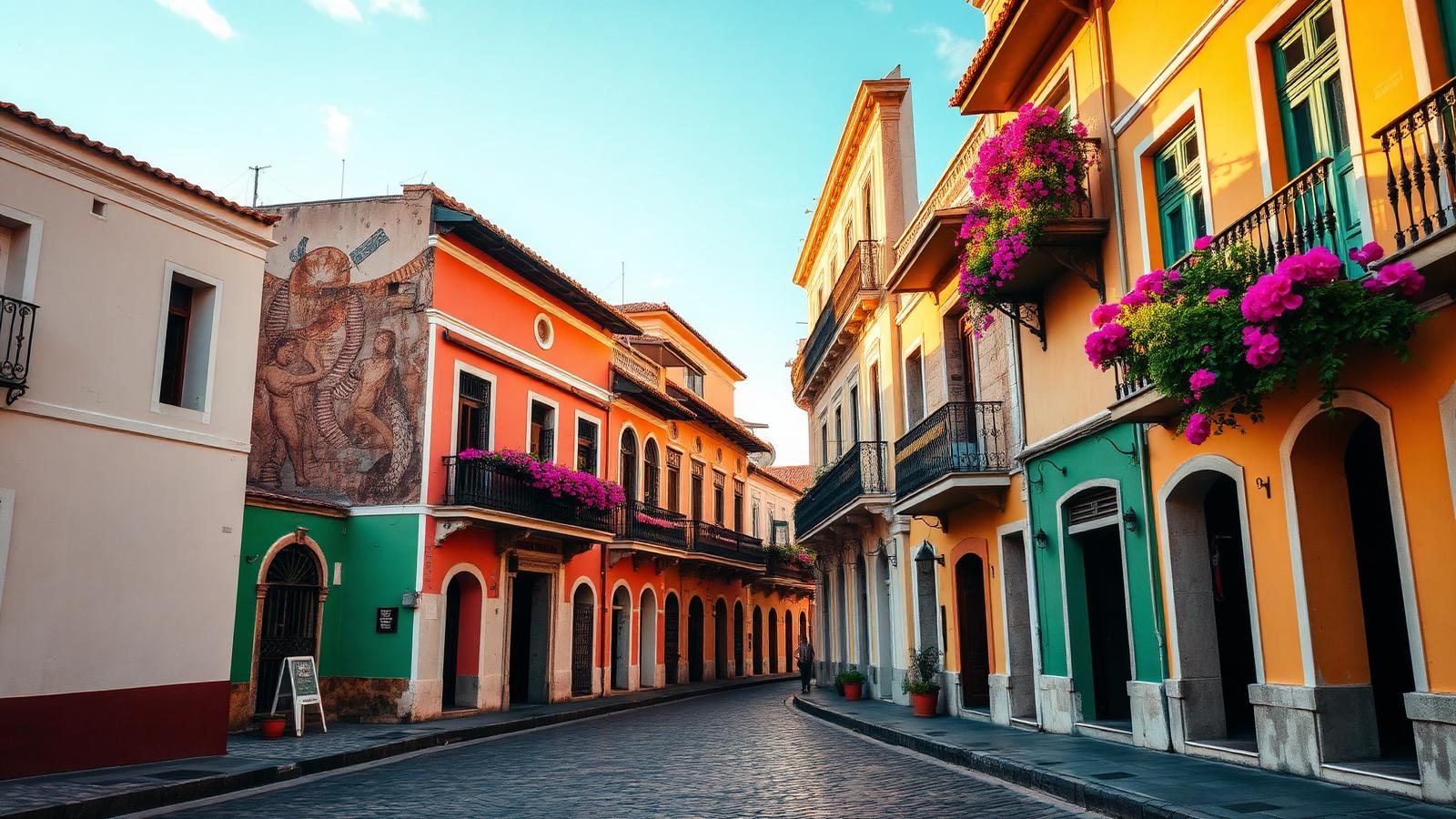
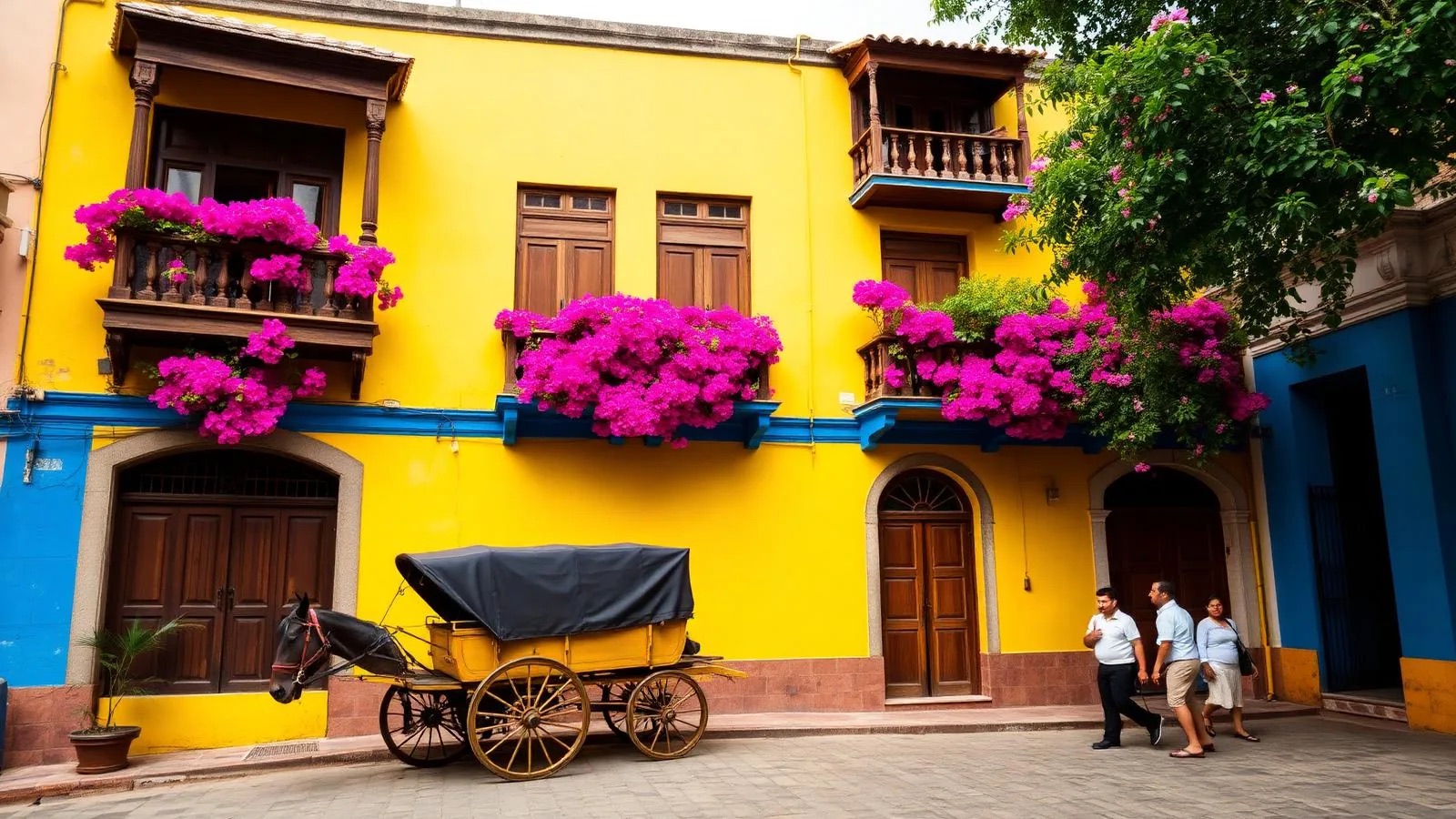
Cartagena is the country's postcard — a walled Caribbean colonial city painted every colour of a fruit market, with cathedrals and horse carriages and bougainvillea over the balconies. It has become expensive by Colombian standards (prices in the old city are Miami-level in the high season) and it's very much a tourist town, but on a first visit it's genuinely unmissable.
Base yourself in the walled city (Centro Histórico) if you want the atmosphere and can absorb the price, or in Getsemaní just outside the walls — hipper, cheaper, better nightlife, better local food. Avoid Bocagrande unless you specifically want a big beach-hotel strip.
The essentials:
- Walk the walls at sunset. Café del Mar sits on top and charges accordingly; walk the walls themselves for free and get the same view.
- Get lost in the old city in the early morning, before the cruise-ship day trippers arrive and while it's still cool enough to enjoy.
- Castillo San Felipe de Barajas — a 17th-century Spanish fortress; go early or in the last hour for shade.
- Getsemaní — Plaza de la Trinidad in the evening turns into an outdoor living room. Umbrella-strung Calle de la Sierpe is the classic photo.
- Islas del Rosario / Playa Blanca — Cartagena's beaches themselves are underwhelming. For sand and water, take a boat to Playa Blanca on Isla Barú or, better, an overnight on one of the Rosario islands.
Two to three nights in Cartagena itself, plus one island night if you have the time.
The Coffee Triangle and Salento
The Eje Cafetero — the Coffee Triangle covering Caldas, Quindío and Risaralda — is where Colombia stops feeling like a Latin American holiday and starts feeling like the country locals actually love. Rolling green hills covered in coffee bushes, wax palms 60 metres tall in the Cocora Valley, jeeps ("willys") in every town square, and fincas that will host you for the night and put you on the picking line the next morning.
Salento is the classic tourist base — a small, brightly painted pueblo two hours from Pereira airport. It's touristy but genuinely charming, and everything you'd want to do in the region is within a short drive.
- Valle de Cocora hike — an easy loop through cloud forest to a stand of the world's tallest palms. Half a day. Take the 6.30 a.m. jeep from Salento's main square to beat the coach tours.
- Coffee-farm tour — Finca El Ocaso and Don Elías are the two everyone recommends around Salento. You'll walk the plantation, pick, pulp, dry, roast and cup, and you'll leave understanding why Colombian coffee is priced the way it is. Around $15–25 per person.
- Filandia — the calmer, prettier alternative to Salento, 40 minutes away. Fewer hostels, more local weekenders.
- Termales de Santa Rosa or San Vicente — thermal springs for a slow afternoon.
Stay at least two nights on a working finca outside town. Waking up in a coffee plantation with clouds sitting in the valley below is one of those experiences that stays with you long after the trip.
Tayrona National Park
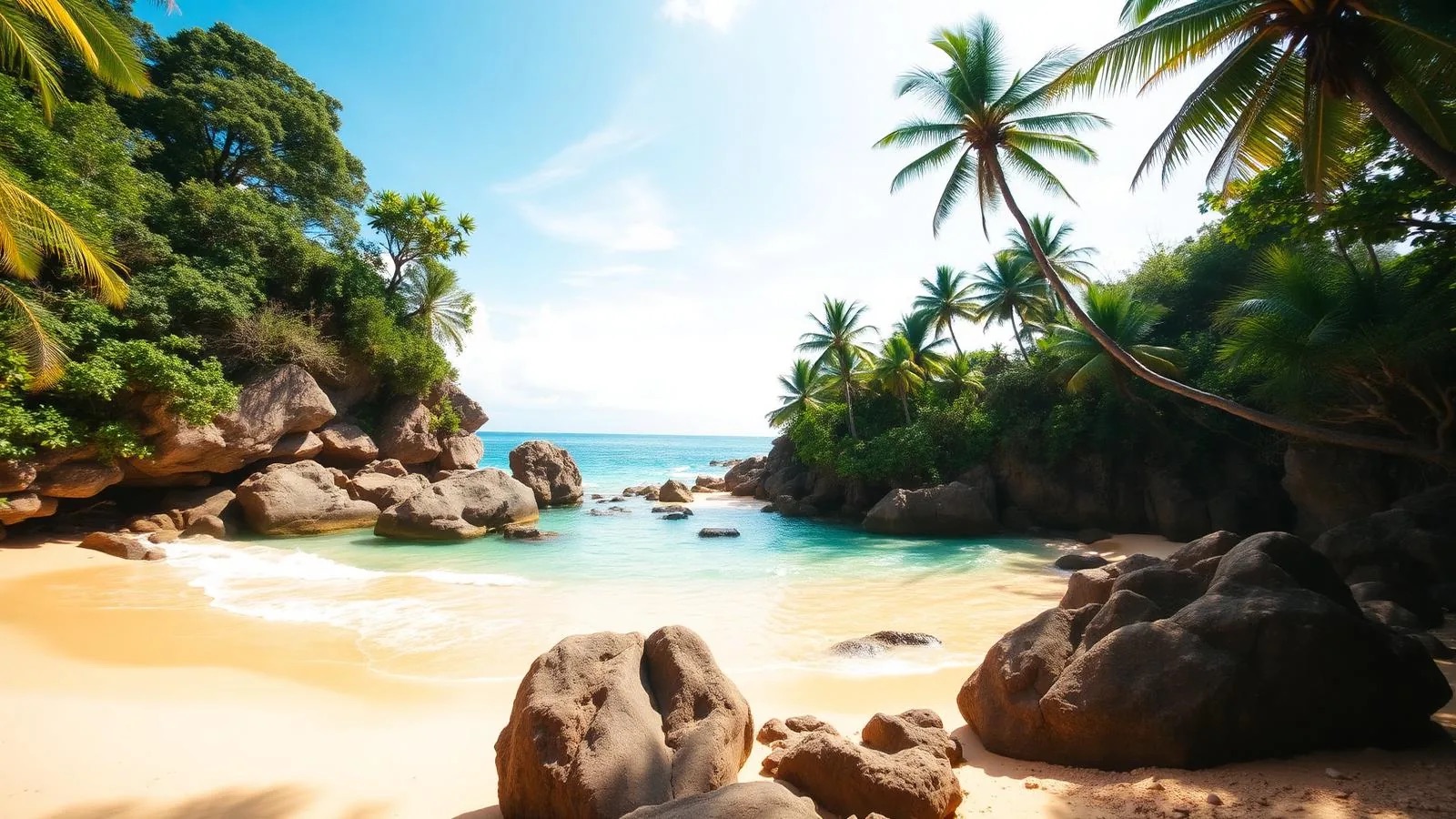
Tayrona is where the Sierra Nevada de Santa Marta — the world's highest coastal mountain range — falls straight into the Caribbean. The result is a coastline of jungle-backed white-sand beaches with no roads, no resorts, and a strict daily visitor cap. It's genuinely one of the most beautiful stretches of coast in the Americas, and it's not near anything, which is what has kept it that way.
The base is Santa Marta (an easy flight from Bogotá or Medellín) or, better, the beach village of Palomino or the hipster hillside town of Minca. From any of them you can reach the main Tayrona entrance (El Zaino) by public bus in under an hour.
What to know:
- You enter on foot. From El Zaino, it's about a two-hour walk through jungle to Cabo San Juan, the postcard double-beach with a rock outcrop and a hammock hut. Add another hour to reach Playa Nudista or the quieter beaches beyond.
- The park closes for several weeks a year (usually February, June and October/November) to let the ecosystem and the Indigenous communities that own the land recover. Check dates before you book flights.
- Not every beach is safe to swim — strong currents. Cabo San Juan and Piscina are the reliable ones.
- You can day-trip it, but the magic is sleeping there. Hammocks and tents at Cabo San Juan are basic and busy; the eco-lodges just outside the park (Ecohabs, Playa Koralia) are more comfortable.
Getting Around Colombia
Colombia is bigger than it looks on a map and the Andes make everything slower than it looks on a map. Two rules of thumb: if it looks like more than about six hours by road, fly instead; if it looks like a scenic four-hour drive, take the bus and enjoy it.
Domestic flights
This is how you make a Colombia trip work in under a month. Avianca, LATAM, Wingo and Clic run cheap, frequent flights between Bogotá, Medellín, Cartagena, Cali, Pereira/Armenia (coffee region) and Santa Marta. A one-way booked a few weeks out is often $30–70 with cabin bag only. Book the earliest flight of the day; delays cascade after that.
Long-distance buses
Reliable, comfortable and cheap. Bolivariano, Expreso Brasilia and Copetran are the big names. An overnight sleeper Bogotá–Salento or Medellín–Cartagena runs $30–60. Book with Redbus or at the terminal. Air-conditioning on long buses is aggressive — bring a jumper.
City transport
In Medellín, the metro (plus the Metrocable) is efficient, safe, and reaches the neighbourhoods you'll actually want to visit. In Bogotá, the TransMilenio bus system is functional but pickpocket-y at peak; Uber and Cabify are safer and cheaper than they'd be at home. In Cartagena, the old city is tiny enough to walk.
Rental cars
Renting a car in Colombia isn't recommended. Driving standards outside main highways are variable, mountain roads are slow, signage inconsistent, parking scarce in old-town areas, and the combination of cheap flights and cheap Ubers makes it the wrong tool for almost every itinerary. If you want to drive somewhere, hire a driver for a day instead — often $60–100 all in and completely painless.
Is Colombia Expensive to Visit? Costs and Daily Budget
Colombia is meaningfully cheaper than Costa Rica and comparable to Peru or Bolivia rather than Chile. Cartagena is the outlier — expect Cartagena to cost roughly 60–80% more than the rest of the country.
- Backpacker ($40–60/day): hostel dorm ($10–20), set-lunch menú del día ($4–7), buses and public transport, one paid activity every couple of days.
- Mid-range ($90–140/day): nicer hotel or boutique guesthouse ($55–90), mix of local and tourist restaurants, Ubers, one paid activity most days. This is where the country hits its best value.
- Comfort ($200–350/day): boutique hotel in a walled-city street or a finca-lodge in the coffee region, private drivers, guided tours, better restaurants.
- Cartagena luxury: genuine international-luxury pricing. Casa San Agustín, Sofitel Santa Clara and similar are $500+ per night in high season.
Concrete numbers: a set-lunch menú del día is 15,000–30,000 COP (roughly $4–7). A speciality-coffee flat white is 8,000–15,000 COP. An Uber across El Poblado is $2–4. A Bogotá–Medellín one-way flight booked a fortnight out is often $40. Museo del Oro is 5,000 COP. Comuna 13 tour is around 50,000 COP. Tayrona entry for foreigners is 81,000 COP in low season and 96,500 COP in high season (2026 rates), plus compulsory rescue insurance.
Food and Drink
Colombian food is regional in a way that surprises first-time visitors. The dishes you see in the highlands aren't what you eat on the coast, and neither of those is what you get in the Amazon or the Pacific. A short cheat sheet:
- Bandeja paisa — the enormous Antioquian lunch plate: rice, beans, chicharrón, chorizo, fried egg, plantain, avocado, arepa. Order at lunch, skip dinner.
- Ajiaco — Bogotá's chicken-and-three-potato soup with corn on the cob and capers. Perfect for the altitude and the drizzle.
- Arepas — round corn-flour cakes, different in every region: thin and crispy in the Caribbean, thicker and cheese-stuffed in Antioquia.
- Ceviche and cazuela de mariscos on the Caribbean coast — the Cartagena classics.
- Empanadas, buñuelos, arepa de huevo, patacones — the everywhere street snacks.
- Fruit — Colombia has fruit you've never seen. Lulo, guanábana, curuba, granadilla, feijoa, borojó. Order a jugo natural (usually en agua, sometimes en leche) with every meal.
Drink-wise, Colombian speciality coffee is having a moment — Café San Alberto, Café Devoción, Amor Perfecto and Pergamino have proper cafés in the big cities. In bars, aguardiente (anise-flavoured cane spirit) is the traditional shot; a good rum (Ron Medellín, Ron Viejo de Caldas) is the more forgiving option.
How Many Days Do You Need in Colombia? A Two-Week Itinerary
- Days 1–3: Bogotá — arrive, adjust to altitude, La Candelaria + Museo del Oro + Monserrate.
- Days 4–7: Medellín — fly in, Comuna 13 tour, Metrocable, Guatapé day trip, one full day and evening in Laureles/Poblado.
- Days 8–10: Coffee Region — fly to Pereira, taxi to Salento, coffee finca, Cocora hike, Filandia afternoon.
- Days 11–13: Cartagena — fly in, walled city + Getsemaní, sunset walls, Islas del Rosario day trip.
- Days 13–14: Tayrona / Palomino — bus from Cartagena to Santa Marta, one night at the beach, park visit, fly home from Santa Marta.
Three weeks lets you slow down and add either the Amazon (Leticia) or the Pacific coast (Bahía Solano/Nuquí for whales in July–October). One week forces you to pick two regions — Medellín + Cartagena is the best pairing for a first visit.
Final Practical Tips
- Visa: most Western passports get 90 days on entry, no visa required, extendable another 90 days at Migración Colombia offices.
- Money: Colombian pesos (COP). Card is accepted almost everywhere in cities; carry small cash for street vendors, taxis in smaller towns, and the coffee region. ATMs are widely available; withdraw inside shopping centres.
- SIM cards: Claro and Movistar sell tourist SIMs for around $10–15 with plenty of data. Buy in an official store at the airport with your passport — street resellers sometimes hand you a SIM that stops working after two days.
- Language: Spanish, and outside tourist zones English is limited. Basic phrases will noticeably improve your trip.
- Altitude: Bogotá is at 2,640m. Take the first day slowly, drink water, skip alcohol on arrival day. Medellín, Cartagena and the coast are all low-altitude.
- Water: tap water is safe in Bogotá and Medellín. On the Caribbean coast and in smaller towns, stick to bottled or filtered.
- Plugs: same as the US — Type A/B, 110V. No adapter needed for North American gear.
- Tipping: a 10% service charge is voluntary but usually added to restaurant bills — the server will ask if you want to include it. Round up on taxis; tip guides on tours.
Colombia is a country that under-promises and over-delivers, and the misconceptions people arrive with make the reality even better. Go with the same street-smart caution you'd use in any big city, respect the regional differences, and let the country do its thing. As they say here, tranquilo.
Explore Colombia in Depth: My Detailed Guides
This guide is the overview. When you are ready to plan a specific part of the trip, these deep-dives go further, and each one links back here:
More Colombia guides
Best Beaches in Colombia: Caribbean and Pacific
Tayrona's jungle-backed bays, Palomino, the Rosario Islands, San Andrés and the wild Pacific coast — which Colombian coast suits which…
Things to Do in Colombia: Cartagena to Coffee Country
Cartagena's walled city, Medellín's Comuna 13, Guatapé, the Coffee Triangle, Tayrona's beaches and the Lost City trek.