Best Cities in Poland: Kraków, Warsaw, Gdańsk and Wrocław
How Poland's cities differ — Kraków, Warsaw, Gdańsk, Wrocław, Poznań, Toruń, Lublin and Zamość — with rail-friendly routes and how long each is worth staying.
In this guide
- Quick Facts: Polish City Hopping
- The Soul of the Polish City: Market Squares, Reconstruction, and Regional Identity
- Comparison Table: Polish Cities at a Glance
- The Big Three: Krakow, Warsaw, and Gdansk
- The Western Jewels: Wroclaw, Poznan, and Torun
- Eastern & Southern Strongholds: Lublin, Zamosc, and Katowice
- Industrial & Northern Powerhouses: Lodz, Szczecin, and Bialystok
- Crafting Your Route: Suggested City-Hopping Itineraries
- Practical Tips for Navigating Polish Cities
- Final Thoughts: Finding Your Polish Rhythm
This guide is part of our Poland Itinerary: 10 Days in Krakow, Warsaw and Gdansk — start there for the overview, when to go and how to get around.
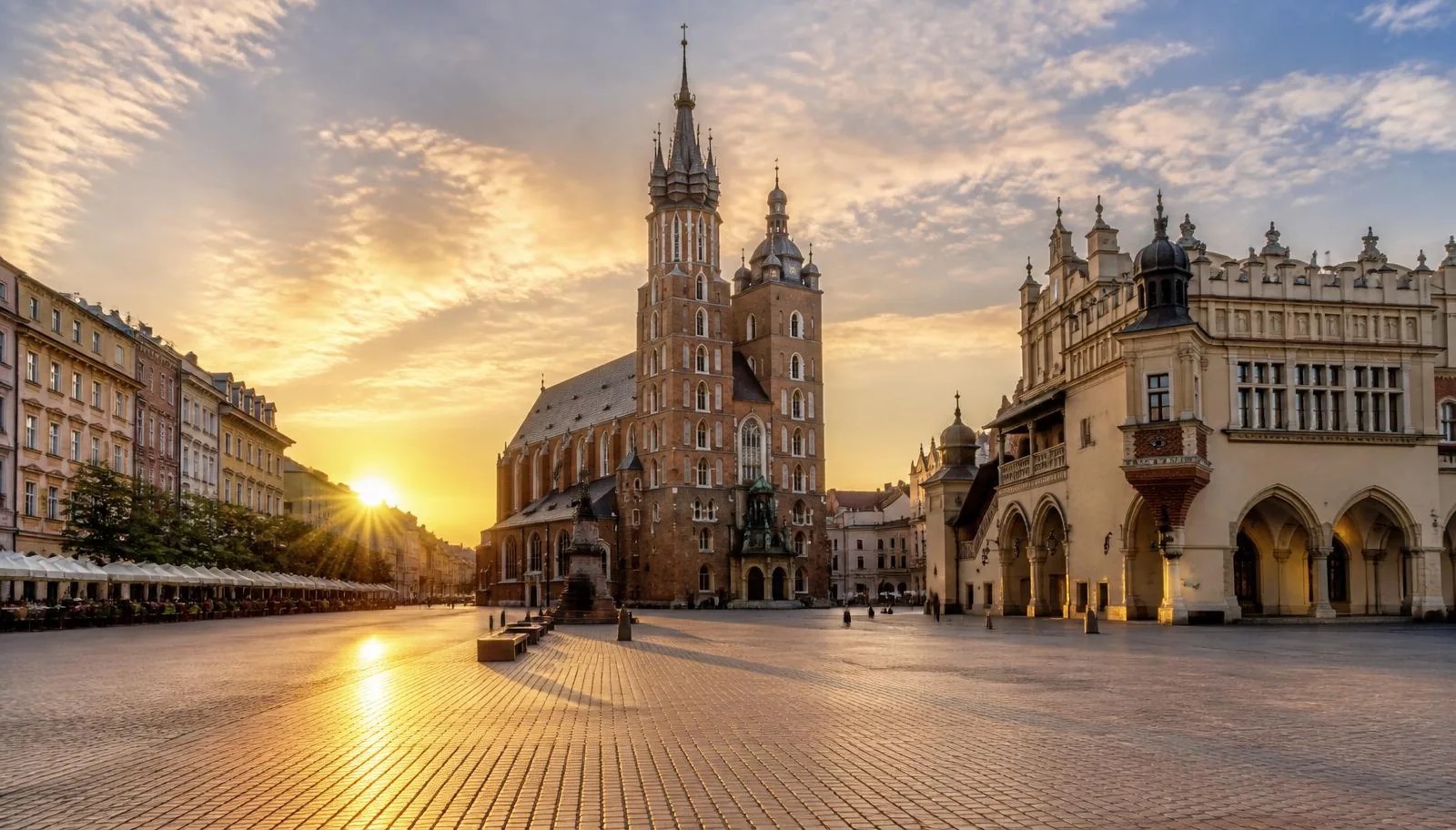
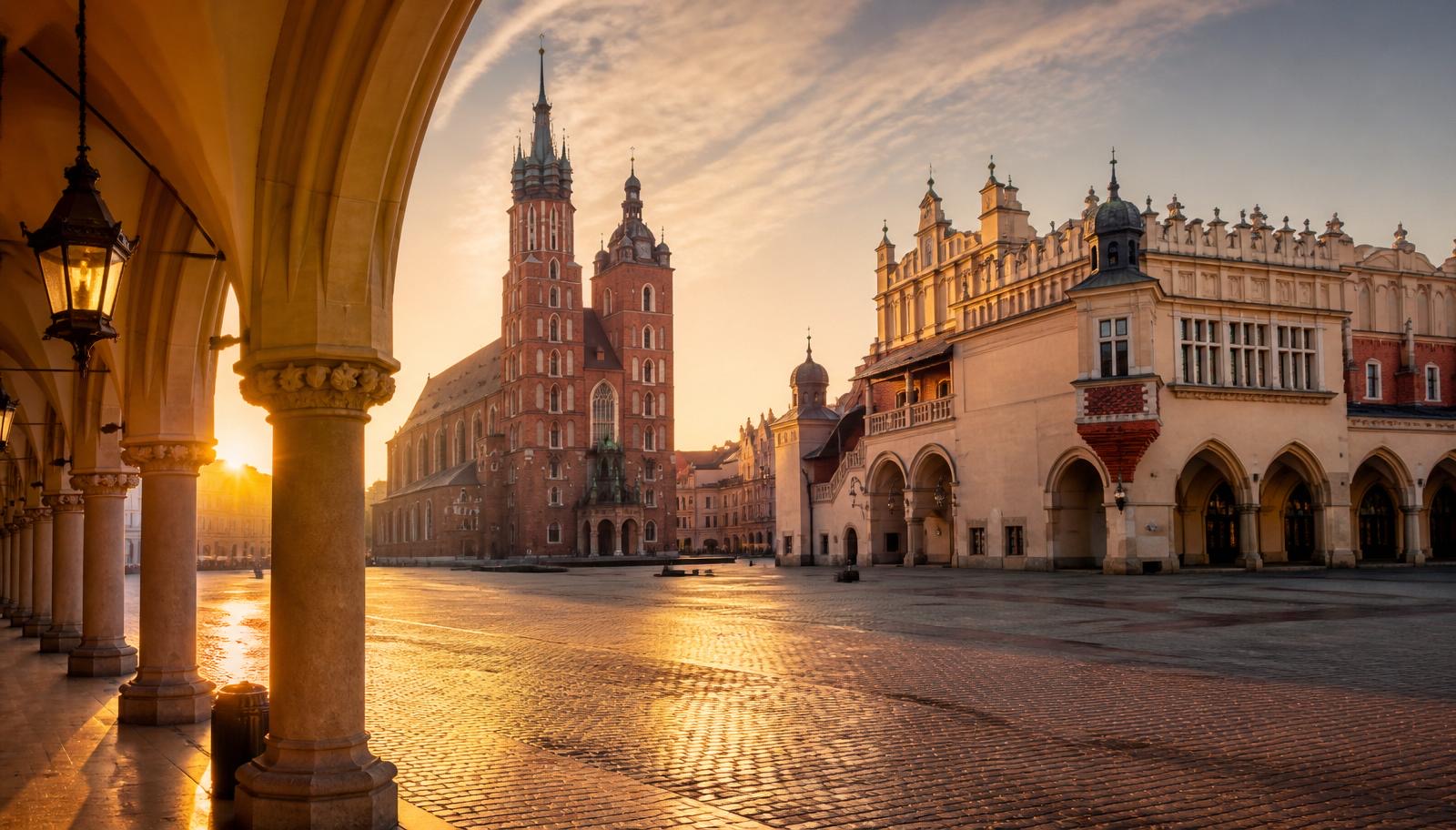
Sit on the edge of the Rynek Główny in Kraków at sunset and watch the Gothic spires of St. Mary's Basilica turn into glowing silhouettes. The crisp air is scented with toasted woodsmoke, spiced grilled sausages, and warm pierogi from nearby food stalls, while yellow street lamps flicker to life along the cobblestones. A bugle call echoes across the square—a centuries-old tradition cut short to honour a trumpeter shot long ago—and it's easy to see how Central Europe hooks visitors for life.
Poland is a country of astonishing urban diversity, where no two cities share the same architectonic DNA or cultural rhythm. You can move from the fairytale Gothic alleyways of Kraków to the soaring glass skyscrapers and meticulously reconstructed royal routes of Warszawa, then board a high-speed train north to find the Hanseatic, Dutch-influenced red-brick facades of Gdańsk overlooking maritime canals.
Deciding which urban stops to prioritize on a Polish journey often catches travellers off guard. Is it better to spend extra time hunting brass dwarves across the bridges of Wrocław, or should you venture east to admire the Renaissance symmetry of Zamość and the industrial revivals of Łódź and Katowice? Covering the efficient rail network between the Baltic coast and the southern mountains, this comprehensive guide will help you map out your ideal urban itinerary across Poland.
Quick Facts: Polish City Hopping
- Primary Transport Mode: PKP Intercity express trains (Express InterCity Premium / EIP) connecting all major metropolitan centres smoothly.
- Core Rail Hubs: Warszawa Centralna, Kraków Główny, Wrocław Główny, and Gdańsk Główny form the backbone of the network.
- Central Square Culture: Most Polish cities revolve around a central market square (Rynek), serving as the social, dining, and historic heart.
- Architectural Character: Varies dramatically by region, reflecting historical influences from Hanseatic trade, Prussian administration, Austrian Habsburg rule, and Italian Renaissance design.
- Suggested Minimum Duration: 10 to 14 days to properly experience four or five distinct cities without rushing.
- Ideal Travel Seasons: Late spring (May to June) and early autumn (September to October) offer mild weather, smaller crowds, and comfortable walking temperatures.
The Soul of the Polish City: Market Squares, Reconstruction, and Regional Identity
To truly appreciate Polish urban landscape, one must understand how history shaped their physical layouts. Unlike many Western European capitals that experienced gradual modernization over centuries, Polish cities carry the dramatic marks of border shifts, foreign empires, and catastrophic wartime destruction followed by heroic rebirths.
The concept of the Rynek (market square) is the defining element of Polish urban planning. Established mostly under Magdeburg rights during the Middle Ages, these massive square or rectangular plazas served as commercial epicentres and civic arenas. Today, they remain vibrant gathering points where outdoor cafe terraces spill out under colourful facades, musicians perform under arched arcades, and locals meet for evening drinks long past midnight.
Equally profound is the story of post-WWII reconstruction. When visiting Warszawa, Gdańsk, or Wrocław, what appears to be centuries-old medieval or Baroque architecture is often a masterclass in modern restoration. Polish architects and historians painstakingly rebuilt shattered urban cores using historic paintings, archival photographs, and salvaged original materials. In contrast, cities like Kraków escaped widespread structural devastation, offering an authentic, uninterrupted timeline of European architectural evolution from Romanesque to Art Nouveau.
Comparison Table: Polish Cities at a Glance
Use this snapshot to balance your travel preferences, whether you crave grand historical quarters, seaside maritime breezes, or cutting-edge industrial reinventions.
| City | Primary Vibe | Best For | Ideal Stay | Rail Hub Status |
|---|---|---|---|---|
| Kraków | Fairytale, Royal, Bohemian | Gothic history, nightlife, day trips | 3–4 Days | Major Southern Hub |
| Warszawa | Dynamic, Metropolis, Resilient | Museums, skyline views, modern culture | 2–3 Days | National Central Hub |
| Gdańsk | Maritime, Hanseatic, Maritime | Seafaring history, amber, coastal trips | 3 Days (with Tri-City) | Major Northern Hub |
| Wrocław | Whimsical, Bridges, Academic | Architecture, island walking, families | 2–3 Days | Major Western Hub |
| Poznań | Energetic, Renaissance, Foodie | Market square life, pastry tradition | 1–2 Days | Main West Rail Transit |
| Toruń | Gothic, Intimate, Gingerbread | Preserved brick architecture, stars | 1–2 Days | Regional Direct Link |
| Lublin | Atmospheric, Eastern, Literary | Courtyard wanderings, medieval spirit | 1–2 Days | Eastern Regional Hub |
| Zamość | Symmetrical, Renaissance, Ideal | Architecture buffs, tranquil strolls | 1 Day | Branch Line Connection |
| Katowice | Post-Industrial, Modern, Cultural | Architecture, transformation, music | 1 Day | Silesian Main Junction |
| Łódź | Gritty, Cinematic, Creative | Red-brick mills, murals, street life | 1–2 Days | Central Regional Link |
| Szczecin | Spacious, Parisian, Seaport | Underground history, riverwalks | 1–2 Days | North-West Border Hub |
| Białystok | Palatial, Green, Multicultural | Palace gardens, nature gateway | 1 Day | North-East Border Hub |
The Big Three: Krakow, Warsaw, and Gdansk
For first-time visitors to Poland, these three destinations form the foundational triangle of any trip. Each represents a radically different chapter of the nation's past and present.
Kraków: The Undefeated Royal Jewel
Kraków feels instantly personal. Having served as the capital of Poland until the late 16th century, its streets retain an air of aristocratic grandeur combined with a thriving student population that keeps its subterranean cellars humming with live jazz and conversation late into the night.
The city centres on the vast Rynek Główny, Europe's largest medieval town square. At its heart sits the Renaissance Sukiennice (Cloth Hall), where traders once swapped spices and textiles, and where you can still pick up carved wooden boxes and shimmering Baltic amber jewellery. Perched on a limestone bluff overlooking the Vistula River is Wawel Castle and Cathedral, the burial ground of Polish kings and an architectural tapestry of Gothic, Renaissance, and Baroque styles.
Just south of the Old Town lies Kazimierz, the historic Jewish Quarter. Here, narrow lanes are lined with historic synagogues, art galleries, vintage shops, and lively outdoor bars centred around Plac Nowy, famous for serving hot, open-faced zapiekanki toasted baguettes.
- Character: Enchanting, artistic, rich in intact medieval and Renaissance structures.
- Top Sights: Rynek Główny, St. Mary's Basilica, Wawel Royal Castle, Kazimierz Jewish Quarter, Schindler's Enamel Factory.
- How Long to Stay: 3 to 4 days (allowing time for day trips to Auschwitz-Birkenau or the Wieliczka Salt Mine).
- Who It Suits: History lovers, first-time travelers, culture seekers, and nightlife enthusiasts.
- Rail Links: Direct high-speed EIP trains connect Kraków Główny to Warszawa Centralna in roughly 2.5 hours.
Warszawa: The Resilient Capital of Contrast
Warszawa (Warsaw) demands an open mind. Unlike Kraków's historic charm, the capital is an energetic, sprawling metropolis where soaring glass skyscrapers brush against restored historic palaces and grey Socialist Realist monoliths like the imposing Palace of Culture and Science.
The city's heartbeat is tied to its post-war rebirth. Destroyed almost completely during World War II, Warszawa rebuilt its historic core brick by brick using 18th-century landscape paintings by Bernardo Bellotto. Today, walking through the colourful Old Town Market Place (Rynek Starego Miasta) and along the Royal Route to the sprawling lawns of Łazienki Park feels miraculous when you consider the district was mere rubble eight decades ago.
Beyond history, Warszawa is Poland's creative engine. Its dining scene rivals any European capital, filled with vegan bistros, specialty coffee roasters, craft beer bars, and world-class institutions like the Warsaw Uprising Museum and POLIN Museum of the History of Polish Jews.
- Character: Bold, fast-paced, modern, deeply historical yet forward-looking.
- Top Sights: Reconstructed Old Town, Royal Castle, Łazienki Park, Palace of Culture and Science, Vistula Boulevards.
- How Long to Stay: 2 to 3 days.
- Who It Suits: Urban explorers, modern history buffs, foodies, and museumgoers.
- Rail Links: The nation's primary hub; direct express trains branch out to every major Polish city.
Gdańsk (and the Tri-City): Maritime Power and Golden Amber
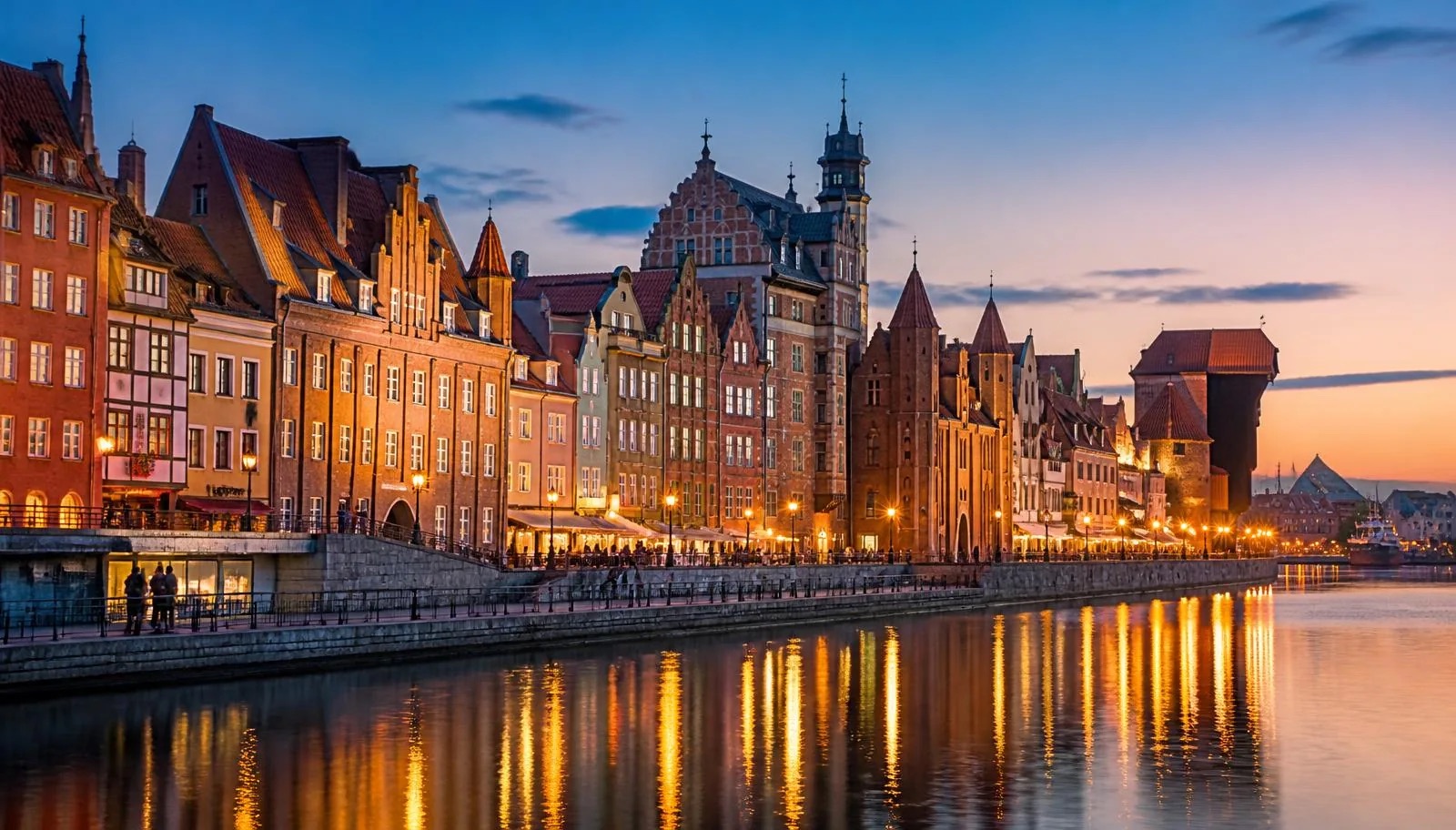
Located on the edge of the Baltic Sea, Gdańsk boasts a character completely distinct from Poland's inland hubs. As a crucial historic member of the Hanseatic League, the city was shaped by centuries of international maritime trade, wealthy merchants, and Dutch architects who left their mark in tall, narrow gabled townhouses decorated with rich stone friezes and gilded embellishments.
Strolling along Długi Targ (Long Market) past the iconic Neptune Fountain brings you to the waterfront of the Motława River. Here stands the medieval Żuraw (Crane), an engine of historical port trade. Gdańsk is also a city of modern courage: it was at the Westerplatte peninsula where WWII broke out, and decades later at the Gdańsk Shipyard where Lech Wałęsa led the Solidarity movement, ultimately sparking the downfall of communism across Eastern Europe.
Gdańsk forms part of the "Tri-City" (Trójmiasto) along with Sopot—a chic seaside resort town famous for its wooden pier and sandy beaches—and Gdynia, a modern port city renowned for its 1930s modernist architecture and maritime museums. Local commuter trains link all three effortlessly.
- Character: Maritime, atmospheric, Hanseatic, breeze-swept, historical.
- Top Sights: Main Town (Główne Miasto), Motława Riverfront, European Solidarity Centre, Museum of the Second World War, Sopot Pier.
- How Long to Stay: 3 days (to explore Gdańsk, Sopot, and nearby Malbork Castle).
- Who It Suits: Maritime enthusiasts, amber collectors, coastal lovers, and modern history students.
- Rail Links: Gdańsk Główny is connected to Warszawa by high-speed rail in approximately 2.5 hours.
The Western Jewels: Wroclaw, Poznan, and Torun
Heading west toward the German border, Poland's urban centres showcase distinct Bohemian, Prussian, and Gothic architectural traits. These cities offer vibrant university life and some of the country's finest public spaces.
Wrocław: The Venice of Poland
Built across twelve islands connected by over one hundred bridges on the Odra River, Wrocław is one of Central Europe's most charming destinations. Having been ruled over the centuries by the Kingdom of Bohemia, the Austrian Empire, Prussia, and Germany (as Breslau), the city displays a rich architectural mixture.
The vast Market Square features a grand Gothic Town Hall with intricate stone carving and steep roofs. Just a short walk across the river leads to Ostrów Tumski (Cathedral Island), the oldest part of the city. In the evening, a traditional gas lamp lighter in a dark cape still makes his rounds by hand along the quiet cobblestone lanes near the twin-spired Cathedral of St. John the Baptist.
Visitors young and old enjoy hunting for the famous Wrocław Dwarves (Krasnale)—hundreds of small bronze figurines scattered across kerbs, windowsills, and doorways, which originated as a whimsical symbol of anti-communist protest in the 1980s.
- Character: Whimsical, picturesque, academic, water-laced.
- Top Sights: Rynek, Ostrów Tumski, Centennial Hall, Panorama of the Battle of Racławice, Odra River Islands.
- How Long to Stay: 2 to 3 days.
- Who It Suits: Photographers, couples, families, and architecture admirers.
- Rail Links: Well connected via main line trains to Poznań (1.5 hours) and Kraków (3 hours).
Poznań: Trade, Renaissance Flair, and St. Martin's Croissants
Located halfway between Warszawa and Berlin, Poznań is a historic trade city that balances business dynamism with a relaxed pace of life. The focal point of the town is its Old Market Square, dominated by a stunning Renaissance Town Hall. Every day at noon, doors above the clock face open and two mechanical mechanical goats emerge to butt heads twelve times to the delight of gathered crowds below.
Poznań is also home to Ostrów Tumski, an island holding Poland's oldest cathedral and the burial site of the country's first historic rulers, Mieszko I and Bolesław I the Brave. Food lovers shouldn't leave without sampling a official St. Martin's Croissant (Rogal świętomarciński), a rich, horseshoe-shaped pastry filled with white poppy seeds, crushed nuts, and dried fruit.
- Character: Lively, colourful, energetic, foodie-centric.
- Top Sights: Old Market Square & Town Hall, Cathedral Island, Imperial Castle, Citadel Park.
- How Long to Stay: 1 to 2 days.
- Who It Suits: Culinary travelers, stopover rail passengers, trade visitors, and history fans.
- Rail Links: Major hub on the main express rail line connecting Warszawa and Berlin.
Toruń: Intact Gothic Red-Brick and Copernicus
Spared significant destruction during World War II, Toruń stands as one of Europe's best-preserved medieval towns. Sitting gracefully on the banks of the Vistula River, its red-brick Gothic townhouses, grand defensives walls, and towering churches earned it a spot on the UNESCO World Heritage list.
Toruń is famous as the birthplace of astronomer Nicolaus Copernicus, who stopped the sun and moved the earth with his heliocentric theory. Visitors can explore his family home, now a museum. The city is equally renowned for its centuries-old baking tradition: authentic Toruń Gingerbread (Pierniki), flavoured with exotic spices that arrived via river trade routes during the Middle Ages.
- Character: Medieval, romantic, fragrant, atmospheric.
- Top Sights: Old Town Hall, Copernicus House, Ruins of the Teutonic Castle, Vistula River Panorama.
- How Long to Stay: 1 to 2 days.
- Who It Suits: Day-trippers, medieval history enthusiasts, and families.
- Rail Links: Easy direct regional express connections from Poznań, Gdańsk, and Warszawa.
Eastern & Southern Strongholds: Lublin, Zamosc, and Katowice
Venture away from the primary tourist trails to uncover the cultural crossroads of eastern Poland and the industrial hubs of the south.
Lublin: Gateway to the East
Perched on rolling hills near the eastern border, Lublin has served as a bridge between Western and Eastern Europe for centuries. It was here that the Union of Lublin was signed in 1569, creating the massive Polish-Lithuanian Commonwealth.
Lublin's Old Town is atmospheric and delightfully undiscovered. Courtyards feature peeling paint and carved stone doorways, while quiet alleyways wind past grand medieval city gates. At the top of the hill stands Lublin Castle, housing the breathtaking Chapel of the Holy Trinity, where 15th-century Byzantine-Ruthenian frescoes cover every inch of Gothic brick vaulting.
- Character: Authentic, artistic, historic, Eastern European crossroads.
- Top Sights: Old Town Gates, Lublin Castle & Chapel of the Holy Trinity, Crown Tribunal, Open Air Village Museum.
- How Long to Stay: 1 to 2 days.
- Who It Suits: Off-the-beaten-path travelers, heritage seekers, and budget travellers.
- Rail Links: Direct rail connections connect Lublin to Warszawa in just under 2 hours.
Zamość: The Ideal Renaissance City
Founded in 1580 by Grand Chancellor Jan Zamoyski and designed by Venetian architect Bernardo Morando, Zamość was built from scratch to be the perfect "ideal city" based on Italian Renaissance theories. The entire historic centre remains intact today, surrounded by star-shaped fortress bastions.
The centerpiece is the Great Market Square, a perfect square surrounded by vibrant, colourful arcaded merchant houses built by Armenian, Greek, and Italian traders. The town hall features a grand fan-shaped double staircase and a towering spire that dominates the low-rise skyline.
- Character: Harmonious, quiet, architectural, historic.
- Top Sights: Great Market Square, Armenian Houses, Zamość Fortress Walls, Cathedral of the Resurrection.
- How Long to Stay: 1 day (or an easy overnight stop from Lublin).
- Who It Suits: Architecture students, urban design buffs, and quiet seekers.
- Rail Links: Accessible via regional service links from Lublin and Kraków.
Katowice: The Silesian Culture Shift
Once known exclusively as the heartland of coal mining and heavy steel manufacturing in Upper Silesia, Katowice has undertaken an impressive post-industrial transition into a green, modern city centred around culture, music, and design.
The city's historic mining sites have been transformed into vibrant public hubs. The Culture Zone features the striking Silesian Museum, constructed underground inside a former coal mine complex, surrounded by modern concert halls and the iconic saucer-shaped Spodek arena. nearby, the historic Nikiszowiec district offers a glimpse into early 20th-century workers' housing with its distinctive red-brick brick tenement blocks and bright red window frames.
- Character: Industrial, innovative, bold, musical.
- Top Sights: Silesian Museum, Nikiszowiec District, Spodek Arena, Culture Zone.
- How Long to Stay: 1 day.
- Who It Suits: Industrial heritage fans, modern art enthusiasts, and urban design travelers.
- Rail Links: Major southern railway hub with high-frequency connections to Kraków and Warszawa.
Industrial & Northern Powerhouses: Lodz, Szczecin, and Bialystok
Rounding out Poland’s diverse urban canvas are cities shaped by 19th-century industrial booms, grand waterways, and royal estates tucked away in pristine borderlands.
Łódź: The Polish Manchester
During the 19th century, Łódź (pronounced Woodzh) exploded from a small village into a booming textile production hub. Factory owners constructed vast red-brick cotton mills and lavish eclectically styled palaces alongside their industrial empires.
Today, Łódź has embraced its industrial legacy. Massive textile complexes like Manufaktura have been converted into lively cultural, shopping, and dining spaces. Piotrkowska Street, one of Europe's longest pedestrian avenues, runs for over four kilometres, lined with fine restaurants, bronze statues of famous former residents, and vibrant street murals. Łódź is also the capital of Polish cinema, home to the famous National Film School that trained directors like Roman Polański and Andrzej Wajda.
- Character: Industrial-chic, artistic, creative, cinematic.
- Top Sights: Piotrkowska Street, Manufaktura Complex, Izrael Poznański Palace, Off Piotrkowska.
- How Long to Stay: 1 to 2 days.
- Who It Suits: Street art lovers, film lovers, and industrial history fans.
- Rail Links: Frequent trains connect Łódź to Warszawa in approximately 1 hour and 15 minutes.
Szczecin: Parisian Layouts and Baltic Waterways
Located in Poland's far northwest near the German border, Szczecin is a sprawling port city positioned along the Odra River and Lake Dąbie. Built on a grand urban plan designed in part by Georges-Eugène Haussmann's contemporaries, the city features star-shaped roundabouts and wide avenues lined with trees, earning it comparisons to Paris.
Highlights include the Wały Chrobrego (Chrobry Embankment), a elevated promenade overlooking the river and port docks, and the striking white geometric Mieczysław Karłowicz Philharmonic, which won the prestigious Mies van der Rohe Award for architecture. Underground, visitors can tour vast wartime tunnels built deep beneath the main railway station.
- Character: Spacious, aquatic, architectural, maritime.
- Top Sights: Wały Chrobrego Promenade, Szczecin Philharmonic, Pomeranian Dukes' Castle, Underground Routes.
- How Long to Stay: 1 to 2 days.
- Who It Suits: Architecture lovers, off-grid explorers, and travelers entering from Germany.
- Rail Links: Connected directly to Poznań and Warszawa, with easy cross-border rail into Berlin.
Białystok: Palatial Gardens and Multicultural Heritage
Nestled in Poland’s green northeast, Białystok serves as the gateway to the ancient Podlasie region and the primeval Białowieża Forest. Historically home to diverse populations of Poles, Lithuanians, Tatars, Belarusians, and Jewish communities, it is the birthplace of L. L. Zamenhof, creator of the constructed language Esperanto.
The city center is dominated by the grand Branicki Palace, often called the "Versailles of Podlasie." Built in the Baroque style with Italianate French garden landscapes, the estate reflects the opulence of 18th-century Polish nobility. Surrounding the city are tranquil forest reserves and historic wooden architecture unique to the eastern border regions.
- Character: Regal, green, relaxed, multicultural.
- Top Sights: Branicki Palace & Gardens, Kościuszko Market Square, Historical Museum, Planty Park.
- How Long to Stay: 1 day.
- Who It Suits: Nature enthusiasts heading to national parks, palace lovers, and regional road-trippers.
- Rail Links: Direct rail links connect Białystok to Warszawa in roughly 2 hours.
Crafting Your Route: Suggested City-Hopping Itineraries
Poland's high-speed rail network makes hopping between major cities effortless. The nation's main operator, PKP Intercity, runs comfortable Express InterCity Premium (EIP) trains that move smoothly between hubs. Here are three tested routes based on your trip length.
Option 1: The First-Timer's Express Route (7 to 9 Days)
This classic line hits Poland's biggest heavyweights with minimal transit fatigue using high-speed rail.
- Days 1–3: Kraków — Explore the Old Town, Wawel Hill, and Kazimierz. Take a day trip to Wieliczka or Auschwitz.
- Days 4–5: Warszawa — Take the early 2.5-hour morning EIP train north. Discover the restored Old Town, dynamic museum scene, and Vistula banks.
- Days 6–8: Gdańsk — Catch the 2.5-hour train to the coast. Tour the main town, visit the Solidarity Museum, and take a local commuter train to Sopot beach.
Option 2: The Grand Northern & Western Loop (10 to 12 Days)
Perfect for travelers seeking a deep dive into Hanseatic, Bohemian, and Gothic heritage across Poland's western halves.
- Days 1–3: Kraków — Culture, dining, and historical sights.
- Days 4–5: Wrocław — Travel west by train (3 hours). Walk the river islands, admire Market Square, and spot bronze dwarves.
- Days 6–7: Poznań & Toruń — Stop in Poznań for town hall goats and pastry traditions, then head to Toruń for preserved Gothic red-brick architecture and gingerbread.
- Days 8–10: Gdańsk — Finish on the Baltic coast, taking in seafaring history and fresh maritime air.
Option 3: The Eastern & Industrial Trail (12 to 14 Days)
A route tailored for seasoned travelers looking to explore beyond the primary tourist trail.
- Days 1–3: Warszawa — Start in the capital.
- Days 4–5: Lublin & Zamość — Head east to explore Lublin's courtyards and the perfect Renaissance layout of Zamość.
- Days 6–7: Kraków — Rail south to Poland's royal heartland.
- Days 8–9: Katowice & Łódź — Experience industrial transformation at Nikiszowiec and the creative red-brick mill spaces of Łódź.
- Days 10–12: Wrocław — Conclude on the riverbanks and market squares of Silesia.
Practical Tips for Navigating Polish Cities
To ensure your urban travel across Poland goes smoothly, keep these practical, field-tested observations in mind:
- Train Booking Etiquette: Express trains (EIP and EIC) require mandatory seat reservations. Booking your tickets online a few weeks in advance often yields discounted fares and guarantees you sit together on busy routes.
- Getting Around Town: Trams and buses form the backbone of urban transport across every Polish city. You can purchase digital tickets easily via smartphone apps like Jakdojade or pay with contactless bank cards at machines on board.
- Currency & Payments: Poland uses the Polish Złoty (PLN), not the Euro. Contactless card payments and mobile payments are ubiquitous; even street vendors, bakeries, and public toilets accept cards, though carrying a small amount of cash coins is handy.
- Safety & Atmosphere: Polish cities are consistently rated among the safest in Europe. Standard common-sense precautions apply in busy train stations or crowded nightlife districts, but walking around central squares late at night is normal and secure.
- Language & Local Etiquette: Young people and hospitality workers in primary tourist cities generally speak excellent English. Learning simple Polish greetings like "Dzień dobry" (Good day) and "Dziękuję" (Thank you) will be greeted with warm smiles everywhere.
- Dining Hours: Restaurants typically serve hot meals continuously from noon until late evening. Market square milk bars (Bar mleczny) offer fast, budget-friendly traditional meals like pierogi and borscht in self-service cafeteria setups.
Final Thoughts: Finding Your Polish Rhythm
What makes travelling through Poland so memorable is that no single city tells the entire story of the country. Standing on the royal terraces of Kraków feels entirely distinct from looking up at skyscraper glass in Warszawa, catching the Baltic coastal breeze along Gdańsk’s waterfront, or enjoying cold craft beer beside a roaring Wrocław river lock.
Whether you choose to focus on the heavy-hitting trio of Kraków, Warszawa, and Gdańsk or branch out into the charming cobblestone streets of Toruń, Wrocław, and Lublin, you will find a warm, resilient, and dynamic country eager to share its history, its culture, and its table with you.
More Poland guides
Things to Do in Poland: Kraków, Gdańsk and the Tatras
Kraków's old town, the Wieliczka salt mine, Warsaw's rebuilt centre, Gdańsk and Malbork, Zakopane and the Tatras, and the Masurian lakes.
Poland Itinerary: 10 Days in Kraków, Warsaw and Gdańsk
A 10-day Poland itinerary covering Kraków, Warsaw, Gdańsk, Auschwitz and Zakopane, with the best time to visit and what a trip actually…