Things to Do in Poland: Kraków, Gdańsk and the Tatras
Kraków's old town, the Wieliczka salt mine, Warsaw's rebuilt centre, Gdańsk and Malbork, Zakopane and the Tatras, and the Masurian lakes.
In this guide
- Quick Facts: Travelling in Poland
- Historic Heart: Kraków Old Town, Wawel Castle, and Kazimierz
- Essential Day Trips from Kraków: Salt Mines and Remembrance
- Alpine Vistas: Zakopane and the Tatra Mountains
- Phoenix City: Warsaw’s Royal Route and Modern Culture
- Baltic Jewel: Gdańsk, Westerplatte, and the Tricity
- Gothic Grandeur & Fairytale Charm: Wrocław, Poznań, and Toruń
- Eastern Treasures: Primeval Forests, Lakes, and Renaissance Towns
- Polish Culinary Journey: Pierogi, Żurek, and Milk Bars
- Festive Magic: Poland’s Christmas Markets
- Practical Travel Tips for Poland
- Why Poland Belongs on Your European Itinerary
This guide is part of our Poland Itinerary: 10 Days in Krakow, Warsaw and Gdansk — start there for the overview, when to go and how to get around.
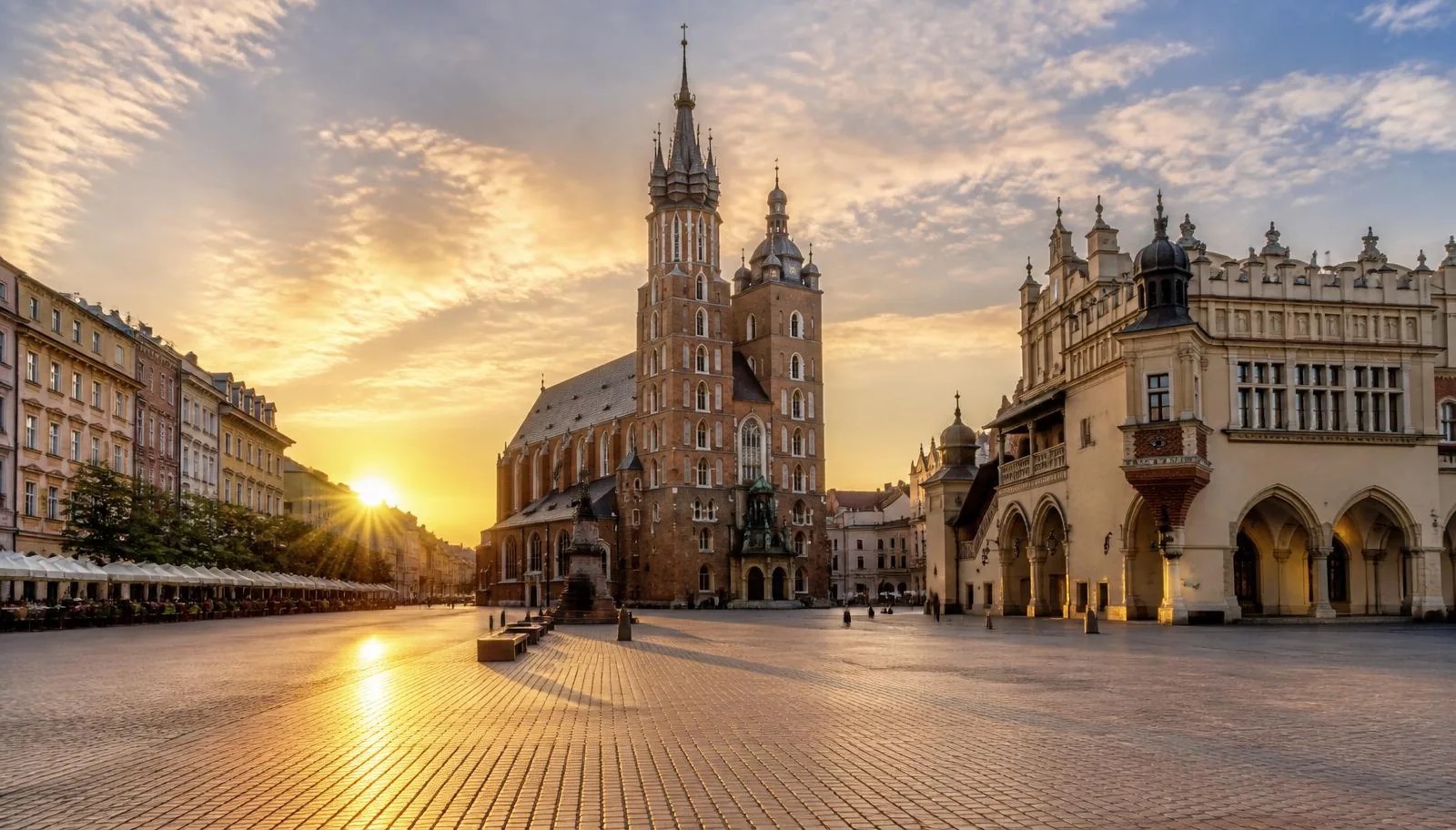
As the sun dips behind the Cloth Hall in Kraków’s Rynek Główny, a cold breeze whisks down from the snowy Tatras while the golden glow of streetlamps bounces off wet cobblestones. A lone trumpeter plays the hourly Hejnał mariacki from the tallest tower of St Mary’s Basilica, the melancholy melody cutting cleanly through the crisp evening air before abrupt silence falls over the square. It is a single, suspended moment that captures so much of this extraordinary country.
Poland is a destination that constantly defies expectation. For decades, foreign visitors treated it primarily as a poignant historical stopover, but modern travellers quickly discover a land brimming with vibrant cultural life, pristine natural wilderness, and architectural triumphs that span centuries. From the pastel-hued medieval facades of the north to the jagged granite peaks of the southern border, Poland manages to feel both deeply storied and energetically modern.
Whether you are drawn by the haunting depth of its twentieth-century history, the quiet grandeur of ancient oak forests where wild bison roam, or simply the comfort of a piping-hot plate of pierogi in a bustling milk bar, Poland delivers unforgettable experiences at every turn. This comprehensive guide walks you through the absolute finest things to see, do, and savour across the nation.
Quick Facts: Travelling in Poland
- Official Language: Polish (English is widely spoken in major cities and by younger generations).
- Currency: Polish Złoty (PLN). Card payments are virtually universal, though carrying small cash for rural stalls is helpful.
- Capital City: Warsaw (Warszawa).
- Transport Network: Exceptionally efficient intercity trains run by PKP Intercity, complemented by extensive long-distance bus routes.
- Driving Side: Right-hand side of the road.
- Best Time to Visit: May to September for warm weather and outdoor hiking; December for magical Christmas markets.
Historic Heart: Kraków Old Town, Wawel Castle, and Kazimierz
Kraków is the undisputed cultural crown jewel of Poland. Spared the sweeping physical destruction that flattened other Polish cities during World War II, its historic core remains a masterclass in Gothic, Renaissance, and Baroque architecture that demands unhurried exploration on foot.
Rynek Główny and St Mary’s Basilica
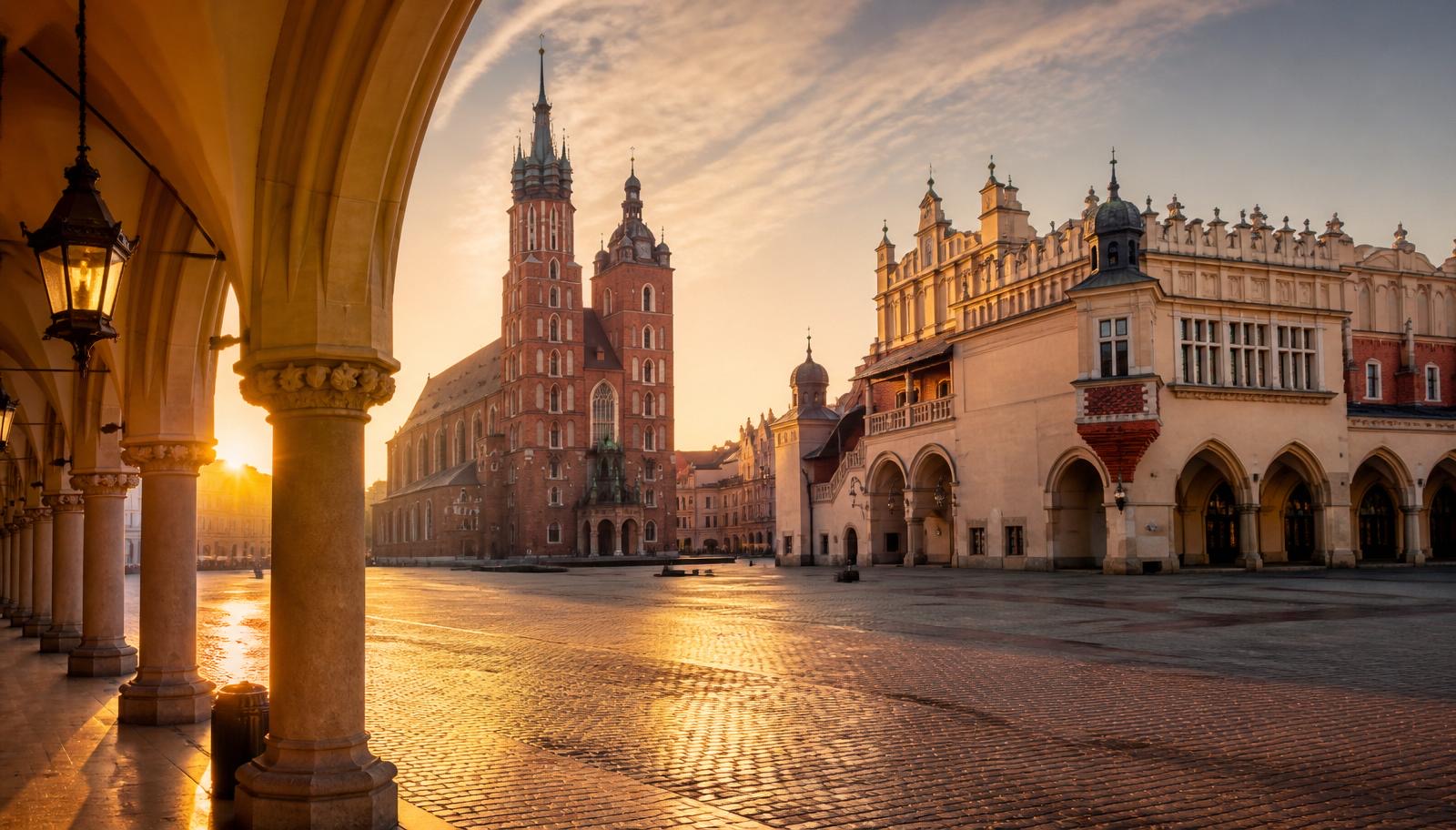
At the heart of the city lies Rynek Główny, one of Europe’s largest medieval town squares. Anchored in the centre by the Renaissance-era Cloth Hall (Sukiennice), where merchants have traded textiles and handicrafts for centuries, the square hums with horse-drawn carriages, street performers, and sidewalk cafés. Dominating one corner is St Mary’s Basilica (Kościół Mariacki), famous for its asymmetrical brick towers and the breathtaking wooden altarpiece carved by Veit Stoss. Step inside to admire the cobalt-blue starry ceiling before listening for the hourly trumpet call.
Wawel Royal Hill
Perched high above a bend in the Vistula River, Wawel Castle served as the seat of Polish kings for generations. The complex is a fascinating blend of architectural styles, featuring a stunning Italianate courtyard, grand state rooms, and royal private apartments. Adjacent to the palace stands Wawel Cathedral, the national sanctuary where Polish monarchs were crowned and laid to rest. Don't miss climbing the Sigismund Tower to view the massive 16th-century bell and gaze out over Kraków’s spires.
Kazimierz Jewish Quarter
Just south of the royal hill lies Kazimierz, a neighbourhood defined by its rich, bittersweet heritage. For more than four centuries, from 1495 until World War II, Kazimierz was a heart of Polish Jewish life. Today, its quiet alleys and atmospheric courtyards host historic synagogues, such as the Old Synagogue and Remuh Synagogue, alongside indie boutiques, art galleries, and lively nightlife. The central square, Plac Nowy, is famous for its circular market building where locals and travellers queue late into the night for zapiekanki—open-faced toasted baguettes piled high with mushrooms, cheese, and garlic sauce.
Essential Day Trips from Kraków: Salt Mines and Remembrance
While Kraków itself offers days of discovery, two of Poland’s most profound UNESCO World Heritage sites lie just outside the city limits.
Wieliczka Salt Mine
Dating back to the 13th century, the Wieliczka Salt Mine is an underground marvel carved entirely out of rock salt by generations of miners. Descending hundreds of steps into the earth, visitors navigate a subterranean labyrinth of winding corridors, emerald saline lakes, and vast timbered chambers. The undisputed highlight is the Chapel of St Kinga, a grand underground cathedral complete with intricate biblical bas-reliefs and shimmering chandeliers crafted entirely from crystallized salt.
Auschwitz-Birkenau Memorial and Museum
Located near the town of Oświęcim, the former Nazi concentration and extermination camp at Auschwitz-Birkenau stands as a somber monument to human tragedy and remembrance. Visiting requires reverence and emotional readiness. The preserved brick barracks of Auschwitz I house quiet exhibition spaces detailing the systemic atrocity, while the vast expanse of Birkenau (Auschwitz II), with its wooden watchtowers and endless railway tracks, conveys the immense scale of the Holocaust. Due to intense visitor demand, booking official guided entry months in advance is essential.
Alpine Vistas: Zakopane and the Tatra Mountains
A short journey south from Kraków brings you to the foot of the jagged granite peaks that mark the border with Slovakia. The Tatras represent Poland's grandest mountain landscape, offering world-class outdoor recreation paired with unique regional folklore.
The resort town of Zakopane serves as the primary base for mountain adventures. Known for its distinctive wooden architecture—characterized by steep pitch roofs and decorative timber carvings—the town offers a lively contrast to the tranquil wilderness nearby. Wander down Krupówki Street to sample regional delicacies, most notably oscypek, a salted sheep’s milk cheese smoked over pine wood and served warm with cranberry preserves.
- Morskie Oko: A brilliant turquoise glacial lake surrounded by towering granite walls. A well-paved trail through alpine forest makes this one of the country's most accessible high-altitude vistas.
- Kasprowy Wierch: Reachable via a historic cablecar ride, this ridge offers sweeping panoramic views across both the Polish and Slovakian Tatras.
- Dolina Kościeliska: A peaceful valley trek ideal for gentle walks alongside rushing mountain streams, past traditional shepherd shelters and limestone caves.
Phoenix City: Warsaw’s Royal Route and Modern Culture
Warsaw is a metropolis shaped by resilience. Almost completely destroyed during the dark events of World War II, the city pulled off a near-miraculous postwar reconstruction that saw its historical heart rebuilt using archive photos and historic paintings.
The Rebuilt Old Town and Royal Castle
Walking through Warsaw's Old Town (Stare Miasto), it is astonishing to realise that the colourful townhouses and brick fortifications around the Old Town Market Square were painstakingly reconstructed from rubble in the mid-20th century. Anchoring the entry to the historic centre is the vast, rose-coloured Royal Castle, once the residence of Polish monarchs and the site where Europe's first modern constitution was passed in 1791.
Łazienki Park and the Royal Way
Stretching south from the castle is the Royal Way (Trakt Królewski), a grand boulevard lined with palaces, churches, and university buildings. The boulevard eventually leads to Łazienki Park, a vast landscaped garden featuring grand neoclassical architecture. Here, the picturesque Palace on the Isle sits serenely on a lake surrounded by roaming peacocks. During summer months, visitors gather around the grand Chopin Monument within the park to attend free outdoor piano recitals.
World-Class Museums
Warsaw’s modern identity is defined by brilliant, highly interactive museums that frame Polish history with dramatic clarity:
- Warsaw Rising Museum: Housed in a former tram power station, this immersive space chronicles the 1944 underground struggle of the Home Army against occupying forces through personal artifacts, soundscapes, and period photographs.
- POLIN Museum of the History of Polish Jews: Located on the grounds of the former Warsaw Ghetto, this architectural masterpiece tells a thousand-year story of Jewish culture, community, and heritage in Poland through multi-sensory galleries.
Baltic Jewel: Gdańsk, Westerplatte, and the Tricity
Facing the chilly waters of the Baltic Sea, Gdańsk possesses a maritime ambiance entirely distinct from inland Poland. Shaped by centuries as a wealthy Hanseatic trading port and the birthplace of the Solidarity movement, Gdańsk is a city of soaring brick churches, elaborate merchant mansions, and amber workshops.
Długi Targ and the Waterfront
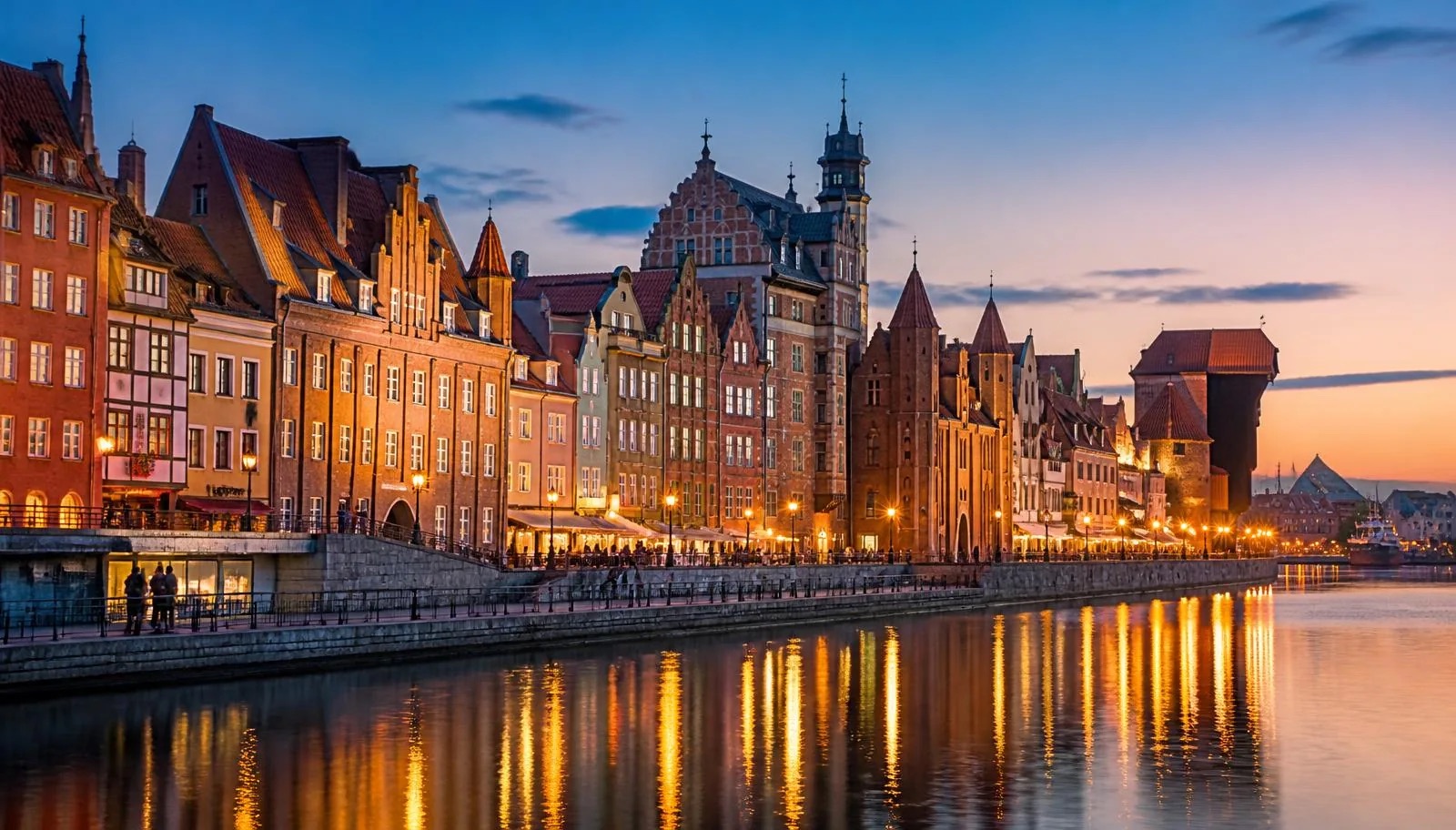
The pedestrian heart of the city, known as the Royal Way, culminates in the Long Market (Długi Targ). Framed by ornate Mannerist townhouses, the square is guarded by the famous 17th-century bronze Neptune Fountain. A short walk brings you to the Motława River embankment, where the towering timber structure of the Medieval Crane (Żuraw) hangs over the water—a testament to Gdańsk’s historical port power.
Westerplatte and Modern History
Gdańsk holds a momentous place in 20th-century history. A short ferry ride down the harbour brings you to Westerplatte, the peninsula where the very first shots of World War II were fired in September 1939. Back in town, the soaring rusty steel facade of the European Solidarity Centre stands near the historic shipyard gates, commemorating Lech Wałęsa and the trade union movement that ultimately brought down Communist rule across Eastern Europe.
The Tricity and Malbork Castle
Gdańsk forms part of the "Tricity" urban area alongside Sopot, a seaside resort famous for its grand wooden pier and sandy beaches, and Gdynia, a modern port town with impressive modernist architecture. An hour inland via train lies Malbork Castle, the vast red-brick stronghold built by the Teutonic Knights in the 13th century. Recognized as the world's largest castle complex by land area, exploring its fortified gateways, grand refectories, and high towers requires a full half-day.
Gothic Grandeur & Fairytale Charm: Wrocław, Poznań, and Toruń
Western Poland holds a string of historic towns that highlight the region's rich Silesian, Pomeranian, and Prussian cultural crosscurrents.
Wrocław: The City of Bridges and Dwarfs
Spread across twelve islands on the Oder River connected by more than a hundred bridges, Wrocław is pure visual magic. Its expansive Rynek features a magnificent Gothic Town Hall adorned with intricate stonework. As you explore the city, keep your eyes on the pavement: hundreds of whimsical bronze dwarfs (krasnale) are hidden across the city, installed since 2005 and inspired by the Orange Alternative, an anti-communist protest movement of the 1980s that used the dwarf as its symbol. Across the river lies Ostrów Tumski (Cathedral Island), the oldest part of the city, where a gas lantern-lighter still makes his rounds on foot every evening.
Poznań: History and Tradition
As one of the oldest cities in Poland, Poznań boasts a beautifully restored market square dominated by a colourful Renaissance Town Hall. Every day at noon, crowds gather in front of the building to watch two mechanical billy goats emerge from the clock tower to butt horns twelve times. While in Poznań, be sure to visit a local bakery to sample the famous St Martin’s Croissant (Rogal świętomarciński), a rich pastry filled with white poppy seeds, nuts, and candied fruit.
Toruń: Gingerbread and Copernicus
Unscathed by major wars, Toruń is a magnificent preserve of Gothic brick architecture on the banks of the Vistula River. Famous as the birthplace of astronomer Nicolaus Copernicus, the city is equally celebrated for its centuries-old gingerbread tradition. At the city's living gingerbread museums, visitors can bake their own traditional spiced gingerbread using wood-carved moulds identical to those used centuries ago.
Eastern Treasures: Primeval Forests, Lakes, and Renaissance Towns
Eastern Poland offers a serene, unhurried pace of life defined by dense wilderness, glassy lake districts, and pristine Renaissance architecture.
Białowieża Forest: Land of the Bison
Straddling the border with Belarus, Białowieża Forest is a UNESCO World Heritage site containing the last remaining patch of primeval lowland forest that once covered the European plain. Walking beneath ancient oaks and spruces feels like stepping back in time. The forest is the ultimate sanctuary for the European bison (żubr), Europe’s heaviest land mammal. Joining an experienced local guide at dawn offers the best opportunity to spot these magnificent creatures in their wild, natural habitat.
The Masurian Lake District
Featuring over two thousand connected lakes set amidst rolling green countryside, the Masurian Lake District (Mazury) is Poland’s capital for water sports. Towns like Giżycko and Mikołajki serve as hubs for sailing, kayaking down tranquil rivers like the Krutynia, and cycling scenic trail networks that thread through nature reserves.
Lublin and Zamość
Further south, the eastern city of Lublin charms travellers with its hillside Old Town and cobbled lanes lined with rustic taverns. A short journey away sits Zamość, a town designed in the late 16th century by an Italian architect as an "ideal Renaissance city." Its perfectly proportioned central market square, lined with colourful arcaded merchant houses, remains one of the finest architectural ensembles in Central Europe.
Polish Culinary Journey: Pierogi, Żurek, and Milk Bars
Polish cuisine is soul food at its finest—hearty, deeply aromatic, and reliant on fresh regional ingredients like wild mushrooms, forest berries, dill, beetroots, and fermented cabbages.
Unmissable Polish Dishes
No trip across the country is complete without trying these classic comfort foods:
- Pierogi: Crescent-shaped dumplings filled with various ingredients. The classic varieties include pierogi ruskie (mashed potato, farmer's cheese, and fried onion), spiced minced meat, or sweet summer berries topped with cream.
- Żurek: A unique sour rye soup made with a fermented starter, seasoned with garlic and marjoram, and packed with smoked sausage and hard-boiled eggs. It is frequently served inside a carved-out loaf of crusty bread.
- Bigos: Known as hunter’s stew, this slow-simmered dish combines fresh cabbage, sauerkraut, wild mushrooms, and various cuts of tender meat and sausage over several days.
- Placki Ziemniaczane: Crispy grated potato pancakes served savory with rich mushroom sauce or sour cream, or sweet with a sprinkle of sugar.
The Milk Bar Experience
For an authentic slice of daily life, seek out a Bar Mleczny (Milk Bar). Originally established during the communist era as state-subsidized cafeterias serving affordable, dairy- and vegetable-based meals to workers, these no-nonsense eateries remain a beloved fixture of Polish urban life. You order at the counter from a chalkboard menu and receive massive, home-style portions of pierogi, soups, and cutlets for a fraction of restaurant costs.
Comparing Regional Polish Specialties
| Region | Signature Dish | Key Ingredients | Flavour Profile |
|---|---|---|---|
| Podhale (Tatras) | Oscypek | Smoked sheep's milk, cranberry jam | Salty, smoky, and sweet contrast |
| Greater Poland (Poznań) | Rogal Świętomarciński | Puff pastry, white poppy seeds, nuts, candied peel | Rich, sweet, and nutty |
| Silesia & Lesser Poland | Żurek | Fermented rye flour, white sausage, marjoram | Tangy, savory, and aromatic |
| Kuyavia (Toruń) | Pierniki Toruńskie | Honey, ginger, cinnamon, nutmeg, dark chocolate | Spicy, sweet, and warm |
Festive Magic: Poland’s Christmas Markets
Visiting Poland during December is like walking into a fairy-tale winter landscape. Cities across the country host magical Christmas markets (Jarmark Bożonarodzeniowy) that fill historic town squares with glowing lights, festive music, and wooden chalets.
The market in Kraków's Rynek Główny is world-famous, offering hand-painted glass baubles, carved timber crafts, and sizzling stalls selling grilled sausage and hot oscypek. Wrocław hosts one of the largest and most whimsical markets in Central Europe, spanning across its enormous square with fairytale-themed rides and multi-story wooden pyramid windmills selling warm mulled wine (grzaniec).
Practical Travel Tips for Poland
Planning a seamless trip across Poland is straightforward thanks to modern infrastructure and traveler-friendly services.
Getting Around
Poland's rail network is clean, punctual, and highly comprehensive. High-speed Express InterCity Premium (EIP) trains operated by PKP Intercity connect Warsaw, Kraków, Gdańsk, and Wrocław effortlessly. For secondary routes and smaller towns, comfortable long-distance coaches like FlixBus fill any transport gaps smoothly.
Safety and Local Etiquette
Poland consistently ranks as one of the safest travel destinations in Europe. Violent crime is extremely rare, though standard precautions regarding pickpocketing should be observed at busy railway stations and tourist markets. When visiting places of worship or historical memorials like Auschwitz, modest attire and respectful silence are expected.
Tipping and Payments
Contactless card payment is standard practically everywhere in Poland, from high-end boutiques to local public transport ticket kiosks. Tipping in restaurants is customary for good service—rounding up the bill or leaving around 10% in cash directly to your server is standard practice.
Why Poland Belongs on Your European Itinerary
Poland is a country that stays with you long after you have packed your bags and returned home. It is a place where history is written into every cobblestone, where ancient wilderness thrives alongside forward-looking cities, and where hospitality is served generously with every plate placed on the table.
Whether you find yourself gazing up at the brick towers of Gdańsk, hiking through misty alpine valleys in the Tatras, or soaking in the timeless atmosphere of Kraków’s medieval square, Poland delivers a depth of experience that rivals Europe's most famous destinations—while retaining a quiet, authentic magic all its own.
More Poland guides
Best Cities in Poland: Kraków, Warsaw, Gdańsk and Wrocław
How Poland's cities differ — Kraków, Warsaw, Gdańsk, Wrocław, Poznań, Toruń, Lublin and Zamość — with rail-friendly routes and how long…
Poland Itinerary: 10 Days in Kraków, Warsaw and Gdańsk
A 10-day Poland itinerary covering Kraków, Warsaw, Gdańsk, Auschwitz and Zakopane, with the best time to visit and what a trip actually…