Poland Itinerary: 10 Days in Kraków, Warsaw and Gdańsk
A 10-day Poland itinerary covering Kraków, Warsaw, Gdańsk, Auschwitz and Zakopane, with the best time to visit and what a trip actually costs.
In this guide
- Why Poland Is Worth the Hype
- Best Time to Visit Poland
- Warsaw
- Kraków
- Auschwitz-Birkenau
- Gdańsk and the Baltic Coast
- Zakopane and the Tatras
- Food Culture
- Getting Around
- Is Poland Expensive to Visit? Costs and Daily Budget
- How Many Days Do You Need in Poland? A 10-Day Itinerary
- Final Practical Tips
- Explore Poland in Depth: My Detailed Guides
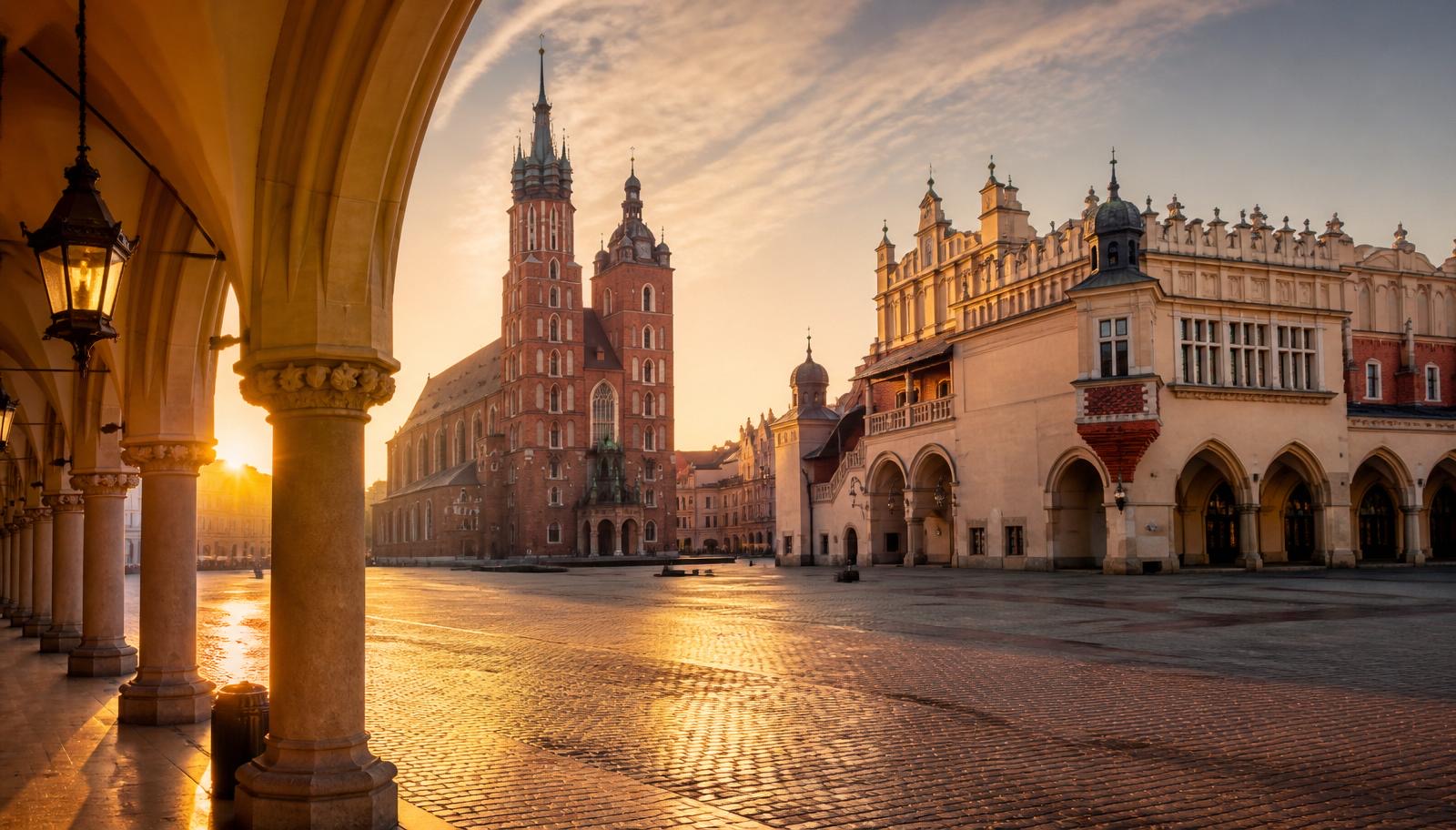
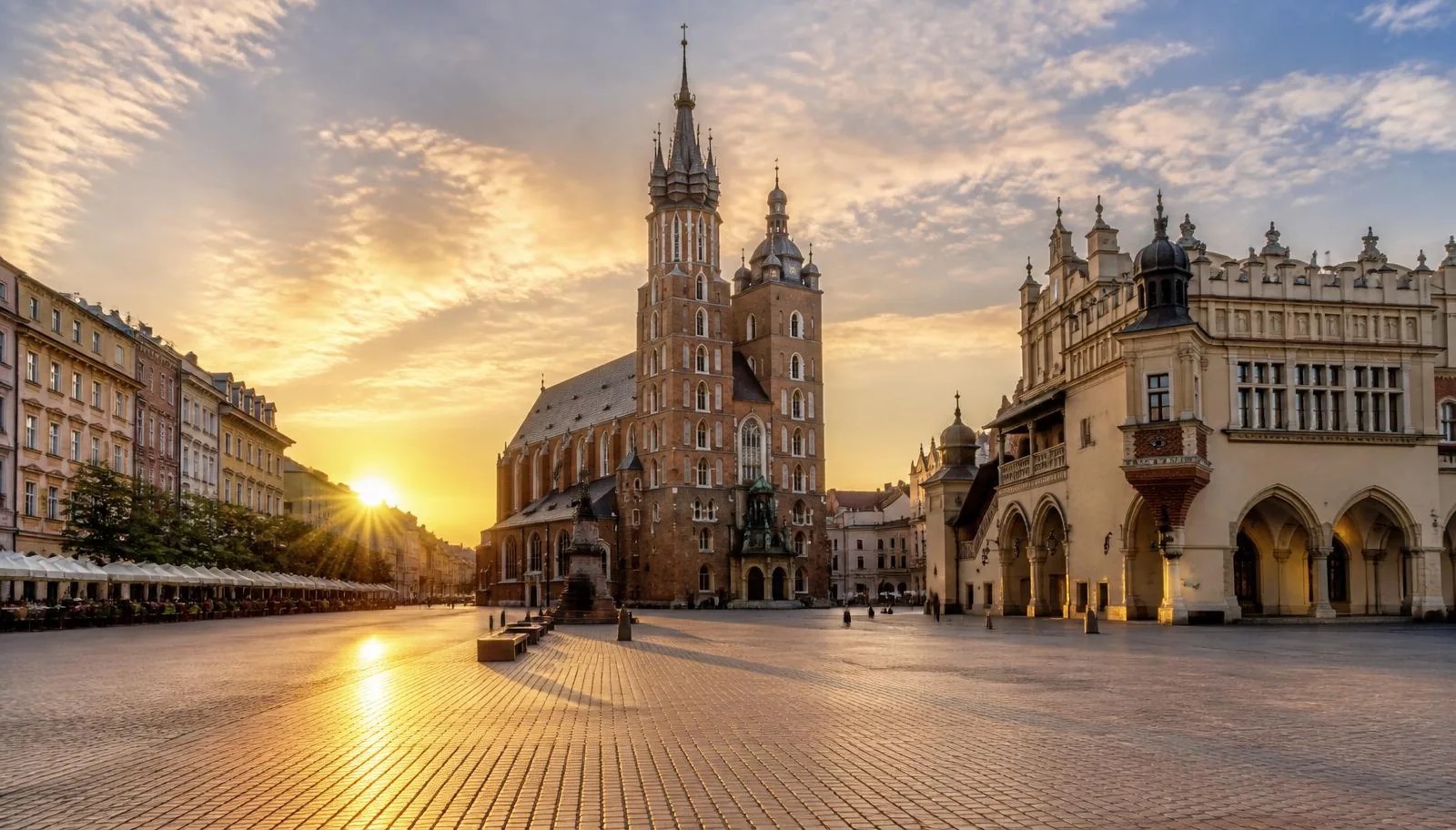
At 5:30am on a July morning, Kraków's Rynek Główny — the largest medieval square in Europe — can be entirely empty, with the trumpeter's hejnał call floating down from St Mary's tower every hour on the hour, as it has for six centuries. Few countries in Central Europe feel this simultaneously ancient and quietly modern. Covering the great cities, the ex-industrial north and the Tatras, this is the guide to read before your first flight into Warsaw or Kraków.
Poland is much larger, richer and more geographically varied than most first-time visitors expect. It's the fifth most populous country in the EU, sits on the Baltic in the north and touches the High Tatras in the south, and its cities carry a layered history — royal Kraków, rebuilt Warsaw, Hanseatic Gdańsk, mountain Zakopane — that most western European itineraries barely touch. This is the guide for the trip that goes past the pierogi and the vodka clichés and treats the country properly.
Why Poland Is Worth the Hype
Poland is arguably the most under-rated country in Europe for the money. In a single week you can walk through a UNESCO-listed royal Kraków old town that survived World War II almost intact, sit through a proper Chopin recital in Warsaw's Łazienki Park, ride a train through the Tatra foothills into a wooden-architecture mountain town, and eat a full three-course dinner with a beer for the price of two pints in London. Prices in 2026 have risen from where they were a decade ago, but Poland is still roughly 30–40% cheaper than western Europe for equivalent quality.
What surprises most first-time visitors is how different the cities feel from each other. Warsaw is modern, glass-tower, forward-looking, its historic centre almost entirely reconstructed post-1945. Kraków is medieval, walkable, university-flavoured, unbombed. Gdańsk is Hanseatic, Baltic, mercantile, with tall gabled townhouses in ochre and dark red. Wrocław is riverine and canal-laced, with 200-plus bronze dwarfs hidden across its streets. Poland is not one thing, and a trip that assumes it is misses most of the point.
The other thing worth saying is that Poland does history seriously. This is a country that in the 20th century was invaded, partitioned, occupied, industrially exterminated, communised and reborn — and the museums and memorial sites confront that story head-on. Some of them (Auschwitz-Birkenau, Warsaw Uprising Museum, POLIN Museum of the History of Polish Jews) are among the most powerful in the world. Come prepared to be moved.
Best Time to Visit Poland
Poland has four proper seasons and each shapes the trip differently.
- Late spring (May to mid-June): arguably the sweet spot. Warm without being hot (17–24°C), long daylight, blooming parks, tourist crowds haven't yet peaked. Prices are moderate.
- Summer (late June to August): peak season. Warm (22–28°C), long evenings, packed old towns, higher prices — but also outdoor concerts, festivals, the Kraków Jewish Culture Festival, and lively Baltic beach towns.
- Autumn (September to October): beautiful colours in the Tatras, cooler days, fewer crowds. The second-best window.
- Winter (December to February): Poland does Christmas markets very well (Wrocław, Kraków and Poznań are all excellent) and Zakopane is a legitimate ski destination. Cold — regular sub-zero temperatures and snow — but wonderfully atmospheric.
The best window is mid-May to mid-June for a first trip, late September for a returning trip that includes the mountains.
Warsaw
Warsaw is a genuinely surprising city. Ninety per cent of its buildings were destroyed in World War II, and what you see today is either meticulous post-war reconstruction (the Old Town, UNESCO-listed as a reconstruction achievement) or 21st-century glass towers. It's also the most economically dynamic Polish city and the one where the country's future is being built. Give it two full nights.
The essential areas:
- Stare Miasto (Old Town) and Nowe Miasto (New Town): the reconstructed royal core, small enough to walk in a morning. The Royal Castle, St John's Archcathedral and Barbican gate are all here. The Old Town Market Square is small compared to Kraków's but atmospheric.
- Royal Route (Krakowskie Przedmieście, Nowy Świat): Warsaw's grand pedestrian avenue linking the Old Town south to Łazienki Park. This is where you actually walk.
- Śródmieście: the modern commercial centre, dominated by the Palace of Culture and Science — Stalin's 1955 "gift" to Warsaw, long the tallest thing on the skyline (overtaken by the 310-metre Varso Tower in 2022) and still the country's most-debated building.
- Praga: across the Vistula, the district that survived the war largely intact. Grittier, hipper, full of small galleries, cafes and cheap restaurants. Where locals actually live and eat.
- Muranów: the neighbourhood built on top of the destroyed Warsaw Ghetto. Home to the POLIN Museum of the History of Polish Jews.
Non-negotiables: the Warsaw Uprising Museum (Muzeum Powstania Warszawskiego, a heavy but essential 3-hour visit), the POLIN Museum in Muranów (a 1,000-year history of Polish Jewry, brilliantly designed — do not skip), and a stroll through Łazienki Park on a Sunday when the free Chopin recitals happen at the monument (mid-May to late September, noon and 4pm). Milk bars (bar mleczny) are the Soviet-era workers' canteens still trading — Bar Prasowy on Marszałkowska is the classic. A full meal for €4.
Kraków
Kraków is Poland's medieval royal capital, its most beautiful city, and — for most first-time visitors — the reason they come. It survived World War II almost entirely intact, and the historic Old Town is one of the most complete late-medieval urban fabrics in Europe. Give it three nights minimum.
The essential areas:
- Stare Miasto (Old Town): the ring of streets inside the Planty park (a green belt that replaced the medieval walls). Rynek Główny at its centre is the largest medieval square in Europe, with St Mary's Basilica (the trumpeter's hejnał plays every hour), the Cloth Hall (Sukiennice) in the middle, and cafes wrapping every side.
- Wawel: the royal castle hill above the Vistula. The Wawel Cathedral and the state rooms are both worth doing; the queue for the Crown Jewels moves quickly if you go before 10am.
- Kazimierz: the historic Jewish quarter south of the Old Town. Seven surviving synagogues (Remuh, Old Synagogue, Isaac Synagogue, Tempel, Kupa, Popper and High), some the oldest in Poland; plazas ringed by low-key restaurants and jazz bars. Best neighbourhood for evening food.
- Podgórze: across the river from Kazimierz, the former Nazi-imposed Kraków Ghetto. Home to Oskar Schindler's Enamel Factory Museum (the excellent one-of-a-kind museum of wartime Kraków — a two-hour visit, book online) and the Ghetto Heroes Square memorial.
- Nowa Huta: the Soviet-era "workers' paradise" district built east of the city in the 1950s. Stark, planned, and increasingly hip. Guided tours from the Old Town are the easiest way in.
Non-negotiables inside town: Rynek Główny at dawn (empty, gorgeous), Wawel, Schindler's Factory Museum, an evening in Kazimierz. Day trips from Kraków: Wieliczka Salt Mine (a 700-year-old underground labyrinth carved from rock salt — UNESCO-listed, book online), Zakopane and the Tatras (2 hours south), and Auschwitz-Birkenau (below).
Auschwitz-Birkenau
This section requires a different tone. Auschwitz-Birkenau is not a tourist attraction; it's the largest of the Nazi German concentration and extermination camps, where an estimated 1.1 million people — nearly a million of them Jews — were murdered between 1940 and 1945. Today it's a state museum and memorial site, and visiting is one of the more important things a traveller can do in Europe.
Practical details:
- The site is 66 km west of Kraków (about 1 hour 20 minutes by car or organised bus). The nearest town is Oświęcim; "Auschwitz" is the historical German name.
- The visit covers two sites, roughly 3 km apart: Auschwitz I (the original concentration camp, mostly brick barracks now used as museum exhibits) and Auschwitz II-Birkenau (the much larger extermination camp, largely open ground with the rail spur and ruins of the gas chambers). Shuttle buses connect the two throughout the day.
- Entry to the site is free, but you must reserve a ticket in advance via visit.auschwitz.org. Between 10am and 4pm, entry is guided only (small group with a licensed educator, ~3.5 hours, moderate fee); early morning and late afternoon slots allow unguided entry but book out weeks ahead in high season.
- Reserve at least three to four weeks ahead in summer and one week ahead in low season. Same-day tickets are rarely available.
- Organised tours from Kraków bundle transport, entry reservation and a guide for around 200–350 PLN per person. Fine as an easy option; if you'd rather have more time and quieter reflection, a self-arranged early morning visit is more contemplative.
How to visit respectfully: dress modestly, no eating or drinking on the grounds (there's a small cafe outside the entrance), no photos inside the barrack blocks containing personal belongings of the murdered (hair, shoes, suitcases), silence and phones on quiet inside Block 11 and the Birkenau gas chamber ruins. Allow the full day — three and a half hours of guided visit followed by time on your own is not too long. Come back to Kraków, sit somewhere quiet for dinner, don't schedule anything else that evening.
Gdańsk and the Baltic Coast
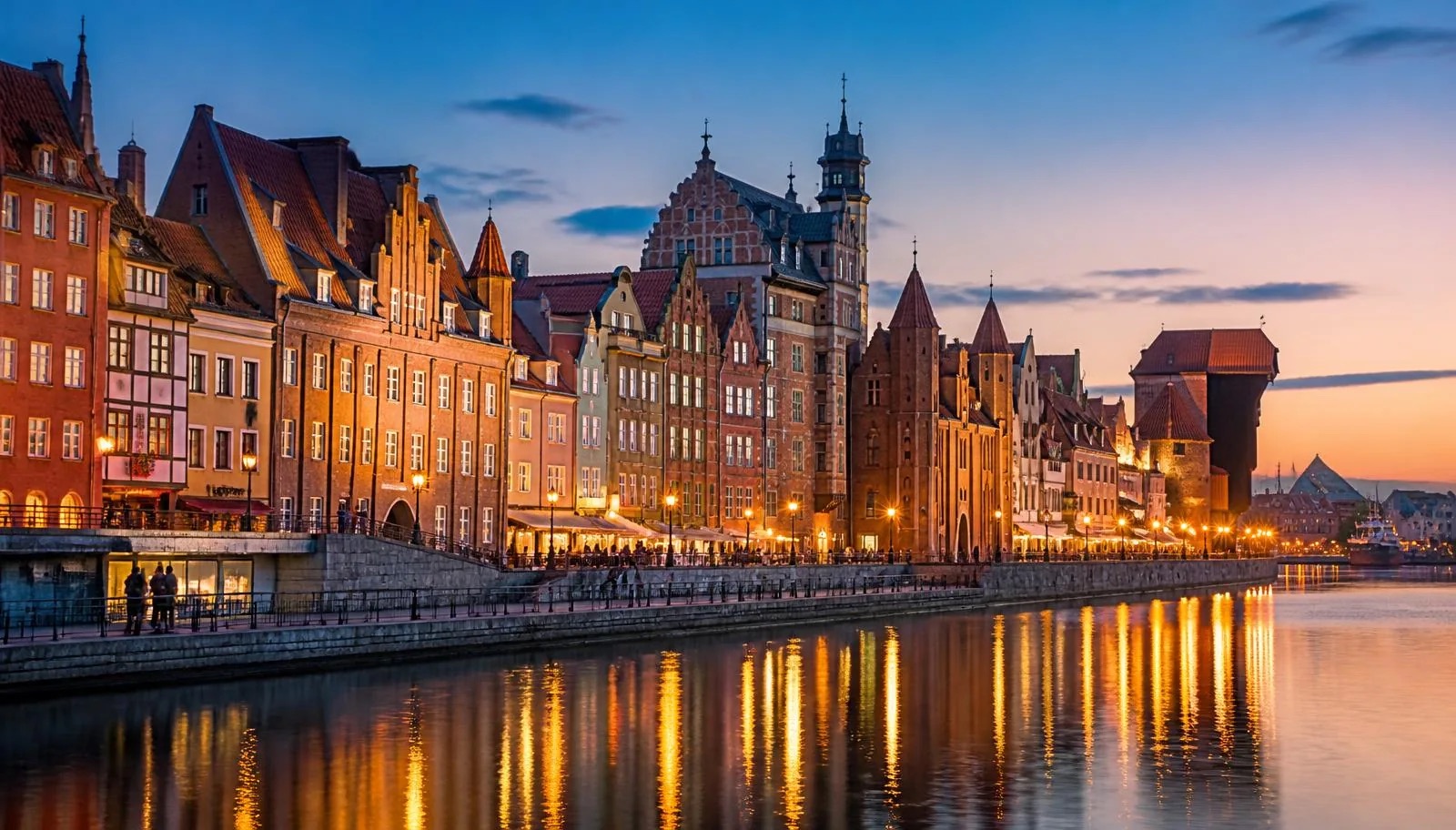
Gdańsk is Poland's Hanseatic port city on the Baltic — a very different beast from the interior. Tall gabled townhouses painted ochre, dark red and green line Long Market (Długi Targ), the Motława river runs through the centre with wooden loading cranes still in place, and the amber shops sell what has been the city's export since the Middle Ages. The city was largely destroyed in 1945 and painstakingly reconstructed; the result is arguably Europe's most convincing rebuild after Warsaw's Old Town.
Base yourself on Długi Targ or in the Old Town. What to do:
- Walk Długi Targ and Mariacka Street (the amber-shop lane running from St Mary's Church down to the river) — the two most photogenic streets in Poland north of Kraków.
- St Mary's Church is one of the largest brick churches in the world; climb the tower for the view.
- The Museum of the Second World War (Muzeum II Wojny Światowej) is an ambitious, sweeping, sometimes controversial telling of the war from a Polish and Central European perspective. Excellent.
- The European Solidarity Centre (ECS) at the old Gdańsk Shipyard — the birthplace of the Solidarity trade-union movement that eventually cracked Soviet Communism. Modern, powerful, essential.
- Day trip north to Sopot (the elegant beach resort with the longest wooden pier in Europe) and, if time allows, Malbork Castle east — the largest brick castle in the world, seat of the Teutonic Order.
Gdańsk is quieter and cheaper than Warsaw or Kraków and gives you the Baltic side of the country in three days without much extra travel.
Zakopane and the Tatras
Zakopane is Poland's mountain resort, 2 hours south of Kraków at the foot of the Tatra range. Skiing in winter, hiking in summer, and a distinctive wooden mountain architecture (highland Podhale style, all steep-pitched shingle roofs and carved balconies) that you'll see nowhere else in Poland. Give it two nights.
The town itself is compact and touristy — Krupówki, the main pedestrian street, is essentially one long parade of smoked-cheese stalls, mountain-cafe patios and outdoor-gear shops. Sample the oscypek, the smoked sheep's-milk cheese with a distinctive marked pattern that is an EU-protected (PDO) regional food. Eat at a wooden mountain restaurant (Karczma Chata Zbójnicka on Jagiellońska Street is a classic).
What actually to do:
- Kasprowy Wierch cable car — a two-stage ride to 1,987 metres with panoramic Tatra ridge views. Book online in high season.
- Morskie Oko, the "Eye of the Sea", is Poland's most-photographed mountain lake at 1,395 metres. It's an 18 km return walk from the road-end car park at Palenica Białczańska (or a horse-drawn cart brings you closer). Go early, wear proper shoes.
- Krupówki + Gubałówka is the tourist Zakopane in a day: the pedestrian street, a funicular up Gubałówka hill for the panoramic view, wooden church visits, dinner with highlander music.
- Rafting the Dunajec Gorge, an hour east of Zakopane, is a traditional wooden-raft ride down the river between Poland and Slovakia. Slow, scenic, older-couple-friendly.
Zakopane is genuinely a ski destination in January to March (limited advanced terrain, but very cheap for European standards), and equally worthwhile in the July–September walking season. Skip April–May when the mountain snow is melting and everything is muddy.
Food Culture
Polish food is heartier than its reputation abroad — dominated by dumplings, root vegetables, meat and dairy — but the newer generation of Polish chefs has done extraordinary things with the tradition in the last decade. A few things to know:
- Pierogi are the national dish — filled dumplings, boiled or pan-fried. Ruskie (potato and white cheese), z mięsem (meat), z kapustą i grzybami (cabbage and mushroom, especially at Christmas), z jagodami (blueberry, sweet, in summer). Every restaurant does them; the good ones make them fresh.
- Bigos (hunter's stew of sauerkraut, cabbage, meat, sometimes prunes and mushrooms) is the ultimate winter dish. Żurek (fermented rye soup, usually with sausage and boiled egg) is a national favourite, often served in a bread bowl.
- Milk bars (bar mleczny) are the Soviet-era subsidised workers' canteens that still trade — cafeteria-style, cheap, homely, and the best possible entry point to Polish home cooking. Bar Prasowy in Warsaw and Bar Mleczny Pod Temidą on Grodzka Street in Kraków are two that consistently deliver.
- Regional specialities: highlander Podhale (Zakopane) for oscypek, kwaśnica (sauerkraut soup) and moskol (potato flatbread); Silesian for kluski śląskie (round dumplings); Kaszub (near Gdańsk) for smoked fish; Kresy (eastern) for kołduny and cepeliny.
- Drinks: Poland is a vodka country. Żubrówka (bison-grass, best with cloudy apple juice as a "szarlotka"), Wyborowa (the everyday premium), Belvedere (the export luxury) and dozens of small craft distillers. Draft beer is everywhere and reliably good (Żywiec, Tyskie, Lech). Kompot, a hot fruit-based drink, is often the free house drink at milk bars.
Polish restaurant etiquette: waitstaff will not automatically bring the bill — say "prosze rachunek". Tipping 10% at proper restaurants is standard; round up at milk bars.
Getting Around
Poland's internal transport is European-grade good and cheap:
- Trains: PKP Intercity is the state rail. Modern EIC/EIP fast trains link the big cities (Warsaw–Kraków 2h 20m, Warsaw–Gdańsk 2h 45m). Book online (rozklad-pkp.pl or koleo.pl) — advance discounts are significant.
- Buses: FlixBus dominates. Cheaper than trains, slower.
- Cars: generally not needed for a city-based itinerary. A rental makes sense only if you're doing Zakopane + smaller Tatra villages, or driving Baltic-coast beaches.
- City transport: Warsaw has metro, tram and bus; Kraków has tram and bus; both are cheap, cashless (contactless card taps) and easy. Bolt and FreeNow are the two ride-hailing apps.
- Domestic flights: LOT flies Warsaw–Gdańsk and other legs but rarely worth it against the train.
Is Poland Expensive to Visit? Costs and Daily Budget
Poland is still one of the best-value countries in the EU. Daily budgets in US dollars, excluding international flights:
- Backpacker (hostel dorm, milk bars, trains): US$45–70 per day.
- Mid-range (private hotel room, mix of milk bars and restaurants, occasional taxis, one or two activities): US$100–160 per day per person.
- Comfort (boutique hotel, sit-down restaurants, guided tours, first-class trains): US$200–320 per day per person.
- Luxury (Bristol in Warsaw, Copernicus in Kraków): €300–600 a night, still a fraction of Vienna or Berlin equivalents.
Concrete price points from 2025–2026 trips: pierogi at a good restaurant 20–40 PLN, milk-bar full meal 15–30 PLN, sit-down mid-range restaurant main 40–80 PLN, decent boutique hotel double 350–700 PLN (US$85–170), Kraków to Warsaw EIP fast train 60–130 PLN, Auschwitz guided visit 90–100 PLN, Wieliczka Salt Mine tour 100–150 PLN, Zakopane cable car 100–140 PLN.
Tipping 10% at proper restaurants is standard; not culturally mandatory at milk bars or cafes.
How Many Days Do You Need in Poland? A 10-Day Itinerary
Ten days is enough to see the four essential Polish cities and one mountain excursion. Suggested route:
- Days 1–2 (Warsaw): Old Town walk, Warsaw Uprising Museum, POLIN Museum, Łazienki Park (Chopin recital if it's a Sunday), Praga dinner.
- Day 3 (train to Kraków): 2h 20m EIP train mid-morning, afternoon exploring Rynek Główny and Wawel, first Kazimierz dinner.
- Days 4–5 (Kraków): Wawel Cathedral, Wieliczka Salt Mine half-day, Kazimierz Jewish quarter (7 synagogues walk), Schindler's Factory Museum, evening food in Kazimierz.
- Day 6 (Auschwitz-Birkenau): full-day organised or self-arranged visit, back to Kraków for a quiet evening.
- Days 7–8 (Zakopane and the Tatras): bus or train south (2h), Kasprowy Wierch cable car, Morskie Oko walk on day two, wooden mountain dinner.
- Day 9 (fly or train to Gdańsk): LOT flies Kraków-Gdańsk or an overnight train. Afternoon walk Długi Targ, dinner on the Motława waterfront.
- Day 10 (Gdańsk): Museum of the Second World War in the morning, European Solidarity Centre in the afternoon, evening flight home from Gdańsk.
Have another 3–4 days? Add Wrocław (the canal city with the 200+ dwarves) between Warsaw and Kraków, or Toruń (Copernicus's Gothic hometown) on the way to Gdańsk.
Final Practical Tips
- Money: Polish złoty (PLN), not euros. Around 4.0–4.3 PLN to the US dollar in 2026. Cards accepted essentially everywhere including milk bars. ATMs everywhere; use bank machines (PKO, mBank, Millennium) rather than Euronet, which charges very high fees.
- Visa: Poland is in the Schengen Area. Most Western passports (US, Canada, UK, Australia, NZ, all EU) get 90 days visa-free in any rolling 180-day period.
- SIM cards: Play, Orange, T-Mobile and Plus all sell tourist SIMs cheaply. eSIMs (Airalo, Holafly) also work well.
- Plugs: EU two-pin, 230V.
- Language: English is very widely spoken in tourist regions, in Warsaw and Kraków universally so, less so in the mountains. Dzień dobry (good day), dziękuję (thank you), proszę (please/here you go), na zdrowie (cheers) go a long way.
- Water: tap water is safe to drink throughout Poland.
- Respect at memorial sites: Auschwitz-Birkenau and the Warsaw Uprising / POLIN museums are not photo op locations. Silence phones, dress modestly, don't pose for smiling photos on the grounds.
- Church etiquette: Polish Catholic churches are working places of worship. Cover shoulders, hats off inside, quiet during Mass — even if you're only walking through St Mary's in Kraków to see the Veit Stoss altarpiece.
Poland rewards travellers who take the country's history seriously and its food joyfully. Two big cities plus one memorial visit plus one mountain excursion is exactly the right shape for a first trip. Eat at the milk bar with a queue, take the train between cities, and trust that the country underneath the pierogi jokes is much richer and more layered than any single trip can capture. That's the whole point — you'll come back.
Explore Poland in Depth: My Detailed Guides
This guide is the overview. When you are ready to plan a specific part of the trip, these deep-dives go further, and each one links back here:
More Poland guides
Best Cities in Poland: Kraków, Warsaw, Gdańsk and Wrocław
How Poland's cities differ — Kraków, Warsaw, Gdańsk, Wrocław, Poznań, Toruń, Lublin and Zamość — with rail-friendly routes and how long…
Things to Do in Poland: Kraków, Gdańsk and the Tatras
Kraków's old town, the Wieliczka salt mine, Warsaw's rebuilt centre, Gdańsk and Malbork, Zakopane and the Tatras, and the Masurian lakes.