Cusco and the Sacred Valley: Altitude, Ruins and Markets
Acclimatising in Cusco, the Inca sites that are worth your time, Pisac and Ollantaytambo, market days and how to sequence the valley before Machu Picchu.
In this guide
- Quick Facts: Cusco and the Sacred Valley
- Understanding Altitude: Acclimatisation and Soroche
- Exploring Cusco: The Historic Heart of the Andes
- The Immediate Ruins of Cusco (Sacsayhuamán Circuit)
- The Sacred Valley of the Incas
- High-Altitude Day Trips: Rainbow Mountain and Humantay Lake
- The Boleto Turístico (Cusco Tourist Ticket)
- Quechua Culture, Textiles, and Ethical Shopping
- Festivals: Inti Raymi and Corpus Christi
- Getting Around: Rail, Colectivos, and Taxis
- Seasons and Climate: When to Visit
- Practical Tips for Cusco and the Sacred Valley
- Final Thoughts: Embracing the Heart of the Andes
- Explore in Depth
This guide is part of our Best Places to Visit in Peru Beyond Machu Picchu — start there for the overview, when to go and how to get around.
Step off the plane at Cusco and the thin mountain air hits your chest like a splash of glacial water. Breathe slowly: the cool air carries the sharp scent of eucalyptus leaves and woodsmoke. Within minutes of walking through the sunlit historic centre, your heart may be hammering against your ribs—a persistent reminder that you are standing 3,400 metres above sea level in the ancient navel of the Inca world.
Cusco is a city where history is not confined to museum glass; it is built into the very foundations of the streets you walk on. Massive, dry-stone Incan masonry forms the lower half of colonial Spanish mansions, creating an architectural tapestry that tells a story of conquest, resilience, and cultural fusion. Everywhere you turn, Quechua women in vibrant, hand-woven polleras navigate cobblestone alleyways alongside backpackers, artists, and pilgrims bound for Machu Picchu.
Beyond the urban limits lies the Sacred Valley of the Incas, a sprawling, fertile river valley cradled by jagged, snow-capped Andean peaks. Stretching between the towns of Pisac and Ollantaytambo, this region was the agricultural and spiritual heartland of an empire. Visiting Cusco and the Sacred Valley is not merely a stopover on the way to Peru's iconic citadel; it is an immersive journey through living traditions, staggering geography, and staggering engineering feats that demand time, respect, and proper acclimatisation.
Quick Facts: Cusco and the Sacred Valley
- Location: Southeastern Peru, situated within the Peruvian Andes in the Cusco Region.
- Elevation: Cusco sits at 3,399 metres; Urubamba at 2,870 metres; Ollantaytambo at 2,792 metres; Rainbow Mountain reaches 5,200 metres.
- Primary Languages: Spanish and Quechua. English is widely spoken in tourism hubs.
- Best Time to Visit: Dry season from May to October for clear skies and optimal hiking condition.
- Getting Around: Local buses (colectivos), private taxis, and scenic passenger rail services connecting the valley to Machu Picchu.
- Key Ticket: The Boleto Turístico del Cusco (Cusco Tourist Ticket) is required to access most major archaeological sites and museums.
Understanding Altitude: Acclimatisation and Soroche
The sheer elevation of Cusco catches almost every traveller off guard. Altitude sickness, known locally as soroche, occurs because the atmospheric pressure drops at higher elevations, meaning every breath yields fewer oxygen molecules. Symptoms often include dull headaches, shortness of breath during mild exertion, insomnia, nausea, and general fatigue. Respecting the altitude is the single most important factor in ensuring a successful trip.
Upon arrival, resist the urge to immediately hit the steep cobblestone streets of San Blas or embark on intense day hikes. Give your body at least 48 hours of rest and low exertion. Hydration is crucial, as high altitude accelerates dehydration; drink plenty of water and avoid heavy meals or alcohol during your first two days. Local hotels and cafes everywhere offer hot infusions of coca tea (mate de coca) or muña (Andean mint), both of which natural traditional remedies that assist in opening airways and settling upset stomachs.
Managing Soroche Effectively
If you experience mild symptoms, resting in a well-ventilated room, staying hydrated, and sipping herbal teas usually helps your body adjust. Many hotels in Cusco offer oxygen supply systems in guest rooms for an additional comfort layer. Soroche pills (often containing acetazolamide) are available over the counter at local pharmacies, though you should consult a travel doctor prior to your trip to confirm suitability.
If symptoms progress to severe vomiting, intense chest pressure, or disorientation, the only effective cure is immediate descent to a lower altitude. Never attempt high-altitude trekking routes like Humantay Lake or Vinicunca without spending several days acclimatising in Cusco or the Sacred Valley first.
The Smart Itinerary Strategy: Sacred Valley First
A clever strategy employed by seasoned Andean travellers is to head straight from the airport in Cusco down into the Sacred Valley. Towns like Urubamba (2,870 metres) and Ollantaytambo (2,792 metres) sit significantly lower than Cusco itself. Sleeping at these lower elevations for your first two or three nights drastically reduces the risk and severity of altitude sickness while allowing you to explore Inca ruins at a much gentler pace before returning to Cusco.
Exploring Cusco: The Historic Heart of the Andes
Cusco was once the grand capital of the Inca Empire, Tawantinsuyu, designed in the shape of a puma. Today, it remains one of South America's most captivating urban destinations, where ancient foundations anchor grand colonial structures.
Plaza de Armas and Cusco Cathedral
The grand central square, the Plaza de Armas, is the beating heart of Cusco. Framed by stone arcades, vibrant gardens, and imposing churches, it is a brilliant spot to soak in the atmosphere. On the north side sits the massive Cusco Cathedral (Cathedral Basilica of the Virgin of the Assumption), constructed between 1560 and 1654 using stone blocks pillaged from the nearby Incan fortress of Sacsayhuamán.
Step inside the cool, darkened nave of the Cathedral to witness incredible examples of the Cusqueña School of Art. Highlights include the famous painting of the Last Supper by Quechua artist Marcos Zapata, which features a roasted guinea pig (cuy) served on the platter before Jesus and his disciples, surrounded by local papaya fruits and Andean corn.
Qorikancha: The Temple of the Sun
In Incan times, Qorikancha was the most sacred shrine in the entire empire, dedicated to Inti, the Sun God. Its interior walls were reportedly covered in hundreds of sheets of pure beaten gold, which were stripped by Spanish conquistadors as part of Atahualpa's ransom. The Spanish subsequently built the Church and Convent of Santo Domingo directly on top of the temple's curved ashlar stone foundations.
Walking through the complex reveals the unbelievable precision of Incan masonry. The mortarless stone blocks fit together so flawlessly that a sheet of paper cannot slide between them. Notably, major earthquakes that flattened the colonial church structure twice over the centuries left the underlying Incan stone walls completely undamaged.
San Blas: The Artisan Quarter
Located up a series of steep, lung-busting stone stairways just northeast of the main square lies San Blas. This bohemian neighbourhood is filled with narrow pedestrian alleys, whitewashed buildings with bright blue window frames, artisan workshops, and laid-back vegetarian cafes. It is a fantastic spot to wander aimlessly, discover local galleries, and enjoy panoramic vistas across the terracotta rooftops of Cusco.
San Pedro Market: Sensory Chaos and Local Life
To experience local daily life, take a stroll down to the Mercado Central de San Pedro. Designed by French engineer Gustave Eiffel in the early 20th century, this sprawling market is a sensory overload of colours, aromas, and sounds. Long wooden stalls are piled high with dozens of varieties of native Andean potatoes, giant wheels of mountain cheese, colourful tropical fruits from the nearby Amazon basin, and dried alpaca meat.
The market is also an excellent place to observe traditional medicinal herb stalls and sample inexpensive local food like caldos (rich soups) or freshly squeezed fruit juices. Exercise standard precautions with personal belongings, as the crowded aisles are a known spot for pickpockets.
The Immediate Ruins of Cusco (Sacsayhuamán Circuit)
Perched on the northern hills overlooking the city centre sit four impressive archaeological sites that can easily be visited in a half-day circuit from Cusco.
Sacsayhuamán
The vast citadel complex of Sacsayhuamán features massive zig-zagging megalithic stone walls overlooking Cusco. The scale of the construction is staggering; the largest carved stone blocks weigh over 120 tonnes, transported from quarries miles away without the use of wheeled draft vehicles. The strategic hilltop location offered defensive superiority, famously serving as the site of a bloody battle during the Incan rebellion of 1536.
Q'enqo, Puka Pukara, and Tambomachay
Further along the road winding uphill behind Sacsayhuamán lie three smaller, fascinating sites:
- Q'enqo: A labyrinthian rock sanctuary carved with subterranean passages, altars, and channels believed to have been used for ritual sacrifices and mummification rites.
- Puka Pukara: Known as the "Red Fortress," this military checkpoint and garrison site features terraces, staircases, and stone quarters overlooking the surrounding valley.
- Tambomachay: A ceremonial water temple featuring series of finely carved stone aqueducts, canals, and cascading waterfalls fed by underground thermal springs, thought to be an elite retreat for Incan rulers.
The Sacred Valley of the Incas
Carved by the Urubamba River (known as the Wilkamayu or Sacred River in Quechua), the Sacred Valley drops down into a lower, warmer, and intensely fertile agricultural region. It is lined with dramatic terrace complexes, ancient fortresses, and vibrant indigenous market towns.
Pisac: Terraces and Crafts
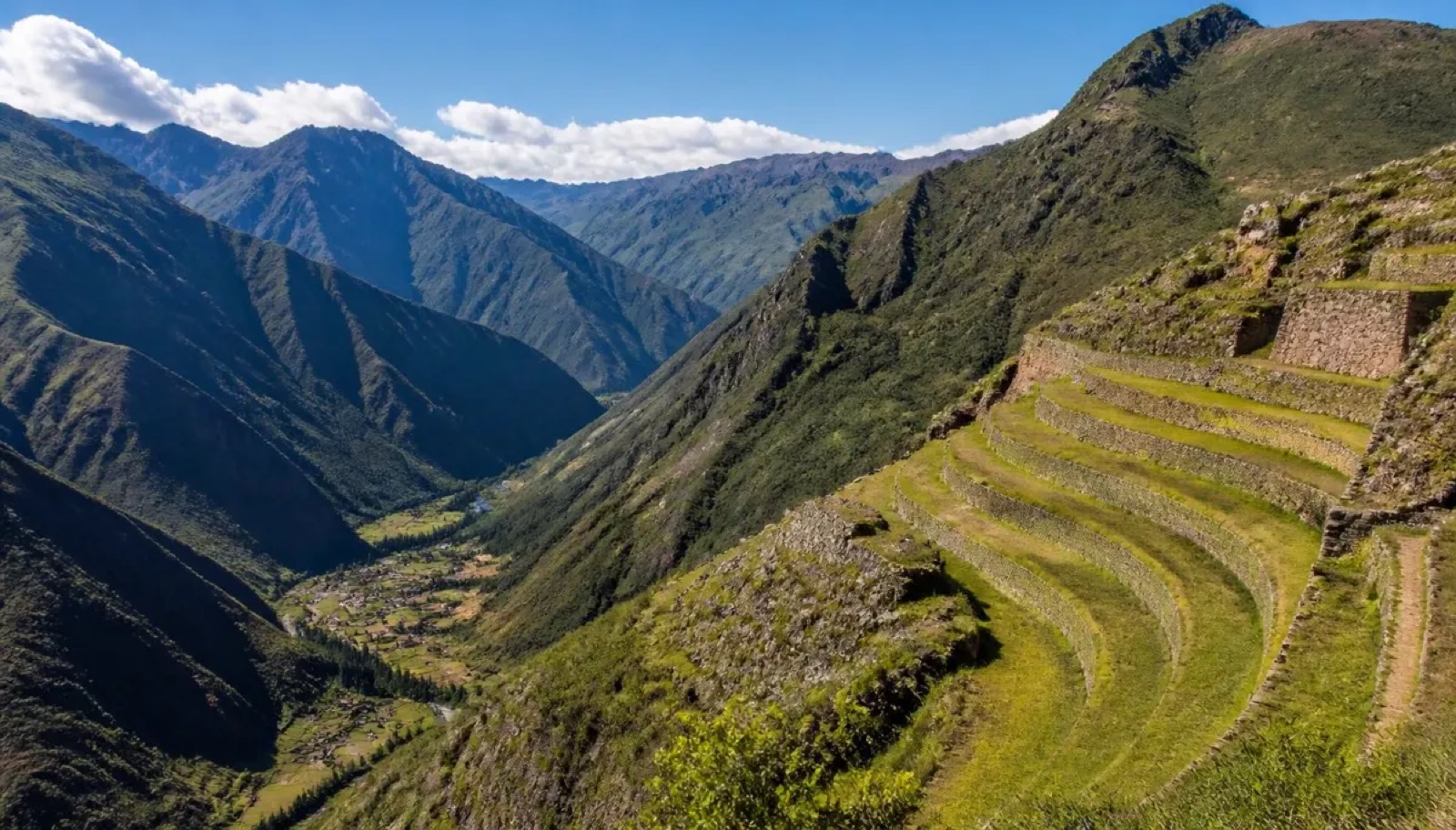
Situated at the eastern entrance to the valley, Pisac is renowned for two distinct attractions: its sprawling hill-clinging Incan ruins and its massive traditional market. The archaeological site of Pisac perches high on a narrow ridge overlooking the town, featuring incredible agricultural terracing that sweeps gracefully around the contours of the mountain, alongside ancient residential quarters, ceremonial baths, and a royal cemetery cut into the cliff face.
In the valley floor below, Pisac's town square transforms into a bustling craft market. Local artisans gather to sell hand-woven alpaca sweaters, vibrant textiles, silver jewellery, hand-painted ceramics, and traditional musical instruments. While tourist stalls operate daily, Sunday remains the most authentic market day, attracting Quechua villagers from high mountain communities who come to barter produce.
Ollantaytambo: Living Inca Town
Located at the western end of the valley, Ollantaytambo is often referred to as the only "living Incan town." Its street grid, stone foundations, irrigation channels, and stone doorways remain virtually unchanged from the 15th century, allowing you to walk through original Incan residential blocks (canchas).
Towering above the town is the formidable Sun Temple fortress, accessible by ascending a colossal flight of stone agricultural terraces. It was here that Manco Inca successfully repelled Spanish forces in 1537 by flooding the valley plains below to mire the conquistadors' horses. Ollantaytambo is also home to the primary railway station for trains departing toward Aguas Calientes (Machu Picchu Pueblo).
Moray: The Agricultural Laboratory
Off the main valley road lies Moray, one of the visually striking archaeological sites in Peru. Moray resembles a giant, earth-carved amphitheatre formed by concentric circular terraces sinking deep into the limestone earth. Due to variations in wind, sun exposure, and depth, the temperature difference between the top rim and the bottom terrace can vary by up to 15 degrees Celsius. Archaeologists believe the Incas used Moray as an agricultural research station to hybridize and acclimatise crops from surrounding climates to grow in the high Andes.
Maras: The Terraced Salt Pans
A short distance from Moray lie the extraordinary Salineras de Maras. Here, over 3,000 small, terraced evaporation ponds spill down a narrow canyon side in shades of white, pink, and tan. A subterranean hyper-saline hot spring feeds the pools. Local families have managed these individual pans since pre-Inca times, diverting the salty water from pool to pool and letting the equatorial sun evaporate the water to harvest rich mineral salt by hand.
Chinchero and Urubamba
Chinchero sits at a high elevation (3,762 metres) between Cusco and the Sacred Valley. Famed for its exceptional traditional weaving guilds, Chinchero features a charming colonial church built over an Incan palace, expansive terracing, and sweeping views of the Cordillera Vilcanota mountain range. Urubamba sits right on the riverbank, serving as the commercial and agricultural heart of the valley, home to peaceful luxury resorts, organic gardens, and fine ceramic studios.
High-Altitude Day Trips: Rainbow Mountain and Humantay Lake
In recent years, two natural wonders located outside Cusco have exploded in popularity. However, both demand serious physical stamina and proper high-altitude preparation.
Vinicunca (Rainbow Mountain)
Located roughly three hours southeast of Cusco in the Vilcanota mountain range, Vinicunca (Rainbow Mountain) stands at a dizzying elevation of approximately 5,200 metres above sea level. The mountain's striking turquoise, magenta, and golden stripes were formed by millions of years of mineral weathering and sediment deposition, revealed as climate shifts melted the glaciers covering the ridge.
The trek to the viewing point involves a steady, steep walk starting from around 4,600 metres. The air is extremely thin, making even simple steps feel incredibly demanding. Early morning departures from Cusco are required, and warm, layered windproof clothing is essential as freezing winds sweep across the ridge.
Humantay Lake
Nestled beneath the dramatic ice walls of Mount Salkantay and Mount Humantay, Humantay Lake is an astonishingly bright turquoise glacial lagoon sitting at 4,200 metres elevation. Reaching the lake requires a steep, relentless uphill hike from the base camp at Soraypampa. The trail climbs roughly 400 vertical metres over a short distance, requiring steady footwork on loose gravel. The pristine blue waters framed by massive white glaciers make every breathless step worthwhile.
Comparison of Popular Day Trips
| Destination | Max Elevation | Hike Distance / Difficulty | Primary Highlights |
|---|---|---|---|
| Vinicunca (Rainbow Mountain) | 5,200 metres | ~7 km round trip / Strenuous (Extreme altitude) | Multi-coloured mineral ridge, high Andean landscapes, views of Mt. Ausangate. |
| Humantay Lake | 4,200 metres | ~4.5 km round trip / Moderate to Demanding (Steep grade) | Vibrant turquoise glacial lake, towering alpine glaciers, sacred Incan ritual site. |
| Pisac Ruins | 3,250 metres | ~3-5 km network / Moderate | Sweeping agricultural terraces, ancient stone masonry, broad valley views. |
| Moray & Maras | 3,500 metres | ~2 km walking / Easy | Concentric agricultural test circles and thousands of ancient terraced salt pans. |
The Boleto Turístico (Cusco Tourist Ticket)
Access to almost all major archaeological sites and select museums across Cusco and the Sacred Valley is regulated by a centralized ticketing system called the Boleto Turístico del Cusco (BTC). Rather than buying individual entry passes at every site, you purchase a single ticket that grants access to multiple attractions over a specified validity period.
The ticket is offered in several formats:
- Full Tourist Ticket (Boleto Integral): Valid for 10 consecutive days. Includes 16 major sites spanning Cusco city ruins (Sacsayhuamán, Q'enqo, Puka Pukara, Tambomachay), Sacred Valley sites (Pisac, Ollantaytambo, Chinchero, Moray), south valley sites (Tipón, Pikillacta), and several urban museums.
- Partial Circuit Tickets: Valid for 1 or 2 days, covering specific geographical clusters (e.g., Circuit 1 for immediate Cusco ruins, Circuit 2 for city museums and South Valley, Circuit 3 for Sacred Valley ruins).
Note: Major landmarks like the Cusco Cathedral, Qorikancha (Santo Domingo Church), and the Maras Salt Pans are managed independently and require separate admission tickets at their respective entrances. Always check current official ticket rules, coverage inclusions, and accepted payment methods before setting out on your day tours.
Quechua Culture, Textiles, and Ethical Shopping
The Sacred Valley and high surrounding highlands are the traditional homeland of the Quechua people, direct descendants of the Incas. Quechua remains a living language, spoken widely across rural communities alongside Spanish. The visual trademark of the region is its remarkable textile tradition, which has preserved ancient weaving patterns, dyeing techniques, and symbolic iconography for over a millennium.
Textile Traditions and Natural Dyes
Authentic Andean weaving uses hand-spun yarn harvested from alpacas and llamas. Artisans use entirely natural organic elements to dye the yarn: crushed cochineal insects found on nopal cacti produce deep reds and pinks; indigo leaves produce rich blues; lichen yields bright yellows; and volcanic mud fixes dark tones.
When shopping for textiles in market towns like Chinchero or Pisac, look out for authentic hand-woven items. Handcrafted textiles feel heavy, soft, and slightly irregular in weave texture, whereas cheap factory-made souvenirs are usually made from light, synthetic acrylic yarns and dyed chemically. Buying directly from weaver cooperatives in towns like Chinchero ensures that your financial support directly benefits indigenous artisan women and preserves centuries-old heritage techniques.
Festivals: Inti Raymi and Corpus Christi
Cusco's cultural calendar is packed with religious and cultural celebrations that blend ancestral Incan traditions with Catholic customs.
Inti Raymi (Festival of the Sun)
Taking place annually during the winter solstice in late June, Inti Raymi is the most celebrated cultural event in Peru. Originally established by Inca Pachacuti to honour Inti and secure divine blessing for crops, the modern festival features hundreds of actors dressed in elaborate historical costumes. The spectacular theatrical reenactments take place across three main historic staging grounds: Qorikancha, the Plaza de Armas, and the massive stone esplanade of Sacsayhuamán.
Corpus Christi
Celebrated sixty days after Easter Sunday (usually falling in late May or June), Corpus Christi sees fifteen massive, ornate statues of saints and virgins brought from parish churches across the city to the Cusco Cathedral. Accompanied by traditional brass bands, dancers wearing colourful masks, and ceremonial processions, the festival offers an incredible insight into syncretic Andean folk traditions.
Getting Around: Rail, Colectivos, and Taxis
Navigating between Cusco and the Sacred Valley is straightforward, thanks to a well-established network of public and private transport options.
Colectivos (Shared Minibuses)
Colectivos are the standard mode of transport used by locals. These minivans run frequent, fixed routes connecting Cusco to Pisac, Urubamba, Chinchero, and Ollantaytambo. They depart continuously throughout the day once full from designated departure streets in Cusco. Colectivos offer an extremely affordable, authentic, and fast way to travel between valley towns.
Private Taxis and Hired Drivers
Hiring a private driver for a full day is a comfortable and highly flexible option for touring the Sacred Valley, especially if you wish to link multiple sites like Moray, Maras, and Chinchero in a single trip. Agree on a fixed total price with the driver before embarking on the journey.
Passenger Rail Services
To reach Aguas Calientes (Machu Picchu Pueblo), travellers board passenger trains operated primarily by PeruRail or Inca Rail. Trains depart from Poroy Station (a 20-minute drive outside Cusco) or, more frequently, from Ollantaytambo Station in the Sacred Valley. Train options range from glass-ceilinged scenic observational cars to luxurious vintage-style rail carriages. Booking train services several weeks or months in advance is essential during peak travel seasons.
Seasons and Climate: When to Visit
The Peruvian Andes experience two primary climate seasons: the dry season and the rainy season. Given the mountainous terrain, daytime temperatures stay fairly consistent year-round—warm and sunny in direct sunlight, but dropping rapidly once the sun sets.
- Dry Season (May to October): Characterised by bright blue skies, warm sun, and minimal rainfall. This is the optimal window for high-altitude trekking, day trips, and outdoor sightseeing. Be prepared for freezing nighttime temperatures, particularly in Cusco and high mountain camps.
- Rainy Season (November to April): Heavy downpours occur frequently, usually in the afternoon hours. January and February see the heaviest precipitation, leading to occasional mudslides or train delays. However, during these months the valley turns lush and emerald green, crowds drop significantly, and daytime temperatures remain milder.
Practical Tips for Cusco and the Sacred Valley
- Sequence Your Itinerary Smartly: Plan your route sequentially: start in the lower Sacred Valley (Ollantaytambo/Urubamba) to acclimatise, visit Machu Picchu, and end with several days exploring Cusco city and high day trips like Rainbow Mountain.
- Carry Small Cash Denominations: Local market vendors, colectivo drivers, and public restroom operators rarely have change for large bills. Keep a healthy supply of small local coin and note denominations on hand.
- Protect Against High UV Exposure: The equatorial sun at 3,500+ metres is intense. Wear a wide-brimmed hat, UV-blocking sunglasses, and high-SPF sunscreen even on cloudy days.
- Dress in Layers: Andean weather shifts rapidly. You can easily go from sweating in a T-shirt under midday sun to shivering in a fleece jacket twenty minutes later when clouds roll over or shade falls.
- Check Official Requirements: Rail timetables, site ticket rules, and regional park entry fees change periodically. Always verify current operating procedures via official agency websites before confirming travel schedules.
Final Thoughts: Embracing the Heart of the Andes
Cusco and the Sacred Valley are far more than mere staging grounds for a pilgrimage to Machu Picchu. They represent the living, breathing soul of the Peruvian Andes—a high-altitude realm where centuries-old Incan stone masonry supports active colonial homes, and where Quechua traditions continue to thrive in everyday mountain life. By taking the time to slow your pace, adjust to the altitude, and listen to the quiet whispers of history lingering in these dramatic valleys, you will unlock one of the truly legendary cultural journeys on earth.
Explore in Depth
More Peru guides
Machu Picchu Guide: Tickets, Trains and Trekking
How Machu Picchu access works — timed tickets and circuits, the train through the Sacred Valley, trekking options and how to handle…
Best Places to Visit in Peru Beyond Machu Picchu
Machu Picchu, Cusco, the Sacred Valley, Lima, Lake Titicaca, Colca Canyon, the Nazca Lines, the Amazon, Arequipa and Huacachina, and why…
Peru Itinerary: Lima, Cusco and Machu Picchu
A first Peru itinerary: Lima, the Sacred Valley, Machu Picchu and beyond, with altitude, timing and how to sequence it all sensibly.