Dubrovnik Travel Guide: Old Town Walls and Day Trips
Walking the city walls at the right hour, staying outside the Old Town, cruise-ship crowd timing and the best day trips along the southern Dalmatian coast.
In this guide
- Quick Facts: Dubrovnik at a Glance
- Exploring Dubrovnik Old Town: The Heart of the Republic
- Walking the City Walls: Strategy, Views, and Routing
- Fortress Lovrijenac and Mount Srđ
- Swimming and Coastal Escapes in Dubrovnik
- Island Hopping: Lokrum and the Elaphiti Archipelago
- Day Trips: Ston, Cavtat, and the Pelješac Peninsula
- Cross-Border Excursions: Montenegro and Mostar
- Game of Thrones Connections in Dubrovnik
- Neighbourhood Guide: Where to Stay in Dubrovnik
- Crowd Strategy, Timing, and Summer Heat
- Practical Tips and Getting Around Dubrovnik
- Final Thoughts on Visiting Dubrovnik
- Explore in Depth
This guide is part of our Croatia Travel Guide: From Dubrovnik to Istria — start there for the overview, when to go and how to get around.
Step through the massive stone archway of the Pile Gate in the late afternoon and the sun strikes the limestone paving of the Stradun, turning the main street into a mirror of liquid gold. In the Dalmatian summer the heat hangs thick in the air, carrying the rich scents of roasting garlic, wild rosemary and salty brine off the Adriatic Sea, while swifts slice through the sky above ancient terracotta rooftops. No amount of photos can properly prepare you for the sheer scale of this walled citadel.
Dubrovnik is often called the 'Pearl of the Adriatic', a moniker coined by Lord Byron that has echoed through travel literature for centuries. Rising dramatically from the deep blue waters of the southern Dalmatian coast, this resilient Republic of Ragusa built its fortune on maritime trade, diplomacy, and engineering marvels. Today, its pristine medieval core attracts travellers from every corner of the globe seeking history, crystal-clear swimming spots, and world-class coastal drives.
However, Dubrovnik's global popularity means navigating the city requires a bit of smart planning. Between cruise ship schedules, intense summer temperatures, and narrow stone staircases that will test your calf muscles, knowing when to explore and when to seek refuge is essential. This guide covers everything you need to experience the best of the city and its surrounding islands and countryside.
Quick Facts: Dubrovnik at a Glance
- Location: Southern Dalmatian coast, Croatia, situated on the Adriatic Sea.
- Primary Entry Point: Dubrovnik Airport (DBV), located approximately 20 kilometres south-east of the Old Town.
- Local Currency: Euro (EUR).
- Terrain: Steep, hilly coastal terrain with extensive pedestrianised historic zones requiring significant stair climbing.
- Best Time to Visit: May to June or September to October for warm weather, swimming, and manageable crowd levels.
- Top Highlights: Ancient City Walls, Stradun, Fort Lovrijenac, Mount Srđ, Lokrum Island, and the Elaphiti Archipelago.
Exploring Dubrovnik Old Town: The Heart of the Republic
The Old Town of Dubrovnik is a masterclass in urban medieval design, entirely enclosed within massive stone ramparts. Stepping into this UNESCO World Heritage site feels like walking onto an elaborate theatre set, yet every stone carries centuries of authentic maritime history.
The central artery of the historic core is the Stradun (officially named Placa), a wide pedestrian thoroughfare that stretches roughly 300 metres from the western entrance at Pile Gate to the eastern harbour at Ploče Gate. Polished slick by millions of footsteps over centuries, the limestone street shines brightly under the midday sun and reflects the street lanterns softly at night. Lined with uniform baroque building facades, bustling cafés, and boutique shops, the Stradun is where the life of the city unfolds.
Right inside the Pile Gate stands Onofrio’s Great Fountain, a sixteen-sided polygonal structure built in the 15th century to supply fresh spring water to the citizens. It remains a favourite meeting point and a welcome spot to refill your water bottle with cool, drinkable spring water before tackling the city steps.
Civic and Religious Landmarks
At the eastern end of the Stradun, the space opens up into Luža Square, home to several of Dubrovnik's most significant structures:
- Rector’s Palace (Knežev Dvor): Once the seat of power for the elected Rector of the Republic of Ragusa, this remarkable building blends Gothic, Renaissance, and Baroque architectural styles. The open central atrium features elegant arches and houses a museum showcasing period furniture, historical coins, and portraits of Ragusa’s elite.
- Franciscan Monastery: Located near the Pile Gate, this serene complex features a stunning Romanesque cloister framed by twin columns. It is also home to one of the world's oldest continuously operating pharmacies, established in the early 14th century.
- Dubrovnik Cathedral (Cathedral of the Assumption): Built on the site of earlier basilicas, this grand Baroque church houses a famous treasury filled with silver and gold reliquaries, including the arm, leg, and skull of Saint Blaise, the city's patron saint.
- Church of St Blaise: An ornate Baroque jewel dedicated to the protector of Dubrovnik, whose statue holding a pre-1667 model of the city sits above the main altar.
Walking the City Walls: Strategy, Views, and Routing
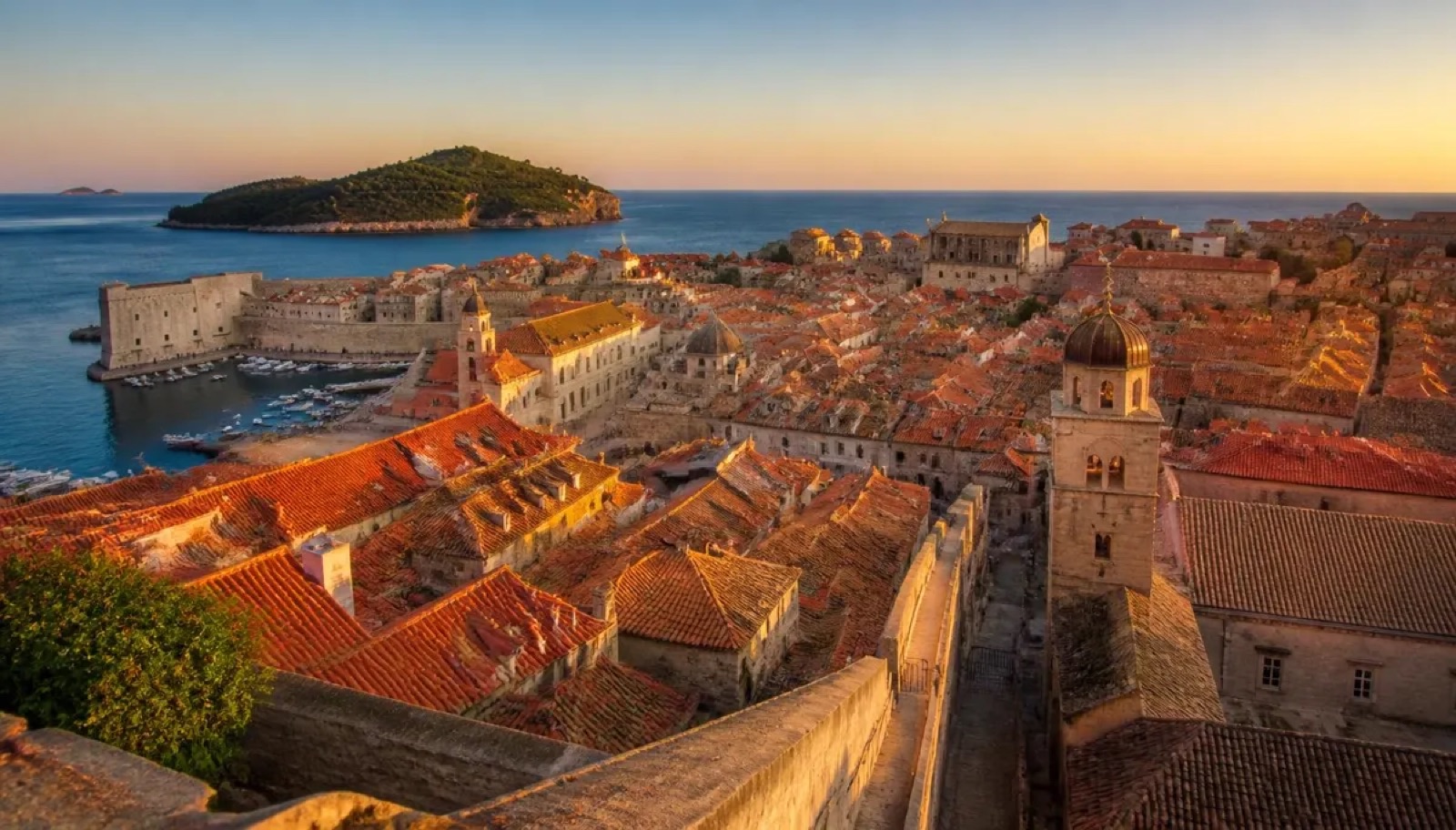
If you only do one organised activity in Dubrovnik, walking the full circuit of the famous City Walls is non-negotiable. Encircling the entire historic centre, these formidable defences stretch nearly two kilometres in length and reach heights of up to 25 metres in certain sections. Walking along the top offers an unhindered perspective of terracotta rooflines, quiet residential courtyards, secret garden patches, and the sparkling expanse of the Adriatic Sea.
The flow of traffic around the walls is strictly one-way in a counter-clockwise direction. Main access points are located near the Pile Gate, the Ploče Gate, and near the Maritime Museum by the Old Port. The entire walk takes between 1.5 to 2.5 hours, depending on how frequently you stop to take photographs and take in the vistas.
Optimising Your Wall Walk
Timing is critical when planning your wall walk, particularly during the warm summer months. The stone surfaces store and radiate heat intensely, and shade is virtually non-existent along the high ramparts.
The absolute best times to go are right when the gates open in the early morning, or roughly two hours before closing in the late afternoon. The morning light reveals the soft pink tones of the tile roofs, while the late afternoon casts a golden glow across the limestone towers and sea. Always carry a refillable water bottle, wear broad-brimmed sun protection, and wear sturdy footwear with good grip, as the worn steps can be slick.
Fortress Lovrijenac and Mount Srđ
Beyond the primary city wall circuit lie two elevated vantage points that provide iconic, postcard-worthy perspectives of Dubrovnik from above and afar.
Fort Lovrijenac (St Lawrence Fortress)
Perched dramatically on a sheer cliff 37 metres above the sea just outside the western city walls, Fort Lovrijenac is often referred to as 'Dubrovnik’s Gibraltar'. Built to protect the western approaches to the city from potential Venetian incursions, the fortress features walls facing the sea that are up to 12 metres thick, while the walls facing the city inside are merely 60 centimetres thick—a clever design to ensure the fortress could be easily breached from within if a rogue commander ever tried to rebel against the Republic.
Inscribed above the entrance gate is the famous Latin sentence: "Non Bene Pro Toto Libertas Venditur Auro" ("Freedom is not sold for all the gold in the world"). Climbing the stone steps to the fortress reward you with dramatic views back toward the city walls and the small bay of Šulić below.
Mount Srđ and the Cable Car
For the ultimate bird's-eye view over the region, head to the summit of Mount Srđ, which rises steep and grey directly behind the Old Town. From the top, the entire red-roofed peninsula looks like an intricate miniature model floating on turquoise velvet.
There are three primary ways to reach the top of Mount Srđ:
| Method | Travel Time | Experience & Notes |
|---|---|---|
| Cable Car | ~4 minutes | Fast, highly scenic ascent directly from just outside the northern wall. Service can pause during high wind conditions; check live operational updates locally. |
| Hiking Trail | 60–90 minutes | A switchback gravel trail starting from the main road above the Old Town. Offers continuous views, but is completely exposed to sun; best attempted early in the morning. |
| Taxi or Private Transfer | ~20 minutes | Drives along a winding, narrow road behind the mountain. Excellent option for groups or those looking to visit the summit near sunset without waiting for the cable car queue. |
At the summit, you will find the historic Fort Imperial, built during the Napoleonic Wars. Inside, a sobering exhibition documents the defence of Dubrovnik during the Conflicts in the early 1990s. The panoramic terrace is also one of the premier spots in Dalmatia to watch the sun drop beneath the horizon.
Swimming and Coastal Escapes in Dubrovnik
After spent hours ascending stone steps in the urban core, cooling off in the crystal waters of the Adriatic is a welcome relief. Dubrovnik offers several distinct swimming locations ranging from managed beach clubs to wild cliff-jumping platforms hidden against the outer walls.
Banje Beach
Located just a few hundred metres east of the Ploče Gate, Banje Beach is Dubrovnik's primary city beach. A pebble and gravel strand, it offers magnificent views directly back toward the Old Port and city walls. It features clear waters, sunbed rentals, water sports facilities, and a beachfront restaurant. Because of its proximity to the centre, it gets very busy by midday during peak season.
The Buža Bars (Cliff Jumping & Sunset Drinks)
Tucked away on the rocky outer cliffs directly beneath the southern city walls are two legendary spots known colloquially as Buža I and Buža II (the word 'buža' translates to 'hole in the wall'). Accessible only through small, unmarked doorways cut directly through the stone fortification walls, these rustic wooden platforms and steep rock terraces cling precariously above the open ocean.
Here, travellers sit on stone steps drinking cold local beers, diving straight from the cliffside into deep blue waters, and watching the local sea kayaks paddle past. Space is limited, and seats fill rapidly as sunset approaches.
Danče and Sveti Jakov Beaches
- Danče Beach: Located west of Gradac Park, this is one of the oldest swimming spots favoured by locals. It consists of large flat concrete platforms, rocky outcrops, and deep, clear waters facing the open sea. It is ideal for confident swimmers who prefer a traditional local atmosphere over sun loungers.
- Sveti Jakov Beach: Set in a small bay roughly a 20-minute walk east of the Old Town below a church of the same name, this pebbled cove provides a much quieter alternative to Banje, with spectacular long-distance views across the water to the Old Town.
Island Hopping: Lokrum and the Elaphiti Archipelago
When the heat and crowds inside the city reach their peak, the forested islands drifting offshore offer an immediate natural haven.
Lokrum Island
Floating just 600 metres off the shore of Dubrovnik's Old Port, Lokrum Island is a protected nature reserve and an easy half-day excursion. Wooden ferry boats run regularly back and forth from the Old Port, making the short crossing in roughly 15 minutes.
According to local legend, Richard the Lionheart was shipwrecked on Lokrum in 1192 upon returning from the Crusades. Today, the island is entirely uninhabited by humans overnight, but is famously populated by a friendly colony of peacocks and rabbits introduced centuries ago. Key points of interest include:
- The Botanical Garden: Features impressive collections of giant cacti, eucalyptus trees, and exotic palms brought back by sailors over centuries.
- The Benedictine Monastery Complex: A sprawling ruin featuring peaceful cloisters, gardens, and a restored section housing cultural exhibits.
- The Dead Sea (Mrtvo More): A small, calm saltwater lake on the southern side of the island fed by underground sea caves. Its high salt concentration and gentle entry make it a relaxed swimming spot for families.
- Fort Royal: A star-shaped fort sitting at the highest point of Lokrum, offering unmatched views back toward the mainland coast.
The Elaphiti Islands
Stretching to the north-west of Dubrovnik lies the Elaphiti Archipelago, an archipelago of lush, evergreen islands. While the chain comprises thirteen islands, only three are inhabited and accessible via daily public passenger ferries from Gruž Port: Koločep, Lopud, and Šipan.
Lopud is the most visited of the three, celebrated for its car-free policy, quiet olive groves, and the horseshoe-shaped Šunj Bay, which features one of the very few sandy beaches in the southern Dalmatian region. Regular island-hopping excursion boats offer full-day trips covering all three main islands, but taking the local Jadrolinija passenger ferry allows you to set your own relaxed pace.
Day Trips: Ston, Cavtat, and the Pelješac Peninsula
Dubrovnik makes an excellent base for exploring the rich cultural landscapes and wine regions of southern Croatia.
Ston and Mali Ston
Situated roughly 50 minutes north-west of Dubrovnik at the narrow neck of the Pelješac Peninsula lie the twin historic towns of Ston and Mali Ston. Constructed by the Republic of Ragusa in the 14th century to protect the highly lucrative salt pans that operated here, the towns are linked by a dramatic defensive wall system.
Extending over five kilometres across the steep hillside, the Walls of Ston form one of the longest surviving fortification systems in Europe. Climbing and walking along the restored ramparts yields views down over the geometric grid layout of Ston and the salt pans below, which are still harvested using centuries-old traditional methods today.
Mali Ston, facing the quiet waters of the Mali Ston Bay, is world-renowned for its aquaculture. The nutrient-dense bay produces some of Europe's finest oysters (European Flat Oysters, Ostrea edulis) and mussels. Local boat tours take visitors directly out to the floating wooden frames in the bay to sample oysters pulled directly from the salt water, served simply with fresh lemon wedges.
The Pelješac Wine Region
Beyond Ston, the spine of the Pelješac Peninsula rises into rugged limestone mountains lined with steep, terraced vineyards. This is the premier red wine region of Croatia, dominated by the robust, full-bodied Plavac Mali grape variety—a direct genetic relative of Zinfandel.
Notable wine-growing micro-regions like Dingač and Postup feature vineyards clinging to 45-degree slopes dropping directly into the ocean, where the grapes receive direct sunlight, sea reflection, and light reflected off the pale rock face. Visiting family-owned wineries along the peninsula offers an authentic taste of coastal Croatian agricultural culture.
Cavtat
Located roughly 20 kilometres south of Dubrovnik, Cavtat is a tranquil, sophisticated coastal town situated around a horse-shoe shaped bay fringed by pine trees and stone mansions. Originally founded by the ancient Greeks as Epidaurus, Cavtat offers a much quieter, slower pace than Dubrovnik while maintaining a high level of charm.
You can stroll the traffic-free waterfront promenade, swim off the rocky points of the Rat Peninsula, and visit the historic home and gallery of famous Croatian painter Vlaho Bukovac. Cavtat is easily reached from Dubrovnik via local bus or via regular passenger boats operating from Dubrovnik's Old Port in season.
Cross-Border Excursions: Montenegro and Mostar
Due to Dubrovnik's position in the far south of Croatia, it serves as a gateway for full-day cross-border journeys into neighbouring Balkan countries.
Kotor and the Bay of Kotor (Montenegro)
Just south of the Croatian border lies the Bay of Kotor, a breathtaking fjord-like bay lined with dramatic limestone cliffs and medieval towns. A day trip into Montenegro typically focuses on:
- Perast: A quiet maritime town featuring Venetian palaces and two picturesque offshore islets, including Our Lady of the Rocks, an artificial island built over centuries around an icon of the Virgin Mary.
- Kotor Old Town: A UNESCO-listed maze of narrow paved streets, stone squares, and medieval churches, backed by the sheer, imposing cliffs of Mount Lovćen. Energetic visitors can climb the 1,350+ stone steps up to the Fortress of San Giovanni for sweeping views over the fjord.
Mostar and Počitelj (Bosnia and Herzegovina)
Heading inland north-east from Dubrovnik brings you into the heart of Bosnia and Herzegovina, where Ottoman architecture and cultural traditions meet Western European influences.
The highlight of a trip to Bosnia is Mostar, famous worldwide for its iconic 16th-century Ottoman bridge, Stari Most, which arches over the emerald waters of the Neretva River. Watching local divers leap from the apex of the high bridge into the icy river below remains an unforgettable spectacle. En route to Mostar, many trips stop at the historic village of Počitelj, a stone-built fortress town clinging to an amphitheatre-like hillside along the riverbank.
Important Border Crossing Travel Tip: When planning day trips into Montenegro or Bosnia and Herzegovina, keep in mind that you are crossing external borders of the European Union / Schengen zone. Passport control checks can cause unpredictable delays at land border crossings, particularly during peak summer months. Carry your physical passport (with appropriate validity) and verify visa entry requirements for your nationality in advance. Leaving very early in the morning helps minimise border wait times.
Game of Thrones Connections in Dubrovnik
It is impossible to discuss modern travel to Dubrovnik without acknowledging its cinematic second life as King's Landing, the fictional capital of Westeros in HBO's landmark fantasy series Game of Thrones. The city's intact medieval walls, dramatic coastal cliffs, and preserved stone architecture made it the primary King's Landing filming location from the second season onwards (the first season used Malta).
While you do not need to be a fan of the television show to appreciate the city's beauty, pop culture enthusiasts will recognise several iconic filming locations integrated seamlessly into the daily landscape:
- Fort Lovrijenac: Serves as the exterior and interior courtyards of the Red Keep.
- The Jesuit Staircase: The grand Baroque staircase leading down from the Church of St Ignatius to Gundulić Square, immortalised as the location for the iconic 'Cersei's Walk of Shame' scene.
- Pile Gate Entrance: Featured as the site of civic riots against the crown in earlier seasons.
- Lokrum Island: Stood in for the trading city of Qarth; the island's Benedictine monastery courtyard housed the garden party scenes.
- Trsteno Arboretum: Located 18 kilometres north of the city, this historic 15th-century garden served as the seaside palace gardens of King's Landing.
Neighbourhood Guide: Where to Stay in Dubrovnik
Understanding the layout of Dubrovnik’s distinct neighbourhoods will help you choose the right base for your travel style, budget, and mobility level.
1. Old Town (Grad)
Vibe: Historic, bustling, completely immersive.
Pros: Step right out your front door directly onto historic streets; walking access to major sights, dining, and boat tours.
Cons: No vehicle traffic permitted; you must haul luggage up steep stone staircases; noise levels can be higher; accommodation costs tend to be premium.
2. Ploče
Vibe: Upmarket, residential, highly scenic.
Pros: Located directly east of the Old Town, offering the absolute best classic postcard views of the city walls and harbour; close to Banje Beach.
Cons: Extremely steep terrain requiring significant stair climbs to reach higher properties.
3. Lapad & Babin Kuk
Vibe: Relaxed, green, resort-style coastal living.
Pros: Located roughly 3 to 4 kilometres west of the Old Town on a green peninsula; offers walking promenades, pebbled bays, pine forests, and modern resort hotels; flat walking areas available.
Cons: Requires taking a short local bus ride or taxi ride to reach the historic centre.
4. Gruž
Vibe: Authentic, working port quarter, budget-friendly.
Pros: Home to the main ferry terminal and central bus station; features fresh food markets and local craft breweries; practical transport connections.
Cons: Less picturesque historic architecture; industrial port atmosphere in certain sections.
Crowd Strategy, Timing, and Summer Heat
Dubrovnik’s intense popularity means that crowd density can significantly impact your overall experience if you do not plan around peak hours. The city encounters two primary challenges during mid-summer: high temperatures and concentrated visitor arrivals from daily cruise ships.
Mastering the Cruise Ship Schedule
On days when multiple large cruise ships berth at Gruž Port simultaneously, thousands of visitors flow into the Old Town between 09:00 and 15:00. This creates severe pedestrian congestion at the Pile Gate and along the Stradun.
To avoid the peak crowds:
- Check the official port authority or city travel app schedules to monitor daily cruise passenger arrival counts.
- Plan to explore the Old Town streets early in the morning (before 09:00) or during the late afternoon and evening (after 16:00), when day-trippers have returned to their ships.
- Use the high-density middle hours of the day to take a ferry out to Lokrum Island, embark on an Elaphiti island excursion, or relax at a beach away from the immediate centre.
Managing Summer Temperatures
July and August consistently bring daily high temperatures that often exceed 32°C (90°F), coupled with high humidity. Because the pale limestone streets and stone walls reflect the heat back onto pedestrians, sightseeing during midday can be draining.
Adopt a Mediterranean routine: start early, take a long afternoon lunch or quiet rest in shade or sea water between 13:00 and 16:00, and re-emerge in the evening when the limestone cools and street life revitalises.
Practical Tips and Getting Around Dubrovnik
Arriving via Dubrovnik Airport (DBV)
Dubrovnik Airport is situated in Čilipi, approximately 20 kilometres south-east of the city centre. Transport options include:
- Airport Shuttle Bus: Scheduled shuttle buses run regularly in coordination with flight arrivals, transporting passengers directly to the Old Town (Ploče Gate) and ending at the main Gruž Bus Station.
- Taxi / Ride-Share Services: Taxis and major international ride-hailing apps operate directly from the airport terminal exit.
- Car Rental: Available at the airport; however, driving inside Dubrovnik is strongly discouraged due to restricted pedestrian zones, extremely expensive parking garages, and limited space. Rent a car only when departing Dubrovnik to travel onward up the coast or inland.
Public Bus Network (Libertas)
Dubrovnik is served by an efficient local public bus network operated by Libertas. Bright orange buses run frequently between Gruž Port, Lapad, Babin Kuk, and the Pile Gate bus stop (the primary hub outside the Old Town walls). Tickets can be purchased directly from bus drivers (exact cash preferred) or at local news kiosks before boarding.
Maritime Ferries and Water Taxis
For island connections, regular passenger ferries to Lokrum operate continuously from the historic Old Port inside the city walls. Long-distance ferries (to Split, Hvar, Korčula, and the Elaphiti Islands) depart from the commercial ferry terminal at Gruž Port, which is situated roughly 3 kilometres north-west of the Old Town. Local water taxis also link the Old Port with Cavtat, Srebreno, and Mlini during the summer season.
Final Thoughts on Visiting Dubrovnik
Dubrovnik is a city that fully justifies its legendary status. Standing atop the ancient ramparts, looking out across the red-tiled roofs toward the endless blue expanse of the Adriatic Sea, you feel connected to centuries of human history, craftsmanship, and resilience.
By pacing your days, dodging the peak midday sun, spending your afternoons in the sea, and exploring beyond the city walls to nearby islands and coastlines, you will discover that Dubrovnik is far more than just a quick photo stop—it is one of the world's truly magnificent coastal destinations.
Explore in Depth
If you want to go deeper on this trip, these companion guides pick up where this one leaves off.