Croatia Travel Guide: From Dubrovnik to Istria
When to go, Dubrovnik, Split, Hvar and Istria, Plitvice and Krka national parks, Zagreb, getting around, beaches, food and what a Croatia trip costs.
In this guide
- Why Croatia Is Worth the Hype
- Best Time to Visit
- Dubrovnik and the Southern Dalmatian Coast
- Split, Hvar and Central Dalmatia
- Istria: Truffles, Hilltops and the Adriatic's Quiet Side
- Plitvice Lakes and Krka National Park
- Zagreb and the Continental North
- Getting Around Croatia
- Costs and Budget
- Food and Drink
- Croatia's Beaches
- Final Practical Tips
- Explore Croatia in Depth
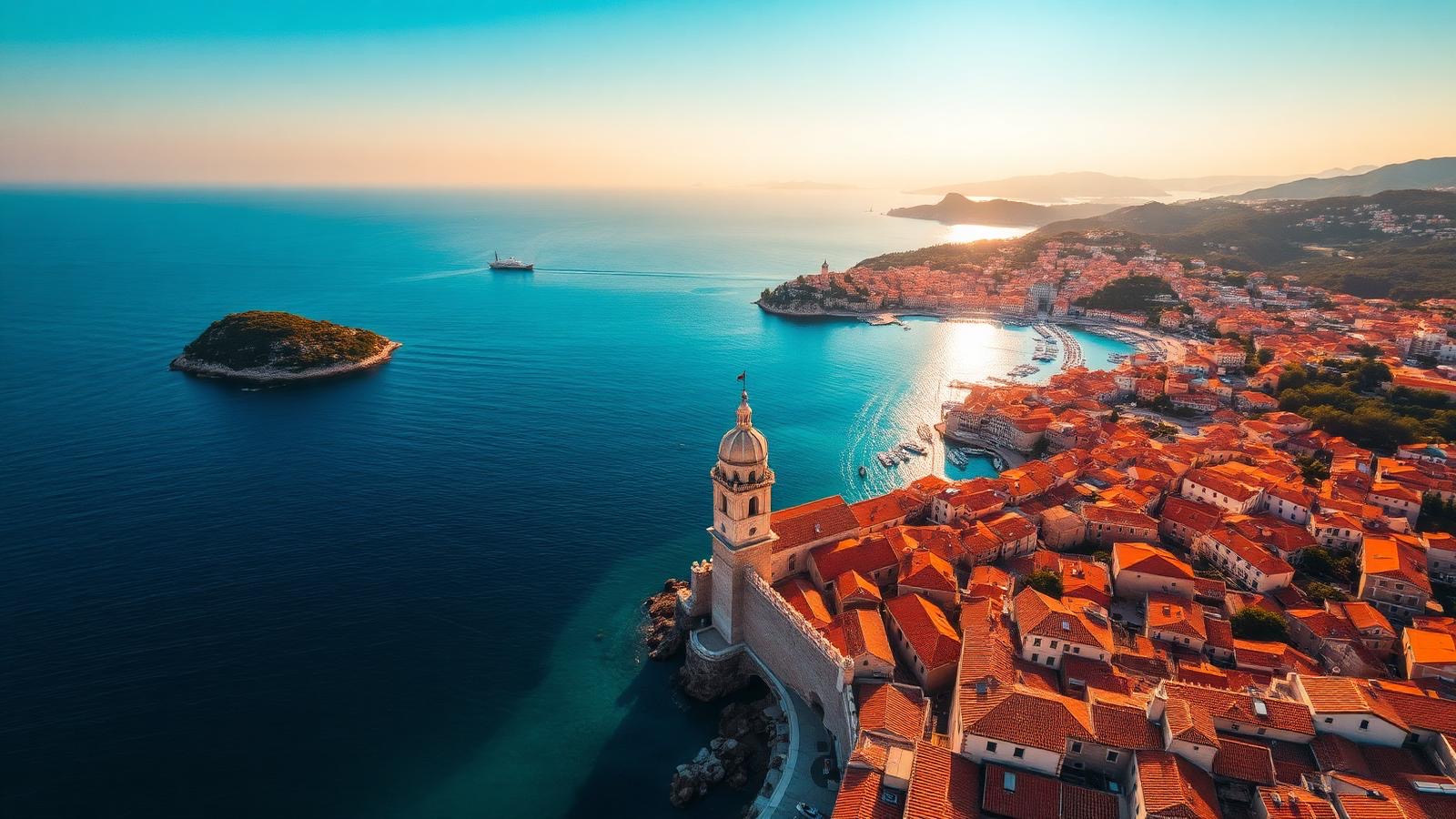
At dawn, Dubrovnik's marble Stradun can be empty, the limestone glowing pink and the Adriatic flat as glass beyond the walls — and no photograph quite does Croatia justice. From this coastline to the Istrian hill towns, the karst waterfalls of Plitvice and more islands than you can name, this guide answers the practical questions first-time visitors actually ask.
Croatia is small enough to see a lot of in a single trip and varied enough that you don't have to choose between beaches, medieval walled cities, national parks or truffle country — you can build a route that includes all of them without ever driving more than half a day. This is the guide to read before your first visit.
Why Croatia Is Worth the Hype
Croatia sits at the meeting point of Central Europe, the Mediterranean and the Balkans, and it feels like all three at once. In a single week you can stand inside a 4th-century Roman palace that's still a functioning city (Split), sleep in a 15th-century Venetian merchant house on a stone-paved island, hike past turquoise travertine waterfalls in a UNESCO-listed national park, and eat truffle pasta shaved tableside in a hilltop village that looks straight into Italy.
What makes Croatia unusual, compared with other European coastlines, is how compact and legible the geography is. The Adriatic runs almost the entire length of the country in a single long strip, dotted with more than a thousand islands. That means you're rarely more than an hour or two from your next town, ferry or national park — and it means a two-week trip can genuinely cover Dubrovnik, Split, Hvar, Plitvice and Istria without ever feeling rushed.
Best Time to Visit
The single most important decision for a Croatia trip is when you go. The season shapes prices, ferry schedules, crowd levels and even whether some restaurants and hotels are open at all.
- Peak season (mid-July to late August): hot, sunny, every island buzzing, every ferry running. It's also the most expensive time and the busiest — Dubrovnik's Old Town and Hvar Town can feel overrun midday.
- Shoulder season (May to mid-June, and September): arguably the sweet spot. The sea is warm enough to swim, the light is gorgeous, prices drop noticeably, and you can actually get a table on the waterfront without booking days in advance.
- Early shoulder (April, early May) and late shoulder (October): quiet, atmospheric, cooler. Ferry schedules thin out and some island restaurants close, but the mainland — Dubrovnik, Split, Zagreb, Istria — is a joy.
- Winter (November to March): a different country. The coast is quiet, some islands feel almost empty, and Zagreb turns into one of Europe's best Christmas-market cities. Not the trip for swimming, absolutely the trip for atmosphere.
The best single window: the second week of September. Warm sea, thinning crowds, honeyed light on the stone.
Dubrovnik and the Southern Dalmatian Coast
Dubrovnik is the postcard — a walled medieval city jutting into the Adriatic, its terracotta rooftops famously reset by a stroll around the ramparts. It's also small and understandably popular, which means the trick to enjoying it is timing.
Walk the City Walls at opening time (usually 8am in summer) or in the last two hours before sunset. Midday, when four cruise ships are in port and the marble is radiating heat, is the one time it isn't fun. From up on the walls the whole city is laid out beneath you: the Stradun cutting straight through the middle, the little harbour, Lokrum Island just offshore, and the sea sliding off toward Montenegro.
Beyond the walls, take the cable car up Mount Srđ for the definitive skyline shot, wander the tiny Buža bars tucked into holes in the seaside cliff, and ride the short boat over to Lokrum for a swim and a slow afternoon in the pine forest. If you have an extra day, drive up the coast to Ston for its own giant medieval walls, oyster farms and salt pans — one of the best half-days anywhere in Croatia.
Split, Hvar and Central Dalmatia
Split is the opposite of a museum city — its historic core is Diocletian's Palace, a Roman emperor's retirement complex built in 305 AD that's still, seventeen centuries later, a working neighbourhood with laundry hanging from the walls and coffee bars in the vaulted cellars. You can walk through Roman gates on your way to buy groceries. It's remarkable.
Use Split as a base and hub. From the ferry terminal a few minutes' walk from the palace, catamarans and car ferries fan out across the central Dalmatian islands:
- Hvar — lavender fields, a photogenic harbour town, and Croatia's most famous nightlife scene. Also home to some of the country's best beach-club-style days.
- Brač — home to Zlatni Rat, the famous shape-shifting pebble beach that curves depending on the wind.
- Vis — the furthest out, quiet, incredibly pretty, and the launching point for boat tours to the Blue Cave on Biševo.
- Korčula — a miniature walled town often nicknamed "little Dubrovnik", easier to reach on the way south.
A good route is to spend two nights in Split, then two or three on one island (Hvar for energy, Vis for calm), then continue south along the coast toward Dubrovnik.
Istria: Truffles, Hilltops and the Adriatic's Quiet Side
If Dalmatia is Croatia's poster, Istria is its secret. The heart-shaped peninsula in the north-west has more in common with Tuscany and Slovenia than with Dubrovnik: hilltop stone villages, vineyards, olive groves, and one of the best truffle regions in Europe.
Base yourself in Rovinj, a Venetian-era fishing town whose old quarter rises out of the sea in a single pastel cone crowned by a bell tower. From there, day-trip into the interior: Motovun and Grožnjan are the classic hill towns; Livade is the truffle capital, with restaurants shaving fresh white truffle over hand-cut fuži pasta from October to December. The coast around Rovinj and Pula — with its remarkably intact Roman amphitheatre — is quieter than the south, with pine-lined pebble coves rather than dramatic islands.
Istria is the place for anyone who has already "done" Dubrovnik and Split and wants a completely different side of Croatia.
Plitvice Lakes and Krka National Park
Croatia has eight national parks and two of them are unmissable.
Plitvice Lakes is the famous one: sixteen terraced lakes in astonishing shades of blue and green, connected by waterfalls and linked by wooden boardwalks that let you walk right across the water. It's a full day, and it genuinely delivers on its reputation. Arrive as close to opening as possible — mid-morning tour buses are the enemy — and, if you can, come in shoulder season when the crowds thin and the light is softer.
Krka National Park, closer to Split, is the smaller, more accessible cousin — a series of waterfalls along the Krka river with easy boardwalk loops. Swimming near the falls is no longer allowed at the main viewpoint, but Krka's advantage is that you can pair it with a morning in the town of Skradin and be back on the coast for dinner.
If you only have time for one, choose Plitvice for the scenery and Krka for the ease.
Zagreb and the Continental North
Most first-time visitors skip Zagreb, and most people who go end up wishing they'd stayed longer. Croatia's capital is not a coastal city — it's an Austro-Hungarian, Central European one, with grand 19th-century squares, an atmospheric Upper Town, one of the world's best small museums (the Museum of Broken Relationships), and a café culture that rivals Vienna's.
Two nights in Zagreb pairs beautifully with either a Plitvice detour on the way south, or a loop through the wine and castle country of Zagorje to the north. In December, Zagreb's Advent Christmas market is one of the best in Europe and worth a trip in its own right.
Getting Around Croatia
Croatia is one of the easier European countries to travel in, but the logistics depend on where you're going.
- Rental car: the best way to see Istria, Plitvice, and the coast between Split and Dubrovnik. Roads are good, distances are short, and parking in old towns is manageable if you use signposted lots outside the walls.
- Ferries and catamarans: the essential mode between the mainland and the islands. Jadrolinija is the main car-ferry operator; Krilo and Kapetan Luka run fast passenger catamarans out of Split. Book online a few days ahead in peak season.
- Buses: extensive, cheap and comfortable — a good option along the Dalmatian coast if you don't want to drive. Split–Dubrovnik takes about 4.5 hours by bus (which briefly enters Bosnia and Herzegovina at Neum — bring your passport).
- Trains: useful only in the interior — Zagreb–Split and Zagreb–Rijeka in particular. Coastal towns south of Split have no rail service.
- Flights: Croatia Airlines and low-cost carriers connect Zagreb, Split, Dubrovnik, Pula and Zadar. A one-way Zagreb–Dubrovnik flight is often cheaper than the drive.
Costs and Budget
Croatia joined the eurozone in 2023, so everything is now priced in euros. It is no longer a "cheap" Mediterranean country — coastal Croatia in July is comparable to Italy or coastal Spain — but it's still noticeably better value inland and in shoulder season. Rough per-person daily budgets, excluding flights:
- Backpacker: €55–€80 per day — hostels or private rooms, buses, bakery lunches, one sit-down dinner.
- Mid-range: €120–€200 per day — three-star hotels or good apartments, a rental car shared between two, one or two nice meals a day, park entries and boat tours.
- Higher-end: €280+ per day — boutique or four-star hotels, private transfers, waterfront dinners and premium island excursions.
Major line items to know: Plitvice Lakes entry in peak season is around €40; Dubrovnik's City Walls around €35; a return catamaran Split–Hvar around €25–€30; a hearty konoba dinner with wine, €30–€45 per person.
Food and Drink
Croatian food splits cleanly by region, and it's a genuine highlight of the trip.
- Dalmatia (the coast): grilled fish, black cuttlefish risotto (crni rižot), octopus salad, peka (meat and vegetables slow-roasted under a bell-shaped iron dome — order it hours in advance), and the slow-braised beef pašticada.
- Istria: hand-cut fuži or pljukanci pasta with truffle, boškarin (indigenous ox) stew, Adriatic scampi, and world-class olive oil.
- Continental Croatia: heartier, Central European — štrukli (baked cheese dumplings), stuffed peppers, freshwater fish along the Zagorje rivers.
- Wine: the whites are excellent. Try Malvazija and Teran in Istria, and Pošip, Grk and the red Plavac Mali in Dalmatia.
- Coffee culture: Croatians take coffee the way Italians take espresso — slowly, socially, and often for hours. Sitting on a Zagreb square with a long kava is a national pastime.
Croatia's Beaches
Croatia's coast is almost entirely pebble and rock — there are very few sandy beaches, but the water more than makes up for it. Because rivers are short and the seabed is limestone karst, the Adriatic here is extraordinarily clear: 20+ metres of visibility in many bays, and colours that genuinely look edited.
You'll find dramatic pine-fringed pebble coves on Hvar, Brač and Korčula; hidden swimming platforms cut into the rocks around Dubrovnik; long shallow bays on Rab and Pag; and quiet, family-friendly coves all along the Istrian coast. If you want the full breakdown — including which beaches are worth the boat ride, which are family-friendly, and which are effectively private — there's a dedicated companion piece: The Best Beaches in Croatia Along the Adriatic.
Final Practical Tips
- Currency: the euro. ATMs are everywhere; cards are accepted almost universally except in a few small konobas.
- Language: Croatian. English is spoken very widely in tourist areas, particularly by anyone under 40. Learning "hvala" (thank you) and "molim" (please) goes a long way.
- Border quirk: the Dalmatian coast is split briefly by a short strip of Bosnian territory at Neum. A new bridge (the Pelješac Bridge, opened 2022) bypasses it entirely if you're driving, but buses still cross the border — bring your passport.
- Water: tap water is safe and excellent everywhere in Croatia.
- Booking rhythm: in July and August, book ferries, Plitvice entry slots and popular restaurants in advance. In May, June, September and October, you can travel much more spontaneously.
- Dress code: smart-casual works everywhere. For churches, cover shoulders and knees.
The overall verdict: Croatia is one of the highest-value trips left in Europe if you go in shoulder season, and one of the most rewarding coastlines on the planet if you're willing to spend a couple of nights on a boat or a small island. However you plan it, don't try to see everything — pick two regions (say, Dubrovnik + Split, or Split + Istria) and let yourself linger. This is a country that rewards slowness.
Explore Croatia in Depth
This guide is the overview. When you are ready to plan a specific part of the trip, there is a dedicated deep-dive on each of these, and every one of them links back here:
Beaches, nature and outdoors
More guides
More Croatia guides
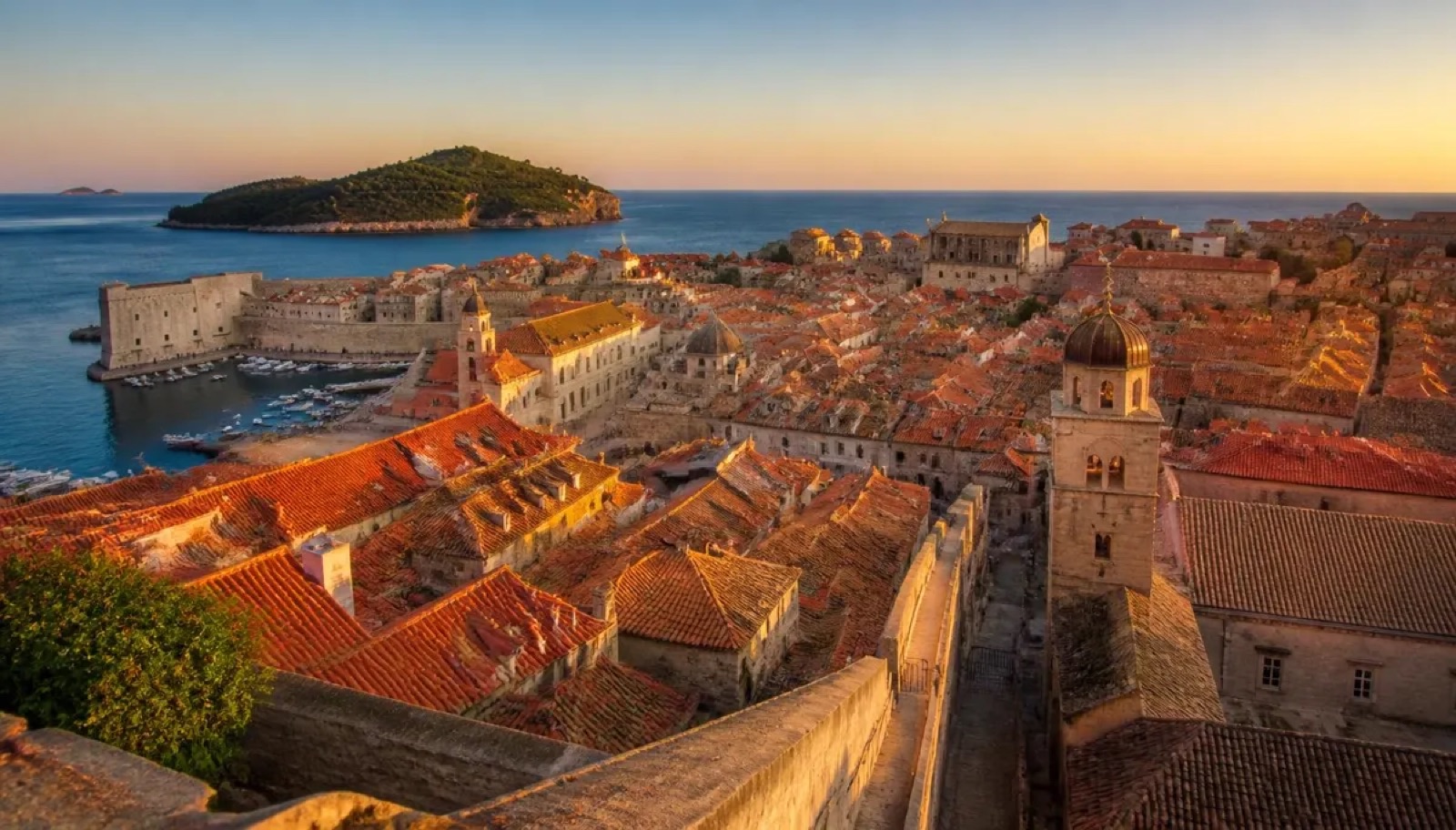
Dubrovnik Travel Guide: Old Town Walls and Day Trips
Walking the city walls at the right hour, staying outside the Old Town, cruise-ship crowd timing and the best day trips along the southern…
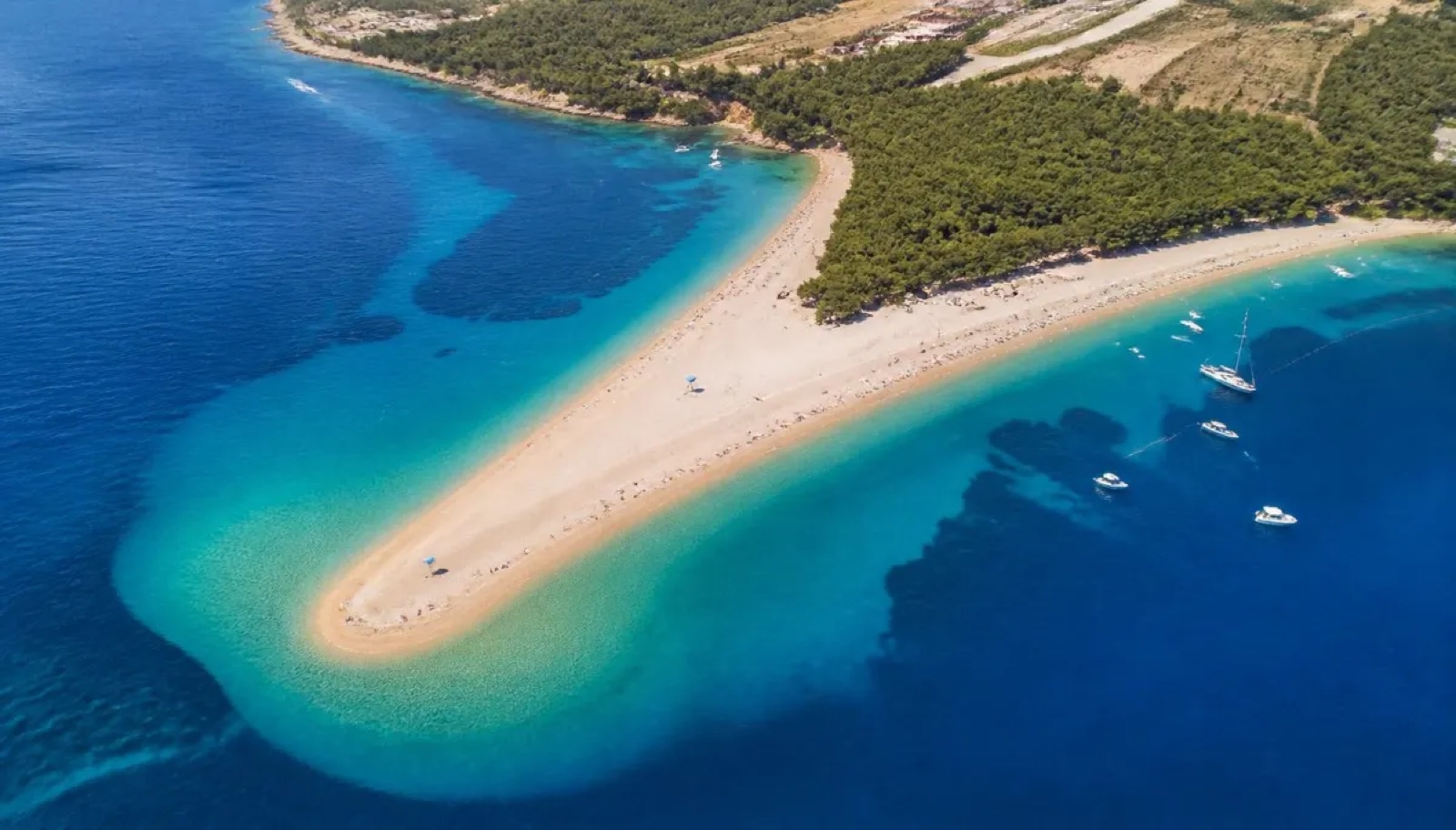
Best Croatian Islands: Hvar, Brac, Korcula and Vis
A practical rundown of Croatia’s main islands — who each one suits, how the ferries connect, when to go and how to build an island-hopping…
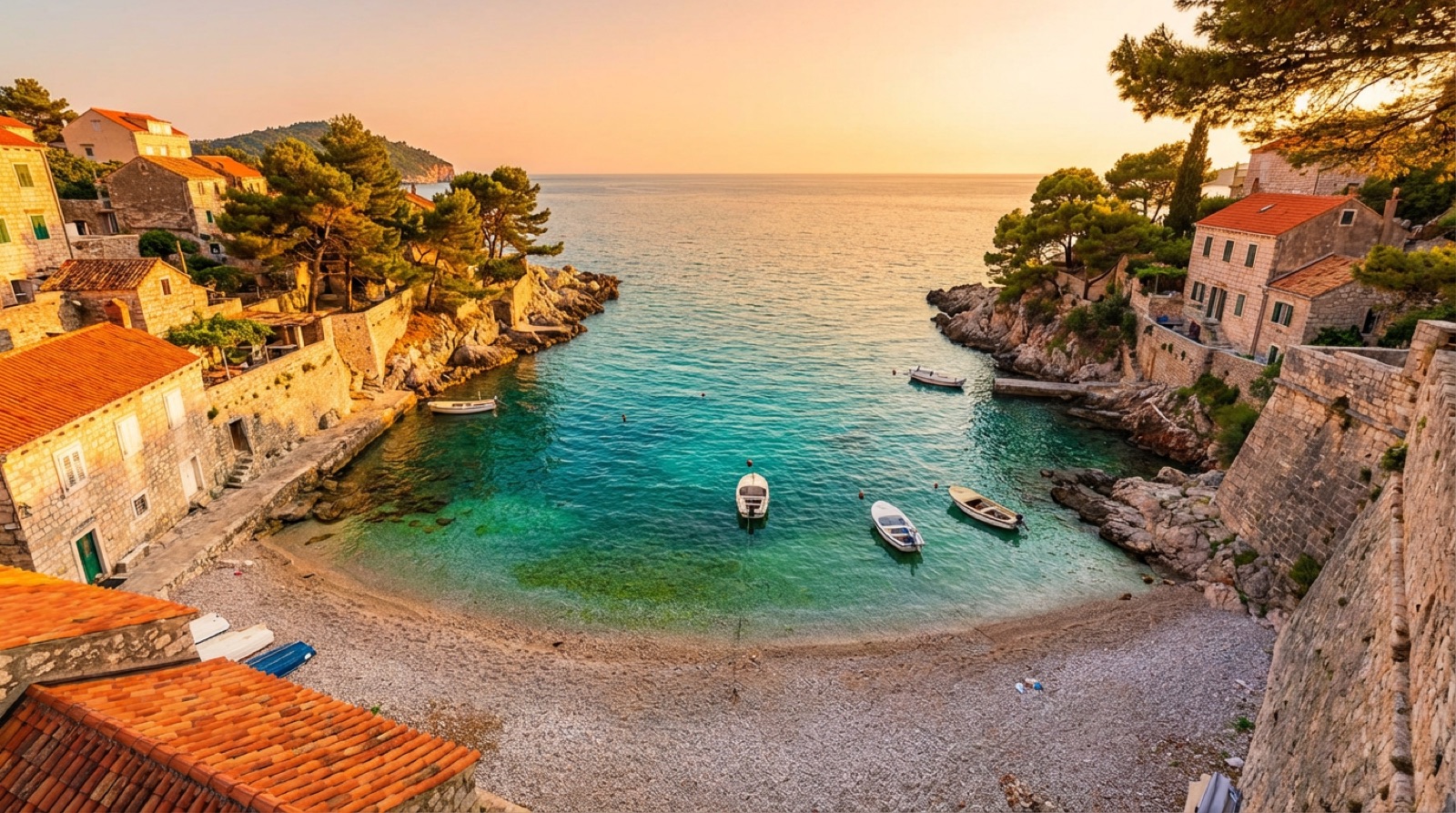
The Best Beaches in Croatia Along the Adriatic
Croatia's beaches region by region, from Dubrovnik and Split to Hvar, Zadar, Pag and Istria, with practical tips and what a beach holiday…