Everest Base Camp Trek: What to Expect
An honest look at the EBC trek: the day-by-day route, altitude, Lukla, teahouse life, fitness and the seasons that work.
In this guide
- Quick Facts
- What the Everest Base Camp Trek Really Is
- Getting to the Trailhead: The Lukla Flight and Alternatives
- A Classic Day-by-Day Journey
- The Gokyo Lakes and Cho La Pass Alternative
- Altitude: The Invisible Mountain
- Life in the Teahouses
- Sherpa Culture and Trail Etiquette
- Permits and Preparation
- Gear and When to Go
- Insurance: The Non-Negotiable Essential
- Photography on the Roof of the World
- Is the Everest Base Camp Trek For You?
- Explore in Depth
- Frequently Asked Questions
- Final Thoughts
This guide is part of our Nepal Travel Guide: Kathmandu, Trekking and Seasons — start there for the overview, when to go and how to get around.
The air was so thin it felt like a ghost in my lungs. I was standing on the summit of Kala Patthar at 5,644 metres, the pre-dawn cold seeping through every layer I owned. My camera battery was dying, my water bottle was a block of ice, and my head was pounding a dull rhythm against my skull. Then the sun breached the horizon, and the world’s highest mountains lit up one by one. Nuptse, Lhotse, and finally, the black pyramid of Everest itself, its summit plume catching the first golden light like a streamer of fire. In that moment, the weeks of walking, the endless bowls of dal bhat, and the freezing nights all dissolved into pure, crystalline awe. It’s a memory burned into my soul, the reward for one of the planet’s greatest journeys.
They call it a trek, but the journey to Everest Base Camp is more of an ascent—a slow, deliberate pilgrimage into the heart of the Himalaya. This isn’t a technical climb, and you won’t be summiting Sagarmatha (the Nepali name for Everest), but it is a serious high-altitude undertaking that demands respect, preparation, and a healthy dose of humility. In this guide, I’ll walk you through what to expect, from the nail-biting flight into the world’s most famous mountain airstrip to the day-by-day reality of life on the trail. We’ll cover acclimatisation, culture, gear, and the raw, staggering beauty you’ll find at every turn. This is the culmination of my own trips into the Khumbu, filled with the hard-won lessons that only the trail can teach.
Quick Facts
- Location: The Khumbu region of Sagarmatha National Park, north-eastern Nepal.
- Getting There: Typically a short flight from Kathmandu or Ramechhap to Lukla, the main trailhead. Overland options exist but add significant time.
- Getting Around: On your own two feet. This is a trekking region with no roads beyond the trailheads.
- Language & Currency: Nepali is the national language, but Sherpa is spoken widely in the Khumbu. English is common in teahouses. The currency is the Nepali Rupee.
- Best Time to Visit: The main trekking seasons are pre-monsoon (March-April) and post-monsoon (October-November) for clear skies and stable weather.
What the Everest Base Camp Trek Really Is
Let's clear this up first: you are not climbing Mount Everest. The Everest Base Camp (EBC) trek is a high-altitude hike that takes you to the southern encampment where mountaineers prepare for their summit attempts. You’ll walk through the valleys and high passes of the spectacular Khumbu region, home of the Sherpa people, culminating at Base Camp (5,364 metres) and, for the best views, the nearby peak of Kala Patthar (around 5,644 metres).
The total round-trip distance is roughly 130 kilometres. While that might not sound extreme, you're doing it at an altitude where oxygen levels are about half what they are at sea level. A standard itinerary takes around 12 days, which includes 8-9 days of walking up and 3-4 days to descend. Crucially, this includes two dedicated 'acclimatisation days' where you stay at the same altitude for two nights to allow your body to adjust. Rushing is the single biggest mistake you can make out here.
Getting to the Trailhead: The Lukla Flight and Alternatives
For most trekkers, the journey begins with an adventure in itself: the flight to Tenzing-Hillary Airport in Lukla. Perched on a mountainside at 2,860 metres, its runway is incredibly short and angled upwards to help planes slow down. There's a cliff at one end and a solid mountain wall at the other. It’s a breathtakingly scenic—and admittedly nerve-wracking—way to arrive. You fly in a small 15-20 seater plane, and on a clear day, the views of the Himalaya are simply astonishing. Sit on the left side of the plane on the way to Lukla for the best mountain panoramas.
Be prepared for delays. The weather in the mountains is notoriously fickle. Cloud, wind, or rain in either Lukla or Kathmandu can ground flights for hours or even days. Always build buffer days into your itinerary. Furthermore, to ease congestion at Kathmandu’s airport, flights to Lukla are often diverted to operate from Ramechhap Airport during the peak seasons. This involves a long, bumpy 4-5 hour drive from Kathmandu in the middle of the night to catch your morning flight. This is a fluid situation that changes season by season, so you absolutely must verify your departure airport with your airline or trekking company before you travel.
For those with more time and a desire for a more traditional approach, you can trek in from the old trailhead at Jiri. This 'pioneers' route' adds another 5-7 days and follows the path used by early mountaineering expeditions before the Lukla airport was built. It’s quieter, sees fewer trekkers, and allows for much more gradual acclimatisation. A more modern compromise is to take a jeep to Salleri, which is further along than Jiri, and trek for 2-3 days to join the main trail near Phakding.
A Classic Day-by-Day Journey
While every itinerary can vary slightly, the classic EBC trek follows a well-established route designed for acclimatisation. Here’s a look at the rhythm of the trail.
Lukla to Namche Bazaar (2-3 days)
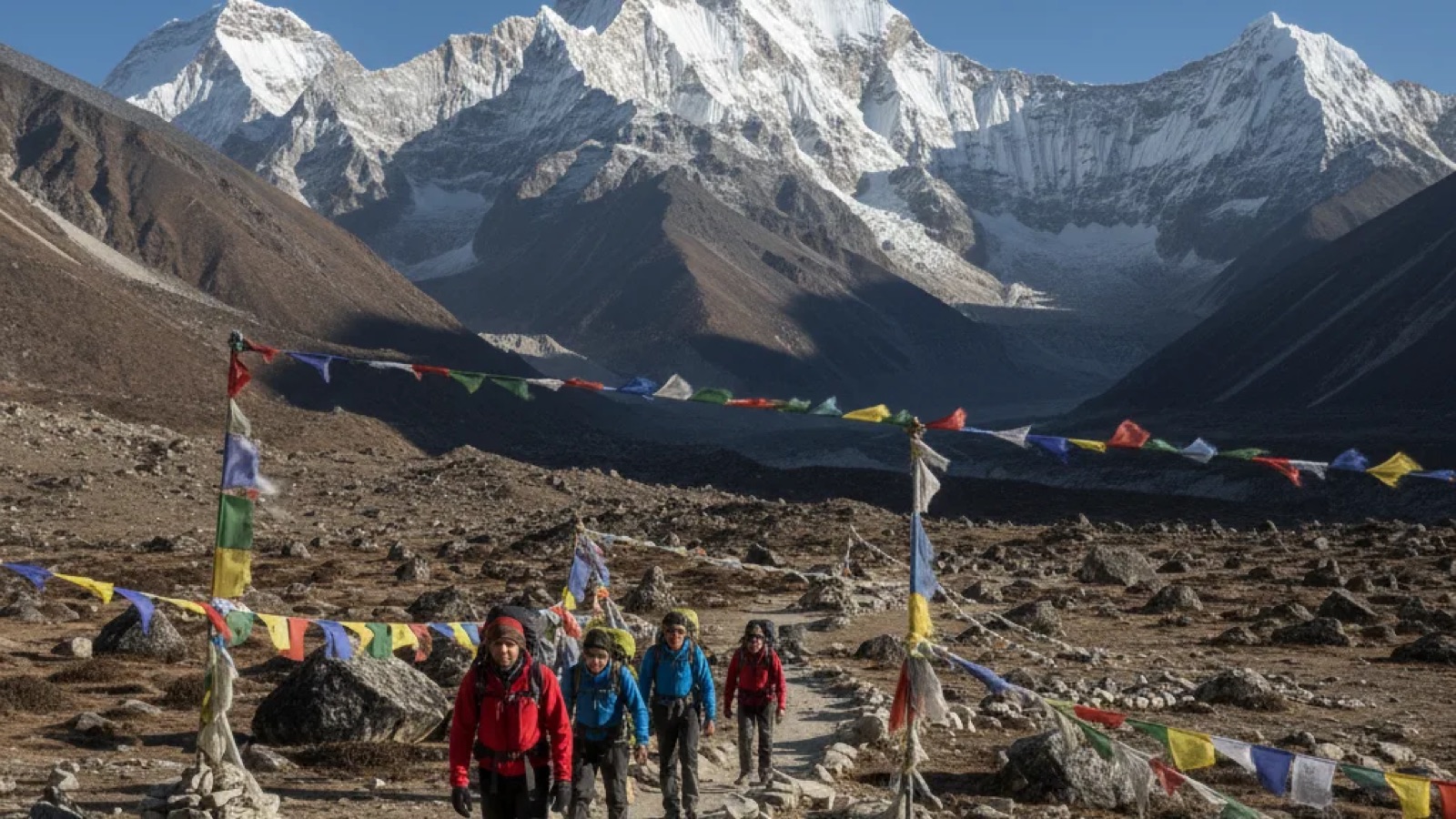
After landing in Lukla, the first day is a relatively gentle downhill and undulating walk to Phakding. You'll cross your first wire suspension bridge, festooned with colourful prayer flags, and get a feel for the trail. The next day is the real test: the long, steep climb up to Namche Bazaar, the bustling capital of the Sherpa region. It’s a tough day with a significant altitude gain, ending as you cross the iconic high bridge and trudge up the final hill. Namche, set in a natural amphitheatre, is a vibrant hub of gear shops, bakeries, and lodges. This is where you’ll spend your first acclimatisation day, usually taking a day hike up to the Everest View Hotel for your first—weather permitting—glimpse of the big peaks.
Namche to Dingboche (3 days)
Leaving Namche, the trail offers incredible views of Ama Dablam, often called the most beautiful mountain in the Himalaya. You’ll descend to the river before a long climb to the famous Tengboche Monastery. I’ll never forget sitting in on evening prayers here, the sound of chanting monks and horns echoing as the setting sun lit up Everest and Lhotse in the distance. From Tengboche, you walk through rhododendron forests (stunning in spring) and ascend above the tree line into a more stark, alpine landscape. The next key stop is Dingboche, another village where you’ll take your second crucial acclimatisation day. The recommended acclimatisation hike here is up the ridge behind the village for panoramic views of Makalu, Lhotse, and Island Peak.
The High-Altitude Push: Dingboche to Base Camp (3 days)
From Dingboche, the trek feels different. The air is noticeably thinner, the landscape more lunar. You climb to the Thukla Pass, which features a solemn memorial area with chortens and prayer flags dedicated to climbers who have lost their lives on Everest. It's a sobering and powerful place. The trail then flattens out to follow the terminal moraine of the Khumbu Glacier to the small collection of lodges at Lobuche. The final push is from Lobuche to Gorak Shep, the last settlement before Base Camp. This is a tough, rocky slog. After dropping your bags at a teahouse in Gorak Shep, most people hike the final couple of hours to Everest Base Camp that same afternoon. Base Camp itself is a sprawling, chaotic city of tents on the moving ice of the glacier during the spring climbing season. You don’t get a great view of Everest’s summit from here, but the sense of being at the epicentre of Himalayan climbing is palpable.
Kala Patthar and the Descent
The undisputed best view of Mount Everest is from the top of Kala Patthar. Most trekkers make the demanding two-hour climb from Gorak Shep before dawn to watch the sunrise. It's brutally cold and steep, but the 360-degree panorama of Everest, Nuptse, and the surrounding giants is the defining moment of the trek for many. After soaking it all in, you begin the long walk back down, a journey that takes just 3-4 days but feels worlds away from the slow upward plod.
The Gokyo Lakes and Cho La Pass Alternative
For trekkers seeking a bigger challenge and fewer crowds, the route via the Gokyo Lakes is a magnificent detour. This trek branches off from the main trail after Namche Bazaar and heads up a different valley to the west. The destination is a series of six sacred, turquoise lakes shimmering below the stunning peak of Cho Oyu. The view from the top of Gokyo Ri, a peak above the lakes, is arguably one of the most comprehensive in the entire Himalaya, taking in four 8,000-metre peaks including Everest.
From Gokyo, adventurous and well-acclimatised trekkers can cross the Cho La, a high, glaciated pass at 5,420 metres, to rejoin the main Everest trail near Lobuche. This is a very long, demanding day that involves glacier travel and should not be attempted without a guide or significant alpine experience. It turns the trek into a more complete circuit of the high Khumbu and is one of my favourite journeys on Earth.
Altitude: The Invisible Mountain
Altitude is the single greatest challenge on the EBC trek. Acute Mountain Sickness (AMS) is a serious and potentially fatal condition that can affect anyone, regardless of age or fitness. Your entire itinerary is built around mitigating its risks through slow ascent and acclimatisation days.
Initial symptoms of AMS are often mild and can feel like a bad hangover: headache, nausea, fatigue, loss of appetite, and difficulty sleeping. It is vital you take these symptoms seriously. The golden rules are:
- If you have mild symptoms, do not ascend any higher. Rest at your current altitude until they subside.
- If your symptoms worsen or do not improve, descend immediately to the last altitude where you felt well.
- Never ascend with AMS symptoms.
More severe forms of altitude sickness include High-Altitude Pulmonary Edema (HAPE), which is fluid in the lungs, and High-Altitude Cerebral Edema (HACE), which is fluid in the brain. Symptoms of HAPE include extreme breathlessness (even at rest), a persistent wet cough, and gurgling sounds from the chest. HACE symptoms include confusion, loss of coordination (ataxia – struggling to walk a straight line), and altered consciousness. Both HAPE and HACE are medical emergencies requiring immediate and rapid descent. Descent is the only reliable cure.
Some trekkers consider using a medication called Acetazolamide (Diamox) to help with acclimatisation. This is a prescription medication with potential side effects, and it's not a magic bullet or a substitute for a slow ascent. It's something you should discuss in detail with a travel doctor long before your trip to see if it's right for you.
Life in the Teahouses
Accommodation on the trail is in simple lodges known as teahouses. In the lower regions, these can be surprisingly comfortable, with private rooms and even attached bathrooms. As you get higher, they become much more basic. Rooms are typically small, unheated, and made of plywood, with two simple wooden bed platforms and a mattress. You will need your own warm sleeping bag. The social heart of every teahouse is the dining room, which is heated in the evening by a pot-bellied stove, usually fuelled by dried yak dung.
The food menu is surprisingly extensive in the lower villages but becomes more limited with altitude. The staple, and your best friend on the trail, is dal bhat—a huge platter of rice, lentil soup, and vegetable curry. It’s nutritious, filling, and you’ll always be offered seconds. Garlic soup is another popular dish, believed by locals to help with acclimatisation. It’s generally advised to avoid meat higher up the trail. All of it is carried up by porters or yaks, so its freshness can be questionable, and getting food poisoning at 4,000 metres is no one’s idea of fun.
For drinking water, you must treat all water. Buying bottled water creates a massive plastic waste problem in the fragile environment. Your best bet is to carry a reusable bottle and treat water yourself using purification tablets, a filter like a Sawyer Squeeze, or a UV steriliser like a SteriPen. Teahouses will sell boiled 'safe' water, which is a good option in the evenings. Wi-Fi and electricity for charging devices are available in most teahouses, but they are not free and the price increases with altitude. Speeds can be slow and unreliable, so it's best to manage expectations and embrace the digital detox.
Sherpa Culture and Trail Etiquette
The Khumbu is the homeland of the Sherpa people, renowned for their strength at altitude and their deep connection to these mountains, which they hold sacred. The culture is Tibetan Buddhist, and you’ll see evidence of this everywhere: colourful prayer flags, mani walls (long walls of stones carved with the mantra 'Om Mani Padme Hum'), and stupas (religious monuments).
It's important to be a respectful visitor. A few key points of etiquette: always walk to the left of mani walls and stupas, in a clockwise direction. Ask for permission before taking close-up photos of people. Dress modestly, especially if you visit a monastery like Tengboche. 'Namaste' is the universal greeting and will be met with a smile everywhere you go. The warmth and resilience of the local people is one of the most memorable parts of the entire experience.
Your guide and porter are your lifeline on the trek. Most guides are local Sherpas with immense knowledge of the terrain, culture, and signs of altitude sickness. Your porter, who carries the bulk of your gear, does one of the hardest jobs in the world. Please treat them with the utmost respect. Ensure you are trekking with a reputable company that provides its staff with proper wages, insurance, and appropriate gear. Be mindful of porter load limits—a responsible trekker's pack for their porter shouldn't exceed a certain weight. Your company should clarify this with you.
Permits and Preparation
You will need permits to trek in this region. Typically, this includes a Khumbu Pasang Lhamu Rural Municipality Entrance Permit and a Sagarmatha National Park Entry Permit. The system and fees for these can, and do, change. If you are trekking with an agency, they will organise all of this for you. If you are trekking independently, you will need to arrange them yourself in Lukla or Monjo. It's best to check the latest official information from Nepal's Department of Tourism before you go.
As for fitness, you don't need to be a marathon runner, but you do need to be in good cardiovascular shape. The best training is hiking, preferably on hills or mountains, for several hours at a time. Start training at least 3-4 months before your trek. Focus on building leg strength and endurance. Importantly, on your last few big training hikes, wear the hiking boots you plan to take to Nepal to ensure they are thoroughly broken in. A new pair of boots and the Khumbu trails are a recipe for blister-filled misery.
Gear and When to Go
The key to staying comfortable is layering. You’ll need a base layer (merino or synthetic), a mid-layer fleece, and an outer shell (a wind/waterproof jacket) for walking. You will also need a very warm down jacket for the cold evenings and for high-altitude rests like on Kala Patthar. Good quality, broken-in hiking boots are non-negotiable, as is a warm four-season sleeping bag (rated to at least -10°C, an even lower rating for winter is better).
The two main trekking seasons offer the best chance of clear weather and stable conditions:
- October – November: This is post-monsoon. The air is often crystal clear, offering sharp mountain views. It gets progressively colder as you head towards winter. This is my favourite time to be in the Khumbu.
- March – April: This is pre-monsoon. It’s warmer, and the rhododendron forests in the lower valleys are in spectacular bloom. You might encounter more haze at lower elevations, but it's also the main Everest climbing season, so Base Camp is a hive of activity.
Trekking during the winter (December-February) is possible but extremely cold, with heavy snow possible on the high passes. Many teahouses close. Trekking during the monsoon (June-September) is generally not recommended due to heavy rain, leeches on the lower trails, and cloud cover obscuring the mountains.
Insurance: The Non-Negotiable Essential
I cannot stress this enough: do not travel to Nepal to do this trek without comprehensive travel insurance that specifically covers high-altitude trekking and helicopter evacuation up to 6,000 metres. Regular travel insurance will not cover you. If you get seriously ill or injured, a helicopter is the only way out, and the cost can be astronomical without insurance. Read the fine print of your policy carefully.
It's also important to be aware of the unfortunate history of helicopter rescue scams in Nepal. This has involved some guides and operators encouraging evacuations for minor illnesses to claim insurance money. The industry has worked to clamp down on this, but the best way to protect yourself is to choose a highly reputable, internationally-recognised trekking agency. Communicate directly with your insurance company's emergency assistance line if an evacuation is suggested, ensuring they authorise the rescue with an approved operator.
Photography on the Roof of the World
As a photographer, the Khumbu is paradise, but it comes with challenges. The cold is your biggest enemy. Batteries drain incredibly fast in freezing temperatures, so keep your spares in an inside pocket close to your body. At night, I sleep with my camera batteries and phone in my sleeping bag. The air is also dry and dusty, so be mindful when changing lenses. Keep a dust blower and lens cloth handy.
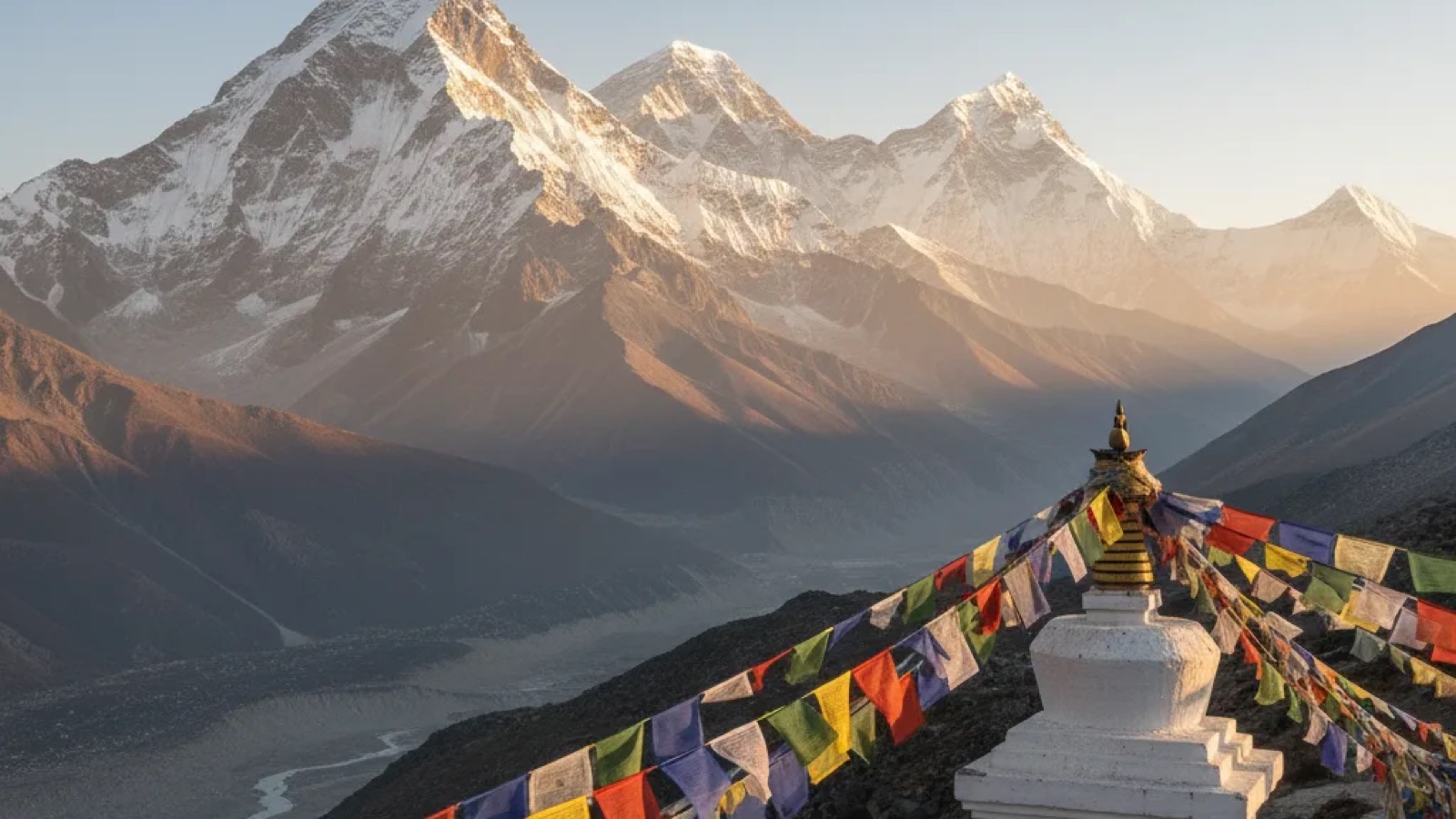
The light can be harsh and midday sun washes out the dramatic landscapes. The golden hours of early morning and late afternoon are when the mountains truly come alive. My most treasured shots are from this time. Look for classic compositions: the dramatic spire of Ama Dablam framed by prayer flags, the snaking line of the Khumbu Glacier from Kala Patthar, the warm glow of a teahouse window against the deep blue of twilight. Don’t just focus on the big landscapes; the details of daily life, the weathered faces of porters, and the intricate carvings on mani stones tell an equally powerful story.
Is the Everest Base Camp Trek For You?
This journey is one of the most rewarding experiences a traveller can have, but it is not for everyone. You should probably reconsider if you have pre-existing heart or lung conditions—a thorough check-up with your doctor is essential for anyone considering the trek. You should not attempt it if you are unwilling to put in the months of physical preparation required. And frankly, if your only goal is to tick a box and rush to the end, the mountains will quickly humble you. This is a trek that demands patience. It is for those who are willing to embrace discomfort, respect the power of nature and culture, and find joy not just in the destination, but in every single footstep it takes to get there.
Explore in Depth
Once you're back from the high mountains, the chaotic charm and ancient history of Nepal's capital is a world away. Dive into the temples, stupas and vibrant neighbourhoods with my guide to Kathmandu.
Frequently Asked Questions
Can I do the Everest Base Camp trek without a guide?
Technically, yes, it is possible for independent trekkers to do the EBC trek. The trail is well-defined, and teahouses are plentiful. However, I strongly recommend hiring at least a guide, if not a guide and a porter. A good local guide is invaluable for navigating trail conditions, organising accommodation, and most importantly, recognising the signs of altitude sickness. They are your first line of defence in an emergency. Hiring guides and porters also contributes directly to the local economy. For a first-time trekker in Nepal, going with a guide is the safest and most responsible choice.
How much training do I really need to do?
You need to take training seriously. This isn't a walk in the park; it's consecutive days of walking for 4-7 hours at increasing altitude. I recommend starting a consistent training plan at least three to four months before your trip. Focus on cardiovascular fitness—running, cycling, swimming—and strength training for your legs and core. Most importantly, do long weekend hikes on varied terrain, ideally with some hills. A crucial part of your training should be walking for several hours while wearing the same boots and daypack you intend to use in Nepal. Endurance is more important than speed.
What is the toilet and shower situation on the trek?
In the lower villages like Lukla and Namche, you can often find teahouses with Western-style flush toilets and hot gas-powered showers. As you ascend, facilities become much more basic. Toilets are typically squat-style and located in a small outhouse. Showers, if available, are often a "bucket shower" of lukewarm water, and you will have to pay for the service. Many trekkers opt for wet wipes and a small basin of warm water instead of showering at higher altitudes where it is very cold. Be prepared for basic sanitation and bring your own toilet paper and hand sanitiser.
Do I need to carry all my gear myself?
No, most trekkers hire a porter to carry their main duffel bag, which contains their sleeping bag, spare clothes, and other non-essential items. You will then carry a smaller daypack with your daily essentials: water, snacks, sunscreen, a warm layer, a waterproof jacket, your camera, and any personal medications. Hiring a porter makes the trek significantly more enjoyable, allowing you to focus on the walking and scenery. It's also a vital source of employment in the region. Ensure your porter is hired through a reputable company that guarantees fair wages, insurance, and proper gear.
Is it safe for a solo female traveller?
Yes, the Everest Base Camp trek is generally considered safe for solo female travellers, especially if you hire a guide or join a group. The trail is busy during peak season, and the teahouse environment is communal and friendly. That said, it's always wise to take standard precautions. Hiring a reputable local guide adds a significant layer of security and local knowledge. Choose a well-regarded trekking company, inform someone of your itinerary, and trust your instincts. I've met many solo women on the trails in Nepal who have had an absolutely incredible and trouble-free experience.
Final Thoughts
The Everest Base Camp trek is more than a list of villages and altitudes. It's a journey inward as much as upward. It's about stripping life back to the essentials: walking, eating, sleeping, and breathing. It's the kindness of a teahouse owner offering you a third serving of dal bhat, the shared camaraderie with fellow trekkers in a freezing dining room, and the quiet reverence you feel standing in the shadow of the world's highest peaks.
I’ve been lucky enough to see a lot of this world, but the images from the Khumbu are the ones that replay most vividly in my mind. The morning light on Ama Dablam, the rumble of a distant avalanche, the smile on my guide's face as he pointed towards the summit. It’s a journey that will test you, change you, and leave you with a profound sense of perspective that you’ll carry with you long after you’ve left the thin, sacred air of the Himalaya.
More Nepal guides
Nepal Travel Guide: Kathmandu, Trekking and Seasons
Planning Nepal: trekking regions compared, permits, altitude, the two clear seasons and how to travel respectfully.
Kathmandu Guide: Temples, Thamel and the Valley
Kathmandu without the overwhelm: Durbar Squares, Boudhanath and Pashupatinath, Thamel, air quality and valley day trips.