Kathmandu Guide: Temples, Thamel and the Valley
Kathmandu without the overwhelm: Durbar Squares, Boudhanath and Pashupatinath, Thamel, air quality and valley day trips.
In this guide
- Quick Facts
- Arriving in Kathmandu: Embracing the Chaos
- Where to Stay: Thamel, Patan or Boudha?
- Kingdoms of the Valley: The Three Durbar Squares
- Sacred Views: Swayambhunath and Boudhanath
- Pashupatinath: Life, Death and Reverence
- Finding Your Kathmandu: Markets, Gardens and Food
- Gearing Up for the Himalaya in Thamel
- Practicalities: Air Quality and Getting Around
- Beyond the City: Day Trips into the Valley
- Cultural Etiquette and Respectful Photography
- Explore in Depth
- Frequently Asked Questions
- Final Thoughts
This guide is part of our Nepal Travel Guide: Kathmandu, Trekking and Seasons — start there for the overview, when to go and how to get around.
Stepping into Thamel isn't so much an arrival as an immersion. A river of sound and scent washes over you: the discordant chime of a dozen bicycle bells, the urgent drone of a motorbike horn, the low chant of "Om Mani Padme Hum" from a nearby shop, all layered over the smell of frying momos, sweet incense, and diesel fumes. Saffron-robed monks navigate the narrow laneways, their calm a stark contrast to the haggling over pashminas nearby. Kathmandu doesn't gently introduce itself. It pulls you in, headfirst, and demands your full attention.
Kathmandu is the gateway to the Himalaya, but it's a destination in itself, not just a staging post for treks. It is a living, breathing museum where medieval traditions rub shoulders with the frantic energy of a modern metropolis. This guide will help you navigate that beautiful chaos. We’ll cover where to base yourself, how to explore the ancient kingdoms of the valley, find moments of peace amidst the noise, and understand the cultural currents that make this city one of the most fascinating on Earth.
Quick Facts
- Location: Kathmandu is the capital city of Nepal, situated in the Kathmandu Valley in the high-altitude central region of the country.
- Getting There: Tribhuvan International Airport (KTM) serves Kathmandu and is Nepal's main international gateway.
- Getting Around: The historic core is best explored on foot. For longer distances, taxis (bargain before you get in) and modern ride-hailing apps are the standard.
- Language: The official language is Nepali. English is widely understood and spoken in all tourist centres, hotels, and restaurants.
- Currency: The Nepalese Rupee (NPR).
- Best Time to Visit: The post-monsoon autumn months (October to December) offer the best clarity for mountain views and pleasant, dry weather. Spring (March to April) is also excellent, with warmer temperatures and blooming rhododendrons.
Arriving in Kathmandu: Embracing the Chaos
Landing at Tribhuvan International can feel a little bewildering, but it’s an organised chaos. My advice is to sort your taxi before you exit the terminal. There’s usually a pre-paid taxi desk that offers fixed, fair rates, saving you the hassle of bargaining with the drivers waiting outside. The drive into the city is your first real taste of Kathmandu. The air gets thick with dust, the traffic is a ballet of improbable manoeuvres, and every frame of your window is filled with life: women in vibrant saris, shops overflowing onto the pavement, and sudden, breathtaking glimpses of a temple roof or a hidden stupa between concrete buildings.
It can be a sensory overload. The key is not to fight it. When you get to your hotel, drop your bags and find the nearest rooftop cafe. It’s a classic Kathmandu ritual for a reason. Order a masala chai, sit back, and just watch the city unfold below you. Listen to the symphony of horns and bells. Watch the kites dance over the rooftops. Let the pace of the city reveal itself to you from a gentle distance. After an hour, you'll feel less like you’ve been thrown in the deep end and more like you're starting to understand its rhythm.
Where to Stay: Thamel, Patan or Boudha?
Choosing your neighbourhood has a huge impact on your Kathmandu experience. There are three main hubs for travellers, each with a distinct character.
Thamel: The Traveller's Epicentre
For most first-time visitors, Thamel is the default base, and for good reason. This labyrinth of narrow streets is packed with hotels, restaurants, bars, and more trekking gear shops than anywhere else on the planet. If you need to organise a trek, hire a sleeping bag, or find a pizza, it's all within a five-minute walk. The energy is infectious and it’s undeniably convenient. The downside? It can be loud, intense, and at times, feel like a tourist bubble, a little disconnected from the rest of the valley. It's the perfect place to start or end a trip, especially if you're on a tight schedule for trek preparation.
Patan (Lalitpur): The City of Beauty
Just across the Bagmati River lies Patan, technically a separate city. Staying here offers a more soulful and authentic experience. Its own Durbar Square is arguably the most stunning in the valley, and the surrounding old town is a maze of hidden courtyards, artisan workshops, and quiet temples. It's significantly quieter than Thamel, especially at night. You'll trade the convenience of having everything on your doorstep for an atmosphere that feels less tailored to tourists and more rooted in ancient Newari culture. You’ll rely on taxis to get to Thamel for trekking business, but it’s a small price to pay for waking up in such a beautifully preserved city.
Boudha: A Tibetan World
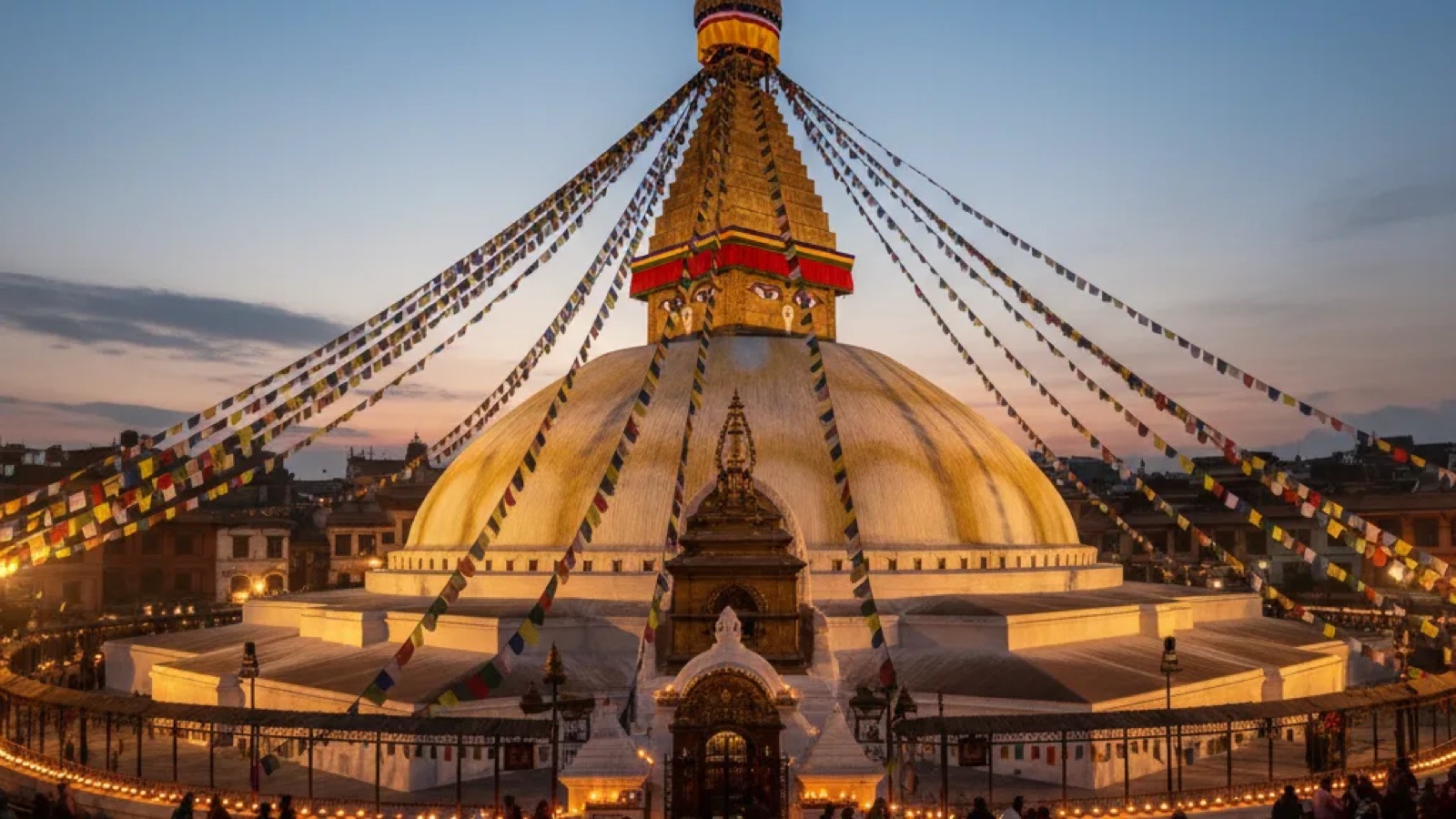
If your interests lean more towards the spiritual, consider staying in Boudha. The neighbourhood is built around the colossal Boudhanath Stupa, one of the most sacred sites for Tibetan Buddhists outside of Tibet. The atmosphere here is completely different—calmer, more contemplative. The air hums with chanting and the scent of butter lamps. It’s the perfect place to witness the daily ritual of the kora at dawn and dusk. It is, however, further from the city centre and the main trekking agencies, making it better suited for those who want to immerse themselves in the valley's spiritual life rather than use it as a logistical base for the mountains.
Kingdoms of the Valley: The Three Durbar Squares
The Kathmandu Valley is home to three ancient city-states, each with its own royal palace and temple complex known as a Durbar Square. All three suffered damage in the devastating 2015 earthquake, but the restoration work itself has become part of their story. You'll see artisans painstakingly carving new wooden beams and masons repairing brickwork, a testament to the valley's incredible resilience.
Kathmandu Durbar Square is the most central and easily accessible. It feels like the city’s living room, a hub of activity where commerce and worship collide. It's a sprawling complex of temples, courtyards, and palaces. Don't miss the Kumari Ghar, the residence of the Kumari Devi, a young girl worshipped as a living goddess. If you're lucky, she may appear at one of the windows—remember that photography of her is strictly forbidden.
Patan Durbar Square is arguably the pinnacle of Newari architecture. It’s more compact than Kathmandu's and the collection of temples, with their intricate wood and stone carvings, is simply breathtaking. The Patan Museum, housed in a restored portion of the old palace, is world-class and provides fantastic context for the art and history you're seeing. This square feels less like a series of monuments and more like a cohesive architectural masterpiece.
Bhaktapur Durbar Square, a little further out, offers a journey back in time. Its Durbar Square is one of the Kathmandu Valley's UNESCO World Heritage monument zones, and large parts of its core are pedestrian-only, giving it a much slower, more peaceful pace. It's famous not just for its 55-Window Palace and towering Nyatapola Temple, but also for its artisan traditions. Make sure you wander to Pottery Square to see potters at their wheels, their wares drying in the sun. It's well worth staying overnight here to experience the magical atmosphere after the day-trippers have left.
Sacred Views: Swayambhunath and Boudhanath
Two of Kathmandu's most iconic sights are its great stupas, perched on opposite sides of the city, each offering a unique spiritual experience.
Swayambhunath, affectionately known as the "Monkey Temple," sits on a forested hillock overlooking the entire valley. The climb up the steep eastern staircase is a workout, but you’re rewarded with one of the best panoramic views of Kathmandu. The complex is a fascinating blend of Buddhist and Hindu iconography, and the air is thick with the smell of incense and butter lamps. The resident monkeys are bold and endlessly entertaining, but keep a firm grip on your camera and snacks. The best time to photograph the stupa is in the late afternoon, when the setting sun bathes its all-seeing eyes and golden spire in a warm, ethereal light.
Boudhanath Stupa is a different experience altogether. It’s one of the largest spherical stupas in the world, and its massive mandala dominates the surrounding neighbourhood. The magic of Boudhanath is best felt at dusk. Join the hundreds of Tibetan pilgrims and monks who walk the circular route, or kora, around the base, spinning prayer wheels and chanting mantras. The energy is powerful and deeply moving. As darkness falls, the surrounding monasteries light up and thousands of butter lamps are lit around the stupa's base. It’s a profoundly peaceful and mesmerising spectacle.
Pashupatinath: Life, Death and Reverence
A visit to Pashupatinath Temple, Nepal's most sacred Hindu shrine, is an intense and profound experience. Located on the banks of the Bagmati River, its main purpose for visitors is to witness the open-air cremation ceremonies on the stone ghats. It is absolutely crucial to approach this with the utmost respect. This is not a tourist attraction; it is a funeral. Families are farewelling their loved ones in a deeply personal and sacred ritual.
As a non-Hindu, you won't be permitted inside the main temple, but you can observe the ghats from the terraces on the opposite side of the river. Find a quiet spot, sit down, and just observe. Do not take close-up photos of the ceremonies or the grieving families. A long lens used discreetly from a distance is one thing, but intrusive photography is unacceptable. Dress conservatively (cover your shoulders and knees), speak in hushed tones, and be mindful of your presence. It's a place that confronts you with the raw realities of life and death, and it will stay with you long after you leave.
Finding Your Kathmandu: Markets, Gardens and Food
Beyond the major monuments, the soul of Kathmandu is found in its backstreets. Getting deliberately lost in the maze of lanes between Thamel and Kathmandu Durbar Square is one of the city's great pleasures. You'll stumble through bustling market areas like Asan and Indra Chowk, where vendors sell everything from fragrant spices and fresh vegetables to brassware and colourful textiles. It’s a chaotic, vibrant assault on the senses and a fantastic opportunity for street photography.
When the noise and dust become too much, the Garden of Dreams is your sanctuary. Tucked away just outside Thamel, this beautifully restored neo-classical garden is an oasis of tranquility. With its elegant pavilions, fountains, and immaculate lawns, it’s the perfect spot to read a book or simply enjoy a few moments of peace before diving back into the city.
And then there's the food. Kathmandu is a paradise for food lovers. The local Newari cuisine is rich and flavourful, but the one dish you absolutely cannot miss is the humble momo. These steamed or fried dumplings, filled with buffalo, chicken, or vegetables, are Nepal's unofficial national dish. You’ll find them everywhere, from street-side stalls to high-end restaurants. And when in Bhaktapur, you must try the juju dhau, or "king curd." This thick, creamy, sweet yoghurt served in a clay bowl is utterly delicious and a true specialty of the city.
Gearing Up for the Himalaya in Thamel
If Kathmandu is your launching pad for a trek, you'll inevitably spend a good amount of time in Thamel's gear shops. The sheer volume of equipment available is staggering. You can find everything from high-end, genuine international brands to incredibly convincing local knock-offs. For critical items like hiking boots, it's best to buy a trusted brand from home and break them in. But for other gear—down jackets, sleeping bags, trekking poles, duffel bags—the options in Thamel are excellent and affordable.
Renting is also a fantastic option, especially for big-ticket items you might not use again. You can rent a high-quality down jacket or a sub-zero sleeping bag for a fraction of the cost of buying one. A good approach is to arrive with your core gear (boots, pack, base layers) and then spend an afternoon in Thamel picking up or renting the rest. Just be sure to inspect everything carefully—check zips, seams, and the loft of any down gear before you commit.
Practicalities: Air Quality and Getting Around
Let's be honest: Kathmandu's air quality can be poor. On dry, windless days, the dust and exhaust fumes create a thick haze. A good quality face mask is not just a suggestion; it's an essential piece of your day-pack. It makes walking around much more comfortable. Most pharmacies sell them, or you can bring some from home.
For getting around, walking is the best way to explore historic neighbourhoods. For longer journeys, flagging a taxi is easy. The crucial rule is to always agree on the fare before you get in the car. Bargaining is expected. In recent years, ride-hailing apps have become popular in Kathmandu and are an excellent way to get a fixed, fair price without the hassle of negotiation. You'll need a local SIM card or Wi-Fi to use them, but they’ve made navigating the city much simpler.
Beyond the City: Day Trips into the Valley
The Kathmandu Valley is dotted with smaller towns and sacred sites that make for fantastic day trips, offering a glimpse of a more rural, traditional Nepal.
- Nagarkot: Famous for its spectacular sunrise views over the Himalayan range, including Everest on a clear day. It's best visited between October and December. Be warned, it can get very crowded, but the view can be worth it.
- Changu Narayan: The oldest temple in the valley, perched on a ridge with beautiful views. It's less visited than the main Durbar Squares and has an incredibly peaceful atmosphere and exquisite stone carvings. You can combine it with a visit to Bhaktapur.
- Kirtipur: A historic hilltop town with a tragic and heroic past. It offers a more rustic and less-touristed experience, with winding lanes and old temples.
- Dhulikhel & Namobuddha: Dhulikhel is another old Newari town with great mountain vistas. From there, you can do a beautiful short hike or take a taxi to Namobuddha, one of the most important Tibetan Buddhist pilgrimage sites in Nepal, commemorating a selfless act by the Buddha in a previous life.
Cultural Etiquette and Respectful Photography
Nepalis are incredibly warm and welcoming, but it's important to be mindful of local customs, especially around religious sites.
- Always walk clockwise around Buddhist stupas and monuments (a practice known as kora).
- Remove your shoes before entering any temple or monastery, as well as private homes.
- Dress modestly, especially when visiting religious sites. This means covering your shoulders and knees.
- Be aware that many Hindu temples restrict entry to non-Hindus, most notably the main temple at Pashupatinath. Look for signs and respect the rules.
- Some Hindu temples also forbid leather items (belts, bags) inside, as cows are sacred.
- When it comes to photography, always ask for permission before taking a close-up picture of a person. A smile and a friendly gesture go a long way. Some sadhus (holy men) will pose for photos but will expect a donation. As mentioned before, be extremely sensitive at Pashupatinath. And while it's tempting to photograph children, be mindful and respectful—their privacy matters.
Explore in Depth
Kathmandu is often the beginning or end of a much bigger adventure in the mountains. If you're planning on heading for the hills, this detailed guide to the most famous trek of all is the perfect place to start your research.
Frequently Asked Questions
How many days do I really need for Kathmandu?
Allow a minimum of three full days. This gives you one day for the central sites like Kathmandu Durbar Square and Swayambhunath, a second day for Boudhanath and Pashupatinath, and a third day for Patan or Bhaktapur. However, to truly appreciate the valley and not feel rushed, five to seven days is ideal. This allows for a more relaxed pace, time for day trips to places like Nagarkot or Changu Narayan, and a day dedicated to just getting lost in the city's incredible backstreets.
Is it better to stay in Thamel or somewhere quieter like Patan?
This really depends on your travel style and priorities. If you are on a tight schedule and need to organise a trek quickly, Thamel's convenience is unbeatable. Everything you need is right there. However, if you have a little more time and want a more atmospheric and culturally immersive experience, Patan is the better choice. Waking up and walking through its stunning Durbar Square before the crowds arrive is a magical experience. You can always take a short taxi ride to Thamel when you need to.
How safe is the street food in Kathmandu?
Like anywhere, you need to use your judgement. Street vendors in Kathmandu serve some of the city's best food. The golden rule is to eat at busy stalls with a high turnover of customers—it means the food is fresh. Look for food that is cooked to order in front of you at high heat. Momos, samosas, and sel roti are generally safe and delicious bets. Be more cautious with uncooked items like salads, pre-cut fruit, or anything that may have been washed in tap water.
I'm not a trekker. Is Kathmandu still worth visiting?
Absolutely, one hundred percent. While Kathmandu is the gateway to the Himalaya, it is a world-class cultural and historical destination in its own right. The Kathmandu Valley contains an astonishing seven UNESCO World Heritage sites. You could spend a week just exploring the medieval art and architecture, delving into the vibrant Newari culture, observing ancient Buddhist and Hindu rituals, and eating incredible food. The mountains are a magnificent backdrop, but the valley itself is the main event for many travellers.
What should I know about visiting the cremation ghats at Pashupatinath respectfully?
Remember that you are a guest at a funeral. The most important things are to be discreet and respectful. Dress conservatively, covering your shoulders and knees. Observe from the opposite bank of the river to give the grieving families space. Do not take photos of the ceremonies or the mourners; it is a profound violation of their privacy. Speak quietly and move slowly. The goal is to be an unobtrusive observer, not a participant in a spectacle. It is a powerful place of reflection if you approach it with the right mindset of reverence.
Final Thoughts
Kathmandu isn't a city you can passively observe; it’s a city you feel. You feel the grit of the dust on your skin, the warmth of a cup of chai in your hands, the deep resonance of a temple bell in your chest. It’s a city of profound contrasts—of serene, spiritual moments set against a backdrop of urban clamour; of ancient, sacred art next to a shop selling fake North Face jackets. It will test your patience with its traffic and enchant you with its kindness.
Some of the best moments come from simply sitting on a temple step in a quiet Patan courtyard and watching everyday life go by. There are no grand monuments, no tickets, no queues. Those are the moments that truly define this exhilarating, exhausting, and utterly unforgettable city.