Temples of Angkor: A Complete Guide for Visitors
A temple-by-temple guide to Angkor: Angkor Wat, the Bayon faces and Ta Prohm, plus ticket types, timing and how many days you need.
In this guide
- Quick Facts: Temples of Angkor
- Understanding Angkor: History and Iconography
- The Big Three: Angkor Wat, Bayon, and Ta Prohm
- The Petit Circuit: Essential Inner Loop
- The Grand Circuit: Expanding Your Horizon
- Far-Flung Masterpieces: Banteay Srei, Beng Mealea, and Roluos
- Crowd Strategy and Beat-the-Heat Logistics
- How Many Days Do You Need?
- Transport Options Compared
- Temple Etiquette, Dress Code, and Respect
- Final Thoughts on the Magic of Angkor
- Explore in Depth
This guide is part of our Cambodia Itinerary: How Many Days for Angkor Wat? — start there for the overview, when to go and how to get around.
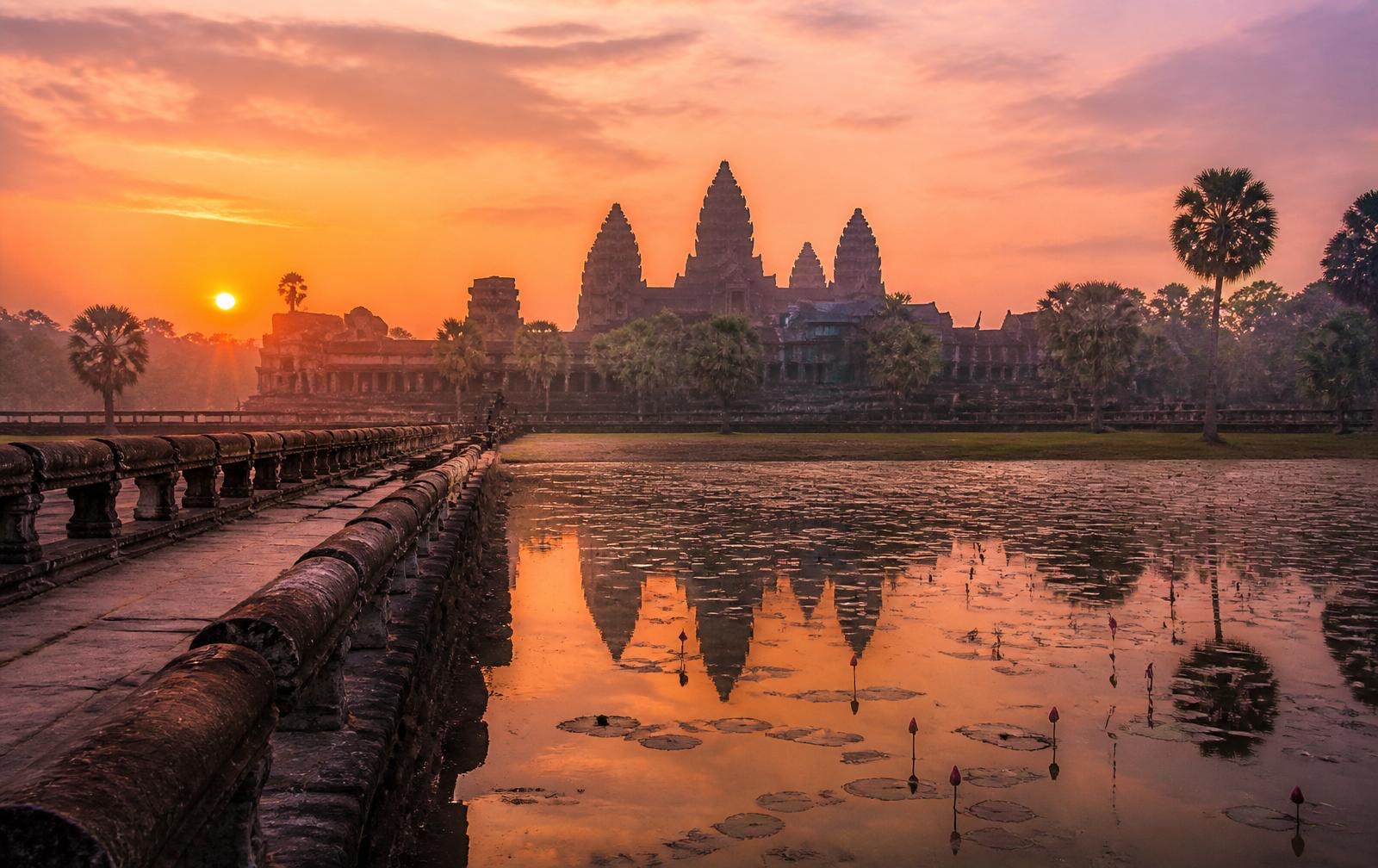
At five o'clock in the morning the air is thick with moisture and smells of damp earth and night-blooming jasmine as tuk-tuks rattle along the dark forest road towards Angkor Wat. Visitors cross the ancient moat on foot under a starlit canopy and gather in a quiet procession by the northern lily pond, waiting in near silence. As the darkness dissolves into shades of deep violet and apricot, the distinctive lotus-bud towers emerge against the sky, their silhouettes perfectly doubled on the glassy water.
That first dawn at Angkor Wat is a rite of passage for any global traveller, but it is merely the opening chapter of a much grander story. Spanning over four hundred square kilometres across the northern provinces of Cambodia, the Angkor Archaeological Park contains the stone remnants of the Khmer Empire, which dominated Southeast Asia between the ninth and fifteenth centuries.
To walk through these ruins is to step into an extraordinary dialogue between human engineering, religious devotion, and the relentless forces of tropical nature. Giant strangler figs drape themselves across crumbling doorways, stone faces gaze placidly over green jungle canopies, and intricate bas-reliefs tell immortal tales of gods and demons.
Whether you have a single day or a full week to explore, navigating this sprawling UNESCO World Heritage site requires a clear strategy. This comprehensive guide covers the essential masterpieces, the hidden outer temples, practical logistics, and the cultural context you need to truly appreciate one of humanity's greatest architectural achievements.
Quick Facts: Temples of Angkor
- Location: Siem Reap Province, Northwestern Cambodia
- Park Area: Approximately 400 square kilometres (150 square miles)
- Historical Era: Khmer Empire (9th to 15th centuries AD)
- Primary Religions: Hinduism (Vishnu/Shiva) evolving into Theravada Buddhism
- Architectural Highlights: Sandstone carven temples, mountain-temple pyramids, sprawling barays (reservoirs)
- Primary Gateway: Siem Reap city (6 to 10 kilometres south of the park entrance)
Understanding Angkor: History and Iconography
Before stepping onto the sandstone causeways, it pays to understand what you are looking at. The temples of Angkor were not built as congregational places of worship in the modern sense; they were earthly representations of Mount Meru, the sacred cosmic mountain that serves as the home of the gods in Hindu and Hindu-Buddhist cosmology.
Each successive Khmer king constructed his own state temple mountain to demonstrate his divine authority (the concept of Devaraja, or god-king) and ensure prosperity for his realm. Water management was central to this civilization: vast artificial lakes called barays were constructed alongside thousands of intricate canals, creating an agricultural powerhouse capable of sustaining up to one million people at its peak.
The Religious Evolution
The iconography of Angkor reflects a fascinating spiritual journey. Early monarchs were staunchly Hindu, dedicated primarily to Shiva or Vishnu. Angkor Wat itself was commissioned by King Suryavarman II in the early twelfth century as a grand Hindu temple dedicated to Vishnu.
By the late twelfth century, under the legendary reign of King Jayavarman VII, the empire shifted towards Mahayana Buddhism, giving rise to unique sites like Bayon and Ta Prohm. In later centuries, the empire converted to Theravada Buddhism, which remains the dominant religion in Cambodia today. You will frequently spot active Buddhist shrines inside ancient Hindu sanctuaries, tended by saffron-robed monks and local devotees offering fresh flowers and incense.
Key Iconography to Spot
As you wander the stone galleries, keep your eyes open for these recurring symbolic motifs:
- Apsaras and Devatas: Celestial dancers and female divinities. Angkor Wat alone features over 1,800 intricately carved apsaras, each with distinct hairstyles, jewellery, and facial expressions.
- Nagas: Multi-headed mythic serpents that act as guardians. They line causeways across moats, symbolizing the rainbow bridge connecting the human world to the realm of the gods.
- Garudas: Mythical bird-like creatures, the mount of Vishnu, often depicted gripping Nagas or supporting heavy stone cornices.
- The Churning of the Ocean of Milk: A masterpiece of Hindu narrative art. Look for gallery walls depicting gods (Devas) and demons (Asuras) using the giant serpent Vasuki as a rope to churn the cosmic ocean and retrieve the nectar of immortality (Amrita).
The Big Three: Angkor Wat, Bayon, and Ta Prohm
While the park contains hundreds of monuments, three central temples form the absolute core of any visit. Each possesses a distinct personality and architectural style.
Angkor Wat: The Supreme Masterpiece
Angkor Wat is the world's largest religious monument, an awe-inspiring synthesis of balance, symmetry, and epic scale. Enclosed by a moat two hundred metres wide, the temple complex covers 162 hectares. The central structure rises through three terraced tiers to five lotus-flower towers, reaching sixty-five metres above the ground.
Entering from the West Gate across the grand sandstone causeway, the sheer proportion of the site unfolds before you. The primary highlight is the outer gallery of bas-reliefs running along the ground floor. Spanning nearly eight hundred metres, these delicate carvings detail historical battles, judgment scenes of heaven and hell, and grand mythological epics.
Sunrise Strategy: Arrive at the ticket check by 5:00 am and head straight across the main causeway to the reflection pond on the left (north) side. To avoid the thickest crowds, once the sun pops over the central tower, skip the immediate photo session and head straight into the inner sanctuaries or the bas-relief galleries. Most visitors leave to eat breakfast at 6:30 am, leaving the vast stone galleries astonishingly peaceful during the early morning light.
Bayon: The Temple of Smiling Faces
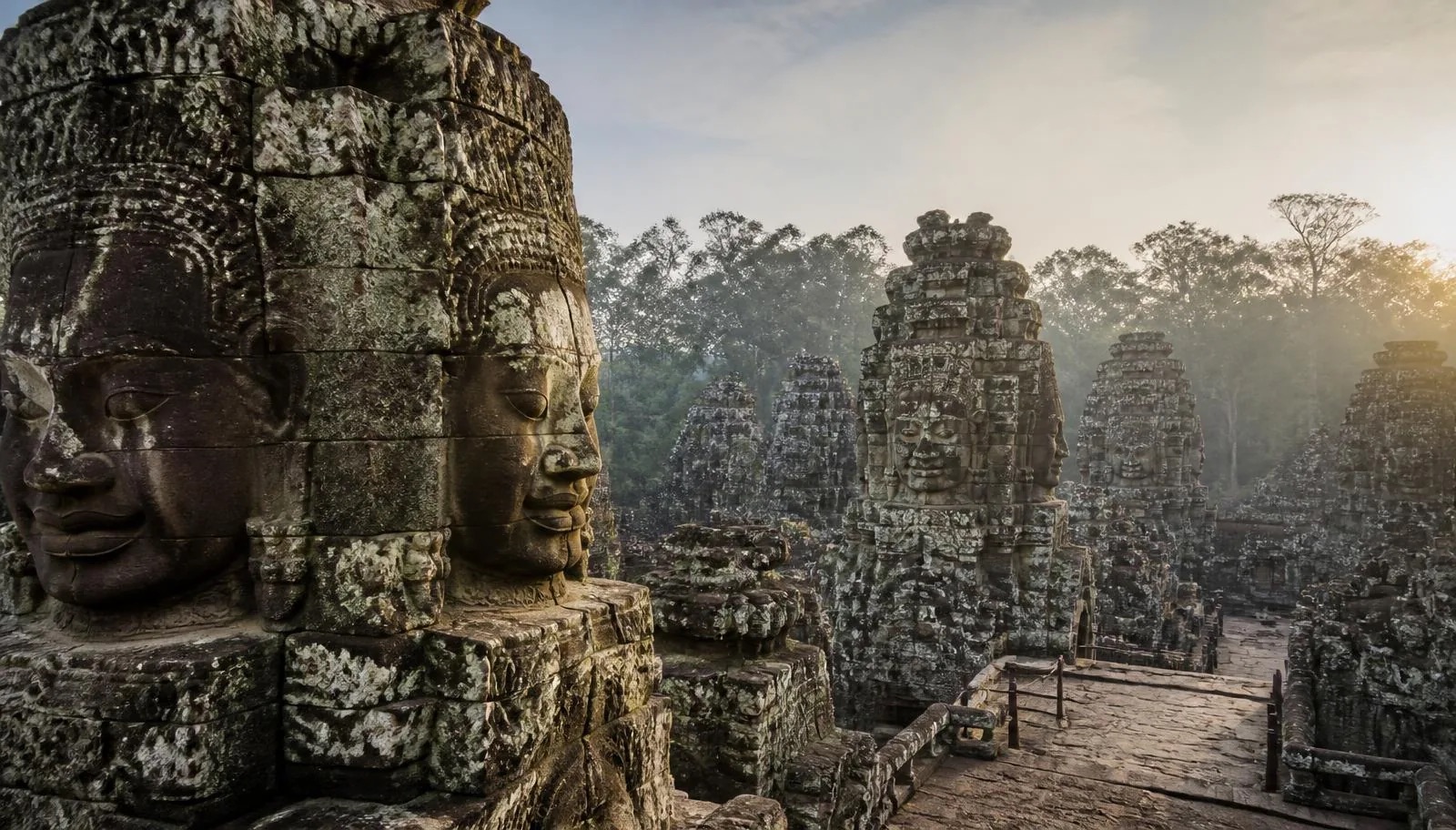
Located at the exact heart of the ancient walled city of Angkor Thom, Bayon is radically different from the structured harmony of Angkor Wat. Built by King Jayavarman VII, it feels like a dense forest of stone towers, each carved with four massive, serene faces gazing out to the cardinal directions.
There are fifty-four towers in total, bearing over two hundred faces with subtle, enigmatic smiles—often believed to be a combination of the Avalokiteshvara (the Bodhisattva of Compassion) and King Jayavarman VII himself. Walking through the upper terrace of Bayon places you face-to-face with these monumental stone sculptures.
Don't skip the lower outer walls of Bayon. Unlike the mythological themes of Angkor Wat, the bas-reliefs here paint a vibrant portrait of everyday twelfth-century Khmer life: market stalls, cockfights, naval warfare on the Tonle Sap lake, childbirth, and traditional cooking.
Ta Prohm: Nature’s Conquest
Famous worldwide as the "Tomb Raider temple," Ta Prohm offers the romantic image of Angkor that many travellers dream of: ancient ruins locked in a slow-motion battle with the surrounding jungle. Left largely as it was found by nineteenth-century French archaeologists, the temple is smothered by the massive root systems of silk-cotton trees and strangler figs.
The roots cascade over stone lintels like liquid wood, prizing apart massive blocks of moss-covered sandstone. Wandering through its narrow corridors, dark courtyards, and collapsed galleries feels like an active exploration. Visit early in the morning or late in the afternoon when light filters through the dense jungle canopy, casting dramatic shadows across the lichen-spotted walls.
The Petit Circuit: Essential Inner Loop
The Petit Circuit (Small Circuit) is a classic seventeen-kilometre trail that encompasses the core highlights surrounding Angkor Wat and Angkor Thom. It is the best itinerary for a first or second day in the park.
Baphuon, Terrace of the Elephants, and Leper King
Within the fortified walls of Angkor Thom, just north of Bayon, lies a cluster of brilliant monuments easily explored on foot:
- Baphuon: A steep mountain-temple dedicated to Shiva, accessed via a striking elevated sandstone causeway supported by columns. Climb to the top for expansive views over the surrounding canopy, and look out for the massive reclining Buddha carved into the rear stone wall during a sixteenth-century renovation.
- Terrace of the Elephants: A 350-metre-long grand viewing platform decorated with life-sized bas-reliefs of elephants and their mahouts. Khmer kings used this elevated terrace to view public ceremonies, royal parades, and military reviews.
- Terrace of the Leper King: Located at the northern end of the elephant terrace, featuring deep, zigzagging sandstone walls carved with intricate court scenes, nagas, and underworld figures. On top stands a weathered, enigmatic statue long associated with a legendary Khmer monarch afflicted with leprosy.
Ta Keo, Banteay Kdei, and Srah Srang
Moving east out of Angkor Thom along the Petit Circuit route, you will encounter three contrasting sites:
- Ta Keo: A massive, unadorned sandstone temple-mountain built around the year 1000. It was struck by lightning during construction, which was viewed as a bad omen, leaving its giant block terraces plain and uncarved. Climbing its impossibly steep steps offers a thrilling adventure and excellent views.
- Banteay Kdei: Translating to "A Citadel of Chambers," this sprawling Buddhist monastery is quieter and less restored than Ta Prohm. Crumbling lintels, delicate apsara carvings, and quiet tree-lined courtyards give it a wonderfully peaceful atmosphere.
- Srah Srang: Located directly across from the eastern entrance of Banteay Kdei, this massive royal reservoir measures 700 by 300 metres. The landing platform, guarded by sandstone lions and nagas, is an exceptional spot for watching a quiet, crowd-free sunrise or late afternoon breeze.
The Grand Circuit: Expanding Your Horizon
The Grand Circuit (Big Circuit) extends the loop out to twenty-six kilometres, taking you into the outer reaches of the core park area. It features vastly different architectural styles, quiet forest walks, and fascinating water-temples.
Preah Khan: The Royal Monastery
Similar in age and style to Ta Prohm, Preah Khan ("Royal Sword") was built by Jayavarman VII to honour his father. It was once a vast complex functioning as a Buddhist monastery, university, and town housing over 100,000 people.
Preah Khan is magnificent to explore. A long, straight corridor runs east-to-west through a series of diminishing doorways, creating a compelling optical illusion. Highlights include a unique two-storey stone building with round Mediterranean-style columns and massive strangler fig roots swallowing long vaulted galleries.
Neak Pean and Ta Som
Continuing along the Grand Circuit brings you to two unique sites:
- Neak Pean: A circular island temple set in the middle of a vast man-made reservoir (Jayatataka Baray). Visitors cross a long wooden footbridge over calm, lily-covered waters to reach the central shrine, which was originally built as a medical sanctuary where water was believed to cure physical ailments.
- Ta Som: A small, charming late-twelfth-century temple that mirrors the face towers of Bayon. Its most iconic sight is the eastern entry gopura (gatehouse), completely enveloped in the root structure of a massive sacred fig tree, framing a stone archway.
East Mebon and Pre Rup: The Brick Giants
The southeastern arc of the Grand Circuit features two grand, reddish-orange temple mountains constructed primarily from brick and laterite rather than sandstone:
- East Mebon: Built on what was once an island in the now-dry East Baray. It features large, beautifully preserved stone elephant statues standing guard at the corners of its upper terraces.
- Pre Rup: A towering multi-tiered pyramid built in the late tenth century. Its warm terra-cotta hues glow intensely during the golden hour, making it one of the most popular elevated spots for watching the sunset over the Cambodian countryside.
Far-Flung Masterpieces: Banteay Srei, Beng Mealea, and Roluos
If you have a three-day or seven-day park pass, venturing beyond the main circuits reveals some of the finest artistry and most atmospheric ruins in the entire kingdom.
Banteay Srei: The Citadel of Women
Located roughly twenty-five kilometres north of the main Angkor complex, Banteay Srei ("Citadel of Women") is widely considered the jewel of Khmer art. Constructed in 967 AD out of fine-grained pink sandstone, its carvings possess a level of detail, depth, and delicacy unmatched anywhere else in Southeast Asia.
Because the temple is built on a intimate scale compared to the gargantuan monuments of Angkor Wat or Bayon, the elaborate doorways, lintels, and pediments are right at eye level. The intricate carvings depict vivid scenes from the Ramayana and Mahabharata epics with extraordinary precision. Combining a visit here with a trip to the nearby Landmine Museum or Banteay Srei Butterfly Centre makes for a memorable half-day excursion.
Beng Mealea: Jungle Exploration
Situated about forty kilometres east of the main Angkor temples, Beng Mealea offers a raw, unrestored wilderness experience. Built in the same architectural style as Angkor Wat during the twelfth century, this massive site remains largely enveloped by dense jungle and piled high with fallen sandstone blocks.
Wooden walkways elevated above the rubble allow you to navigate through ruined galleries, collapsing towers, and mossy courtyards. It receives a fraction of the visitors found at Ta Prohm, making you feel like an early explorer discovering a lost city buried deep in the forest.
The Roluos Group: The Birth of Angkor
Located thirteen kilometres southeast of Siem Reap, the Roluos Group contains the oldest major temples built by the Khmer Empire, dating from the late ninth century when the capital was known as Hariharalaya.
The three key temples include Bakong, a impressive multi-tiered sandstone pyramid that established the template for later temple-mountains; Preah Ko, known for its fine stucco decorative work and bull statues; and Lolei, which sits atop an island in a former reservoir. Visiting Roluos offers crucial historical context for how Khmer architecture evolved over four centuries.
Crowd Strategy and Beat-the-Heat Logistics
Exploring ancient ruins in tropical humidity requires smart pacing. Between 11:00 am and 2:30 pm, temperature readings inside sandstone courtyards often soar past thirty-five degrees Celsius with overwhelming humidity.
The Split-Day Strategy
The absolute best way to experience Angkor is to break your day into two distinct sessions:
- Morning Session (5:00 am – 10:30 am): Start early for sunrise or beat the tour buses at the outer temples. Light is spectacular for photography, and temperature levels are comfortable.
- Midday Break (11:00 am – 2:30 pm): Return to your hotel in Siem Reap. Eat a long lunch, swim in a pool, rest in air conditioning, and recharge your energy.
- Afternoon Session (3:00 pm – 6:30 pm): Return to the park as the heat begins to break. The late afternoon golden hour lights up sandstone carvings beautifully, leading into sunset.
Managing Sunset Expectations
Phnom Bakheng is the most famous sunset location in the park. Sitting on a hilltop overlooking Angkor Wat, its upper terrace offers panoramic views over the jungle canopy. However, safety regulations limit access to the upper level to just 300 visitors at a time, resulting in long queues and crowded conditions on top.
Instead of queuing at Phnom Bakheng, consider these peaceful alternative sunset options:
- Watch the warm light blanket the brick towers of Pre Rup.
- Sit along the quiet, grassy banks of Srah Srang reservoir to watch the sky reflect across calm waters.
- Take a serene sunset boat ride along the ancient moat surrounding Angkor Thom.
How Many Days Do You Need?
Angkor Passes are typically issued in one-day, three-day, and seven-day options. Choosing the right duration depends on your personal interest in history and your tolerance for temple exploration.
1-Day Highlights Itinerary
If you only have one day, focus strictly on the icons. Start with sunrise at Angkor Wat, visit the smiling faces of Bayon in Angkor Thom, walk through the jungle roots at Ta Prohm, and finish with late afternoon light at Pre Rup or Banteay Kdei.
3-Day Classic Itinerary (Recommended)
A three-day pass allows for a comfortable, balanced pace with plenty of time to rest during the heat of the day:
- Day 1: The Petit Circuit (Angkor Wat sunrise, Angkor Thom, Bayon, Baphuon, Ta Prohm).
- Day 2: The Grand Circuit (Preah Khan, Neak Pean, Ta Som, East Mebon, Pre Rup).
- Day 3: Outer Treasures (Early morning drive to Banteay Srei, stopping at Beng Mealea or the Roluos Group on the way back).
7-Day Deep Dive Itinerary
For photography enthusiasts, historians, and slow travellers, a seven-day pass unlocks complete flexibility. You can revisit your favourite temples at different times of day to catch optimal lighting, explore distant sites like Kbal Spean ("River of a Thousand Lingas"), and explore lesser-visited ruins deep in the forest without feeling rushed.
Transport Options Compared
Selecting the right transport mode impacts your comfort, flexibility, and overall enjoyment of the park.
| Transport Mode | Pros | Cons | Best For |
|---|---|---|---|
| Tuk-Tuk (Remorque) | Open-air breeze, highly flexible, comfortable, affordable daily rate, local driver knowledge. | Exposed to dusty roads and rain; slower travel to far-flung outer temples like Banteay Srei. | 1 to 3 travellers exploring Petit and Grand Circuits. |
| Private Car / Minivan | Air-conditioned comfort between stops, protected from dust/rain, fast transport to distant sites. | Higher cost tier, isolated from ambient outdoor sounds and countryside atmosphere. | Families, groups, hot season visits, long trips to Banteay Srei and Beng Mealea. |
| Bicycle / E-Bike | Complete freedom, peaceful travel along forest paths, eco-friendly, budget option. | Physically demanding in extreme heat and humidity; limited range for outer sites. | Fit solo travellers and couples exploring the flat inner core around Angkor Wat. |
Temple Etiquette, Dress Code, and Respect
The temples of Angkor are active religious and cultural sanctuaries deeply revered by the Cambodian people. Following basic etiquette ensures a respectful experience for local worshippers and aids ongoing conservation efforts.
Angkor Code of Conduct
- Dress Appropriately: Shoulders and knees MUST be covered for both men and women. Loose, lightweight cotton trousers or long skirts and t-shirts with sleeves are ideal. Wrapping a scarf over bare shoulders is often rejected by guards at the entrance to top-tier sanctuaries like the Bakan tower of Angkor Wat.
- Do Not Touch the Carvings: Sandstone bas-reliefs and apsara sculptures are easily damaged by skin oils. Never touch, lean against, or climb on ancient stone surfaces.
- Respect the Monks: Monks are highly respected in Khmer culture. Always ask permission before taking their photograph. Women must never touch a monk or hand items directly to them.
- Mind the Sacred Spaces: Keep your voice quiet inside enclosed corridors and active worship areas. Step over raised door sills rather than standing directly on them, as they traditionally keep evil spirits out.
- Litter and Wildlife: Carry all rubbish back to your tuk-tuk or bin stations. Do not feed the monkeys near Angkor Thom; they can become aggressive and carry diseases.
Final Thoughts on the Magic of Angkor
No matter how many photos, documentaries, or travel books you consume before arriving in Siem Reap, nothing quite prepares you for the sheer atmospheric presence of Angkor. It is a place where human artistry reached dizzying heights, leaving behind an indelible stone legacy that continues to inspire wonder centuries after its golden age.
Take your time, pace yourself against the tropical heat, and give yourself space to sit quietly on an ancient stone terrace. Beyond the grand monuments and popular sunrise spots lies a living landscape rich in history, spirituality, and quiet magic waiting to be discovered.
Explore in Depth
If you want to go deeper on this trip, these companion guides pick up where this one leaves off.
More Cambodia guides
Cambodia Itinerary: How Many Days for Angkor Wat?
How many days you need for Angkor Wat and beyond — a 10-day Cambodia itinerary with temple passes, Phnom Penh, the islands and daily costs.
Things to Do in Cambodia: Angkor, Phnom Penh, Coast
Beyond Angkor: Phnom Penh's palace and memorials, Battambang's bamboo railway, Kampot pepper country, the southern islands and the wild…
Siem Reap Guide: Beyond the Angkor Temples
Siem Reap beyond Angkor: markets, floating villages, Tonle Sap, food and how to plan rest days around temple mornings.