Cambodia Itinerary: How Many Days for Angkor Wat?
How many days you need for Angkor Wat and beyond — a 10-day Cambodia itinerary with temple passes, Phnom Penh, the islands and daily costs.
In this guide
- Why Cambodia belongs on your Southeast Asia list
- Best time to visit Cambodia
- Angkor Wat and Siem Reap: doing the temples properly
- Phnom Penh: history you shouldn't skip
- The coast and islands: Sihanoukville, Koh Rong, Kep
- Battambang and the countryside
- Getting around Cambodia
- Is Cambodia expensive to visit? What a trip actually costs
- Cambodian food beyond fish amok
- Visas, money, safety, scams
- How many days do you need in Cambodia? A suggested 10-day itinerary
- Final thoughts
- Explore Cambodia in Depth
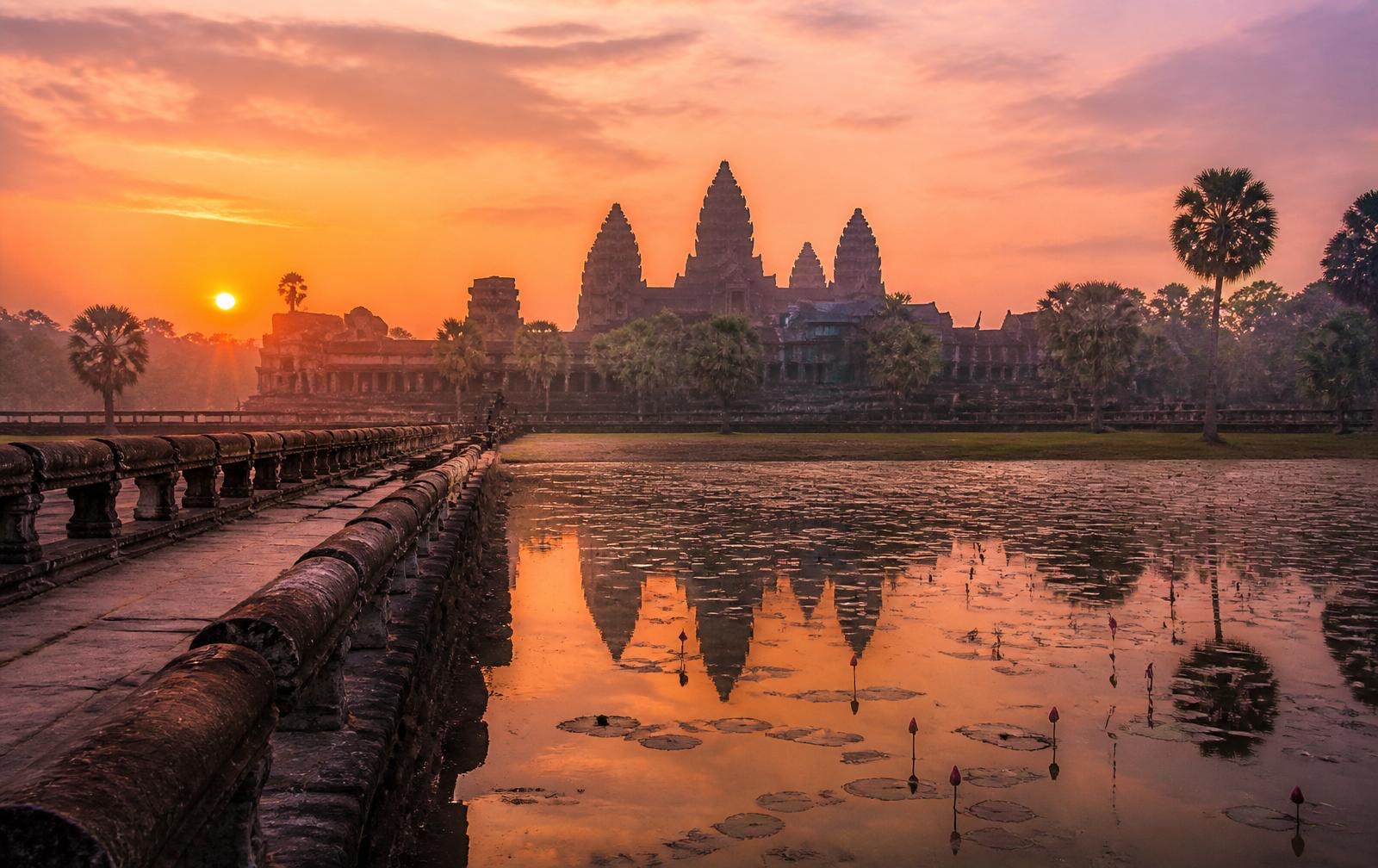
Arrive by tuk-tuk at 4:45 in the morning to watch the sun rise behind Angkor Wat. As the sky turns pink and those five towers appear in silhouette above the lotus pond, it becomes clear why travellers on the Southeast Asia trail insist you don't skip this country. Cambodia remains one of the most underrated countries in the region. It's cheaper than Thailand, quieter than Vietnam, and holds one of the wonders of the ancient world.
This guide covers Angkor Wat and Siem Reap properly (including the temples nobody talks about), Phnom Penh and its heavy but essential history, the coast and islands, real costs in 2026, and the practical realities of getting around a country where "the road" often means a red-dirt track.
Why Cambodia belongs on your Southeast Asia list
People come to Cambodia for Angkor Wat and then stay for reasons they didn't expect. It's the friendliness — genuinely, not the trained-hospitality kind. It's the fact that a plate of fish amok in a Siem Reap night market still costs $3.50, that the beaches on Koh Rong Samloem look like the Thai islands did twenty years ago, and that outside a handful of tourist hubs you can travel for a week and see maybe five other Western faces.
It's also a country that carries an extraordinary amount of recent trauma with grace. Between 1975 and 1979, the Khmer Rouge regime murdered somewhere between 1.7 and 2.2 million Cambodians — roughly a quarter of the population — in genocide, forced labour, starvation and executions at sites now known collectively as the Killing Fields. Almost every Cambodian over the age of fifty has a direct family loss. You cannot travel here without engaging with that history at some level, and you shouldn't try to. But the country you actually meet on the ground is not defined by it — it's a young, hopeful, hustling place where 60% of the population is under thirty and Angkor-era pride runs deep.
Best time to visit Cambodia
Cambodia has two seasons, and the difference matters more than you'd think.
Dry season (November to April) is the classic tourist window. Skies are blue, humidity drops, Angkor Wat photographs like a postcard, and the islands are perfect. The trade-off is prices: hotels in Siem Reap can double between mid-December and early January, and the temple complex genuinely gets crowded — queues of 40 minutes to climb the upper level of Angkor Wat itself are possible in peak season. December to February is also cooler (28–32°C during the day, 22°C at night) which sounds mild until you realise you'll be walking around ruins for eight hours.
March and April are the hottest months. Siem Reap regularly hits 38–40°C in April and the temples become genuinely punishing after 10am. But April is also Khmer New Year (Chaul Chnam Thmey, usually 13–16 April), which is one of the most joyful festivals you'll ever accidentally end up in — expect nationwide water fights, temple offerings, and every guesthouse offering free amok.
Wet season (May to October) is an underrated window. Rain typically falls in dramatic afternoon bursts of an hour or two, not all-day drizzle. The countryside turns brilliant green, the moats at Angkor fill and reflect the temples, waterfalls run, and prices drop 30–50%. Book the shoulder months — May, June, September, October — and you get the best of it. Avoid mid-August through September on the coast if you're chasing beach days: storms can knock out ferries to the islands for two or three days at a stretch.
Angkor Wat and Siem Reap: doing the temples properly
Angkor Wat is not a single temple. It's the flagship of a 400 km² complex containing around 70 major temples and hundreds of smaller structures, built by the Khmer Empire between roughly the 9th and 15th centuries. Most travellers "see Angkor" in a single day, which is genuinely a shame. Buy the three-day pass.
The passes and prices
Tickets are only sold at the official Angkor Enterprise centre (about 4km east of central Siem Reap) or online at angkorenterprise.gov.kh. Don't buy from tour operators; there's no discount and you risk fakes.
- 1-day pass: $37 USD
- 3-day pass: $62 USD (valid for any 3 days within a 10-day window)
- 7-day pass: $72 USD (valid for any 7 days within a month)
The 3-day pass is the sweet spot for 95% of travellers. Bring a passport for the ticket photo and keep the ticket visible on a lanyard — you'll be checked at every temple entrance.
The best time of day to see Angkor Wat
The famous sunrise photo is famous for a reason, but it's also become a scene: 1,500+ people crammed shoulder-to-shoulder at the reflection pond by 5:15am. If that's your priority, arrive by 4:45am and go left (north pond) rather than right — same shot, half the crowd.
The trick most tour groups don't use: skip sunrise entirely on day one and start at Bayon or Ta Prohm around 7am, then hit Angkor Wat itself between 3:30pm and 5:30pm. Late afternoon light on the western galleries is glorious, the bas-reliefs are far better lit, and the crowds are 80% smaller. A good split for a three-day pass is sunrise once, mid-morning starts twice, and sunset at Pre Rup or Phnom Bakheng once.
The temples to prioritise
Angkor Wat (12th century, Suryavarman II): the world's largest religious monument. Don't just take the photo — walk the outer galleries clockwise to see the 800m of bas-reliefs, particularly the Churning of the Ocean of Milk on the eastern wall. Climb the central Bakan tower (limited daily tickets, timed entries, closed on Buddhist holy days; conservative dress required — shoulders and knees covered).
Bayon (late 12th century, Jayavarman VII): 216 giant serene stone faces staring at you from 54 towers. Go early — the light is best before 9am and the crowds thicken after that.
Ta Prohm: the "Tomb Raider" temple, deliberately left semi-swallowed by silk-cotton and strangler-fig trees. Cinematic in the extreme. Get there at 7am or after 4pm; the mid-morning bus tours can make it unbearable.
Banteay Srei: 25km northeast, so most day-trippers skip it. Don't. The pink sandstone carvings are the finest in the entire complex — every square inch feels like jewellery. Pair it with the Cambodia Landmine Museum (a short drive away, run by a former Khmer Rouge child soldier who has cleared over 50,000 landmines — donate).
Preah Khan, Neak Pean, Ta Som, Pre Rup: the "Grand Circuit" temples that most one-day tours skip. Half the crowds, and Preah Khan in particular is atmospheric and huge.
Getting around Angkor
A tuk-tuk for a full temple day costs $18–25 and comfortably seats two. Your driver waits at each temple. For the smaller, further-out sites (Banteay Srei, Beng Mealea, Kbal Spean), you'll need a car — $50–70 for a full day with driver. A tip of $5–10 on top is customary; it's roughly what your driver clears after fuel and rental. Cycling is possible but underestimated: temperatures and distances chew through the least-fit travellers by lunchtime, and the ring roads have real traffic.
Siem Reap itself
Siem Reap has quietly become one of Southeast Asia's best small cities. Pub Street is fine for one loud night. But the real Siem Reap is Kandal Village, the arts quarter around Wat Bo, and the night markets away from the tourist strip. Eat at Marum (a training restaurant for at-risk youth, run by the Tree Alliance NGO), Cuisine Wat Damnak (elevated modern Khmer, listed on Asia's 50 Best Restaurants) or any of the family-run amok spots near Wat Damnak. Coffee culture is superb — try Little Red Fox or Sister Srey.
Phnom Penh: history you shouldn't skip
Most Angkor-first travellers give Phnom Penh a single hurried day and regret it. Give it two full days.
The morning that matters is spent at the Tuol Sleng Genocide Museum (S-21) and the Choeung Ek Killing Fields, in that order. Tuol Sleng is a former high school converted by the Khmer Rouge into a torture and interrogation prison; between 1975 and 1979, roughly 20,000 people were held here, of whom only twelve are known to have survived. The exhibition is careful, respectful and unflinching. The audio guide ($5 on top of the $5 entry ticket) is essential — it's narrated by survivors and features testimony from one of the few former guards to have spoken publicly.
Choeung Ek, 15km south of the city, is where prisoners from S-21 were taken to be executed. It's one of hundreds of Killing Fields sites across Cambodia; roughly 20,000 mass graves have been identified nationwide. The memorial stupa contains more than 8,000 skulls. The audio guide (again included) is an hour and a half of deeply affecting narration.
A tuk-tuk for the round trip from central Phnom Penh runs $18–22 including waiting. Do S-21 first (opens 8am) and Choeung Ek in the afternoon; the order matters emotionally. Don't schedule anything social for that evening. And please: no smiling selfies at either site. Cambodians visit both regularly to mourn family members, and being photographed grinning at a mass grave is precisely as bad as it sounds.
Phnom Penh's other days are lighter. The Royal Palace and Silver Pagoda ($10, closes for lunch 11am–2pm, strict dress code) are genuinely worth it — the palace is still the working residence of King Norodom Sihamoni. The National Museum ($10) houses the world's best collection of Khmer sculpture, and pairs beautifully with a temple trip. The riverside promenade at sunset, with locals doing aerobics classes to Cambodian pop, is one of the best free shows in Southeast Asia.
The coast and islands: Sihanoukville, Koh Rong, Kep
Let's get Sihanoukville out of the way. Between 2018 and 2020, Chinese investment turned this once-scruffy backpacker port into a casino city with dozens of half-finished high-rises. Most of the old backpacker soul is gone. Treat Sihanoukville as a two-hour transit point to the islands, nothing more. Buses from Phnom Penh (5–6 hours, $10–15 with Giant Ibis or Virak Buntham) drop you close to the ferry pier.
The islands are the reason to come. Koh Rong is bigger and busier, with a lively backpacker scene at Koh Touch and quieter beaches at Long Set (4K Beach) — bioluminescent plankton on moonless nights are genuinely magical. Koh Rong Samloem, forty minutes further, is the quieter, more couples-and-honeymooners sibling. Saracen Bay is beautiful but developed; Sunset Beach and M'Pai Bay are what you came for. Ferries run 2–3 times daily from Sihanoukville ($20–25 return); book online with GTVC, Speed Ferry Cambodia or Buva Sea a day ahead.
Honest recommendation: skip Sihanoukville-region entirely and head to Kep instead. It's a sleepy old French colonial resort town 3 hours by bus from Phnom Penh, famous for its crab market — you pick a live crab, they pull kampot pepper straight off the vine behind the restaurant, and you eat a superb meal for $10. Nearby Rabbit Island (Koh Tonsay) is a $10 boat ride and has bungalow beaches with zero wifi and $8 lobster.
Battambang and the countryside
Cambodia's second city sees a fraction of the tourists it deserves. Battambang is 3 hours by bus from Siem Reap and offers French colonial streets, superb street food, the Bamboo Train (a plank-and-motor contraption running on abandoned rails — touristy but a joy), and Phnom Sampeau — a limestone mountain that houses the sobering Killing Cave and, at sunset, a "bat cave" from which literally millions of bats stream out for exactly 45 minutes. It's one of the best free wildlife spectacles on earth. Get there by 5pm with a cold Angkor beer.
Getting around Cambodia
Buses: Cambodia's long-distance bus network is functional, cheap and dominated by two operators worth trusting: Giant Ibis and Virak Buntham. Both have proper toilets, wifi that occasionally works, and departure times close to advertised. Phnom Penh to Siem Reap is 6–7 hours ($15–20). Phnom Penh to Sihanoukville is 5 hours ($10–15). Book on 12go.asia or Bookmebus a day ahead.
Domestic flights: A short-hop flight from Phnom Penh to Siem Reap (45 minutes, $70–110 on Cambodia Angkor Air or AirAsia) saves you a day if your budget stretches. Note that Siem Reap's old in-town airport closed in 2023; flights now use the new Siem Reap-Angkor International Airport 40km east of town — roughly an hour and a $35 fixed-fare taxi ride into Siem Reap proper.
Tuk-tuks in cities: Use the PassApp or Grab apps rather than negotiating on the street. Phnom Penh cross-town rides are typically $2–4; Siem Reap central rides $1.50–3. The apps show the fare upfront and there's no haggling.
Trains: Cambodia's Royal Railway now runs a genuinely charming Phnom Penh–Sihanoukville service (7 hours, $6–8) and Phnom Penh–Battambang–Poipet on weekends. Slow, scenic and cheap, but bus is faster.
Driving yourself: Don't. Cambodian traffic outside the tourist bubble is genuinely chaotic. Hire a driver ($40–60 per day including fuel).
Is Cambodia expensive to visit? What a trip actually costs
Cambodia remains one of the cheapest countries in Southeast Asia, on a par with Laos and cheaper than Thailand or Vietnam. All prices in USD (the country runs on a dual USD/Cambodian riel economy; you'll rarely see riel above about $5).
- Backpacker ($30–45/day): dorm bed $6–10, street food and market meals $2–4, tuk-tuk shares, temple pass split over multiple days.
- Mid-range ($70–120/day): a genuinely lovely private room with pool at a boutique hotel for $35–60, restaurant meals $6–12, private tuk-tuk driver for the day, a beer or two.
- Comfortable ($180–300/day): 4-star hotels or a Belmond Angkor-style splurge, a private car with driver-guide, cocktail bars, the best restaurants.
The big-ticket items to budget for: the 3-day Angkor pass ($62), a full-day tuk-tuk-and-driver ($22), a Battambang or Kep round trip ($25–40 in transport), the island ferry return ($20–25). A three-week comprehensive Cambodia trip on the mid-range budget runs comfortably under $2,500 all-in per person, excluding international flights.
Cambodian food beyond fish amok
Khmer cuisine is subtler than Thai, less pork-heavy than Vietnamese, and criminally under-exported. Do not leave without trying:
- Fish amok — the national dish, a delicate coconut-and-kroeung fish curry steamed in a banana leaf. $3.50 at a market, $8 at a nice restaurant.
- Lok lak — stir-fried beef in a pepper-lime sauce, over rice with a fried egg.
- Nom banh chok — fresh rice noodles with a green-fish gravy, eaten for breakfast. Look for it at morning markets.
- Kampot pepper crab — Kep's signature dish. Fresh crab, still-green kampot peppercorns on the vine, garlic, butter. $8–12 for a plate.
- Beef loc lac and prahok ktis — the latter is a pungent fermented-fish dip eaten with raw vegetables and pork. An acquired taste, well worth acquiring.
Draft Angkor Beer costs 50¢–$1 at happy hour in Siem Reap. Cambodian coffee is superb — try any Feel Good Coffee or Brown Coffee outlet.
Visas, money, safety, scams
Visas: Most Western passports (US, UK, Australia, Canada, EU) get a 30-day tourist visa on arrival for $30 USD cash, plus a passport photo. Or apply for the eVisa in advance at evisa.gov.kh for $36 — smoother, no queue, and worth the extra $6. There are scam sites that look identical; always double-check the URL is gov.kh.
Money: USD is used interchangeably with Cambodian riel; ATMs dispense both. Small change comes back in riel (roughly 4,000 riel to $1). Bring clean, non-torn USD notes — Cambodian vendors regularly refuse anything with a small tear or ink mark. Card acceptance is widespread in tourist hubs but rural areas are cash-only.
Safety: Cambodia is broadly safe for tourists. Petty theft (bag-snatching from motorbikes in Phnom Penh; leave bags off your shoulder in tuk-tuks) is the main risk. Violent crime against tourists is rare. Do not touch or step off marked paths in rural areas — Cambodia still has an estimated 4–6 million uncleared landmines and unexploded ordnance, particularly near the Thai border and around Battambang. Trust the signs.
Common scams: the "closed temple" scam (a "guide" tells you Angkor Wat is closed today and offers an alternative — it isn't); overpriced tuk-tuks at the airport (use PassApp/Grab); the "special milk powder for orphanage" scam near markets. Do not visit orphanages as tourists — the practice is exploitative and every reputable NGO in the country has been asking travellers to stop for over a decade.
Health: Tap water isn't drinkable; stick to filtered or bottled. Dengue is present year-round; use repellent. Malaria risk is very low in tourist areas — check current CDC guidance for rural border regions. Standard travel vaccinations (Hep A, typhoid, tetanus) are recommended.
How many days do you need in Cambodia? A suggested 10-day itinerary
- Day 1: Arrive Siem Reap. Kandal Village dinner and Pub Street loop.
- Day 2: Angkor sunrise, Angkor Wat interior, Bayon before lunch. Nap. Pre Rup for sunset.
- Day 3: Ta Prohm at 7am, Preah Khan, Neak Pean, Ta Som. Cooking class in the afternoon.
- Day 4: Banteay Srei, Landmine Museum, Beng Mealea (jungle temple). Massage on return.
- Day 5: Bus or fly to Phnom Penh. Riverside dinner.
- Day 6: Tuol Sleng in the morning, Choeung Ek in the afternoon. Quiet evening.
- Day 7: Royal Palace, National Museum, Central Market. Rooftop drinks.
- Day 8: Bus to Kep. Crab-market lunch and sunset.
- Day 9: Rabbit Island day trip or Kampot pepper farm tour.
- Day 10: Return to Phnom Penh for departure — or extend to Koh Rong Samloem for a beach week.
Extend to 14 days and you can slot in Battambang between Siem Reap and Phnom Penh, catch the bat cave sunset, and take the bamboo train. Extend to 21 days and add Ratanakiri or Mondulkiri in the northeast — Cambodia's genuinely wild frontier, home to ethical elephant sanctuaries like the Elephant Valley Project and some of the last old-growth forest in the Mekong basin.
Final thoughts
If you're planning a first Southeast Asia trip and can only pick one country, Cambodia is not the obvious answer — Thailand or Vietnam are. But if you're on your second or third trip, or you want a country where a modest budget still buys you a sense of arriving somewhere before the rest of the world caught up, Cambodia is unbeatable. Angkor Wat alone justifies the flight. Everything else — the kindness of the people, the food, the beaches, the weight of the history — is what makes you come back.
For more Southeast Asia planning, see our Thailand travel guide, our Bangkok guide and our deep dive on Sak Yant tattoos in Thailand. Cambodia pairs beautifully with two weeks in Thailand or Vietnam either side.
Explore Cambodia in Depth
This guide is the overview. When you are ready to plan a specific part of the trip, these deep-dives go further, and each one links back here:
More Cambodia guides
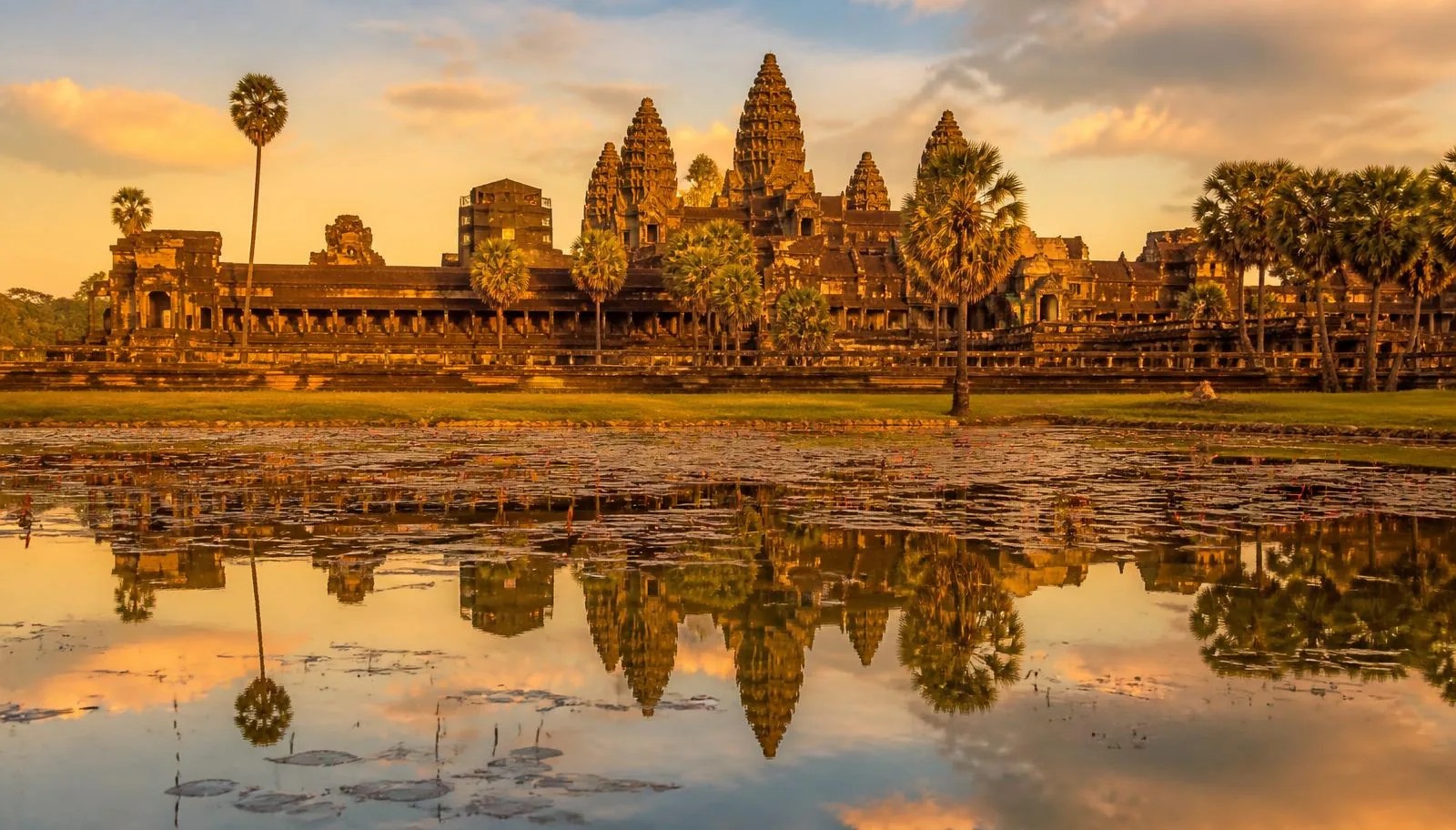
Things to Do in Cambodia: Angkor, Phnom Penh, Coast
Beyond Angkor: Phnom Penh's palace and memorials, Battambang's bamboo railway, Kampot pepper country, the southern islands and the wild…
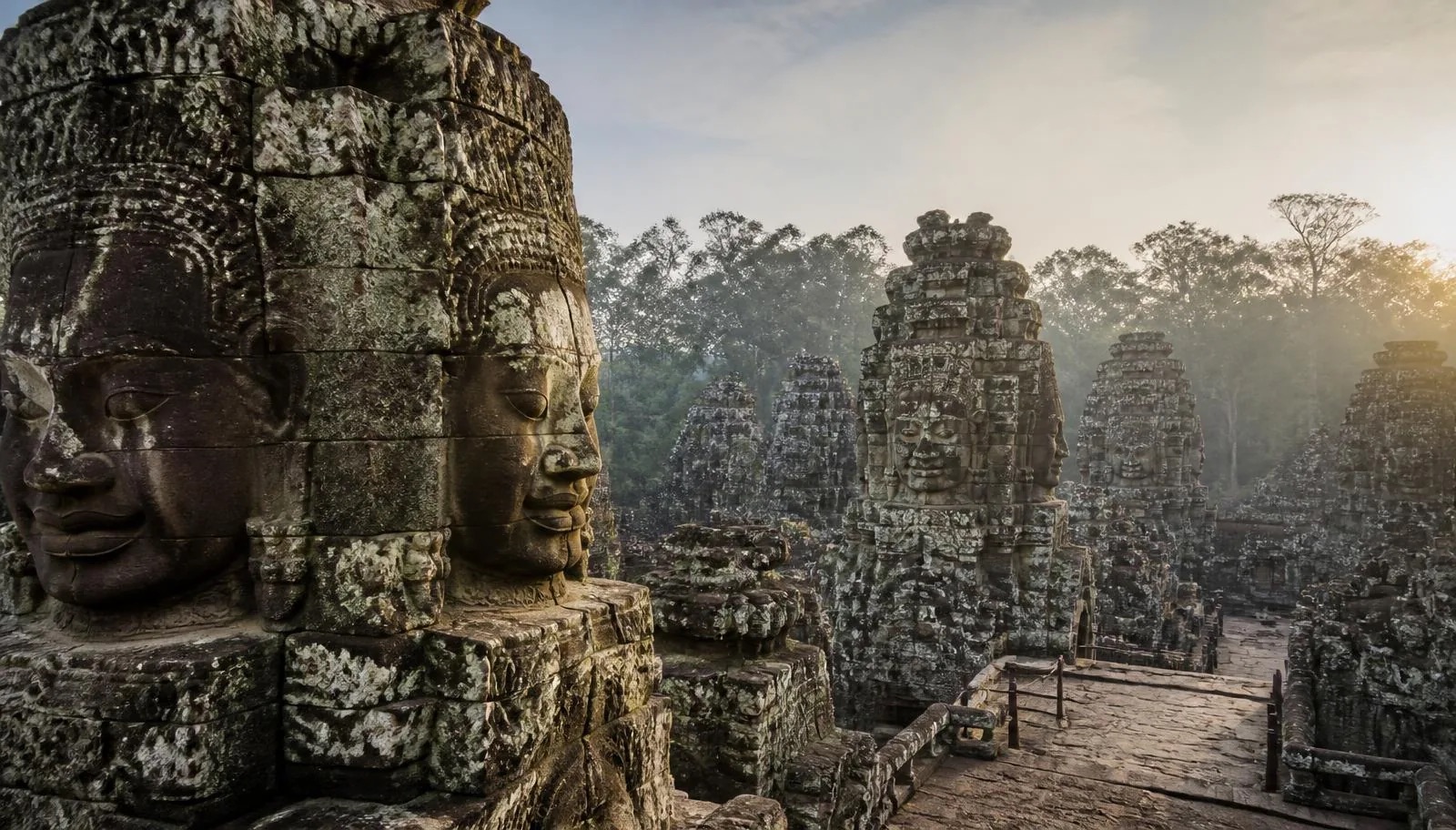
Temples of Angkor: A Complete Guide for Visitors
A temple-by-temple guide to Angkor: Angkor Wat, the Bayon faces and Ta Prohm, plus ticket types, timing and how many days you need.
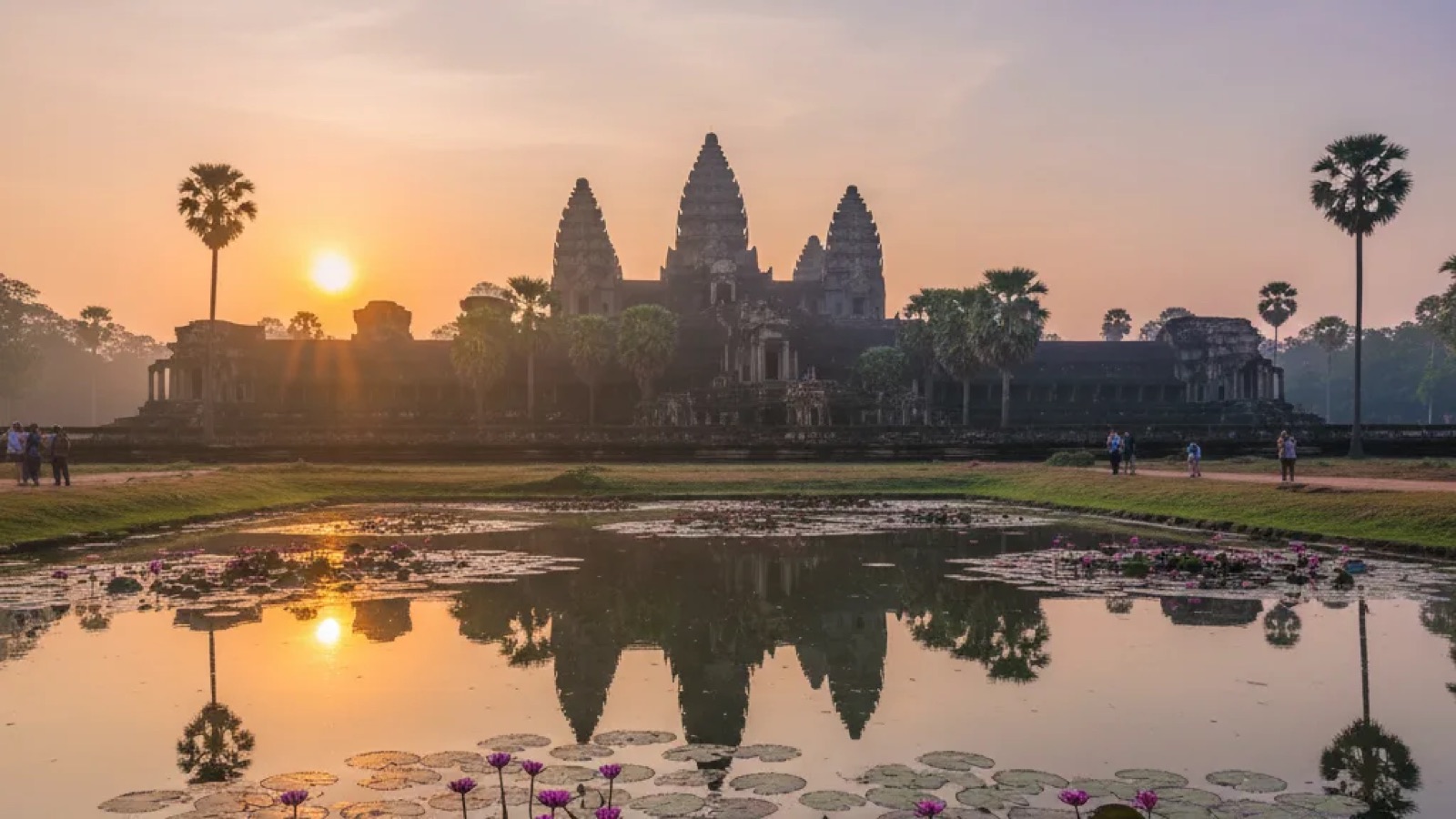
Siem Reap Guide: Beyond the Angkor Temples
Siem Reap beyond Angkor: markets, floating villages, Tonle Sap, food and how to plan rest days around temple mornings.