Things to Do in Cambodia: Angkor, Phnom Penh, Coast
Beyond Angkor: Phnom Penh's palace and memorials, Battambang's bamboo railway, Kampot pepper country, the southern islands and the wild Cardamom Mountains.
In this guide
- Quick Facts: Cambodia
- 1. The Temples of Angkor and Siem Reap
- 2. Exploring Cambodia’s Remote Ancient Ruins
- 3. Phnom Penh: Capital History, Culture, and Reflection
- 4. Battambang: Arts, Colonial Charm, and Countryside
- 5. The Southern Coast and Tropical Islands
- 6. The Wild East and Highland Ecotourism
- 7. Cambodian Food, Markets, and Cultural Festivals
- Comparing Cambodia’s Primary Travel Regions
- Practical Tips for Travelling in Cambodia
- Final Thoughts on Exploring Cambodia
- Explore in Depth
This guide is part of our Cambodia Itinerary: How Many Days for Angkor Wat? — start there for the overview, when to go and how to get around.
At six in the morning on the muddy embankment of the Tonle Sap, sunlight bleeds through a sky the colour of bruised plums. A solitary fisherman pushes off in a narrow wooden skiff, his paddle disturbing the glassy water with soft, rhythmical splashes while the distant hum of a tuk-tuk engine sputters to life. Quiet moments like this, as the morning wakes up over a submerged forest, show how Cambodia steals your heart not through grand spectacles, but through its subtle, enduring rhythms.
For many travellers, Cambodia enters the imagination purely as the backdrop to Angkor Wat. While those colossal 12th-century stone towers are indeed world-defining, stepping beyond the temple gates reveals a country of astonishing depth, resilience, and natural splendour. From the dusty, art-infused lanes of Battambang to the pristine white sand bays of the southern islands, Cambodia offers an extraordinary mix of ancient heritage and laid-back Southeast Asian warmth.
This guide walks you through the essential experiences across the Kingdom of Wonder. Whether you are navigating the chaotic markets of Phnom Penh, trekking through the rain-drenched Cardamom Mountains, or eating fresh blue crab seasoned with green peppercorns on the coast, these are the absolute best things to do across Cambodia.
Quick Facts: Cambodia
- Official Name: Kingdom of Cambodia
- Capital City: Phnom Penh
- Primary Language: Khmer (English widely spoken in tourism hubs)
- Currency: Cambodian Riel (KHR) and US Dollar (USD used alongside local currency)
- Climate: Tropical monsoon climate; dry season runs from November to April, wet season from May to October
- Getting Around: PassApp/Grab for city tuk-tuks, overland express buses, and coastal speed ferries
1. The Temples of Angkor and Siem Reap
No journey to Cambodia is complete without spending several days deciphering the immense stone ruins of the Khmer Empire. Based out of the vibrant town of Siem Reap, exploring the Angkor Archaeological Park feels like wandering through a living storybook of ancient architecture and tangled jungle roots.
Angkor Wat and Bayon
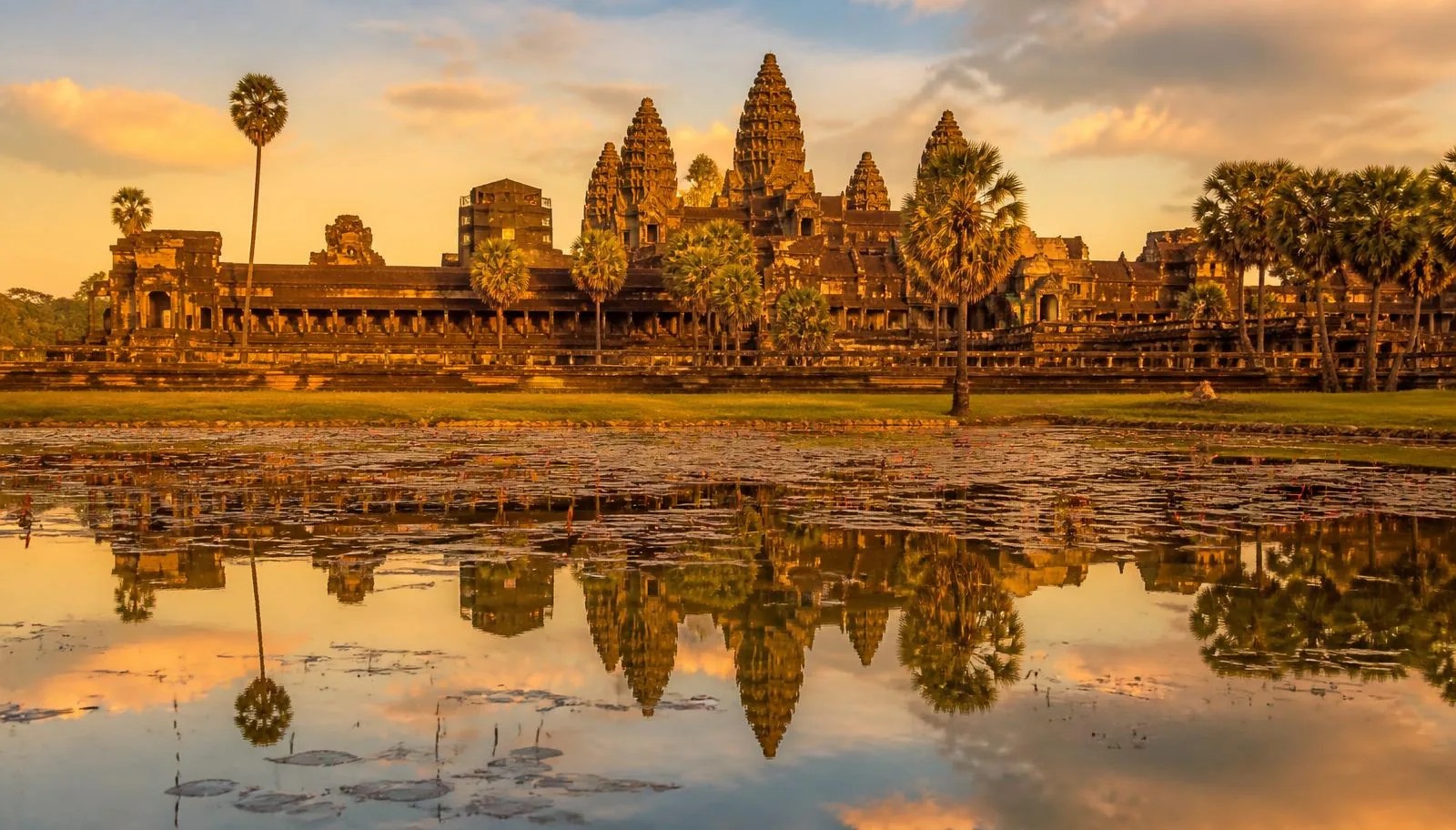
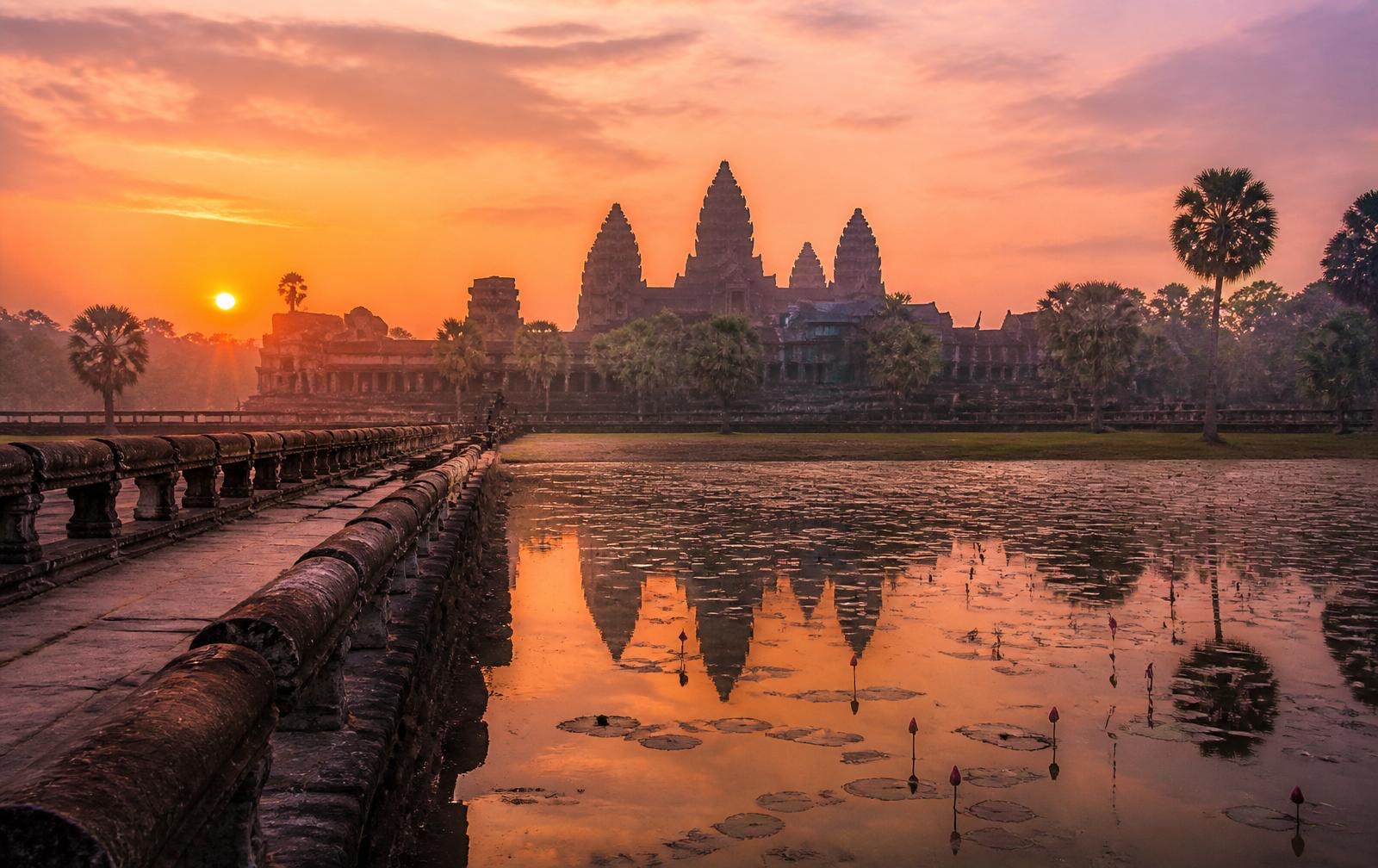
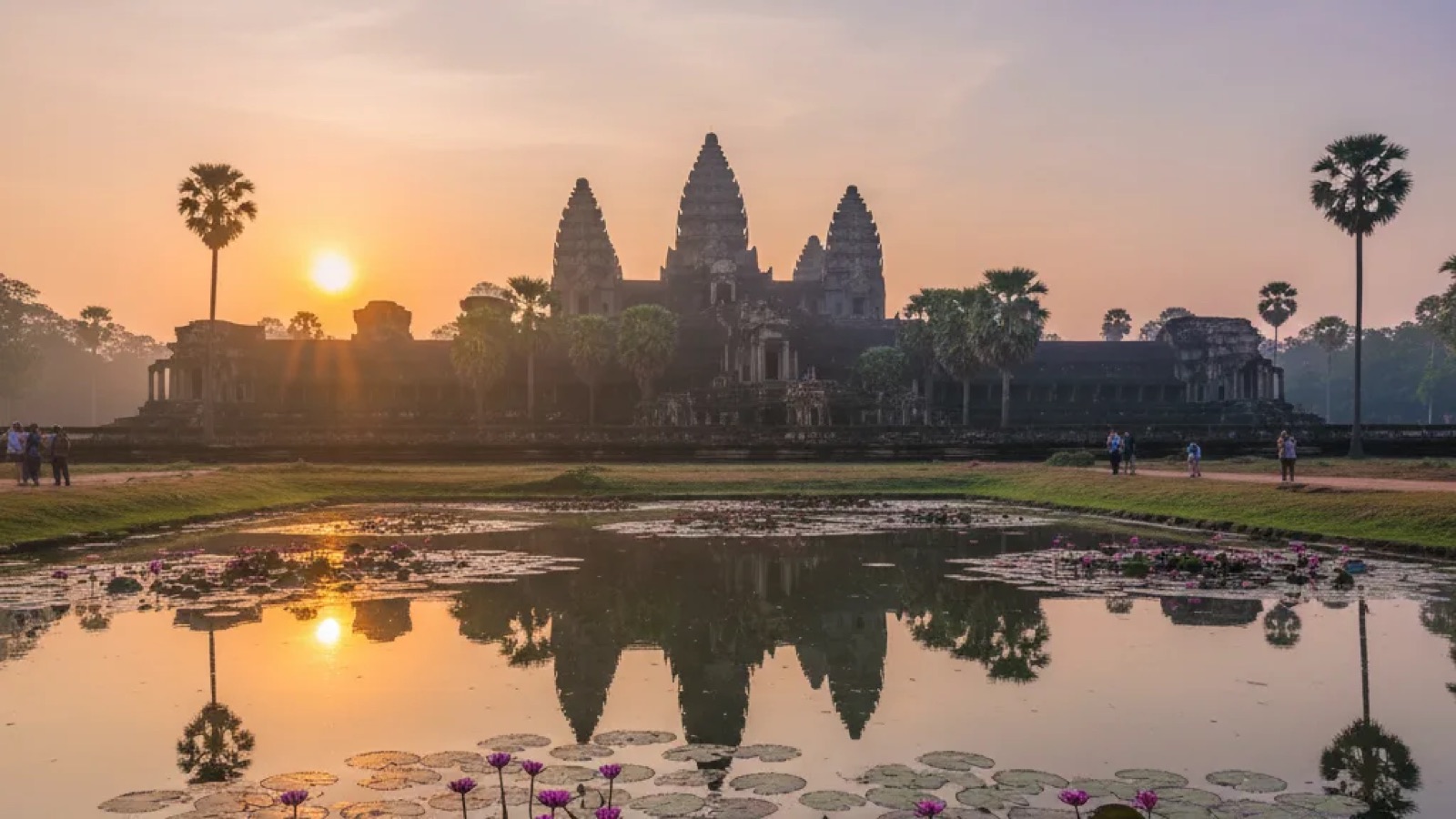
Standing before Angkor Wat at dawn is a rite of passage. The lotus-bud towers stand in dark silhouette against a sky that shifts from indigo to orange, reflected perfectly in the lily-covered moat. Constructed under King Suryavarman II in the 12th century, it remains the largest religious monument on Earth. Take time to walk the outer gallery walls, where detailed bas-reliefs carve out epic battles and heavenly scenes across hundreds of metres of sandstone.
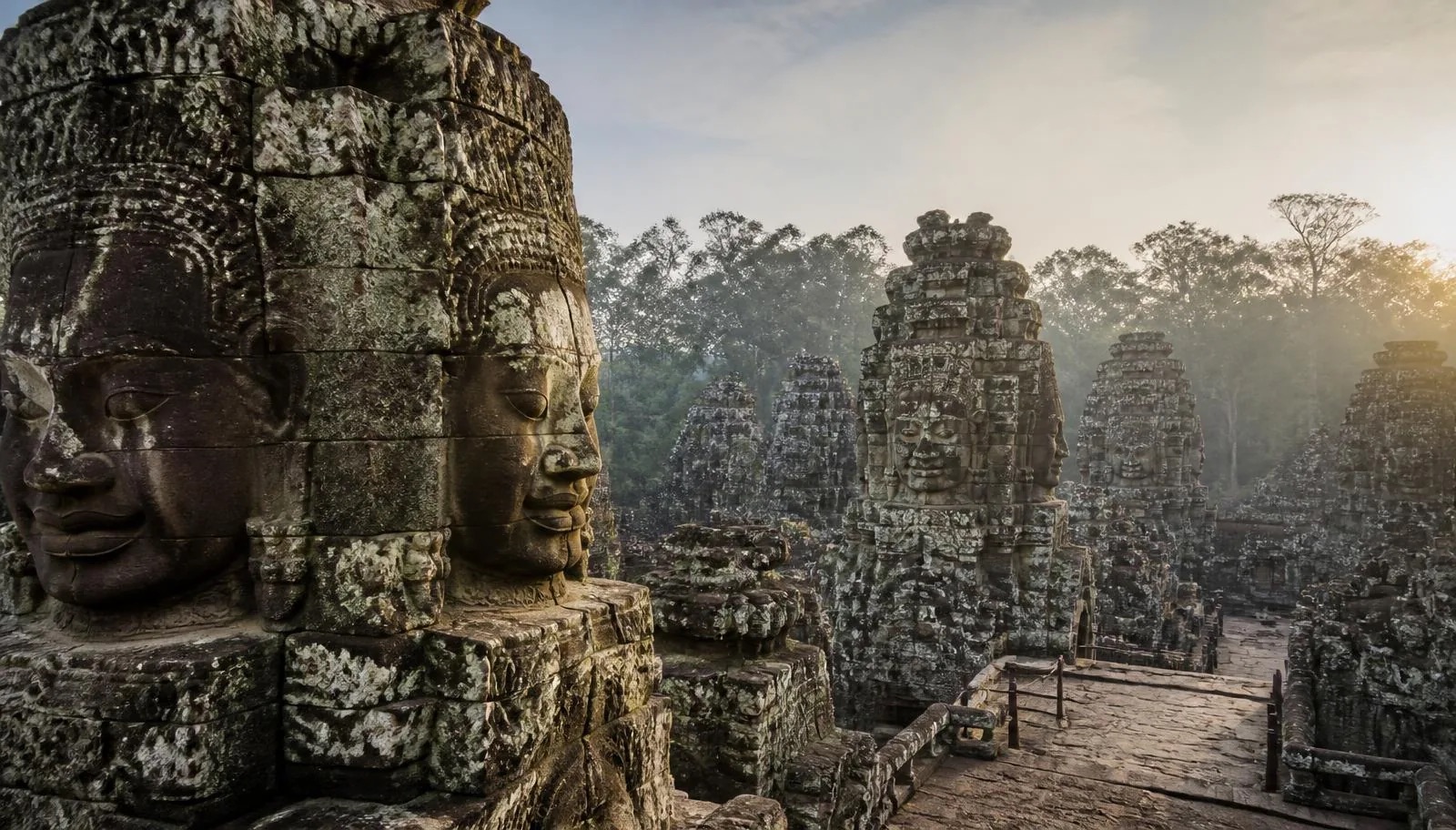
A short ride north brings you to Angkor Thom and its miraculous centrepiece, the Bayon Temple. Here, 216 giant stone faces carved into 54 towers gaze down at visitors with serene, enigmatic smiles. The sensory experience of weaving through the tight, shadowy passageways of Bayon while giant carved eyes track your every step is utterly unforgettable.
Ta Prohm and Banteay Srei
If Angkor Wat showcases human engineering at its apex, Ta Prohm demonstrates the crushing power of nature. Left largely as it was rediscovered, giant silk-cotton and strangler fig trees twist their massive root systems directly through stone doorways and lintels, pinning the ancient corridors to the earth. Arrive early in the morning when mist hangs in the canopy to experience its true, eerie quietude before the afternoon crowds arrive.
Located roughly 25 kilometres northeast of the main complex, Banteay Srei is a smaller, exquisitely preserved temple built from pink-hued sandstone. Known as the "Citadel of the Women," its delicate, three-dimensional wall carvings of Hindu divinities are so fine they look as though they were chiselled from wood rather than stone.
Siem Reap Town and Tonle Sap Floating Villages
Siem Reap itself has matured from a dusty frontier town into a sophisticated base for exploration. Beyond the late-night buzz of Pub Street, you will find tranquil riverside walks, artisan craft boutiques, and world-class dining. It is also the gateway to the vast Tonle Sap Lake, Southeast Asia's largest freshwater body.
Taking a wooden boat out to the floating and stilted villages, such as Kampong Phluk or Kampong Khleang, offers a fascinating glimpse into life dictated entirely by seasonal water level changes. Entire communities—complete with schools, churches, and markets—float seamlessly across the water or perch on timber stilts up to ten metres high.
- Highlights: Sunrise at Angkor Wat, giant smiling faces at Bayon, ancient roots at Ta Prohm, delicate carvings at Banteay Srei.
- Best Time to Visit: November to February for cooler, drier weather during temple walking.
- Tip: Buy a multi-day Angkor Pass (three-day passes offer the best flexibility) to explore at a relaxed pace without temple fatigue.
2. Exploring Cambodia’s Remote Ancient Ruins
While the main temples of Angkor attract millions, those willing to travel further afield into the northern provinces are rewarded with atmospheric ruins free from tour groups, set deep within tranquil rural settings.
Koh Ker and Preah Vihear
Deep in the northern jungle lies Koh Ker, a brief 10th-century capital of the Khmer Empire that was hidden beneath thick vegetation for centuries. The standout structure here is Prasat Thom, a striking seven-tiered pyramid temple that looks strikingly like something built by the Mayans in Central America. Climbing the wooden staircase to the top rewards you with expansive views across the forest canopy.
Perched dramatically on a high cliff edge in the Dângrêk Mountains on the border with Thailand sits Preah Vihear. This ancient temple complex spans an 800-metre axis up the mountain side, offering incredible sweeping vistas over the Cambodian plains below. The sanctuary features some of the finest stone causeways and carvings in Khmer history, with a location second to none.
Banteay Chhmar
Tucked away near the northwestern border, Banteay Chhmar is one of Cambodia’s largest and least visited temple complexes. Overgrown with foliage and largely unrestored, this massive 12th-century site features incredible bas-reliefs depicting ancient battles and multi-armed Avalokiteshvara figures. Visiting Banteay Chhmar feels like embarking on a genuine archaeological expedition, where you are far more likely to meet local cows than fellow tourists.
3. Phnom Penh: Capital History, Culture, and Reflection
Phnom Penh is a city of sharp, compelling contrasts. Perched at the confluence of the Mekong, Tonle Sap, and Bassac rivers, the Cambodian capital blends grand French-colonial boulevards, shimmering royal palaces, and bustling street markets with the tragic memory of its modern history.
Royal Palace and Silver Pagoda
The golden spires of the Royal Palace dominate the city's riverfront skyline. Still the official residence of the King of Cambodia, visitors can wander through beautifully manicured tropical gardens and admire traditional Khmer architecture. Adjacent to the palace grounds lies the Silver Pagoda, named after its floor, which is paved with over five thousand solid silver tiles. Inside sits a celebrated Emerald Buddha alongside a life-sized golden Buddha encrusted with thousands of diamonds.
National Museum and Riverfront
Housed in a stunning terracotta building surrounding a courtyard garden, the National Museum of Cambodia holds the world’s most impressive collection of Khmer sculpture, bronze, and ceramics spanning pre-Angkorian eras to the peak of the empire. Afterwards, stroll along Sisowath Quay, the lively riverfront promenade where locals gather in the late afternoon to play shuttlecock, do group aerobics, and watch river barges navigate the currents.
Tuol Sleng Genocide Museum and Choeung Ek
To understand modern Cambodia, one must honour the dark history of the Khmer Rouge regime, which devastated the nation between 1975 and 1979. A visit to these sites requires quiet respect and emotional readiness.
The Tuol Sleng Genocide Museum (S-21), a former high school converted into a brutal interrogation facility, stands as a solemn monument to human resilience. The preserved classrooms, stark cell blocks, and poignant photographs of victims tell a chilling story. A short drive outside the city leads to the Choeung Ek Genocidal Centre, one of the many sites known as the Killing Fields. Today, it is a serene memorial garden marked by a central glass stupa housing thousands of human skulls—a powerful space dedicated to remembrance, peace, and solemn reflection.
4. Battambang: Arts, Colonial Charm, and Countryside
Sitting along the tranquil Sangker River, Battambang is Cambodia's second city, yet it retains a delightfully slow-paced, small-town atmosphere. Renowned for its well-preserved French-colonial architecture, vibrant artistic community, and lush agricultural surrounds, Battambang offers an authentic taste of Cambodian rural life.
The Bamboo Railway and Countryside Rides
One of Battambang’s most unique local attractions is the famous Norry, widely known as the Bamboo Train. Consisting of a simple bamboo platform powered by a small engine resting on two sets of metal wheels, these improvised vehicles zip down rusty single-track train rails through bright green rice paddies. When two cars meet from opposite directions, the car carrying fewer passengers is quickly disassembled, set beside the track, and reassembled once the other passes.
Riding a bicycle or tuk-tuk through the surrounding countryside reveals small family workshops producing rice paper, banana chips, fish paste, and coconut candy. The local villagers are extraordinarily warm, often waving from wooden stilt houses as you travel along shady dirt paths.
Phare Circus Arts and Phnom Sampeau
Battambang is the creative beating heart of Cambodia, largely thanks to Phare Ponleu Selpak, a non-profit vocational training centre that empowers disadvantaged youth through performing arts, visual arts, and music. Attending a circus performance in their big top is a thrilling experience, combining traditional folklore, modern drama, high-flying acrobatics, and infectious live drumming.
As evening approaches, head to the base of Phnom Sampeau, a striking limestone mountain southwest of the city. Just as dusk settles over the horizon, millions of bats pour out of a high cave opening in an endless, undulating black ribbon across the sky—a breathtaking natural spectacle that lasts for nearly an hour.
5. The Southern Coast and Tropical Islands
When you are ready to swap temple ruins for coastal breezes and tropical waters, Cambodia’s southern coast provides a wonderfully laid-back escape defined by seafood markets, river towns, and pristine island beaches.
Kampot Pepper Country and Kep Crab Market
The quiet riverside town of Kampot is famous worldwide for producing some of the finest peppercorns on the planet. Surrounded by lush, green plantations, Kampot pepper is highly prized by international chefs for its aromatic depth and distinct spicy notes. Taking a tour of a local pepper farm to taste fresh green, black, red, and white peppercorns straight from the vine is an absolute must.
A short drive down the coast brings you to Kep, a tranquil seaside town famous for its historic French villas and its bustling seaside market. At the Kep Crab Market, fishermen wade into the shallows to pull up wooden traps filled with fresh blue swimmer crabs. Order a plate cooked on the spot over open woks, tossed generously with fresh Kampot green pepper strands, and enjoy it while sitting right above the crashing waves.
Koh Rong and Koh Rong Samloem
For pristine, white-sand paradise, take a fast ferry out from the mainland to the islands of the Koh Rong Archipelago.
- Koh Rong: The larger island, renowned for its expansive, powder-white beaches such as Long Set Beach, vibrant beach bars, snorkeling spots, and luminous bioluminescent plankton that light up the night sea.
- Koh Rong Samloem: A quieter, more serene neighbor, ideal for complete relaxation. Saracen Bay offers crystal-clear turquoise waters and soft sand sheltered in a tranquil crescent moon bay.
Sihanoukville Coastal Gateway
While Sihanoukville has transformed rapidly into a major port and commercial center in recent years, it remains the essential maritime transit hub. Modern fast ferries depart regularly from its piers, whisking travelers across the Gulf of Thailand to the pristine sands of Koh Rong and Koh Rong Samloem in under forty minutes.
6. The Wild East and Highland Ecotourism
Venture east across the Mekong River toward the hilly, forested provinces of Mondulkiri and Ratanakiri to experience a totally different side of Cambodia—one of cooler breezes, red dirt roads, cascading waterfalls, and rolling forest sanctuaries.
Mondulkiri and Ratanakiri Highlands
In Mondulkiri, the rolling grassy hills and pine forests contrast sharply with the tropical lowlands. The province is home to ethical elephant sanctuaries where rescued domestic elephants, freed from decades of hard logging or tourist-riding labour, can roam freely through protected forest valleys. Here, visitors can observe these majestic animals foraging, bathing in natural rivers, and socialising in peace without riding or forced performance.
Further north lies Ratanakiri, famous for its dense jungles, indigenous minority villages, and Yeak Laom Volcanic Lake. This perfectly round, emerald-green crater lake sits surrounded by thick jungle, offering exceptionally clear, fresh water ideal for a refreshing swim on a hot afternoon.
The Cardamom Mountains
Spanning southwestern Cambodia, the vast Cardamom Mountains represent one of the largest remaining contiguous rainforests in Southeast Asia. Home to rare wildlife including Asian elephants, sun bears, and clouded leopards, the region has become a premier destination for community-based ecotourism. Guided treks, kayaking through mangrove estuaries, and staying in forest lodges allow travellers to support local conservation initiatives while exploring untouched wilderness.
7. Cambodian Food, Markets, and Cultural Festivals
Khmer cuisine is nuanced, herb-forward, and beautifully balanced, relying on fresh ingredients, fragrant pastes (known as kroeung), fermented fish, and subtle citrus notes rather than aggressive chilli heat.
Essential Khmer Dishes to Try
When dining across the country, make sure to seek out these traditional culinary staples:
- Fish Amok: Cambodia’s national dish—fresh river fish coated in a fragrant coconut curry paste infused with lemongrass, kaffir lime, and turmeric, steamed inside a folded banana leaf cup until smooth and custard-like.
- Beef Lok Lak: Tender strips of stir-fried beef served over fresh lettuce, tomatoes, and onions, accompanied by a signature dipping sauce made from fresh lime juice, salt, and cracked Kampot black pepper.
- Nom Banh Chok: A beloved breakfast staple, consisting of fresh rice noodles topped with a light, lemongrass-infused green fish curry sauce and heaps of fresh wild herbs, cucumber, and banana flower.
- Lort Cha: Pan-fried short rice pin noodles tossed with garlic, bean sprouts, green onions, and beef, topped with a fried egg and sweet chilli sauce.
Markets and Cultural Celebrations
Exploring local markets is an essential part of daily life in Cambodia. In Phnom Penh, duck beneath the striking Art Deco yellow dome of the Central Market (Phsar Thmei) to browse gems, textiles, and street food stalls, or wander the dense aisles of the Russian Market (Phsar Toul Tom Poung) for hand-carved souvenirs, silk scarves, and antiques.
Timing your visit around a national festival provides deep insight into local traditions:
- Chaul Chnam Thmey (Khmer New Year): Celebrated mid-April, this major holiday sees families return home, clear temples, and engage in joyful street-wide water fights to wash away bad luck for the year ahead.
- Bon Om Touk (Water Festival): Occurring in October or November, this festival marks the miraculous reversal of the Tonle Sap River flow. Millions gather in Phnom Penh to watch colourful dragon boat races along the riverfront accompanied by fireworks and illuminated boats.
Comparing Cambodia’s Primary Travel Regions
To help you structure your perfect journey through Cambodia, this simple overview breaks down what each region offers best:
| Region | Primary Highlights | Travel Vibe | Ideal For | Recommended Stay |
|---|---|---|---|---|
| Siem Reap & Angkor | Angkor Wat, Bayon, Ta Prohm, Tonle Sap Lake | Historic, bustling, vibrant nightlife | First-time visitors, temple buffs, culture lovers | 3 to 5 Days |
| Phnom Penh | Royal Palace, National Museum, Tuol Sleng, Riverfront | Fast-paced, contrasting, deeply historic | History enthusiasts, urban explorers, foodies | 2 to 3 Days |
| Battambang | Bamboo Railway, Phare Circus, Bat Caves, Countryside | Artistic, rural, quiet, authentic | Art lovers, cyclists, off-the-beaten-path travellers | 2 Days |
| Southern Coast & Islands | Kampot Pepper, Kep Crab Market, Koh Rong Beaches | Relaxed, tropical, coastal, laid-back | Beachgoers, island hoppers, food enthusiasts | 4 to 7 Days |
| Eastern Highlands | Elephant Sanctuaries, Crater Lakes, Rainforests | Wild, adventurous, eco-focused | Nature lovers, hikers, animal welfare advocates | 3 to 4 Days |
Practical Tips for Travelling in Cambodia
Smooth travel through Cambodia relies on a few practical preparation steps:
- Visas: Most nationalities can easily obtain a 30-day Tourist Visa on arrival at international airports and major land borders, or apply online for an e-Visa in advance. Ensure your passport has at least six months' validity remaining.
- Dual Currency System: While the Cambodian Riel (KHR) is the official currency, US Dollars are widely accepted everywhere. Small changes are typically given back in Riel. Ensure paper USD bills are clean and crisp, as torn or marked bills may be rejected by merchants.
- Temple Etiquette: When visiting active religious sites and ancient temples (especially Angkor), cover your shoulders and knees. Choose light, breathable long pants or maxi skirts, and wear easily removable footwear when entering pagoda buildings.
- Getting Around: Ride-hailing apps like PassApp and Grab make securing local tuk-tuks in Phnom Penh and Siem Reap completely hassle-free without haggling over fares. For intercity travel, reliable express mini-buses operate across all main highways.
- Hydration and Sun Care: Tropical heat and humidity can be intense year-round. Carry a refillable water bottle, use broad-spectrum sun protection, and plan your outdoor sight-seeing for early mornings and late afternoons.
Final Thoughts on Exploring Cambodia
Cambodia is far more than an open-air museum of ancient stone monuments—it is a country of extraordinary warmth, living traditions, and stunning landscapes. From the quiet majesty of watching dawn break over the towers of Angkor Wat to eating fresh blue crab on the edge of the Gulf of Thailand, every corner of this kingdom delivers moments of profound connection and joy.
Take your time, slow down to the local rhythm, talk with the people you meet along the road, and allow yourself to fall under the quiet, enduring spell of Southeast Asia's Kingdom of Wonder.
Explore in Depth
If you want to go deeper on this trip, these companion guides pick up where this one leaves off.
More Cambodia guides
Cambodia Itinerary: How Many Days for Angkor Wat?
How many days you need for Angkor Wat and beyond — a 10-day Cambodia itinerary with temple passes, Phnom Penh, the islands and daily costs.
Temples of Angkor: A Complete Guide for Visitors
A temple-by-temple guide to Angkor: Angkor Wat, the Bayon faces and Ta Prohm, plus ticket types, timing and how many days you need.
Siem Reap Guide: Beyond the Angkor Temples
Siem Reap beyond Angkor: markets, floating villages, Tonle Sap, food and how to plan rest days around temple mornings.