Iguazu Falls: Brazil or Argentina Side?
Which side of Iguazu to visit, how many days you need, the Devil's Throat, boat rides, border crossing and the best seasons.
In this guide
- Quick Facts
- The Big Question: Brazil or Argentina?
- The Brazilian Side: Panoramic Perfection
- The Argentine Side: Total Immersion
- Into the Mist: Boat Rides and Jungle Trails
- The Locals: Wildlife at Iguazu
- Gateway Towns and Border Logistics
- When to Visit: Seasons and Crowds
- A Photographer's Guide to Iguazu
- Optional Extra: Itaipu Dam
- Explore in Depth
- Frequently Asked Questions
- Final Thoughts
This guide is part of our Brazil Travel Guide: Rio, Iguazu and the Amazon — start there for the overview, when to go and how to get around.
The roar hits you first. Not a sound, but a physical pressure in your chest. Then comes the spray, a fine, cool mist that clings to your skin and clothes long before you see the source. On the Argentine side, the final few hundred metres of the metal gangway run above the Iguazu River, churning brown and deceptively calm below. Then the path turns, and there it is: the Garganta del Diablo, the Devil's Throat. It isn't just a waterfall; it's a vast, semicircular abyss where the world seems to end, where the river simply ceases to be, plunging into a cauldron of white fury and perpetual cloud. The sheer, violent power of it is something no photo can ever prepare you for.
That raw, visceral experience is at the heart of any visit to Iguazu Falls. But the first question on every traveller's mind is always the same: Brazil or Argentina? It’s the classic dilemma, and the honest answer isn’t a simple choice. They are two completely different experiences of the same natural wonder. This guide aims to answer that question. We’ll break down the panoramic grandeur of the Brazilian side versus the up-close immersion of the Argentine side, cover the logistics of crossing the border, talk wildlife, photography, and how to plan your time to truly do justice to the "Great Waters".
Quick Facts
- Location: A chain of hundreds of waterfalls on the Iguazu River, straddling the border between Misiones Province, Argentina, and the state of Paraná, Brazil.
- Getting There: Fly into Foz do Iguaçu/Cataratas International Airport (IGU) on the Brazilian side, or Cataratas del Iguazú International Airport (IGR) on the Argentine side. Both have good connections to major hubs like São Paulo, Rio de Janeiro, and Buenos Aires.
- Getting Around: Public buses and taxis are readily available to connect the gateway towns (Puerto Iguazú in Argentina, Foz do Iguaçu in Brazil) with their respective park entrances. Taxis can also easily transport you across the international border.
- Language & Currency: Brazilian Portuguese and the Real in Brazil; Spanish and the Argentine Peso in Argentina. Credit cards are widely accepted in the parks and towns, but having some local cash is always wise.
- Best Time to Visit: The shoulder months of April-May and September-October offer a great balance of pleasant weather and strong water flow. December to March is the hottest, wettest, and busiest season.
The Big Question: Brazil or Argentina?
Let's get this out of the way first. If you have the time, you absolutely must see both sides. Asking which is "better" is like asking if you prefer the frame or the painting itself. You need both to appreciate the full picture. They are not competing views, but complementary halves of a single, staggering whole.
Think of it like this: Brazil gives you the panorama, Argentina gives you the experience.
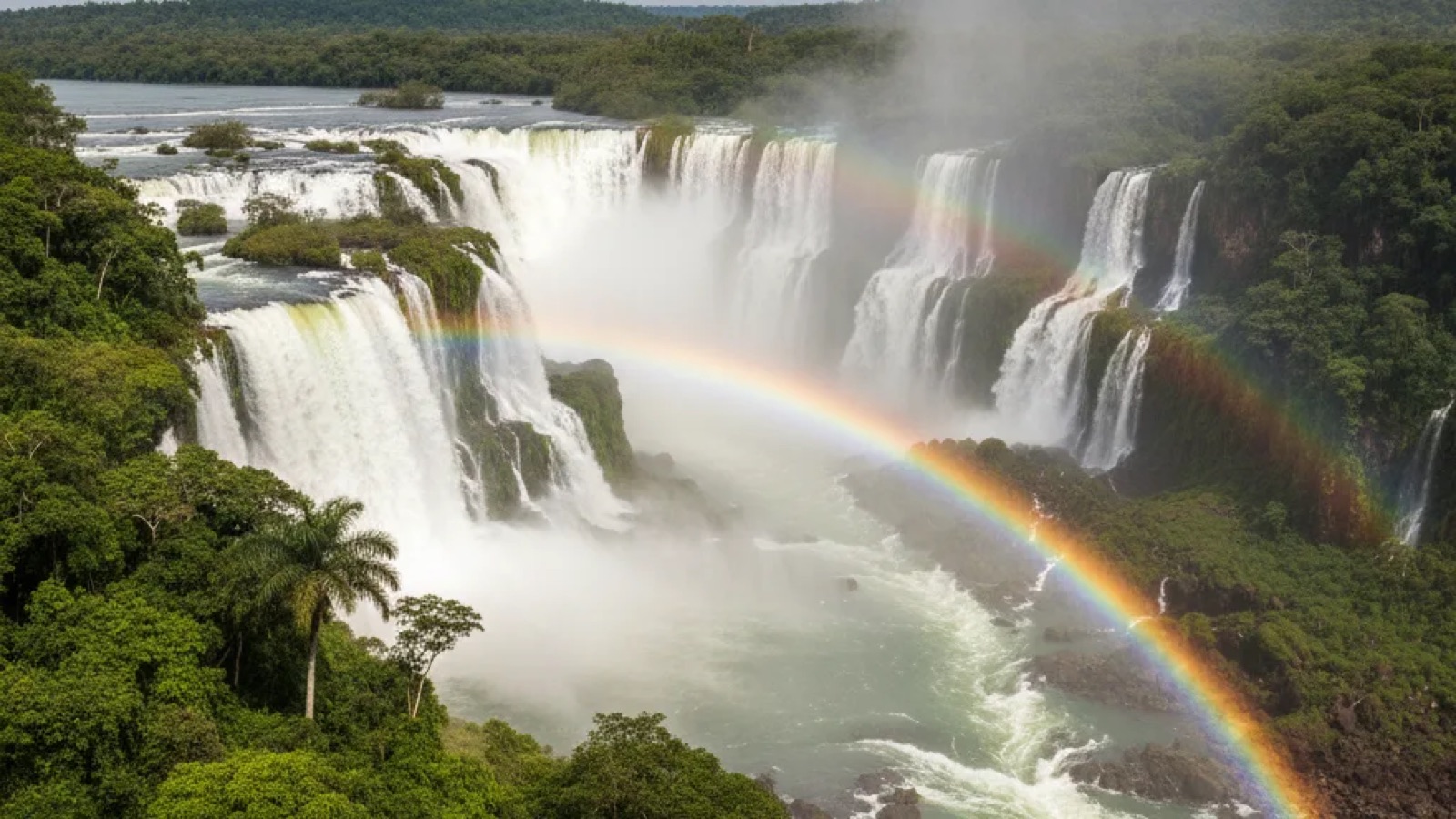
Roughly 80% of the individual waterfalls are on the Argentine side. This means that from the Brazilian side, you are looking across at this immense wall of water. It provides the postcard-perfect, wide-angle cinematic shot. You can grasp the sheer scale and layout of the entire falls complex from Brazil. Conversely, on the Argentine side, you are literally in, on, and among the falls. You walk over them, you get drenched by them, you feel their thunderous power beneath your feet.
If you are cruelly short on time and can only visit one, your choice depends on what you're seeking. For the most iconic, breathtaking single view, Brazil wins. For a more intimate, varied, and physically immersive experience, it has to be Argentina. But if at all possible, move mountains, change flights, do what you have to do to see both.
The Brazilian Side: Panoramic Perfection
The experience in Brazil's Parque Nacional do Iguaçu is straightforward and incredibly impactful. A single, well-marked trail runs along the canyon rim, offering a succession of ever-more-spectacular viewpoints looking across to the Argentine side. This is where you’ll fill your camera's memory card with those classic, sweeping shots of the falls. You can comfortably see the entire Brazilian side in half a day, making it easy to combine with a flight or a visit to the nearby Bird Park.
The park uses its own fleet of double-decker buses to shuttle visitors from the entrance to the start of the walking trail. The path is just over a kilometre long and culminates in a walkway that extends out towards the base of the Devil’s Throat. Here, you’re surrounded on three sides by thundering water, and the roar and spray are immense. A glass lift then whisks you up to a final viewpoint for a stunning top-down perspective.
The best part of the Brazilian side is the way the path constantly reveals new sections of the falls. You start with a wide view, and as you walk, you get closer and closer, the sound grows louder, and different cascades come into focus. It’s a masterfully designed experience that builds to a fantastic climax.
The Argentine Side: Total Immersion
Prepare to spend a full day, or even two, in Argentina's Parque Nacional Iguazú. This side is a sprawling network of trails and circuits that get you breathtakingly close to the action. It's a much more active and involved visit than the one in Brazil.
The park is organised into three main sections:
The Upper Circuit (Paseo Superior)
This is a series of flat, accessible metal walkways built along the upper rim of the escarpment. You are literally walking on top of the waterfalls, looking down into the churning water just metres before it plummets over the edge. It gives you a unique perspective on the sheer volume of water and the forces at play. It’s a relatively easy walk and provides fantastic, wide views of the myriad of cascades.
The Lower Circuit (Paseo Inferior)
As the name suggests, this circuit takes you down closer to the base of the falls. It's a more challenging walk with stairs, but the payoff is immense. You'll feel the spray of the Álvar Núñez and Bossetti falls, and you can take a small, free ferry boat across to San Martín Island (when water levels permit) for a whole different set of views. This is where you feel the jungle environment most keenly, surrounded by lush vegetation and clouds of butterflies.
The Devil's Throat (Garganta del Diablo)
This is the park's main event. To reach it, you take a small, open-sided ecological train from the park's central station. The train ride itself is a lovely journey through the forest. From the final stop, a remarkable kilometre-long walkway takes you out over the wide, powerful upper Iguazu River. You're walking directly towards the heart of the falls, and the anticipation builds with every step as the roar gets louder and a permanent cloud of mist rises ahead. The final platform puts you right on the edge of the abyss, and it is an experience that will stay with you forever.
Into the Mist: Boat Rides and Jungle Trails
On both sides of the falls, you'll see adventure boats zipping in and out of the mist at the base of the cascades. Operators like Macuco Safari on the Brazilian side offer these thrilling rides. To be clear, this isn't a gentle sightseeing cruise. The entire point is to drive the boat directly under one of the smaller falls. You will get completely, utterly, astoundingly soaked. It’s a loud, adrenaline-pumping experience and a lot of fun if you're prepared.
The advice? Do it at the end of your day so you don't have to walk around in wet clothes. Wear swimmers under your clothes, or just clothes you don't mind getting drenched. They provide dry bags for your valuables, but it’s safer to leave your camera in your backpack in a locker. This is a job for a waterproof action camera, not your expensive DSLR.
For a quieter adventure, the Argentine park has the Sendero Macuco. It’s a 7-kilometre return trail through the jungle to the small but pretty Arrechea waterfall and natural pool. It's a great way to escape the crowds, get some proper walking in, and increase your chances of spotting wildlife like capuchin monkeys.
The Locals: Wildlife at Iguazu
The falls are the main draw, but the surrounding Atlantic Rainforest is a wildlife haven. Your most constant companions will be the troops of charismatic, ring-tailed coatis. They are everywhere, especially around food areas. They look cute, but they are wild animals with sharp claws and teeth. Under no circumstances should you feed them. It's bad for their health, encourages aggressive behaviour, and they can deliver a nasty scratch or bite. Keep your food sealed and your wits about you.
Look up, and you're likely to see the flash of a toucan's giant, colourful beak as it flies between trees. Capuchin monkeys chatter in the canopy, and you'll see countless species of butterfly – on the Lower Circuit you can find yourself surrounded by a cloud of yellow sulphurs. And watch the falls themselves closely. The birds you see flying in and out of the curtain of water are Great Dusky Swifts, who have the incredible ability to build their nests on the rock faces behind the waterfalls.
Near the entrance to the Brazilian park is the Parque das Aves (Bird Park). It's a privately owned rescue and conservation centre with walk-through aviaries that let you get incredibly close to toucans, macaws, and hundreds of other bird species. It's an excellent, ethically-run attraction and well worth a couple of hours.
Gateway Towns and Border Logistics
Your base for exploring the falls will be one of two towns: Foz do Iguaçu in Brazil or Puerto Iguazú in Argentina. Foz is a large, sprawling Brazilian city, while Puerto Iguazú has more of a laid-back, small-town feel. Both are well set up for tourism with plenty of accommodation and restaurants.
The most critical part of your planning is the border crossing. Before you even book your flights, you must check the visa requirements for BOTH Brazil and Argentina for your specific nationality. These rules can and do change. Don't rely on anecdotes; check the official consulate or embassy websites for the most up-to-date information. Having a visa for one country does not grant you entry to the other.
Crossing the border itself, which runs over the Tancredo Neves Bridge, is usually straightforward. You can take a public bus or a taxi. If you take a taxi, ensure the driver knows you need to stop at both the exit immigration point for one country and the entry immigration point for the other. They are used to this process. Allow plenty of time, as queues can form at peak times. It's often easiest to hire a taxi for the day to take you from your hotel on one side to the park on the other, wait, and then bring you back, handling all the border stops along the way.
There's a third city, Ciudad del Este in Paraguay, just across another bridge from Foz do Iguaçu. It's known primarily as a massive shopping hub, but for most first-time visitors to the falls, it's an unnecessary and complicated addition to the itinerary.
When to Visit: Seasons and Crowds
There is no "bad" time to see Iguazu, but the experience changes with the seasons. The summer months (December to February) are the rainy season. This means the falls are at their most powerful, an incredible sight of raw, thunderous volume. However, it's also the hottest, most humid, and most crowded time of year, with both Northern Hemisphere winter holidaymakers and South American summer vacationers. Extremely high water levels can sometimes lead to the closure of certain walkways, particularly the one to the Devil's Throat.
The winter months (June to August) are drier and cooler. The water flow is reduced, which means the falls are less about overwhelming power and more about definition. You'll see the individual cascades more clearly, separated by a lot more rock face. It's generally less crowded.
The sweet spot is the shoulder seasons: April-May and September-October. The weather is typically warm and pleasant, the crowds are more manageable, and you usually get a fantastic water flow that's powerful without being so extreme that it closes the trails. It's the best of both worlds.
A Photographer's Guide to Iguazu
As a photographer, Iguazu is both a dream and a nightmare. The scale is epic, but the spray is your enemy. First, gear protection. A proper rain sleeve for your camera is ideal. In a pinch, a plastic bag and a rubber band can work, but the constant fine mist gets everywhere. My hard-won tip: take a high-quality microfibre lens cloth and keep it in a sealed plastic bag. You will need it every five minutes.
Lens choice is key. A wide-angle lens (something like a 16-35mm on a full-frame camera) is essential for capturing the grand panoramas, especially on the Brazilian side. However, don't forget a telephoto lens. A 70-200mm is ideal for isolating interesting cascades, capturing the swifts flying behind the water, and for any wildlife opportunities like toucans or monkeys in the trees.
The most famous photographic phenomenon at Iguazu is the rainbows. Because of the orientation of the falls, you get the best light and the most vibrant rainbows on the Argentine side in the morning and on the Brazilian side in the afternoon. Plan your visit to each park accordingly if getting that perfect rainbow shot is a priority for you. A polarising filter can also help cut through the glare and deepen the colours of the sky and foliage.
Optional Extra: Itaipu Dam
If you have an extra half-day on the Brazilian side, the Itaipu Dam is a fascinating feat of engineering. Straddling the border between Brazil and Paraguay, it was one of the largest hydroelectric dams in the world when it was built. The scale of the concrete structure is staggering, and the panoramic tours give you a great overview of its operation and the vast reservoir it has created. While it can't compare to the natural wonder of the falls, it's a testament to human ingenuity on a massive scale and a worthwhile addition for those with an interest in engineering or technology.
Explore in Depth
Iguazu Falls is often a key stop on a grander South American adventure. For more ideas on how to build your itinerary and what to see in these incredible countries, check out these other guides.
Frequently Asked Questions
Do I really need to see both the Argentinian and Brazilian sides of the falls?
Yes, if you possibly can. They offer genuinely different perspectives. The Brazilian side gives you the breathtaking, wide-screen panoramic view of the whole system, which you can see in half a day. The Argentinian side provides an immersive experience, with extensive walkways that take you right up to, and even over, the individual cascades, requiring a full day. Seeing only one side is like reading only half a book; you miss the full story. Prioritise seeing both if your schedule and visa situation allows.
How much time should I plan for an Iguazu Falls trip?
Plan for a minimum of two full days, not including your travel days. This allows you one full day to thoroughly explore the more extensive Argentinian park (including the Upper and Lower circuits and the train to the Devil's Throat) and a second day to see the Brazilian side in the morning (which takes about 3-4 hours) and perhaps visit the Parque das Aves (Bird Park) in the afternoon before flying out. This pace allows you to soak it all in without rushing.
What is the best way to protect my camera and phone from the water?
The spray, especially near the Devil's Throat and on the boat rides, is intense. A professional rain sleeve for a DSLR is best. As a backup, a simple plastic bag secured with a rubber band can work. For phones, a waterproof case or pouch is essential. The most important tool is a dry, high-quality microfibre lens cloth stored in a ziplock bag – you'll be wiping your lens constantly. For the boat trip, either use a waterproof action camera or leave your expensive electronics in a locker; it's not worth the risk.
Is it difficult to cross the border between Brazil and Argentina?
The process is generally straightforward but requires planning. The most critical step is to check official government or consulate websites for up-to-date visa requirements for your nationality for *both* countries well in advance. The crossing itself involves stopping at two separate immigration checkpoints. Taxis are accustomed to this and will wait. Buses also cross, but you are responsible for getting off, getting your stamps, and catching the next bus. To be safe, always allow a couple of hours for the crossing in case of queues.
Are the boat rides under the falls worth it?
They are worth it if you're seeking a shot of adrenaline and don't mind getting completely drenched. It's a fun, loud, and thrilling experience to be driven directly under a powerful waterfall. However, if you're looking for a peaceful sightseeing trip, this is not it. It's an adventure activity more than a tour. It's best to plan it for the very end of your day in the park so you can go straight back to your hotel to change into dry clothes afterwards.
Final Thoughts
Eleanor Roosevelt is famously said to have exclaimed "Poor Niagara!" upon seeing Iguazu. It's a sentiment you immediately understand when you stand before it. There's a raw, pre-historic quality to these falls. They feel bigger than tourism, bigger than the walkways and the parks built to contain them. It's a place that reminds you of the planet's immense power.
Whether you're feeling the thunder through the soles of your feet at the Devil's Throat or watching a rainbow form in the afternoon light from the Brazilian side, Iguazu delivers. It's not just a box to be ticked on a bucket list; it's an experience that engages all the senses, leaves you soaked and smiling, and recalibrates your sense of scale. Go, see both sides, and let the Great Waters work their magic.
More Brazil guides
Brazil Travel Guide: Rio, Iguazu and the Amazon
Planning a first Brazil trip: which regions to combine, internal flights, seasons, safety awareness and Portuguese basics.
Rio de Janeiro Guide: Beaches, Christ and Samba
Rio in three or four days: Christ the Redeemer, Sugarloaf, Copacabana and Ipanema, Santa Teresa, Lapa nights and staying smart.