Ireland Travel Guide: Route, Weather and Driving
Planning an Ireland trip: a realistic loop, driving on narrow roads, weather, the north-south border and how long you need.
In this guide
- Quick Facts
- How Long Do You Really Need in Ireland?
- Planning Your Route: Two Classic Itineraries
- The Great Irish Road Trip: Hiring and Driving a Car
- Beyond the Driver's Seat: Trains and Buses
- "Four Seasons in One Day": Decoding Irish Weather
- When to Go: Crowds, Daylight and Festivals
- A Whirlwind Tour of Ireland's Regions
- Crossing the Border to Northern Ireland
- The Heartbeat of Ireland: Pubs, Music and Language
- Touching the Ancient Past: Newgrange and Skellig Michael
- Explore in Depth
- Frequently Asked Questions
- Final Thoughts
I still feel the phantom shudder of the wing mirror scraping against an overgrown hedge. I was somewhere deep in County Clare, navigating a road barely wider than my hire car, a claustrophobic green tunnel of hawthorn and stone. A tractor appeared ahead, taking up the entire lane. I pulled in as tight as I could, holding my breath. The old farmer gave me a gentle nod as he squeezed past with millimetres to spare, the world opened up again, and a sudden break in the clouds drenched the valley ahead in the most ludicrous, cinematic gold. A flock of sheep scattered across a field impossibly green. That single moment—the mild terror, the quiet human connection, the explosive beauty—is Ireland in a nutshell. It’s a country that asks for your patience and rewards you tenfold.
For over a decade on the road, few places have lodged themselves in my heart quite like Ireland. It’s more than just a destination; it’s a feeling. This guide is built from my own journeys, designed to give you the practical, hard-won advice you need to plan your own adventure. We’ll cover how long you need, whether to brave the driving (and how to do it), where to go, and what to expect from the famously fickle weather. From the lively pubs of Dublin to the soul-stirring silence of the Connemara coast, this is the roadmap for crafting a trip you’ll be talking about for years to come.
Quick Facts
- Location: An island in the North Atlantic, west of Great Britain. It comprises the Republic of Ireland and Northern Ireland (which is part of the United Kingdom).
- Getting There: The main international gateways are Dublin Airport (DUB) on the east coast, Shannon Airport (SNN) on the west, and Cork Airport (ORK) in the south.
- Getting Around: Hiring a car offers the most freedom, especially for the west coast. A network of trains and buses connects major cities and towns, but rural access is limited.
- Language & Currency: English is universally spoken. Irish (Gaeilge) is the first official language and you'll see it on all road signs. The currency in the Republic of Ireland is the Euro (€). In Northern Ireland, the currency is the Pound Sterling (£).
- Best Time to Visit: May, June, and September offer the best balance of pleasant weather, long daylight hours, and manageable crowds. July and August are the warmest and busiest.
How Long Do You Really Need in Ireland?
This is the first and most important question. The island might look small on a map, but those narrow, winding roads make travel times much longer than you'd expect. Trying to "see it all" in a week is a recipe for exhaustion, where you’ll see Ireland through a windscreen but never truly experience it.
For a one-week trip (7-8 days), you need to be focused. Don't try to loop the entire country. Instead, pick one or two regions. A popular choice is to fly into Dublin, spend a couple of days there, then drive west to Galway and the Cliffs of Moher before heading back. Alternatively, you could fly into Shannon and concentrate solely on the southwest, exploring the glories of Kerry and Clare.
To do a proper "grand tour" that feels rewarding rather than rushed, you really need 10 to 14 days. This gives you enough time to trace a comfortable loop, perhaps from Dublin down through the southeast, along the southern coast to Kerry, up the magnificent Wild Atlantic Way through Clare and Galway, and back across the midlands. Two weeks allows for spontaneity—for that unplanned detour down a coastal lane or an extra night in a village with a brilliant trad music session.
Planning Your Route: Two Classic Itineraries
Here are two tested frameworks for building your trip. Think of them as skeletons you can flesh out with your own interests.
The Express Week: Dublin to the Wild Atlantic Way
This route gives you a taste of both urban history and epic coastline. It's fast-paced but hugely rewarding. Fly in and out of Dublin. After exploring the capital, pick up your hire car and head south to the medieval city of Kilkenny. From there, cut west towards the Dingle Peninsula or Killarney National Park for your taste of County Kerry's drama. Drive north through County Clare to witness the colossal Cliffs of Moher and the unique landscape of The Burren. Spend a night in or near bustling Galway city before making the straightforward motorway drive back to Dublin for your flight home.
The Grand Loop: A Fortnight on the Emerald Isle
With two weeks, the island truly opens up. Starting in Dublin, you can travel at a more civilised pace. Head south into the Wicklow Mountains, then on to Kilkenny and the Rock of Cashel. Continue to the southern coast, exploring Cork city and the colourful fishing village of Kinsale. Devote several days to the southwest, choosing between the famous Ring of Kerry and my personal favourite, the wilder Dingle Peninsula. The journey north along the Wild Atlantic Way is the main event: the Cliffs of Moher, the music-filled pubs of Doolin, the limestone plains of the Burren, the vibrant city of Galway, and the breathtaking, empty landscapes of Connemara. From there, you could even head further north to Sligo and Donegal before cutting back across the country to Dublin.
The Great Irish Road Trip: Hiring and Driving a Car
Let’s be direct: for the ultimate freedom to explore Ireland's best bits, you need a car. But driving here is an adventure in itself. First, you'll be driving on the left-hand side of the road. If you're from Australia or the UK, you're set. If not, it takes a day or two of intense concentration, especially at roundabouts. My advice is to pick up your car outside of a major city centre if possible to avoid immediate chaos.
The real challenge isn't driving on the left; it's the roads themselves. While motorways between major cities are excellent, the moment you turn off onto a regional (R) or local (L) road, things get narrow. I mean really narrow. These are the fabled ‘boreens’, often lined with ancient stone walls and thick hedges that leave zero room for error. You will have close encounters with tractors, sheep, and other cars. The key is to drive slowly and be prepared to pull over. It's part of the charm.
A few crucial practicalities: book your car well in advance, especially if you require an automatic transmission. Manuals (stick shifts) are the standard and much more common. If you aren't completely comfortable with a manual, pay the extra for an automatic. You'll be thankful on a steep, narrow hill. Also, pay close attention to insurance. Most rentals come with a basic Collision Damage Waiver (CDW), but this often carries a very high excess. Check if your travel insurance or credit card provides cover for this excess, or you may want to purchase the rental company's super-cover for peace of mind.
Beyond the Driver's Seat: Trains and Buses
If the thought of those narrow roads is too much, you can absolutely have a wonderful trip without a car, it just requires different planning. Irish Rail operates a decent train network that connects Dublin to major centres like Belfast, Cork, Galway, Limerick, and Killarney. The journeys are scenic and relaxing.
Bus Éireann and a host of private operators cover a more extensive network, reaching many smaller towns that trains don't. A combination of trains and buses can get you to most key tourist areas. From towns like Killarney or Galway, you can then join guided day tours that take you to places like the Ring of Kerry, Dingle, or the Cliffs of Moher. This approach works well, but you do lose the flexibility to stop at a whim for that perfect photo or to explore a ruined abbey you spot on a hillside. For the true explorer, a car remains king.
"Four Seasons in One Day": Decoding Irish Weather
The saying is a cliché because it's completely true. I’ve started mornings in brilliant sunshine in County Cork only to be running through a sideways downpour an hour later, then basking in sun again by lunchtime. The weather in Ireland isn't relentlessly bad; it's relentlessly changeable. This is thanks to the Atlantic, which sends weather systems scudding across the country at a great pace.
Forget packing for a single season. The only way to dress for Ireland is in layers. Your packing list must include a waterproof and windproof outer jacket. Not water-resistant, waterproof. Underneath that, a fleece or wool jumper is perfect. Then a comfortable t-shirt or long-sleeve top as a base. With this combination, you can add or remove layers as the sun, clouds, and rain chase each other across the sky. You'll never regret having that rain jacket, but you'll definitely regret not having it.
From a photography perspective, this weather is a gift. The fast-moving clouds create incredible, dramatic light. A dark, moody sky can break open, sending a beam of light—a 'God ray'—to illuminate a patch of green field or a crumbling castle. The most stunning landscapes I've ever shot were just moments after a rain shower passed.
When to Go: Crowds, Daylight and Festivals
Your experience of Ireland can change quite dramatically depending on the season. Summer (July and August) is peak season. You get wonderfully long days—it can be light until after 10 pm—and the country is buzzing with festivals. However, this is when crowds at major sites like the Cliffs of Moher and in popular towns like Killarney are at their thickest. Accommodation needs to be booked far in advance.
My personal recommendation is the shoulder season: May, June, and September. The weather is often just as good as, if not better than, mid-summer. The spring flowers in May and June are spectacular, while September can bring a lovely, settled autumn glow. Crucially, the crowds are thinner, and there’s a more relaxed feel to everything. You still get long daylight hours and almost all attractions and restaurants are open.
Winter (November to February) is for a different kind of trip. It’s quiet, and you might have some incredible sights almost to yourself. The trade-off is short, often dreary days and the fact that many rural B&Bs, restaurants, and attractions close down completely. But for a city break in Dublin or a cosy trip focused on snuggling by a pub fireplace, it has its own stark charm.
A Whirlwind Tour of Ireland's Regions
Each corner of Ireland has its own distinct character, shaped by history and landscape.
Dublin and the East
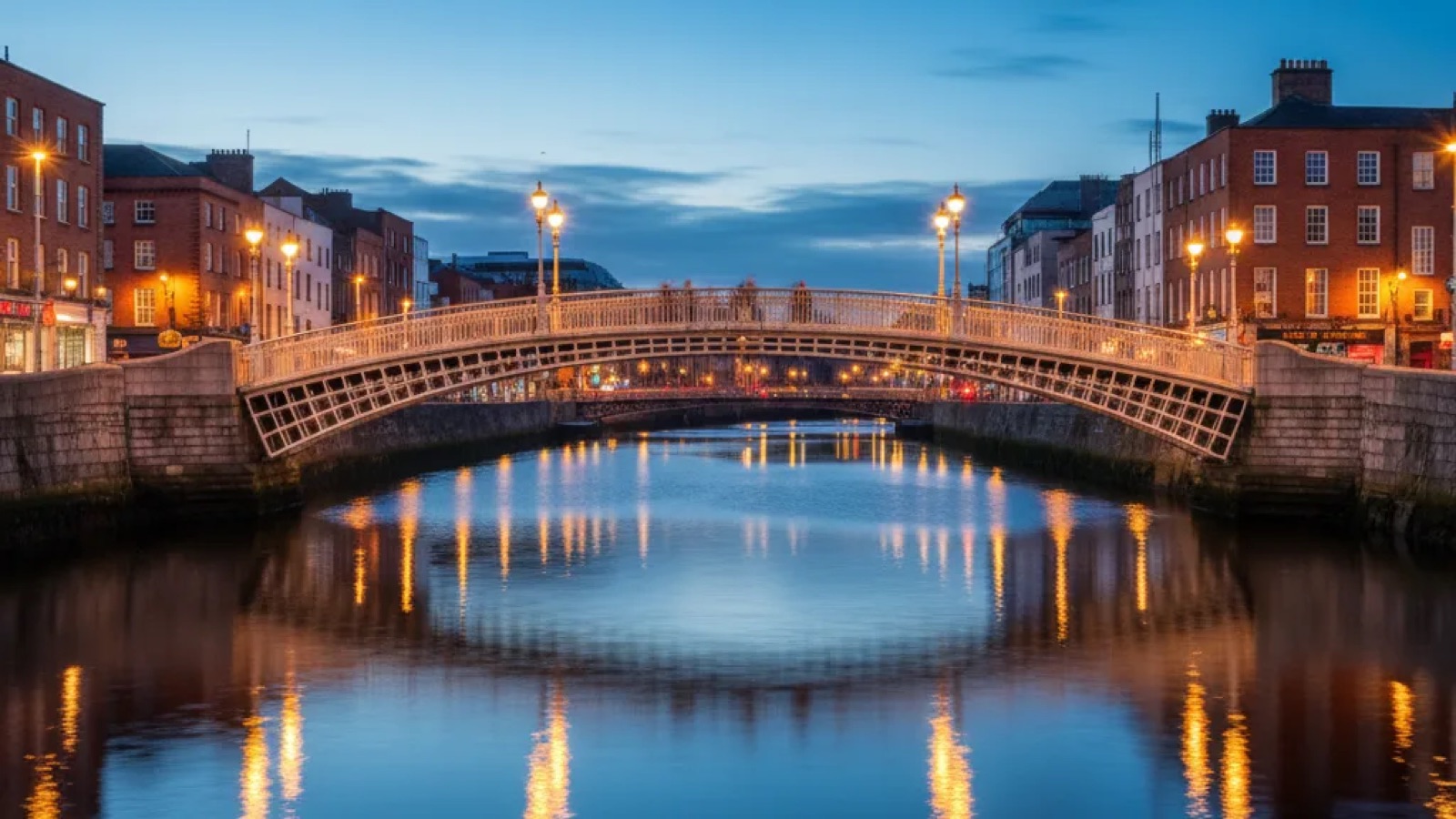
Most trips start or end in Dublin, a vibrant, walkable city brimming with history. You can wander through the hallowed halls of Trinity College to see the Book of Kells, explore Dublin Castle, and learn about the nation's struggle for independence. But don't just stay in the city; the surrounding Boyne Valley is home to some of Europe's most important ancient sites, including the mind-bogglingly old passage tomb of Newgrange.
The Wicklow Mountains and the Southeast
Just south of Dublin lies the "Garden of Ireland". The Wicklow Mountains National Park offers stunning drives and walks, with the 6th-century monastic city of Glendalough, nestled by two dark lakes, being an absolute must-see. Further south, you'll find the perfectly preserved medieval city of Kilkenny, with its magnificent castle and winding "slips" or laneways.
The Rebel South: Cork and Kinsale
Cork, Ireland's second city, has a fierce independent streak and a fantastic foodie scene centred on the glorious English Market. It’s a great base for exploring the south coast. A short drive away is Kinsale, a postcard-perfect harbour town famous for its ridiculously colourful streets and high-end restaurants.
Kingdom of Kerry: The Ring vs. Dingle
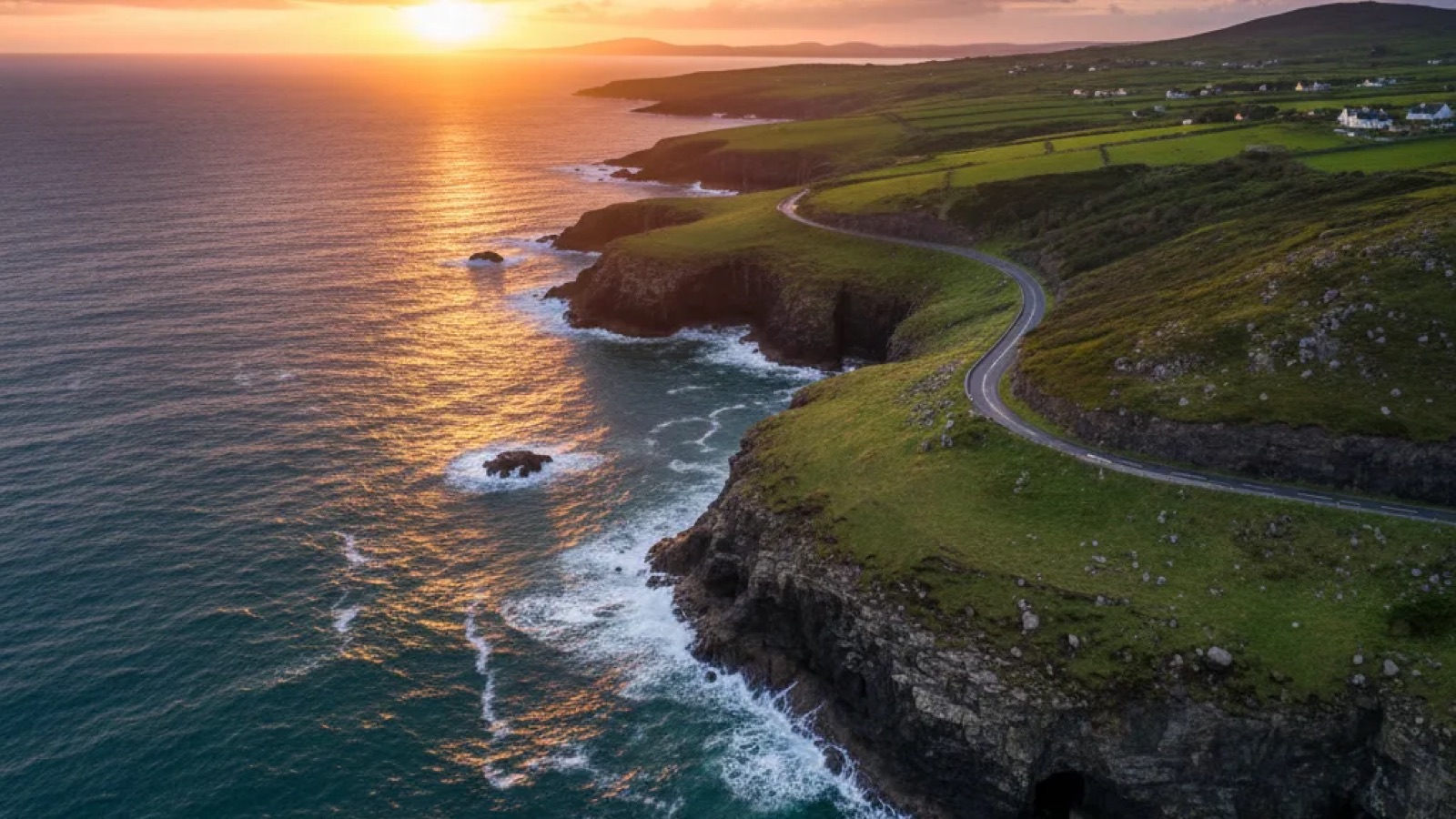
This is a classic traveller's dilemma. The Ring of Kerry is the famous 179-kilometre scenic loop, and it is beautiful. However, it gets very congested with tour buses (which all travel anti-clockwise, so driving clockwise is a good tip for cars). My heart, however, belongs to the Dingle Peninsula just to the north. It's more compact, feels wilder, and the Slea Head Drive section is, for my money, the most spectacular stretch of coastal road in the country, with views out to the Blasket Islands.
The Wild West: Clare and Galway
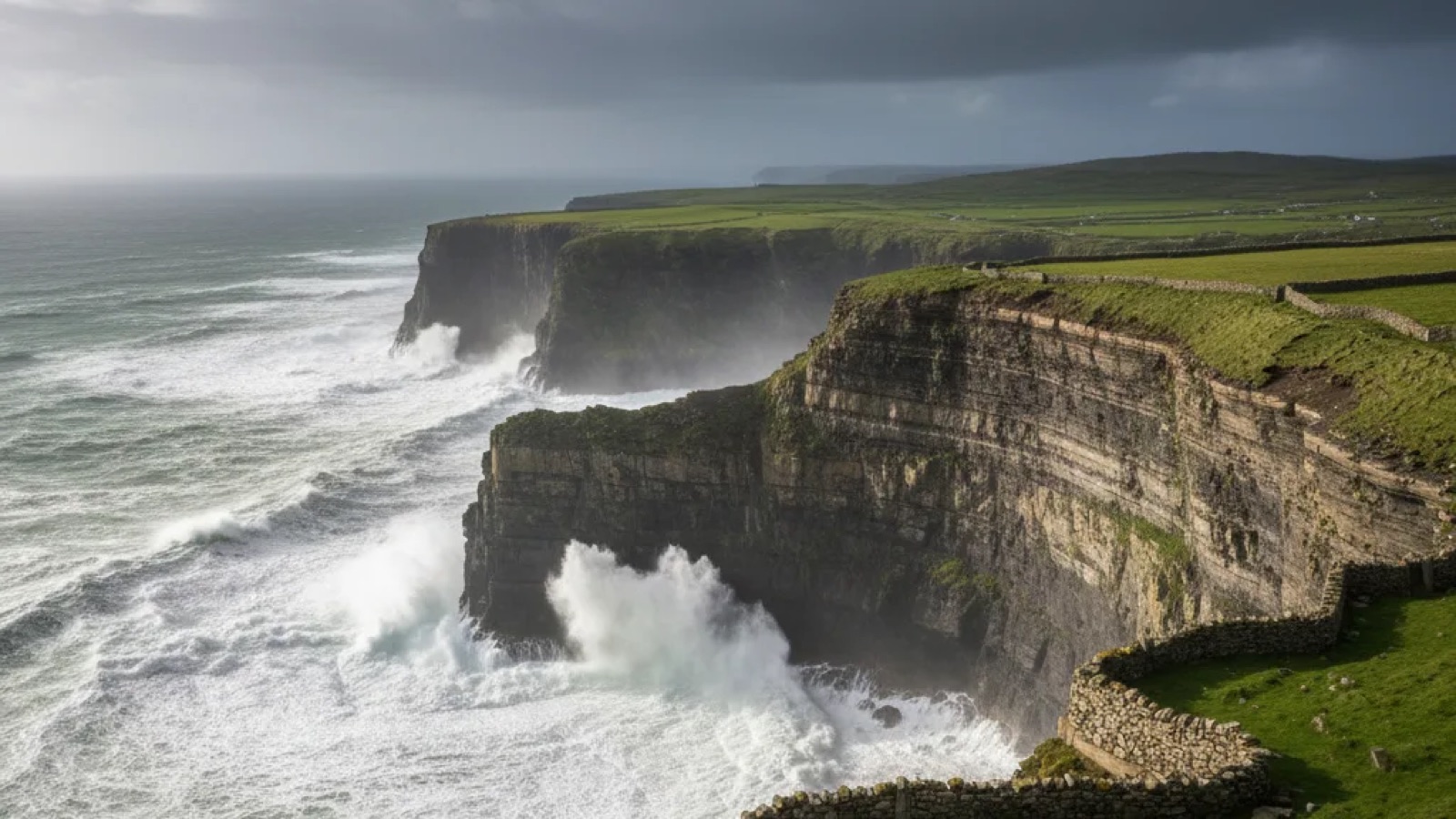
This is the Ireland of postcards. County Clare is home to two geological wonders: the sheer, 214-metre-high Cliffs of Moher and the alien limestone landscape of The Burren, where rare arctic and alpine flowers grow in the cracks. The region is also a heartland for traditional Irish music, especially in villages like Doolin and Miltown Malbay. Across the bay lies Galway, a bohemian and artsy university city with a brilliant pub scene. From Galway, you can push west into the stark, beautiful, and sparsely populated bog and mountain landscape of Connemara.
A Quick Look North: Sligo and Donegal
Often overlooked by those on a tight schedule, the northwest is where the Wild Atlantic Way gets truly wild. County Sligo is "Yeats Country," with the iconic flat-topped Benbulben mountain dominating the landscape. Donegal is even more remote, featuring vast sea cliffs at Slieve League (three times higher than Moher!), rugged peninsulas, and some of the country's most pristine beaches.
Crossing the Border to Northern Ireland
It's easy to forget that a trip to the Causeway Coast or Belfast involves crossing into a different country. Northern Ireland is part of the United Kingdom, which means a few key differences for the traveller. The most obvious is the currency: they use the Pound Sterling (£), not the Euro. While cards are widely accepted, it's good to have some sterling cash.
At the time of writing, there is no physical border infrastructure between the Republic and Northern Ireland, and the crossing is seamless. Even so, visitors who are not British or Irish citizens (or Ireland residents) need a UK Electronic Travel Authorisation (ETA) to cross into Northern Ireland, including over the land border. However, this is a politically sensitive area, so it's always wise to check the latest official government advice on entry requirements before you travel. You'll notice road signs and speed limits change from kilometres per hour in the Republic to miles per hour in the North.
The highlights are magnificent. Belfast is a fascinating city reborn, with the superb Titanic Belfast museum and powerful political murals telling the story of The Troubles. The Causeway Coast is a world-class road trip, home to the geological marvel of the Giant's Causeway, the thrilling Carrick-a-Rede Rope Bridge, and numerous filming locations from a certain famous fantasy TV show.
The Heartbeat of Ireland: Pubs, Music and Language
The Irish pub is not just a place to drink; it's the living room of the community. It’s where news is shared, stories are told, and life is lived. Don't be afraid to walk in, find a corner, and just soak it all in. For an authentic experience, look for pubs away from the main tourist squares.
Many pubs host traditional music sessions ('trad sessions'), which are a highlight of any trip. These are often informal affairs where local musicians just show up with their instruments—fiddles, tin whistles, bodhráns (drums), and uilleann pipes. There’s no stage, just a corner of the pub that comes alive. To find one, simply ask a local: "Any music on tonight?"
You'll also travel through 'Gaeltacht' areas, particularly on the west coast (like Dingle and Connemara), where Irish (Gaeilge) is the primary language spoken at home and in the community. All road signs in Ireland are bilingual, but in the Gaeltacht, the Irish name is often more prominent. It’s a powerful reminder of the deep cultural roots that run beneath the surface of modern Ireland.
Touching the Ancient Past: Newgrange and Skellig Michael
Ireland has an astonishing density of ancient sites, but two stand apart and require special planning. Newgrange, in the Boyne Valley, is a 5,200-year-old passage tomb that predates both Stonehenge and the Pyramids of Giza. Access is strictly controlled via the Brú na Bóinne Visitor Centre, and you must take a shuttle bus to the site. Tickets, especially for the summer, should be booked well in advance online.
Even more elusive is Skellig Michael, the jagged rock island off the coast of Kerry where monks built a monastery in the 6th century. Its recent fame from the *Star Wars* films has only increased demand. Landing on the island is a serious undertaking. The crossing can be rough, the climb up the 600 stone steps is steep and has no handrails, and it’s not for those with mobility issues or a fear of heights. A very limited number of boat operators are licensed to land passengers, and these tours are often booked out months in advance. Furthermore, all trips are entirely weather-dependent and can be cancelled at the last minute. If you miss out on a landing tour, a boat trip that circles the island is a fantastic and more accessible alternative.
Explore in Depth
This guide gives you the big picture for planning your Irish adventure. For a deeper dive into specific areas, including detailed itineraries and photography spots, check out my other focused guides:
Frequently Asked Questions
Is it hard to drive on the left in Ireland?
The first hour or two requires intense focus, especially at roundabouts, but most drivers adapt quickly. The real challenge is not the side of the road but the narrowness of the rural lanes (boreens). These are often just a single track with high hedges or stone walls. The key is to reduce your speed, be prepared to reverse to a passing place, and consider hiring a smaller car. Booking an automatic if you're not a confident manual driver will remove a major source of stress.
Do I need cash in Ireland, or can I use my card everywhere?
In cities, towns, and larger establishments like hotels and restaurants, credit and debit cards are almost universally accepted. However, I always recommend carrying a reasonable amount of Euro cash. It's essential for smaller purchases in family-run shops, for paying for car parks, tipping tour guides, and for buying a pint in a small rural pub that might be cash-only. It's also a good backup in case of any card machine issues, especially in more remote areas on the west coast.
Can I see the best of Ireland without a car?
You can certainly have a fantastic trip without a car, but you will see a different Ireland. The train and bus networks are good for connecting the dots between cities like Dublin, Cork, Galway, and Belfast. From these hubs, you can take organised day tours to major sights like the Cliffs of Moher or the Giant's Causeway. What you miss is the freedom to explore the countryside at your own pace—to discover hidden beaches, stop in tiny villages, and navigate the most scenic parts of the Wild Atlantic Way independently.
What's the difference between the Republic of Ireland and Northern Ireland for a traveller?
The main practical differences are jurisdiction and currency. The Republic of Ireland is an independent country and a member of the EU; it uses the Euro (€). Northern Ireland is part of the United Kingdom and uses the Pound Sterling (£). Road signs in the Republic use kilometres, while Northern Ireland uses miles. While the border is currently open and easy to cross, it's an international border, so it's always wise to check official government travel advice for the latest regulations before your trip.
I only have a week. Should I try to see the whole island?
In a word: no. Trying to loop the entire island in a week would mean spending almost all your daylight hours in the car. You would see a lot of tarmac but experience very little. For a one-week trip, it's far more rewarding to pick one coast. For example, fly into Dublin and explore the city and the ancient East, or fly into Shannon and dedicate your entire week to the spectacular scenery of the southwest, covering Clare and Kerry. Quality over quantity is the golden rule for travel in Ireland.
Final Thoughts
Ireland is a country that gets under your skin. You come for the epic landscapes—the cliffs, the wild Atlantic coastline, the forty shades of green—but you leave with memories of the small moments. The impromptu music session in a tiny pub, the warmth of a peat fire on a cool evening, the easy conversation with a stranger while sheltering from a sudden shower. It’s a place that doesn’t demand you rush; it invites you to slow down, to look closer, and to listen.
After all my years of travelling, I can tell you that the magic of Ireland isn't just in the places you see, but in the way it makes you feel. It reconnects you to something ancient, wild, and profoundly human. So pack your rain jacket, book that car, and get ready for an adventure that will fill both your camera’s memory card and a special place in your own.
More Ireland guides
Dublin Itinerary: History, Pubs and Day Trips
Two days in Dublin: Trinity and the Book of Kells, Kilmainham, the museums, a sane approach to Temple Bar, and day trips.
Wild Atlantic Way: A Road Trip Guide
Driving Ireland's Wild Atlantic Way: how much of the 2,500km route to attempt, the best stretches, timings and road realities.