Wild Atlantic Way: A Road Trip Guide
Driving Ireland's Wild Atlantic Way: how much of the 2,500km route to attempt, the best stretches, timings and road realities.
In this guide
- Quick Facts
- What Is The Wild Atlantic Way?
- The Golden Rule: Don't Rush It
- How to Split the Route: Three Epic Journeys
- Key Stops: The Southern Peninsulas
- Key Stops: The Burren, Cliffs and Islands
- Key Stops: Connemara, Mayo and the Wild North
- Key Stops: The Majestic Giant of Donegal
- The Reality of Driving in the West
- Weather, Cancelled Boats and What to Pack
- Campervans, Cycling and Wild Camping
- A Photographer's Guide to the Atlantic Coast
- Explore in Depth
- Frequently Asked Questions
- Final Thoughts
This guide is part of our Ireland Travel Guide: Route, Weather and Driving — start there for the overview, when to go and how to get around.
The spray hit my face before I even saw the wave. I was standing on the very tip of the Slea Head Drive on the Dingle Peninsula, camera pressed to my eye, trying to capture the drama of the Blasket Islands as a squall rolled in from the west. The sky turned from a soft grey to a bruised purple in minutes. The wind wasn't just a sound; it was a physical force, pushing me back from the cliff edge. In that moment, with the salt on my lips and the raw, untameable energy of the Atlantic filling every sense, I understood. This wasn't just a scenic drive; it was a conversation with the edge of the world.
That raw power is the very soul of the Wild Atlantic Way. It's not a single road, but a mammoth 2,500-kilometre touring route winding its way along the entire western seaboard of Ireland, from the northern headlands of Donegal to the sheltered harbours of West Cork. The biggest mistake travellers make is treating it like a checklist to be completed in a week. It simply can't be done. This guide is built on my own hard-won experience driving its length over multiple trips. I’ll help you break the route into manageable sections, point you towards the unmissable stops, and give you the real, honest advice you need to navigate its narrow roads, wild weather, and breathtaking beauty.
Quick Facts
- Location: The entire west coast of Ireland, stretching from the Inishowen Peninsula in County Donegal to Kinsale in County Cork.
- Getting There: Fly into Dublin (DUB) and drive west (around 3 hours), or fly directly into the region via Shannon (SNN), Cork (ORK), or Knock (Ireland West Airport, NOC). Ferry services from the UK and mainland Europe are also available.
- Getting Around: Self-driving is the only practical way to explore the route. A standard rental car is perfectly fine, though campervans are popular. Plan for slow average speeds.
- Language & Currency: English is spoken everywhere. Ireland uses the Euro (€). In Gaeltacht (Irish-speaking) areas, you'll see signage in Irish first, but English is always present.
- Route Length: Officially around 2,500 kilometres, but expect to drive far more with detours and side trips.
- Best Time to Visit: May, June, and September are the sweet spots for a balance of decent weather, long daylight hours, and fewer crowds than the peak months of July and August.
What Is The Wild Atlantic Way?
First, let's clear up a common misconception. The Wild Atlantic Way isn't a purpose-built highway like California's Route 1. It's a network of existing, often ancient, local roads that have been officially designated and signposted as a continuous touring route. The magic lies in the fact that it forces you off the main motorways and onto the tiny coastal lanes where real life unfolds.
To navigate, you just need to follow the signs. Look for the distinctive dark blue posts with a white jagged wave symbol. This simple logo becomes your guide, leading you through forgotten villages, past dramatic sea stacks, and down to hidden beaches. Sometimes the route seems to take a wild, illogical detour, but trust the signs. They are almost always leading you towards a discovery point, a spectacular viewpoint, or a hidden harbour you would never have found otherwise.
The Golden Rule: Don't Rush It
I can’t say this forcefully enough: do not try to drive the entire Wild Atlantic Way in a single one-week holiday. You will spend your entire trip gripping the steering wheel, arriving at your B&B exhausted, and seeing the coast as a green-and-grey blur through your windscreen. It would be like trying to visit every great museum in Europe in seven days. You see everything and experience nothing.
The joy of this route is in the unplanned detours. It’s about stopping to watch surfers at a windswept beach, getting stuck behind a flock of sheep being herded down a lane, or spending an extra hour in a pub because the music is too good to leave. A realistic pace is no more than 150-200 kilometres of driving per day. That might sound ridiculously slow, but on these roads, that can be a full four to five hours of driving time, without even counting stops. For the full 2,500-kilometre route, I’d recommend a minimum of three weeks, and even that would be pushing it. A month would be better. The best approach for most travellers is to pick a section and explore it deeply.
How to Split the Route: Three Epic Journeys
For a typical 7 to 10-day trip, focusing on one of these three general sections will give you a rich, rewarding experience without the fatigue. Each has its own distinct personality.
The South: Kerry, West Cork & Southern Clare
This is arguably the most famous and romanticised part of Ireland. It's a journey of deep, fjord-like bays, mountainous peninsulas, and impossibly green fields dotted with ancient stone forts. It’s also the busiest, especially around the Ring of Kerry and Dingle in summer. The reward is classic Irish scenery, a high density of incredible sights, and a fantastic food scene in towns like Kinsale and Dingle.
The Centre: The Burren, Galway & Connemara
This section offers stark, magnificent contrasts. You have the otherworldly limestone moonscape of the Burren and the sheer power of the Cliffs of Moher, followed by the vibrant, bohemian city of Galway. From there, you head into the desolate beauty of Connemara, a vast peat bog landscape of dark lakes, rugged mountains, and a deeply indented coastline. It feels wilder and more melancholic than the south.
The North: Mayo, Sligo & Donegal
This is the Wild Atlantic Way at its most raw and adventurous. The crowds thin out dramatically the further north you go. The coastline in Mayo is spectacular, with Achill Island and Downpatrick Head. Sligo offers the mythical landscapes of Yeats Country, dominated by Benbulben mountain. And then there's Donegal. Vast, remote, and breathtakingly beautiful, with the highest sea cliffs in Europe at Slieve League and the rugged extremities of Malin Head. This is for the traveller who wants to feel like they’re truly at the edge of the map.
Key Stops: The Southern Peninsulas
The south is a feast. Starting in West Cork, Mizen Head is an essential stop. Crossing the high-arched bridge to the signal station, with the Atlantic churning below, you really feel like you’re at Ireland’s most south-westerly point, the "teardrop of Ireland" for emigrants of old.
From there, you’re faced with a choice of peninsulas. The Beara Peninsula is rugged, less travelled, and staggeringly beautiful, with the colourful villages of Eyeries and Allihies. For a truly memorable drive, tackle the Healy Pass, a twisting mountain road with unbelievable views. Further north lies the famous Ring of Kerry. It's popular for a reason, but it can be a circus of tour buses in summer. My hard-won advice: drive it clockwise, from Kenmare towards Sneem. This puts you going in the opposite direction to the large coaches, which are mandated to travel anti-clockwise. It makes for a much less stressful drive.
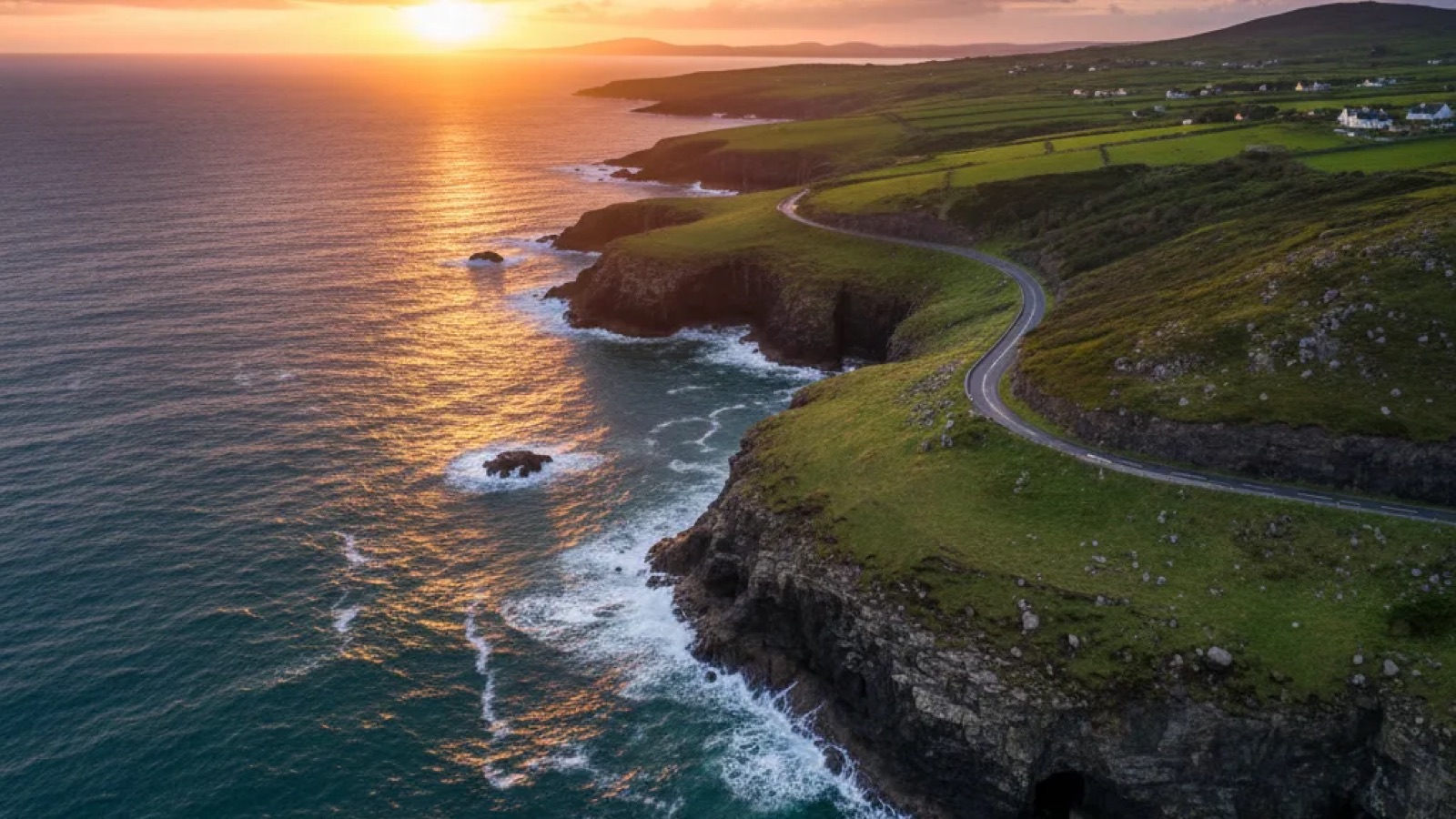
For me, though, the jewel of the south is the Dingle Peninsula. The Slea Head Drive is a condensed, potent shot of everything that makes the Atlantic coast magical. It's a 46-kilometre loop of stunning cliffs, ancient beehive huts, pristine beaches like Coumeenoole Strand, and heart-stopping views of the Blasket Islands. The town of Dingle itself is a delight, full of colourful pubs with live traditional music.
Key Stops: The Burren, Cliffs and Islands
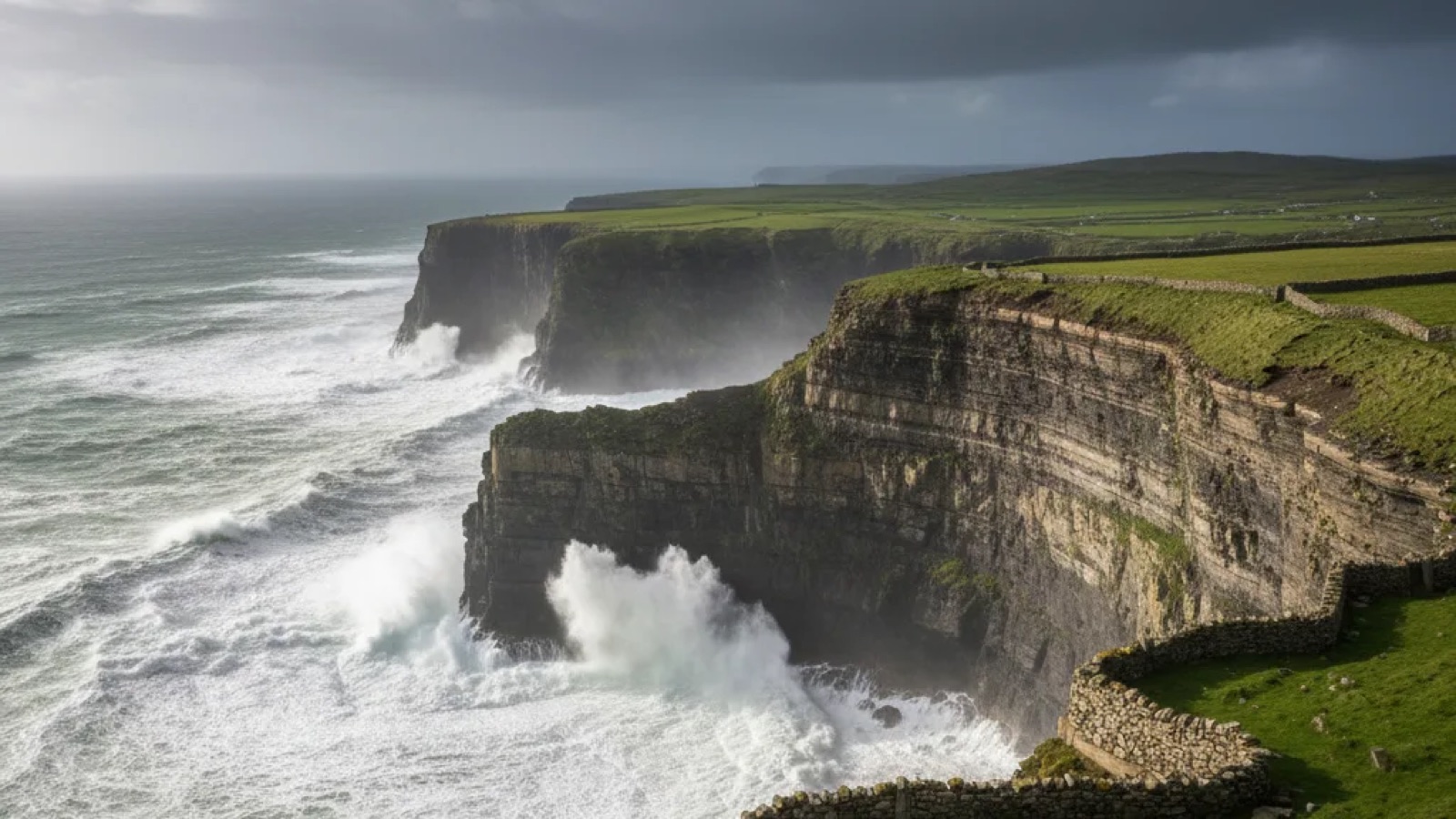
Heading into County Clare, the landscape transforms. The Cliffs of Moher are an icon. They are, without question, spectacular. But be prepared for crowds. To escape the busiest area around the visitor centre, I highly recommend hiking a section of the coastal path that runs along the cliff tops. Another incredible way to see them is from below, on a boat trip from Doolin, which gives you a true sense of their colossal scale.
Just inland from the cliffs is The Burren, one of my favourite landscapes in all of Europe. It’s a vast region of cracked limestone pavement, where rare Arctic and Alpine flowers grow in the crevices. It looks barren from a distance, but up close, it’s teeming with life. It’s a wonderful place for walking, with marked trails criss-crossing the strange, grey hills. Don’t miss the Poulnabrone Dolmen, a prehistoric portal tomb that stands starkly against the limestone landscape.
From Doolin or Rossaveal near Galway, you can take a ferry to the Aran Islands. Inis Mór is the largest and most popular, home to the spectacular clifftop fort of Dún Aonghasa. My personal favourite is Inis Meáin, the quietest of the three, a place where the Irish language is still the everyday tongue and you can feel a profound sense of stepping back in time. Always check ferry schedules in advance as they are highly weather dependent.
Key Stops: Connemara, Mayo and the Wild North
West of Galway lies Connemara. The drive from Galway towards Clifden via the N59 is one of the greats. The Twelve Bens mountain range rises dramatically from a landscape of peat bogs and shimmering loughs. Don't miss the Connemara National Park for superb hiking, and drive the 'Sky Road' loop from Clifden for sunset views you'll never forget. A slight detour north will bring you to Killary Harbour, a stunning nine-mile-long fjord that forms the border between counties Galway and Mayo.
In County Mayo, Achill Island, connected to the mainland by a bridge, is a must. It's a microcosm of the west coast, with dramatic cliffs, vast bogland, and some of the country's best beaches, like Keem Bay. For cyclists, the Great Western Greenway is a world-class, 42-kilometre off-road trail built on an old railway line, running from Westport to Achill. It's a brilliant, family-friendly way to experience the landscape. Further up the Mayo coast, the sea stack of Downpatrick Head is a formidable sight, especially on a day with big seas.
Key Stops: The Majestic Giant of Donegal
Donegal feels like a country apart. It is remote, wild and utterly magnificent. The centrepiece of its coastline is Slieve League (Sliabh Liag). These sea cliffs are nearly three times higher than the Cliffs of Moher, yet they attract a fraction of the visitors. You can drive much of the way up, but for the full experience, park lower down and walk. For seasoned hikers, the narrow path along the top, known as One Man's Pass, is a heart-in-mouth scramble with dizzying views.
The coastline of Donegal is a continuous highlight reel of surf beaches, hidden harbours, and rugged capes. The drive around the Horn Head peninsula near Dunfanaghy is breathtaking. The ultimate destination is the Inishowen Peninsula, Ireland's most northerly landmass. The journey culminates at Malin Head, the very top of Ireland. Standing there as the Atlantic pounds the rocks below, you feel a genuine sense of arrival at the end of the line. Gaze out to sea, and the next parish is Newfoundland.
The Reality of Driving in the West
Driving the Wild Atlantic Way is an adventure, not a commute. The roads are often incredibly narrow, sometimes just a single track wide, bordered by stone walls or deep ditches. You'll frequently have to use designated 'passing places' to let oncoming traffic by. The etiquette is simple: whoever is closer to the passing place pulls in. A friendly wave acknowledges the courtesy. You will share the road not just with other cars, but with enormous tour buses (on the popular stretches), slow-moving tractors, wandering sheep, and lycra-clad cyclists. Patience is not just a virtue here; it's a survival skill.
Your average speed will be far lower than you expect. A 50-kilometre journey might take well over an hour. Forget what your GPS tells you and embrace the slow pace. One very practical piece of advice: when you see a petrol station in a small town, fill up your tank, even if it's only half empty. Stretches of the route, particularly in Connemara and Donegal, have very few services, and you don’t want to be sweating over your fuel gauge in the middle of nowhere. Tolls are not a feature of the rural west coast; you’ll only encounter them on the motorways around major cities like Dublin.
Weather, Cancelled Boats and What to Pack
The old saying about Ireland having "four seasons in one day" was invented for the west coast. A brilliant, sunny morning can turn into a torrential downpour and a howling gale by lunchtime, before becoming calm and gloriously sunny again for sunset. The Atlantic weather systems roll in fast and untamed. An Atlantic 'squall' is something to behold, a wall of wind and rain that can reduce visibility to metres in seconds. They usually pass quickly, but they command respect.
This volatility has a direct impact on activities. Boat trips are frequently cancelled at very short notice due to sea conditions. This particularly affects trips to exposed islands like Skellig Michael or the aformentioned Aran Islands. If you have your heart set on one, book it for the earliest possible day in your itinerary to give yourself a chance to reschedule if it's cancelled.
Packing is all about layers. A waterproof and windproof outer jacket is non-negotiable, even in July. Underneath, a fleece or warm mid-layer is essential. Add and remove layers as the weather changes. Sturdy, comfortable walking shoes are a must; you'll be walking over uneven ground, muddy paths, and wet rocks. And don't forget sunglasses – the glare off the sea when the sun does break through can be intense.
Campervans, Cycling and Wild Camping
Campervanning is a fantastic way to experience the route, offering flexibility and freedom. However, with this freedom comes responsibility. The narrow roads can be challenging for larger vehicles. Never, ever park in a passing place, even for a photo. Always use designated campsites or official overnight parking spots (known as 'aires'). The infrastructure for campervans is improving, but it’s vital to be a courteous road user and visitor.
For cyclists, the Wild Atlantic Way presents a serious challenge with its hills and often-present headwind. However, dedicated cycling routes like the Great Western Greenway in Mayo offer a safe and spectacular alternative away from traffic. Many towns also offer bike hire for shorter local loops.
A note on wild camping: while it may seem tempting, wild camping is not officially permitted in Ireland without the landowner's permission. Unlike Scotland, there is no 'right to roam'. While some experienced campers do find discreet spots in remote areas following a strict 'leave no trace' ethic, as a visitor, the most respectful approach is to use official campsites. This supports local communities and ensures you don't inadvertently cause problems for farmers or residents.
A Photographer's Guide to the Atlantic Coast
As a photographer, Ireland's west coast is both a dream and a challenge. The light is the star of the show. It's soft, diffused, and changes by the second. The hours around sunrise and sunset are pure magic, casting long shadows and painting the sky in incredible colours. A sunset over the Atlantic is the classic shot, and for good reason. Find a west-facing cliff, harbour or beach, set up your tripod, and be patient.
A sturdy tripod is essential to handle the wind and allow for long exposures, which can turn a chaotic, churning sea into a soft, misty dreamscape. I never go without a circular polarising filter; it's my secret weapon for cutting the glare from the water's surface, deepening the blue of the sky, and making the green of the landscape really pop. The biggest challenge is the rain. A good waterproof camera bag is obvious, but I also carry a lens cloth and a small microfibre towel in my jacket pocket at all times to quickly wipe spray and rain from my lens. Often, the best light appears just as a rain shower clears, so you need to be ready to act fast.
Explore in Depth
While the west coast is a world of its own, many journeys to Ireland begin in its historic capital. For tips on how to spend your first few days, where to find the best pint, and how to understand its rich history, check out my other guides.
Frequently Asked Questions
Can I drive the Wild Atlantic Way in a week?
While you could technically drive the main roads from end to end in a week, you would be doing yourself a massive disservice. You would spend most of your days in the car, feeling rushed and stressed, and you would miss the very essence of the route, which is about slow travel and discovery. A week is perfect for exploring one section thoroughly, such as the peninsulas of Kerry and West Cork, or the coastline of Clare and Galway. To do the whole thing justice, you really need a minimum of three weeks.
Which direction should I drive the Wild Atlantic Way?
The route can be driven in either direction. The traditional way is south to north, from Cork to Donegal. A key advantage of this is that when driving on the left side of the road, the Atlantic Ocean will be on your driver's side for much of the journey. However, driving north to south is also perfectly fine and means the ocean is on the passenger's side, which can be better for your co-pilot's photography! It really comes down to personal preference and your starting point. The official signposting works equally well in both directions.
Do I need a 4x4 or special vehicle?
No, a standard rental car is absolutely sufficient for the Wild Atlantic Way. The main challenge on the roads is their narrowness, not their surface quality. The vast majority of the route is on sealed, tarmac roads. A smaller car can actually be an advantage, making it easier to navigate tight squeezes and find parking in small villages. Don't feel you need to rent a large SUV unless you need the space for luggage or passengers; it won't give you access to any extra roads and can be more cumbersome.
Is it hard to find accommodation on the route?
In the peak summer months of July and August, yes, it can be very difficult. It's essential to book your accommodation far in advance, especially in popular tourist hubs like Dingle, Killarney, and Galway. Outside of this period, in the shoulder seasons of spring and autumn, it's much easier to be flexible, but I'd still recommend booking at least a few days ahead. The route is exceptionally well-served by wonderful family-run B&Bs (Bed and Breakfasts), which offer a fantastic local experience, alongside hotels and self-catering cottages.
What are the best parts of the Wild Atlantic Way for families?
For families with younger children, the southern sections in West Cork, Kerry and Clare are often a great choice. These areas have a higher density of towns, more sheltered beaches, and family-friendly attractions. The Dingle Peninsula offers boat trips to see dolphins and plenty of accessible walks. Another excellent option is County Mayo, specifically around Westport, because of the Great Western Greenway. This 42-kilometre, traffic-free cycling and walking trail is flat and safe, making it perfect for a family day out on rental bikes.
Final Thoughts
After all my years of travelling, there are few journeys that get under your skin quite like the Wild Atlantic Way. It's more than just a road trip; it’s an immersion in a culture, a landscape, and a certain way of life that is tied inextricably to the sea. You’ll find the highlights aren’t just the big-ticket items like the Cliffs of Moher or the Ring of Kerry. They’re the small moments: the impromptu traditional music session in a tiny pub, the warmth of a B&B owner who tells you the best local spot for sunset, the taste of fresh seafood in a pier-side restaurant.
My best advice is to embrace the unexpected. Let the weather change your plans. Take that intriguing-looking side road. Stop the car for no reason other than the view is too beautiful to just drive past. The Wild Atlantic Way doesn’t just show you the west coast of Ireland; it invites you to become part of it, if only for a little while. And that’s an invitation you should absolutely accept.
More Ireland guides
Ireland Travel Guide: Route, Weather and Driving
Planning an Ireland trip: a realistic loop, driving on narrow roads, weather, the north-south border and how long you need.
Dublin Itinerary: History, Pubs and Day Trips
Two days in Dublin: Trinity and the Book of Kells, Kilmainham, the museums, a sane approach to Temple Bar, and day trips.