Istanbul Travel Guide: Three Days in the City
Three days in Istanbul: Hagia Sophia and the Blue Mosque, the Grand Bazaar, ferries on the Bosphorus and where to eat between them.
In this guide
- Quick Facts
- How Many Days Do You Really Need?
- Arriving in Istanbul: Airports & Transfers
- Getting Around: The Istanbulkart, Trams and Ferries
- Choosing Your Base: Sultanahmet vs. Beyoğlu vs. Kadıköy
- The Holy Trinity: Hagia Sophia, Blue Mosque and Topkapı Palace
- Underground and Overlooking: Basilica Cistern & Süleymaniye Mosque
- The Bazaars: Haggling and Sensory Overload
- Across the Golden Horn: Galata Tower and İstiklal Caddesi
- Crossing Continents: The Bosphorus Ferry to Asia
- A Photographer's Dream: The Colourful Streets of Balat
- Fuel for Exploring: Turkish Breakfast, Simit and Tea
- Culture, Scams and Etiquette
- Explore in Depth
- Frequently Asked Questions
- Final Thoughts
This guide is part of our Turkey Itinerary: Istanbul, Cappadocia, Coast — start there for the overview, when to go and how to get around.
The first call to prayer of the day finds me on a Karaköy rooftop, a tiny tulip-shaped glass of strong black tea warming my hands. It’s not one voice, but a hundred, a chorus cascading from minarets across the Golden Horn. The sound rolls over the slumbering domes of Sultanahmet, across the Bosphorus where the first ferries are tracing white lines on slate-grey water, and seems to settle into the very stones of the city. Down below, a baker dusts his hands with flour and the first scent of baking simit bread rises to meet the dawn. This is the moment I always wait for in Istanbul. It’s the city breathing, a sound that bridges millennia. In that moment, you’re not just a traveller; you’re a tiny part of its impossibly grand, endlessly captivating story.
Istanbul isn’t a city you simply see; it’s a city you feel with every sense. It’s the weight of history under your feet, the taste of salt and grilled fish on the air, the dazzling colour of a bazaar, and the warmth of a shared pot of tea. For a first-time visitor, it can feel like a glorious sensory overload. This guide is built from my own journeys, designed to give you a practical path through the beautiful chaos. We'll cover how to get your bearings, where to base yourself, how to navigate the sprawling sights from ancient mosques to kaleidoscopic bazaars, and how to eat, drink, and travel like someone who’s been here before. This is a plan for three full, unforgettable days in the city that straddles two continents and holds the heart of an empire.
Quick Facts
- Location: North-western Turkey, straddling the Bosphorus Strait, which separates Europe and Asia.
- Getting There: Most international travellers arrive at Istanbul Airport (IST) on the European side or Sabiha Gökçen Airport (SAW) on the Asian side. Both are well-connected by airport shuttle buses.
- Getting Around: An Istanbulkart is essential for the excellent network of trams, metros, and public ferries. Walking is the best way to explore individual neighbourhoods.
- Language & Currency: The official language is Turkish. English is spoken in tourist centres, but learning a few Turkish phrases goes a long way. The currency is the Turkish Lira.
- Best Time to Visit: Spring (April-May) and Autumn (September-October) offer pleasant temperatures and beautiful light for photography. Summer can be hot and crowded, while winter is cold and can be rainy.
How Many Days Do You Really Need?
I’ve met travellers trying to ‘do’ Istanbul in a 24-hour layover, and they always leave with the same wide-eyed look of regret. The city is immense, a sprawling tapestry of distinct neighbourhoods, each with its own character and pace. To even begin to scratch the surface, I’d say three full days is the absolute minimum. This allows you to dedicate a day to the historic heart of Sultanahmet, a day to exploring Beyoğlu and the Bosphorus, and a day for the bazaars and a neighbourhood like Balat or Kadıköy.
If you can stretch it to four or five days, you’ll be richly rewarded. An extra day or two allows you to slow down. It’s the difference between ticking off sights and truly experiencing them. It gives you time for a long, lazy Turkish breakfast, an unplanned ferry ride just for the view, or an afternoon spent getting lost in the backstreets of the Grand Bazaar. This guide is structured around a packed three days, but you could easily spread these activities over a longer trip for a more relaxed pace.
Arriving in Istanbul: Airports & Transfers
Istanbul has two major international airports, and it’s crucial to know which one you’re flying into as they are on opposite sides of the city. Istanbul Airport (IST) is the huge new hub on the European side, north of the city centre. Sabiha Gökçen Airport (SAW) is on the Asian side and is a smaller, but still very busy, hub.
Forget the stress of negotiating with taxi drivers upon arrival. The most reliable and straightforward way to get into the city from either airport is the official airport shuttle bus. From IST, the service is called Havaist, and from SAW, it’s Havabus. These comfortable coaches run frequently to key transport hubs all over the city, like Taksim Square and Aksaray on the European side, and Kadıköy on the Asian side. You can pay on board, and they are a fraction of the cost of a taxi. From your drop-off point, it’s usually a short taxi ride or a quick hop on the metro to your hotel.
Taxis and ride-sharing services are of course available, but be prepared for Istanbul's legendary traffic. If you do take a taxi, always ensure the meter is running. A metro line now connects IST to the city network, which is becoming an increasingly good option depending on where you are staying. As with all transport, it’s wise to check the latest routes and timetables on the official airport or transport authority websites before you travel.
Getting Around: The Istanbulkart, Trams and Ferries
Istanbul's public transport is efficient, extensive, and part of the experience itself. The first thing you should do is buy an Istanbulkart. This is a rechargeable contactless card that is your key to the entire system: trams, metros, public ferries, and buses. You can buy and top up the card at yellow vending machines (Biletmatik) found at major stations and ferry terminals. One card can be used for multiple people; you just tap it once for each person in your group.
For exploring the historic areas, the T1 tram line is your best friend. It runs from Kabataş, across the Galata Bridge, through Sultanahmet (stopping for the Blue Mosque, Hagia Sophia, and Topkapı Palace), and onwards past the Grand Bazaar. It’s the perfect tourist lifeline.
But the real soul of Istanbul's transport lies with the ferries (vapur). They crisscross the Bosphorus and the Golden Horn all day long, and a trip on one is non-negotiable. They are not just for transport; they are for seeing the city's incredible skyline from the water. For the price of a single public transport fare, you get a world-class cruise. My favourite simple joy is grabbing a ferry from Eminönü or Karaköy over to Kadıköy on the Asian side, buying a tea from the onboard waiter, and watching the domes and minarets of the old city recede into the distance.
Choosing Your Base: Sultanahmet vs. Beyoğlu vs. Kadıköy
Where you stay will fundamentally shape your experience of Istanbul. There’s no single ‘best’ area; it depends entirely on what you’re looking for.
Sultanahmet: The Historic Heart
For first-time visitors, staying in Sultanahmet is incredibly convenient. You can walk out of your hotel and be at the Blue Mosque, Hagia Sophia, or Topkapı Palace in minutes. Waking up to the sight of those ancient domes outside your window is magical. The downside is that the area is almost entirely geared towards tourism. The food can be more expensive, and the streets become very quiet after the day-trippers leave. It's the epicentre of history, but not necessarily the epicentre of modern Istanbul life.
Beyoğlu & Karaköy: The Vibrant Present
Across the Golden Horn from the old city lies the district of Beyoğlu, which includes areas like Karaköy, Galata, and the area around İstiklal Caddesi. This is where I usually choose to stay. It’s the pulsating heart of modern Istanbul, packed with fantastic restaurants, cool bars, independent shops, and art galleries. You’re connected to Sultanahmet by the T1 tram but are immersed in a more local, energetic atmosphere. Karaköy, down by the water, has a particularly great vibe with its mix of old workshops and trendy cafes. It's hilly, and can be noisy, but the energy is infectious.
Kadıköy: The Local's Asia
If you want to feel like you’re living in Istanbul, not just visiting, consider staying on the Asian side in Kadıköy. This is a vibrant, bustling neighbourhood with a phenomenal food market, great bookshops, and a laid-back, progressive atmosphere. It’s almost entirely free of big tour groups. You’re only a scenic 20-minute ferry ride away from the European side’s main sights, and commuting by water every day is a wonderful way to start and end your sightseeing. It’s a great choice for return visitors or more independent travellers.
The Holy Trinity: Hagia Sophia, Blue Mosque and Topkapı Palace
Sultanahmet Square is the historic core of not just Istanbul, but of two great empires. It’s here you’ll find three of the most significant sites in the city, all within a few minutes’ walk of each other.
Hagia Sophia: A Grand Mosque
Standing beneath the colossal dome of Hagia Sophia is one of the most profound travel experiences on earth. Its 1,500-year history runs from the principal church of the Byzantine Empire to a mosque, then a museum, and now, once again, a working mosque. That change shapes how visitors see it today. Since 15 January 2024, foreign visitors pay an entrance fee and tour the upper galleries, while most of the ground floor is reserved for worshippers. You must dress modestly – shoulders and knees covered for both men and women, and women must cover their heads. Scarves are available to borrow, but carrying a light scarf of your own is easier. The building closes to visitors during the five daily prayer times, so plan your visit around them. The view down into the vast nave from the galleries is a powerful experience in its own right.
The Blue Mosque (Sultanahmet Camii)
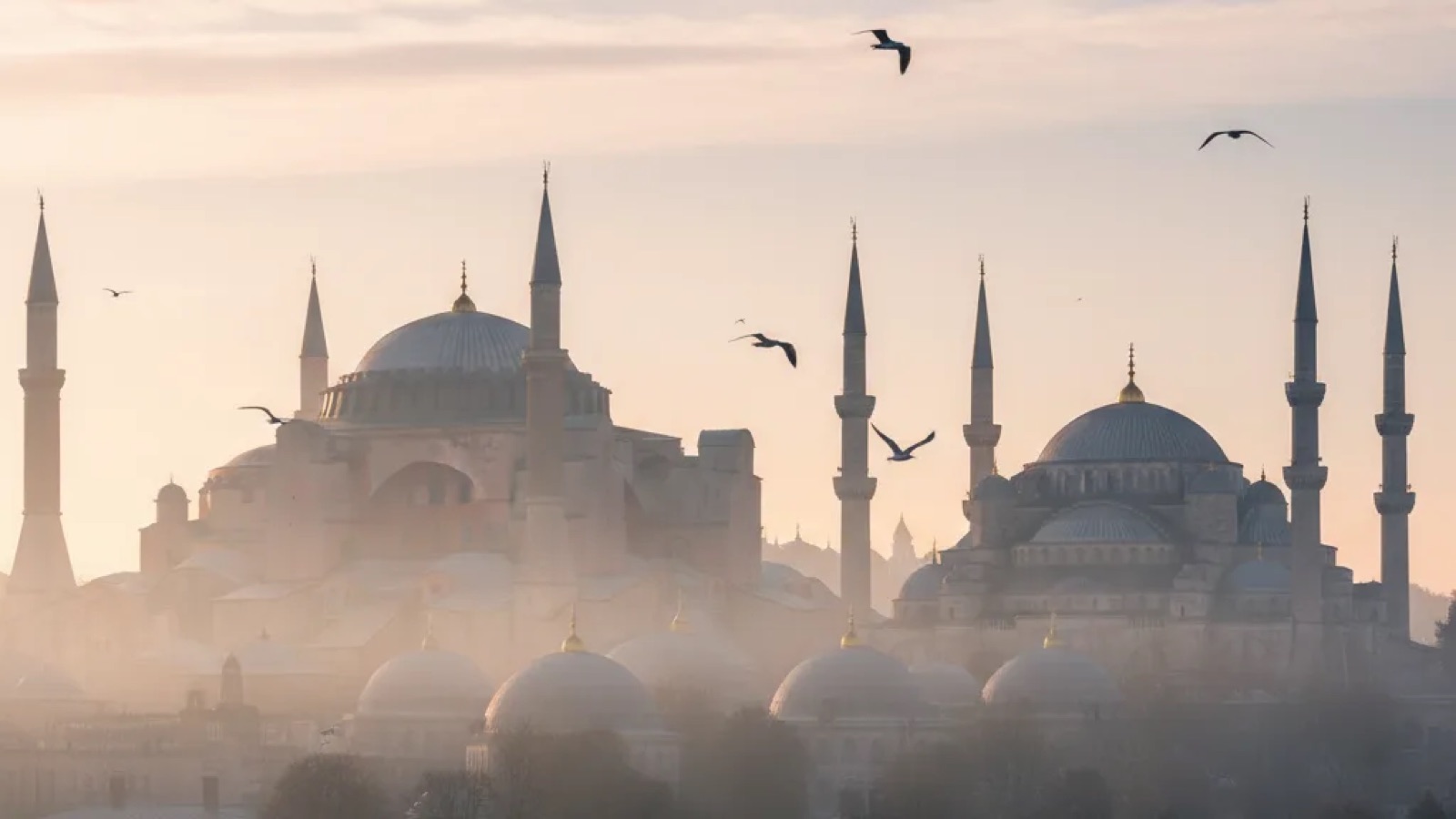
Directly opposite Hagia Sophia, the Blue Mosque is a masterpiece of classical Ottoman architecture, with its six slender minarets and cascading domes. Its popular name comes from the tens of thousands of blue Iznik tiles that adorn its interior. The mosque is an active place of worship and often has sections closed for prayer or extensive restoration (it’s wise to check its status before you go). The same rules of dress and etiquette apply here as at Hagia Sophia. For me, the best view isn’t from inside, but from the surrounding park, where you can appreciate its perfect symmetry and its architectural conversation with Hagia Sophia. From a photographer's perspective, capturing both grand structures in the same frame during the golden hour is the quintessential Istanbul shot.
Topkapı Palace: World of the Sultans
This wasn't just a palace; it was a sprawling city-within-a-city, the seat of Ottoman power for 400 years. Give yourself at least half a day here. The complex is divided into four courtyards, each more private than the last. You’ll see lavish pavilions, holy relics, and mind-boggling treasury collections. The one part you shouldn't miss is the Harem, which is included in the combined palace ticket (with Hagia Irene) and is absolutely worth it. This was the secluded private quarter of the Sultan, his family, and his concubines, and walking through its lavishly tiled rooms and narrow corridors is a fascinating, eerie glimpse into a world of intrigue and power. My favourite spot is the terrace of the Fourth Courtyard, which offers a panoramic view over the Bosphorus and Golden Horn that is truly fit for a Sultan.
Underground and Overlooking: Basilica Cistern & Süleymaniye Mosque
While the big three grab the headlines, two of my absolute favourite places in Istanbul offer different perspectives on the city's grandeur.
Just a stone's throw from Hagia Sophia is the entrance to the Basilica Cistern. Descending the stone steps is like entering another world. The air cools, the city noise vanishes, and you find yourself in a subterranean forest of 336 marble columns holding up the city. The space, built by Emperor Justinian in the 6th century, is vast, and the sound of dripping water echoes around you. Walkways lead you over the shallow water to the far corner, where two giant Medusa heads, one on its side and one upside down, form the bases of two columns. No one knows for sure why they are there. After a recent renovation, the lighting is more atmospheric and artistic, making the walk through this underground wonder even more memorable.
Further up the hill from the Spice Bazaar stands the magnificent Süleymaniye Mosque. While the Blue Mosque impresses with its decoration, Süleymaniye stuns with its sheer scale, light, and architectural harmony. Built for Süleyman the Magnificent by the legendary architect Mimar Sinan, many consider this to be the finest of all the imperial mosques. It sees far fewer tourists than its Sultanahmet rivals, lending it a profound sense of peace. I love to come here in the late afternoon. The interior is a breathtaking study in light and space. Afterwards, walk around to the gardens behind the mosque. The view from here, looking down over the Golden Horn towards Galata, is one of the best in all of Istanbul. It’s the perfect place to sit on a bench, absorb the panorama, and just be.
The Bazaars: Haggling and Sensory Overload
Prepare your senses. Visiting Istanbul's historic markets is a dive into a vibrant, chaotic world of commerce that feels little changed by time. The two main ones are the Grand Bazaar and the Spice Bazaar.
The Grand Bazaar is one of the oldest and largest covered markets in the world, a labyrinth of over 60 streets and 4,000 shops. You will get lost, and that’s part of the fun. Follow your eyes: from glowing lanterns and intricate carpets to beautiful ceramics and leather goods. Photography here is a joy; focus on details, the play of light through a high window, or the face of a shopkeeper.
A short walk downhill brings you to the Spice Bazaar (or Egyptian Bazaar). It’s smaller, more manageable, and smells incredible. Piles of saffron, sumac, and paprika create mountains of colour. You’ll find stalls selling Turkish delight (lokum), dried fruits, nuts, and endless varieties of tea. Most vendors will offer you a sample.
A word on haggling: It’s expected and part of the culture, but it should be a friendly interaction, not an argument. The first price you’re quoted is just an opening offer. A good rule of thumb is to counter with about 50-60% of that price and aim to meet somewhere in the middle. The key is to be polite, smile, and be prepared to walk away if you can’t agree on a price. If the vendor doesn't come after you, you know you've hit their bottom line. Never haggle for something you don't actually intend to buy.
Across the Golden Horn: Galata Tower and İstiklal Caddesi
Crossing the Galata Bridge on foot is an Istanbul rite of passage. Fishermen line the railings, their rods dangling to the water below, while the T1 tram rattles past the centre. On the other side, the Genoese-built Galata Tower dominates the skyline. It’s worth climbing to the top for the stunning 360-degree panoramic view of the entire city, though queues can be long so try to go at an off-peak time.
From the tower, you’re at the foot of İstiklal Caddesi (Independence Avenue), a long, bustling pedestrian street that is the heart of modern Beyoğlu. A charming historic red tram trundles down its centre, past a mix of grand 19th-century European-style buildings, international chain stores, cinemas, and hidden arcades (called pasaj). The real magic of this area is in the tiny side streets that branch off İstiklal. This is where you'll find some of the city's best restaurants, rooftop bars, live music venues, traditional taverns (meyhanes), and a tangible buzz that lasts long into the night.
Crossing Continents: The Bosphorus Ferry to Asia
You haven’t truly been to Istanbul until you’ve travelled between continents. Forget the expensive private Bosphorus cruises. The best way to experience the famous strait is on a public şehir hatları ferry. For the price of a bus ticket, you get a front-row seat to one of the world's most spectacular commutes.
My favourite route is from Karaköy or Eminönü on the European side to Kadıköy on the Asian side. The 20-minute journey is a photographer's dream. As you pull away from the dock, the skyline of the old city unfolds: Topkapı Palace, Hagia Sophia, and the Blue Mosque. You’ll chug past the Dolmabahçe Palace, lavish waterfront mansions (yalı), and the Maiden’s Tower sitting on its tiny islet. Seagulls will inevitably trail the ferry, hoping for a scrap of bread from passengers.
Arriving in Kadıköy feels like discovering a different city. It’s energetic but more relaxed than the European side. Spend an afternoon wandering through the Kadıköy Market, a foodie paradise brimming with fresh fish, olives, cheeses, and pickles. Grab a seat at one of the many cafes, watch the world go by, and enjoy being in the heart of a real Istanbul neighbourhood.
A Photographer's Dream: The Colourful Streets of Balat
If you have a bit of extra time and an adventurous spirit, make your way to the neighbourhoods of Fener and Balat, nestled along the Golden Horn. This is the old Greek and Jewish quarter, and it feels like stepping back in time. It’s a hilly maze of steep, cobblestoned streets lined with some of the most colourful, beautifully dilapidated houses in Istanbul. Kids play football in the streets, and laundry is strung between buildings.
This isn't a place with a list of sights to tick off; the neighbourhood itself is the sight. It's become very popular on Instagram, particularly the sloping street of Kiremit Caddesi with its row of brightly painted houses. But if you wander beyond the most famous spots, you'll find a living, breathing community with a unique, bohemian vibe. It's a fantastic place to spend a morning with a camera, capturing the colours, textures, and quiet moments of a different side of Istanbul.
Fuel for Exploring: Turkish Breakfast, Simit and Tea
Food in Istanbul is an adventure in itself, woven into the fabric of daily life. Start your day with a proper Turkish breakfast (kahvaltı). This isn’t a quick bite; it’s a feast, a social event. Expect a table laden with small plates: several types of cheese, black and green olives, fresh tomatoes and cucumber, honey, clotted cream (kaymak), fruit preserves, maybe some spicy sausage (sucuk) with eggs, and of course, a bottomless basket of fresh bread.
As you explore, you'll be powered by street food. The most ubiquitous is simit, a circular bread ring covered in sesame seeds, sold from red carts on every corner. It’s the perfect cheap, delicious snack. Down by the water near Eminönü and Karaköy, you must try a balık ekmek – a grilled fish fillet stuffed into a hunk of bread with onions and lettuce. Simple, fresh, and absolutely iconic.
And then there is tea (çay). Turkish tea is more than a drink; it's a ritual of hospitality and conversation. It’s served strong and black in small, elegant tulip-shaped glasses. You will be offered it everywhere: in shops, after a meal, while waiting for a bus. Always accept. Sitting down for five minutes with a glass of tea is the best way to pause, people-watch, and connect with the rhythm of the city.
Culture, Scams and Etiquette
Istanbul is a generally safe and welcoming city, but like any major metropolis, it pays to be aware of your surroundings.
The call to prayer (ezan) echoes from the minarets five times a day. It’s not something to be alarmed by; it’s the city’s soundtrack. When visiting any mosque, be respectful. Dress conservatively (shoulders and knees covered) and women should bring or borrow a scarf to cover their hair. Remove your shoes at the door and speak in hushed tones. Avoid visiting during prayer times (these are posted at the entrance).
Be aware of a couple of common, low-level scams. The first is the "shoeshine scam", where a man walking in front of you will "accidentally" drop his brush. If you pick it up for him, he will insist on cleaning your shoes for free as thanks, then demand an exorbitant fee afterwards. Simply ignore it and keep walking. The second is the overly friendly man or group of men who strike up a conversation and invite you to a "great bar" they know. This bar will often have unlisted prices and you'll be presented with a ridiculously inflated bill at the end. A polite "no, thank you" is all that's needed.
Explore in Depth
After you've conquered the city of two continents, your Turkish adventure is just getting started. For the next leg of your journey, let the surreal landscapes and ancient history of central Anatolia captivate you with my detailed guide.
Frequently Asked Questions
What is the dress code for visiting mosques like Hagia Sophia?
When visiting any mosque in Istanbul, including Hagia Sophia and the Blue Mosque, modest dress is required for everyone. This means your shoulders and knees must be covered. For women, a head covering is also mandatory. Major tourist mosques provide loaner scarves and wraps at the entrance, but it’s respectful and more convenient to carry your own lightweight scarf. You will also be required to remove your shoes before stepping onto the carpeted prayer area, so wearing shoes that are easy to slip on and off is a good idea.
Is it better to stay on the European or Asian side of Istanbul?
For a first-time visitor with limited time, staying on the European side is more practical. Sultanahmet puts you at the doorstep of the main historical sites, while Beyoğlu (Karaköy, Galata) offers a vibrant, modern atmosphere with great food and nightlife, while still being well-connected. The Asian side, particularly Kadıköy, is fantastic for a more local, relaxed experience with an amazing food scene. It’s great for return visitors or those on a longer trip who don't mind the daily (and very scenic) ferry commute to the main attractions.
Is the Istanbulkart worth it for a three-day trip?
Absolutely. The Istanbulkart is essential even for a short trip. It makes using public transport incredibly easy and affordable. You'll use it for the T1 tram to get around Sultanahmet, for the metro, and most importantly, for the public ferries across the Bosphorus. The convenience of simply tapping your card and hopping on, rather than buying single tokens for every journey, is well worth it. One card can be shared among a small group, making it even more cost-effective.
How do I handle haggling in the Grand Bazaar without causing offence?
Haggling is an expected part of the shopping experience in the bazaars and should be approached as a friendly negotiation, not a conflict. A good strategy is to start by offering a price that is about half of the vendor's initial asking price. They will likely laugh or feign shock, but this is all part of the process. From there, you trade offers until you reach a price you are both happy with, usually somewhere in the middle. The key is to stay polite, smile, and never get angry. If you cannot agree on a price, it's perfectly acceptable to politely thank the vendor and walk away.
Are the Bosphorus dinner cruises worth it, or is there a better alternative?
While the dinner cruises can be a fun night out, they are often tourist-focused with mediocre food and entertainment. For a more authentic and budget-friendly experience of the Bosphorus, I strongly recommend using the public ferry system (Şehir Hatları). A simple ferry ride from Eminönü to Kadıköy, or a longer "Bosphorus Tour" on one of the public boats, offers the exact same spectacular views of palaces, mosques, and waterfront mansions for a fraction of the cost. You can then spend the money you saved on an amazing meal at a proper restaurant in a neighbourhood like Karaköy or Kadıköy.
Final Thoughts
After a dozen years of travelling, there are only a handful of cities that have truly lodged themselves in my soul, and Istanbul is chief among them. It’s a city that defies easy categorisation. It’s European and Asian, ancient and daringly modern, deeply pious and fiercely secular, all at once. It’s in the taste of a fresh simit, the sound of a ferry horn, and the gaze of a thousand years of history from the mosaic eyes of a Byzantine Christ.
To travel to Istanbul is to walk through the pages of a history book that is still being written. Don't just rush between the monuments. Take the time to sit in a tea garden, to watch the fishermen on the Galata Bridge, to simply listen to the city's symphony. Let Istanbul happen to you. I promise you'll leave a small piece of your heart behind on the shores of the Bosphorus, and carry a large piece of its magic with you forever.