Kandy to Ella Train: How to Book and What to See
How to plan the Kandy to Ella hill country train: classes, reserved seats, the best side for views, Nine Arches Bridge and doorway safety.
In this guide
This guide is part of our Sri Lanka Itinerary: Hill Country and Coast — start there for the overview, when to go and how to get around.
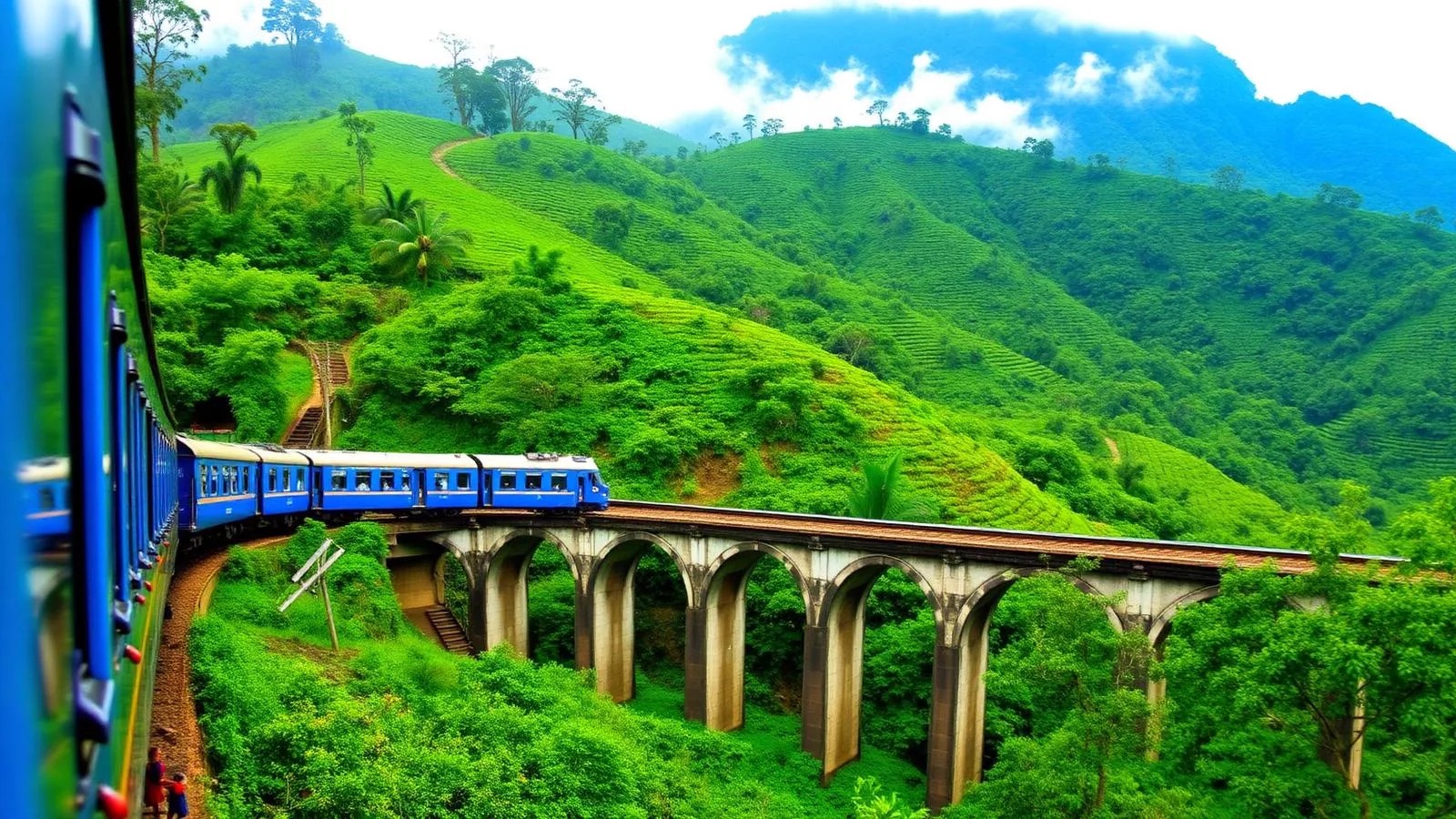
The hiss of the brakes, a final jolt, and the station’s chaotic symphony quietens. On the crowded platform at Kandy, the iconic blue train waits, a long, rumbling caterpillar resting before its epic crawl into Sri Lanka’s highlands. Landing a seat by the window feels like winning a lottery, and as the train pulls away from the city, the urban clamour begins to dissolve, replaced by a landscape painted in a thousand shades of green. The magic of this journey never fades.
It’s a trip that transcends mere transport. It’s a rolling, cinematic experience, where every rattle of the carriage and every click of the tracks against steel is part of the soundtrack. The window becomes a frame for a living masterpiece: emerald tea fields rolling over hills like a vast, rumpled blanket, waterfalls cascading down sheer rock faces, and villages appearing like tiny, colourful secrets tucked into the valleys. It remains one of the most profoundly beautiful travel days you can have anywhere on Earth.
One of the World's Great Train Journeys
Often hailed as one of the most scenic train rides in the world, the journey from Kandy to Ella is more than just a way to get from A to B; it's a destination in itself. This colonial-era railway line, originally built by the British to transport tea and coffee from the verdant hill country to the port of Colombo, has become a bucket-list experience for travellers from every corner of the globe. The slow-moving train snakes its way through the heart of Sri Lanka's tea country, offering breathtaking, ever-changing vistas that are simply impossible to appreciate from a car on a winding road.
The full journey takes the better part of a day, but time seems to slow down once you’re on board. You’ll pass through dozens of tunnels, over historic bridges, and past smiling locals who wave from their porches and fields. It’s a chance to unplug, to watch the world go by at a gentle pace, and to connect with the incredible landscape of Sri Lanka’s central highlands.
Quick Facts
- Route: The main line runs from Colombo to Badulla, but the most famous scenic section is between Kandy and Ella.
- Direction: While you can travel either way, the Kandy to Ella direction is generally preferred as the views arguably get more and more spectacular as you climb higher into the mountains.
- Duration: The full Kandy to Ella trip typically takes around 7 hours, but delays are common and part of the authentic experience.
- Key Stops: Major stations and popular points to break the journey include Hatton (for Adam's Peak), Nanu Oya (for Nuwara Eliya), Haputale, and Ella.
- Booking: Reserved seats are essential for comfort and sell out weeks, sometimes even months, in advance. Unreserved tickets are always available on the day of travel but do not guarantee a seat.
- Scenery: Expect vast tea plantations, misty mountains, dramatic valleys, waterfalls, and quaint hill-country villages.
Understanding the Train Carriages and Classes
Choosing the right class of travel can significantly shape your experience on the Kandy to Ella line. Sri Lanka Railways offers several options, each with distinct advantages and disadvantages. There’s no single “best” choice; it all depends on what you prioritise—comfort, photography, or local immersion.
First Class
First Class carriages are a modern addition, aimed squarely at tourists seeking comfort. These are typically air-conditioned carriages with sealed windows, meaning you’re separated from the sounds, smells, and breezes of the hill country. While the seats are comfortable and you're guaranteed a reserved spot, the inability to open a window is a major drawback for photographers and anyone wanting a more sensory experience. Some trains have a First Class Observation Car at the rear, offering a wide, panoramic view through a large window, but the glass can be subject to glare and dirt, and you’re still in a sealed environment.
Second Class
For many travellers, Second Class hits the sweet spot. These carriages feature comfortable, padded seats in a two-by-two configuration and, crucially, have fans instead of air conditioning. This means the windows and doors are usually wide open, allowing for incredible, unobstructed views, fantastic photo opportunities, and a refreshing breeze. Second Class is available in both reserved and unreserved options. A reserved Second Class seat is arguably the most sought-after ticket on the entire line, offering a guaranteed place with all the benefits of the open-air experience.
Third Class
Third Class is the most basic and authentic way to travel. The carriages often have benches instead of individual seats, and they can get extremely crowded, especially the unreserved ones. However, this is where you'll travel alongside locals—families on their way to visit relatives, commuters, and vendors selling delicious snacks. Like Second Class, Third Class also comes in reserved and unreserved flavours. A reserved Third Class seat can be a great budget-friendly option, ensuring you have a place to sit while still being in the heart of the action. The unreserved Third Class carriage is a true immersion, but be prepared to stand for long periods, especially during peak season.
| Feature | First Class | Second Class | Third Class |
|---|---|---|---|
| Air Conditioning | Yes | No (Fans) | No (Natural Breeze) |
| Windows | Sealed | Openable | Openable |
| Seating | Padded individual seats | Padded individual seats | Mostly benches, some individual |
| Atmosphere | Quiet, tourist-focused | Mix of travellers and locals | Lively, primarily local |
| Booking | Reserved only | Reserved & Unreserved | Reserved & Unreserved |
How to Secure Your Ticket
Getting a ticket for the Kandy to Ella train, particularly a reserved one, requires some planning. The immense popularity of this route means that simply showing up on the day and expecting a comfortable seat is a recipe for disappointment.
Reserved vs. Unreserved: The Great Debate
A reserved ticket guarantees you a specific seat in a specific carriage. For a seven-hour journey, this peace of mind is invaluable. You can leave your bag at your seat to wander the carriage, you know you'll have a window to look out of, and you won't be jostling for space. This is the best option for anyone travelling the full Kandy to Ella distance.
An unreserved ticket is essentially permission to board the train and find whatever space you can. You buy these tickets at the station on the day of travel, and they never sell out. The downside is that on a busy day, you will likely be standing for a significant portion, if not all, of the journey. While standing in a crowded carriage can be an adventure for a short hop, it becomes exhausting over several hours. The unreserved carriages are a lottery; you might get lucky and find a seat after a few stops, or you might be pressed into a corner for the duration.
Booking Reserved Seats
This is the tricky part. Reserved seats for all classes become available for booking a set number of days before the travel date (typically around 30 days, but always check the official Sri Lanka Railways website for the latest policy). They sell out almost instantly. Here’s why:
- High Demand: This is one of Sri Lanka’s top tourist attractions, and a limited number of reserved seats are available each day.
- Online Portals: While the official Sri Lanka Railways website is the primary source, tickets are released at a specific time and the site can be difficult to navigate and is often overwhelmed by traffic.
- Local Agents: A large portion of the tickets are snapped up by local tour operators and guesthouses for their clients.
Your best bet is to be organised. As soon as you know your travel dates, mark your calendar for the day tickets are released. Be ready on the official website at the moment they go live. Alternatively, numerous reputable third-party travel and booking websites offer a service where you can pre-book, and they will secure the tickets for you as soon as they become available. This often comes with a service fee but can save a lot of stress and is a very popular method.
Buying Unreserved Tickets
If you decide to brave the unreserved carriages, the process is simple. Arrive at the train station an hour or so before your train is due to depart, go to the correct ticket window for your class (usually there are separate windows for 2nd and 3rd), and buy your ticket. It’s a cheap and straightforward process, but remember what you’re trading for that simplicity: a guaranteed seat and personal space.
The Route, Stage by Stage
The journey unfolds like a story, with each section of the track revealing a new chapter of the hill country's character.
Leaving Kandy (Altitude: 500 metres)
The first hour of the journey involves the slow climb out of the Kandy basin. The scenery is a mix of suburban sprawl, dense jungle, and small farms. The train moves slowly, clattering through small stations as it begins its relentless ascent. It's a nice warm-up, but the truly spectacular views are yet to come.
Into the Tea Country: Hatton to Nanu Oya
After the station of Hatton (the main jumping-off point for pilgrims and trekkers heading to Adam's Peak), the landscape transforms dramatically. This is where the world's image of Sri Lankan tea country comes to life. Unending hills covered in a manicured carpet of tea bushes stretch to the horizon. You'll see tea factories with their colonial architecture perched on hilltops and the brightly coloured saris of tea pluckers moving methodically through the fields. It's a photographer's dream.
Nanu Oya: Gateway to Nuwara Eliya
The train pulls into the bustling Nanu Oya station, and you'll notice a distinct drop in temperature. This is the station for Nuwara Eliya (the line's highest point comes later, at Pattipola, Sri Lanka's highest railway station at 1,897.5 metres), the former British colonial retreat often called "Little England." Many travellers choose to break their journey here for a day or two to explore Nuwara Eliya’s colonial-era post office, grand hotels, and temperate gardens. The station itself is a flurry of activity as passengers embark and disembark.
The Most Scenic Stretch: Nanu Oya to Ella
If you only have time for a shorter trip, the two-to-three-hour leg from Nanu Oya to Ella is the undisputed highlight reel. Leaving Nanu Oya, the train clings to the side of the mountains, offering truly staggering views across the valleys. You'll pass through the longest tunnel on the line, and on a clear day, the vistas seem to go on forever. This section is a continuous stream of jaw-dropping landscapes.
Haputale: A Stunning Alternative
Before reaching Ella, the train stops at Haputale, a town perched precariously on a narrow mountain ridge. What makes Haputale unique is that on a clear day, you can see views stretching out to the southern coast from one side and across the central mountains from the other. It’s a less-visited alternative to Ella, offering access to incredible viewpoints like Lipton's Seat without the same level of crowds. It's a fantastic place for serious hikers and those seeking a more rugged hill country experience.
Approaching Ella: Bridges and Loops
Two of the railway's most famous engineering marvels lie just beyond Ella, on the stretch to Demodara, so a train journey that ends at Ella does not reach them. To cross the Nine Arches Bridge by train, stay on past Ella or take the short hop from Ella to Demodara; the train slows right down on the bridge. From your window, you'll see the crowds gathered below, cameras and phones at the ready, waiting for your train to complete the iconic picture. It’s a surreal experience to be the subject of so many photographs.
At Demodara, the next station after the bridge, the train performs the famous Demodara Loop. Here, the track loops back on itself and passes through a tunnel that runs directly underneath the Demodara station. It's a clever piece of engineering designed to help the train manage the steep gradient. From your carriage, you'll feel the train turn sharply and then emerge from the tunnel, having descended without losing much forward ground. Beyond the loop, the line continues to its terminus at Badulla.
Practical Tips for the Journey
A little preparation goes a long way in making this fantastic journey even better. A few things can make all the difference.
Which Side of the Train? The Million-Dollar Question
This is the most common question, and for good reason. The views are not equal on both sides.
- For the Kandy to Ella direction, the best and most expansive valley views are on the left side of the train.
- For the Ella to Kandy direction, the best views are on the right side.
While you can’t always choose your specific seat when booking, if you’re in an unreserved carriage or a carriage with open doors, you can position yourself to take advantage of the best side. The first few hours out of Kandy have good views on both sides, but from Hatton onwards, the left side (when heading to Ella) is consistently more dramatic.
The Iconic Doorway Photo: A Word of Caution
Scrolling through social media, you’d think the main purpose of this journey is to dangle precariously out of an open doorway for a photo. The shot is undeniably iconic, but it comes with a serious word of warning.
These are old trains on old tracks. They lurch and sway without warning. You are moving past overgrown bushes, solid rock walls, and through narrow tunnels that leave only centimetres of clearance. There are also trains passing in the opposite direction on the adjacent track. Please be incredibly careful. If you must get the shot, do it in a wide-open area, hold on tight with both hands, and never, ever lean your whole body out. Be aware of your surroundings at all times. A photo is not worth a serious injury.
What to Bring Onboard
Treat the journey like a day-long excursion. Pack a small daypack with essentials:
- Water and Snacks: While vendors do hop on and off at stations selling delicious things like spicy 'vade' (lentil fritters), samosas, and fruit, it’s wise to have your own supply of water and snacks just in case.
- Layers: The temperature can vary significantly. It can be warm and humid leaving Kandy, but as you climb towards Nuwara Eliya, it can become cool and misty, especially if the clouds roll in. A light jacket or jumper is a good idea.
- Power Bank: Seven hours is a long time to be taking photos and videos. A portable power bank for your phone and camera battery is a lifesaver.
- Toilet Paper and Hand Sanitiser: The onboard toilets are very basic, to put it mildly. It's always best to be prepared.
Weather in the Hill Country
Don't be disappointed if your journey is shrouded in mist. The weather in the highlands is famously unpredictable. A bright, sunny morning can turn into a misty, atmospheric afternoon in minutes. The mist adds a whole new layer of mystique and beauty to the landscape, creating ethereal, moody scenes that are just as beautiful as the sunny-day panoramas. Embrace whatever the weather throws at you; it’s all part of the experience.
Beyond the Tracks: Arriving in Ella
The train journey might be over, but your adventure is not. Ella is a fantastic base for some of Sri Lanka’s best hikes and scenery, making it the perfect reward at the end of the line.
Hiking Little Adam's Peak
This is the quintessential Ella hike. It’s a relatively easy and incredibly rewarding walk that takes about two hours for a round trip. The path winds its way through a tea plantation before a final, manageable climb up a series of steps to the summit. From the top, you're greeted with stunning 360-degree views of the surrounding valleys and the famous Ella Gap. It’s particularly beautiful at sunrise.
Conquering Ella Rock
For a more challenging trek, Ella Rock is the answer. This is a half-day hike that involves walking along the train tracks (be mindful of trains!) and then a steep, strenuous climb through forest and scrubland. The path can be confusing, and many people hire a local guide, though it is possible to do it yourself with a good map or navigation app. The reward is a truly breathtaking, unobstructed view from a vast cliff face, looking back down on Little Adam’s Peak and the entire region. It’s a tough walk, but the sense of accomplishment and the view are unparalleled.
Visiting the Nine Arches Bridge from Below
Whether or not you cross it by train, the bridge is best seen from the ground. A short walk or tuk-tuk ride from Ella town takes you down into the valley. You can walk along the tracks, explore the area beneath the towering stone arches, and find a spot at one of the small cafes in the jungle. The real magic happens when you time your visit to see one of the blue trains slowly rumbling across the bridge—it’s a truly unforgettable sight and an essential Sri Lankan photo opportunity.
Frequently Asked Questions
Which side of the train has the best views?
For the classic journey from Kandy to Ella, the most spectacular and open valley views are on the left-hand side of the train. The scenery becomes particularly dramatic after the town of Hatton. If you are travelling in the opposite direction, from Ella to Kandy, you will want to be on the right-hand side. While there are lovely views on both sides, one side consistently offers more expansive panoramas of the tea-covered valleys and mountains.
What is the difference between first and second class?
The main difference is the windows and atmosphere. First Class carriages are air-conditioned with sealed windows, providing a quiet, climate-controlled environment separate from the outside. Second Class carriages have fans and, most importantly, windows that open. This allows for better photography, a natural breeze, and a more immersive experience with the sights and sounds of the journey. For this reason, many experienced travellers prefer Second Class.
Do I need to book my ticket in advance?
Yes, if you want a guaranteed seat, you absolutely must book in advance. Reserved seats in all classes, especially Second Class, sell out extremely fast, often weeks or even a month before the travel date. Bookings open a set period beforehand on the official railway website or can be secured through third-party agents. If you don't book, your only option is an unreserved ticket, which means you will likely have to stand for much of the seven-hour journey.
How long does the full Kandy to Ella journey take?
The scheduled travel time for the train journey from Kandy to Ella is approximately seven hours. However, this is a general guide, and it is very common for the journey to take longer. Delays can occur due to track conditions, weather, or simply the relaxed pace of the service. It’s best to consider it a full-day activity and not to schedule any tight connections upon your arrival in Ella. Embracing the slow pace is part of the charm.
Is it possible to do a shorter version of the trip?
Yes, absolutely. The most scenic part of the entire railway line is widely considered to be the section between Nanu Oya (the station for Nuwara Eliya) and Ella. This leg of the journey takes about two to three hours and packs in the most dramatic landscapes, including deep valleys and tea-covered mountainsides. If you are short on time, travelling from Nanu Oya to Ella is an excellent way to experience the best of the journey without committing to the full day.
Final Thoughts
Is the Kandy to Ella train journey overhyped? In a world of fleeting social media trends, it's a fair question. The answer is a resounding no. It doesn't just live up to the hype; it transcends it. This isn't just a train ride; it's a moving meditation. It’s the click-clack of the wheels, the open windows framing an emerald world, the taste of a spicy vada from a platform vendor, and the cool mist that rolls in to kiss the tea leaves.
It’s a throwback to a slower, more deliberate era of travel, one that forces you to be present and to simply watch, listen, and feel. Whether you’re leaning out of a doorway (safely!), sharing stories with fellow travellers, or just gazing out at the impossible greenness of it all, this journey leaves an indelible mark. It’s a ribbon of track that doesn’t just connect two towns; it connects you to the very heart and soul of Sri Lanka.
More Sri Lanka guides
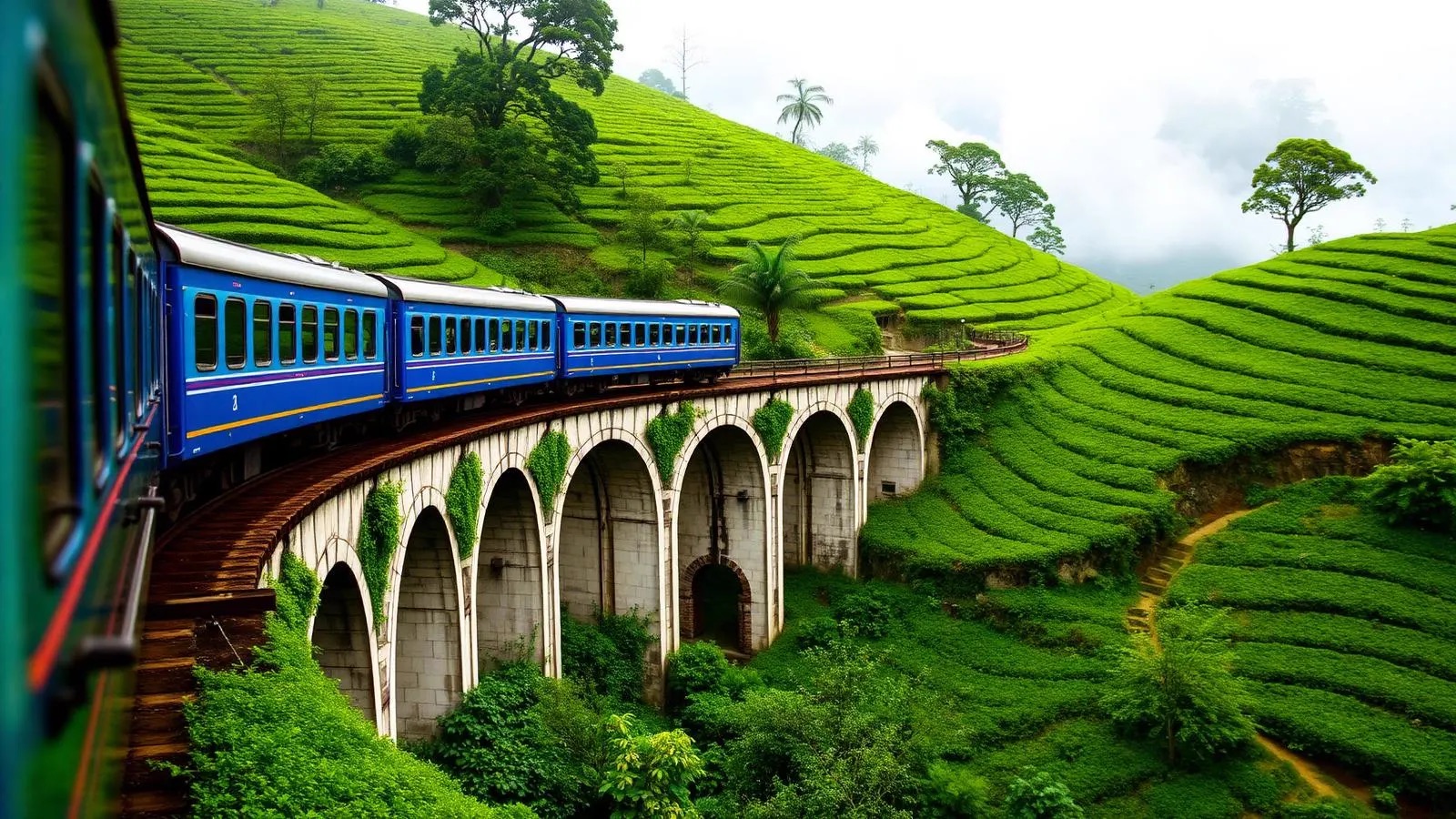
Sri Lanka Itinerary: Hill Country and Coast
Cultural Triangle, the Ella train through tea country, safari parks and southern beaches — plus how the two monsoons split the seasons.
Best Beaches in Sri Lanka: South and East Coasts
Sri Lanka's south and east coast beaches, how the two monsoons decide when to visit each, stilt fishermen, trip planning and staying safe…