Madrid Itinerary: Art, Tapas and Day Trips
Madrid in two or three days: the Prado and Reina Sofia, Retiro, La Latina tapas crawls and day trips to Toledo and Segovia.
In this guide
- Quick Facts
- Arriving and Getting Your Bearings
- How Many Days in Madrid?
- The Golden Triangle of Art
- Royal Madrid: The Palace and Cathedral
- The Heartbeat of the City: Sol and Plaza Mayor
- A Tale of Two Markets
- Tapas Crawling in La Latina
- Neighbourhoods: Malasaña, Chueca and Lavapiés
- Sunsets, Parks and a Touch of Egypt
- Madrid vs. Barcelona: A Tale of Two Rivals
- Essential Rhythms: Football, Churros and Siestas
- Gateway to Castile: Day Trips by Train
- Explore in Depth
- Frequently Asked Questions
- Final Thoughts
This guide is part of our Spain Itinerary: Madrid, Andalusia and Barcelona — start there for the overview, when to go and how to get around.
At sunset, the last sliver of sun catches the Egyptian stone of the Temple of Debod. The sky over the Casa de Campo becomes a riot of bruised purples and hot orange, and down in the reflecting pool, a perfect mirror of the scene shakes with every ripple of the evening breeze. Couples drape across the grassy banks, friends share bottles of wine, and the day's oppressive heat finally breaks. For all its grand palaces and world-class museums, this simple, shared moment feels like the true soul of Madrid. It's a city that lives its life out in the open, with an unpretentious, infectious energy.
Forget what you think you know. Madrid is not a backdrop; it’s a living, breathing character. This is Spain’s regal, landlocked heart, a city of elegant boulevards, obsessive art collections, hidden plazas, and a devotion to the good life that borders on religious. In this guide, we'll navigate the transport hubs that make it the centre of the nation, plan a schedule that does it justice, and dive deep into the Golden Triangle of Art. We’ll untangle the etiquette of tapas crawling, find the best spots for sunset photography, and explore the easy day trips that put ancient cities like Toledo and Segovia right on your doorstep.
Quick Facts
- Location: Right in the geographical centre of the Iberian Peninsula, Madrid is the capital of Spain and its largest city.
- Getting There: Adolfo Suárez Madrid–Barajas Airport (MAD) is the main international gateway, with excellent metro and Cercanías (commuter train) connections to the city. Atocha and Chamartín are the two major train stations, forming the hub of the Renfe AVE high-speed rail network.
- Getting Around: The central core is wonderfully walkable. For longer distances, the Madrid Metro is efficient, clean, and comprehensive. Walking is the best way to make unexpected discoveries.
- Language & Currency: Spanish (Castilian) is the official language. The currency is the Euro (€). While English is common in tourist centres, learning a few Spanish phrases is always appreciated.
- Best Time to Visit: Spring (April-May) and Autumn (September-October) offer glorious, sunny weather perfect for exploring. Winter is crisp and cool, while summer (late June-August) is brutally hot, a time when many Madrileños themselves flee the city.
Arriving and Getting Your Bearings
Madrid’s transport system is a masterclass in civic planning, making your arrival remarkably straightforward. Most international travellers will land at Adolfo Suárez Madrid–Barajas Airport (MAD). From any of its terminals, you have two brilliant public transport options into the city centre. The Metro's Line 8 (the pink line) whisks you directly to Nuevos Ministerios station in the city's business district, where you can easily change to other metro lines. Alternatively, the Cercanías commuter train lines C-1 and C-10 run from Terminal 4, connecting directly to major transport hubs like Chamartín, Nuevos Ministerios, and Atocha. Taxis and ride-sharing services are also readily available, but the train and metro are often just as fast and far more affordable.
Understanding Madrid's two main train stations is key to understanding Spain itself. Atocha Station, in the south of the city centre, is a destination in its own right, famous for its stunning tropical garden under the old train shed's iron-and-glass roof. It's the primary hub for the high-speed AVE trains heading south to Andalusia (Seville, Córdoba, Málaga) and east to Barcelona and Valencia. Chamartín Station, in the north, handles most AVE services to the north and northwest of Spain. This radial network makes Madrid the undisputed hub of the country, placing cities that are hundreds of kilometres away just a couple of hours' train ride from the capital.
How Many Days in Madrid?
The answer depends on your pace. However, to do Madrid justice, allow a minimum of three full days. This gives you one day for the major art museums, one day for the Royal Palace and historical centre around Plaza Mayor, and a third day to explore neighbourhoods like Malasaña and La Latina, relax in Retiro Park, and soak up the atmosphere.
Four days is even better, allowing you to slow down, revisit a favourite spot, or dedicate an afternoon to something specific like a football stadium tour or some serious shopping on Gran Vía. If you plan on using Madrid as a base for day trips, you need to add a full day for each excursion. Trying to cram a day trip to Toledo into a two-day Madrid visit is a recipe for exhaustion. Give the city the time it deserves; it’s a place that rewards a slower, more deliberate pace of discovery.
The Golden Triangle of Art
Even if you're not a die-hard art lover, spending time in Madrid's "Golden Triangle" of art museums is non-negotiable. The sheer concentration of masterpieces along the Paseo del Prado is staggering, and each of the three main museums offers a completely different, complementary experience.
Museo Nacional del Prado
The Prado is the grand dame, the heavyweight champion. This is one of the world's truly great classical art museums, a sprawling and sometimes overwhelming collection of European masters from the 12th to the early 20th century. Its collection of works by Velázquez (including the unmissable Las Meninas), Goya (don't miss the haunting "Black Paintings"), and El Greco is unparalleled. My advice? Don't try to see it all. Pick one or two artists or periods you're interested in, grab a map, and focus your energy. It’s about quality, not quantity.
Museo Nacional Centro de Arte Reina Sofía
Just a short walk down the road, the Reina Sofía catapults you into the 20th and 21st centuries. The collection is housed in a former hospital, a fascinating building in itself, and is home to Spain's greatest modern art. The undisputed crown jewel here is Picasso's Guernica. Seeing it in person is a profoundly moving experience. The sheer scale and raw power of this monumental anti-war statement can't be conveyed in photos. The museum also has excellent collections of works by Salvador Dalí and Joan Miró.
Museo Nacional Thyssen-Bornemisza
The Thyssen beautifully bridges the gap between the other two. It started as a private collection and offers a stunning, encyclopaedic journey through Western art history. Where the Prado is deep in Spanish masters, the Thyssen has everything from Italian primitives and German Expressionists to American pop art and Impressionism. If you only have time for one museum and want a taste of everything, this might be your best bet. It's more manageable than the Prado and its chronological layout makes it incredibly easy to follow.
Pro Tip: All three of these state-run museums, and many others in Madrid, offer free entry windows on certain days and times. These are immensely popular, so expect long queues. But if you’re on a budget, it’s a fantastic way to experience world-class art. Always check the official website of each museum for the most up-to-date information on hours, ticketing, and free entry periods as they can and do change.
Royal Madrid: The Palace and Cathedral
West of the city centre stands the magnificent Palacio Real, the Royal Palace of Madrid. While it's the official residence of the Spanish Royal Family, they reside in a more modest palace on the outskirts, so this opulent behemoth is used primarily for state ceremonies. Its scale is almost impossible to comprehend, with literally thousands of rooms. A tour of the state apartments is a dazzling, if slightly dizzying, journey through rococo excess, with rooms entirely clad in porcelain, throne rooms dripping with velvet and gold, and an astonishing collection of armoury and musical instruments. The exterior, overlooking the Campo del Moro gardens, is just as impressive, especially when illuminated at night.
Directly opposite the palace courtyard is the Catedral de la Almudena. It’s a surprisingly modern cathedral for a major European capital; construction started in the late 19th century and wasn't completed until 1993. This gives it a rather eclectic feel, with a neoclassical exterior designed to match the palace and a more contemporary, neo-Gothic interior with vibrant, modern stained-glass windows and colourful mosaics. It's a striking contrast to the ancient cathedrals you'll find in Toledo or Seville, but fascinating in its own right.
The Heartbeat of the City: Sol and Plaza Mayor
Puerta del Sol is not just a plaza; it's the churning, chaotic heart of Madrid and the symbolic centre of Spain's radial road network (look for the "Kilometre Zero" plaque on the pavement). It's a vast, semi-circular space buzzing with activity day and night, ringed by historic buildings and crowned by the famous Tío Pepe sherry sign. It's a major transport hub, a meeting point, and the place where Madrileños gather to ring in the New Year. It can be intense, but you can’t say you’ve been to Madrid without passing through it.
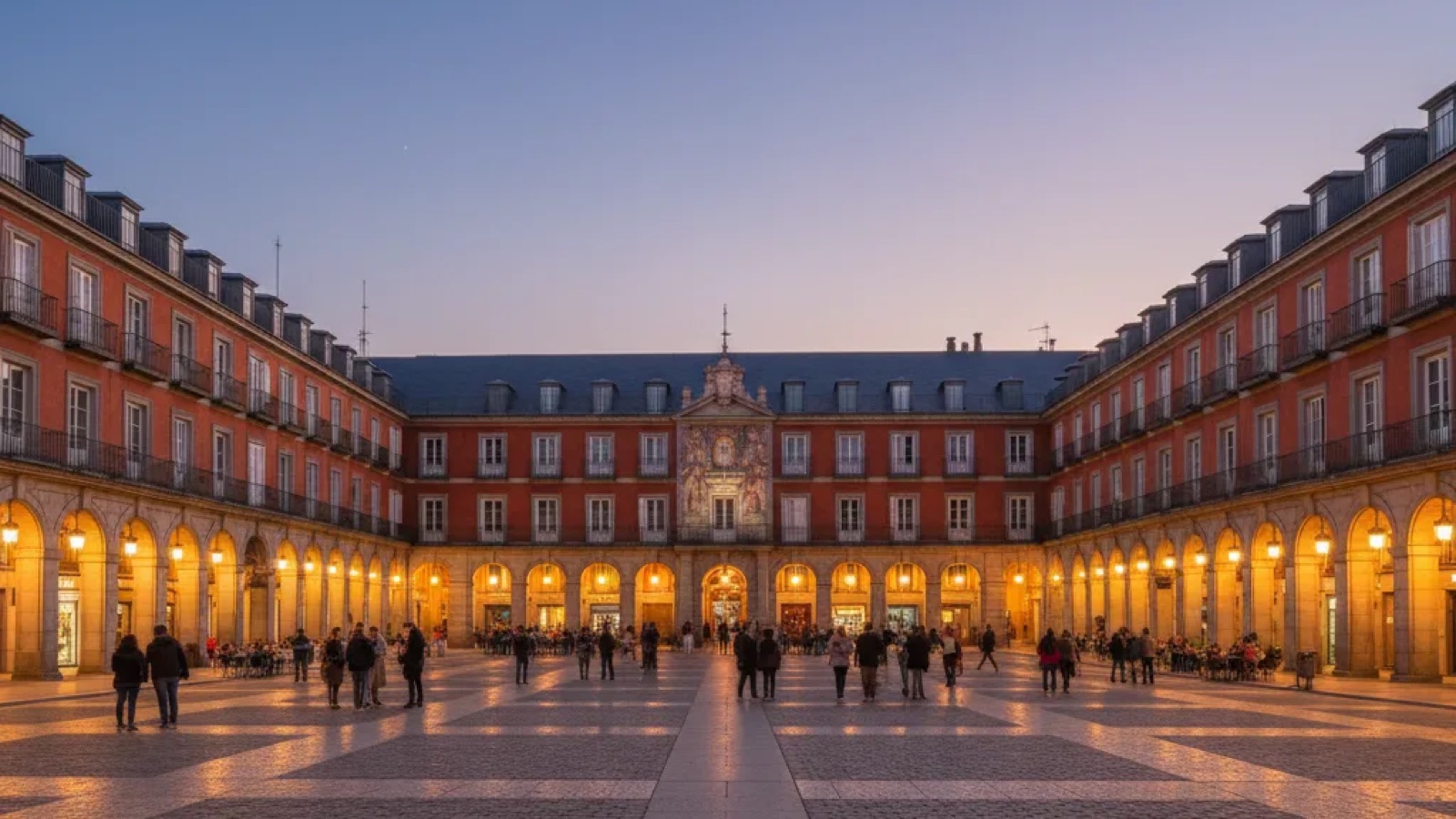
A short walk from Sol's organised chaos leads you into the enclosed elegance of the Plaza Mayor. Stepping through one of its archways feels like entering another world. This grand, rectangular plaza, with its uniform red-brick buildings and slate spires, has been the stage for everything from markets and bullfights to royal proclamations and public executions since the 17th century. Today, its arcades are lined with cafes and restaurants. While it's a wonderful place to sit and people-watch, be aware that you're paying a premium for the location. My advice is to walk through, admire the architecture, and then dive into the side streets for more authentic and affordable food and drink.
A Tale of Two Markets
No visit to Madrid is complete without experiencing its market culture, but it's important to know what you're looking for. The famous Mercado de San Miguel, just off the Plaza Mayor, is a thing of beauty. This restored iron-and-glass structure is a glorious temple to food, filled with gleaming stalls offering perfect tapas, glistening olives, fine wines, and delectable pastries. It's also jam-packed with tourists. It's absolutely worth visiting for the visual feast and to grab a high-quality bite, but it’s not where locals do their weekly shop. It's a gourmet food hall, and an excellent one at that.
For a more authentic slice of life, wander into a neighbourhood market like the Mercado de la Cebada in La Latina. Here, the vibe is completely different. The focus is on fresh produce, butchers shouting their daily specials, and fishmongers artfully arranging their catch on ice. It's louder, a bit messier, and infinitely more real. You’ll see grandmothers haggling over tomatoes and locals stopping for a quick beer and a tapa at one of the no-frills bars tucked between the stalls. This is the lifeblood of the city, and a fascinating contrast to the polished perfection of San Miguel.
Tapas Crawling in La Latina
This is it. The quintessential Madrid experience. The winding, medieval streets of the La Latina neighbourhood, particularly along the famous Cava Baja street, are the city’s ground zero for a proper tapas crawl (ir de tapas). The concept is simple: you don’t sit down for a big meal at one place. Instead, you hop from one crowded, noisy bar to the next.
Here’s how it’s done: squeeze your way to the bar. Order a small drink – a caña (small beer) or a chato (small glass of wine). With your drink, you'll often get a small, free tapa. Then, look at the menu on the board and order one or two of the bar's specialities (raciones are larger sharing plates). Eat it standing up, chat with your friends, throw your napkin on the floor (in many traditional bars, this is a sign of a happy customer!), pay up, and move on to the next spot. Each bar has its own speciality – one might be famous for its grilled mushrooms, another for its pimientos de padrón, another for its cured ham. It's a wonderfully social and delicious way to spend an evening.
Neighbourhoods: Malasaña, Chueca and Lavapiés
Beyond the historic centre, Madrid’s character is defined by its distinct neighbourhoods, or barrios.
- Malasaña: This is Madrid's hipster heartland, the centre of the movida madrileña counter-cultural movement in the 1980s. Today, it’s a vibrant tangle of streets filled with vintage shops, independent boutiques, quirky cafes, and some of the city's best nightlife. It’s creative, a bit gritty, and relentlessly cool.
- Chueca: Adjacent to Malasaña, Chueca is the vibrant centre of Madrid’s LGBTQ+ community. The neighbourhood is stylish and lively, packed with chic boutiques, excellent restaurants, and happening bars. The Mercado de San Antón is a modern market with a fantastic rooftop terrace bar. The entire neighbourhood explodes with colour and energy during the annual Pride festival.
- Lavapiés: South of the centre, Lavapiés is Madrid’s most multicultural neighbourhood. It’s a fascinating, bohemian melting pot of cultures from around the world. The streets are lined with ethnic restaurants (the Indian food here is fantastic), alternative art spaces, and traditional Spanish bars. It has a gritty, dynamic, and ever-evolving energy that is completely captivating.
Sunsets, Parks and a Touch of Egypt
When you need a break from the city's stone and bustle, Parque del Buen Retiro is your magnificent green lung. Once the private gardens of the monarchy, this sprawling park is now Madrid's favourite backyard. You can rent a rowboat on the Grand Pond, admire the soaring glass-and-iron structure of the Palacio de Cristal (Crystal Palace), or simply find a shady spot on the grass. It’s a beautiful place to watch the city relax.
For a standout sunset spot, head west to the Parque del Oeste. Here you'll find the Temple of Debod. This authentic ancient Egyptian temple, dating back to the 2nd century BC, was a gift from Egypt to Spain for its help in saving historical monuments from the rising waters of the Aswan Dam. It was painstakingly dismantled and rebuilt here. Seeing it is remarkable; seeing it at sunset is magical.
Photography Tip: Arrive before the golden hour. The prime shot is from the east side of the temple, looking west towards the setting sun. The temple is surrounded by a shallow pool of water, which, on a calm evening, creates a perfect reflection. The contrast between the ancient, weathered stone and the vibrant colours of the sunset is spectacular. Be patient and wait for the lights on the temple to switch on just after sunset for a completely different mood.
Madrid vs. Barcelona: A Tale of Two Rivals
Travellers often try to pit Spain's two largest cities against each other, but it's like comparing apples and oranges. They are both magnificent, but their personalities couldn't be more different. Barcelona is the rebellious, stylish, coastal capital of Catalonia. It looks outward to the Mediterranean, defined by its unique Catalan identity, the fantastical architecture of Gaudí, and a more avant-garde spirit. It feels distinctly different from the rest of Spain.
Madrid, on the other hand, is unapologetically Spanish. It is the stately, dignified heart of the nation. It has the weight of a great European capital, with grand boulevards, formal parks, and an imperial air. Its energy is less about beach-side cool and more about late-night socialising in tapas bars and sophisticated cafe culture. To truly understand Spain, you need to experience both. One is the heart, the other is the soul, and the tension and contrast between them is part of what makes the country so compelling.
Essential Rhythms: Football, Churros and Siestas
To truly get Madrid, you need to sync with its unique rhythms. First, the eating schedule. Lunch (la comida) is the main meal of the day, eaten between 2 pm and 4 pm. Dinner (la cena) doesn't even start until 9 pm at the earliest, with most locals eating at 10 pm or later. Trying to find a restaurant for dinner at 6 pm will be a frustrating experience. Embrace the rhythm: have a big lunch, perhaps a small afternoon snack (merienda), and a late, light tapas dinner.
One of the most famous merienda or late-night snacks is churros con chocolate. These aren't the sugar-dusted sticks you find at a fairground. Spanish churros are simpler, crispier, and served with a cup of chocolate so thick you can almost stand a spoon up in it. It's a beloved tradition, perfect for a cold morning or after a long night out.
Finally, you can't talk about Madrid without mentioning football (fútbol). The city is home to two of the world's most famous clubs, and the passion is palpable. Even if you can't get a ticket to a match, both major stadiums offer extensive tours that are fascinating even for non-fans, giving you a behind-the-scenes look at the history and scale of the clubs. These tours are hugely popular, so booking in advance is a good idea.
Gateway to Castile: Day Trips by Train
Madrid's role as Spain's central transport hub makes it an incredible base for exploring the historic region of Castile. The high-speed AVE and reliable regional trains make these trips easy and stress-free.
- Toledo: Less than 30 minutes by AVE from Atocha, the former capital of Spain is a staggering hilltop city packed with mosques, synagogues, and churches. It's a labyrinth of history, and getting lost in its medieval streets is half the fun. Known as the "City of Three Cultures".
- Segovia: About 30 minutes by AVE from Chamartín, Segovia is pure fairytale. It's famed for three things: its spectacular, towering Roman aqueduct, its dreamy Alcázar (fortress) that was an inspiration for Disney's Cinderella Castle, and its legendary roast suckling pig.
- Ávila: A bit further out by regional train, Ávila is famous for its perfectly preserved medieval city walls, which completely encircle the old town. Walking atop the ramparts offers incredible views of the city and the surrounding countryside.
- El Escorial: A short Cercanías train ride away is the massive monastery-palace complex of San Lorenzo de El Escorial. This immense, austere granite structure was the historical residence of the King of Spain and is a monument to an empire's power.
For all these day trips, check the Renfe (Spain's national rail operator) website for train schedules and to book tickets, especially for the popular AVE routes which can sell out.
Explore in Depth
Madrid is often just one stop on a larger Spanish adventure. Use these guides to help plan the rest of your trip and put Madrid in the context of a wider European journey.
Frequently Asked Questions
How many days is enough for a first-time visit to Madrid?
For a first-time visitor, allow a minimum of three full days to cover the main sights without feeling rushed. This allows for one day dedicated to the big art museums, another for the Royal Palace and historical centre, and a third for exploring neighbourhoods like Malasaña and La Latina and relaxing in Retiro Park. If you want to add a day trip to a city like Toledo or Segovia, you should add an extra day to your itinerary for each trip you plan to take.
What is the biggest mistake travellers make in Madrid?
The most common mistake is failing to adapt to the local schedule, especially for meals. Travellers often search for dinner at 6 or 7 PM only to find most kitchens are closed and restaurants are empty. The key is to embrace the Spanish rhythm: eat your main meal at lunchtime (around 2-3 PM), have a light snack or siesta in the late afternoon, and then head out for a late tapas crawl or dinner no earlier than 9 PM. Fighting the schedule will only lead to frustration; leaning into it is part of the fun.
Is it worth visiting the Prado Museum if I'm not an art expert?
Absolutely. You don't need to be an art historian to be moved by the masterpieces in the Prado. To avoid feeling overwhelmed, don't try to see everything. Instead, pick a few key artists you've heard of—like Goya, Velázquez, or El Greco—find their most famous works on the museum map, and focus on those. Seeing an iconic painting like Velázquez's Las Meninas in person is a powerful experience, regardless of your art background. You can also take advantage of the free entry hours in the evening for a low-commitment "taster" session.
Is Madrid a walkable city?
Yes, the core of Madrid is exceptionally walkable. Most of the major attractions—from the Royal Palace and Plaza Mayor across to the Prado Museum and Retiro Park—are within a pleasant 20 to 30-minute walk of each other. Strolling through the distinctive neighbourhoods is one of the city's great joys. For longer distances, or to escape the midday heat, the Madrid Metro is incredibly efficient, clean, and easy to navigate. A combination of walking and using the metro is the perfect way to get around.
What is the best way to experience a tapas crawl?
The best way is to go to a dedicated tapas street like Cava Baja in the La Latina neighbourhood. Don't sit down at a table. The real experience is standing at the crowded bar. Order a small drink (a caña of beer or a glass of wine) and just one or two of the bar's speciality tapas. Once you've finished, pay your bill and move on to the next bar down the street. The idea is to sample a little bit from many different places. Go with friends and embrace the lively, social, and slightly chaotic atmosphere.
Final Thoughts
Madrid doesn't shout for your attention in the way some capitals do. It doesn't have a single, defining, Eiffel-Tower-like monument that dominates every postcard. Its appeal is subtler, more immersive. It’s in the taste of a perfect vermouth on a sunny plaza, the hush that falls over a room when a flamenco guitarist finds their rhythm, and the shared joy of a sunset over the Casa de Campo.
It's a city that asks you to participate, not just observe. You have to adjust to its late hours, learn the art of the tapas crawl, and allow yourself to get lost in its maze of streets. If you give yourself over to its rhythms, Madrid will reward you with an experience that feels less like tourism and more like life itself.