Neuschwanstein and the Bavarian Alps: A Guide
Visiting Neuschwanstein without the chaos, plus the Bavarian Alps around it: Fussen, Garmisch, the Zugspitze and alpine lakes.
In this guide
- Quick Facts
- The Fairytale King's Unfinished Dream
- Booking Neuschwanstein: The Only Way Inside
- Getting Up to the Castle
- The Marienbrücke View and a Word of Warning
- Hohenschwangau Castle: The Quieter Cousin
- Füssen: Your Alpine Basecamp
- Garmisch-Partenkirchen and the Zugspitze
- An Alpine Wonderland: Gorges, Lakes, and Villages
- Berchtesgaden and The Eagle's Nest
- Getting There and Around: Train vs. Car
- Planning Your Visit: Seasons and Timing
- Explore in Depth
- Frequently Asked Questions
- Final Thoughts
This guide is part of our Munich Travel Guide: Beer Gardens, Castles & Old Town — start there for the overview, when to go and how to get around.
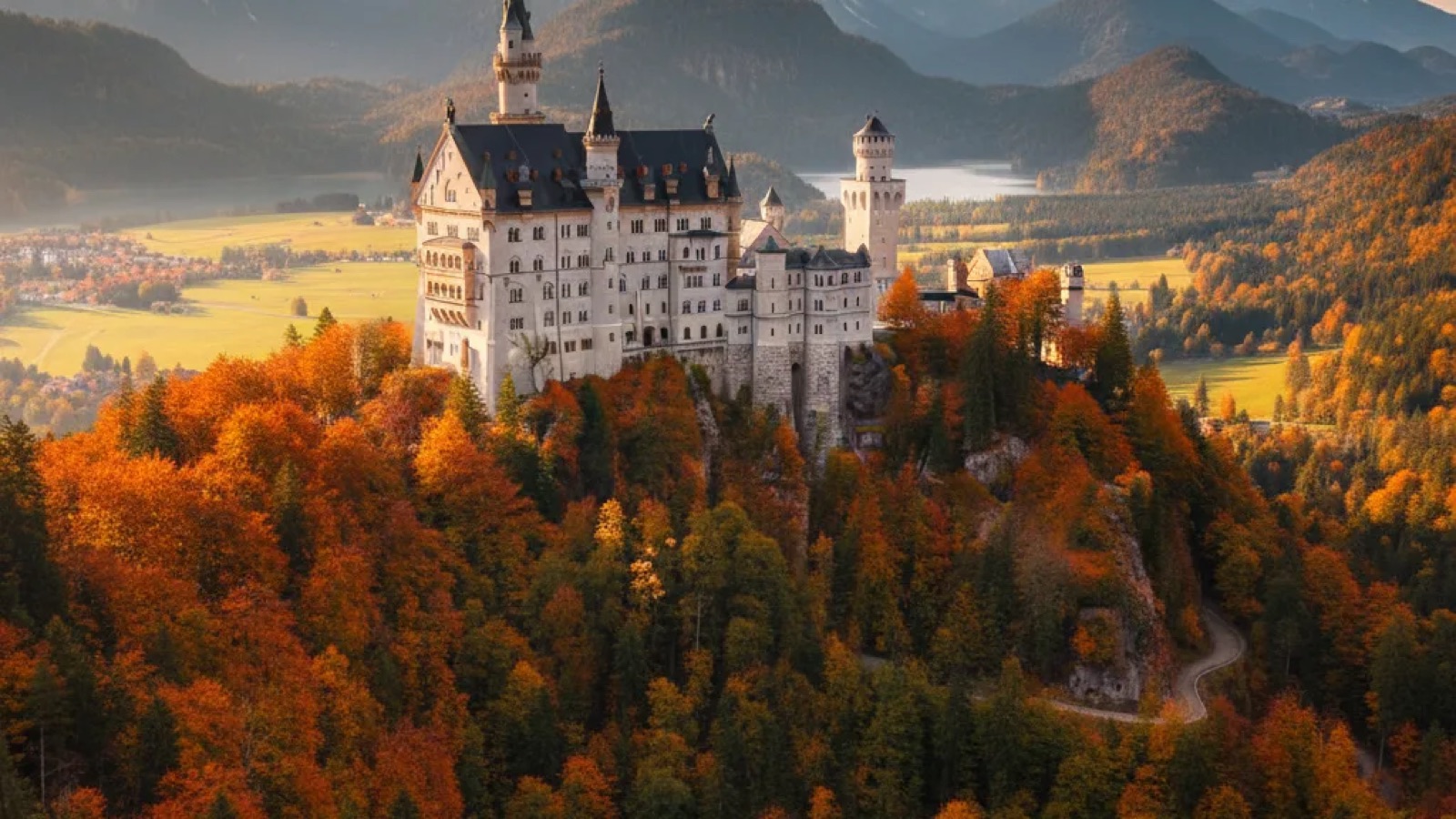
After a steep, heart-pounding walk up a forest track, you step onto the narrow steel of the Marienbrücke. And there it is. Neuschwanstein Castle, materialising through the morning mist, perched on its impossible crag, looking more like a watercolour painting than a real building. It is so perfect, so absurdly romantic, that it barely feels real, and that sense of stepping into a fairytale never quite goes away.
This guide is about capturing that magic. We'll cover the castle, of course—how to navigate the tricky ticketing system for King Ludwig II's fantasy and get that iconic photo. But we'll also go beyond the castle walls into the breathtaking Bavarian Alps that cradle it. We’ll explore the peaks and gorges, the crystal-clear lakes, the painted villages, and the other strange and beautiful palaces Ludwig left scattered across this landscape. This is a region to be savoured, not just day-tripped, and this guide gives you the hard-won advice you need to do just that, whether you've got a weekend or a whole week.
Quick Facts
- Location: Southern Bavaria, Germany, right on the border with Austria. The main towns are Füssen and Garmisch-Partenkirchen.
- Getting There: From Munich, direct trains run to Füssen (for Neuschwanstein) and Garmisch-Partenkirchen. A car offers the most flexibility for exploring the wider region.
- Getting Around: A combination of local buses, cogwheel trains, cable cars, and your own two feet. A rental car is highly recommended for connecting the dots between lakes and smaller villages.
- Language & Currency: German is the official language, though English is widely spoken in tourist areas. The currency is the Euro (€).
- Best Time to Visit: Late spring (May) and autumn (September-October) for pleasant weather, beautiful colours, and fewer crowds. Summer is peak season for hiking, while winter offers snow sports but with some closures.
The Fairytale King's Unfinished Dream
First, let's be clear: Neuschwanstein was never a real medieval castle. It wasn't built for defence, but for retreat. This was the passion project of King Ludwig II of Bavaria, a reclusive and eccentric monarch who was more interested in romantic operas and architectural fantasies than in governing. He commissioned the castle in 1869 as a personal refuge and a homage to the composer Richard Wagner. It’s a 19th-century interpretation of a romanticised Middle Ages, built with steel beams and modern conveniences (for the time) hidden behind the fairytale turrets.
Tragically, Ludwig only lived in the unfinished castle for a total of 172 days before he was declared insane, deposed, and died under mysterious circumstances a few days later. Only about a third of the interior was ever completed, which is what you see on the tour. Within weeks of his death, the magnificent private retreat was opened to the paying public. Its wild, romantic silhouette soaring above the forest directly inspired the Sleeping Beauty Castle at Disneyland, cementing its status as the world's most famous fairytale castle.
Booking Neuschwanstein: The Only Way Inside
This is probably the most important piece of practical advice in this guide: you cannot simply walk up to Neuschwanstein and expect to get in. Access to the interior is by a strictly timed, guided tour only. Tickets for these tours sell out, especially in peak season, weeks or even months in advance.
You absolutely must reserve your tickets online, well ahead of your visit, through the official Hohenschwangau ticket portal. This can't be stressed enough. Visitors queuing at the Ticket Center in the village of Hohenschwangau below the castle are often told the entire day is sold out. Pre-booking online is the only way to guarantee your entry. You’ll be given a specific tour time, and you have to pick up your physical tickets from the Ticket Center at least 90 minutes before that time. Don't be late—they are not flexible.
Getting Up to the Castle
Once you have your tickets from the centre in Hohenschwangau village, you still need to get up the rather steep hill to the castle entrance. You have three options, and none of them are included with your castle ticket.
- By Foot: This is the best method. It’s a steep, 30-40 minute walk up a wide, paved road through the forest. It’s good exercise, gets you away from the crowds, and builds a sense of anticipation. Just be sure to allow plenty of time so you aren't rushing for your tour slot.
- By Shuttle Bus: A bus service runs from the village up to a drop-off point near the Marienbrücke, above the castle. From there, it's a 10-15 minute downhill walk to the castle entrance. The queues for the bus can be long both up and down, and it doesn't run in icy or snowy conditions.
- By Horse-Drawn Carriage: The most romantic option, but also the slowest. The horses pull a carriage up the same main road, dropping you about a 10-minute walk below the entrance. Like the bus, the queues can be very long, and it's a popular choice for families.
My advice? Walk up to build the anticipation and earn the views, then consider the bus back down if your legs are tired after the tour and walking around the viewpoints.
The Marienbrücke View and a Word of Warning
That postcard photo of Neuschwanstein? It’s taken from the Marienbrücke (Mary's Bridge), a pedestrian bridge suspended high over the churning waters of the Pöllat Gorge. The view is simply jaw-dropping, looking directly onto the castle’s most famous profile. It's a short uphill walk from the castle itself, or near the shuttle bus drop-off point.
Photography Note: For the best light on the face of the castle, you want to be here in the morning. The afternoon sun puts the castle into shadow from this angle. It gets incredibly crowded, so if you want a clear shot, you have to be patient or go very early.
Important: The Marienbrücke closes frequently and without much notice, especially during winter for snow and ice, but also for high winds or maintenance. It's a huge disappointment to walk all the way up and find it closed. Always check the official website on the day of your visit for the current status of the bridge.
Hohenschwangau Castle: The Quieter Cousin
Sitting on a hill opposite Neuschwanstein is the much older, much yellower Hohenschwangau Castle. This is where Ludwig II actually spent his childhood summers. While Neuschwanstein is a fantasy, Hohenschwangau feels like a home. The tour here is much more intimate, and you can see the rooms where the young king would gaze across the valley with his telescope, dreaming up the fantastical palace he would one day build on the opposite ridge. Visiting both on the same day provides a fascinating "before and after" look into Ludwig's mind. Tickets are easier to come by, but it’s still wise to book the combination ticket online with your Neuschwanstein entry.
Füssen: Your Alpine Basecamp
While a day trip from Munich is technically possible, it makes for a long, rushed, and exhausting day. My strong advice is to base yourself in the charming town of Füssen for at least one or two nights. Its pastel-painted medieval centre (the Hohes Schloss is magnificent), cobbled streets, and riverside location on the turquoise Lech River make it a destination in its own right. It’s the terminus for the train from Munich and the transport hub for buses to the castles. Staying here allows you to visit the castles early in the morning before the day-trip hordes arrive, and to enjoy a hearty Bavarian meal and beer in a traditional guesthouse after a day of exploring.
Garmisch-Partenkirchen and the Zugspitze
About an hour’s drive from Füssen lies Garmisch-Partenkirchen, the heart of adventure in the German Alps. This is Germany’s premier winter sports resort, but it’s a stunning destination year-round. The main event here is the Zugspitze, Germany’s highest peak at 2,962 metres. You don’t need any mountaineering skill to reach the top. You can take a historic cogwheel train that tunnels through the inside of the mountain, or a spectacular modern cable car (the Seilbahn Zugspitze) that glides almost vertically up the rock face. The panorama from the viewing platform on a clear day is one of the best in Europe, a 360-degree spectacle of snowy peaks across Germany, Austria, Switzerland, and Italy.
An Alpine Wonderland: Gorges, Lakes, and Villages
The beauty of the Bavarian Alps is in the details you discover between the big sights. Renting a car for a day or two unlocks a whole other level of exploration.
- Partnach Gorge (Partnachklamm): Near Garmisch, this is an unmissable walk. You follow a narrow path, sometimes cut directly into the cliff face, through a deep gorge where a torrent of glacial water carves its way through the rock. The sound of the echoing water and the sight of the light filtering down into the narrow chasm is mesmerising. Wear a raincoat—you will get dripped on!
- Alpine Lakes: The region is dotted with stunning lakes. Eibsee, at the foot of the Zugspitze, is a standout for photography. Go at dawn to capture the mountain's reflection in the glassy water before the wind picks up. Königssee, near Berchtesgaden, is famous for its emerald water and silent electric boat tours that glide beneath towering cliffs. The smaller lakes like Alpsee right below the castles are perfect for a stroll, especially in autumn when the forest colours are magnificent.
- Oberammergau: This idyllic village is famous for two things: the world-renowned Passion Play it performs once a decade, and its beautiful painted houses. The art of Lüftlmalerei (air painting), elaborate frescoes depicting biblical scenes, fairy tales, and Bavarian life, adorns countless buildings. It's a wonderful place to just wander and admire the craftsmanship.
Berchtesgaden and The Eagle's Nest
Deeper in the mountains toward the Austrian border lies the Berchtesgaden National Park, a wilder and more dramatic corner of the Alps. The town of Berchtesgaden is another lovely base, but the main draw here for many is the Kehlsteinhaus, better known as the Eagle's Nest. This was a teahouse built as a 50th birthday present for Hitler, though he rarely visited. It’s an engineering marvel, perched on a rocky outcrop and accessible only by a special mountain bus up a terrifyingly steep road, followed by a long tunnel and a polished brass elevator that whisks you up through the heart of the mountain. Today, it’s a restaurant with one of the most commanding (and complicated) views in all of Germany. Be aware that it has very strictly seasonal access, typically only open from mid-May to October, as snow makes the road impassable for the rest of the year. Always check the official site for opening dates.
Getting There and Around: Train vs. Car
How you navigate the Bavarian Alps greatly depends on your travel style. For a trip focused purely on Munich and Neuschwanstein, the train is perfect. The journey from Munich's main station to Füssen is scenic and straightforward, and local buses connect the station to the castles. The Bayern-Ticket (Bavaria Ticket) can be a great value way for groups to travel by regional train.
However, to truly explore the region—to link Füssen with Garmisch, visit Linderhof Palace, stop at Oberammergau, circle the lakes, and find hidden trailheads—a car is almost essential. It gives you the freedom to follow your curiosity, to pull over for a photo of a chapel in a field or to wait for the perfect light at Eibsee. The roads are excellent, but be prepared for narrow, winding sections in the mountains and remember that parking at major attractions is organised and always has a fee.
Planning Your Visit: Seasons and Timing
Allow at least two full days for the Füssen/Neuschwanstein area, and four to five days if you want to include Garmisch-Partenkirchen and some of the other sights without rushing. The Alps have distinct seasons, each with its own character.
- Summer (June-August): Warm weather, long days, everything is open. It’s perfect for high-altitude hiking. It's also the busiest and most crowded time of year.
- Autumn (September-October): A standout time to visit. The crowds thin out, the air is crisp, and the forests erupt in a spectacular display of gold, red, and orange. The light for photography is often softer and more beautiful.
- Winter (November-March): Magical, with snow-covered landscapes, cosy Christmas markets, and world-class skiing. However, many hiking trails are closed, mountain passes can be difficult, and key attractions like the Marienbrücke and Eagle's Nest are often inaccessible.
- Spring (April-May): A time of transition. The valleys are green and full of wildflowers while the peaks are still capped with snow. It can be lovely, but the weather is notoriously unpredictable.
Whatever the season, remember that mountain weather changes in an instant. Always pack layers, a waterproof jacket, and sturdy, comfortable footwear, even if the day starts out sunny.
Explore in Depth
This guide is just the beginning of what you can discover in Bavaria. For more ideas on how to build out your trip and explore the wider region, check out the other Germany travel guides.
Frequently Asked Questions
Is a day trip to Neuschwanstein from Munich a good idea?
While it's technically possible, it's generally not advisable. The journey takes over two hours each way by train, and you'll spend most of your day in transit. You arrive with the biggest crowds and have no flexibility. By staying overnight in Füssen, you can visit the castle early, explore the beautiful town and surrounding lakes like Alpsee at a relaxed pace, and get a much better feel for the region without feeling completely exhausted.
Do I really need to book Neuschwanstein tickets in advance?
Yes, one hundred percent. This cannot be emphasised enough. In any season, but especially from May to October, same-day tickets are virtually non-existent. Trying to buy them on the day means queuing for hours at the Ticket Center in Hohenschwangau, likely only to be told they are sold out. Book your timed-entry tickets through the official website several weeks (or even months, for summer) in advance to avoid crushing disappointment.
What's the best way to get the classic photo of Neuschwanstein?
The iconic, postcard-perfect shot is from the Marienbrücke (Mary's Bridge), which spans the Pöllat Gorge high above the castle. For the best light that illuminates the front of the castle, go in the morning. Be prepared for it to be extremely crowded with fellow photographers. Crucially, always check the official castle website on the day of your visit to see if the bridge is open, as it often closes due to weather, especially in winter.
Can I visit Neuschwanstein in winter?
Yes, the castle itself remains open and the guided tours run year-round. A visit with the castle and surrounding forests blanketed in snow can be incredibly magical. However, there are significant trade-offs. The Marienbrücke viewpoint is almost always closed for safety due to ice and snow. The shuttle bus may not operate, and the walk up can be very slippery, so good boots are essential. Horse-drawn carriages may also be suspended depending on conditions.
Is it worth visiting the other Ludwig II castles?
Absolutely. Visiting Neuschwanstein in isolation gives you only part of the story. A visit to the opulent, French-inspired Linderhof Palace, Ludwig’s smallest palace and the only one he lived to see completed, shows his obsession with absolute monarchy. Herrenchiemsee, his wildly expensive and unfinished replica of Versailles on an island, demonstrates the sheer scale of his ambition. Seeing them all helps you understand the fascinating, tragic mind of the man who built them.
Final Thoughts
It's easy to be cynical about Neuschwanstein. It’s crowded, the ticketing is a hassle, and at times it can feel more like a theme park than a historical site. But then, you round a corner on a forest path, you see those impossible white turrets soaring against a backdrop of dark green pines and snow-dusted peaks, and you get it. You understand why Ludwig poured his soul and his kingdom's treasury into this vision.
The real magic, though, is realising the castle is just the gateway. It's the overture to the grand opera of the Bavarian Alps. My best memories aren't just of the castle, but of the quiet moments: the reflection of the Zugspitze in the mirror-still water of Eibsee at dawn, the taste of a cold beer after a long hike through the Partnach Gorge, the sound of cowbells echoing across a high alpine meadow. Come for the castle, by all means. But stay for the mountains. That's where you'll find the real fairytale.